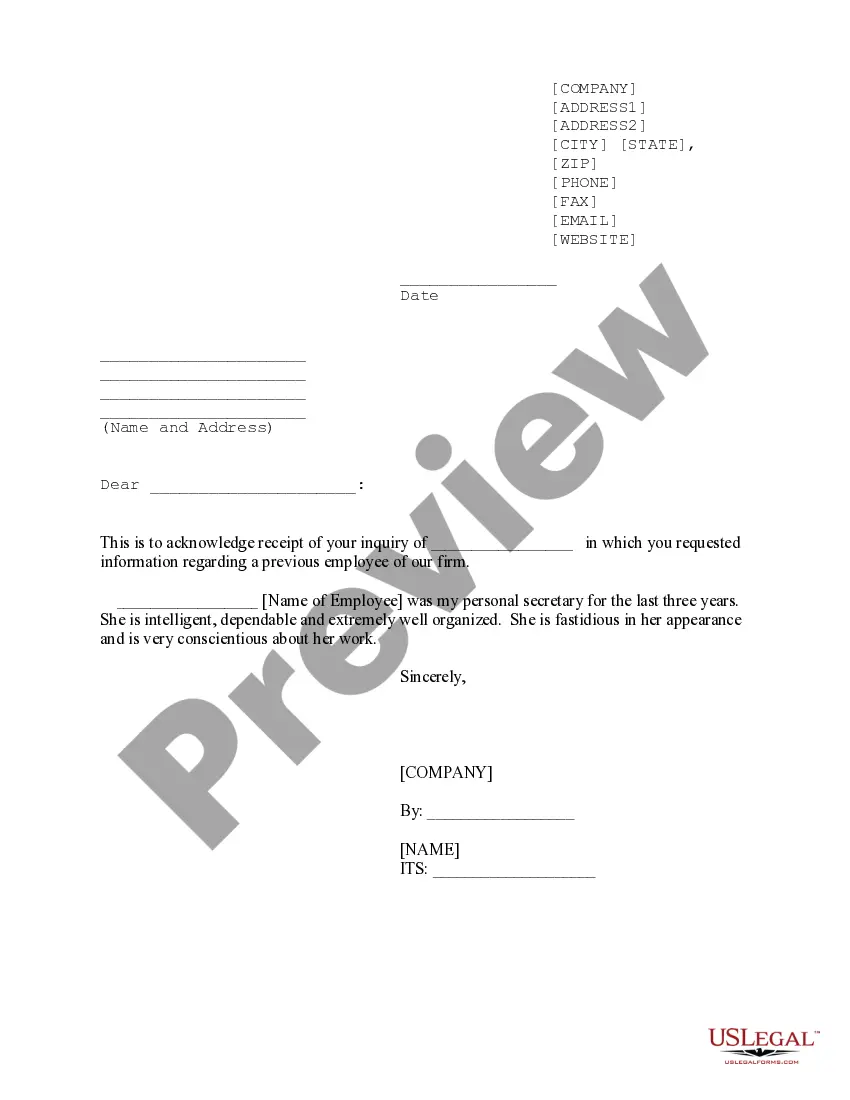
This is a multi-state form covering the subject matter of the title.
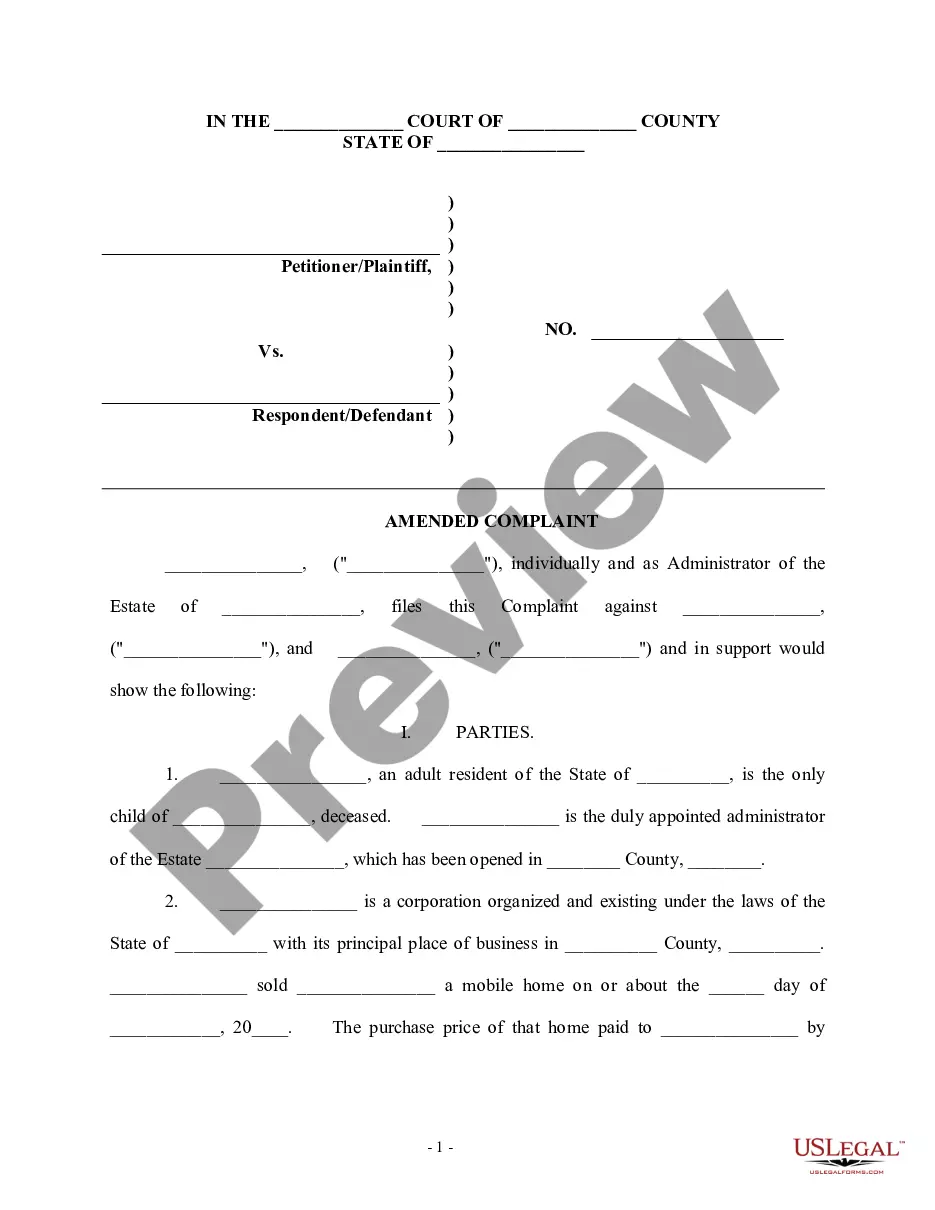
West Virginia Complaint For Loss Due To Product Defect and For Discovery
Category:
State:
Multi-State
Control #:
US-000283
Format:
Word;
Rich Text
Instant download
Description
Free preview
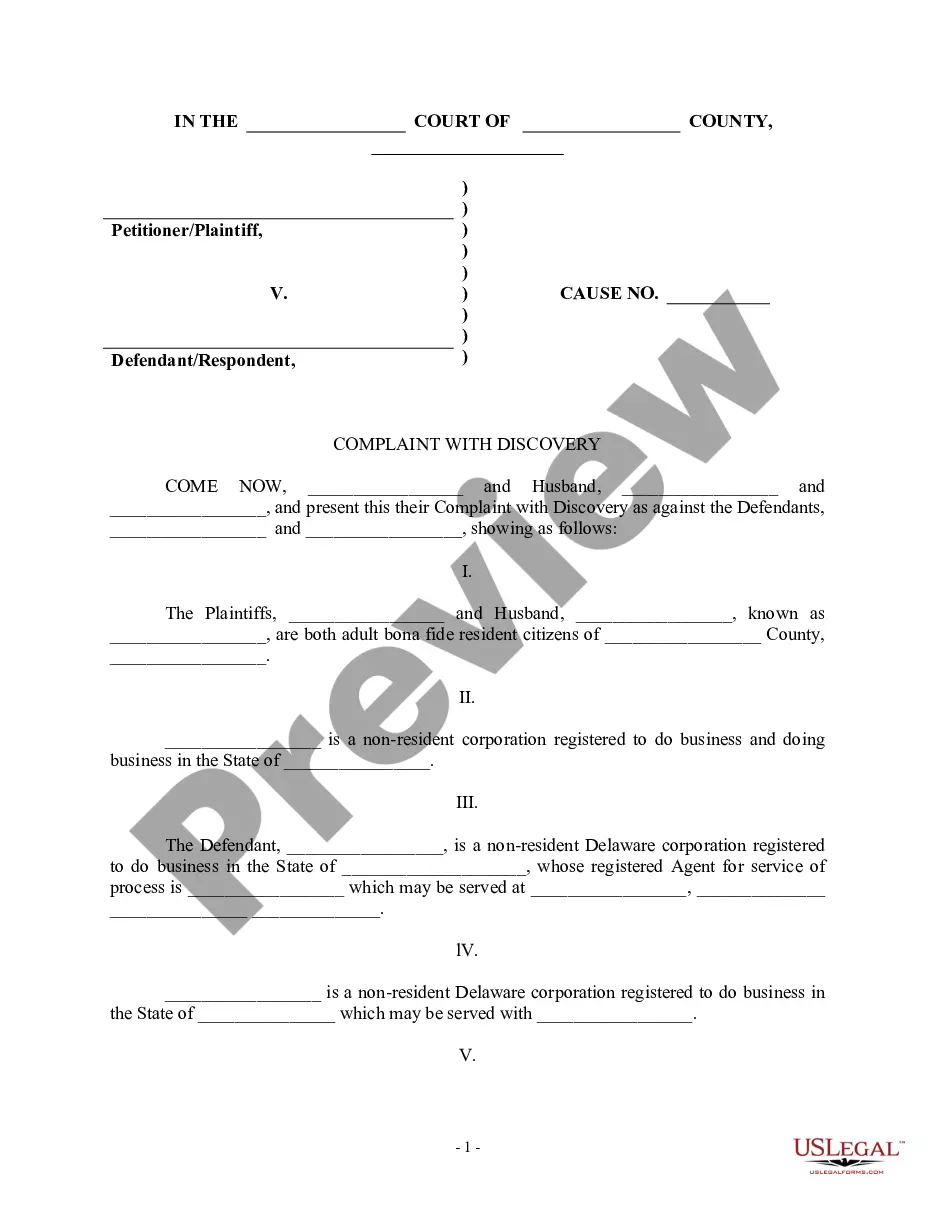
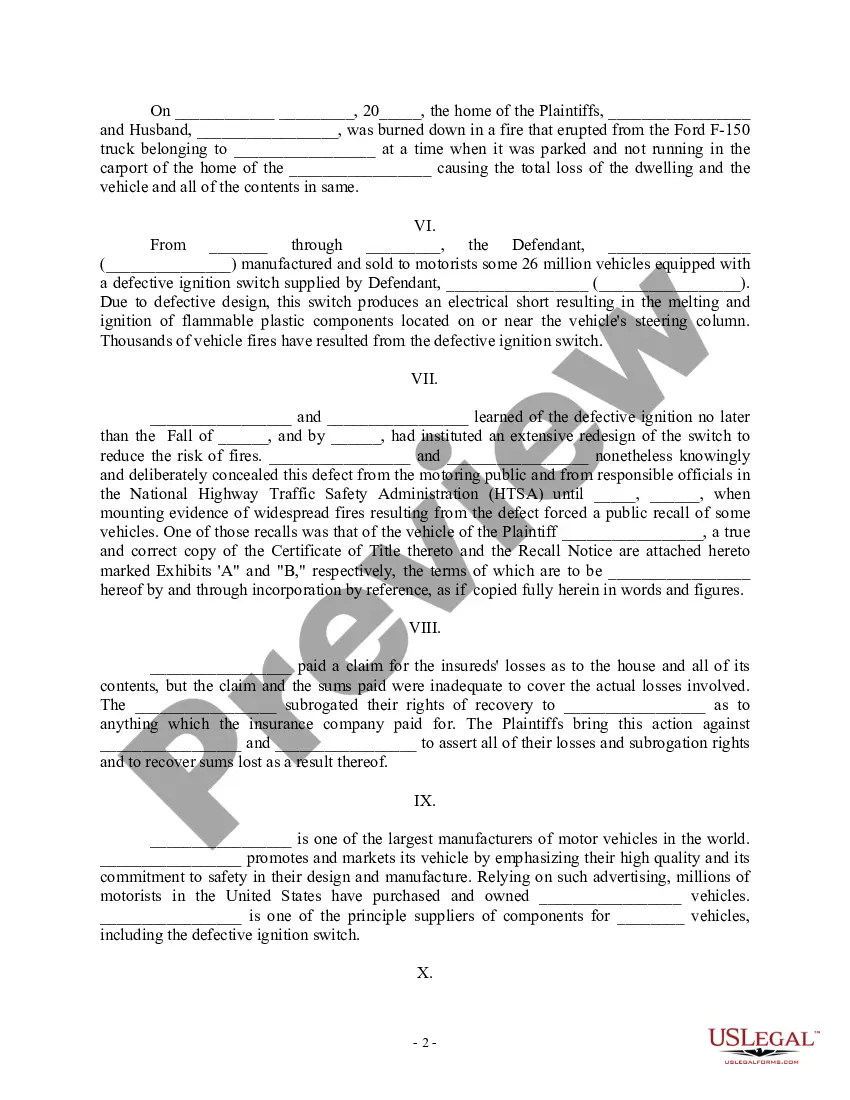
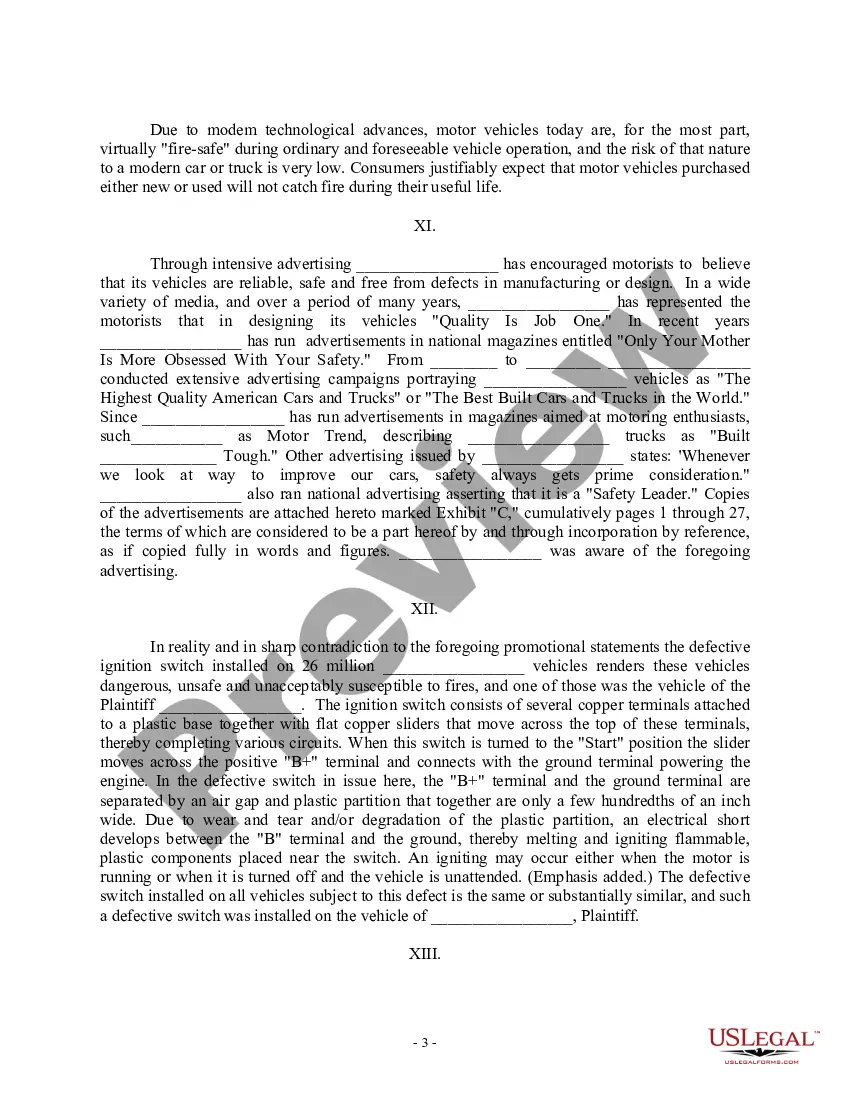


How to fill out Complaint For Loss Due To Product Defect And For Discovery?
It is feasible to spend hours online searching for the legal document template that meets the federal and state requirements you need.
US Legal Forms provides a vast array of legal forms that are reviewed by experts.
You can easily obtain or print the West Virginia Complaint For Loss Due To Product Defect and For Discovery from their service.
If you wish to obtain an additional version of the form, use the Search field to find the template that meets your needs and requirements.
- If you possess a US Legal Forms account, you may Log In and click the Acquire button.
- After that, you can complete, modify, print, or sign the West Virginia Complaint For Loss Due To Product Defect and For Discovery.
- Every legal document template you acquire is yours forever.
- To obtain an additional copy of any acquired form, visit the My documents tab and click the corresponding button.
- If you are using the US Legal Forms website for the first time, follow the simple instructions below.
- First, ensure you have selected the correct document template for the area/city of your choice.
- Read the form description to confirm you have chosen the correct form.
- If available, use the Preview button to glance through the document template as well.
Form popularity
FAQ
Erin's Law in West Virginia focuses on the prevention of child sexual abuse through educational programs in schools. While it may not directly relate to a West Virginia Complaint For Loss Due To Product Defect and For Discovery, it highlights the importance of legal protections and awareness in our communities. By promoting such laws, we can foster a safer environment, encouraging individuals to seek justice when they face legal challenges.
The discovery rule in West Virginia allows a party to file a lawsuit only after they become aware of the injury or defect, which is particularly relevant in cases involving product defects. When dealing with a West Virginia Complaint For Loss Due To Product Defect and For Discovery, understanding this rule helps you determine the appropriate timeframe for your legal action. It is crucial to recognize when the clock starts ticking, as this can significantly impact your case.
Rule 11 in West Virginia requires that all legal documents filed with the court are signed by an attorney or the party involved, ensuring accountability for the claims made. This rule is essential in maintaining the integrity of the legal process, particularly in cases like a West Virginia Complaint For Loss Due To Product Defect and For Discovery. By adhering to Rule 11, parties can avoid frivolous claims and promote responsible legal practices.
Strict Liability and Products Liability Plaintiffs in states that recognize strict liability for manufacturing defects will not need to show that the manufacturer failed to use due care or was reckless. A plaintiff can recover damages even if the manufacturer used all appropriate care in the preparation of the product.
(1) experts who testify as to the type of flaw in the product that led to the plaintiff's injury and/or (2) evidence of the circumstances surrounding the accident that would lead the jury to infer that the accident must have been caused by a defect in the product.
To prove your claim, you need to show the court the following four elements: You suffered injuries or losses. The product was defective. The product defect caused your injury. You used the product as intended.
There are three types of product defects that incur liability in manufacturers and suppliers: Design Defects. Design defects are inherent, as they exist before the product is manufactured. ... Manufacturing Defects. Manufacturing defects occur during the construction or production of the item. ... Defects in marketing.
In a products liability case, a plaintiff can only establish a design defect exists when they prove there is a hypothetical alternative design that would be safer than the original design, as economically feasible as the original design, and as practical as the original design, retaining the primary purpose behind the ...
Many jurisdictions rely on the "malfunction theory" to determine defect when the product is missing or destroyed. Under this theory, the plaintiff can establish a prima facie product liability case by showing that the product unexpectedly malfunctioned while being used normally.
Damages may include compensatory damages and punitive damages. Compensatory damages are meant to put the plaintiff in the position in which they would have been if they had not been injured. This may be hypothetical in some cases because it can be hard to completely undo the impact of an accident.