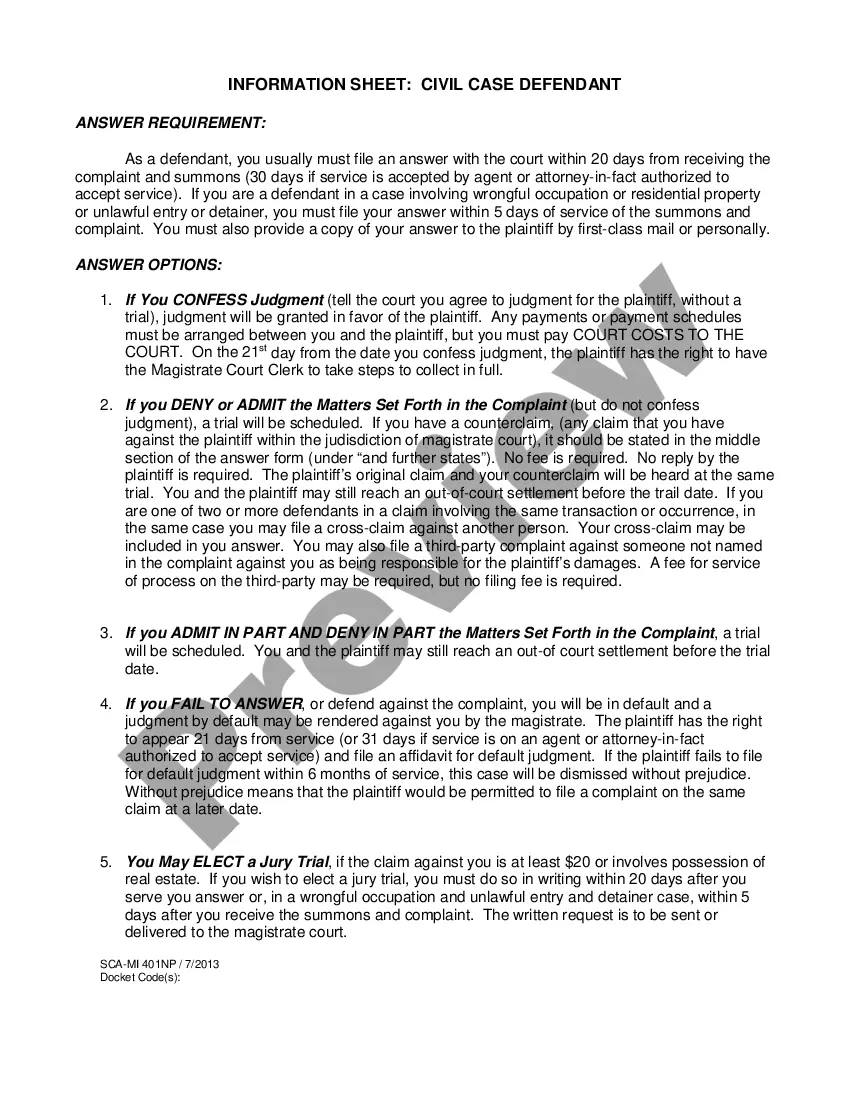
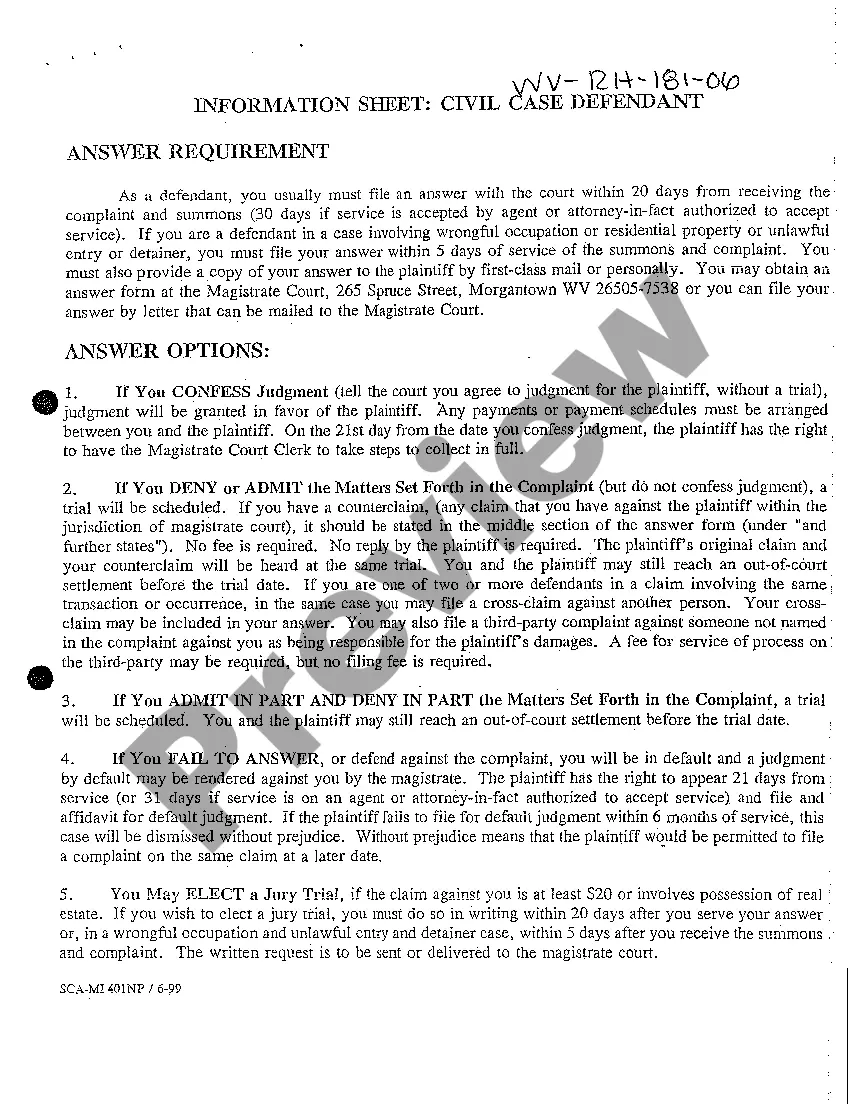
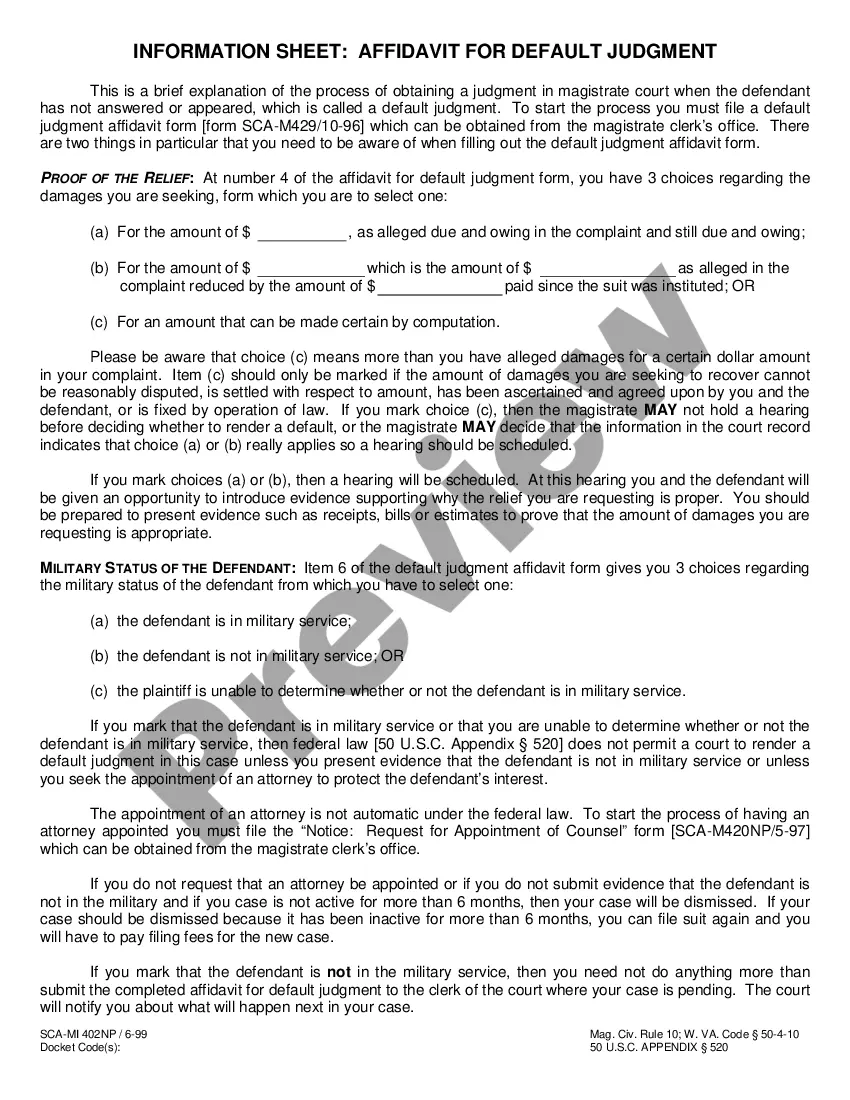
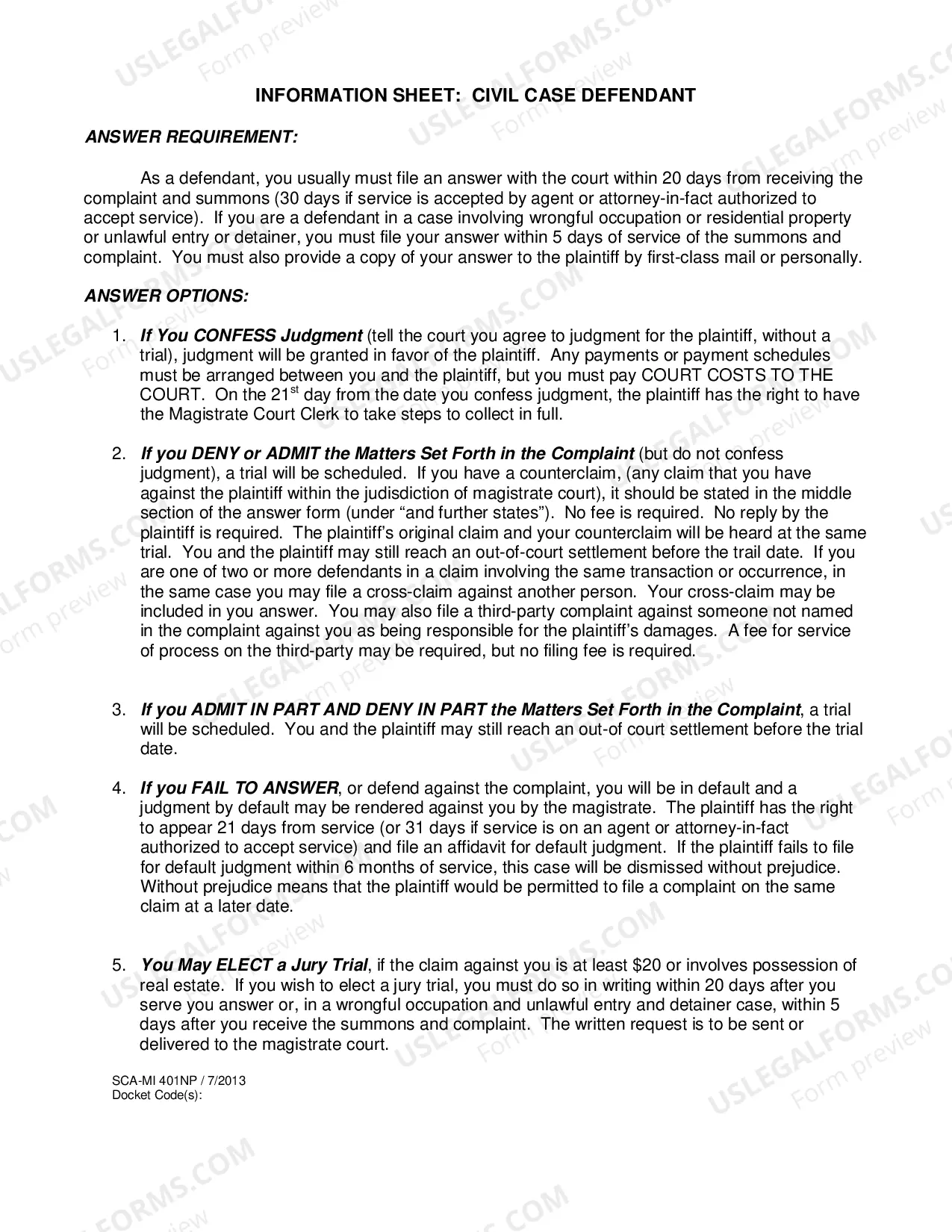
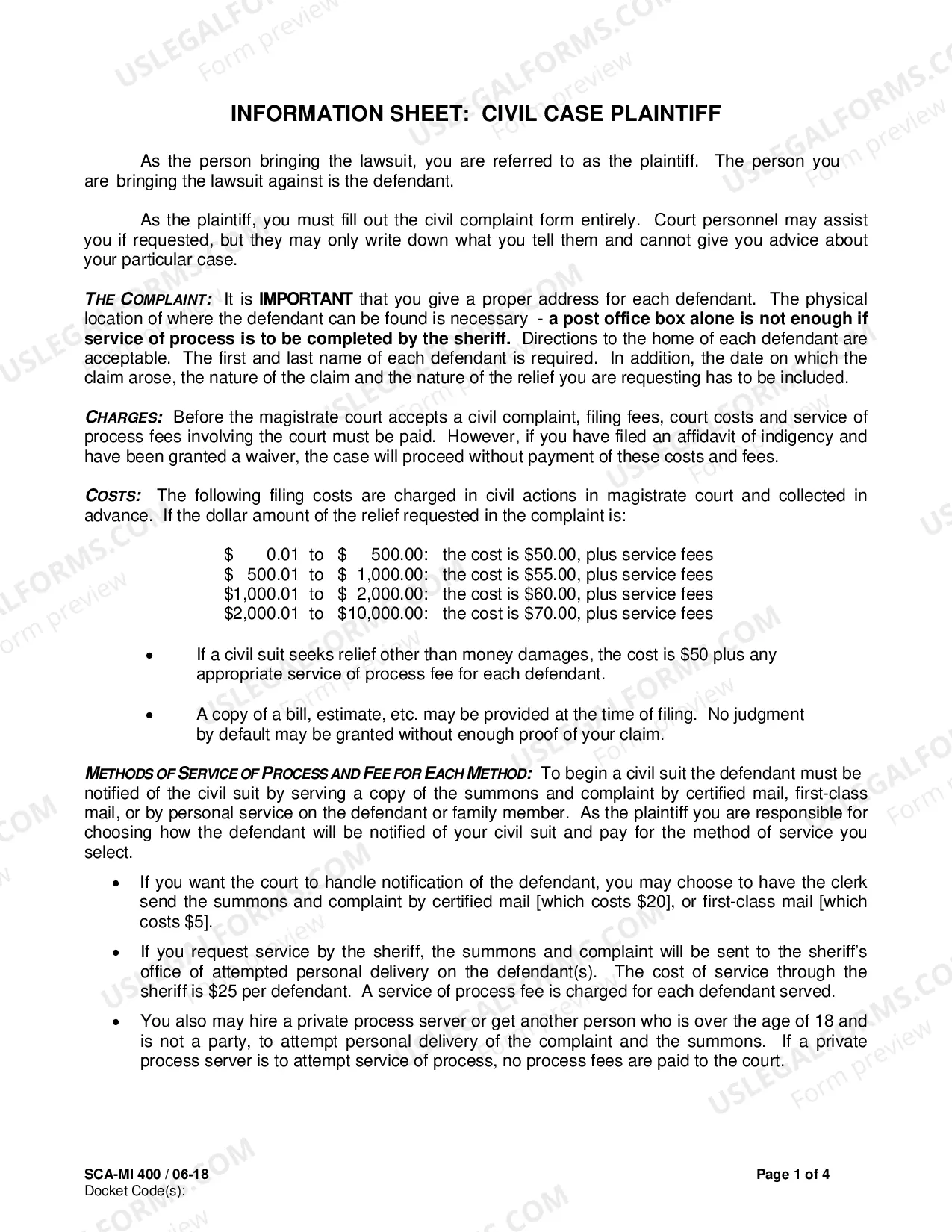
West Virginia Information Sheet for Civil Case Defendant
Does this document require notarization?
Notarization is not commonly needed for this form. However, certain documents or local rules may make it necessary. Our notarization service, powered by Notarize, allows you to finalize it securely online anytime, day or night.
Get your form ready online
Our built-in tools help you complete, sign, share, and store your documents in one place.
Make edits, fill in missing information, and update formatting in US Legal Forms—just like you would in MS Word.
Download a copy, print it, send it by email, or mail it via USPS—whatever works best for your next step.
Sign and collect signatures with our SignNow integration. Send to multiple recipients, set reminders, and more. Go Premium to unlock E-Sign.
If this form requires notarization, complete it online through a secure video call—no need to meet a notary in person or wait for an appointment.
We protect your documents and personal data by following strict security and privacy standards.

Make edits, fill in missing information, and update formatting in US Legal Forms—just like you would in MS Word.

Download a copy, print it, send it by email, or mail it via USPS—whatever works best for your next step.

Sign and collect signatures with our SignNow integration. Send to multiple recipients, set reminders, and more. Go Premium to unlock E-Sign.

If this form requires notarization, complete it online through a secure video call—no need to meet a notary in person or wait for an appointment.

We protect your documents and personal data by following strict security and privacy standards.
Looking for another form?


Form popularity
FAQ
Examples are murder, assault, theft,and drunken driving. Civil law deals with behavior that constitutes an injury to an individual or other private party, such as a corporation. Examples are defamation (including libel and slander), breach of contract, negligence resulting in injury or death, and property damage.
"Civil" cases are the cases in which private citizens (or companies) sue each other in court.General civil cases, usually involving suing someone for money in disputes over things like contracts, damage to property, or someone getting hurt. Family law cases such as divorce, child support, child custody, and adoptions.
Complaint/Petition Usually the first document filed in a lawsuit is the Complaint (or Petition), which provides an outline of the plaintiff's case against the defendant.
Comply With the Relevant Federal, State, and Local Rules. Research Before Writing. Allege Subject Matter Jurisdiction, Personal Jurisdiction, and Venue. Draft Concise and Plain Statement of the Facts. Draft Separate Counts for Each Legal Claim. Plead Facts With Particularity Where Necessary.
Pre-filing stage. During this stage, the dispute arises and the parties gather information, try to negotiate a resolution, and prepare for the possibility of a court case. Pleading stage. Discovery stage. Pre-trial stage. Trial Stage. Post-trial stage.
Step 1: Consult With Representatives. If you are considering going to court, talk to your potential representatives before filing a lawsuit.Step 2: File Complaint / Pleading.Step 3: Discovery.Step 4: Trial.Step 5: Verdict.Step 6: Appeal.
Lawsuits typically proceed through the following steps: pleadings, discovery, trial, and in some instances an appeal, which will follow the trial. A settlement can occur at any time during the pre-trial phases of the case.