West Virginia Agent's Certification as to Validity of Power of Attorney and Agent's Authority
Understanding this form
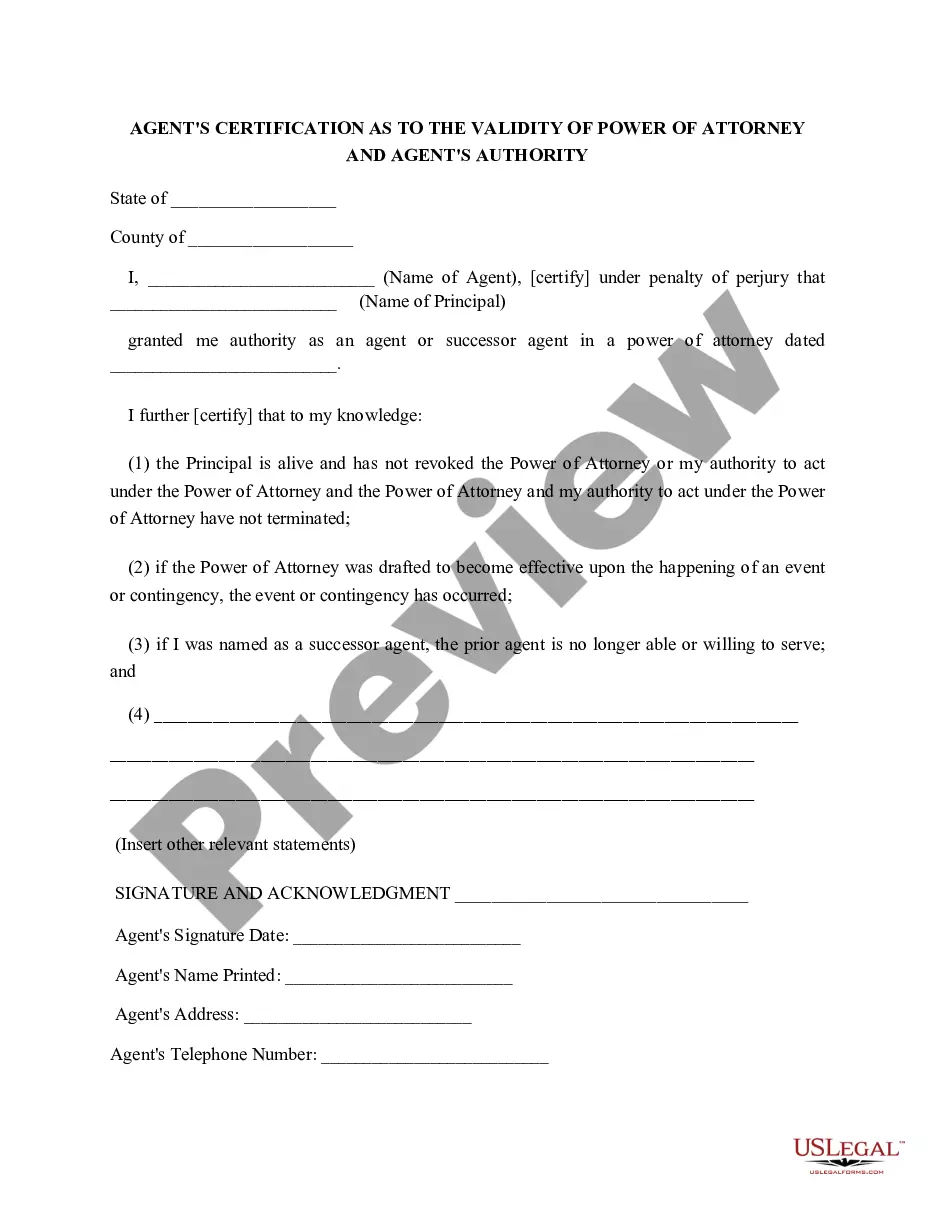
The Agent's Certification as to Validity of Power of Attorney and Agent's Authority is a legal document used to affirm an agent's authority to act on behalf of a principal under a power of attorney. This form ensures that the authority granted is recognized by third parties, confirming that the power of attorney remains valid and that the agent is authorized to perform specific acts. This certification varies from a general power of attorney as it specifically validates the agent's authority at a given time.
Main sections of this form
- Name of the agent and principal
- Date the power of attorney was executed
- Certification of the principal's status (alive and not revoked)
- Confirmation of any events or contingencies that trigger the authority
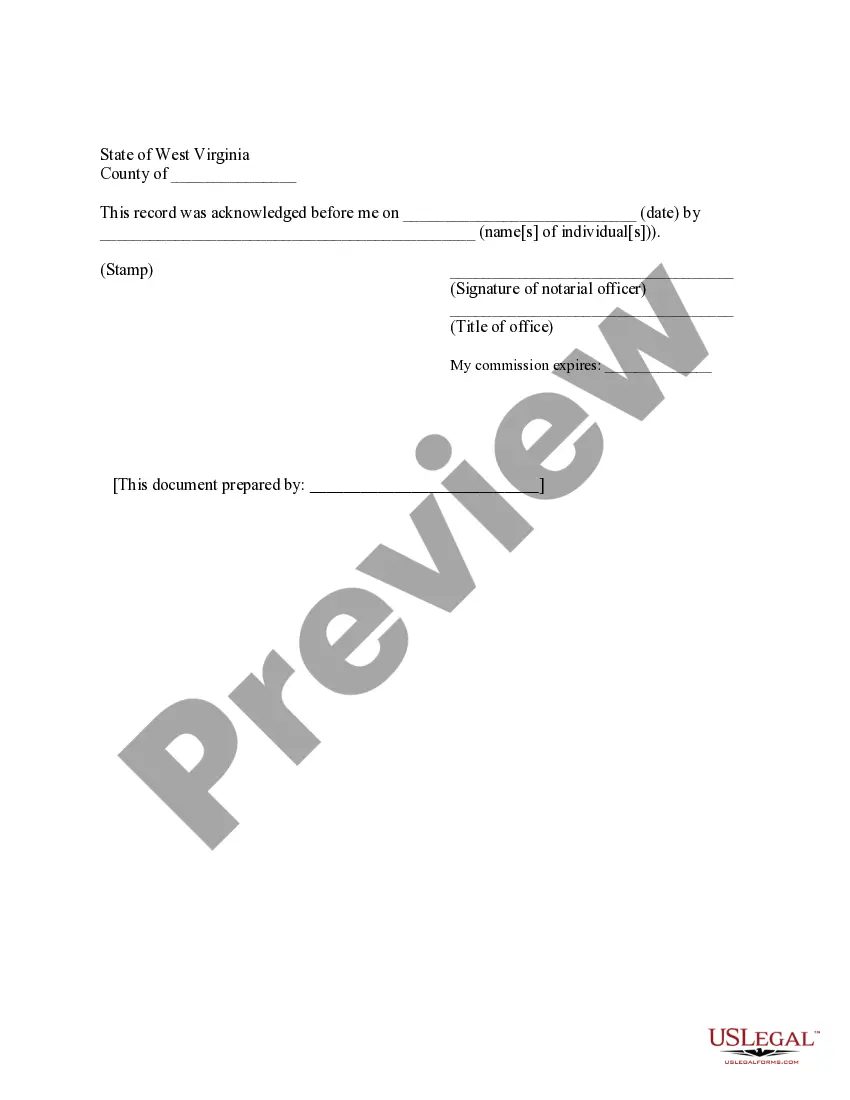
- Signature of the agent and notary acknowledgment
Common use cases
This form is typically used when an agent needs to certify their authority to act for the principal in legal matters, such as financial transactions, property management, or healthcare decisions. This certification is particularly important when dealing with banks, real estate transactions, or medical facilities that require proof of authority before they will allow the agent to act on behalf of the principal.
Who should use this form
- Agents appointed under a power of attorney
- Attorneys-in-fact representing a principal's interests
- Financial institutions and service providers requiring verification of agency authority
Steps to complete this form
- Identify the parties by entering the names of the agent and the principal.
- Specify the date the power of attorney was originally executed.
- Certify the principal's current status and any conditions affecting the power of attorney.
- Sign and date the form as the agent.
- Seek notarization by having a notary public acknowledge the signature.
Notarization requirements for this form
Notarization is required for this form to take effect. Our online notarization service, powered by Notarize, lets you verify and sign documents remotely through an encrypted video session, available 24/7.
Get your form ready online
Our built-in tools help you complete, sign, share, and store your documents in one place.
Make edits, fill in missing information, and update formatting in US Legal Forms—just like you would in MS Word.
Download a copy, print it, send it by email, or mail it via USPS—whatever works best for your next step.
Sign and collect signatures with our SignNow integration. Send to multiple recipients, set reminders, and more. Go Premium to unlock E-Sign.
If this form requires notarization, complete it online through a secure video call—no need to meet a notary in person or wait for an appointment.
We protect your documents and personal data by following strict security and privacy standards.

Make edits, fill in missing information, and update formatting in US Legal Forms—just like you would in MS Word.

Download a copy, print it, send it by email, or mail it via USPS—whatever works best for your next step.

Sign and collect signatures with our SignNow integration. Send to multiple recipients, set reminders, and more. Go Premium to unlock E-Sign.

If this form requires notarization, complete it online through a secure video call—no need to meet a notary in person or wait for an appointment.

We protect your documents and personal data by following strict security and privacy standards.
Common mistakes to avoid
- Failing to provide the name of the principal or agent.
- Incorrectly certifying the status of the power of attorney.
- Not having the form notarized, if required by law.
Benefits of completing this form online
- Convenient access to legal forms whenever you need them.
- Easy to customize for your specific situation.
- Reliably drafted by licensed attorneys to ensure compliance with legal standards.
Main things to remember
- The form certifies an agent's authority derived from a power of attorney.
- It is necessary for validating the agent's actions before third parties.
- Always ensure the form is completed thoroughly and notarized when required.
Looking for another form?
Form popularity
FAQ
The ordinary process for other documents such as letters, forms or general legal documents is that you write 'p. p' before your signature, to demonstrate that you are signing for someone else. This will show the reader that you've signed with the authority of the intended signee.
These certificates are valid for 30 days. As per a recent order of the inspector general of registration, the new rules are applicable to all POAs registered from February 4. By law, POA is not valid once the principal dies.
Signing as a Power of Attorney You can sign the person's name first, then follow it with "by your name under POA." Or, you can sign your own name first, then identify yourself as "attorney-in-fact for the person's name for whom you are attorney-in-fact.
A General Power of Attorney can be witnessed by anyone over the age of 18 years who is not an attorney appointed under the document. (iii) the person is not an attorney under the power of attorney. - a medical practitioner. - not be a care worker; or accommodation provider for the principal.
Springing Power of Attorney. A standard power of attorney gives the agent the authority to act on behalf of the principal in everyday legal and financial matters. The standard power of attorney expires when the principal dies, becomes incapacitated, or revokes the power of attorney in writing.
After the principal's name, write by and then sign your own name. Under or after the signature line, indicate your status as POA by including any of the following identifiers: as POA, as Agent, as Attorney in Fact or as Power of Attorney.
After the principal's name, write by and then sign your own name. Under or after the signature line, indicate your status as POA by including any of the following identifiers: as POA, as Agent, as Attorney in Fact or as Power of Attorney.
Another important thing to note here is that a PoA remains valid only till the life of the principal. Within their lifetime also, one can revoke the PoA. An SPA gets revokes on its own as soon as the specific transaction for which it was executed is completed.
Most states do not require a POA to be in writing in order to be effective, except in specific cases established by statute.As a result, most POAs can be executed electronically with or without authorization under the eCommerce laws, since there is no writing or signature requirement to begin with.