West Virginia Warranty Deed to Child Reserving a Life Estate in the Parents
Overview of this form
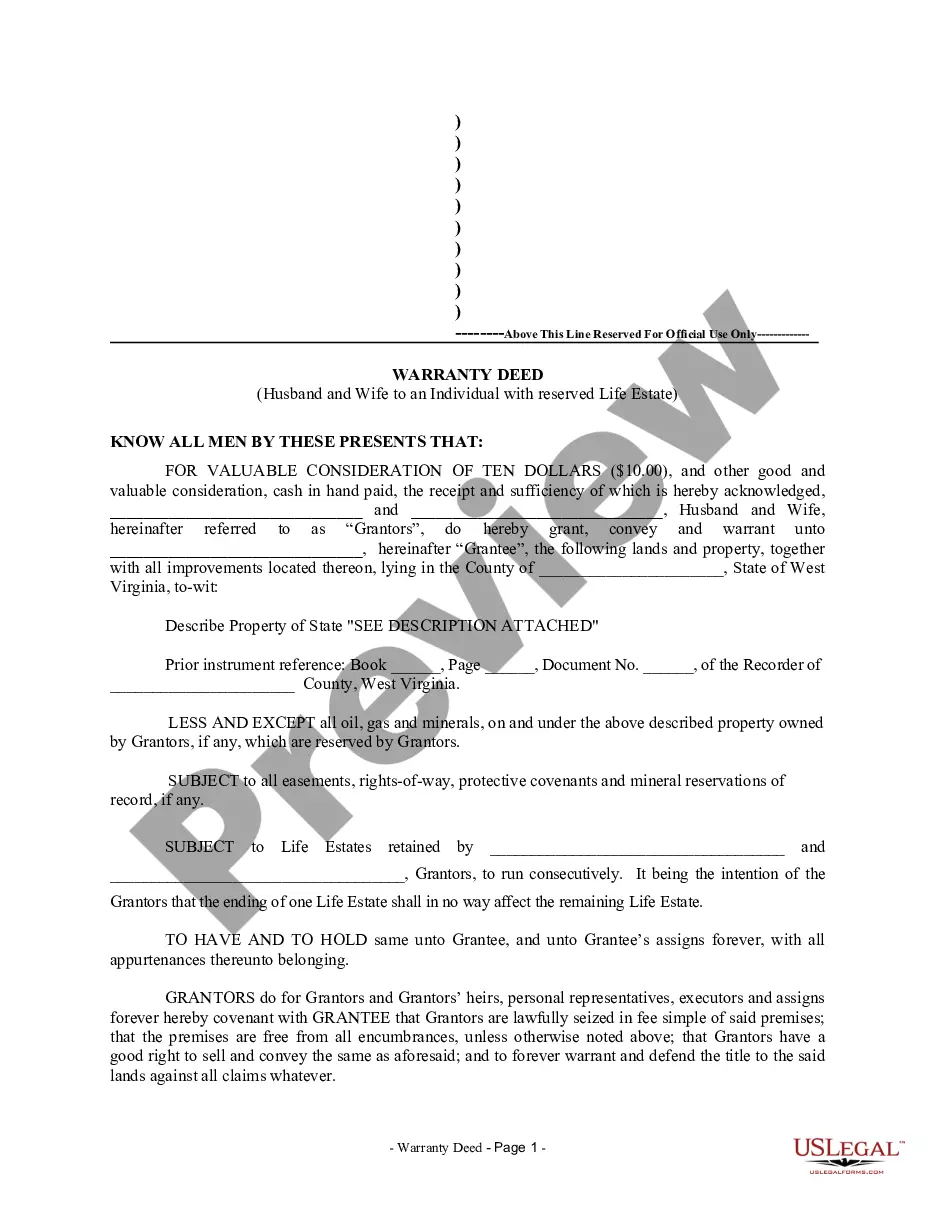
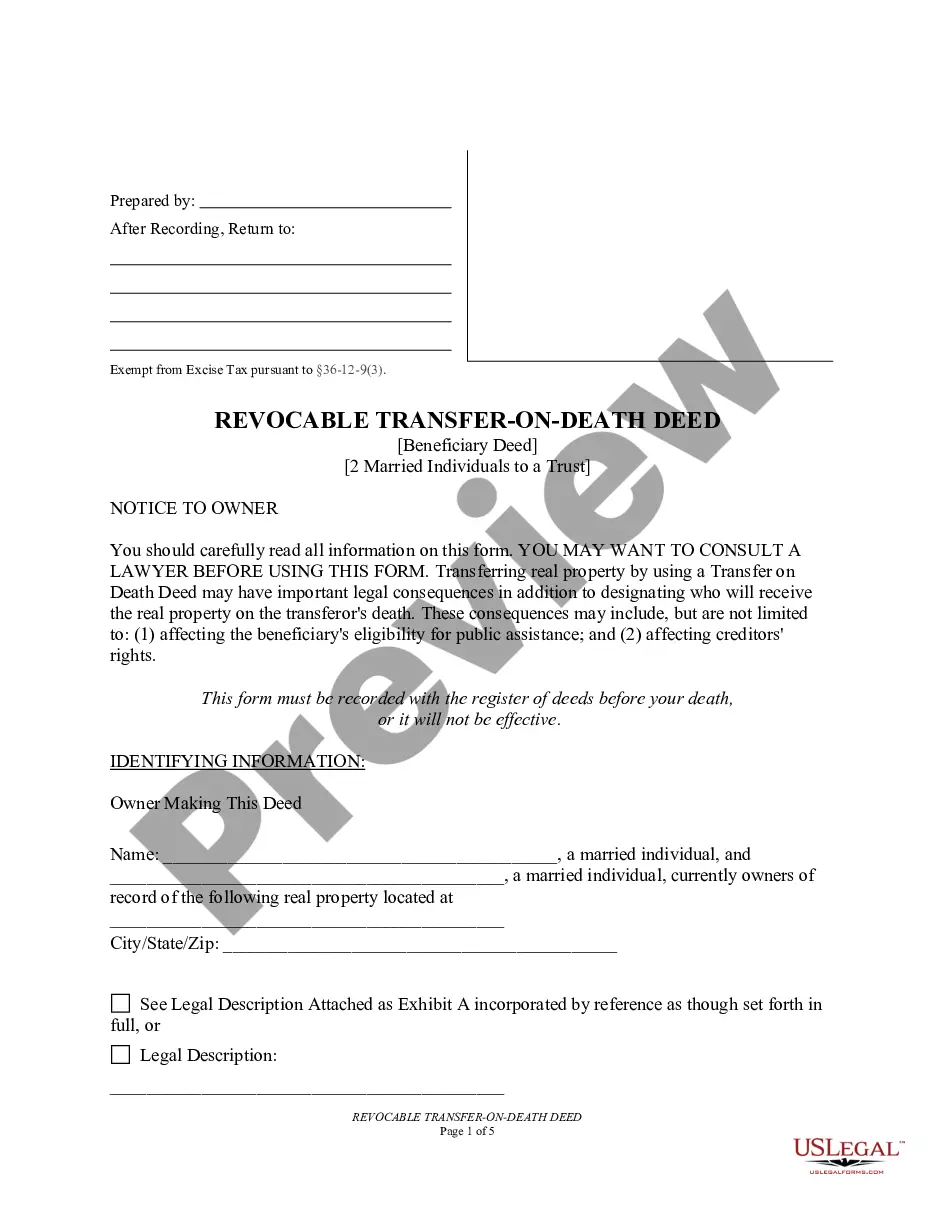
The Warranty Deed to Child Reserving a Life Estate in the Parents is a legal document that allows a parent or parents to transfer ownership of property to their child while retaining a life estate in that property. This means the parents can continue to live in or use the property for as long as they are alive, even after the legal title is transferred to the child. This form is distinct from other deeds as it specifically includes the reservation of a life estate, providing both immediate and ongoing rights to the grantor(s).
Key components of this form
- Identification of the grantor(s) and grantee.
- Property description including any improvements and reservations.
- Reservation of life estate allowing grantor(s) to retain rights during their lifetime.
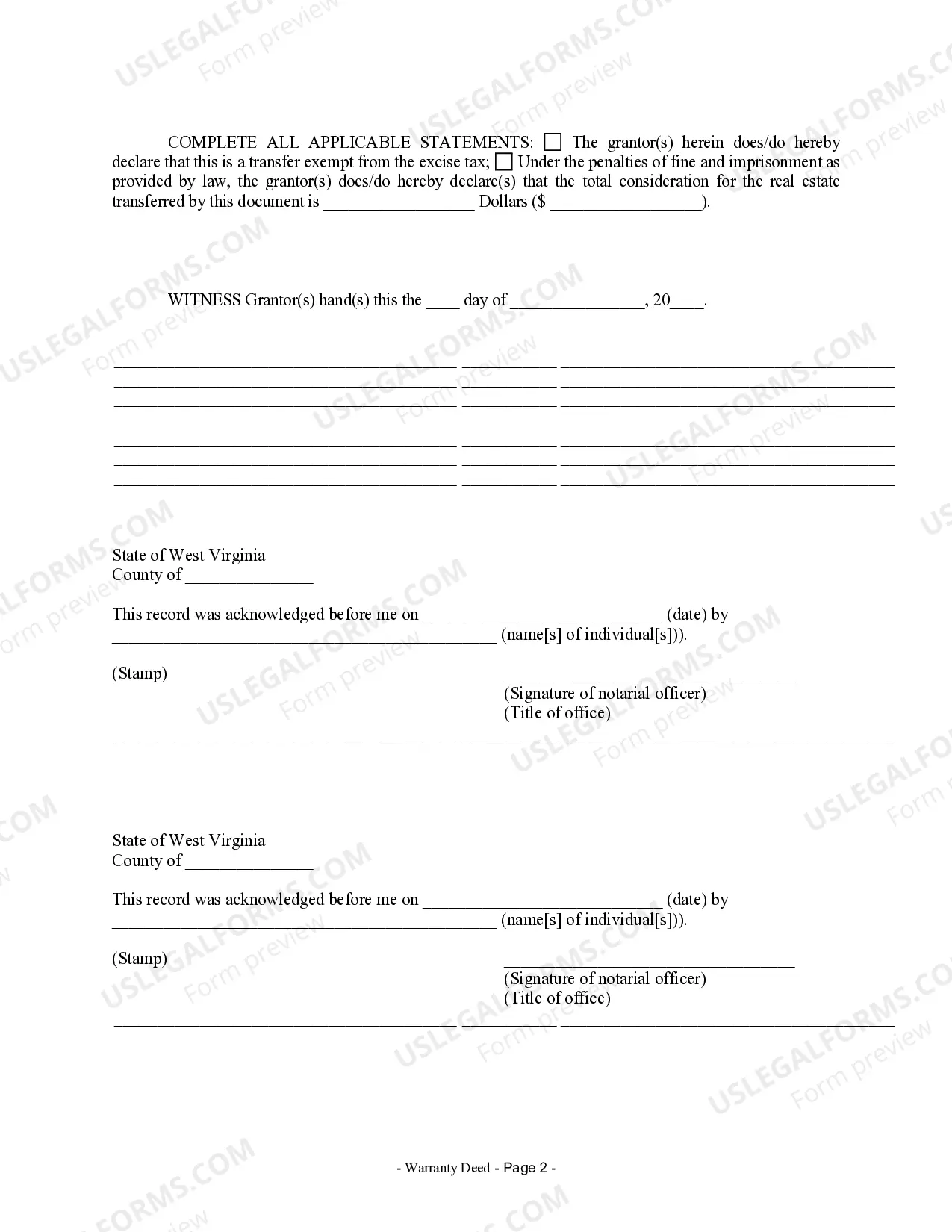
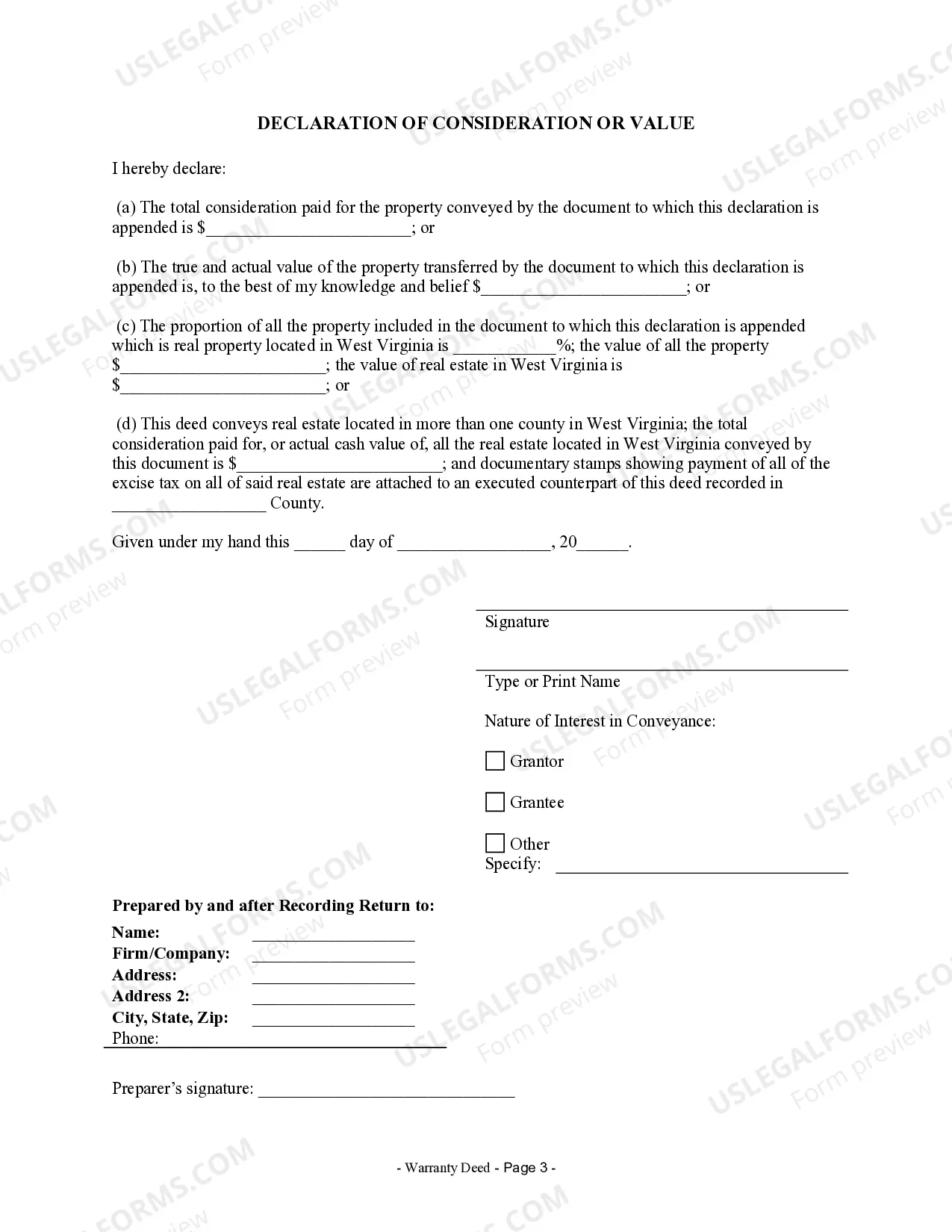
- Declarations of the transfer's consideration or value.
- Signatures and notarization section for legal acknowledgment.
When this form is needed
This form is useful when parents wish to transfer real estate to their child but also want to ensure they retain the right to live in the property during their lifetime. It is applicable in situations such as estate planning, simplifying property transfer to heirs, or avoiding probate while maintaining control over the property.
Who can use this document
- Parents wanting to convey property to their child while maintaining a life estate.
- Individuals managing estate planning and intergenerational property transfers.
- Property owners who wish to avoid probate for real estate assets.
Completing this form step by step
- Identify the parties involved as grantor(s) and grantee.
- Clearly describe the property being transferred.
- Specify any retained rights such as the life estate.
- Enter the total consideration or value of the property, if applicable.
- Obtain signatures from all relevant parties and ensure notarization if required.
Does this form need to be notarized?
To make this form legally binding, it must be notarized. Our online notarization service, powered by Notarize, lets you verify and sign documents remotely through an encrypted video session.
Common mistakes
- Failing to correctly identify all parties involved in the transfer.
- Omitting the legal description of the property.
- Not clearly stating the terms of the life estate reservation.
- Neglecting to have the document notarized where required.
Why use this form online
- Convenient access to legal forms from anywhere at any time.
- Editable templates allow for easy customization according to specific needs.
- Secured access to professionally drafted legal documents that are compliant with current laws.
Legal use & context
- This warranty deed ensures that the transfer of property adheres to legal standards.
- Reserving a life estate can have potential tax implications and should be used carefully as part of estate planning.
- Legal enforceability depends on proper execution and adherence to state laws governing property transfers.
What to keep in mind
- The Warranty Deed to Child Reserving a Life Estate ensures property transfer while allowing parents to retain usage rights.
- Correctly completing the form is crucial to avoid legal issues later on.
- Using this form can simplify the estate planning process and help avoid probate.
Form popularity
FAQ
When a person dies, beneficiaries might learn that the decedent made a deed that conflicts with the specific wording in his will. Generally, a deed will override the will. However, which legal document prevails also depends on state property laws and whether the state has adopted the Uniform Probate Code.
The person holding the life estate -- the life tenant -- possesses the property during his or her life. The other owner -- the remainderman -- has a current ownership interest but cannot take possession until the death of the life estate holder.
A life estate deed involves the transfer of ownership from your name to someone else. Although you are no longer the owner of the property, you have the legal right to reside in the property for as long as you live.
A life estate deed permits the property owner to have full use of their property until their death, at which point the ownership of the property is automatically transferred to the beneficiary.
A life estate deed allows you to transfer property while reserving an interest during your lifetime or during the lifetime of someone else. Once the person who holds the life estate passes away, the Grantee fully owns the property.
A life estate gives a person the right to live on or use property during the life estate owner's lifetime or until his or her death. Someone else is the full owner of the property. The person only has an ownership interest in the property as long as he or she is alive.
The two types of life estates are the conventional and the legal life estate. the grantee, the life tenant. Following the termination of the estate, rights pass to a remainderman or revert to the previous owner.
Reservation of the present interest allows the owner to retain ownership for a period of time measured by the life of one or more individuals, by a term of years, or by a combination of the two.