Wisconsin Last Will and Testament for Domestic Partner with Adult and Minor Children
Understanding this form
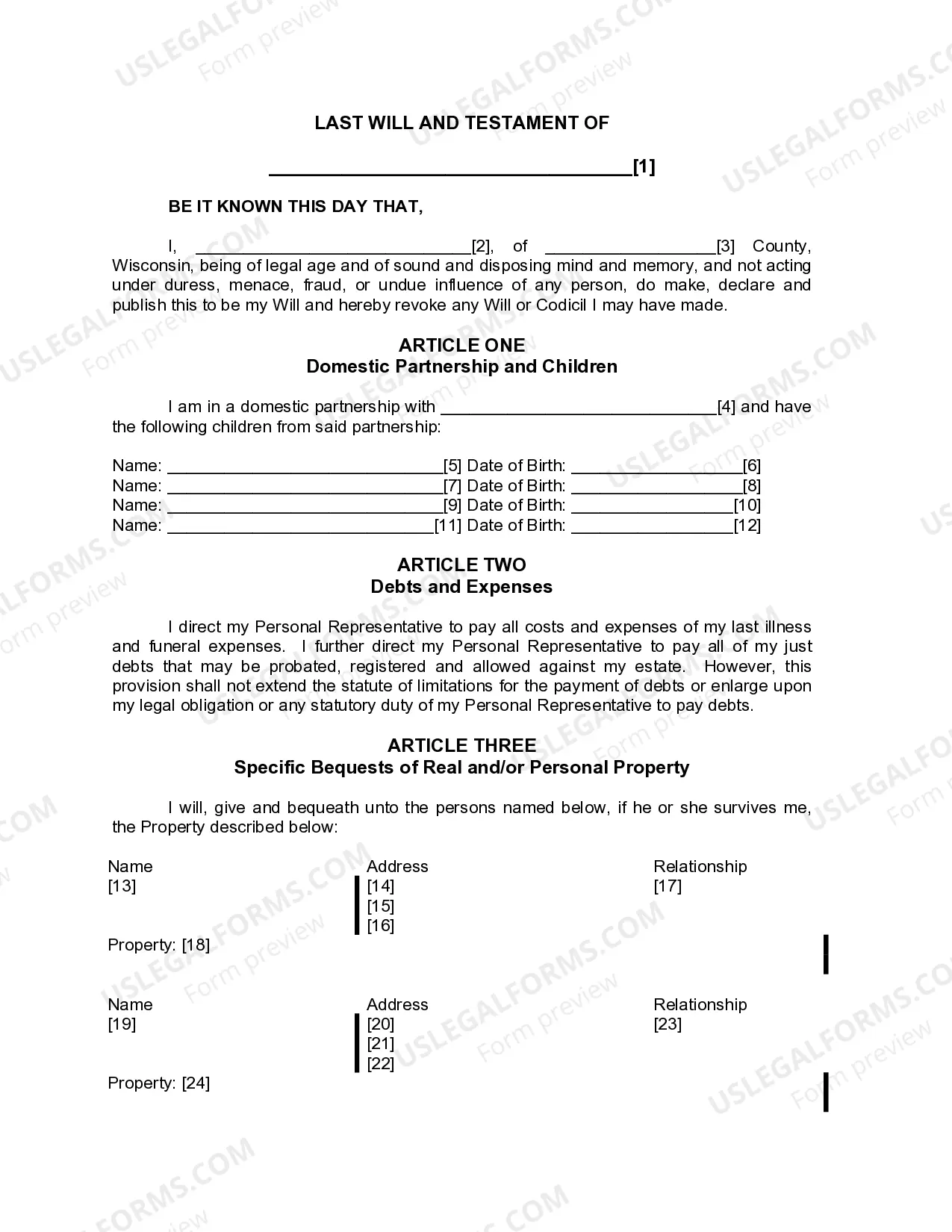
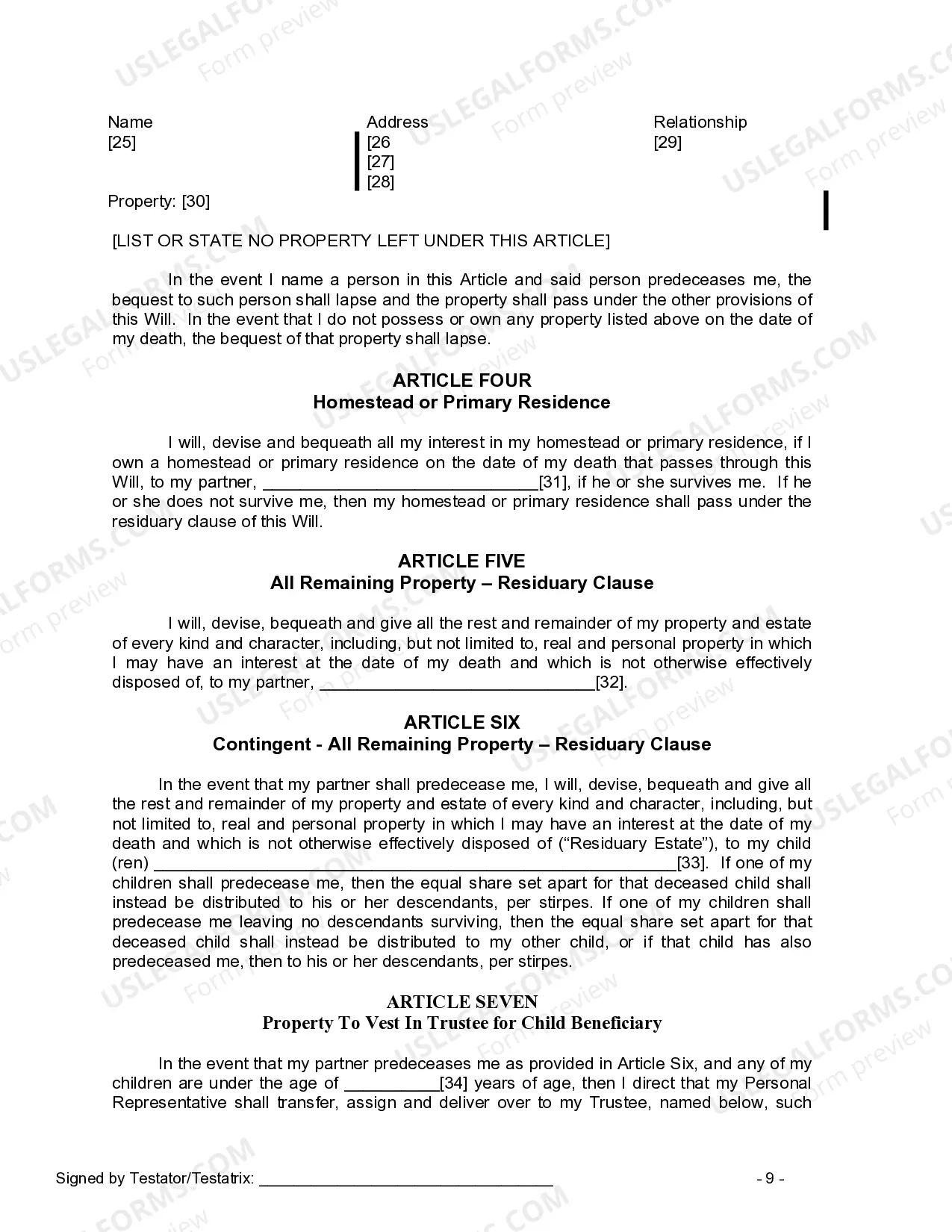
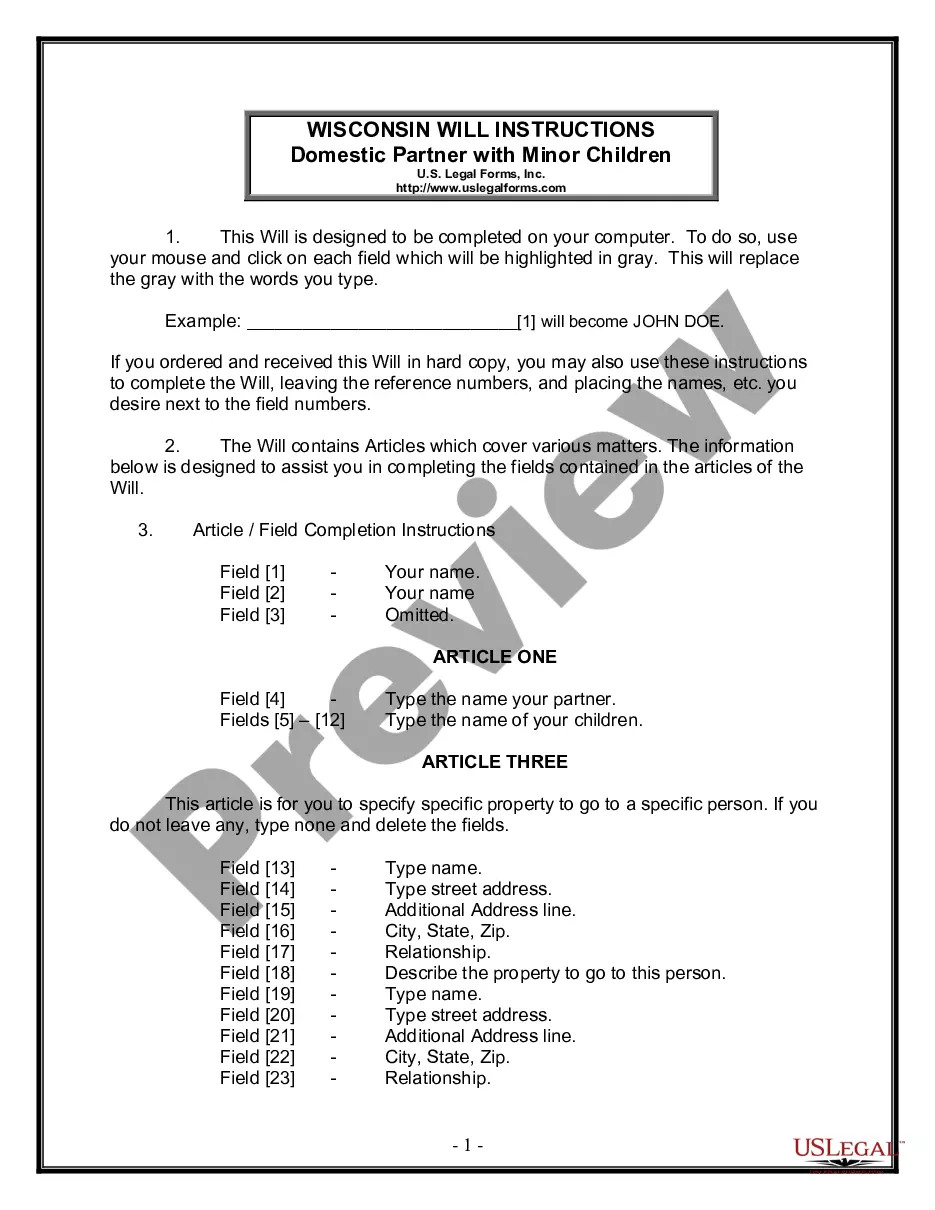
This Last Will and Testament for Domestic Partner with Adult and Minor Children is a critical legal document that outlines how a domestic partner wishes to distribute their property after their death. Unlike a standard will, this form specifically addresses the unique circumstances of partners with both adult and minor children, ensuring that all beneficiaries are considered. It includes provisions for appointing a personal representative, designating beneficiaries, and establishing trusts for minor children, all tailored to accommodate the partners involved.
Form components explained
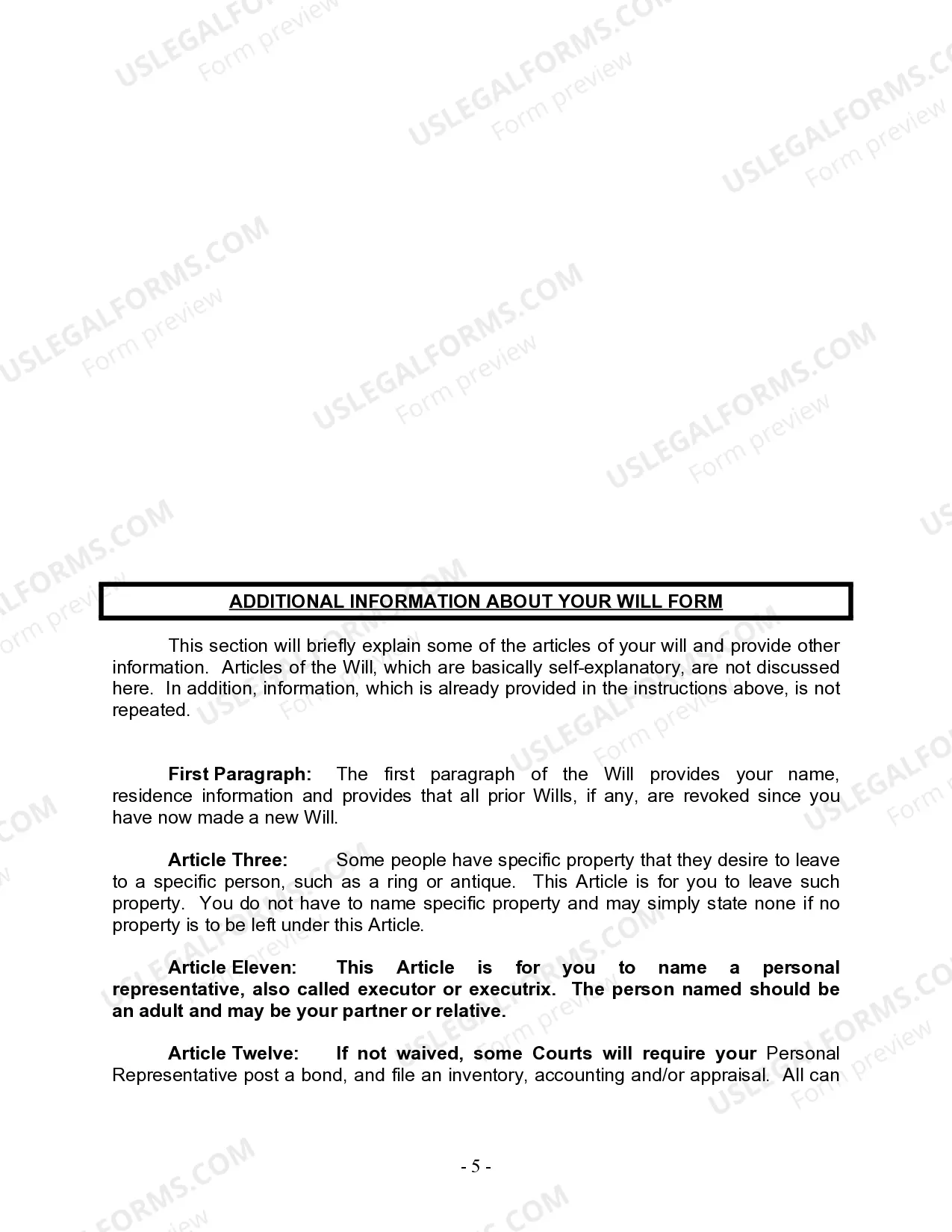
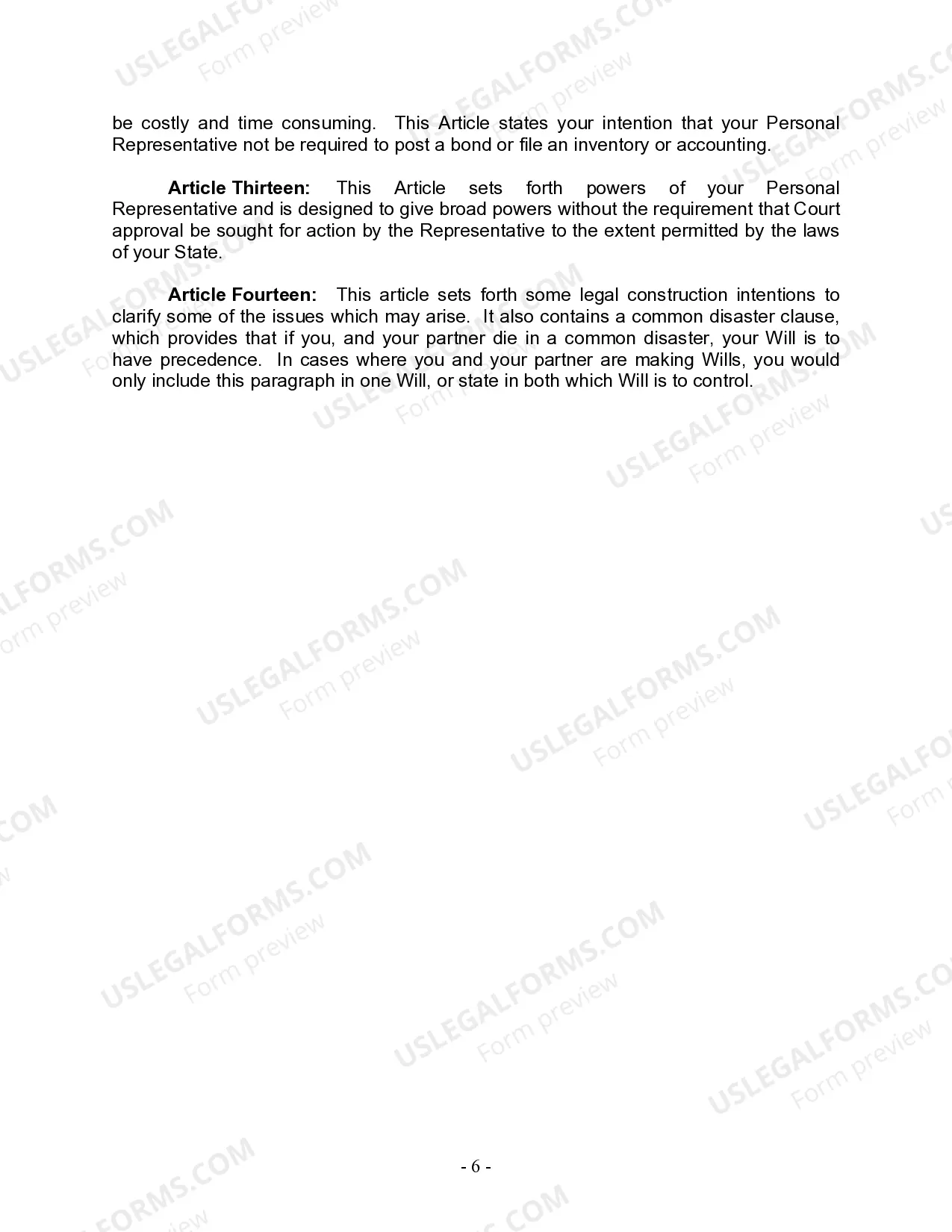
- Appointment of a personal representative or executor.
- Designation of beneficiaries, including provisions for both adult and minor children.
- Creation of trusts for the benefit of minor children.
- Specified distribution of property and provisions for homestead.
- Provisions outlining the appointment of a guardian for minor children.



Common use cases
This form is needed when a domestic partner wants to ensure that their wishes regarding property distribution and guardianship of their children are legally documented. It is particularly useful if both partners have children, ensuring that both adult and minor children are considered in estate planning. Use this form to avoid potential disputes among family members and to provide clear directions on how your estate should be handled after your passing.
Intended users of this form
- Domestic partners who want to create a legally binding document regarding their estate.
- Couples with both adult and minor children looking for tailored distributions and provisions.
- Individuals interested in setting up trusts for their minor children.
How to prepare this document
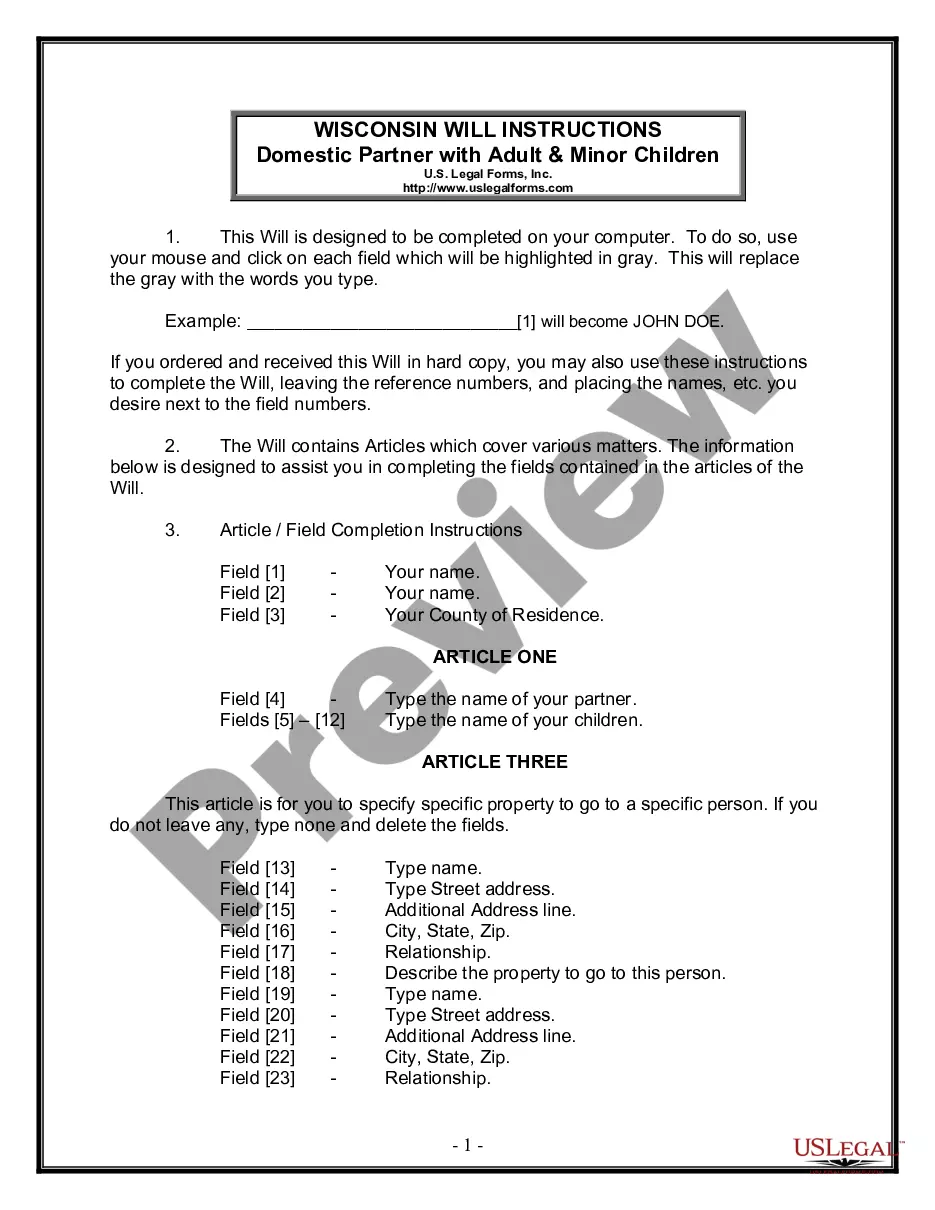
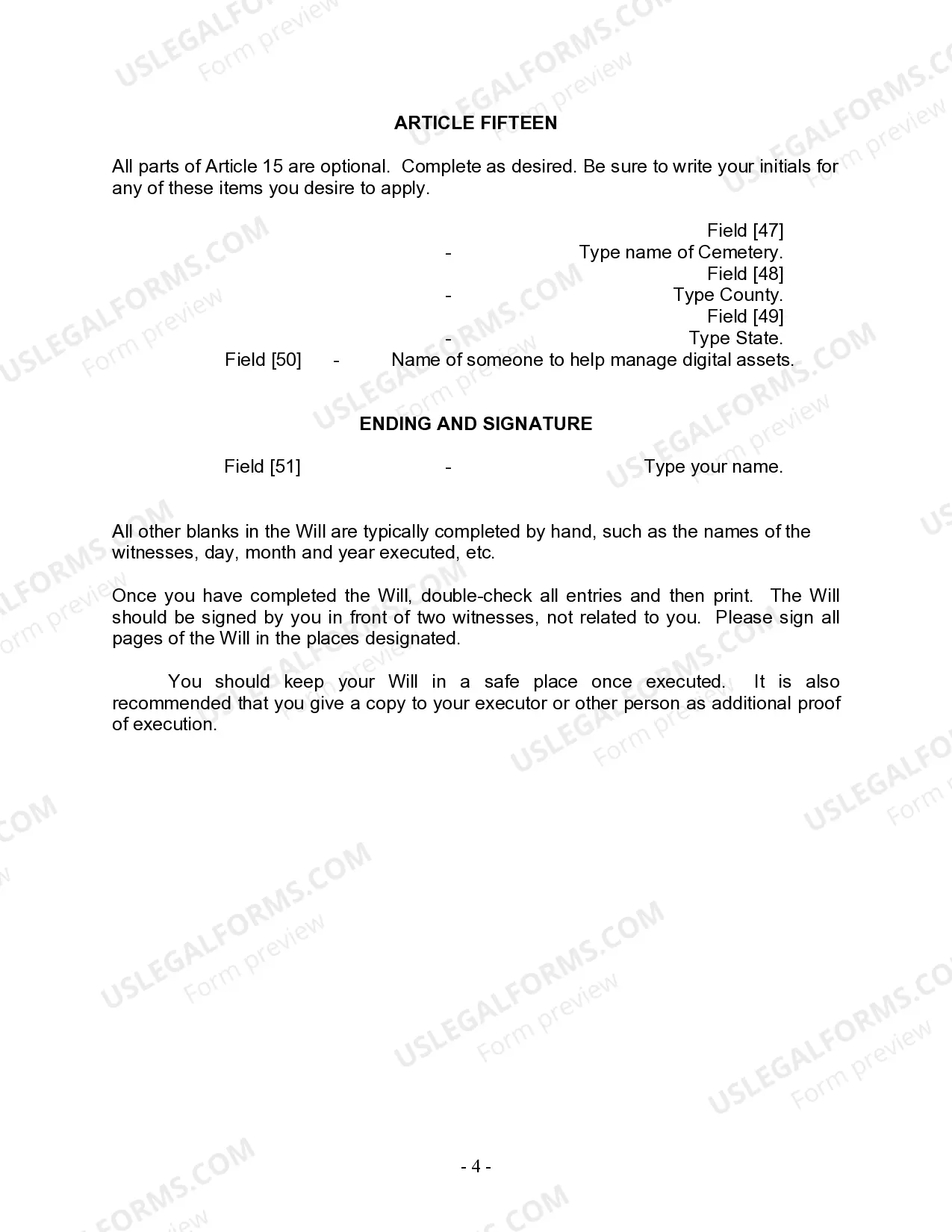
- Identify the parties: Enter your name, your partner's name, and the names of your children.
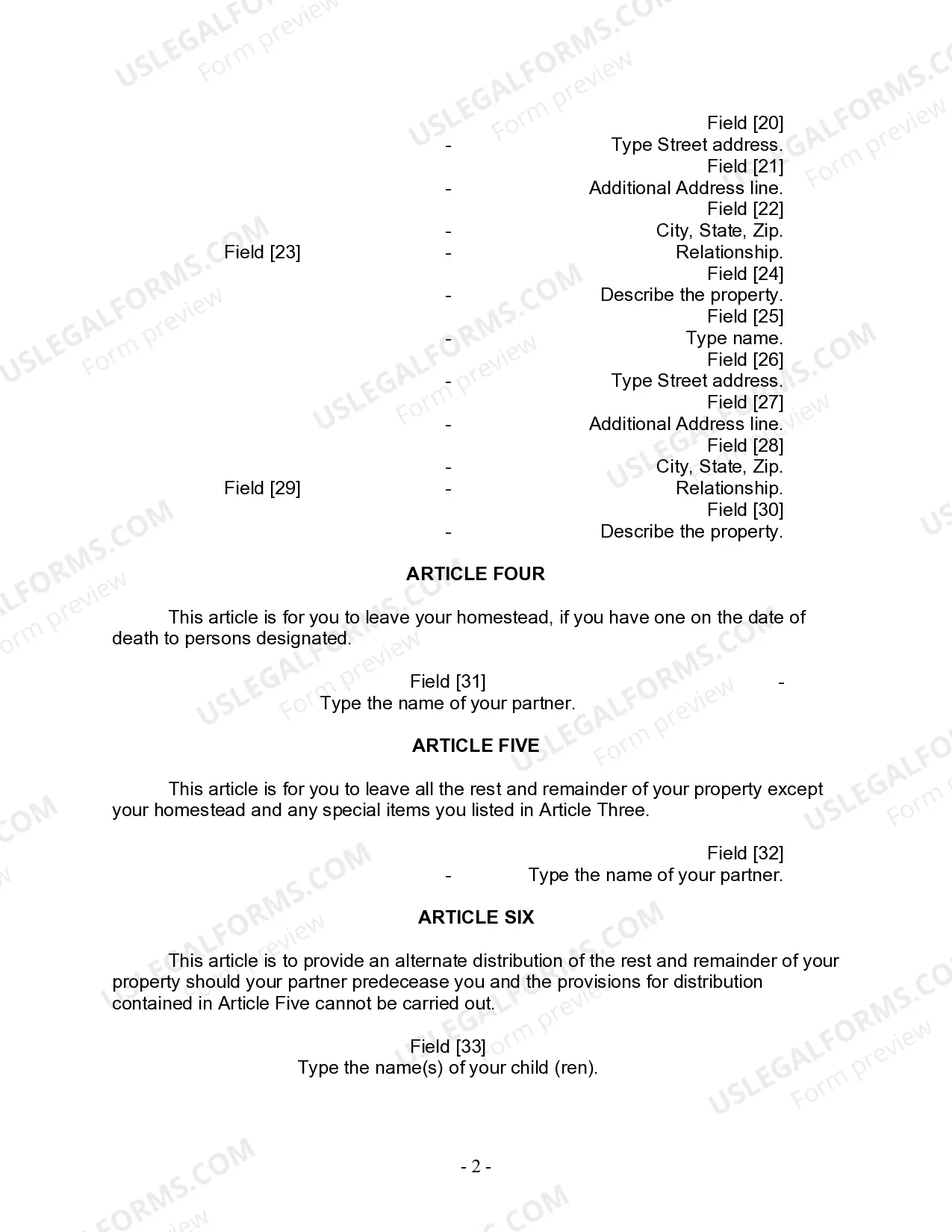
- Designate property: Specify any specific items or properties you want to leave to particular individuals.
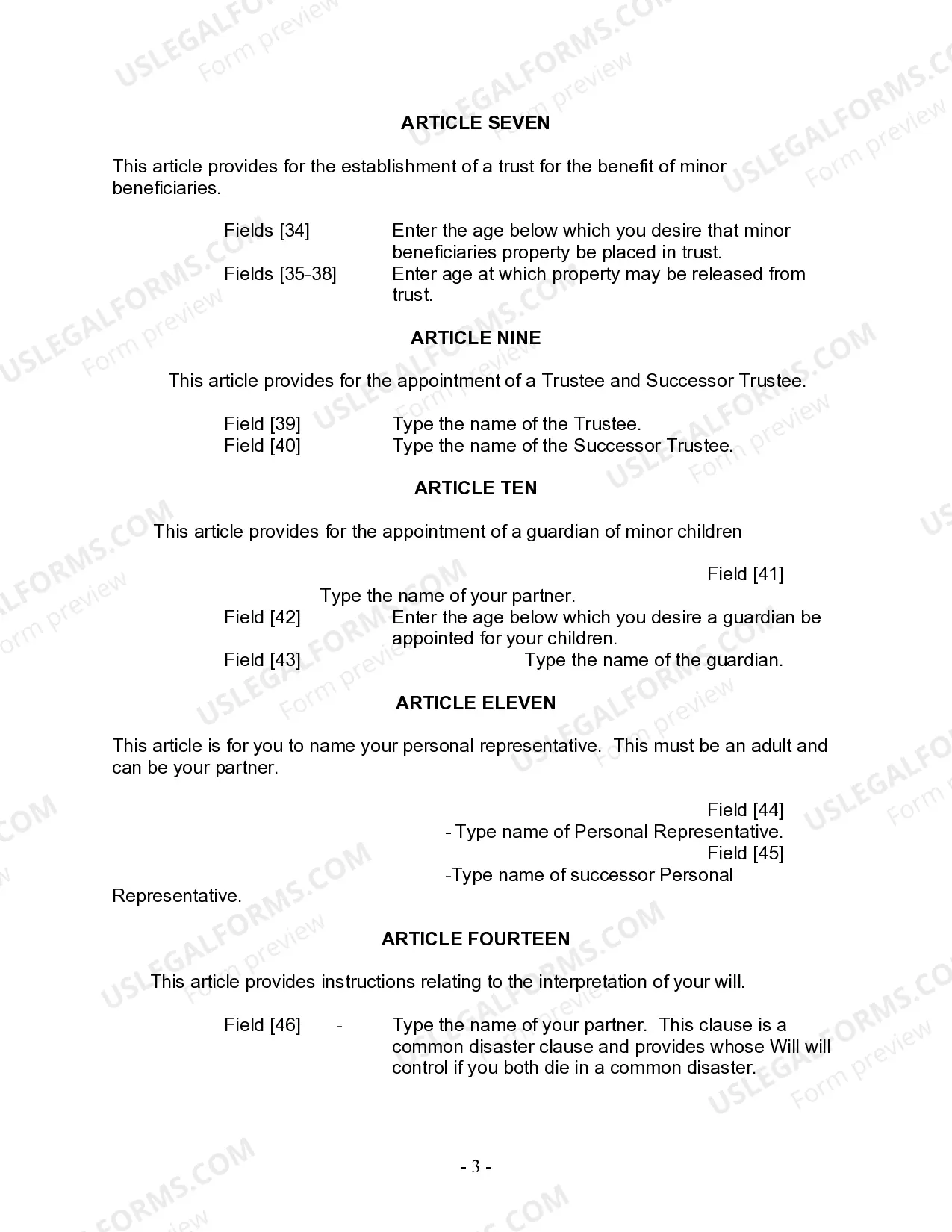
- Set up a trust: Determine the age at which minor beneficiaries will receive their inheritance and appoint a trustee.
- Appoint guardians: Clearly state who should take care of your minor children in the event of your death.
- Sign and witness: Sign the will in front of two unrelated witnesses and ensure they also sign the document.
Is notarization required?
This form does not typically require notarization unless specified by local law. However, if your state has adopted a self-proving affidavit, this will need to be signed in the presence of a notary public along with your witnesses to be legally valid.
Get your form ready online
Our built-in tools help you complete, sign, share, and store your documents in one place.
Make edits, fill in missing information, and update formatting in US Legal Forms—just like you would in MS Word.
Download a copy, print it, send it by email, or mail it via USPS—whatever works best for your next step.
Sign and collect signatures with our SignNow integration. Send to multiple recipients, set reminders, and more. Go Premium to unlock E-Sign.
If this form requires notarization, complete it online through a secure video call—no need to meet a notary in person or wait for an appointment.
We protect your documents and personal data by following strict security and privacy standards.

Make edits, fill in missing information, and update formatting in US Legal Forms—just like you would in MS Word.

Download a copy, print it, send it by email, or mail it via USPS—whatever works best for your next step.

Sign and collect signatures with our SignNow integration. Send to multiple recipients, set reminders, and more. Go Premium to unlock E-Sign.

If this form requires notarization, complete it online through a secure video call—no need to meet a notary in person or wait for an appointment.

We protect your documents and personal data by following strict security and privacy standards.
Mistakes to watch out for
- Failing to sign the document in the presence of witnesses.
- Omitting important details such as the full names and relationships of beneficiaries.
- Neglecting to specify how debts and expenses will be handled.
- Not updating the will after major life events, such as the birth of a new child or changes in partnership status.
Advantages of online completion
- Convenience: Complete the form from home at your own pace.
- Editability: Easily modify fields until you have the exact wording you want.
- Access to legal expertise: Documents are drafted by licensed attorneys, ensuring they meet legal standards.
- Cost-effective: Save on legal fees by using a ready-to-complete form.
Legal use & context
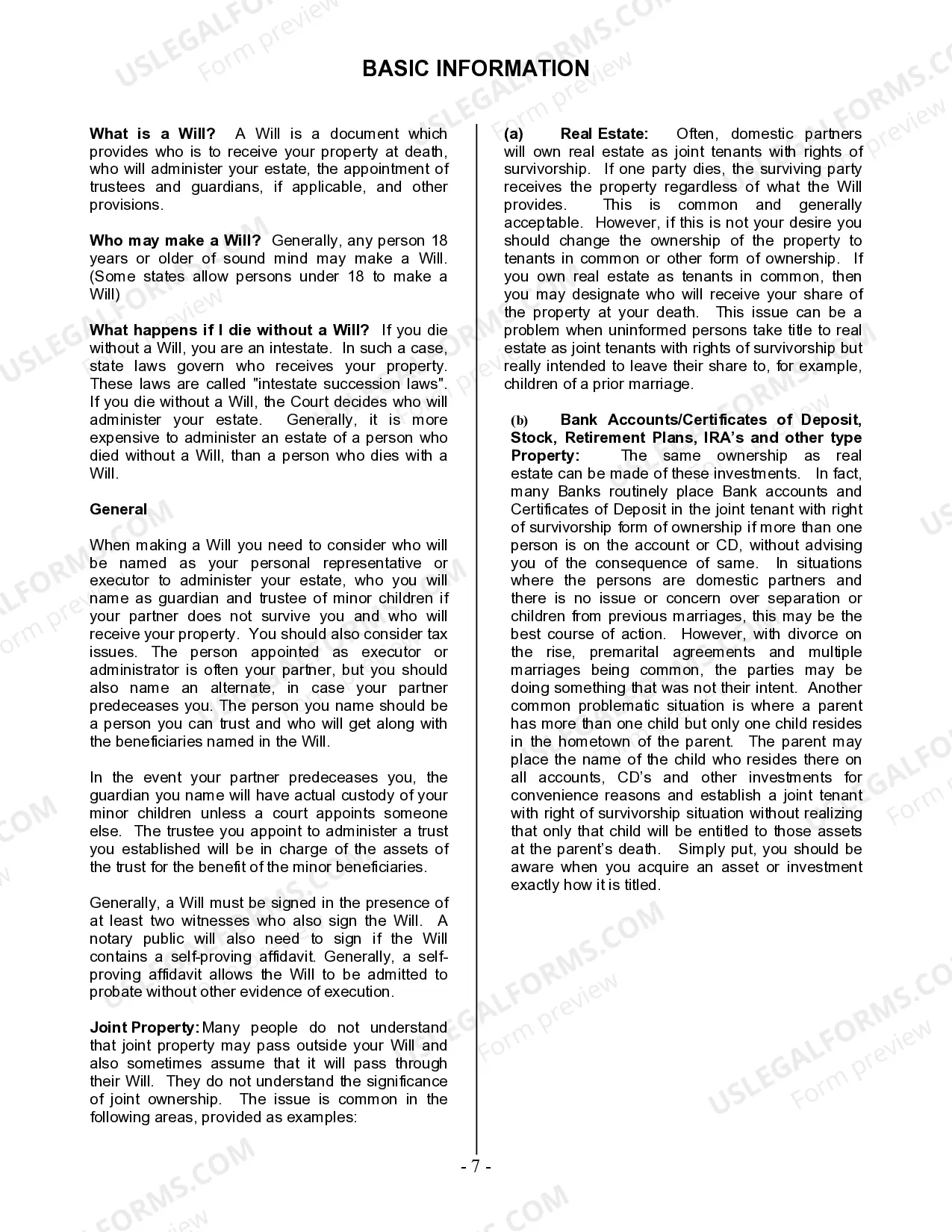
- A will effectively serves as a guide for probate courts regarding the distribution of your assets.
- It is crucial for ensuring that your wishes are followed regarding guardianship of minor children.
- This document must comply with state laws to be enforceable, making it essential to use a state-specific template.
Key takeaways
- A Last Will and Testament is essential for outlining how your property should be distributed after death.
- Using a tailored form for domestic partners ensures appropriate provisions for partners and children.
- Proper execution involves signing in front of witnesses, and in some cases, notarization is advisable.
- Review and update your will regularly to reflect any life changes.
Looking for another form?
Form popularity
FAQ
Value your estate. Get an idea of what your estate will be worth by drawing up a list of your assets and debts. Decide how you want to divide your estate. You may decide to leave a donation to a charity. Choose your executors. Write your will. Sign your will.
In most situations, a will template is an easy and inexpensive way to make sure your wishes are known and carried out. Most people can get everything they need by using a will template, with little cost or hassle.
Age: The testator must be at least 18 years old. Capacity: The testator must be of sound mind. Signature: The will must be signed by the testator or by someone else in the testator's name in his conscious presence, by his direction.
No. You can make your own will in Wisconsin, using Nolo's do-it-yourself will software or online will programs. However, you may want to consult a lawyer in some situations. For example, if you think that your will might be contested or if you want to disinherit your spouse, you should talk with an attorney.
Include personal identifying information. Include a statement about your age and mental status. Designate an executor. Decide who will take care of your children. Choose your beneficiaries. List your funeral details. Sign and date your Last Will and Testament.
Bank accounts. Brokerage or investment accounts. Retirement accounts and pension plans. A life insurance policy.
Probate matters in Wisconsin are handled at the local circuit court level. If there is a will, it must be filed with the court, even if probate isn't needed to distribute the decedent's property.
Make your will self-proving means the court will accept it without further verification from the witnesses who signed it. A notarized affidavit proving who you are and all parties knew they were signing makes your last will and testament self-proving. This can speed up the probate process significantly.
Create the initial document. Start by titling the document Last Will and Testament" and including your full legal name and address. Designate an executor. Appoint a guardian. Name the beneficiaries. Designate the assets. Ask witnesses to sign your will. Store your will in a safe place.