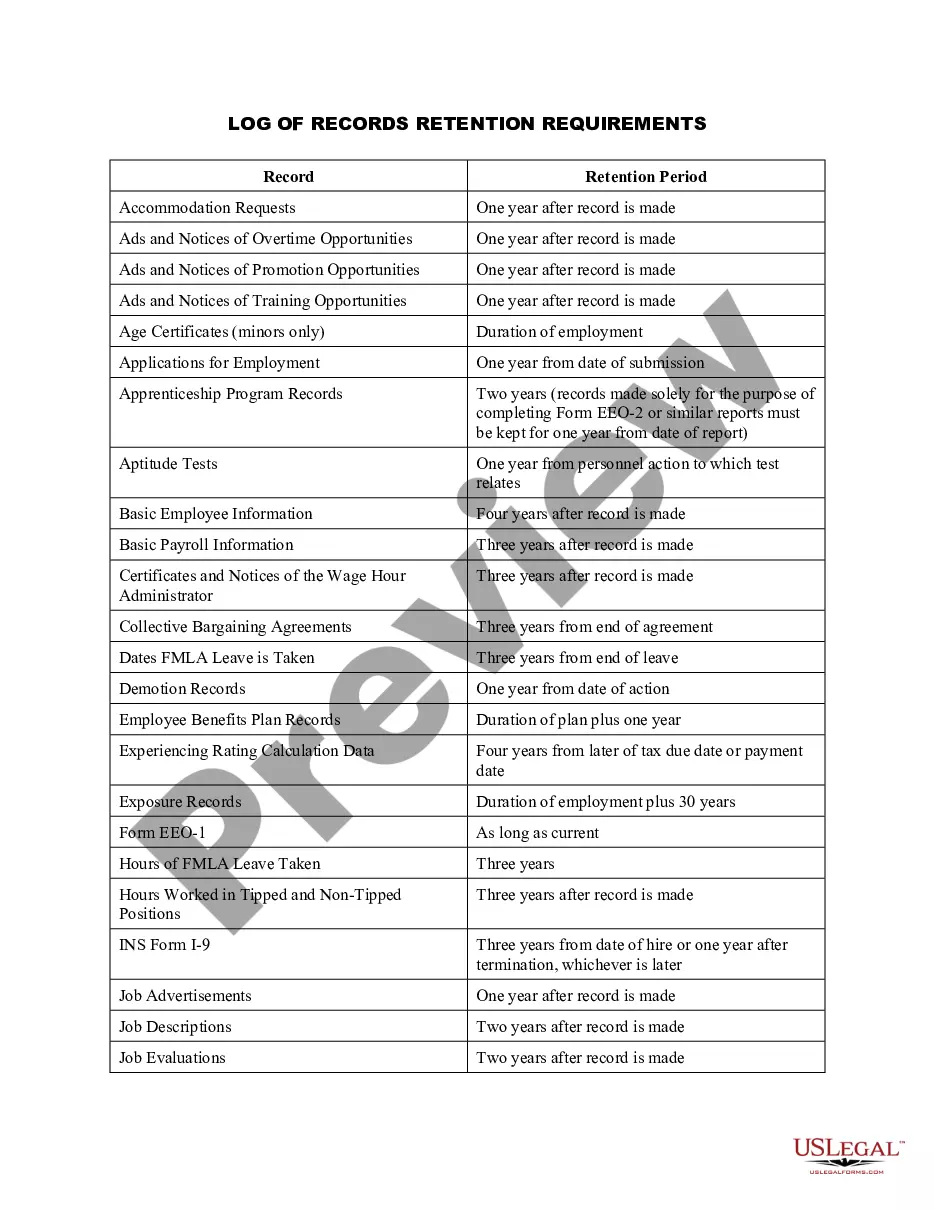
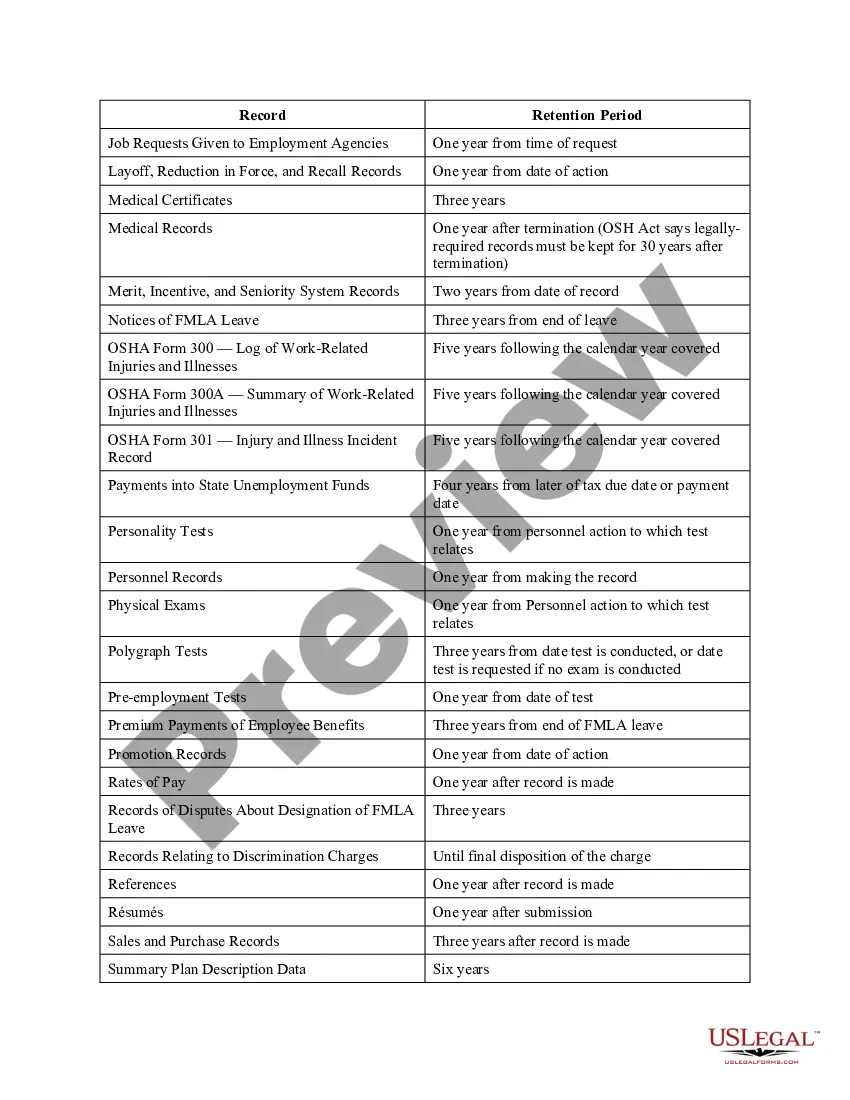
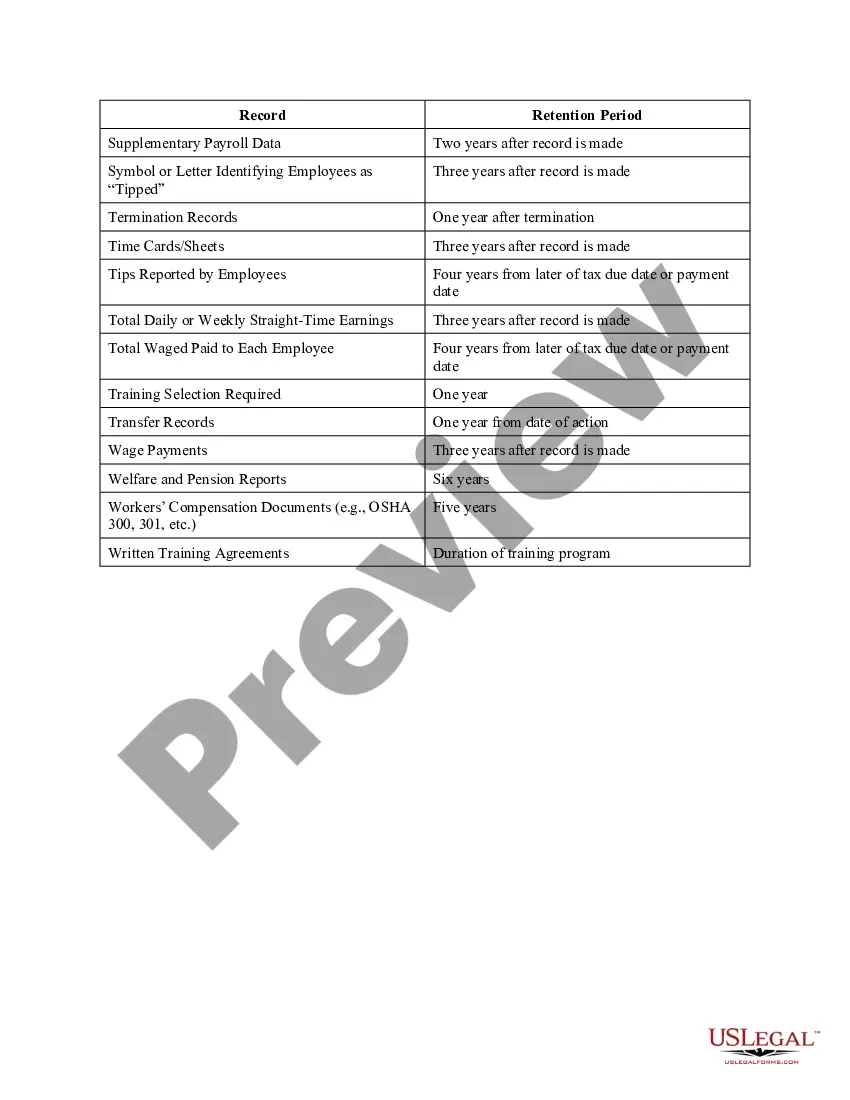
Wisconsin Log of Records Retention Requirements
Description

Get your form ready online
Our built-in tools help you complete, sign, share, and store your documents in one place.
Make edits, fill in missing information, and update formatting in US Legal Forms—just like you would in MS Word.
Download a copy, print it, send it by email, or mail it via USPS—whatever works best for your next step.
Sign and collect signatures with our SignNow integration. Send to multiple recipients, set reminders, and more. Go Premium to unlock E-Sign.
If this form requires notarization, complete it online through a secure video call—no need to meet a notary in person or wait for an appointment.
We protect your documents and personal data by following strict security and privacy standards.

Make edits, fill in missing information, and update formatting in US Legal Forms—just like you would in MS Word.

Download a copy, print it, send it by email, or mail it via USPS—whatever works best for your next step.

Sign and collect signatures with our SignNow integration. Send to multiple recipients, set reminders, and more. Go Premium to unlock E-Sign.

If this form requires notarization, complete it online through a secure video call—no need to meet a notary in person or wait for an appointment.

We protect your documents and personal data by following strict security and privacy standards.
Looking for another form?
How to fill out Log Of Records Retention Requirements?
If you wish to be thorough, obtain, or print sanctioned document templates, utilize US Legal Forms, the largest collection of legal forms available online.
Employ the site's simple and user-friendly search tool to locate the documents you need. Various templates for business and personal purposes are organized by categories and states, or keywords.
Utilize US Legal Forms to find the Wisconsin Log of Records Retention Requirements with just a few clicks.
Every legal document template you obtain is yours for years. You can access every form you downloaded within your account. Click the My documents section and select a form to print or download again.
Participate and obtain, and print the Wisconsin Log of Records Retention Requirements with US Legal Forms. There are numerous professional and state-specific forms available for your business or personal requirements.
- If you are already a US Legal Forms user, sign in to your account and click the Download button to obtain the Wisconsin Log of Records Retention Requirements.
- You can also access forms you previously downloaded in the My documents tab of your account.
- If this is your first time using US Legal Forms, follow the instructions below.
- Step 1. Ensure you have selected the form for the correct city/state.
- Step 2. Use the Preview option to review the form's content. Be sure to read the description.
- Step 3. If you are not satisfied with the form, utilize the Search box at the top of the screen to find other versions of the legal form template.
- Step 4. Once you have found the desired form, click the Purchase now button. Choose your payment plan and input your details to register for the account.
- Step 5. Complete the purchase. You can use your Visa, MasterCard, or PayPal account to finish the transaction.
- Step 6. Select the format of the legal document and download it to your device.
- Step 7. Fill out, edit, and print or sign the Wisconsin Log of Records Retention Requirements.
Form popularity
FAQ
Destroy paper and electronic personnel records and confidential employee data after the retention deadlines have passed. Because employment records contain confidential and sensitive information, employers should establish specific policies and procedures for disposing of records safely.
How long the records must be kept? 200bFive years: counting from the date of submission of a return until the last day of the period. 200bA person required to submit a return but has not complied. 200bFive years: After the end of the five years period, indefinitely until the return is submitted.
How much should be the retention of internal audit and MRM records? The logical answer is a minimum of 3 years as that is the time frame of ISO certificate.
You need to keep most records for five years, starting from when you prepared or obtained the records, or completed the transactions (or acts they relate to), whichever is the later. You need to be able to show the ATO your records if they ask for them.
You must keep the following records for 7 years:minutes of board and committee meetings.written communications with shareholders, including emails.resolutions.certificates issued by directors.copies of all financial statements.a record of the assets and liabilities of the company.
Keep records for 3 years from the date you filed your original return or 2 years from the date you paid the tax, whichever is later, if you file a claim for credit or refund after you file your return. Keep records for 7 years if you file a claim for a loss from worthless securities or bad debt deduction.
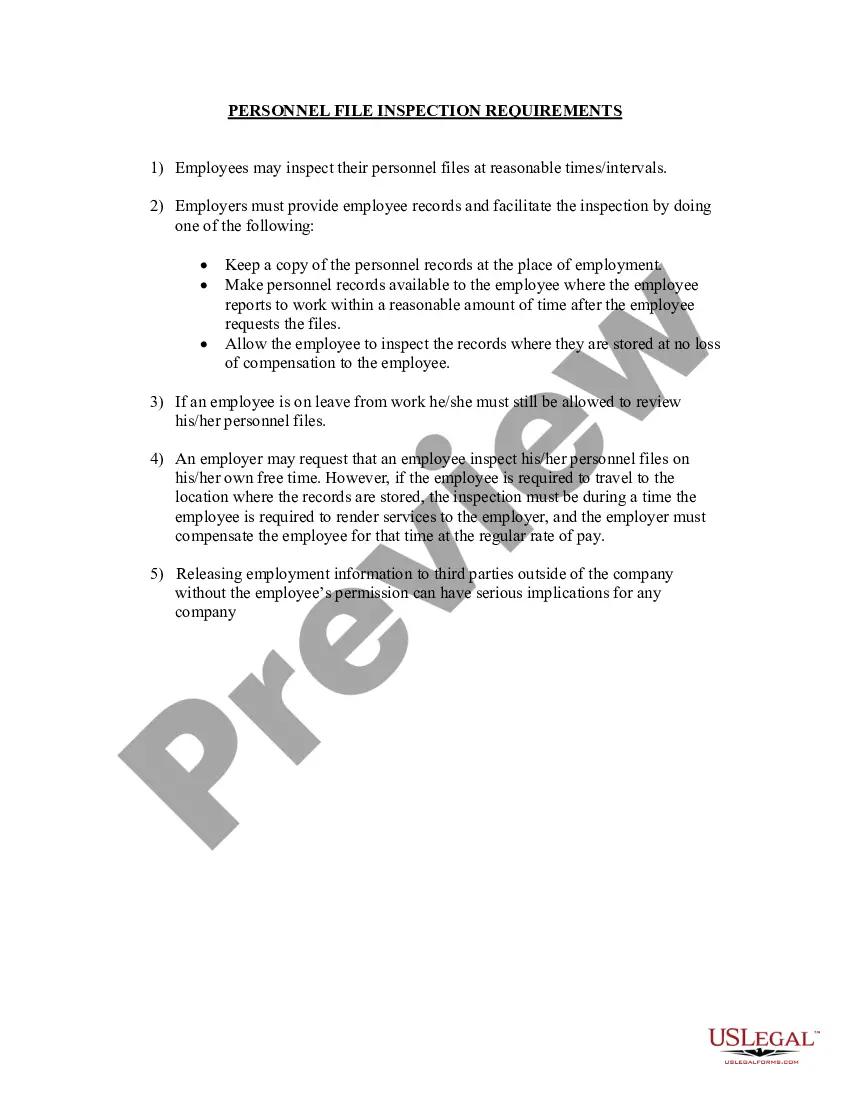
How long should I keep employee personnel files? You should keep an employee's personnel files for six years after the employee has left your organisation. The reason for this is that up until six years has passed, the former employee may sue you for breach of contract in the county court.
Patient health care records on every patient administered shall be maintained for a period of at least 10 years after the date of the last entry, unless otherwise required by state or federal law.
Records Retention Guideline #4: Keep everyday paperwork for 3 yearsMonthly financial statements.Credit card statements.Utility records.Employment applications (for businesses)Medical bills (in case of insurance disputes)
Code DWD § 272.11. Section DWD 272.11 - Permanent records to be kept by the employer (1) Every employer shall make and keep for at least 3 years payroll or other records for each of their employees which contain: (a) Name and address.