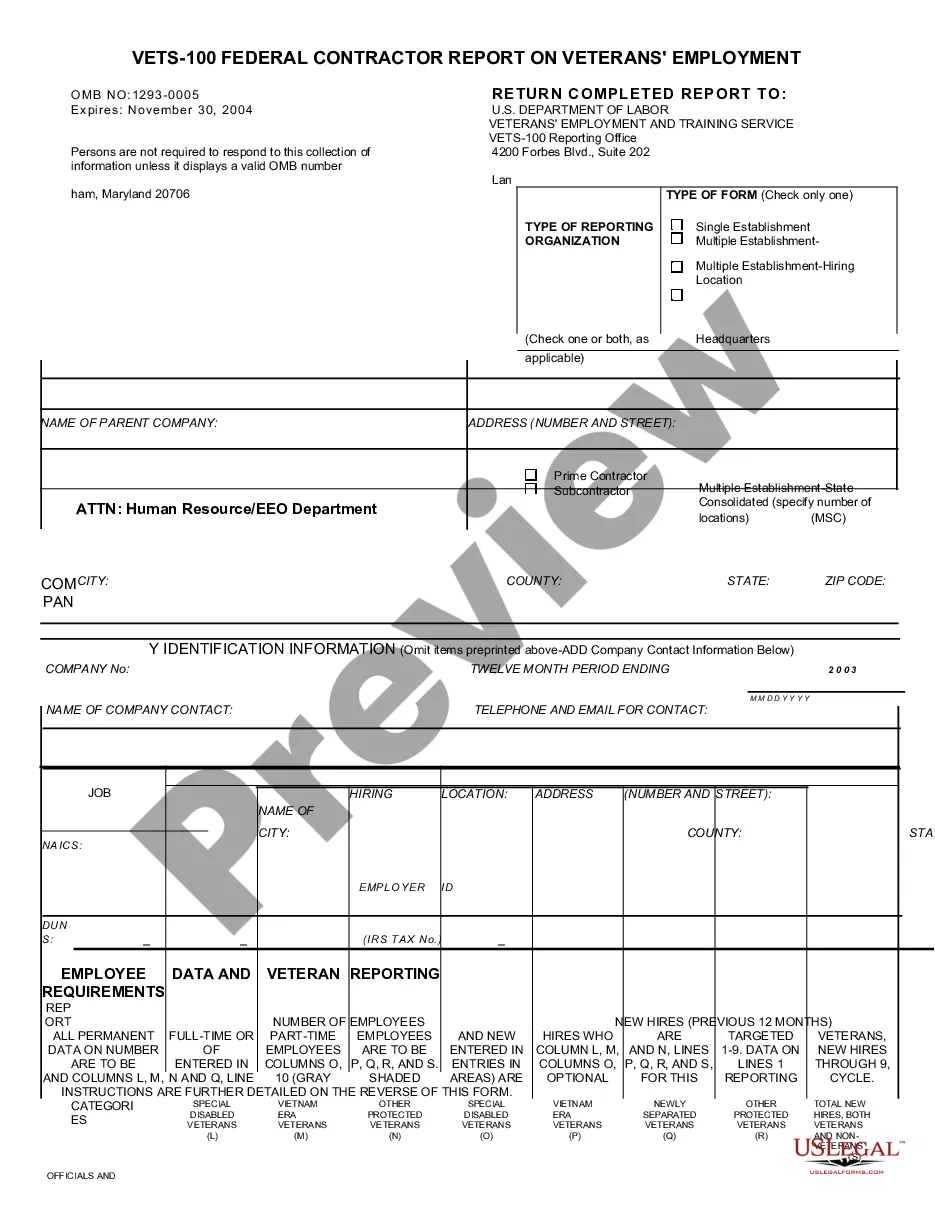
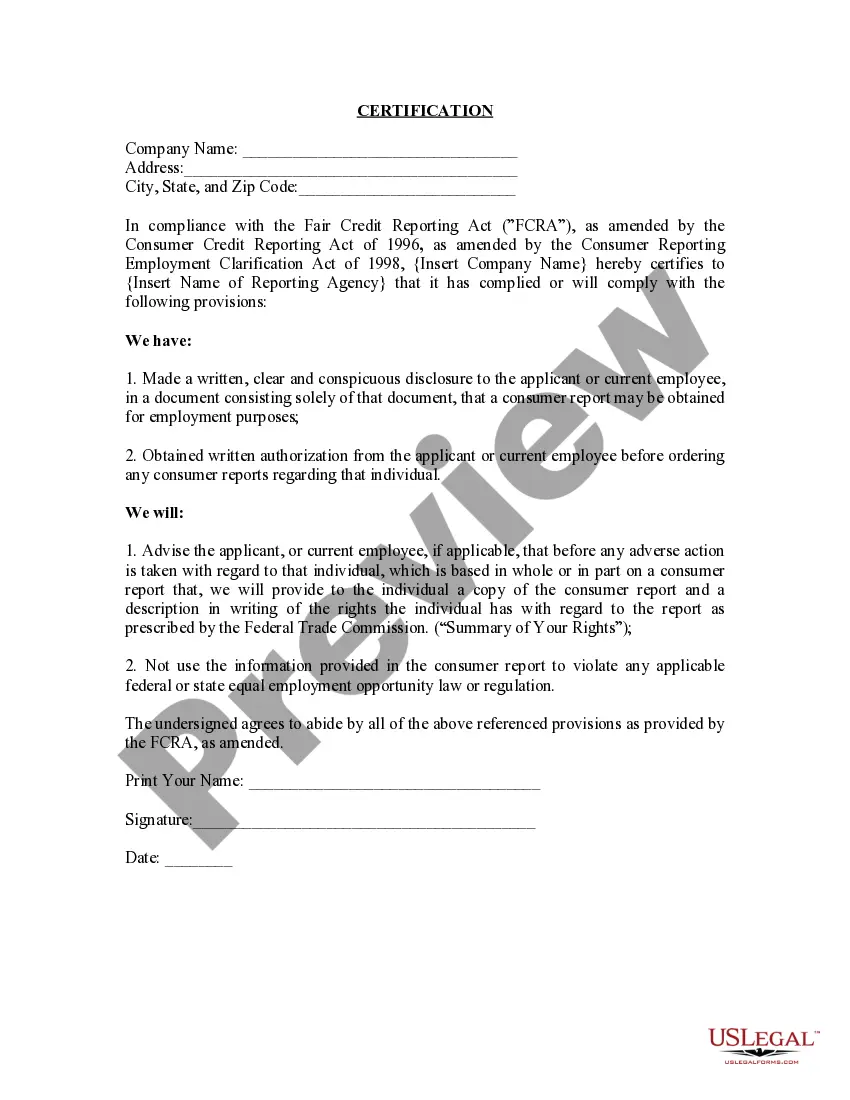
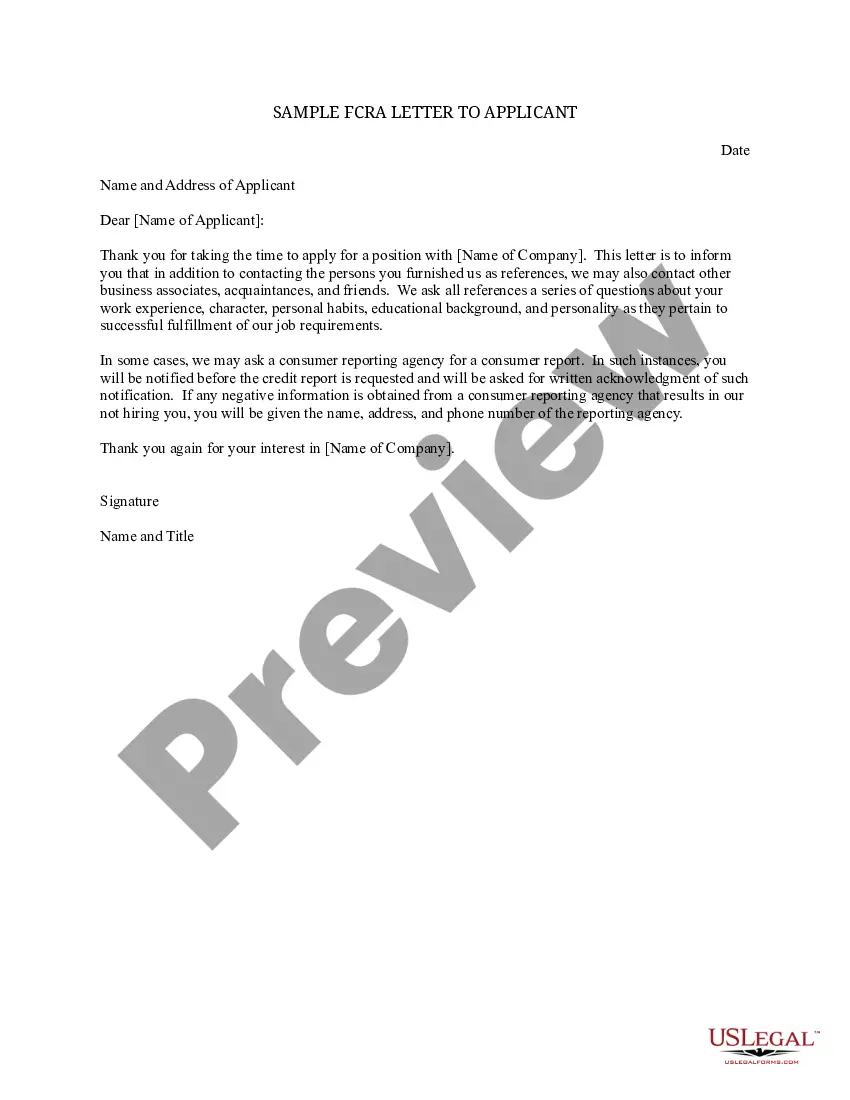
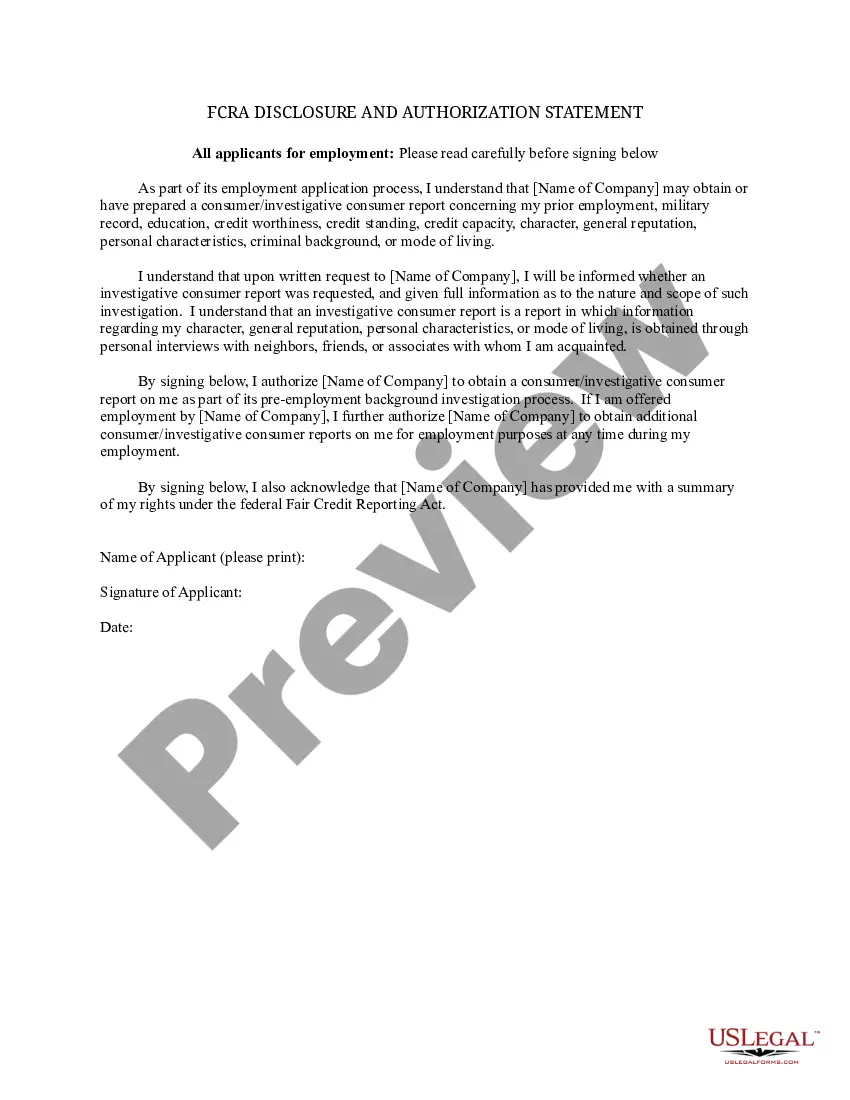
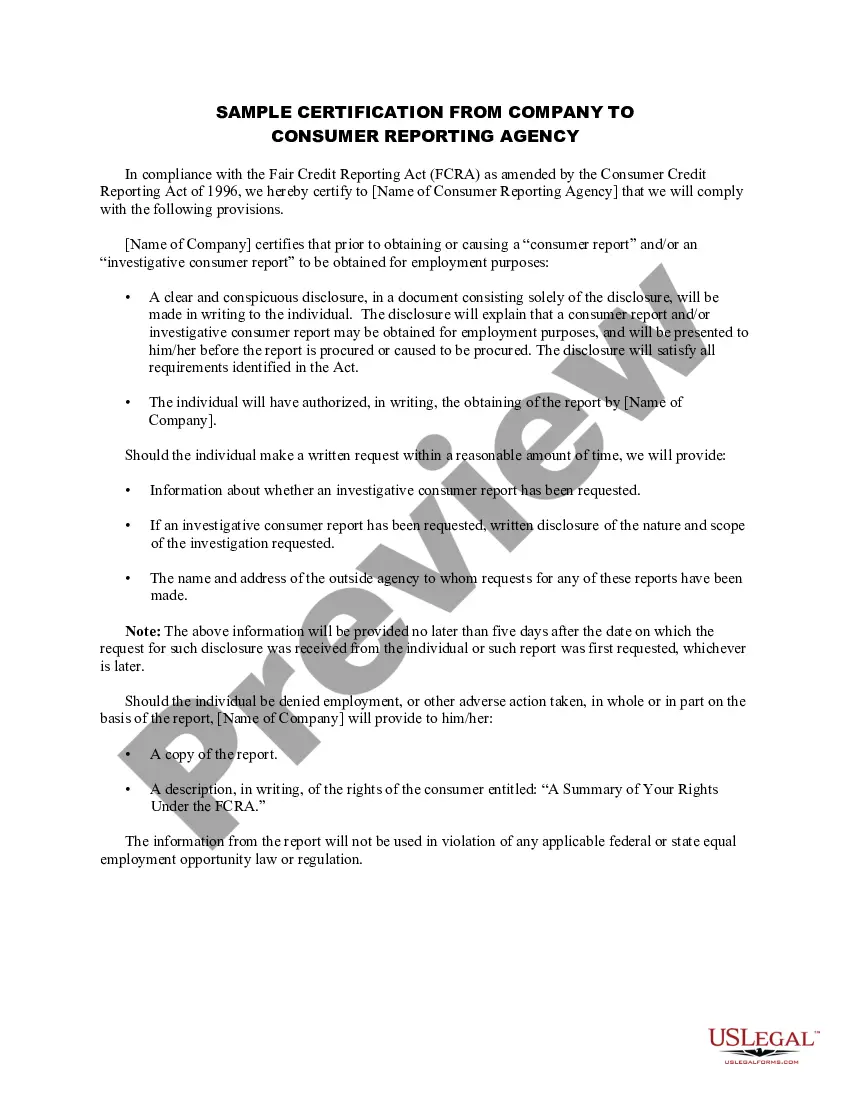
Wisconsin FCRA Certification Letter to Consumer Reporting Agency
Description
Get your form ready online
Our built-in tools help you complete, sign, share, and store your documents in one place.
Make edits, fill in missing information, and update formatting in US Legal Forms—just like you would in MS Word.
Download a copy, print it, send it by email, or mail it via USPS—whatever works best for your next step.
Sign and collect signatures with our SignNow integration. Send to multiple recipients, set reminders, and more. Go Premium to unlock E-Sign.
If this form requires notarization, complete it online through a secure video call—no need to meet a notary in person or wait for an appointment.
We protect your documents and personal data by following strict security and privacy standards.

Make edits, fill in missing information, and update formatting in US Legal Forms—just like you would in MS Word.

Download a copy, print it, send it by email, or mail it via USPS—whatever works best for your next step.

Sign and collect signatures with our SignNow integration. Send to multiple recipients, set reminders, and more. Go Premium to unlock E-Sign.

If this form requires notarization, complete it online through a secure video call—no need to meet a notary in person or wait for an appointment.

We protect your documents and personal data by following strict security and privacy standards.
Looking for another form?

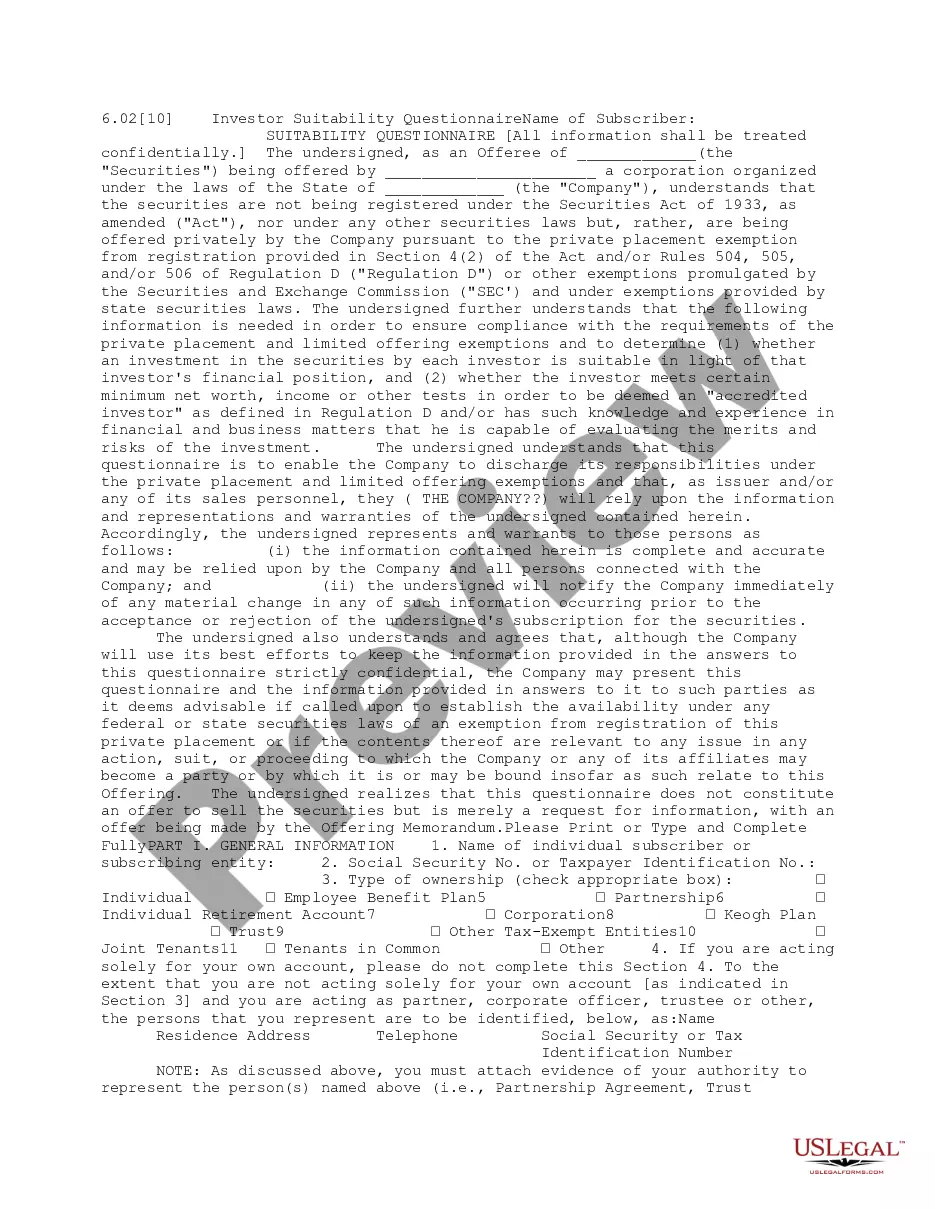



How to fill out FCRA Certification Letter To Consumer Reporting Agency?
You have the capability to dedicate hours online searching for the legal document template that satisfies the state and federal criteria you require.
US Legal Forms offers a vast array of legal forms that are reviewed by experts.
You can download or print the Wisconsin FCRA Certification Letter to Consumer Reporting Agency from my service.
If you wish to find another version of your form, use the Search section to locate the template that meets your needs and requirements.
- If you currently possess a US Legal Forms account, you can Log In and click on the Download button.
- After that, you can complete, edit, print, or sign the Wisconsin FCRA Certification Letter to Consumer Reporting Agency.
- Every legal document template you obtain is yours permanently.
- To get an additional copy of any acquired form, visit the My documents tab and click on the corresponding button.
- If you are using the US Legal Forms website for the first time, follow the simple instructions below.
- First, ensure you have selected the correct document template for your desired area/city. Check the form description to make sure you have selected the right form.
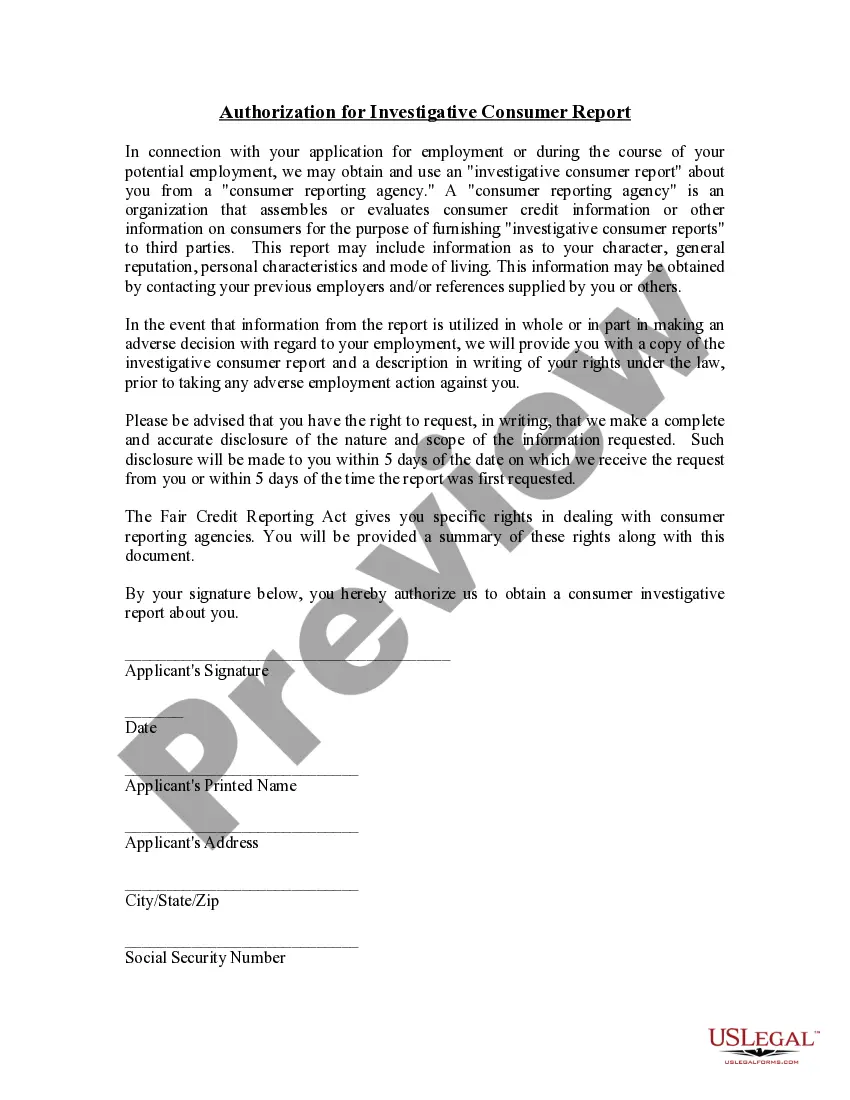
- If available, use the Preview button to view the document template as well.
Form popularity
FAQ
The FCRA applies only to the 3 main credit reporting bureaus -- Equifax, Experian, and TransUnion. b. Under FCRA, each credit bureau must also provide your credit score, free of charge, if you request it.
An adverse action notice is to inform you that you have been denied credit, employment, insurance, or other benefits based on information in a credit report. The notice should indicate which credit reporting agency was used, and how to contact them.
Credit Report Adverse Action Letter A post-decision form sent by entities to consumers after deciding to deny/reject them due to their credit score and/or other information found in a consumer credit report.
Four Basic Steps to FCRA ComplianceStep 1: Disclosure & Written Consent. Before requesting a consumer or investigative report, an employer must:Step 2: Certification To The Consumer Reporting Agency.Step 3: Provide Applicant With Pre-Adverse Action Documents.Step 4: Notify Applicant Of Adverse Action.
Consumers are entitled to one free credit report every 12 months from each of the three nationwide credit bureaus.
Disclosures to consumers. (a) Every consumer reporting agency shall, upon request and proper identification of any consumer, clearly and accurately disclose to the consumer: (1) The nature and substance of all information (except medical information) in its files on the consumer at the time of the request.
The FCRA applies only to the 3 main credit reporting bureaus -- Equifax, Experian, and TransUnion. b. Under FCRA, each credit bureau must also provide your credit score, free of charge, if you request it.
Who Has to Follow the FCRA? The FCRA applies to any company that collects and sells data about you to third parties. Such companies, known as consumer reporting agencies, must follow the stipulations of the FCRA. The three most well-known consumer reporting agencies in the U.S. are Equifax, TransUnion and Experian.
Properly inform the applicant of adverse action: In your final adverse action letter, you must explain your choice and tell the applicant that they have the right to dispute your decision. Provide the necessary information for them to get another copy of their report.
The FCRA applies anytime an employer obtains a background check for employment purposes from a third party. These reports could include criminal history, employment and education verifications, motor vehicle reports, health care sanctions and professional licenses.