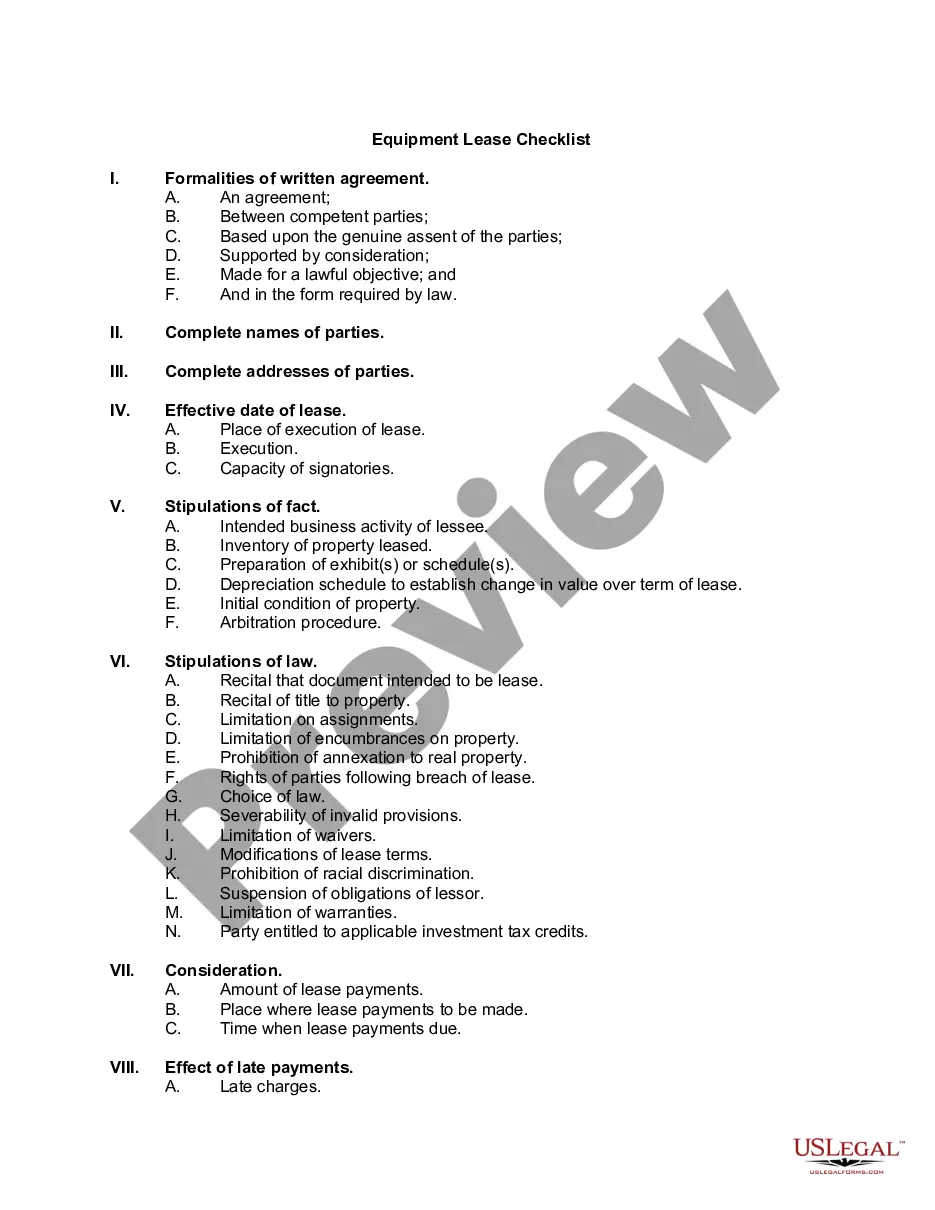
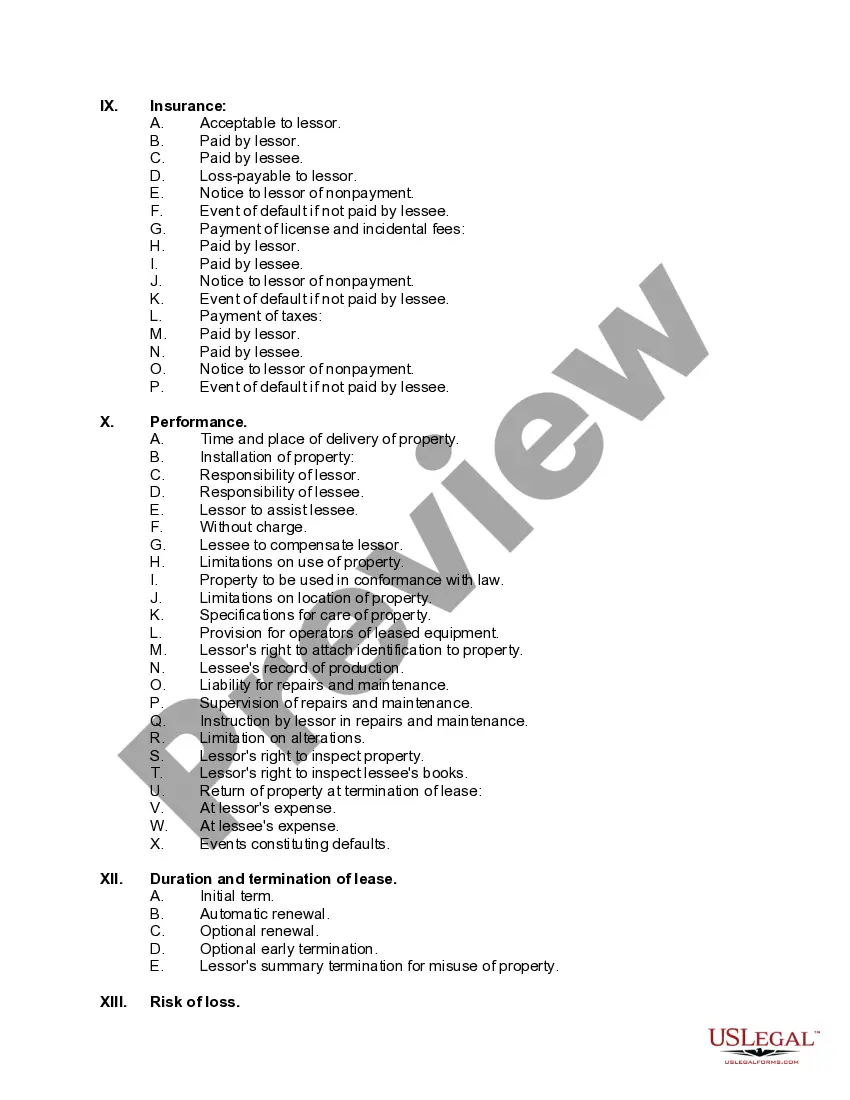
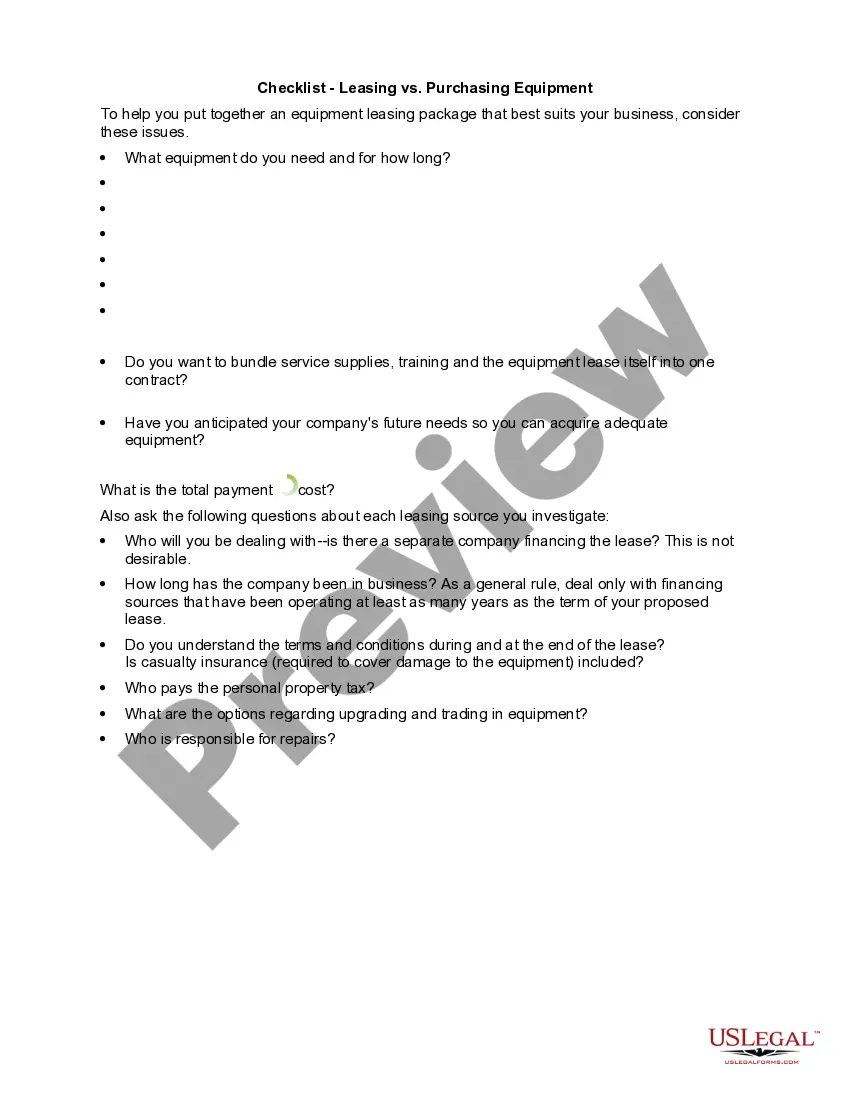
Wisconsin Equipment Lease Checklist
Description
Get your form ready online
Our built-in tools help you complete, sign, share, and store your documents in one place.
Make edits, fill in missing information, and update formatting in US Legal Forms—just like you would in MS Word.
Download a copy, print it, send it by email, or mail it via USPS—whatever works best for your next step.
Sign and collect signatures with our SignNow integration. Send to multiple recipients, set reminders, and more. Go Premium to unlock E-Sign.
If this form requires notarization, complete it online through a secure video call—no need to meet a notary in person or wait for an appointment.
We protect your documents and personal data by following strict security and privacy standards.

Make edits, fill in missing information, and update formatting in US Legal Forms—just like you would in MS Word.

Download a copy, print it, send it by email, or mail it via USPS—whatever works best for your next step.

Sign and collect signatures with our SignNow integration. Send to multiple recipients, set reminders, and more. Go Premium to unlock E-Sign.

If this form requires notarization, complete it online through a secure video call—no need to meet a notary in person or wait for an appointment.

We protect your documents and personal data by following strict security and privacy standards.
Looking for another form?


How to fill out Equipment Lease Checklist?
Selecting the optimal legal document format can be quite challenging.
Naturally, there are numerous templates available online, but how do you obtain the legal form you require.
Utilize the US Legal Forms website. The service provides a vast array of templates, including the Wisconsin Equipment Lease Checklist, which can be utilized for both business and personal needs.
You can preview the form and read the description to ensure this is the right one for you.
- All the documents are reviewed by experts and comply with state and federal regulations.
- If you are already registered, Log In to your account and click the Download button to retrieve the Wisconsin Equipment Lease Checklist.
- Use your account to search through the legal documents you have previously purchased.
- Go to the My documents section of your account to obtain another copy of the document you need.
- If you are a new user of US Legal Forms, here are simple instructions for you to follow.
- First, make sure you have selected the correct form for your specific area/region.
Form popularity
FAQ
To set up an equipment lease in QuickBooks, start by creating a new asset account for the leased equipment. Then, ensure you input recurring lease payment transactions under your expenses or liabilities. The Wisconsin Equipment Lease Checklist can assist in ensuring accuracy in setting up your lease in QuickBooks to maintain proper accounting records.
To record leased equipment, accountants usually enter the asset and the corresponding lease liability in the financial records. This practice ensures accurate tracking of your financial position and obligations over time. The Wisconsin Equipment Lease Checklist provides detailed accounting practices that clarify the correct recording methods for leased equipment.
Typical terms for equipment financing range from two to seven years, depending on the equipment type and its expected lifespan. Interest rates may vary, influenced by credit history and overall market conditions. To make the most of your financing options, consult the Wisconsin Equipment Lease Checklist for insights on favorable terms and conditions in today's market.
Leasing equipment involves obtaining the right to use the equipment for a specified time in exchange for regular payments. The lease may cover maintenance and servicing, allowing you to access the latest technology without upfront costs. For a smoother leasing experience, refer to the Wisconsin Equipment Lease Checklist, which outlines important lease terms and conditions.
When recording a lease, the journal entry generally includes debiting an asset account and crediting a liability account. This entry reflects the obligation to make future lease payments and the right to use the leased equipment. Familiarizing yourself with the Wisconsin Equipment Lease Checklist can help ensure you apply the correct accounting principles in your entries.
A good equipment lease rate varies based on factors like the type of equipment, lease term, and creditworthiness. Typically, a lease rate that is competitive should range from 2% to 10% of the equipment's value annually. To find the best deal, refer to the Wisconsin Equipment Lease Checklist to understand the market standards. This information will guide you in negotiating favorable lease terms.
In general, leased equipment can be capitalized depending on the type of lease. If the lease meets certain criteria, such as a capital lease, it is recorded on the balance sheet as an asset. This classification follows accounting standards that are part of the Wisconsin Equipment Lease Checklist. Understanding these principles helps you manage your lease obligations effectively.
Equipment leases can be operating leases, but not all are categorized this way. An operating lease typically allows for the temporary use of equipment without the commitment of ownership. To better understand your options and ensure you select the best lease for your business, consult the Wisconsin Equipment Lease Checklist, which serves as a valuable guide throughout the leasing process.
An equipment lease may be classified as an operating lease if it meets specific criteria, such as shorter terms and not transferring ownership rights to the lessee. Generally, operating leases allow companies to use equipment without significant upfront costs, preserving capital for other needs. To clarify this aspect and ensure you’re aligned with best practices, refer to the Wisconsin Equipment Lease Checklist.
A lease agreement for equipment is a contract that allows one party to use equipment owned by another party for a specified period in exchange for payment. This arrangement often includes details such as the duration of the lease, maintenance responsibilities, and payment schedules. Understanding the nuances of your lease can be simplified with the Wisconsin Equipment Lease Checklist, which highlights essential components for negotiation.