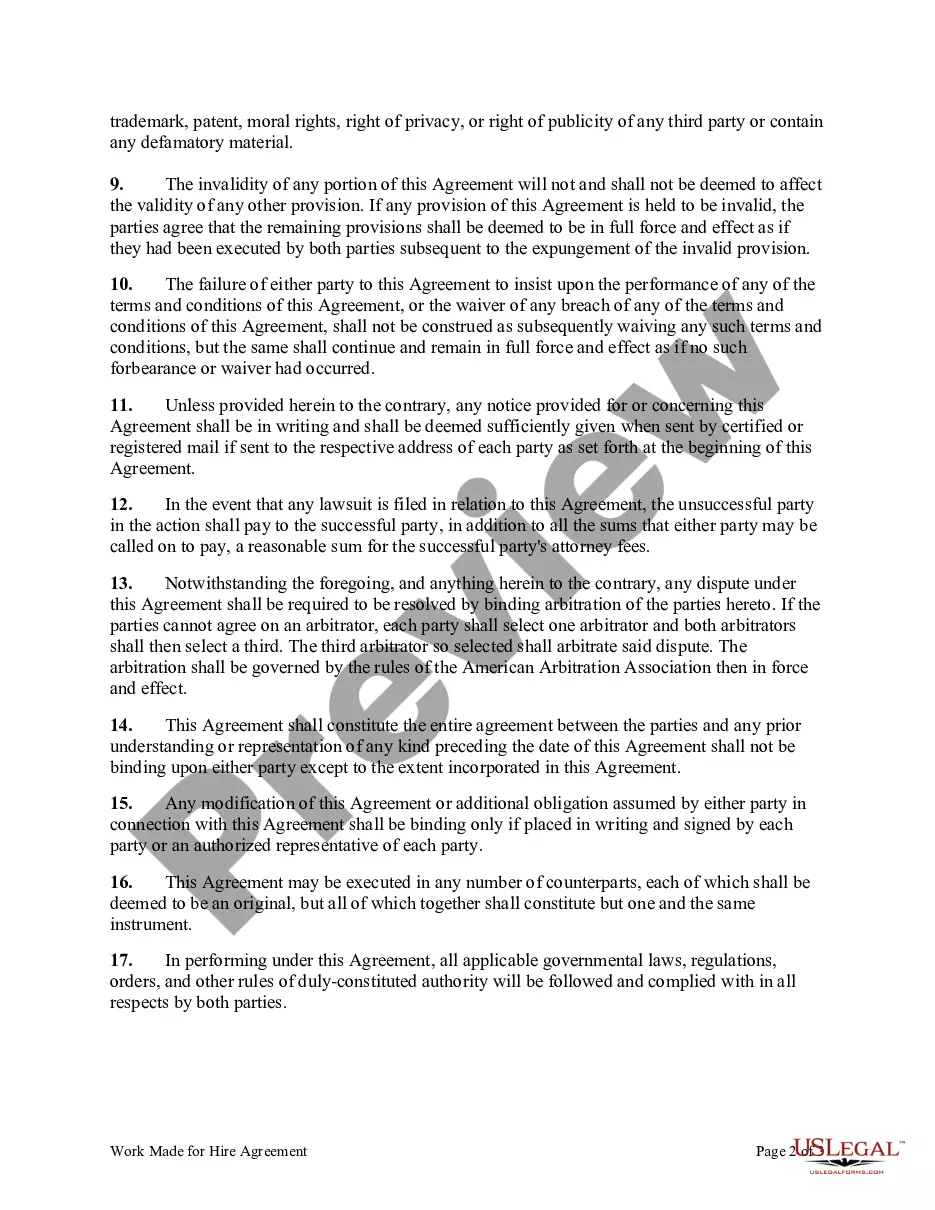
Wisconsin Work Made for Hire Agreement
Description
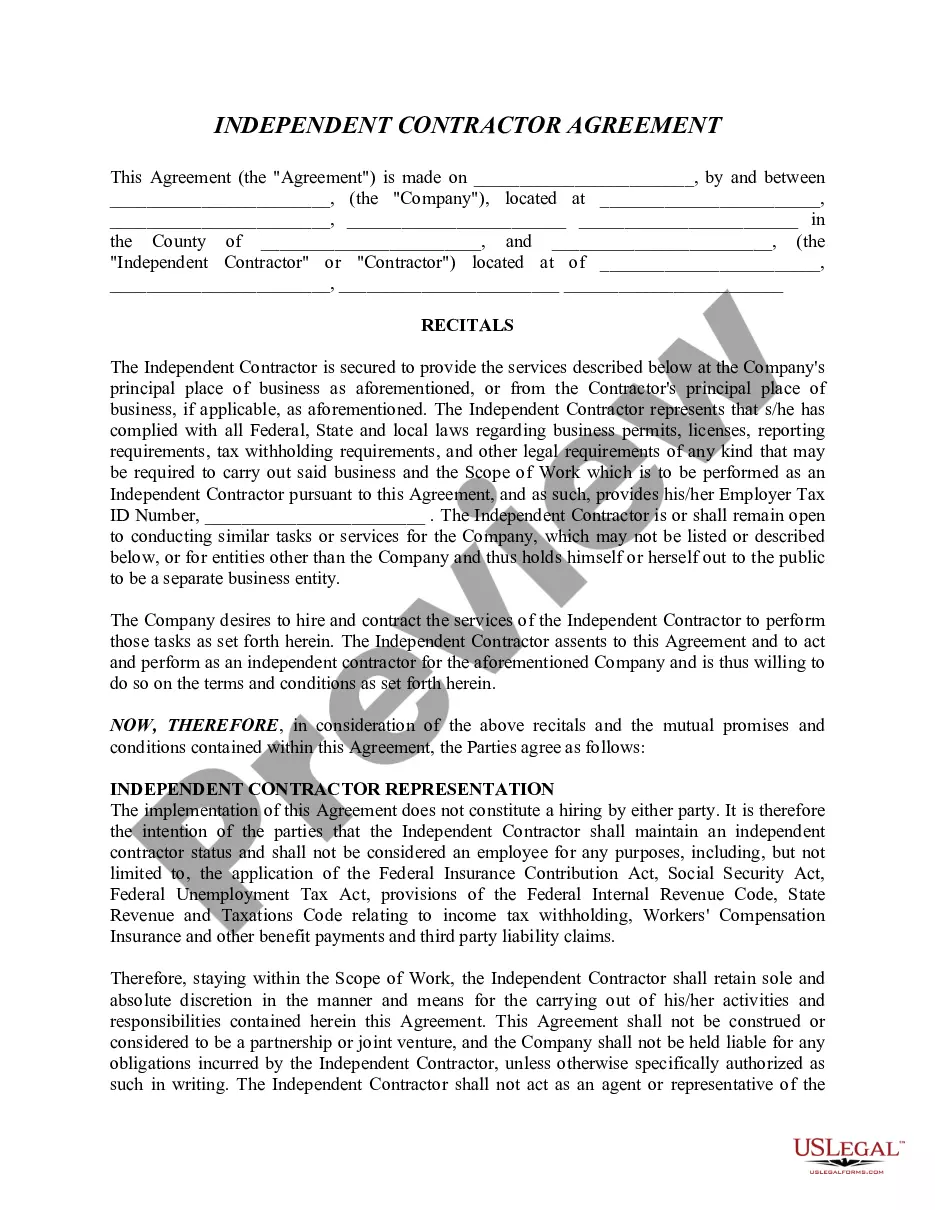
Get your form ready online
Our built-in tools help you complete, sign, share, and store your documents in one place.
Make edits, fill in missing information, and update formatting in US Legal Forms—just like you would in MS Word.
Download a copy, print it, send it by email, or mail it via USPS—whatever works best for your next step.
Sign and collect signatures with our SignNow integration. Send to multiple recipients, set reminders, and more. Go Premium to unlock E-Sign.
If this form requires notarization, complete it online through a secure video call—no need to meet a notary in person or wait for an appointment.
We protect your documents and personal data by following strict security and privacy standards.

Make edits, fill in missing information, and update formatting in US Legal Forms—just like you would in MS Word.

Download a copy, print it, send it by email, or mail it via USPS—whatever works best for your next step.

Sign and collect signatures with our SignNow integration. Send to multiple recipients, set reminders, and more. Go Premium to unlock E-Sign.

If this form requires notarization, complete it online through a secure video call—no need to meet a notary in person or wait for an appointment.

We protect your documents and personal data by following strict security and privacy standards.
Looking for another form?

How to fill out Work Made For Hire Agreement?
If you desire to completely, retrieve, or print legal document templates, utilize US Legal Forms, the premier collection of legal forms, available online.
Employ the website's straightforward and user-friendly search to find the documents you need.
A range of templates for business and personal use are categorized by regions and states, or keywords.
Step 4. Once you have found the form you need, click on the Purchase now button. Choose the pricing plan you prefer and enter your details to sign up for an account.
Step 5. Complete the transaction. You can use your credit card or PayPal account to finalize the transaction.
- Utilize US Legal Forms to locate the Wisconsin Work Made for Hire Agreement in just a few clicks.
- If you are already a US Legal Forms user, Log In to your account and click on the Download button to acquire the Wisconsin Work Made for Hire Agreement.
- You can also access forms you have previously downloaded in the My documents section of your account.
- If you are using US Legal Forms for the first time, follow the instructions below.
- Step 1. Ensure you have selected the form for the correct area/region.
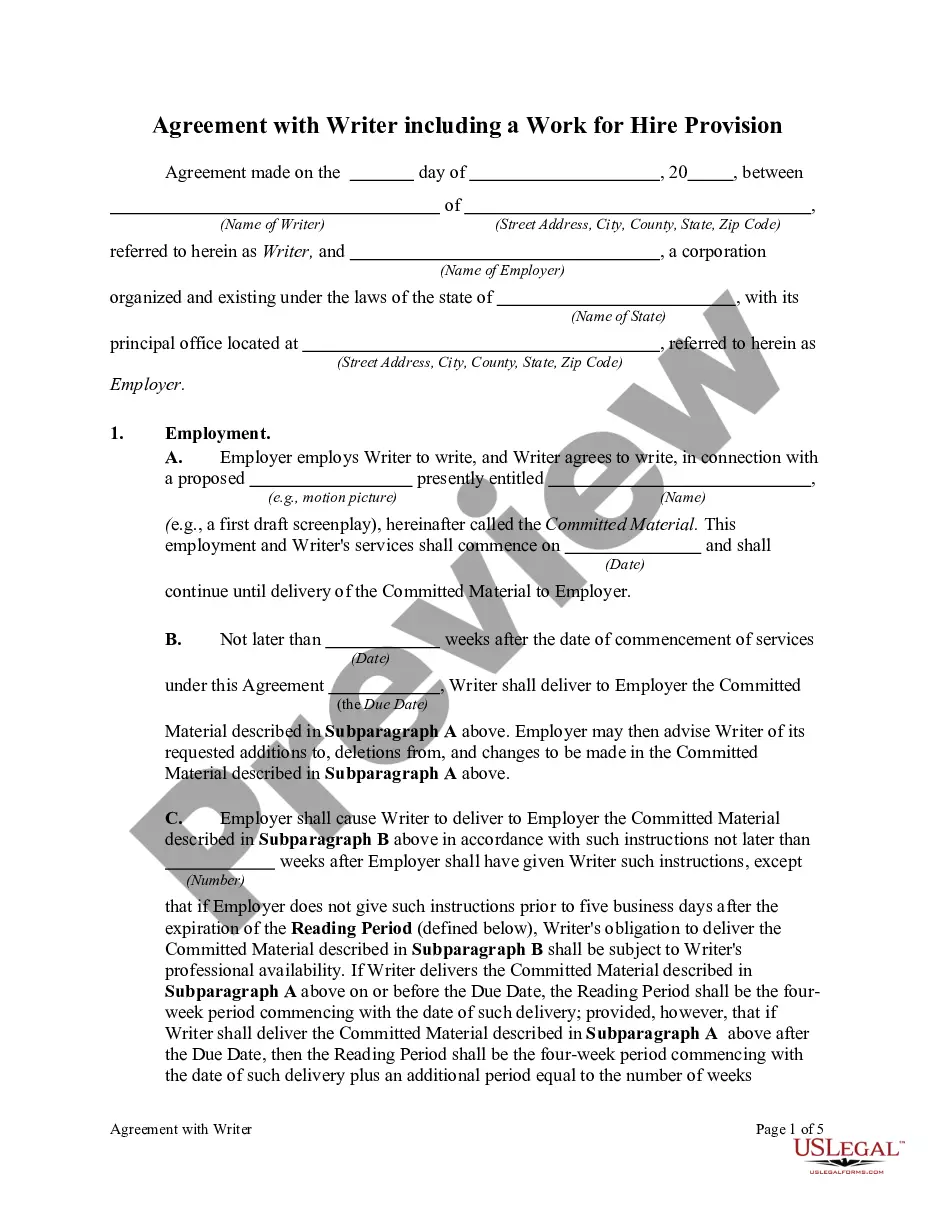
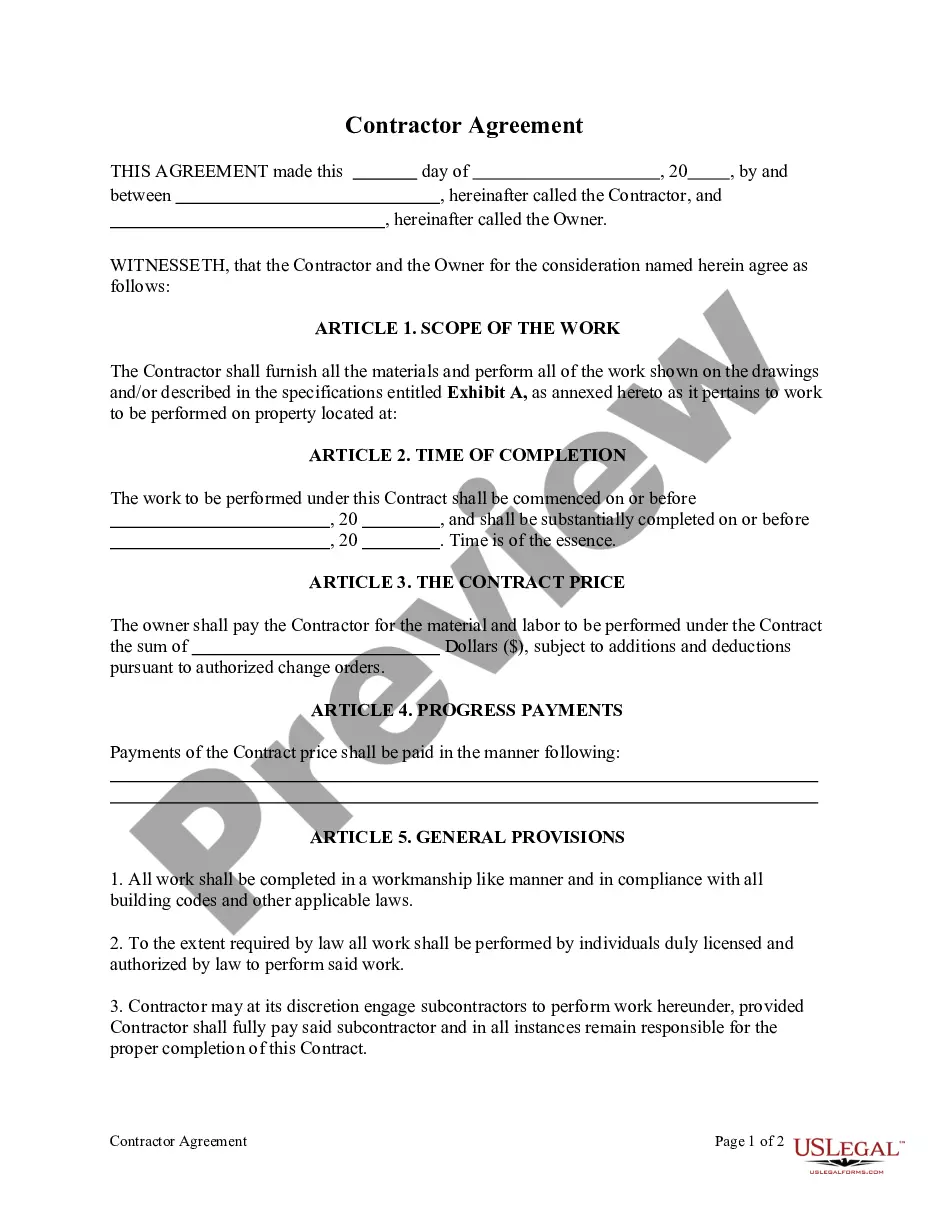
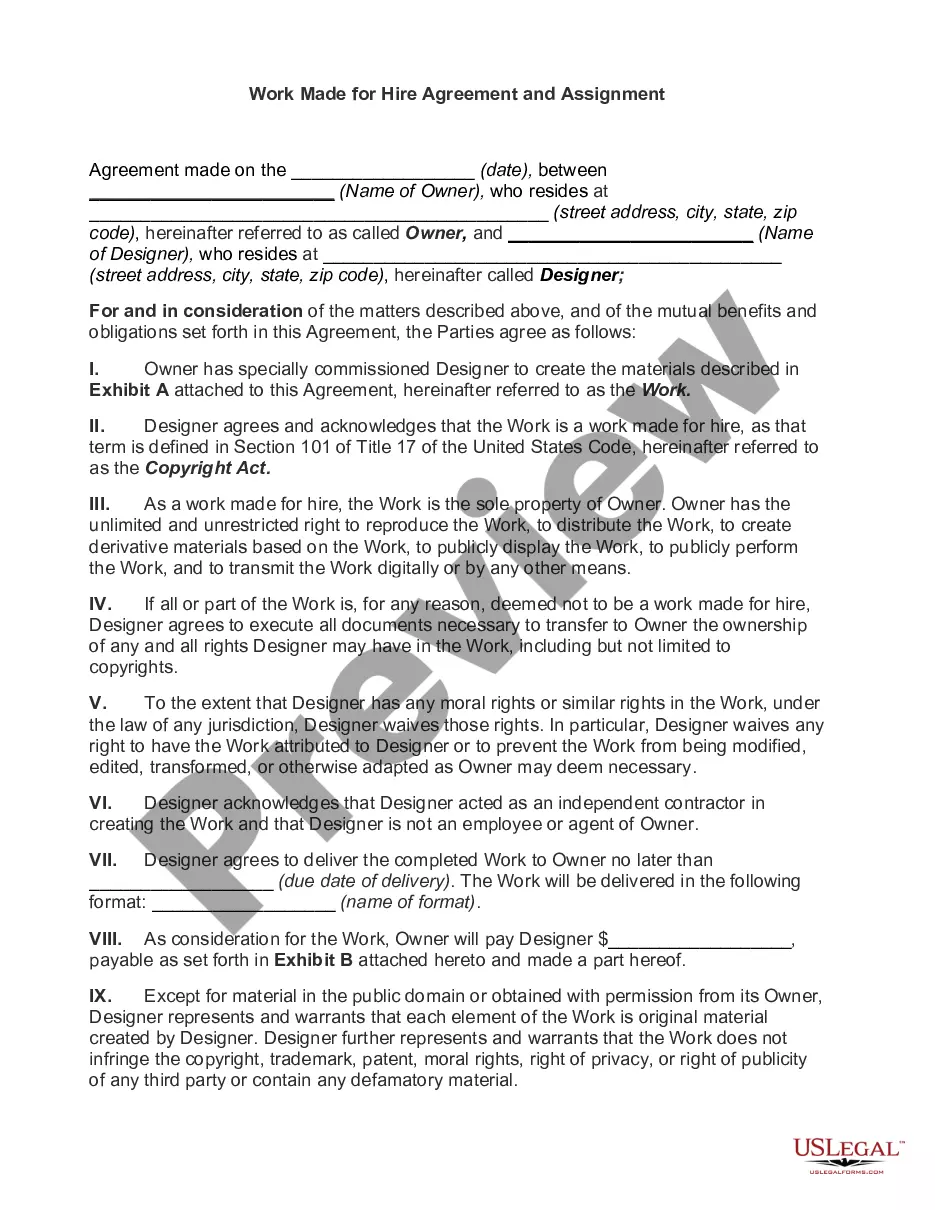
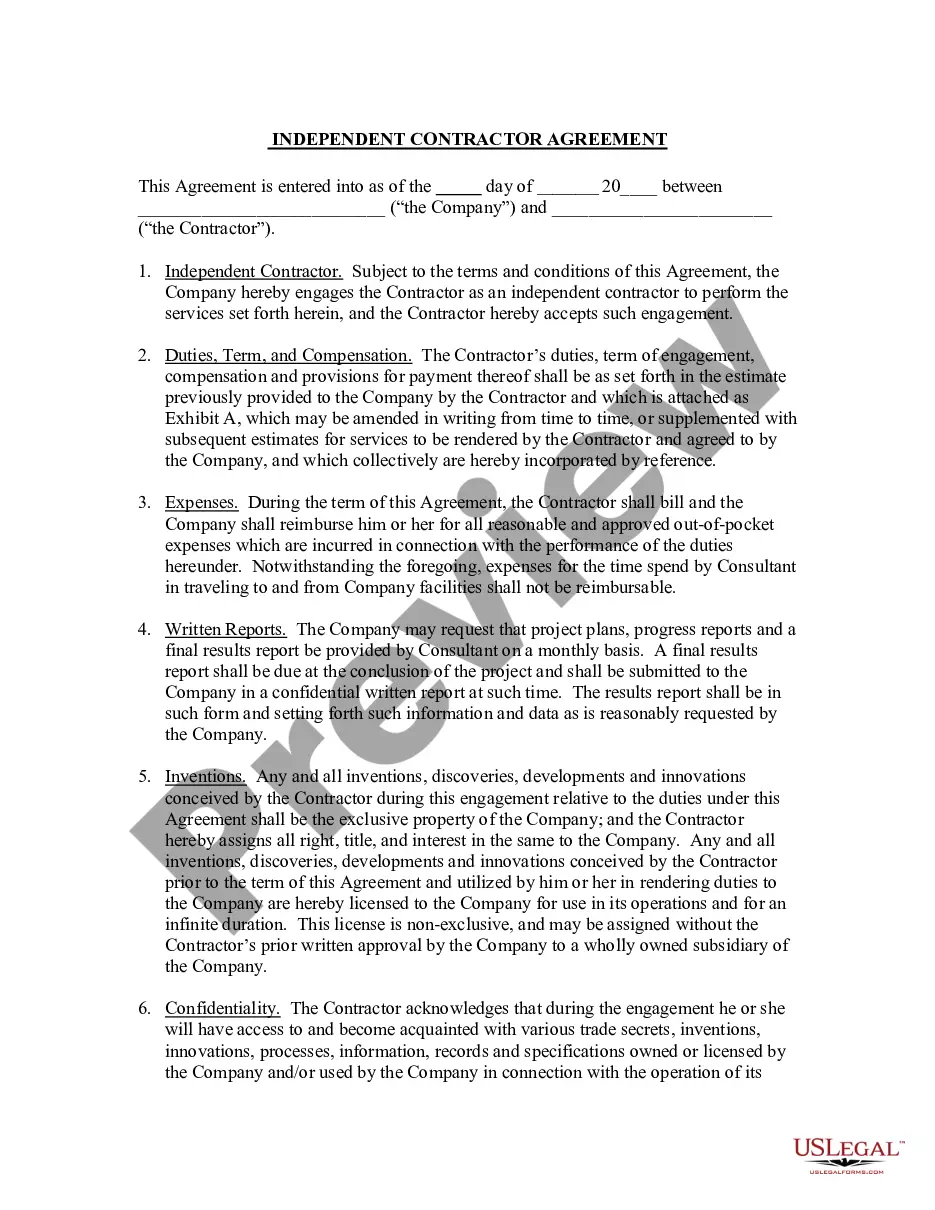
- Step 2. Use the Preview feature to review the form’s content. Don’t forget to read the summary.
- Step 3. If you are not satisfied with the form, utilize the Search box at the top of the screen to find other types of your legal form template.
Form popularity
FAQ
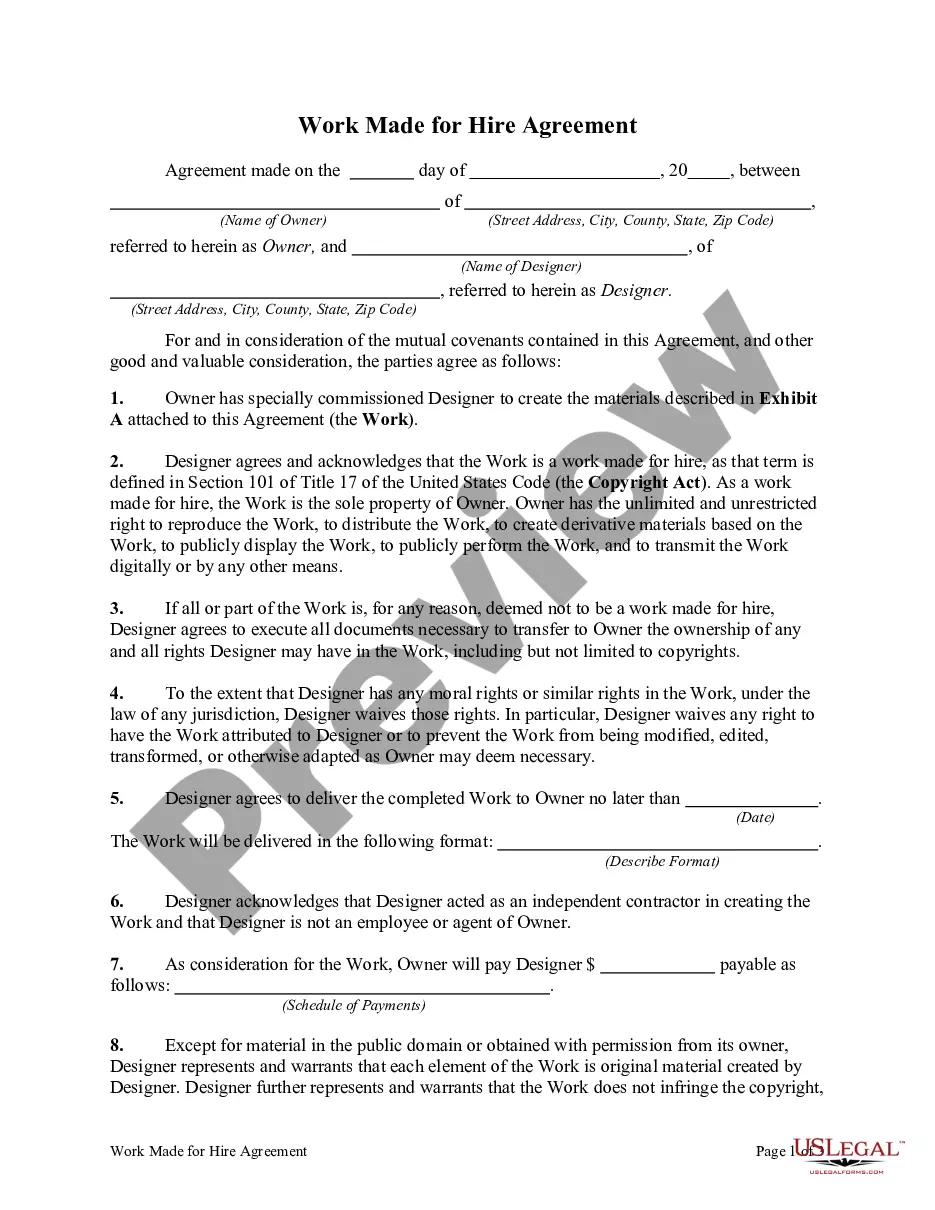
Title 17 refers to the U.S. Code governing copyright law, and it specifically addresses works made for hire in Section 101. This section provides a framework for understanding who owns the copyright to particular works created under specified conditions. By using a Wisconsin Work Made for Hire Agreement, you can safeguard your interests and ensure that the provisions of title 17 are met. This understanding empowers you to navigate copyright ownership confidently.
Yes, work made for hire is defined in Section 101 of title 17 of the United States Code. This section outlines the types of works that qualify, emphasizing the employer's rights over the creator's rights. Therefore, a Wisconsin Work Made for Hire Agreement aligns with this legal definition, assuring creators and companies that ownership and rights are clearly established from the outset. Having such agreements helps avoid future disputes regarding copyright ownership.
A title 17 work made for hire refers to the legal framework established under Section 101 of the U.S. Copyright Act, specifically addressing works created for an employer or as part of a commission. In essence, this means that any work made under these conditions qualifies as a work for hire, granting the employer ownership of the copyright. Utilizing a Wisconsin Work Made for Hire Agreement can ensure compliance with these guidelines and clarify copyright ownership. Understanding such distinctions helps protect your creative and commercial interests.
A common example of a work made for hire includes a software program developed by a contractor specifically for a company. Under a Wisconsin Work Made for Hire Agreement, the company would own all rights to the software as it was created as part of their business needs. Other examples can include freelance articles written for a publication or photographs taken for a client. These situations illustrate how ownership is established unequivocally.
The primary distinction between an assignment of copyright and work for hire lies in ownership rights. With an assignment, the creator retains some rights, while the buyer obtains specified rights outlined in a contract. In contrast, a Wisconsin Work Made for Hire Agreement ensures that the employer or commissioning party automatically holds the copyright upon creation, leaving no rights with the creator. This arrangement is often advantageous for businesses as it provides clear ownership from the start.
A work qualifies as a work made for hire if it meets specific legal criteria under copyright law. It must either be created by an employee as part of their job or be specially commissioned with a signed written agreement that explicitly states the work is made for hire. Clear agreements prevent misunderstandings and ensure that both parties understand ownership rights. For this purpose, you might want to explore a Wisconsin Work Made for Hire Agreement to secure your interests.
Ownership of a work made for hire at the end of a project typically rests with the employer or the party that commissioned the work. This means the creator does not retain rights to the work once completed unless otherwise stated in a legal agreement. For both employers and creators, having a clear Wisconsin Work Made for Hire Agreement is essential to understanding and enforcing these rights.
Under 17 USC 101, a work made for hire applies to works created by an employee within the scope of employment or works created by an independent contractor under specific arrangements. These legal definitions clarify who holds the rights to the work produced. This is crucial for individuals and businesses alike, as understanding these distinctions can prevent ownership disputes in the future. To avoid confusion, professionals should consider a Wisconsin Work Made for Hire Agreement.
The law for work for hire is grounded in copyright law, specifically under Title 17 of the United States Code. This law states that works made for hire are owned by the employer or commissioner, not the creator. It ensures that anyone creating a work in the scope of their employment or under a formal agreement automatically assigns ownership rights. Using a Wisconsin Work Made for Hire Agreement will help you outline these terms clearly.
A work made for hire refers to a piece of creative work where the creator is an employee or the work is commissioned under specific conditions. In general, if you create a work while on the job, your employer typically owns that work. Additionally, if you have an agreement beforehand that specifies the work as made for hire, it meets the criteria. Considering a Wisconsin Work Made for Hire Agreement can clarify ownership rights in these situations.