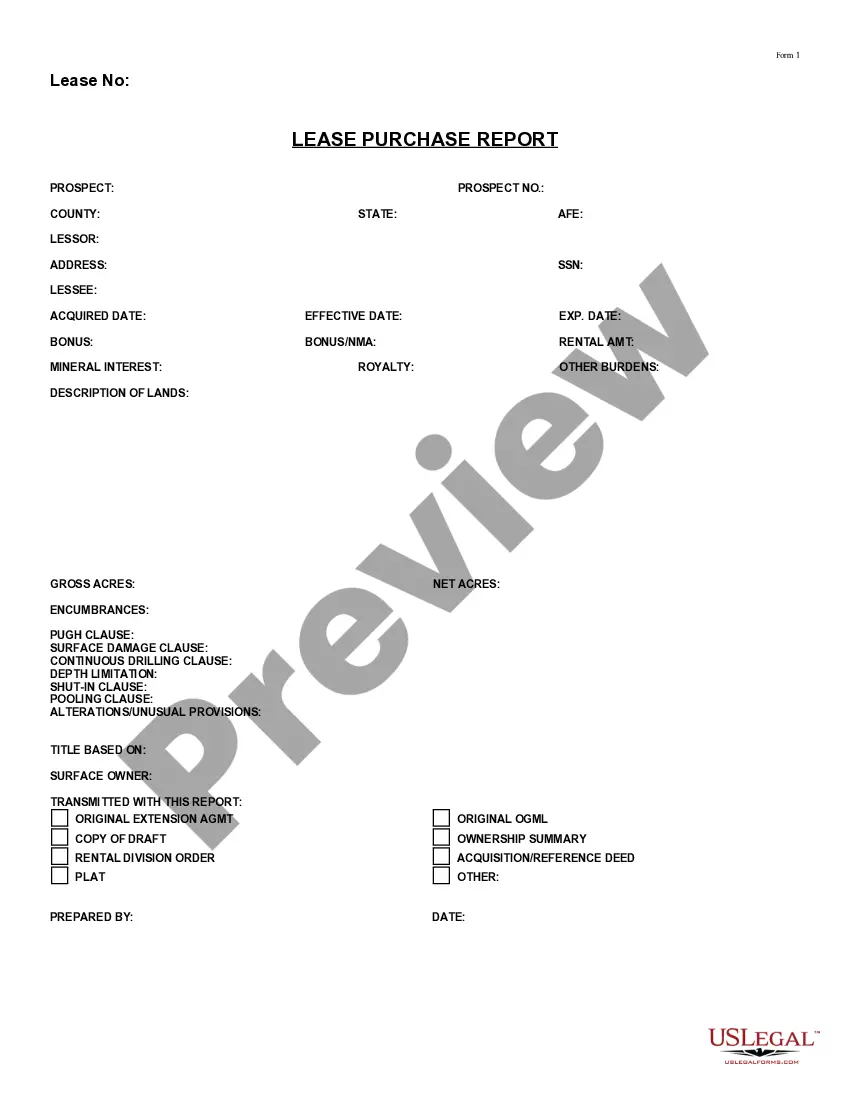
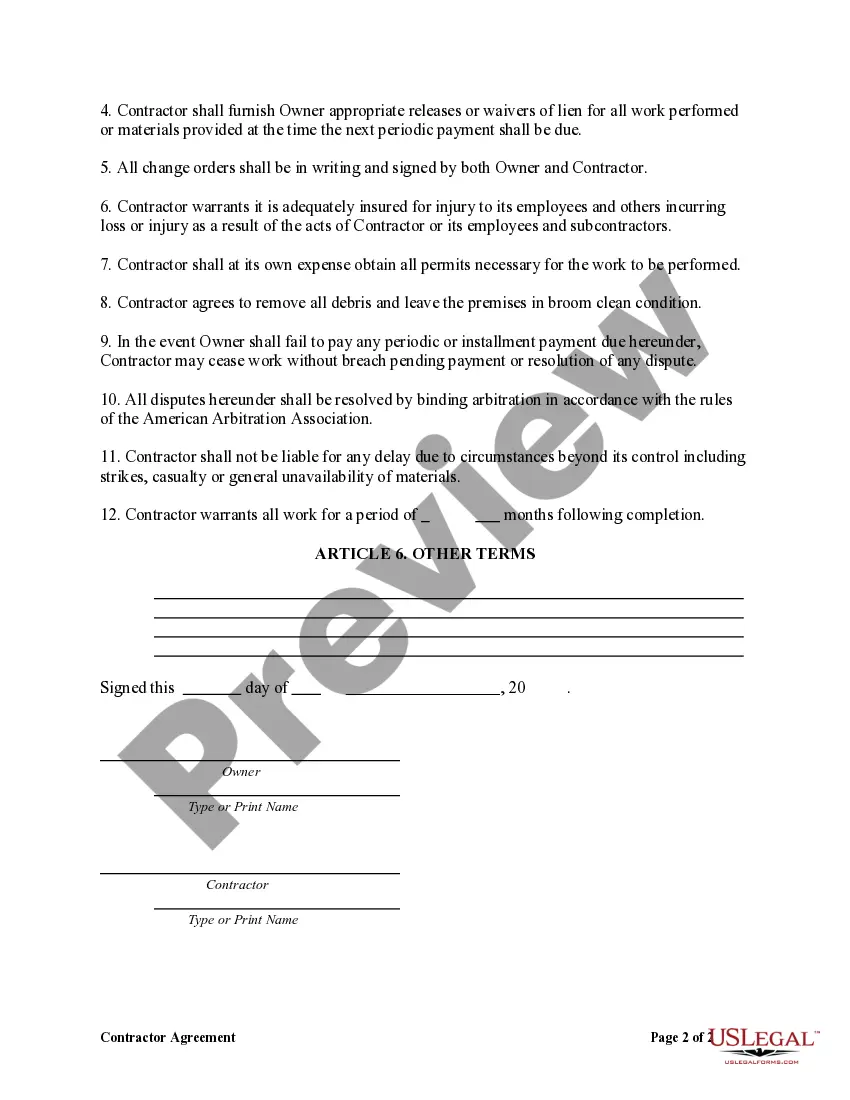
Wisconsin Contractor Agreement
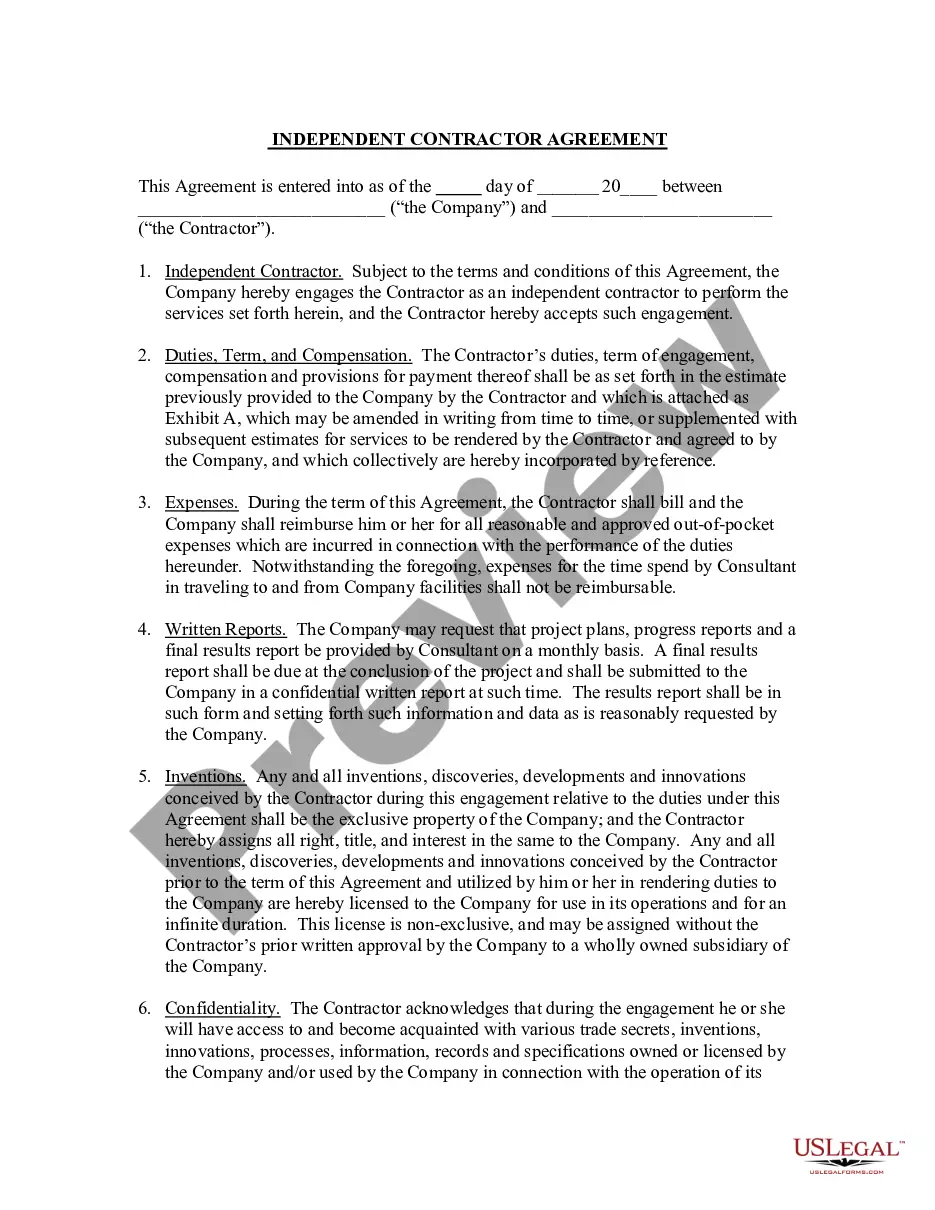
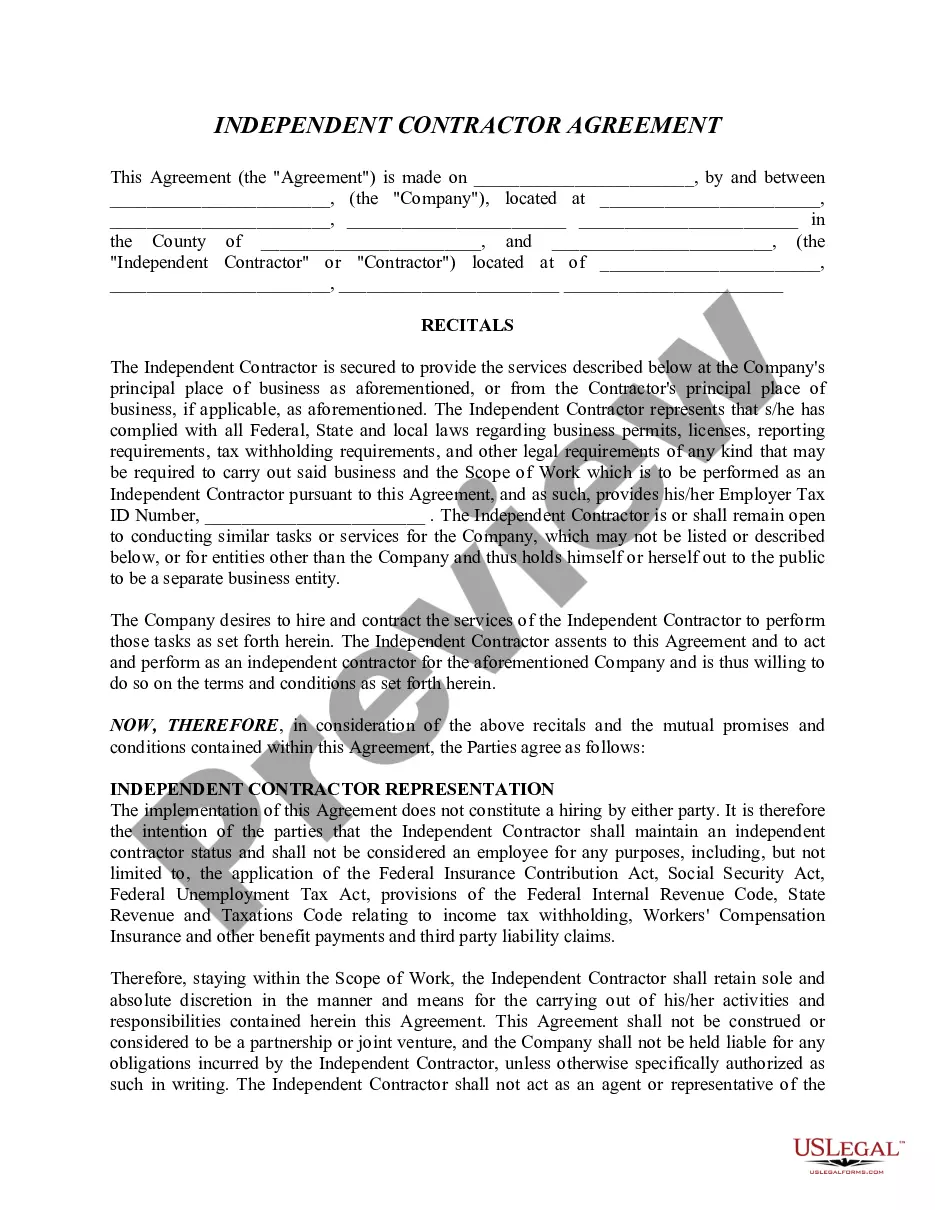
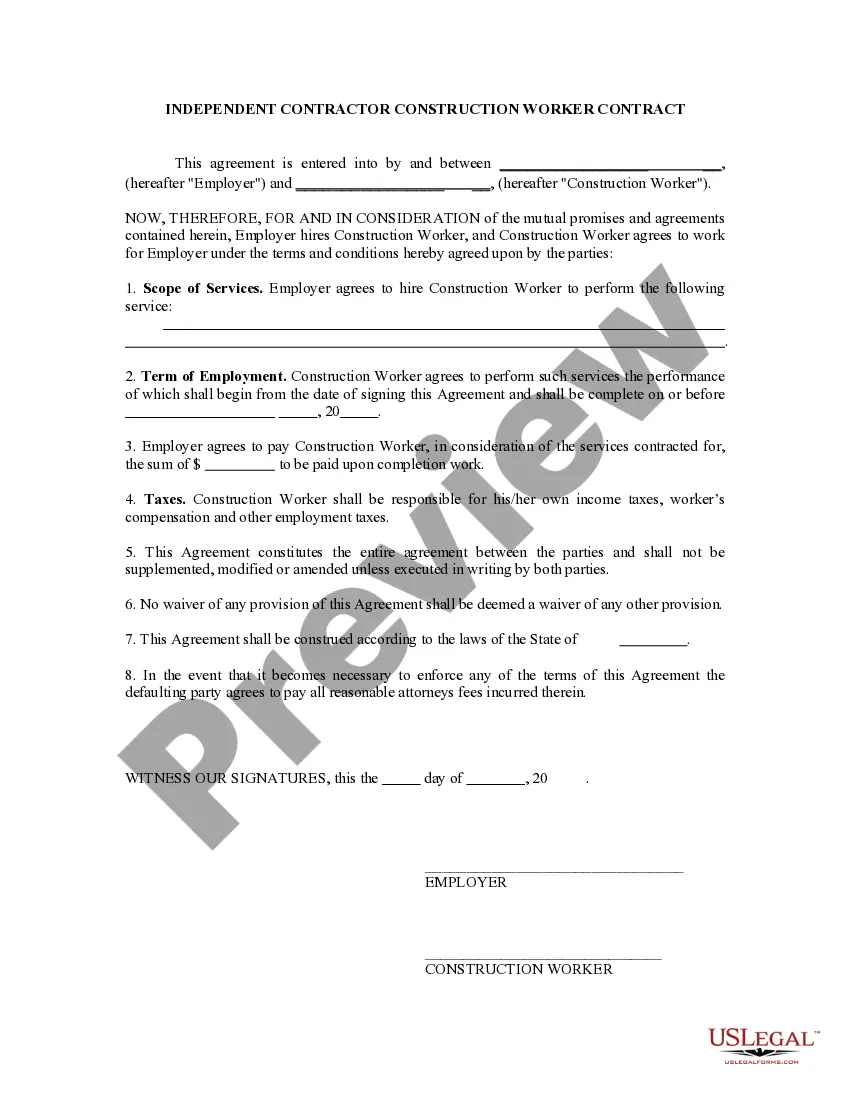
Description
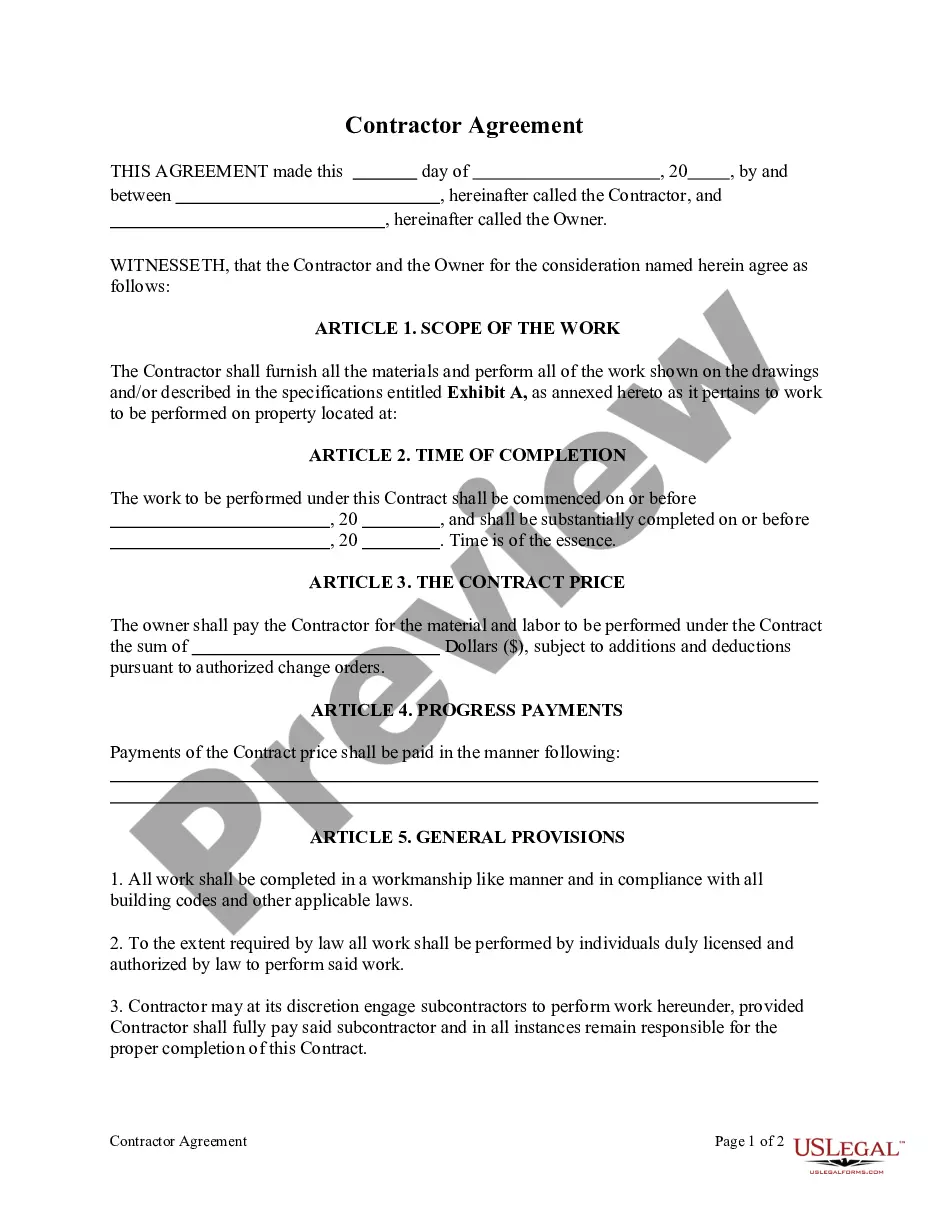
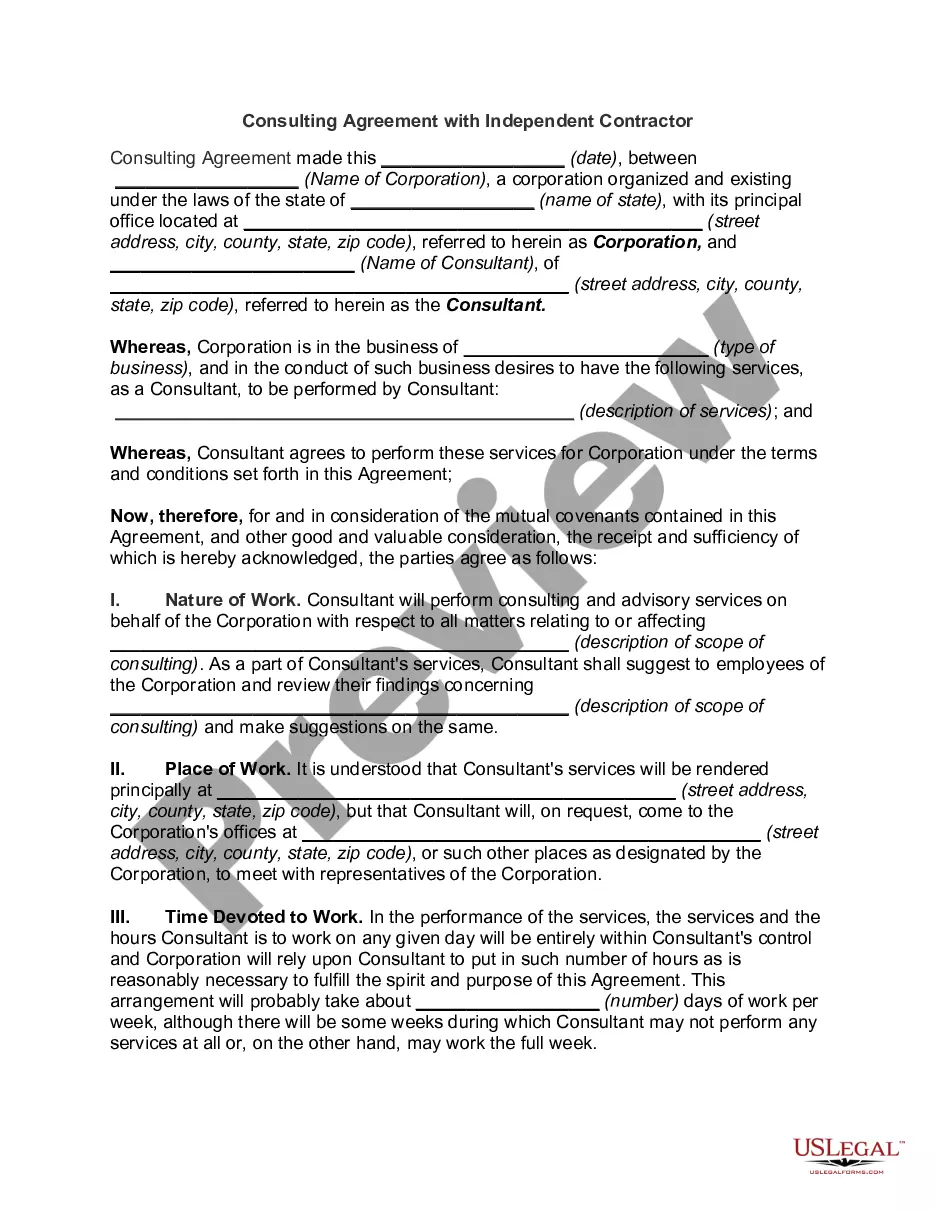
Get your form ready online
Our built-in tools help you complete, sign, share, and store your documents in one place.
Make edits, fill in missing information, and update formatting in US Legal Forms—just like you would in MS Word.
Download a copy, print it, send it by email, or mail it via USPS—whatever works best for your next step.
Sign and collect signatures with our SignNow integration. Send to multiple recipients, set reminders, and more. Go Premium to unlock E-Sign.
If this form requires notarization, complete it online through a secure video call—no need to meet a notary in person or wait for an appointment.
We protect your documents and personal data by following strict security and privacy standards.

Make edits, fill in missing information, and update formatting in US Legal Forms—just like you would in MS Word.

Download a copy, print it, send it by email, or mail it via USPS—whatever works best for your next step.

Sign and collect signatures with our SignNow integration. Send to multiple recipients, set reminders, and more. Go Premium to unlock E-Sign.

If this form requires notarization, complete it online through a secure video call—no need to meet a notary in person or wait for an appointment.

We protect your documents and personal data by following strict security and privacy standards.
Looking for another form?



How to fill out Contractor Agreement?
You can spend hours online looking for the approved document template that meets the state and federal requirements you desire.
US Legal Forms offers thousands of legal forms that are evaluated by experts.
You can download or print the Wisconsin Contractor Agreement from their service.
To find another version of the form, use the Search section to locate the template that meets your needs and requirements.
- If you already have a US Legal Forms account, you can Log In and click the Download button.
- Then, you can complete, modify, print, or sign the Wisconsin Contractor Agreement.
- Every legal document template you purchase is yours forever.
- To download another copy of any purchased form, go to the My documents tab and click the respective button.
- If you are using the US Legal Forms website for the first time, follow the simple instructions below.
- First, ensure that you have selected the correct document template for your state/city of choice.
- Review the form information to confirm you have chosen the right form.
Form popularity
FAQ
The 2-year contractor law refers to guidelines that establish when a contractor may be reclassified into an employee role, often triggered by the duration of their work for a single company. In Wisconsin, if a contractor consistently provides services for more than two years, it might prompt legal scrutiny regarding their employment status. Understanding this law is vital for both contractors and clients. Utilizing a Wisconsin Contractor Agreement ensures that all parties clearly understand the terms of employment, thus avoiding potential legal complications.
A contractor can work for the same company indefinitely, but reclassification may occur after two years under certain laws. Continuous work can lead to questions about the nature of the relationship, including whether benefits should be provided. It is essential to use a Wisconsin Contractor Agreement that specifically outlines the working relationship to protect both parties. This agreement can help maintain clarity and prevent confusion over employment status.
The 2-year contractor rule is typically referenced in contexts like employment stability and benefits. It suggests that if a contractor works on a consistent basis for two years, they may gain rights similar to those of permanent employees. In Wisconsin, being aware of this rule can shape your contractor arrangements. Therefore, it is advisable to have a formal Wisconsin Contractor Agreement in place to define the terms of long-term work.
Generally, in Wisconsin, a contractor's responsibility for their work is linked to the statute of limitations. This usually extends to six years for written agreements under the Wisconsin Contractor Agreement. Therefore, if any issues arise regarding the work performed, you may have up to six years to take action. Always ensure that your agreement clearly outlines responsibilities and expectations.
To make your own contract agreement, start by identifying all key details such as parties involved, payment terms, and the scope of work. Use simple language to ensure clarity, and include an expiration date for the contract's validity. If you're looking for a reliable starting point, consider utilizing the Wisconsin Contractor Agreement templates available on uslegalforms to guide you through the process.
Typically, the hiring party, often the business owner, creates an independent contractor agreement. However, collaboration is key; both parties should discuss and agree on terms to ensure that everyone's needs are met. You can find user-friendly templates for Wisconsin Contractor Agreements on platforms like uslegalforms, making it easy to draft a solid agreement.
Setting up an LLC as an independent contractor in Wisconsin can offer personal liability protection and potential tax benefits. An LLC allows you to separate business assets from personal assets, safeguarding your finances. If you decide to pursue creating an LLC, a comprehensive Wisconsin Contractor Agreement can further define your business relationships and responsibilities.
To set up an independent contractor agreement, start by outlining the project's scope, payment terms, and deadlines. You can use templates tailored to Wisconsin Contractor Agreements to ensure that you include all necessary legal terms. Having a clear agreement protects both parties and sets expectations, making your collaboration smoother.
In Wisconsin, certain contractors must obtain a license, depending on the type of work they perform. For example, electrical, plumbing, and HVAC contractors need specific licenses to operate legally. If you engage in construction projects, having a Wisconsin Contractor Agreement can help clarify roles and responsibilities, while ensuring compliance with local regulations.
To fill out a contractor's affidavit, start by entering your personal details, followed by the scope of work and project information. Clearly state that the work has been completed according to the terms specified in your Wisconsin Contractor Agreement. Make sure to sign and date the affidavit, as this document serves as proof of work compliance and can help protect your rights.