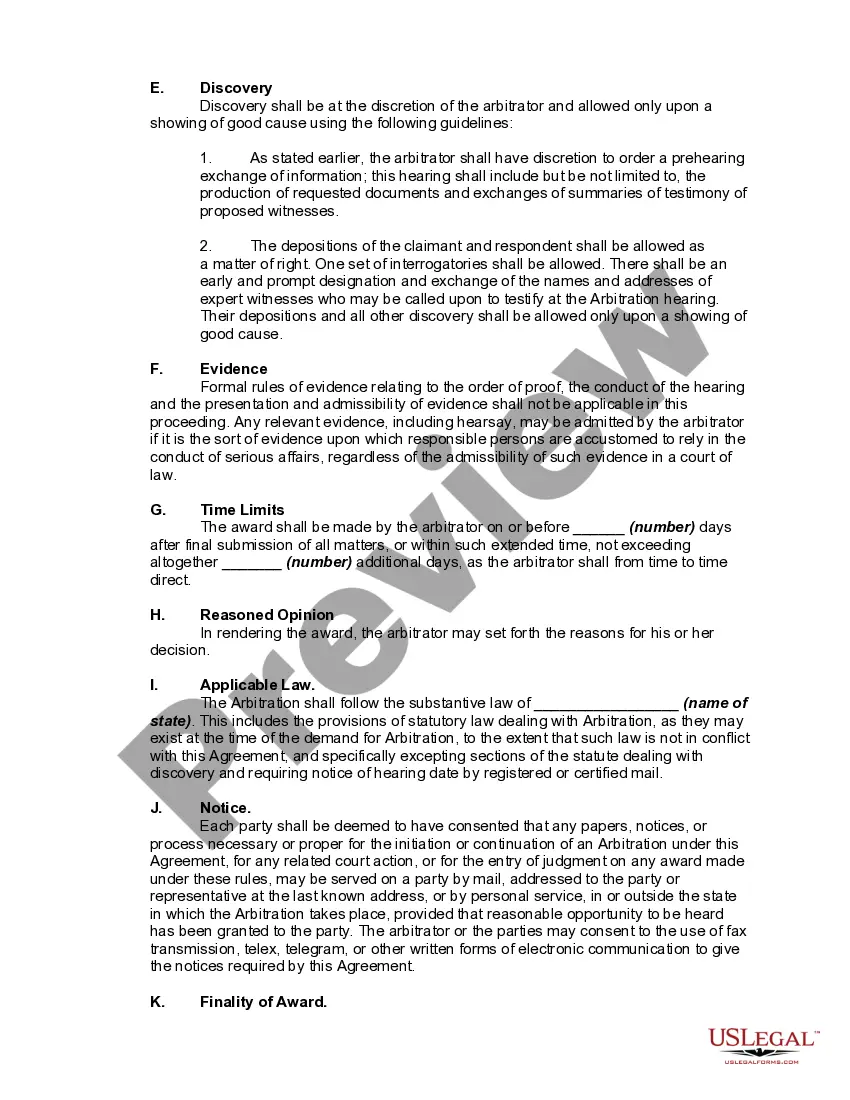
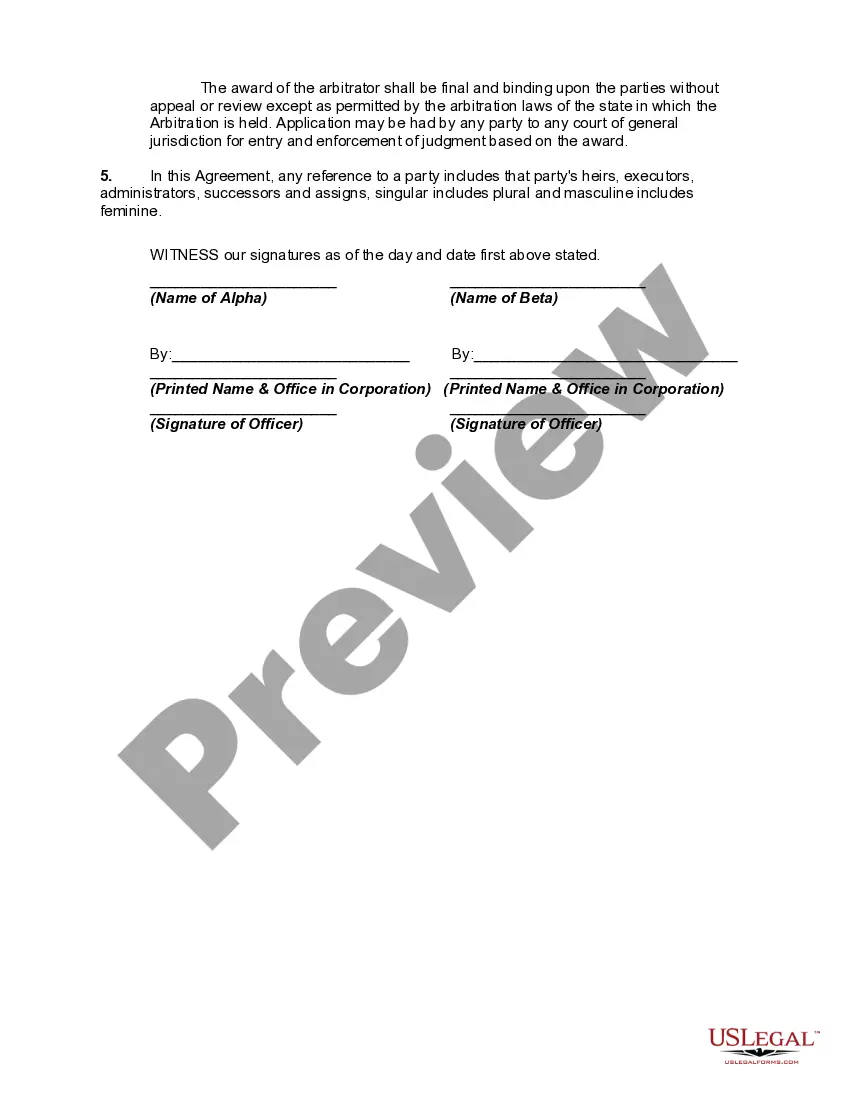
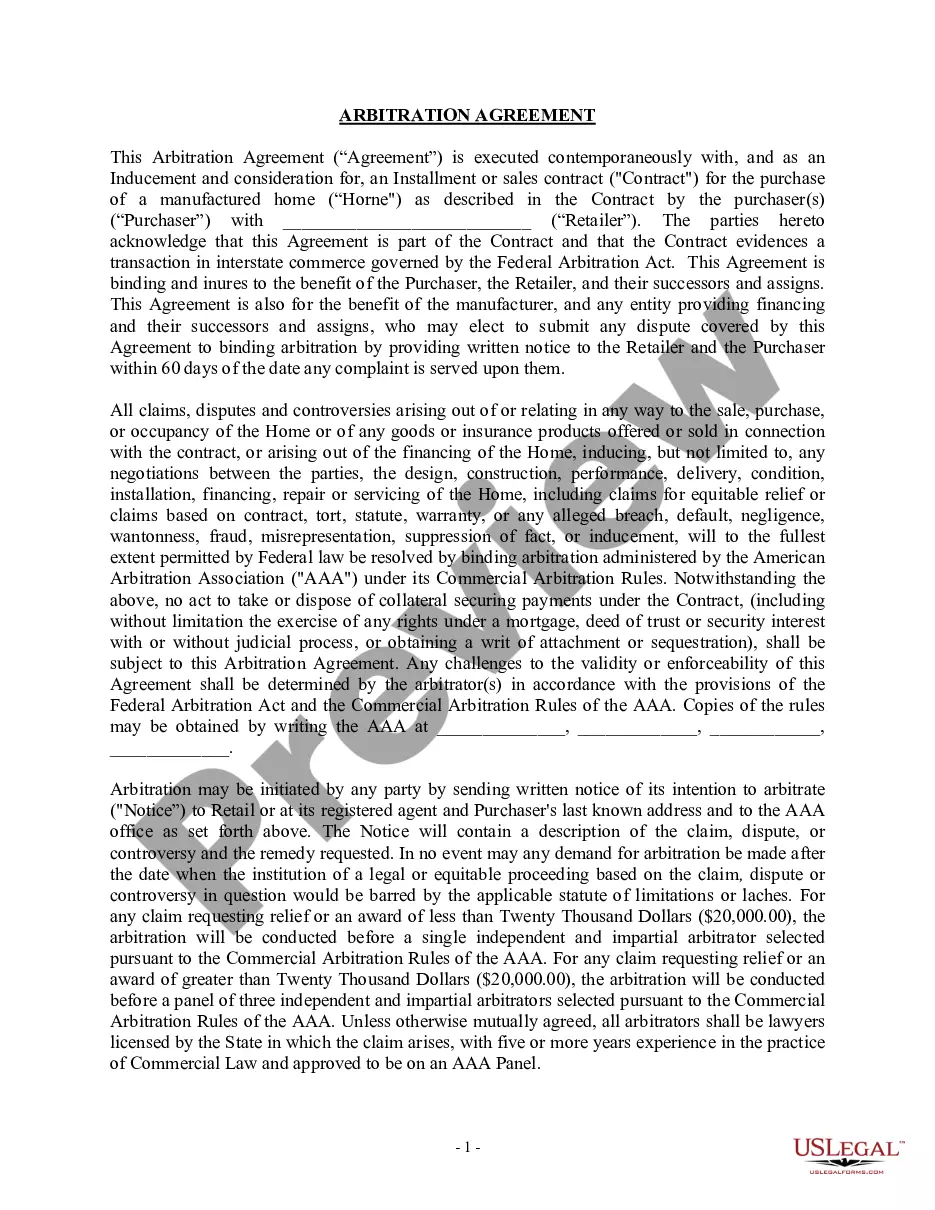
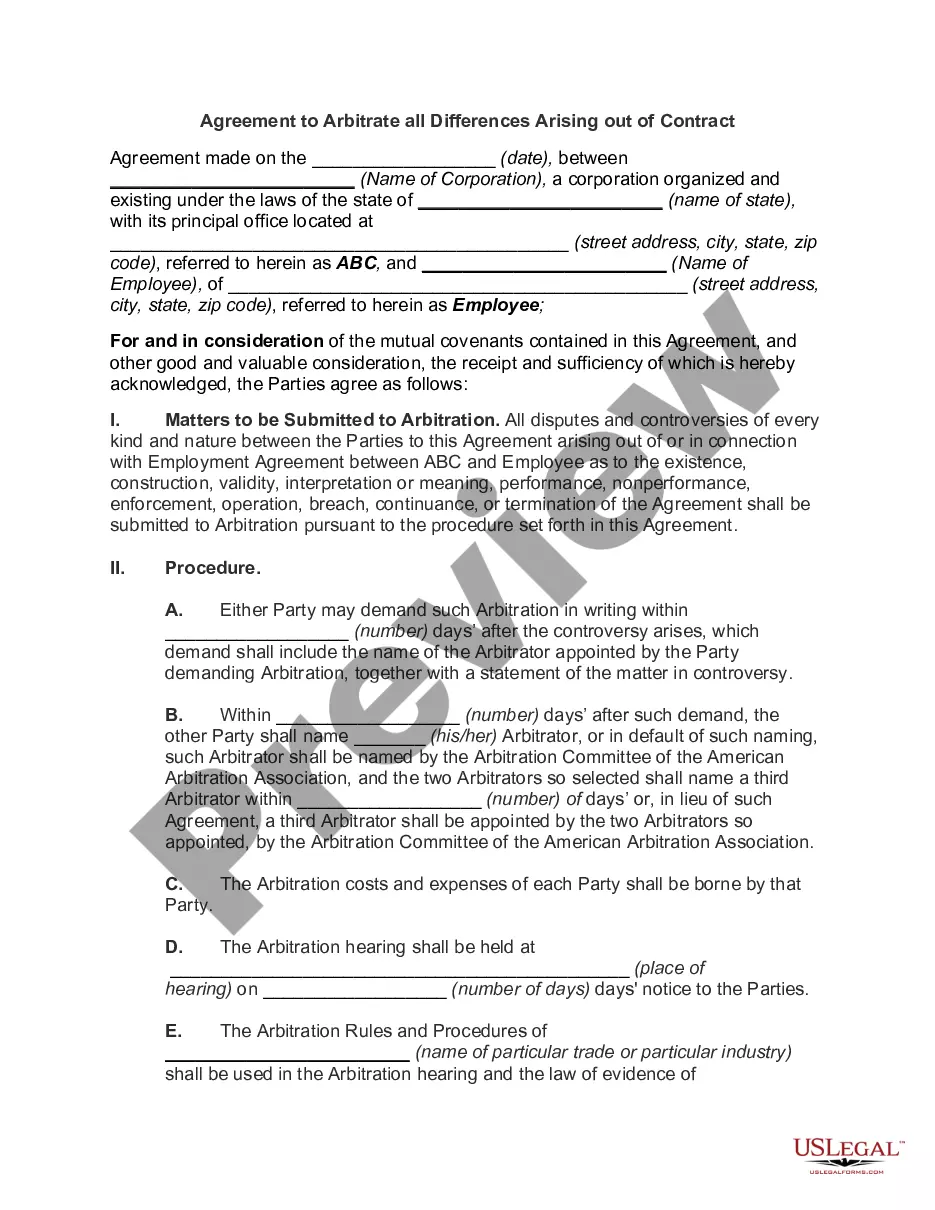
Arbitration is an alternative means of settling a dispute by impartial persons without proceeding to a court trial. It is sometimes preferred as a means of settling a matter in order to avoid the expense, delay, and acrimony of litigation. Discovery is with the discretion of the Arbitrator and there are simplified rules of evidence in arbitration.
Mediation is a non-adversarial method of alternative dispute resolution (ADR) in which a neutral third party helps resolve a dispute. The mediator does not have the power to render a decision on the matter or order an outcome. If a satisfactory resolution cannot be reached, the parties can pursue a lawsuit or arbitration.
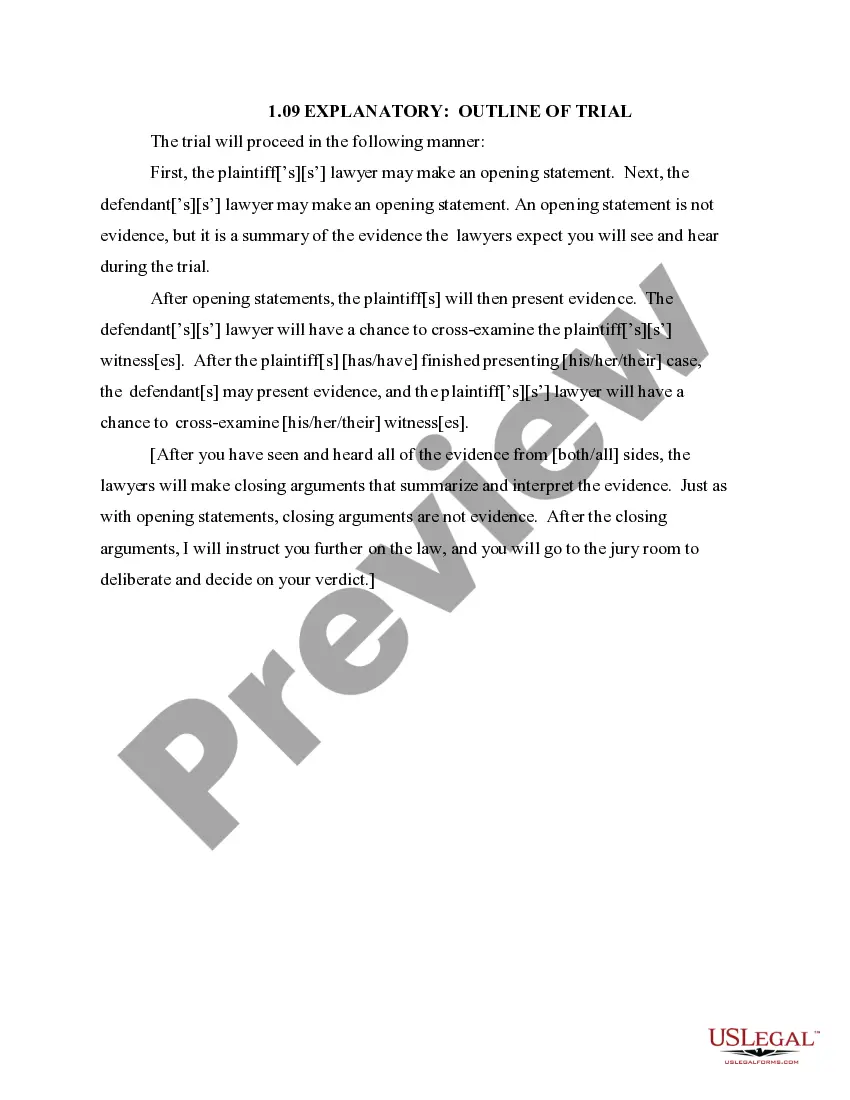
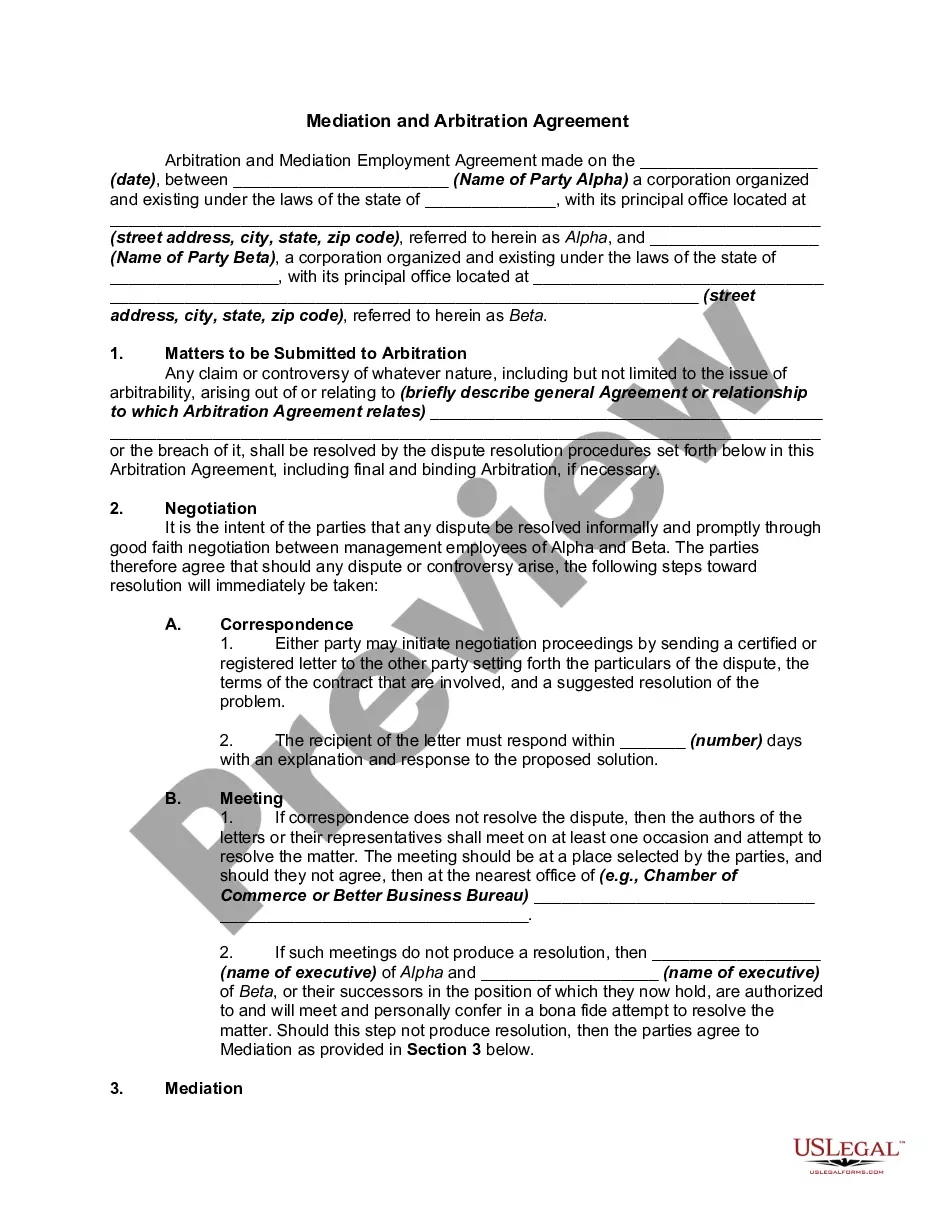
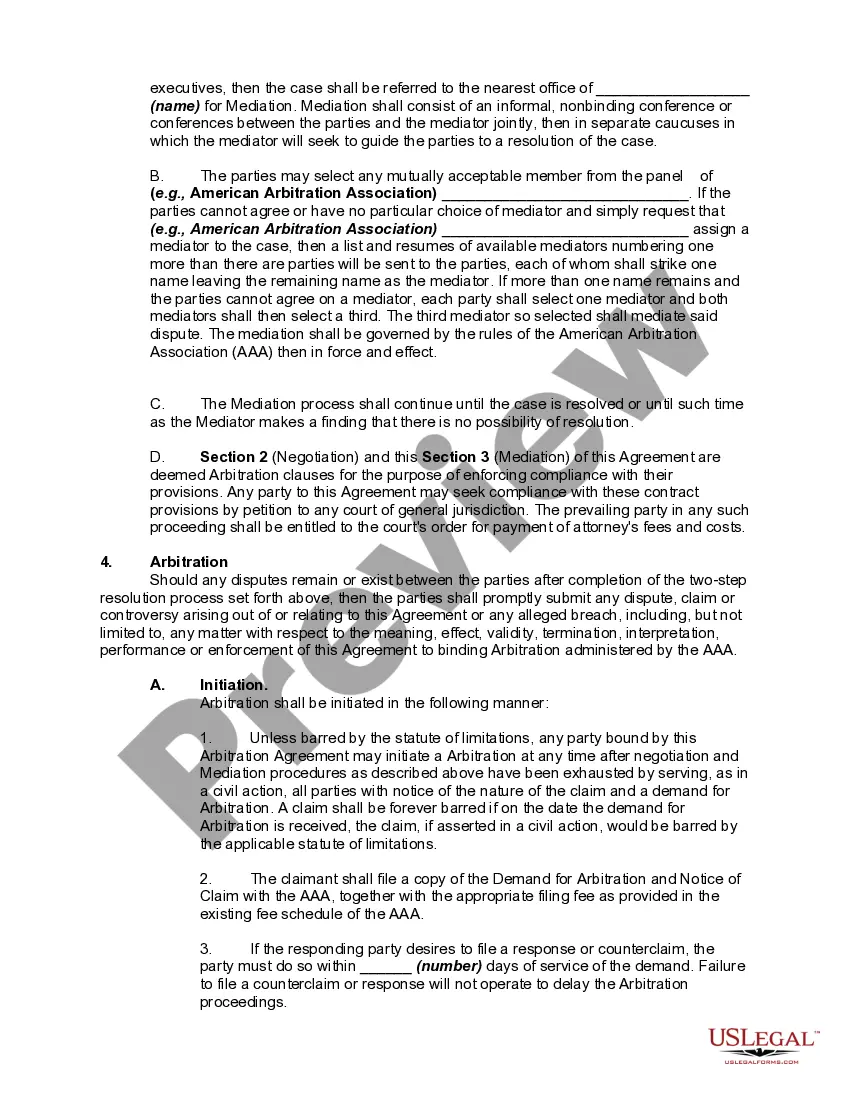
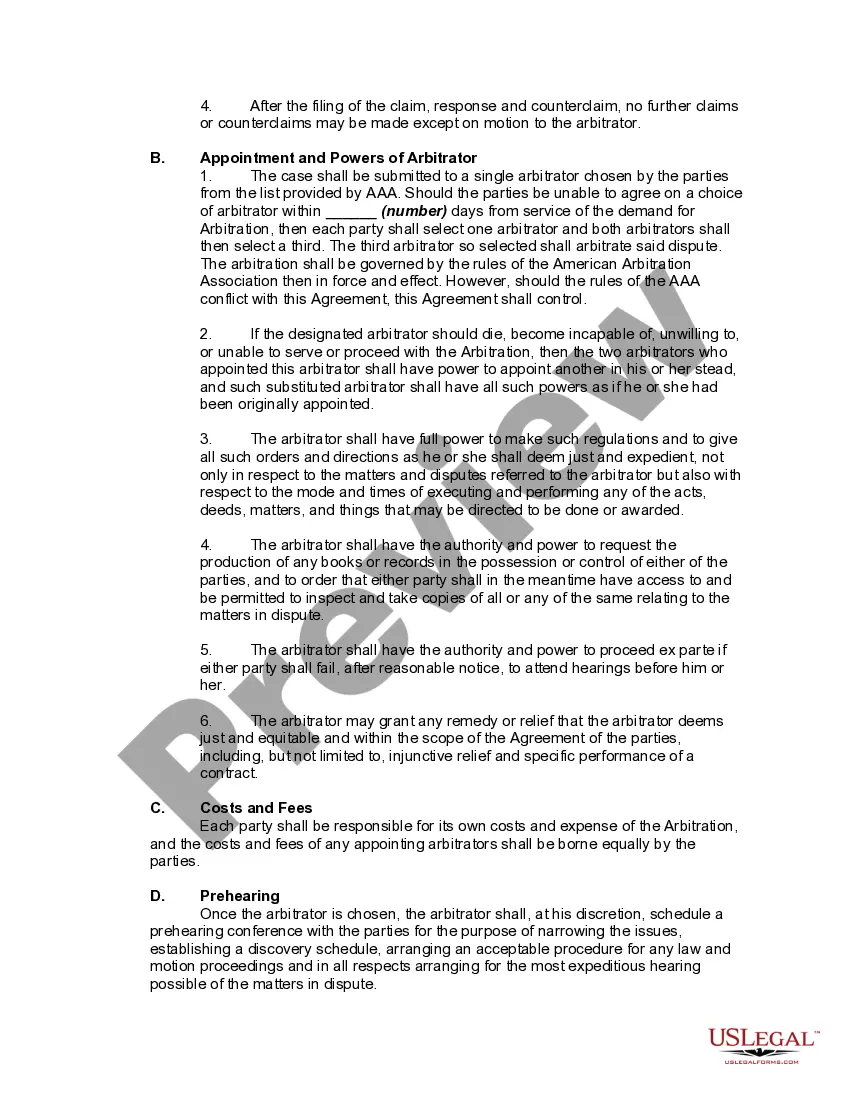
This form provides for negotiation, then mediation if the negotiation fails to resolve the issues. If both negotiation and mediation fail to resolve the issues, the parties arbitrate the dispute.
Wisconsin Mediation and Arbitration Agreement
Category:
State:
Multi-State
Control #:
US-02980BG
Format:
Word;
Rich Text
Instant download
Description
Free preview



Get your form ready online
Our built-in tools help you complete, sign, share, and store your documents in one place.
Built-in online Word editor
Make edits, fill in missing information, and update formatting in US Legal Forms—just like you would in MS Word.
Export easily
Download a copy, print it, send it by email, or mail it via USPS—whatever works best for your next step.
E-sign your document
Sign and collect signatures with our SignNow integration. Send to multiple recipients, set reminders, and more. Go Premium to unlock E-Sign.
Notarize online 24/7
If this form requires notarization, complete it online through a secure video call—no need to meet a notary in person or wait for an appointment.
Store your document securely
We protect your documents and personal data by following strict security and privacy standards.

Make edits, fill in missing information, and update formatting in US Legal Forms—just like you would in MS Word.

Download a copy, print it, send it by email, or mail it via USPS—whatever works best for your next step.

Sign and collect signatures with our SignNow integration. Send to multiple recipients, set reminders, and more. Go Premium to unlock E-Sign.

If this form requires notarization, complete it online through a secure video call—no need to meet a notary in person or wait for an appointment.

We protect your documents and personal data by following strict security and privacy standards.
Looking for another form?

How to fill out Mediation And Arbitration Agreement?
You can spend hours online trying to locate the legal document template that meets the federal and state requirements you need.
US Legal Forms provides a vast array of legal forms that can be reviewed by professionals.
You can download or print the Wisconsin Mediation and Arbitration Agreement from our platform.
Check the form description to ensure you have picked the right document. If available, use the Preview button to browse through the document template too.
- If you already have a US Legal Forms account, you can Log In and click the Obtain button.
- Afterward, you can complete, modify, print, or sign the Wisconsin Mediation and Arbitration Agreement.
- Each legal document template you purchase is yours forever.
- To obtain an additional copy of any purchased form, head to the My documents tab and click the appropriate button.
- If you are using the US Legal Forms website for the first time, follow the simple instructions below.
- First, ensure that you have selected the correct document template for your state/city.
Form popularity
FAQ
To write a mediation agreement, start by outlining the purpose and scope of the mediation. Clearly define the roles and responsibilities of each party and include any necessary confidentiality agreements. By ensuring clarity in these areas, you enhance your Wisconsin Mediation and Arbitration Agreement, promoting a smoother mediation process.
The average settlement offer during mediation can vary widely depending on the nature of the dispute and the parties involved. Statistically, offers may range from 30% to 70% of the claimed amount, influenced by factors like the strength of each party's case and negotiation skills. Engaging in mediation can often lead to a more favorable settlement for both parties involved in a Wisconsin Mediation and Arbitration Agreement.
To write a mediation agreement, start by identifying the parties involved and laying out the issues to be addressed. Clearly state the mediation process steps, including confidentiality provisions and the mediator's role. This ensures all parties understand their commitments, making your Wisconsin Mediation and Arbitration Agreement both clear and effective.
An example of a mediation clause could read: 'Any disputes arising from this agreement shall first be addressed through mediation in accordance with the rules of the American Arbitration Association before proceeding to arbitration or litigation.' Including such clauses in your contracts can facilitate resolution through your Wisconsin Mediation and Arbitration Agreement, promoting a more amicable dispute resolution process.
A good mediation statement should summarize the key facts of the case, outline the issues in dispute, and express the desired outcomes. Use clear and concise language to communicate your position effectively while being respectful of the opposing party's perspective. Ultimately, a well-crafted mediation statement is crucial for a successful Wisconsin Mediation and Arbitration Agreement, as it sets the tone for constructive dialogue.
To write an arbitration agreement, start by defining the scope of the arbitration, including the types of disputes it will cover. Clearly state the rules governing the arbitration process and specify how the arbitrator(s) will be selected. Be sure to include a clear clause that indicates consent to arbitration, ensuring that all parties understand and agree to this approach as part of your Wisconsin Mediation and Arbitration Agreement.
The choice between mediation and arbitration hinges on the nature of the dispute and the desired outcomes. Wisconsin Mediation and Arbitration Agreements provide distinct processes; mediation emphasizes collaboration and mutual agreement, while arbitration yields a binding decision from an arbitrator. For parties seeking control and flexibility over outcomes, mediation may be preferable. Conversely, if you desire a conclusive resolution, arbitration could serve your needs better.
Yes, arbitration clauses are generally enforceable in Wisconsin under state and federal law. This enforceability stems from the legal framework supporting Wisconsin Mediation and Arbitration Agreements, which promote alternative dispute resolution. However, the specific terms of the agreement must comply with statutory requirements to ensure validity. Therefore, it is crucial to draft these agreements carefully to mitigate the risk of challenges.
In most cases, mediation comes first, as outlined in the Wisconsin Mediation and Arbitration Agreement. This practice allows parties to explore resolution collaboratively before entering into the more formal arbitration process. Starting with mediation can help preserve relationships and reduce hostility, making it a favorable first step in conflict resolution. Embracing this order can lead to more amicable outcomes.
The combination of mediation and arbitration can be effectively described as 'med-arb,' a process where parties first attempt mediation and, if unsuccessful, transition to arbitration. Under a Wisconsin Mediation and Arbitration Agreement, this hybrid method encourages cooperative resolution while preserving the option for a binding decision. Such a framework can maximize chances for a mutually satisfactory outcome.