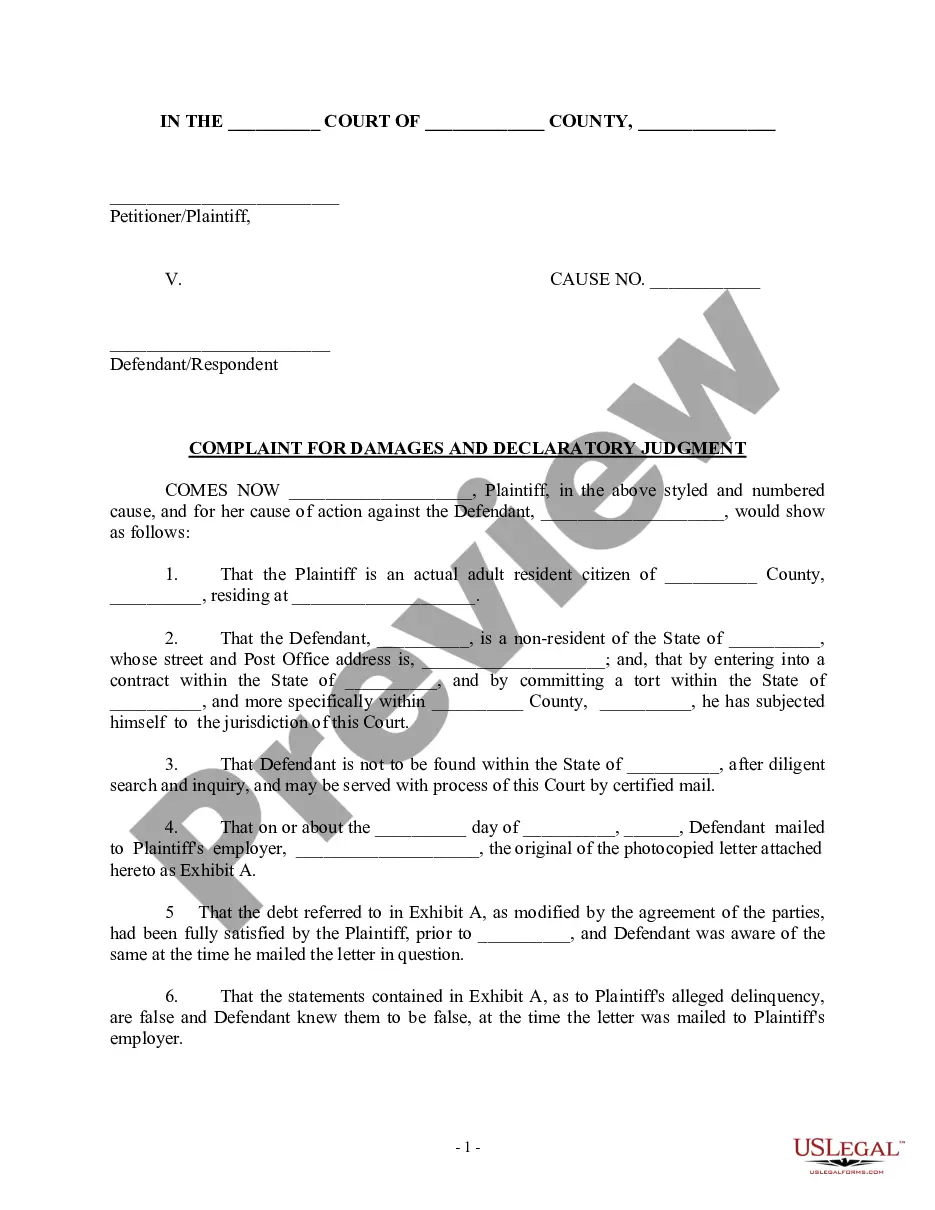
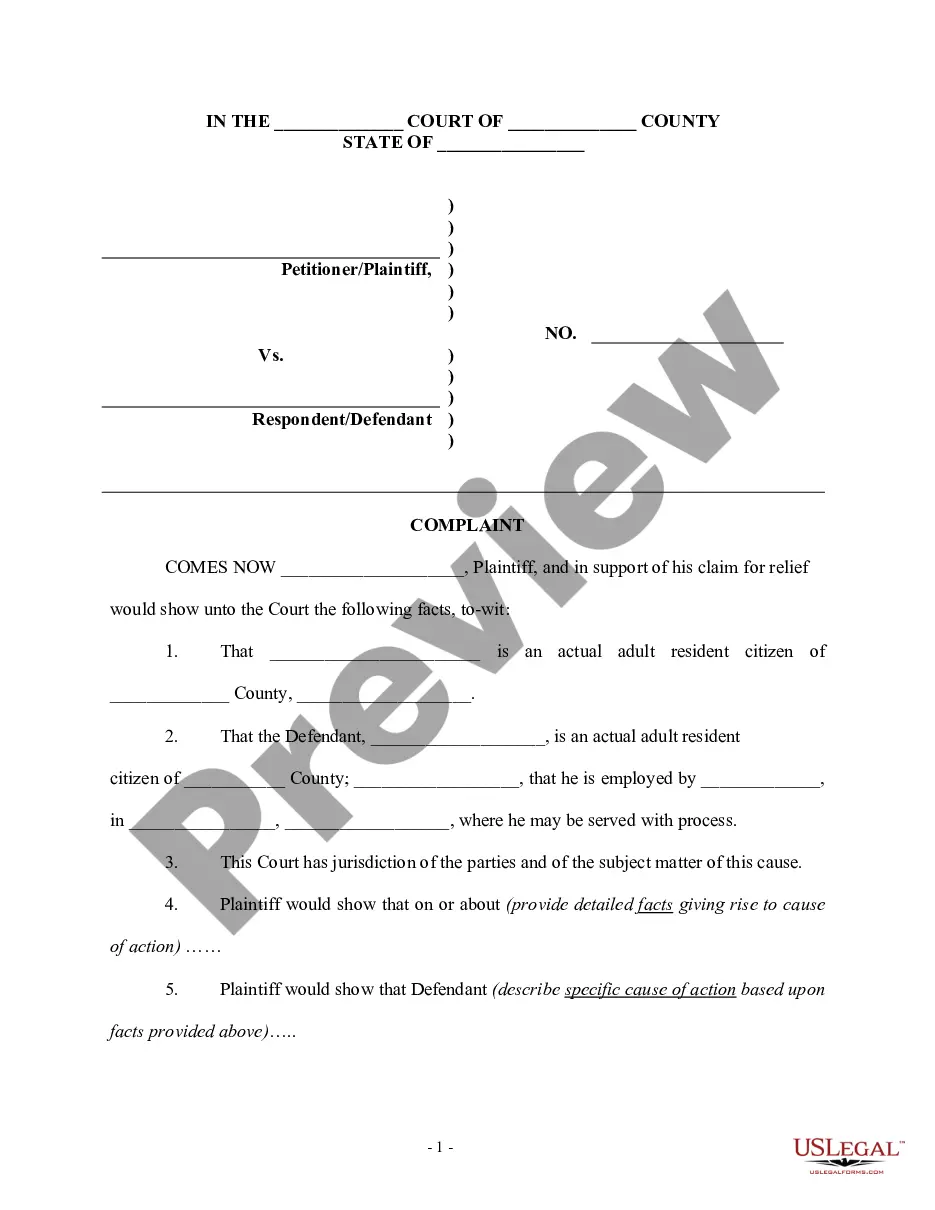
Wisconsin Complaint for Declaratory Judgment
Description




Get your form ready online
Our built-in tools help you complete, sign, share, and store your documents in one place.
Make edits, fill in missing information, and update formatting in US Legal Forms—just like you would in MS Word.
Download a copy, print it, send it by email, or mail it via USPS—whatever works best for your next step.
Sign and collect signatures with our SignNow integration. Send to multiple recipients, set reminders, and more. Go Premium to unlock E-Sign.
If this form requires notarization, complete it online through a secure video call—no need to meet a notary in person or wait for an appointment.
We protect your documents and personal data by following strict security and privacy standards.

Make edits, fill in missing information, and update formatting in US Legal Forms—just like you would in MS Word.

Download a copy, print it, send it by email, or mail it via USPS—whatever works best for your next step.

Sign and collect signatures with our SignNow integration. Send to multiple recipients, set reminders, and more. Go Premium to unlock E-Sign.

If this form requires notarization, complete it online through a secure video call—no need to meet a notary in person or wait for an appointment.

We protect your documents and personal data by following strict security and privacy standards.
Looking for another form?
How to fill out Complaint For Declaratory Judgment?
Finding the correct legitimate document template can be challenging. Obviously, there are numerous designs available online, but how do you find the legitimate form you need.
Use the US Legal Forms website. The service offers thousands of templates, including the Wisconsin Complaint for Declaratory Judgment, that you can utilize for business and personal needs. All of the forms are verified by professionals and comply with state and federal regulations.
If you are already registered, Log In to your account and click on the Acquire button to obtain the Wisconsin Complaint for Declaratory Judgment. Use your account to browse through the legitimate forms you have purchased previously. Visit the My documents tab in your account to retrieve another copy of the document you need.
US Legal Forms is the largest repository of legitimate forms where you can find various document templates. Use the service to obtain professionally crafted documents that adhere to state requirements.
- First, ensure you have chosen the correct form for your city/state.
- You can review the form using the Preview button and read the form description to confirm it is suitable for you.
- If the form does not meet your requirements, utilize the Search field to find the appropriate form.
- Once you are confident that the form is acceptable, click the Buy now button to acquire the form.
- Select the pricing plan you prefer and enter the required information.
- Create your account and pay for the order using your PayPal account or credit card.
- Choose the file format and download the legitimate document template to your device.
- Complete, edit, print, and sign the received Wisconsin Complaint for Declaratory Judgment.
Form popularity
FAQ
A counterclaim of infringement is a compulsory counterclaim to a claim for declaratory judgment of non-infringement. If a patent owner fails to assert an infringement counterclaim in a declaratory-judgment non-infringement suit, the patent infringement claim will be deemed waived.
A judgment can remain on your credit report for seven years or until the statute of limitations expires, whichever is longer. In Wisconsin, the statute of limitations on a judgment can be up to 20 years.
995.50(2)(am)1. 1. Intrusion upon the privacy of another of a nature highly offensive to a reasonable person, except as provided under par. (bm), in a place that a reasonable person would consider private, or in a manner that is actionable for trespass.
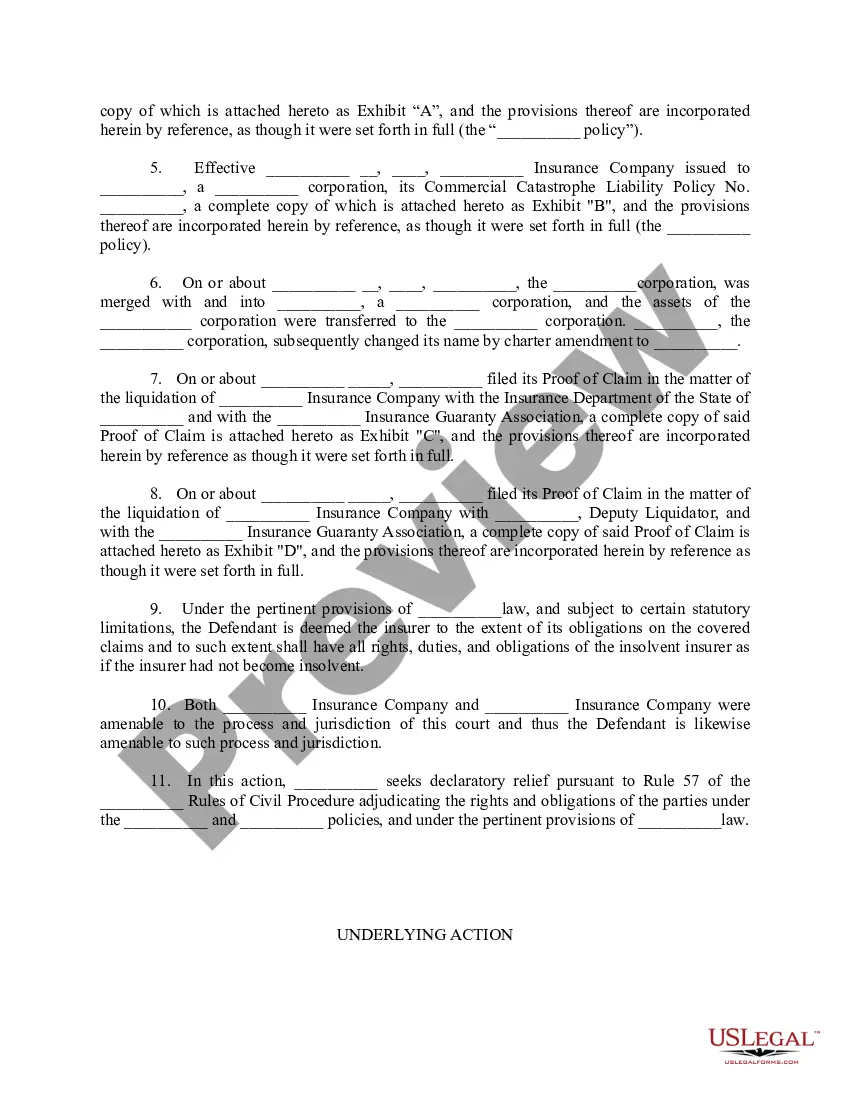
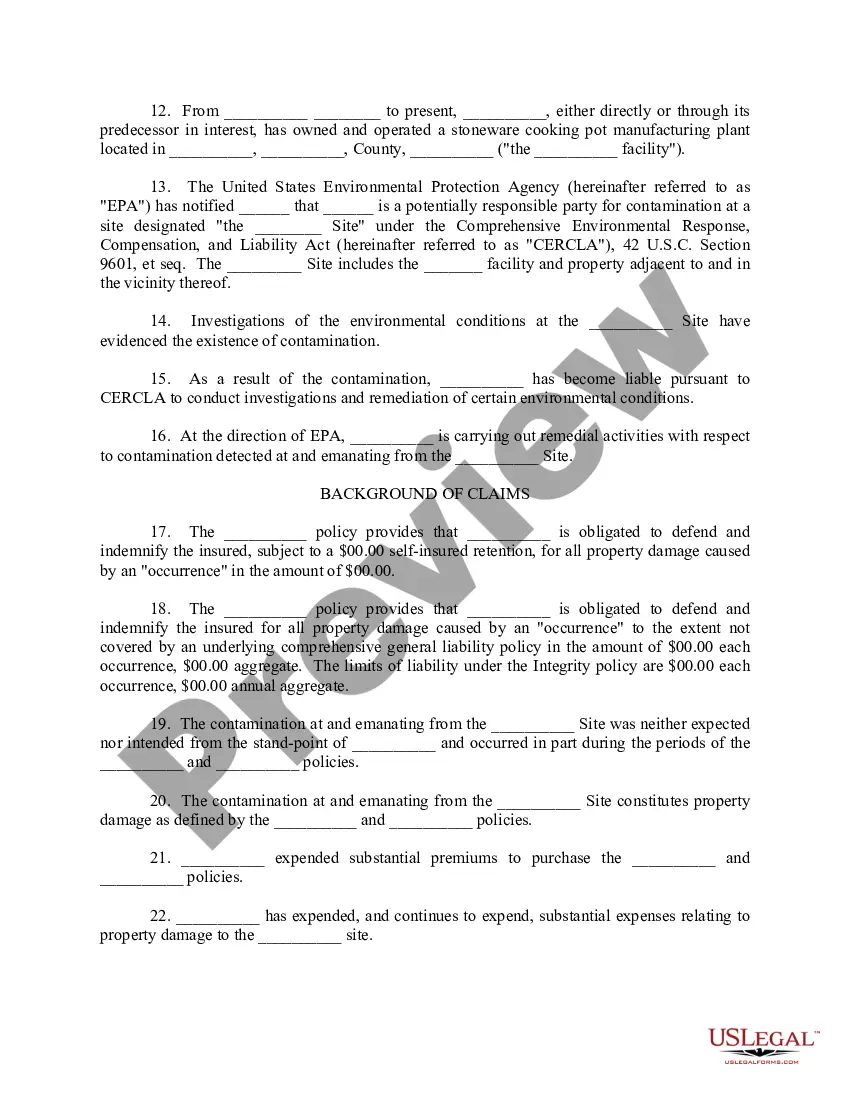
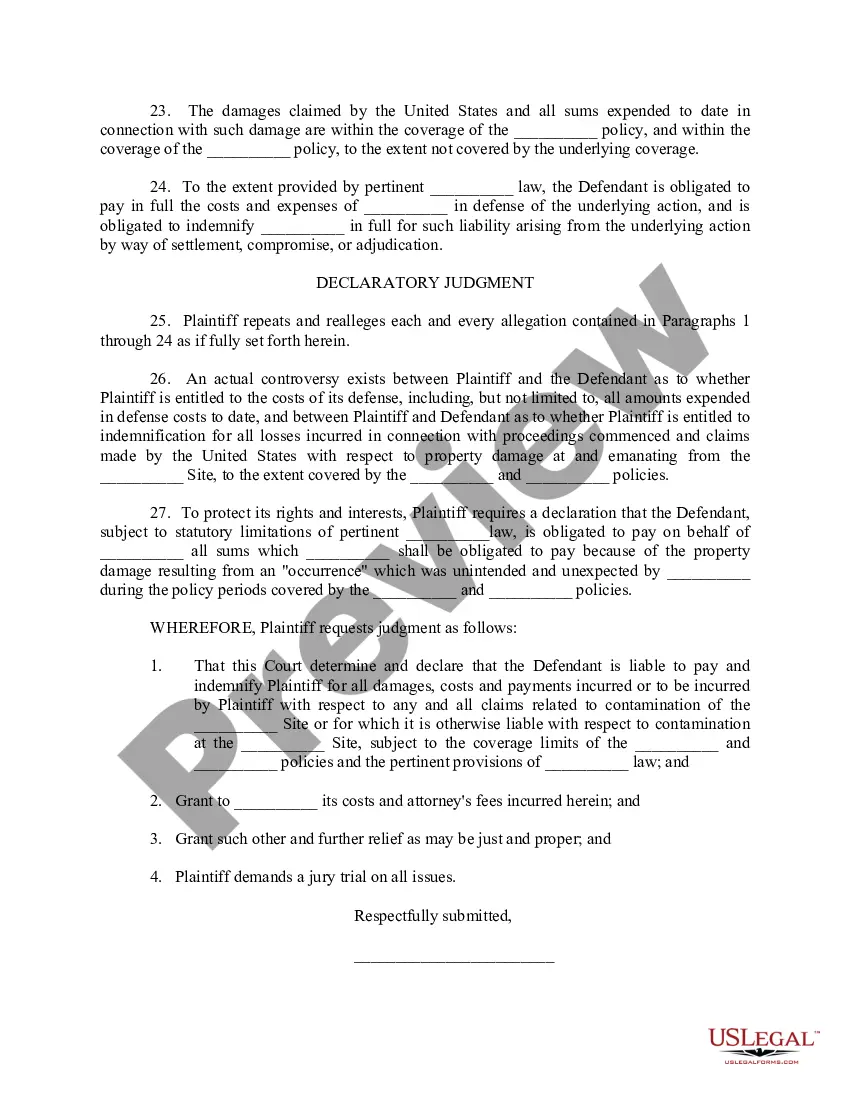
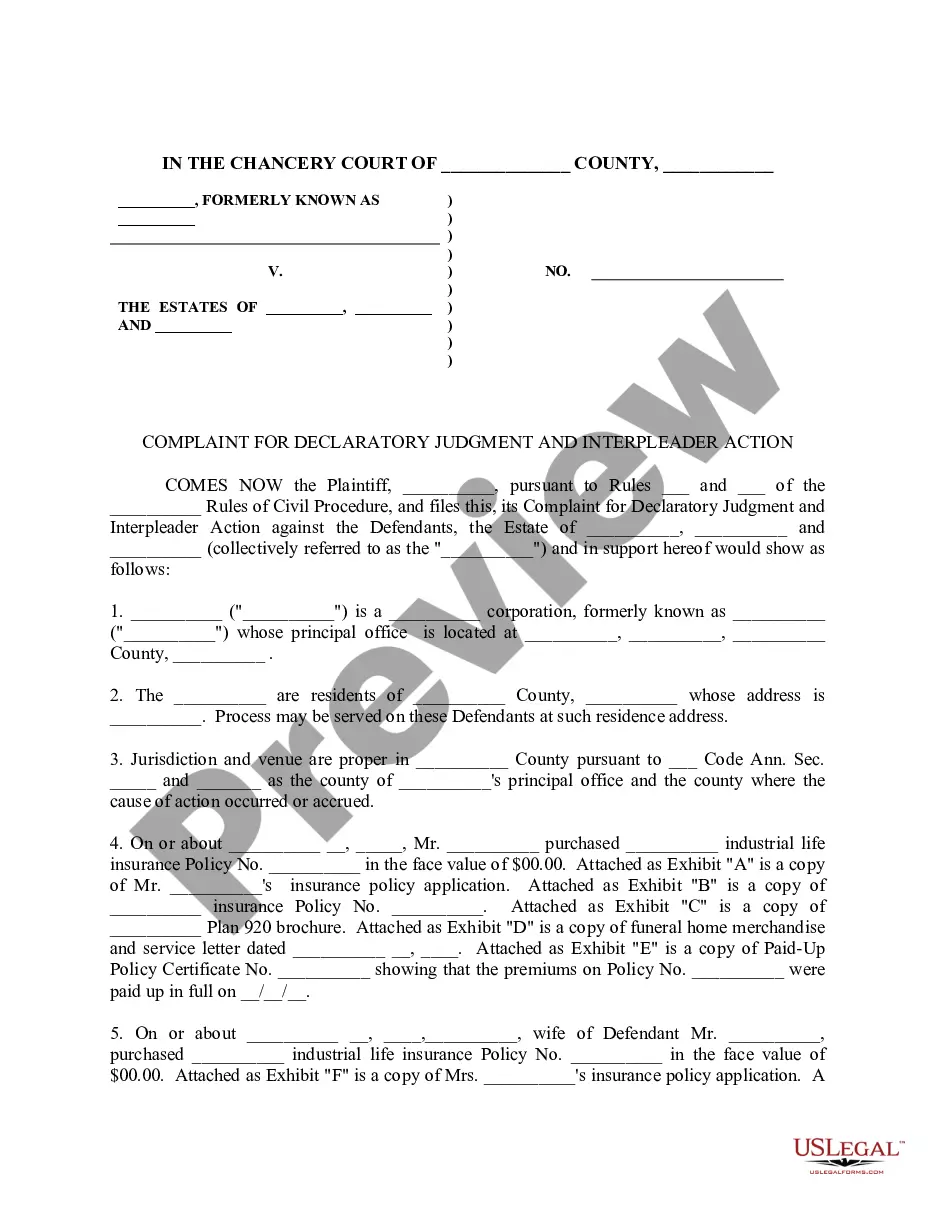
A declaratory judgment is a binding judgment from a court defining the legal relationship between parties and their rights in a matter before the court. When there is uncertainty as to the legal obligations or rights between two parties, a declaratory judgment offers an immediate means to resolve this uncertainty.
Declaratory judgment is appropriate if: 1) there is a controversy in which a claim is asserted against a party with an interest in contesting it; 2) the controversy is between adverse parties; 3) the party seeking relief has a legally protectible interest; and 4) the issue in controversy is ripe for determination.
For example, a declaratory judgment action could be brought to determine party rights and obligations under a contract or to establish the validity of a patent. Under Article III of the U.S. Constitution, a federal court may only issue a declaratory judgment when there is an actual controversy.
To establish federal jurisdiction in a declaratory judgment action, two conditions must be satisfied. First, is the constitutional inquiry - the case must be a 'case or controversy' pursuant to Article III of the US Constitution. Second is the prudential inquiry ? declaratory relief must be appropriate.
A declaratory judgment is typically requested when a party is threatened with a lawsuit but the lawsuit has not yet been filed; or when a party or parties believe that their rights under law and/or contract might conflict; or as part of a counterclaim to prevent further lawsuits from the same plaintiff (for example, ...