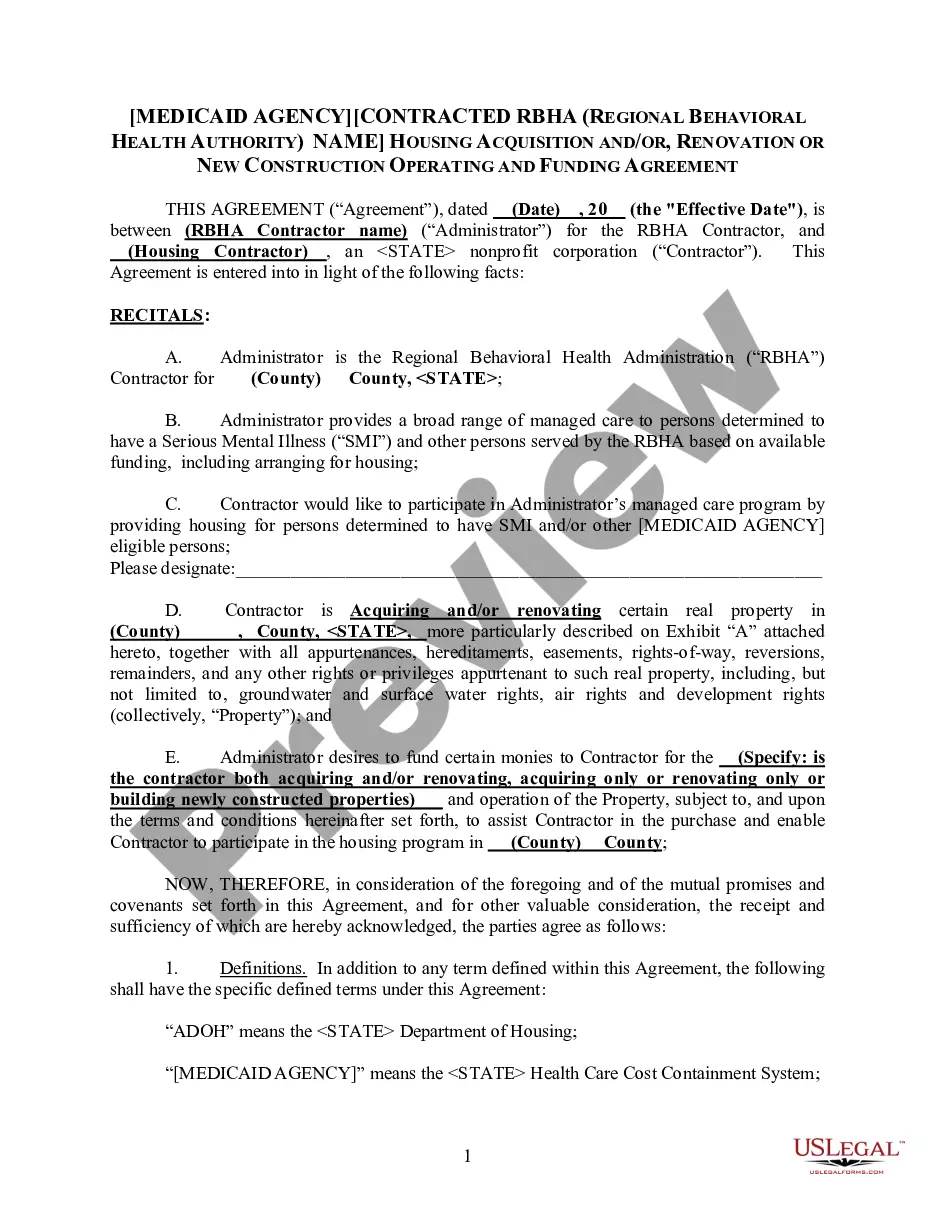
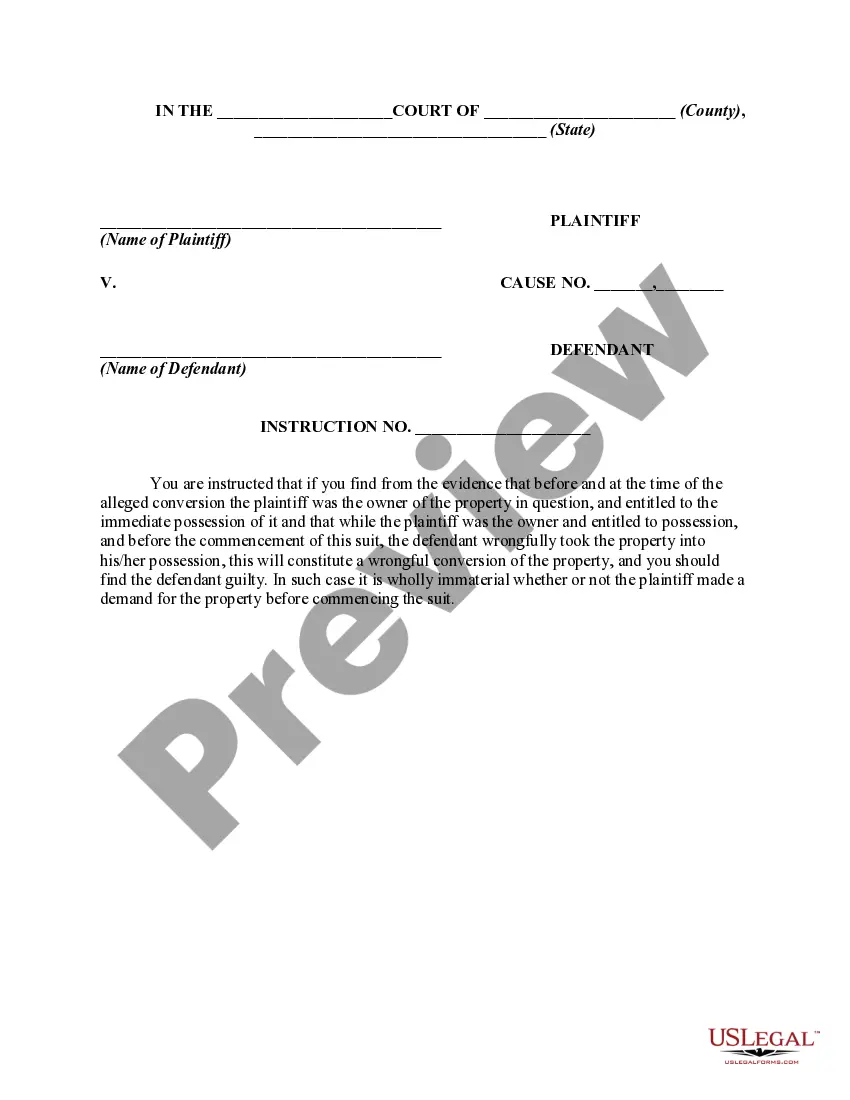
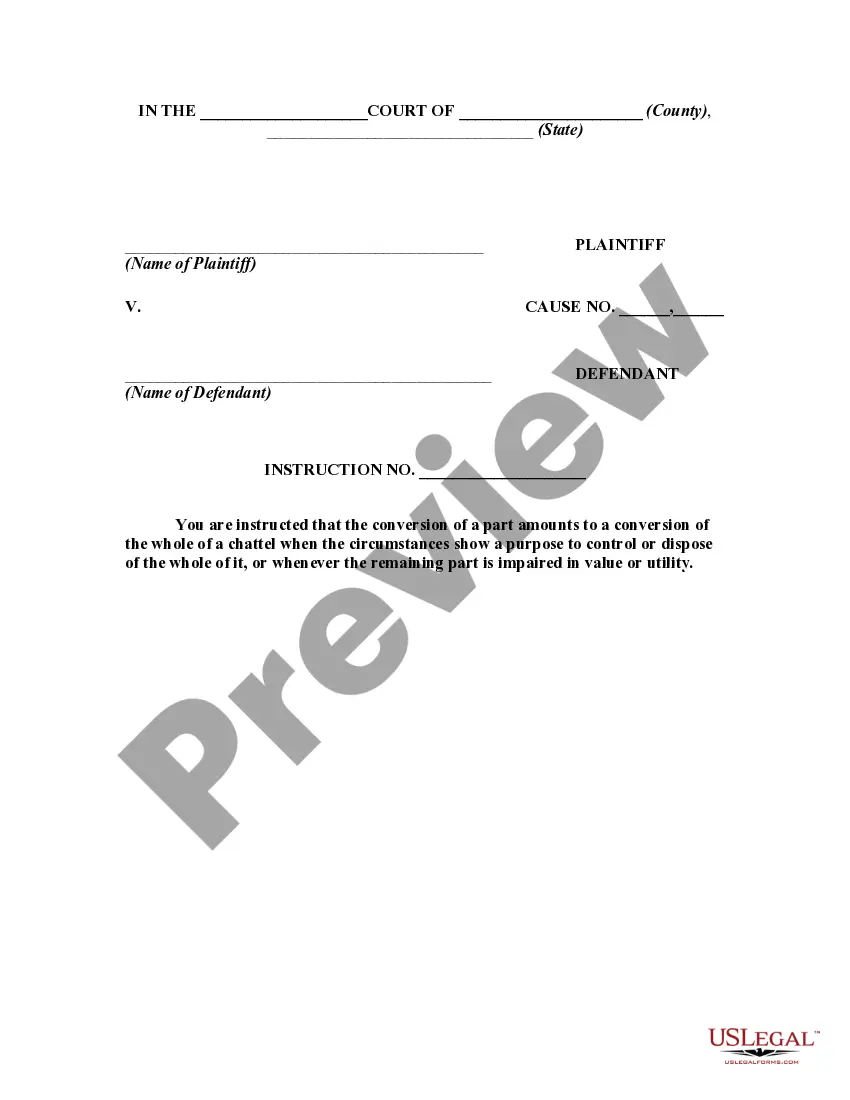
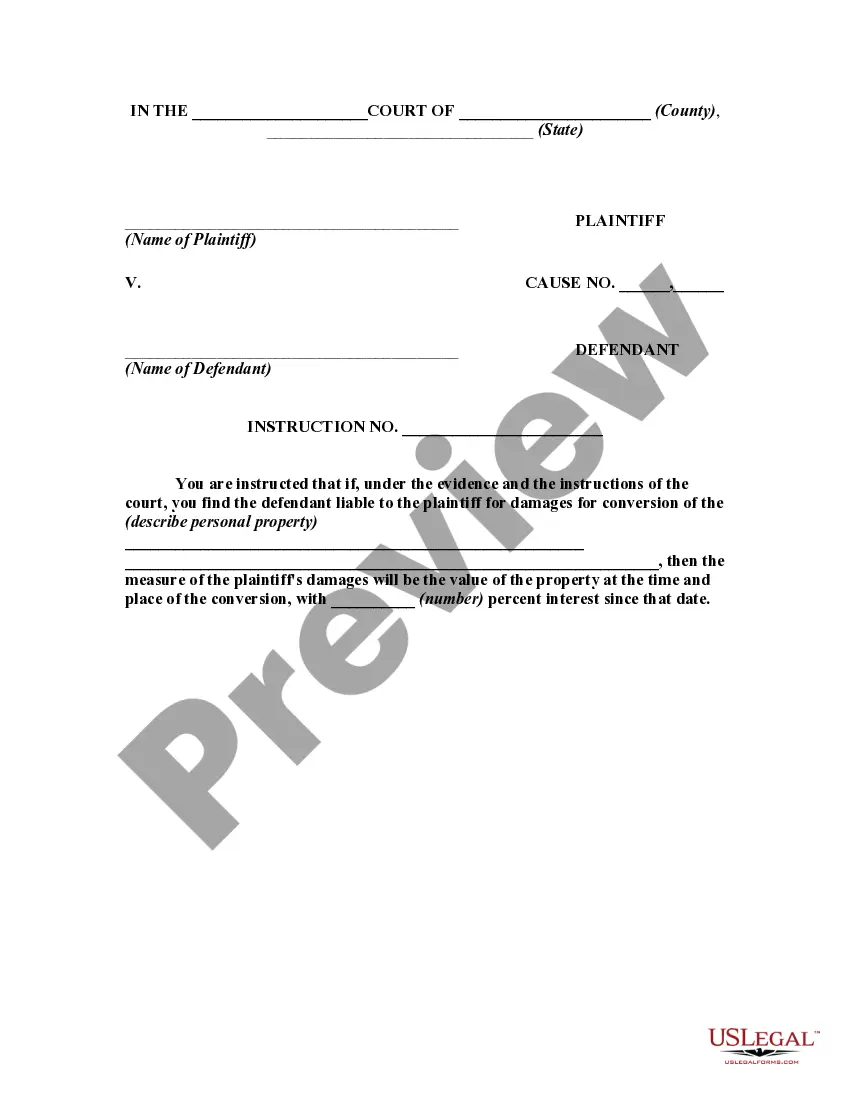
A jury instruction is the judge's oral explanation of the law governing a case. Jury instructions are given after the attorneys have presented all the evidence and have made final arguments, but before the jury begins deliberations. Improper explanations of the law to be applied in jury instructions are often the basis for later appeals.
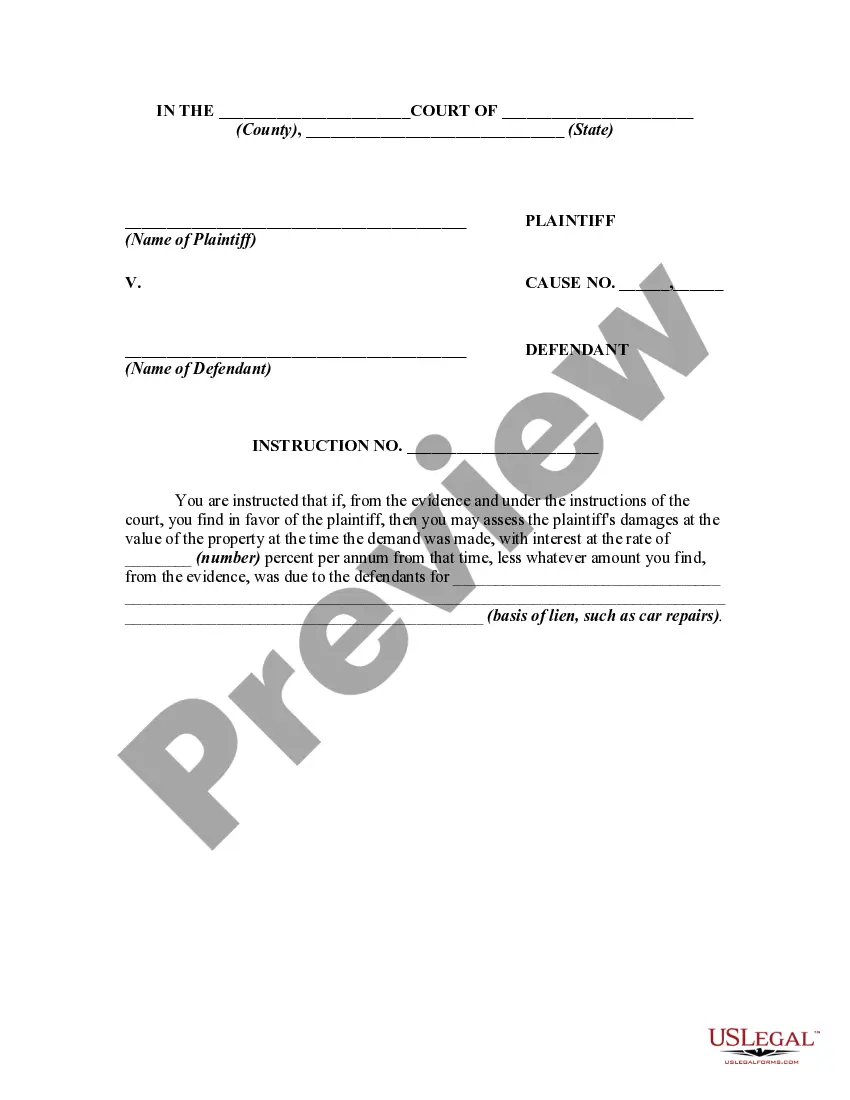
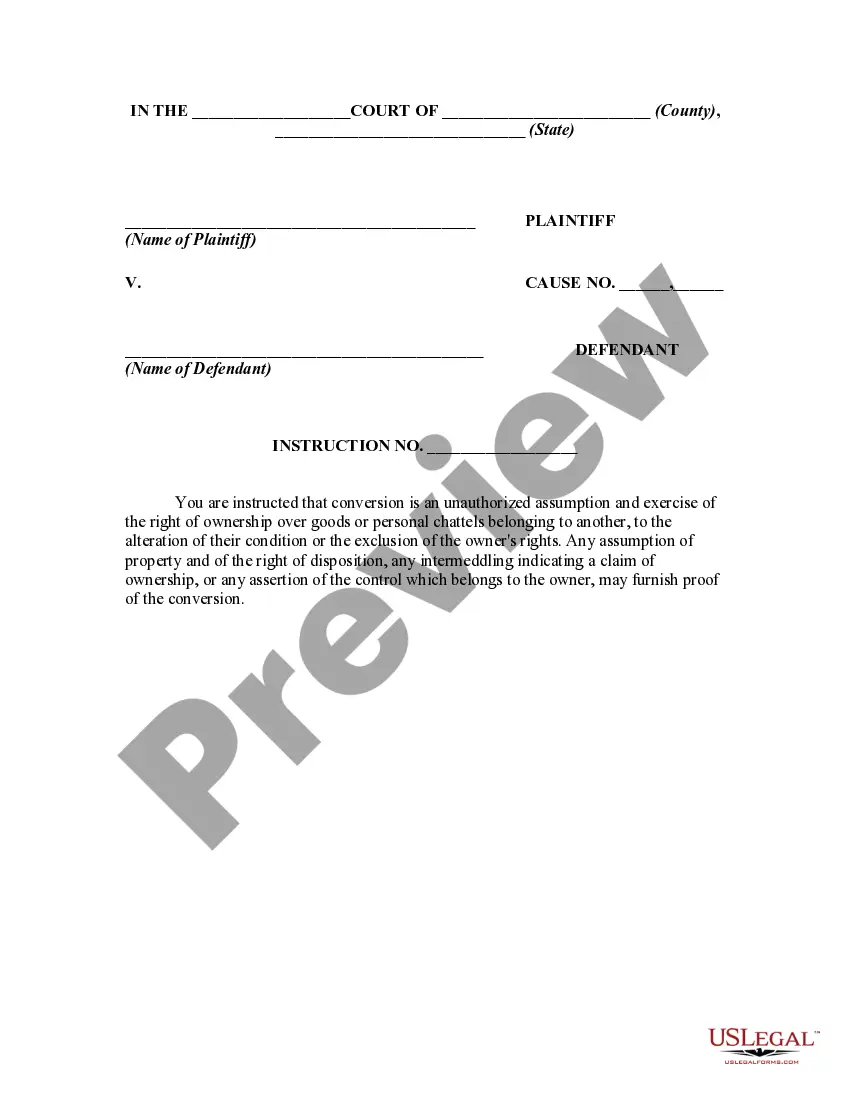
Wisconsin Instruction to Jury Regarding Goods Wrongfully Taken From Plaintiff as Conversion
State:
Multi-State
Control #:
US-01432BG
Format:
Word;
Rich Text
Instant download
Description
Get your form ready online
Our built-in tools help you complete, sign, share, and store your documents in one place.
Built-in online Word editor
Make edits, fill in missing information, and update formatting in US Legal Forms—just like you would in MS Word.
Export easily
Download a copy, print it, send it by email, or mail it via USPS—whatever works best for your next step.
E-sign your document
Sign and collect signatures with our SignNow integration. Send to multiple recipients, set reminders, and more. Go Premium to unlock E-Sign.
Notarize online 24/7
If this form requires notarization, complete it online through a secure video call—no need to meet a notary in person or wait for an appointment.
Store your document securely
We protect your documents and personal data by following strict security and privacy standards.

Make edits, fill in missing information, and update formatting in US Legal Forms—just like you would in MS Word.

Download a copy, print it, send it by email, or mail it via USPS—whatever works best for your next step.

Sign and collect signatures with our SignNow integration. Send to multiple recipients, set reminders, and more. Go Premium to unlock E-Sign.

If this form requires notarization, complete it online through a secure video call—no need to meet a notary in person or wait for an appointment.

We protect your documents and personal data by following strict security and privacy standards.
Looking for another form?




How to fill out Instruction To Jury Regarding Goods Wrongfully Taken From Plaintiff As Conversion?
Are you currently in the situation where you require documents for either business or personal reasons almost every day.
There are numerous legitimate document templates available online, but finding ones you can trust isn’t easy.
US Legal Forms offers thousands of form templates, such as the Wisconsin Instruction to Jury Regarding Goods Wrongfully Taken From Plaintiff as Conversion, which are designed to meet state and federal requirements.
Access all the document templates you have purchased in the My documents section.
You can download an additional copy of the Wisconsin Instruction to Jury Regarding Goods Wrongfully Taken From Plaintiff as Conversion at any time, if needed. Simply navigate to the necessary form to download or print the document template.
- If you are already acquainted with the US Legal Forms site and have an account, simply Log In.
- After that, you can download the Wisconsin Instruction to Jury Regarding Goods Wrongfully Taken From Plaintiff as Conversion template.
- If you do not have an account and want to start using US Legal Forms, follow these steps.
- Find the form you need and ensure it is for the correct area/state.
- Utilize the Preview button to review the form.
- Check the details to confirm you have selected the right form.
- If the form isn’t what you’re looking for, use the Search field to find the form that fits your needs and requirements.
- Once you obtain the appropriate form, click on Get now.
- Choose the pricing plan you prefer, fill in the required information to create your account, and pay for your order using your PayPal or credit card.
- Select a convenient file format and download your version.
Form popularity
FAQ
Wisconsin Legislature: 895.446. (4) A person may bring a civil action under sub. (1) regardless of whether there has been a criminal action related to the physical injury, emotional distress, loss or damage under sub. (1) and regardless of the outcome of any such criminal action.
Wisconsin's civil statute of limitations laws are generally similar to those in other states. Wisconsin's statutes of limitations range from two to six years depending on the type of case. The statutory clock starts ticking typically on the date of the incident or the discovery of the harm.
The elements of conversion are: the plaintiff's ownership or right to possession of the property; the defendant's conversion by wrongful act inconsistent with the property rights of the plaintiff; and. damages.
A judgment can remain on your credit report for seven years or until the statute of limitations expires, whichever is longer. In Wisconsin, the statute of limitations on a judgment can be up to 20 years.
Conversion Under Wisconsin law, the tort of ?[c]onversion is often defined as the wrongful exercise of dominion or control over a chattel[, and] [c]onversion may result from a wrongful taking or a wrongful refusal to surrender property originally lawfully obtained.? Production Credit Assosication v. Nowatzski, 90 Wis.
General Verdict. The burden, called the burden of proof, is on the plaintiff to satisfy you by the greater weight of the credible evidence, to a reasonable certainty, that you should find for the plaintiff. If you are not so satisfied, you must find for the defendant.
(2), an action to recover damages for the wrongful taking, conversion or detention of personal property shall be commenced within 6 years after the cause of action accrues or be barred. The cause of action accrues at the time the wrongful taking or conversion occurs, or the wrongful detention begins.
Claim based on quasi-contract, a claim for unjust enrichment is subject to the six-year statute of limitations set forth in Wis. Stat.