Wisconsin Loan Modification Agreement
Understanding this form
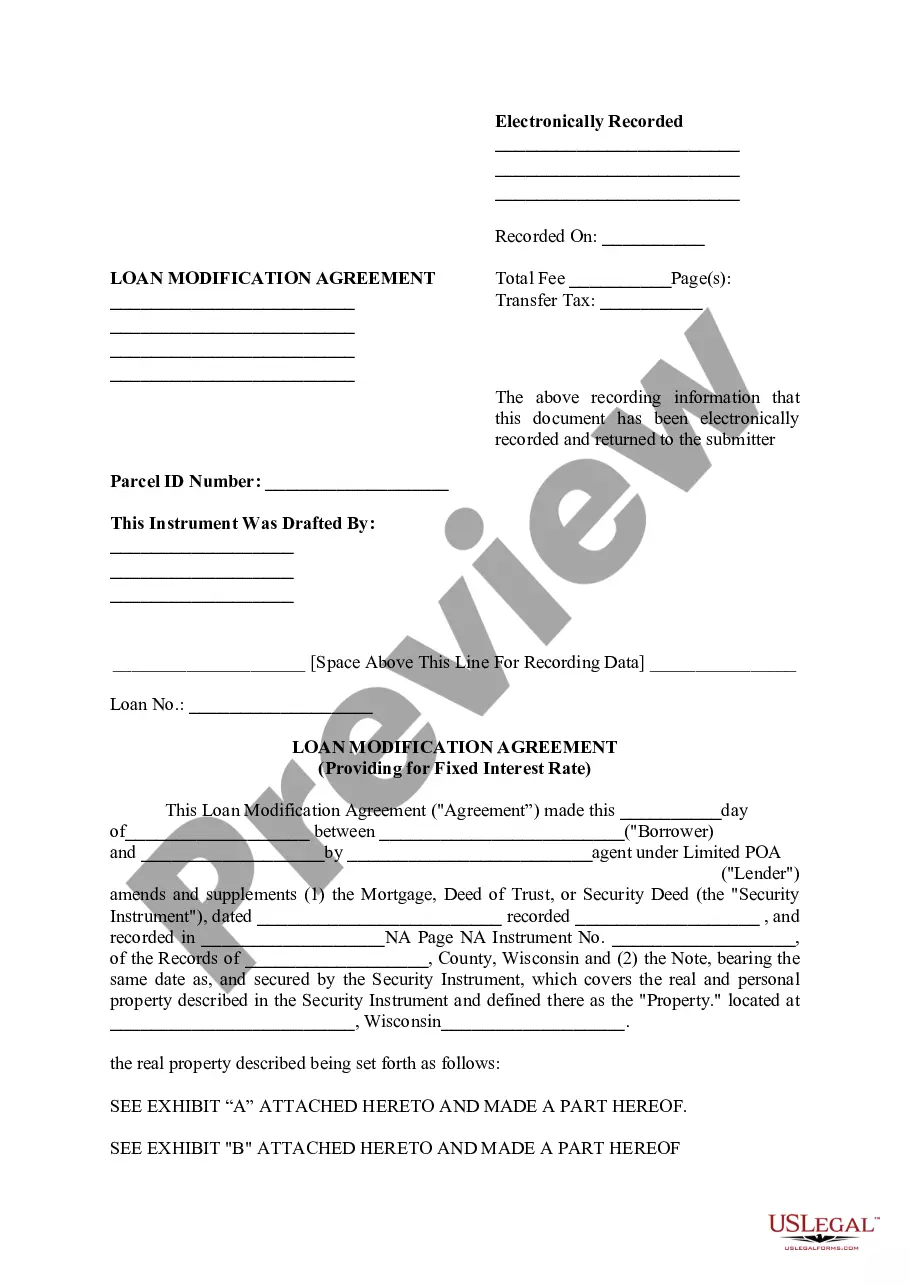
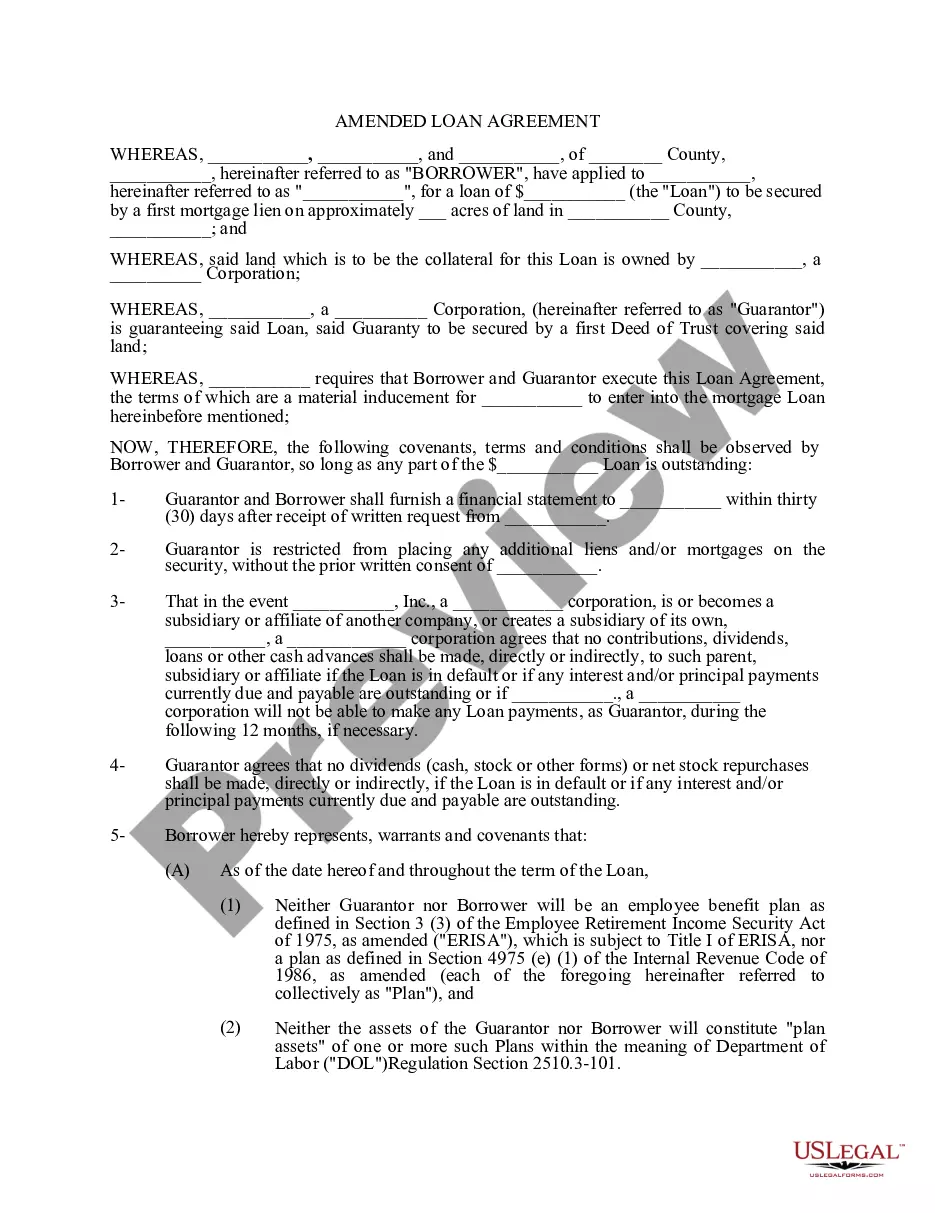
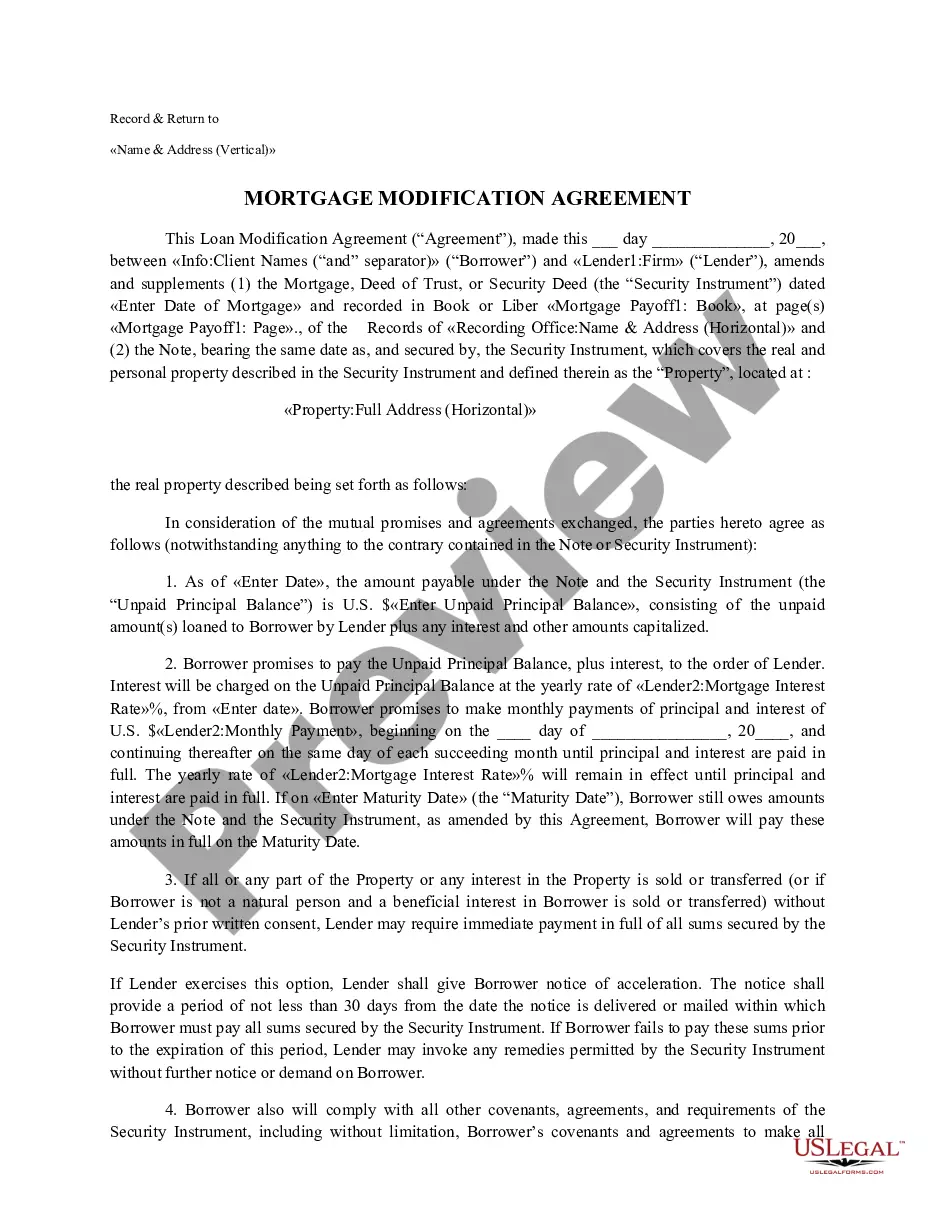
The Loan Modification Agreement is a legal document that allows borrowers and lenders to amend the terms of a mortgage or similar secured loan. This type of agreement is often used to modify existing loan conditions, such as adjusting the interest rate, extending the loan term, or altering the loan type to better suit the borrower's financial situation. Unlike a refinance, which involves taking out a new loan, a loan modification directly alters the original loan agreement while maintaining the same terms and conditions between the parties involved.
What’s included in this form
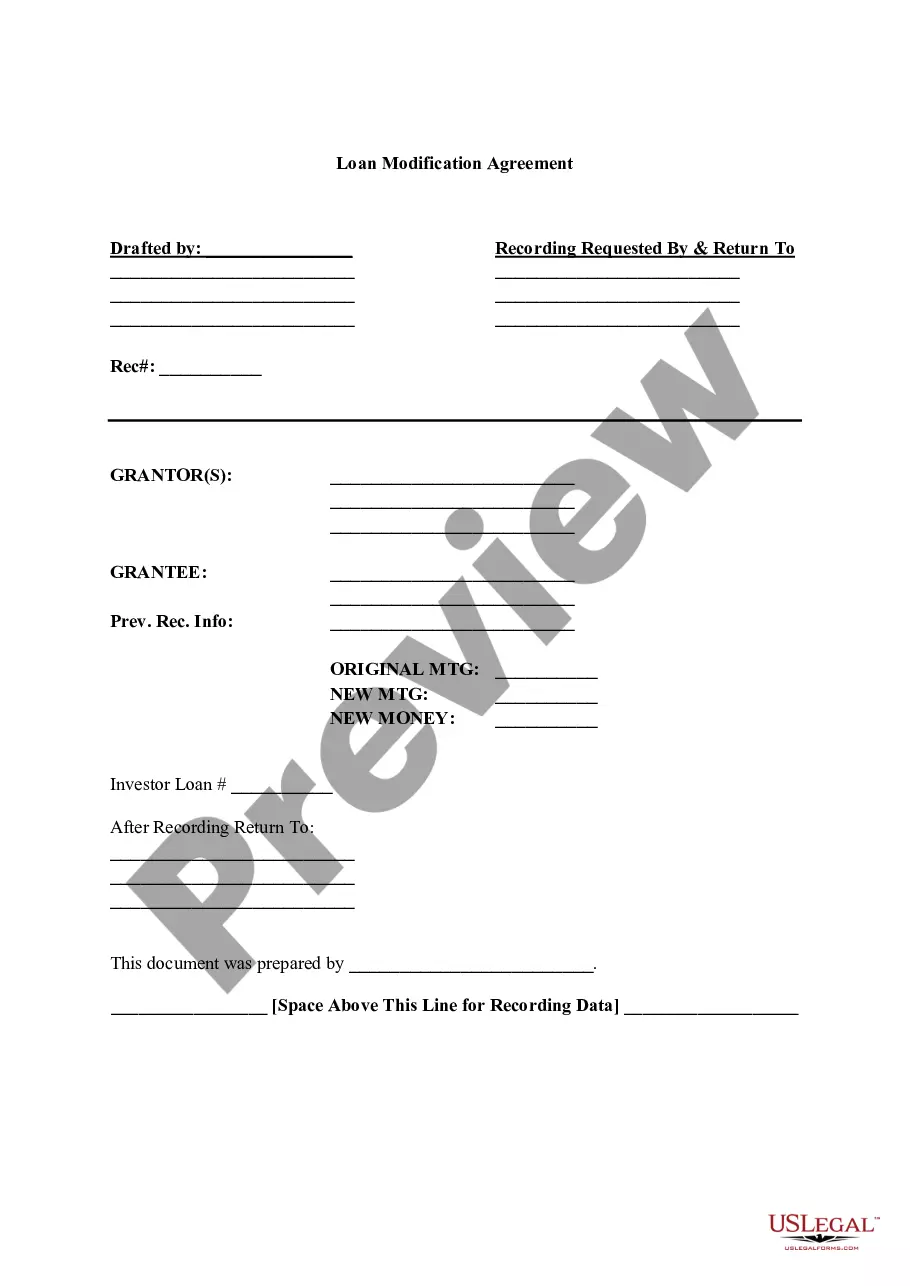
- Recording information including parcel ID and recorded date
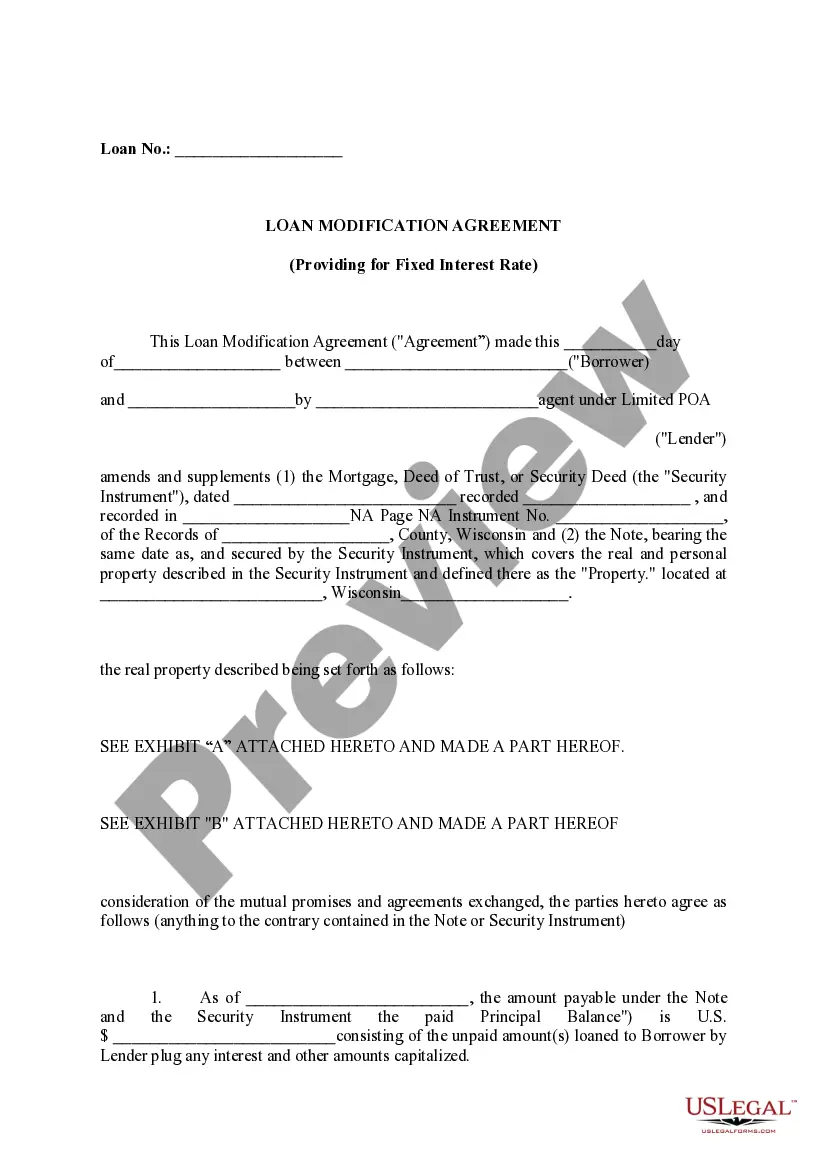
- Borrower and lender details, including agent information
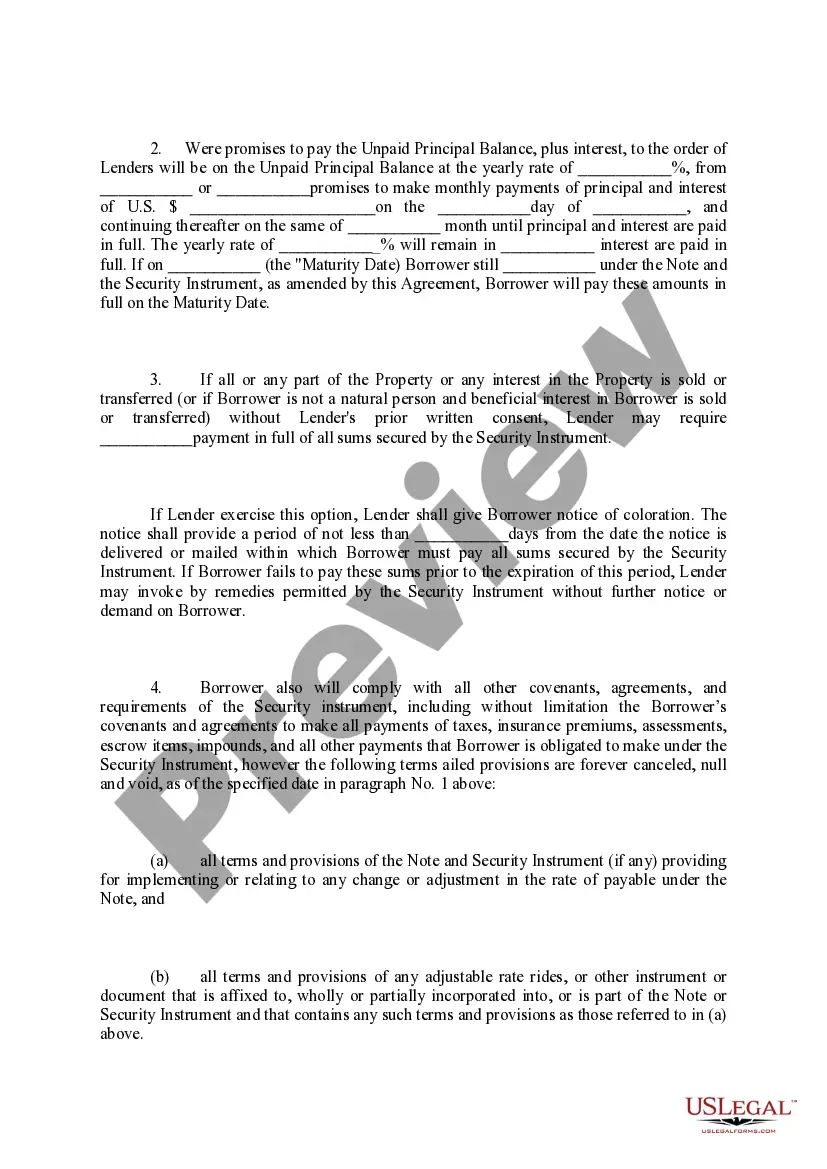
- Specification of the current unpaid principal balance and new payment terms
- Conditions for property sale or transfer without lender consent
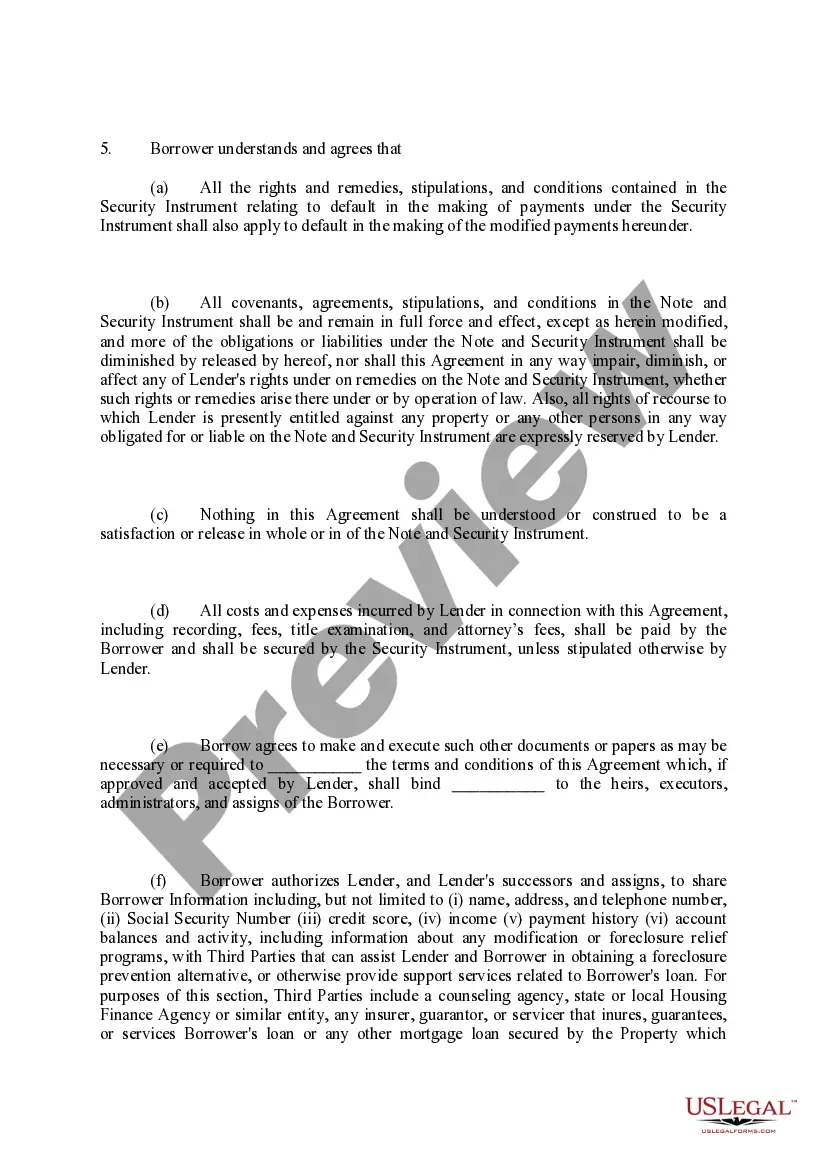
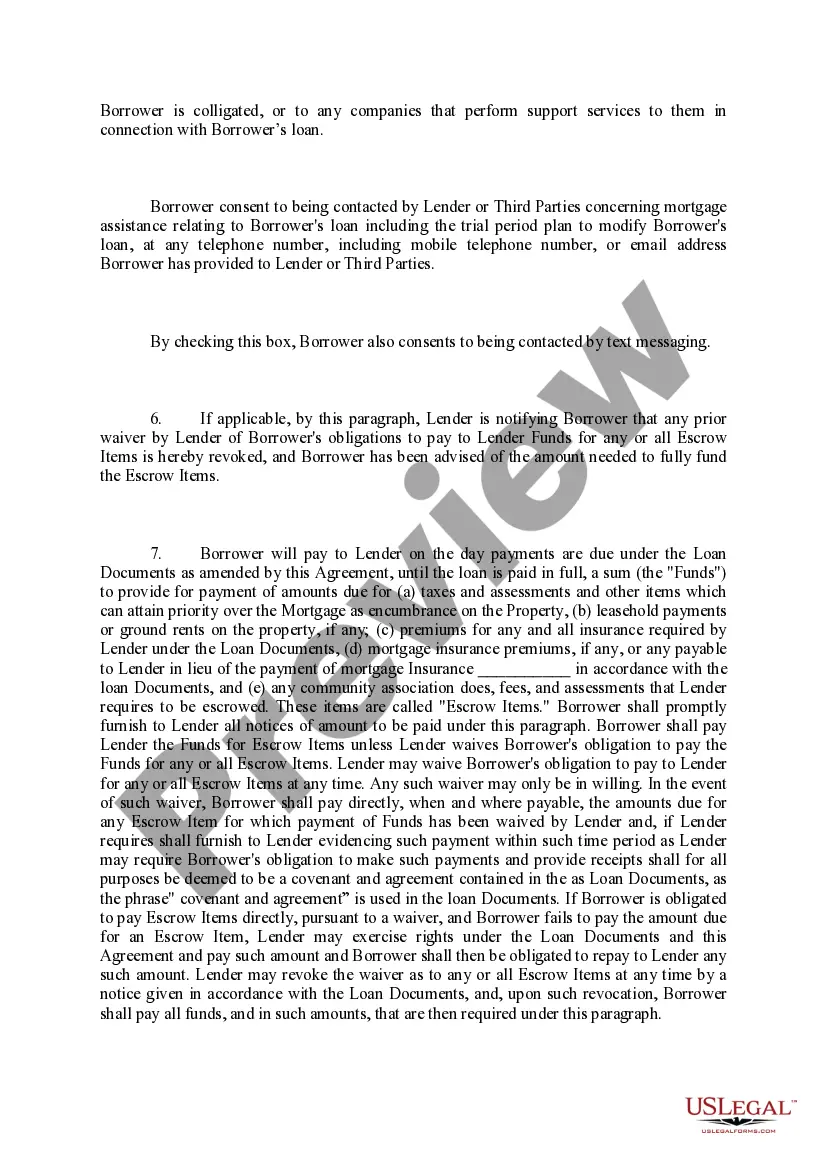
- Borrower obligations regarding the payment of taxes, insurance, and escrow items

When to use this form
You may need to use this Loan Modification Agreement when you are experiencing financial hardship and need to adjust your current mortgage terms to make payments more manageable. Common scenarios include a decrease in income, increased living expenses, or interest rates that have become unfavorable under the initial terms of your loan.
Who needs this form
This form is suitable for:
- Homeowners facing financial difficulties
- Borrowers seeking to lower their monthly mortgage payments
- Lenders wishing to formalize a loan modification
- Representatives acting under power of attorney on behalf of borrowers
Completing this form step by step
Follow these steps to complete the Loan Modification Agreement:
- Identify the parties involved: fill in the borrower and lender's personal information.
- Specify the property: provide detailed information about the real property secured by the mortgage.
- Enter current loan details: complete information about the existing loan, including principal balance and interest rates.
- Outline new payment terms: finalize the new monthly payment amount and structure.
- Review and sign: ensure both parties agree to the new terms before signing the agreement.
Does this document require notarization?
This form does not typically require notarization unless specified by local law. It is advisable to check your state's regulations to confirm whether notarization is necessary for validity.
Get your form ready online
Our built-in tools help you complete, sign, share, and store your documents in one place.
Make edits, fill in missing information, and update formatting in US Legal Forms—just like you would in MS Word.
Download a copy, print it, send it by email, or mail it via USPS—whatever works best for your next step.
Sign and collect signatures with our SignNow integration. Send to multiple recipients, set reminders, and more. Go Premium to unlock E-Sign.
If this form requires notarization, complete it online through a secure video call—no need to meet a notary in person or wait for an appointment.
We protect your documents and personal data by following strict security and privacy standards.

Make edits, fill in missing information, and update formatting in US Legal Forms—just like you would in MS Word.

Download a copy, print it, send it by email, or mail it via USPS—whatever works best for your next step.

Sign and collect signatures with our SignNow integration. Send to multiple recipients, set reminders, and more. Go Premium to unlock E-Sign.

If this form requires notarization, complete it online through a secure video call—no need to meet a notary in person or wait for an appointment.

We protect your documents and personal data by following strict security and privacy standards.
Mistakes to watch out for
- Failing to include all necessary party information, which can lead to complications in enforceability.
- Not specifying the property details clearly, causing legal ambiguities later.
- Overlooking state-specific laws that may affect the modification process.
- Ignoring required signatures from all parties involved, which may render the agreement unenforceable.
Benefits of using this form online
- Convenience: Download and complete the form at your own pace without needing a legal professional immediately.
- Editability: Easily customize the agreement to fit specific needs and terms.
- Availability: Access to legal forms anytime, ensuring you can manage your loan modification promptly.
Main things to remember
- The Loan Modification Agreement is essential for changing the terms of an existing mortgage.
- Proper completion of the form is crucial to avoid future disputes or enforceability issues.
- Understanding your rights and obligations as a borrower can significantly impact your financial situation.
Looking for another form?




Form popularity
FAQ
A lender may agree to a loan modification during a settlement procedure or in the case of a potential foreclosure.A loan modification agreement is a long-term solution. A loan modification may involve a reduced interest rate, a longer period to repay, a different type of loan, or any combination of these.
You should contact the lender's loss and mitigation department to discuss the reason of you loan modification rejection. Possible reasons for a modification rejection include insufficient income, high debt-to-income ratio, missing documents, or delinquent credit history.
Be at least one regular mortgage payment behind or show that missing a payment is imminent. Provide evidence of significant financial hardship, for reasons such as:
Yes, probably. In California, a law called the Homeowner Bill of Rights (HBOR) generally gives borrowers the right to appeal a modification denial. Under HBOR, in most cases, if the servicer denies a borrower's application to modify a first lien loan, the borrower can appeal.
Some of the most common types of hardship are: job loss, pay reduction, underemployment, declining business revenue, death of a coborrower, illness, injury, and divorce.