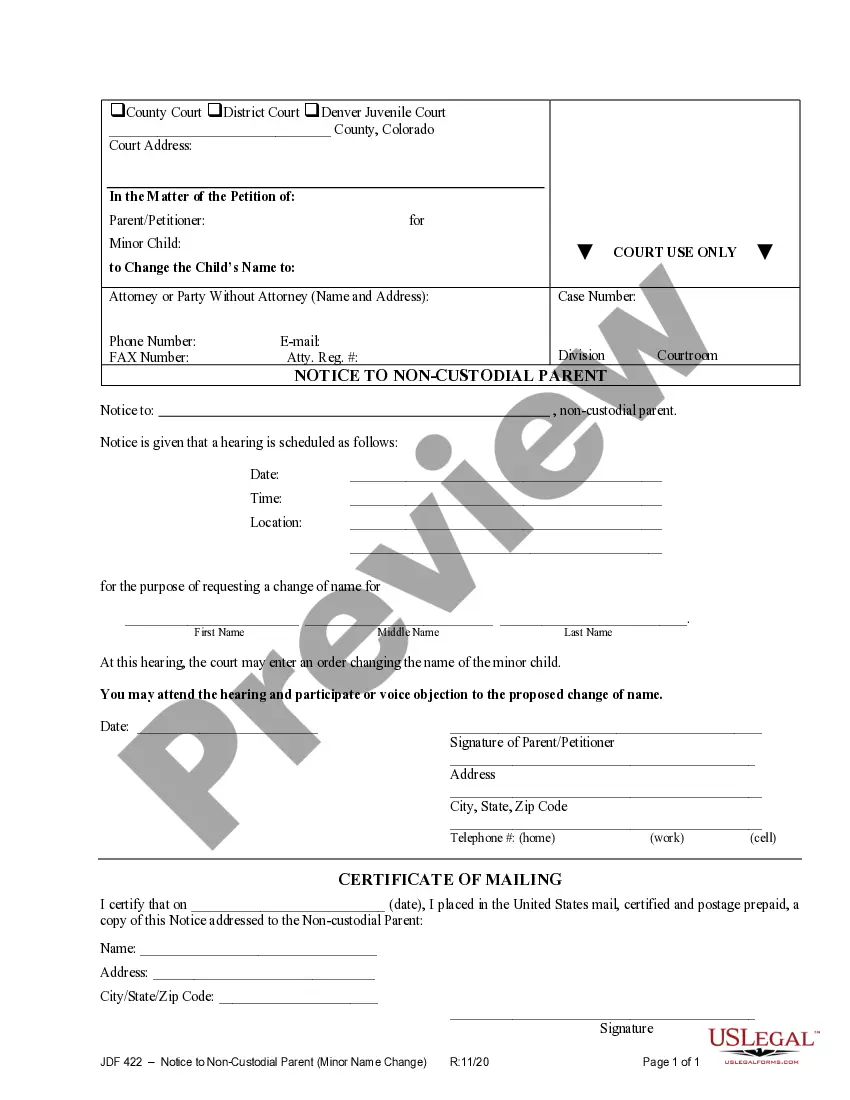
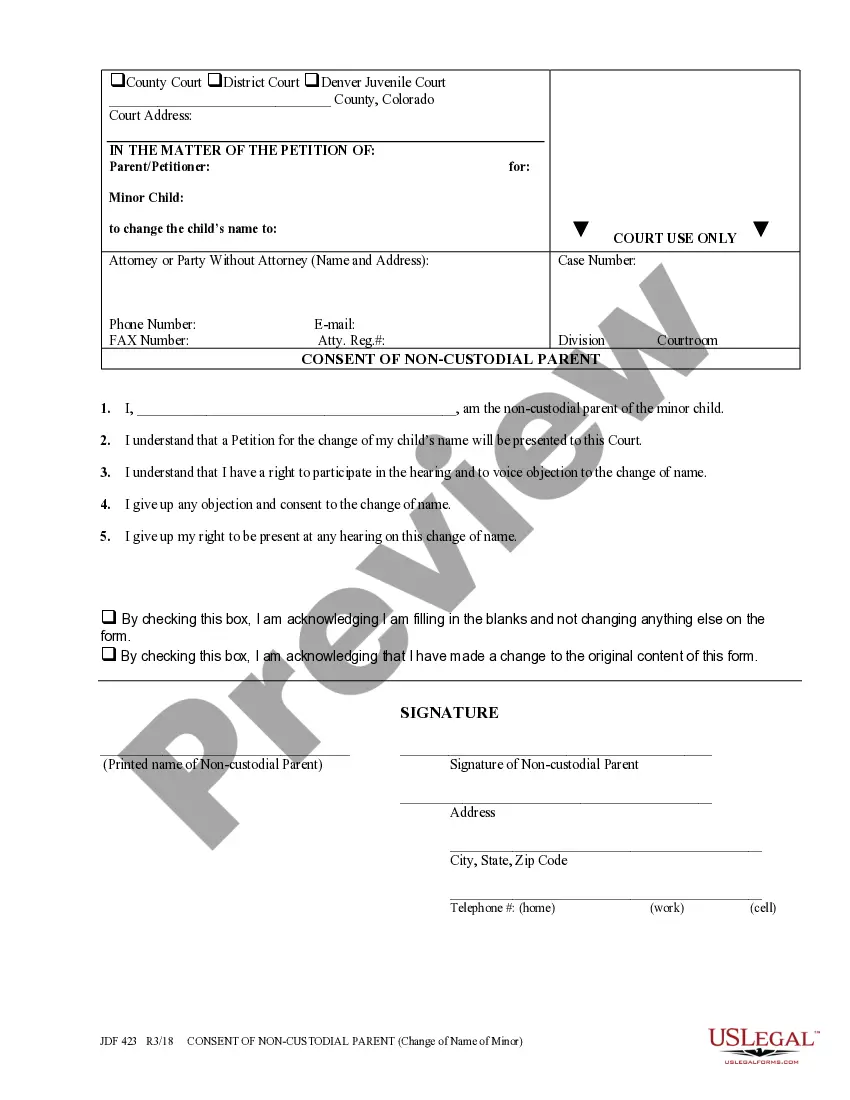
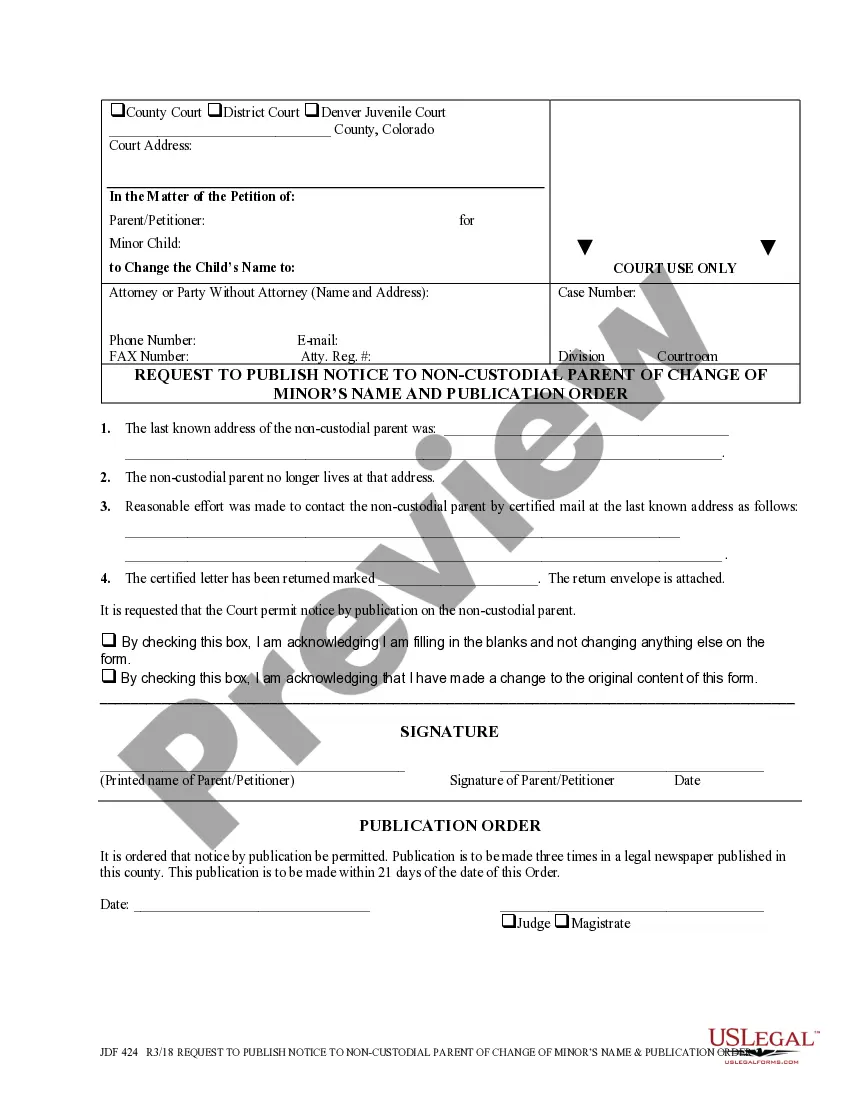
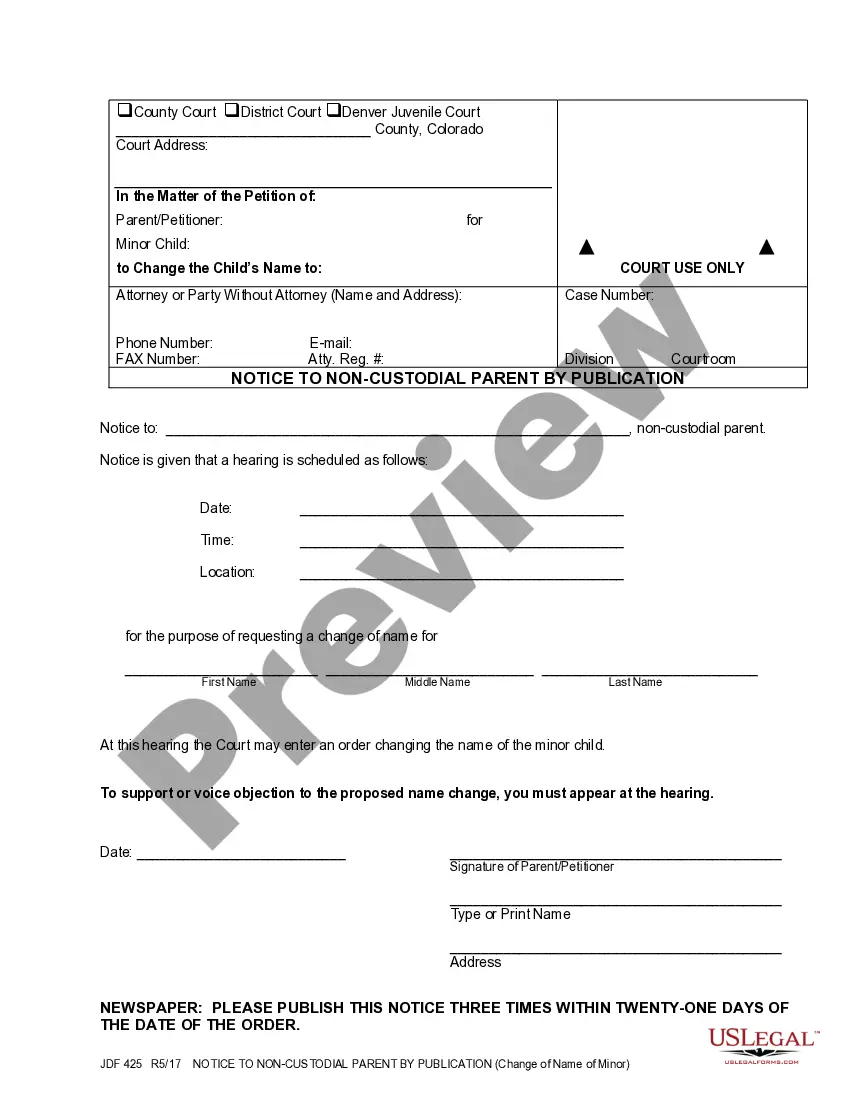
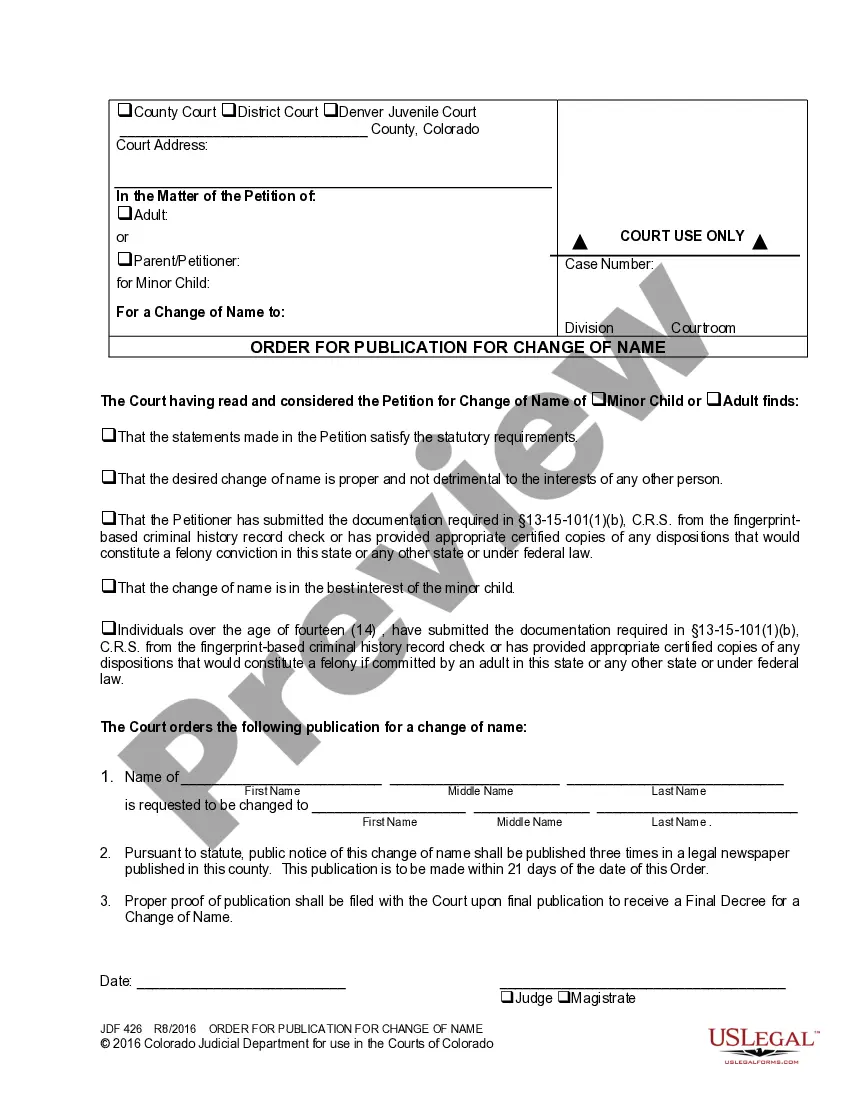
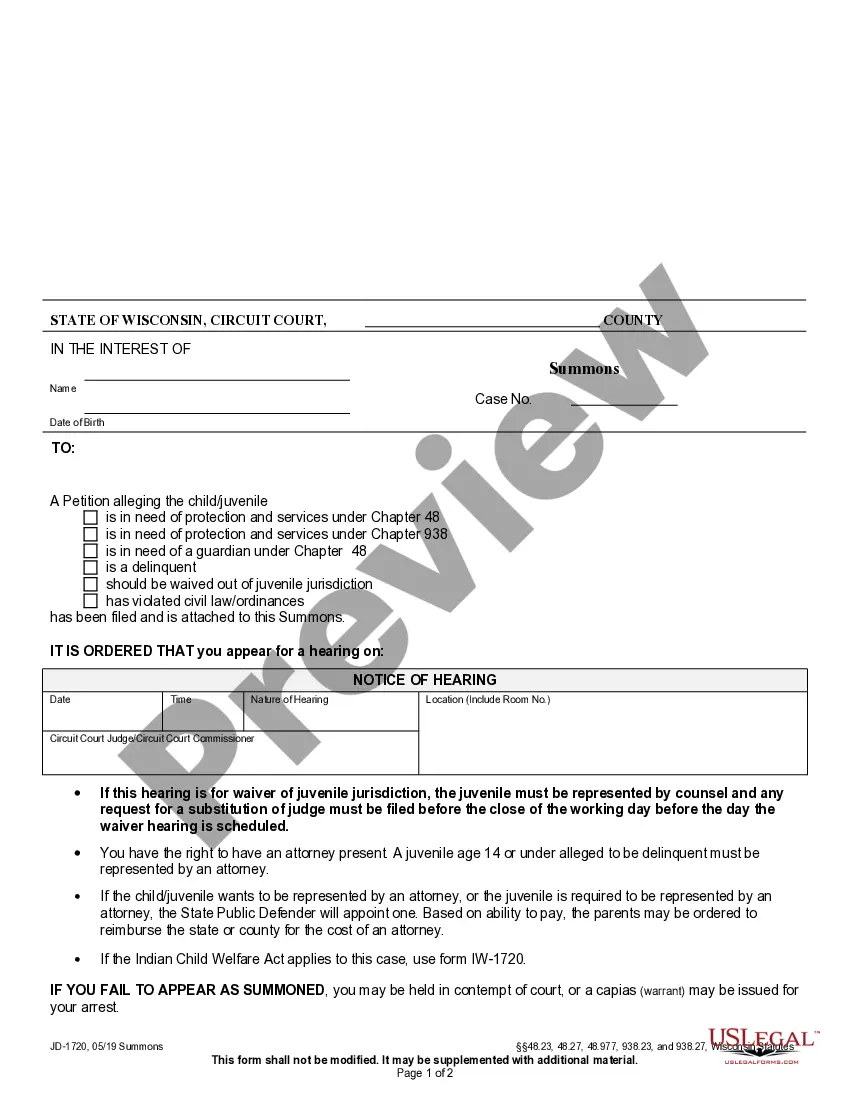
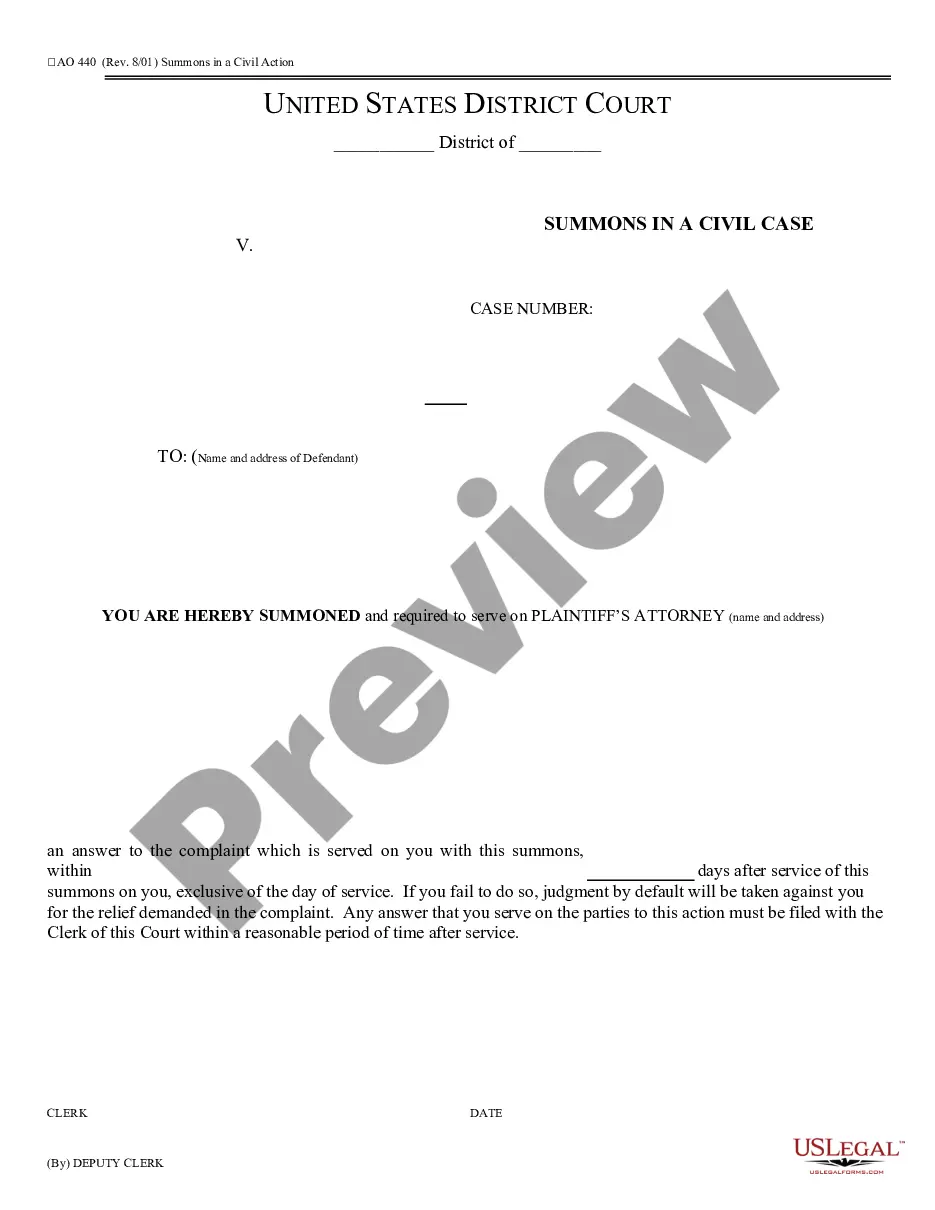
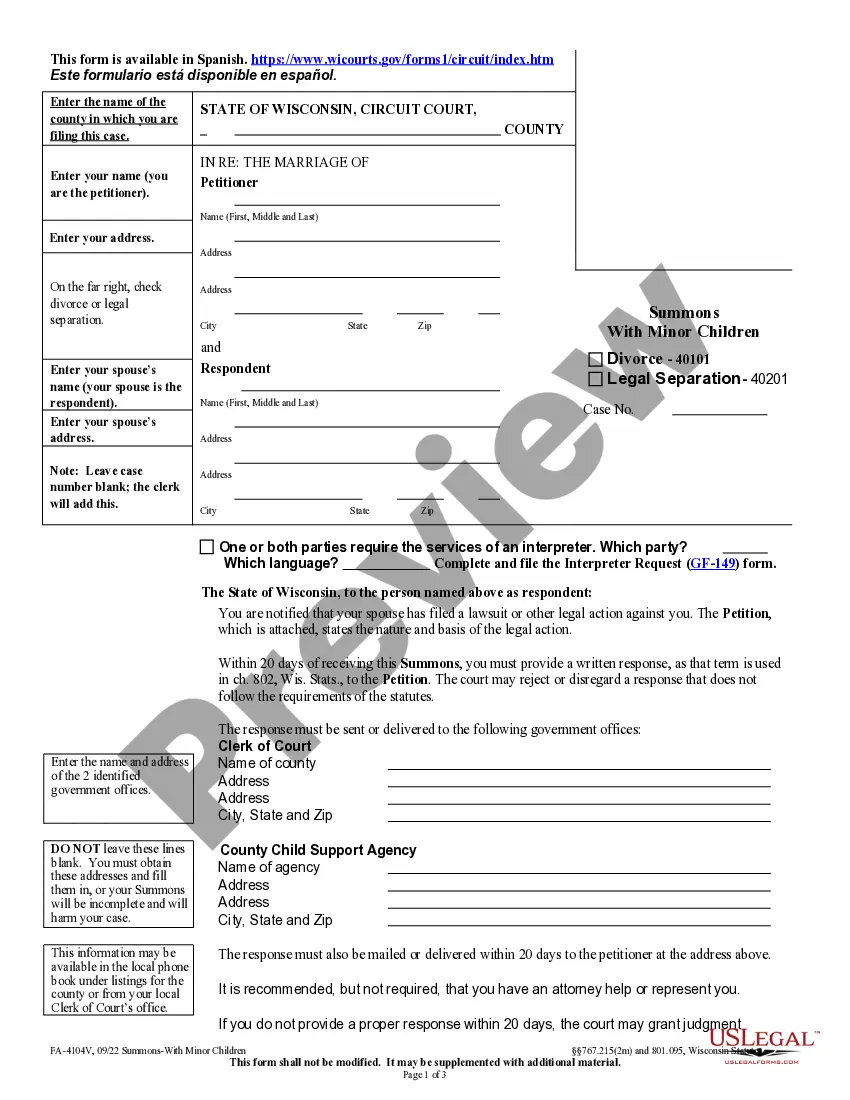
This is a Summons, to be used by the Courts, in the State of Wisconsin. This form serves as a formal notice to an individual to appear in Court, and to respond to a citation or Petition.
Wisconsin Summons
State:
Wisconsin
Category:
Control #:
WI-JD-1720
Format:
Word;
PDF;
Rich Text
Instant download
This website is not affiliated with any governmental entity
Public form
Description
Free preview

Get your form ready online
Our built-in tools help you complete, sign, share, and store your documents in one place.
Built-in online Word editor
Make edits, fill in missing information, and update formatting in US Legal Forms—just like you would in MS Word.
Export easily
Download a copy, print it, send it by email, or mail it via USPS—whatever works best for your next step.
E-sign your document
Sign and collect signatures with our SignNow integration. Send to multiple recipients, set reminders, and more. Go Premium to unlock E-Sign.
Notarize online 24/7
If this form requires notarization, complete it online through a secure video call—no need to meet a notary in person or wait for an appointment.
Store your document securely
We protect your documents and personal data by following strict security and privacy standards.

Make edits, fill in missing information, and update formatting in US Legal Forms—just like you would in MS Word.

Download a copy, print it, send it by email, or mail it via USPS—whatever works best for your next step.

Sign and collect signatures with our SignNow integration. Send to multiple recipients, set reminders, and more. Go Premium to unlock E-Sign.

If this form requires notarization, complete it online through a secure video call—no need to meet a notary in person or wait for an appointment.

We protect your documents and personal data by following strict security and privacy standards.
Looking for another form?




How to fill out Wisconsin Summons?
Out of the great number of platforms that offer legal samples, US Legal Forms offers the most user-friendly experience and customer journey while previewing forms before purchasing them. Its extensive catalogue of 85,000 samples is grouped by state and use for simplicity. All the documents available on the platform have been drafted to meet individual state requirements by accredited lawyers.
If you already have a US Legal Forms subscription, just log in, look for the template, click Download and get access to your Form name in the My Forms; the My Forms tab holds your saved documents.
Keep to the guidelines below to obtain the document:
- Once you discover a Form name, ensure it is the one for the state you need it to file in.
- Preview the template and read the document description just before downloading the template.
- Search for a new template through the Search engine in case the one you have already found isn’t appropriate.
- Simply click Buy Now and choose a subscription plan.
- Create your own account.
- Pay with a credit card or PayPal and download the template.
Once you’ve downloaded your Form name, you can edit it, fill it out and sign it in an web-based editor that you pick. Any form you add to your My Forms tab can be reused multiple times, or for as long as it continues to be the most up-to-date version in your state. Our platform provides quick and easy access to samples that suit both lawyers as well as their customers.
Form popularity
FAQ
1 attorney answer It does not need to be notarized, but a copy must be mailed to every other party, in addition to being filed with the court. Be sure to put your name, address, and phone number on it.
A summons served personally upon the defendant or by substituted personal service upon another authorized to accept service of the summons for the defendant is deemed served on the day of service. A summons served by publication is deemed served on the first day of required publication.
If you don't file a response 30 days after you were served, the Plaintiff can file a form called Request for Default. The Plaintiff has to wait 30 days to file this. If the Plaintiff files this form, the Court can enter a judgment against you. The Plaintiff will win the case.
The most common reason to receive a summons is that someone is filing a complaint against your company. This could be a legal action or a debt. You will be served in person or through your company's Registered Agent.
Read the summons and make sure you know the date you must answer by. Read the complaint carefully. Write your answer. Sign and date the answer. Make copies for the plaintiff and yourself. Mail a copy to the plaintiff. File your answer with the court by the date on the summons.
Contact the clerk's office of the court where the lawsuit was filed. You'll find a phone number and address for the clerk's office on your summons. The clerk will be able to tell you exactly what documents you should file with your answer and whether any filing fee is required.
Provide the name of the court at the top of the Answer. You can find the information on the summons. List the name of the plaintiff on the left side. Write the case number on the right side of the Answer. Address the Judge and discuss your side of the case. Ask the judge to dismiss the case.
Although it might be tempting to ignore a summons and complaint, ignoring a lawsuit does not make it go away. And it could result in the court awarding a money judgment against you by default. That can lead to your wages being garnished, your bank accounts attached, or your property being taken!
Your response to the complaint should both preserve your rights and also comply with court rules. An incorrect response or a failure to respond to a complaint can have serious consequences, such as the waiver of your rights or a judgment against you.