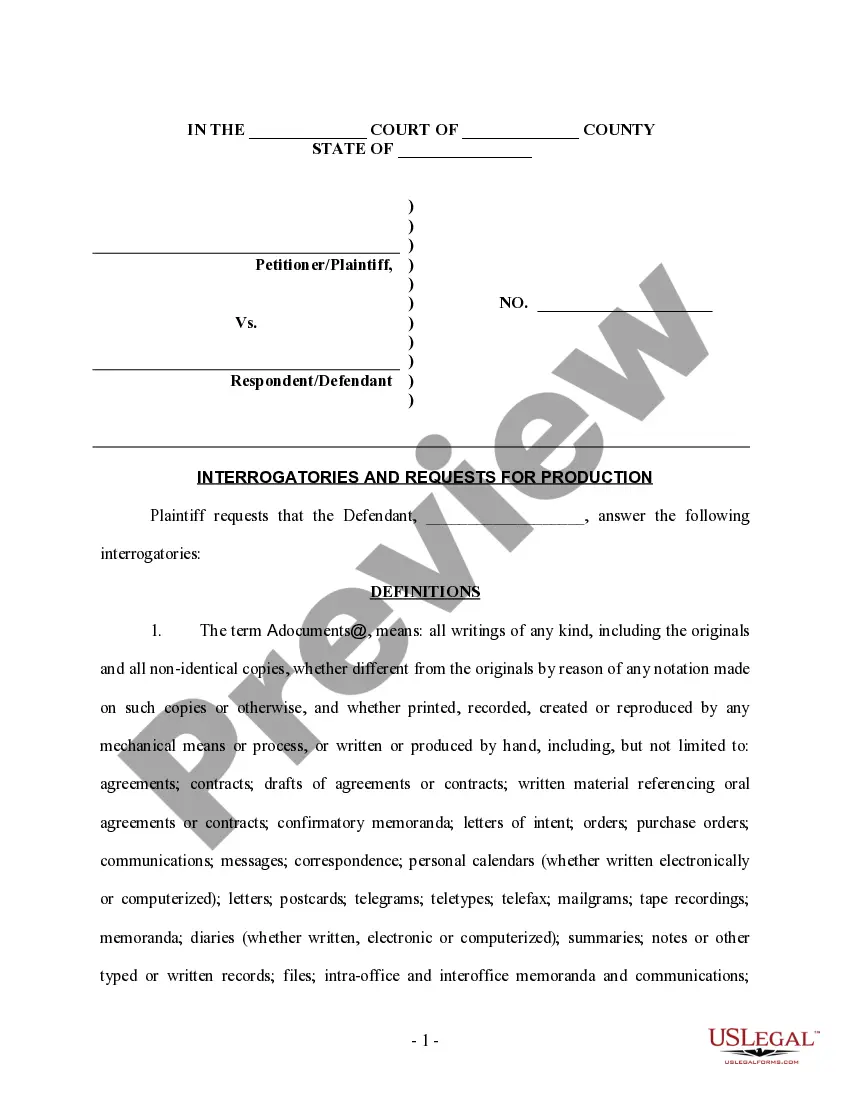
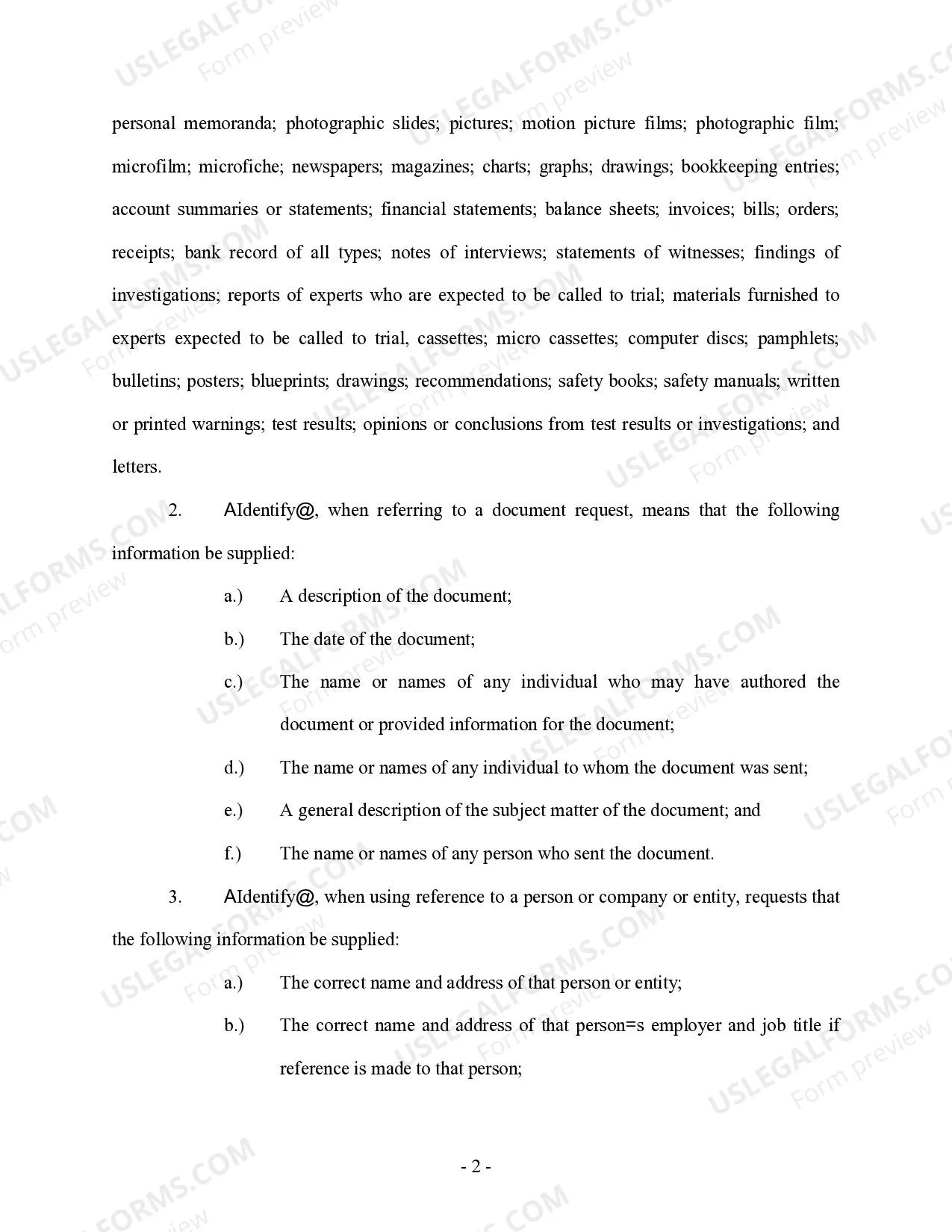
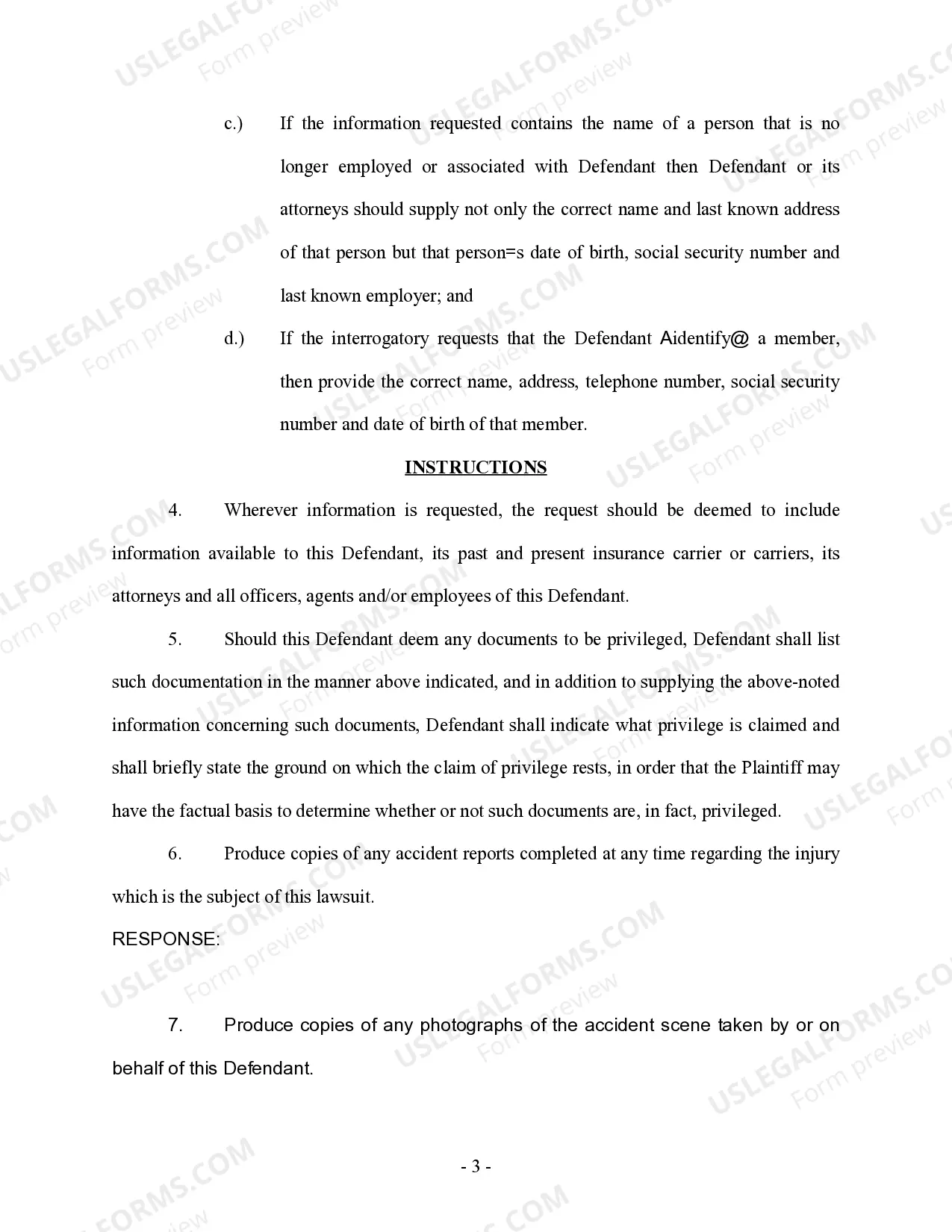
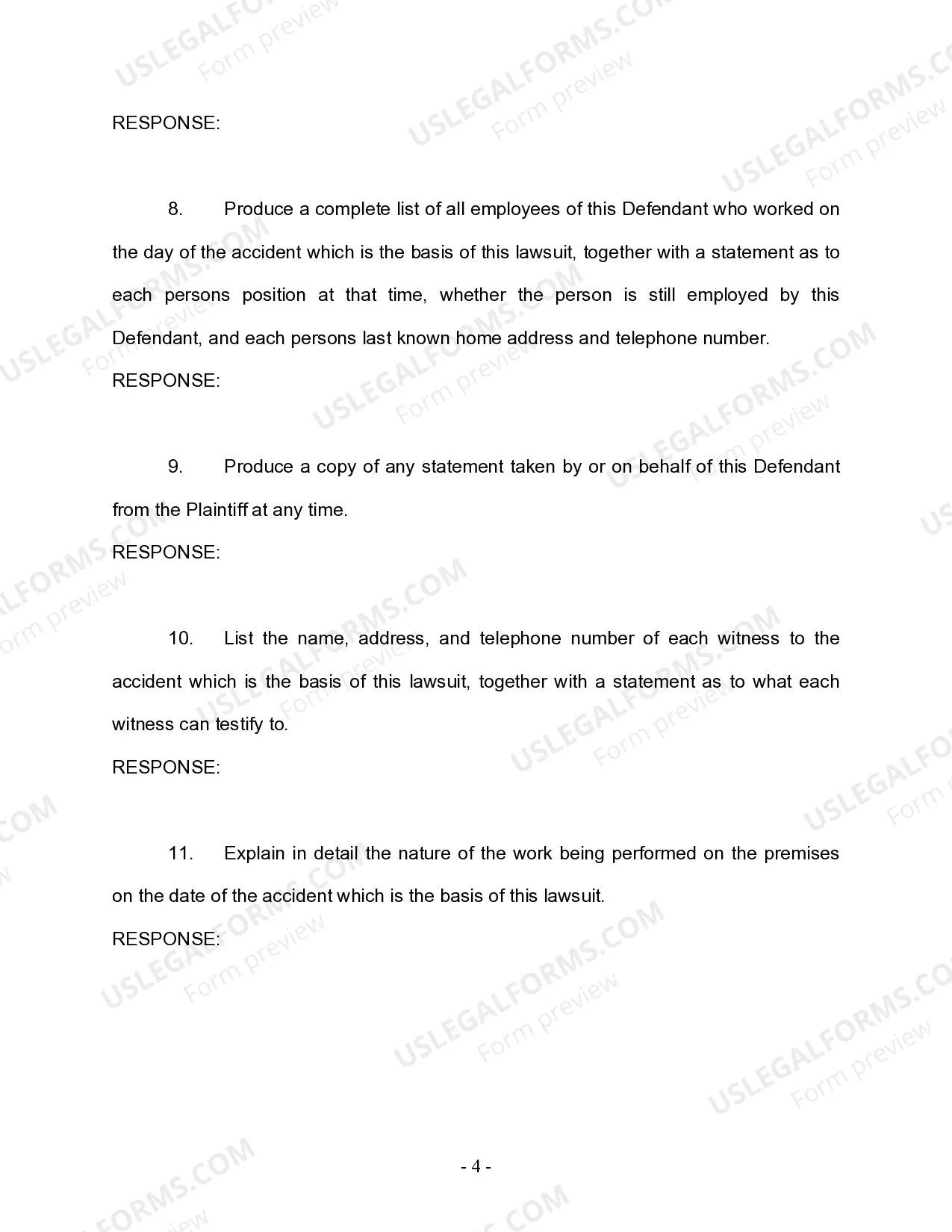
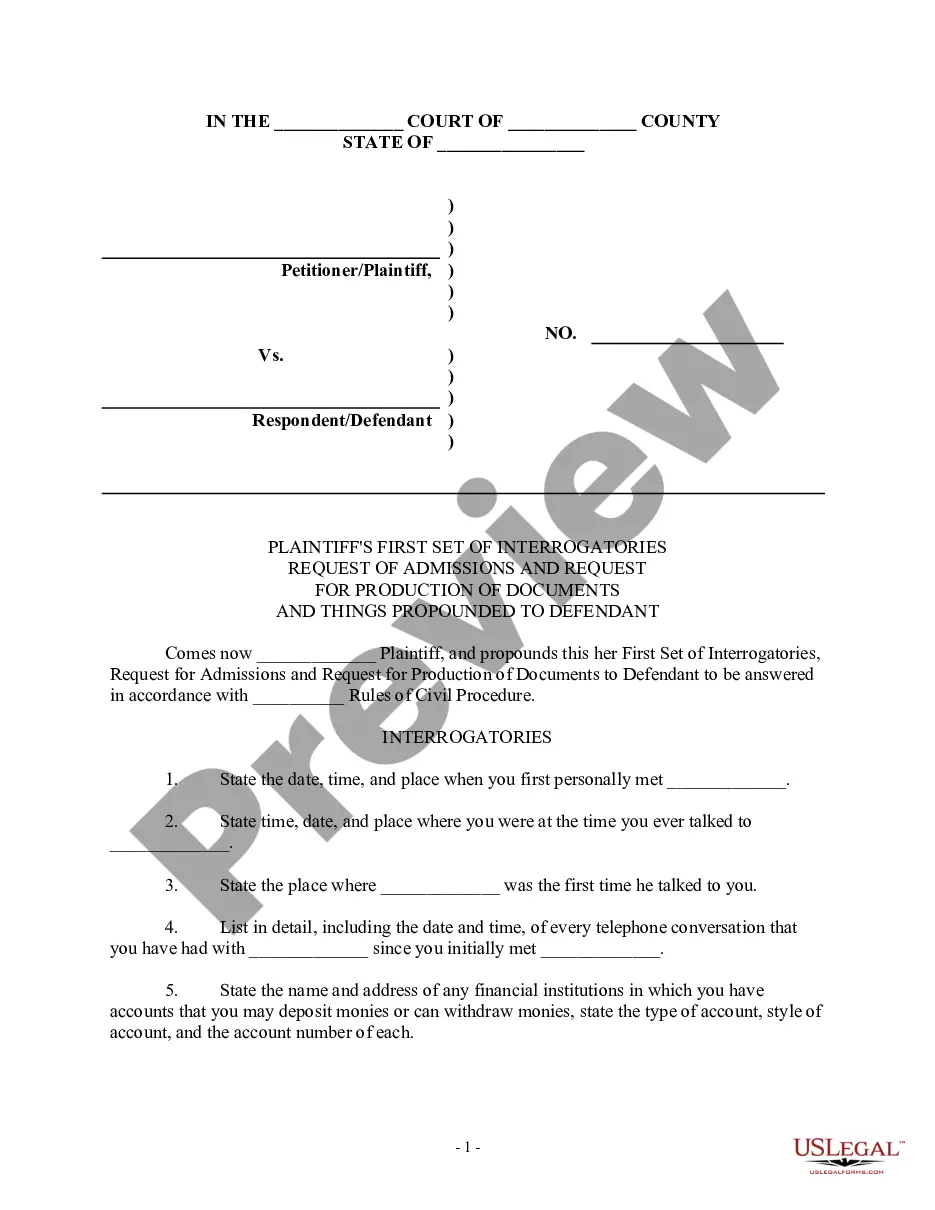
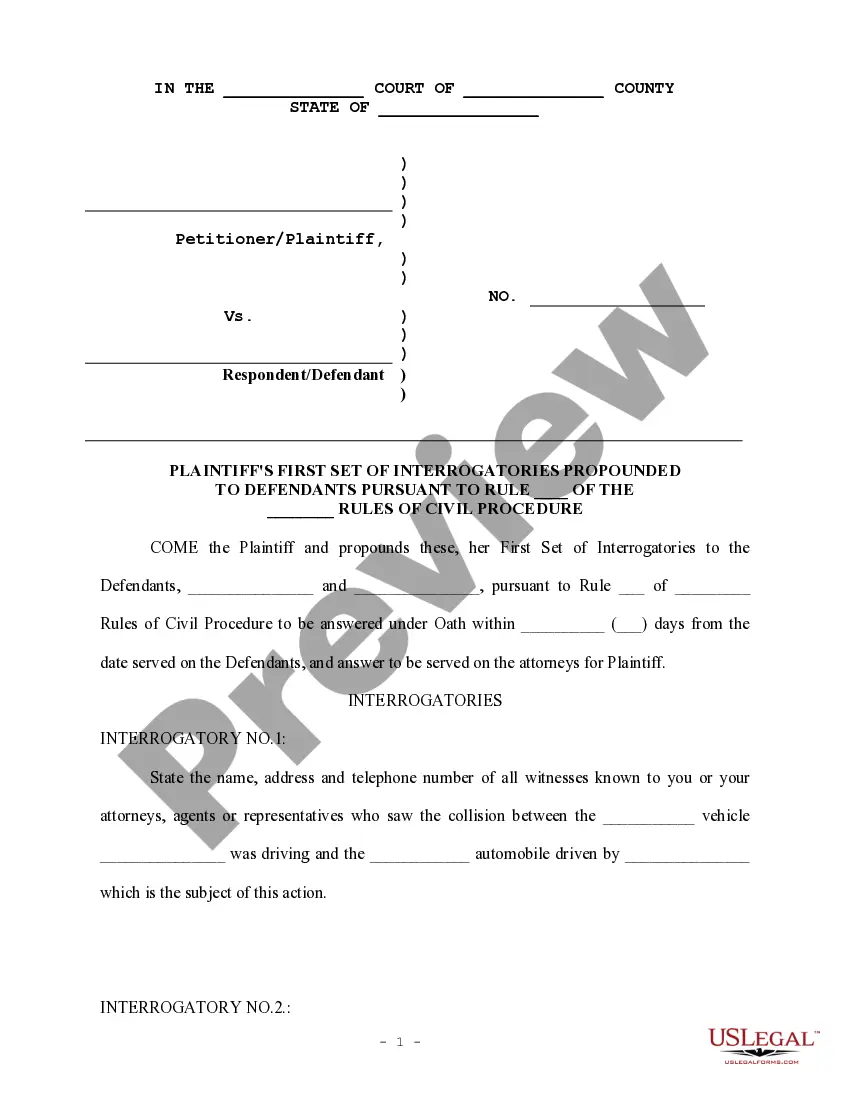
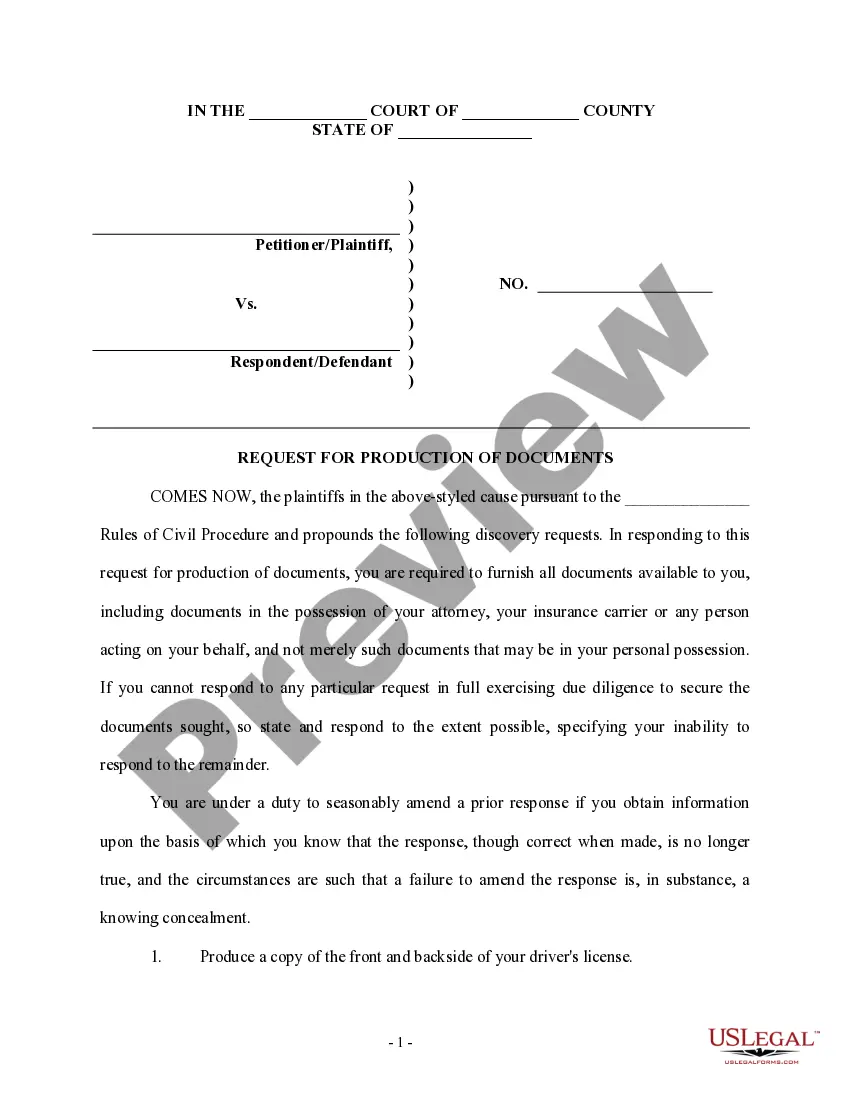
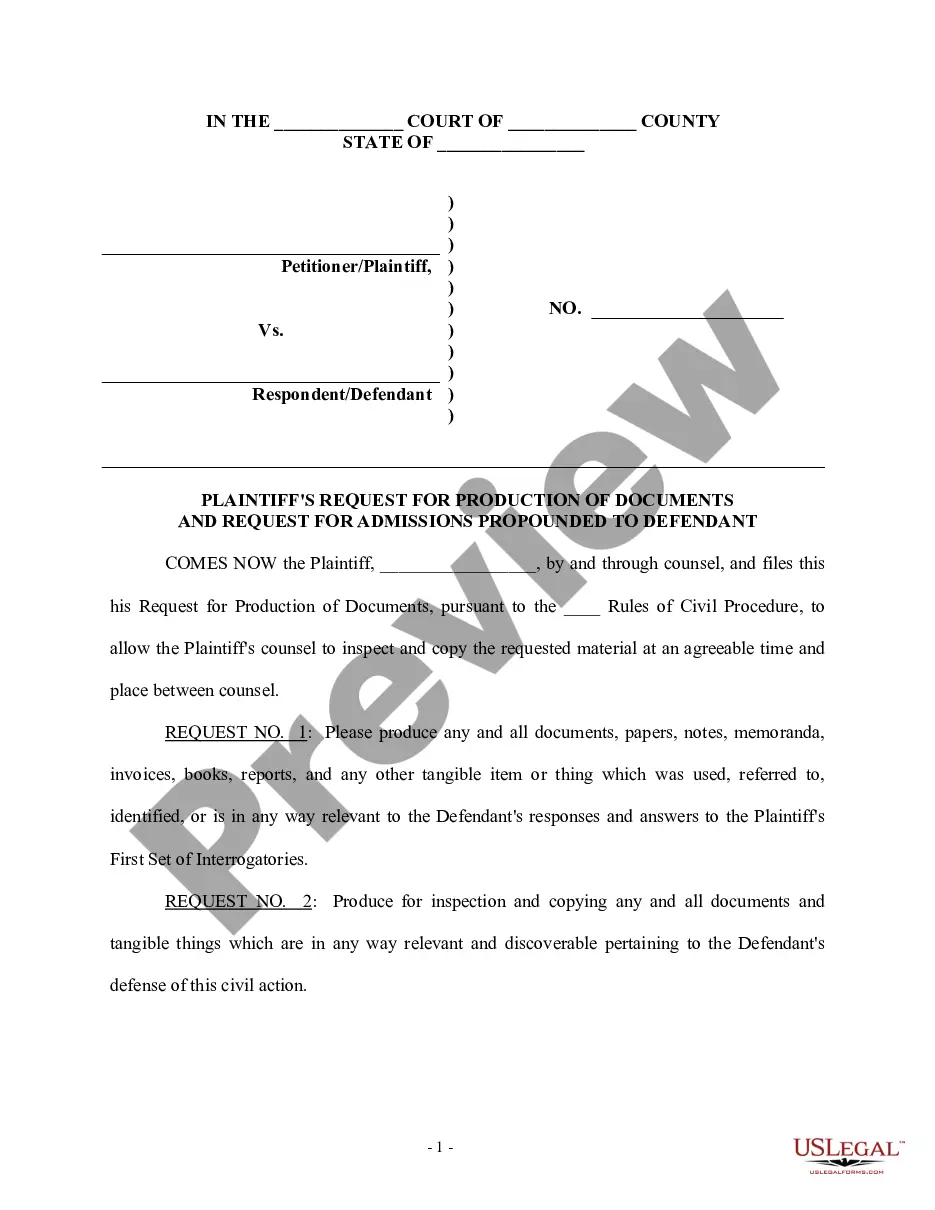
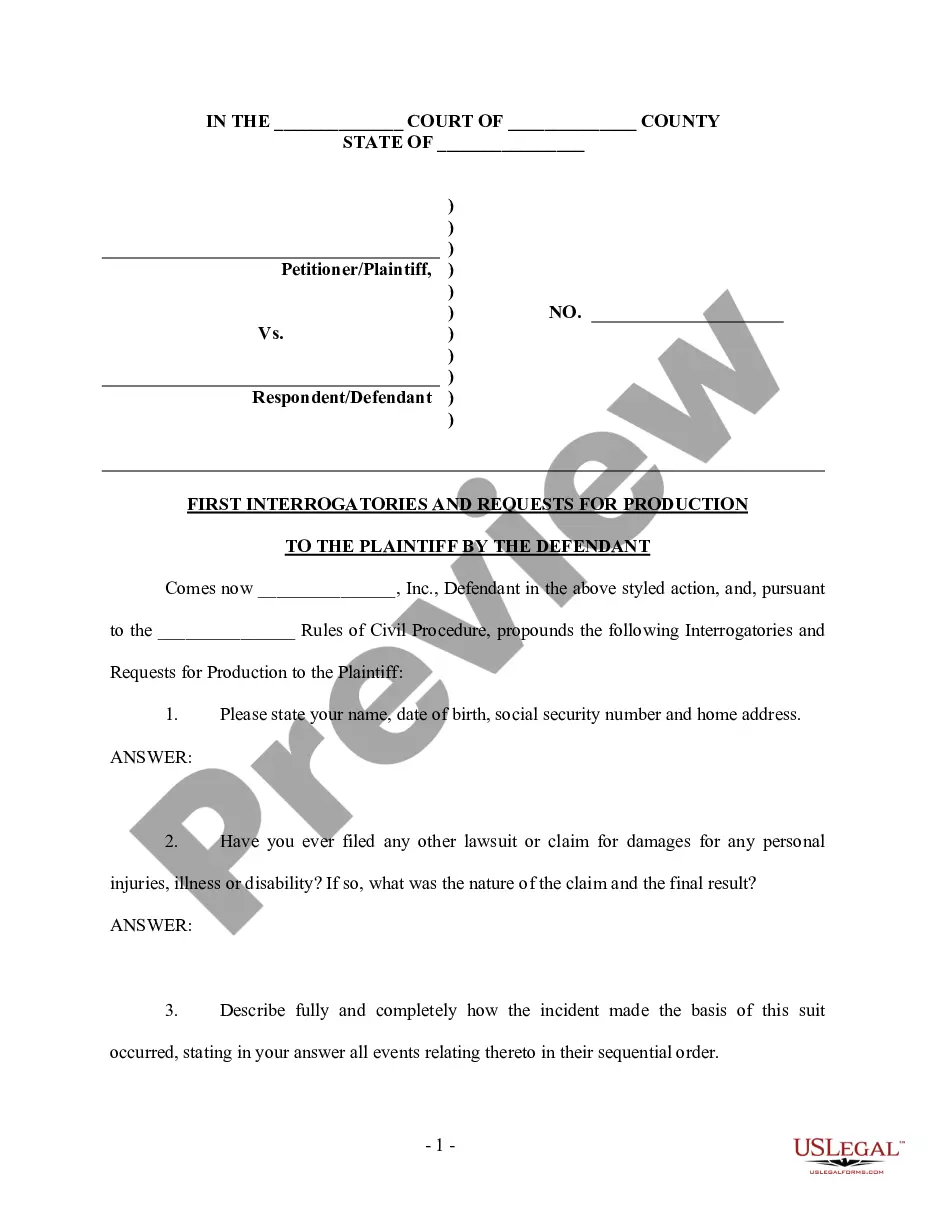
This form is a sample set of interrogatories and requests for production propounded to defendant by the plaintiff in a personal injury action.
Washington Interrogatories and Requests for Production - Personal Injury
State:
Multi-State
Control #:
US-PI-0310
Format:
Word;
Rich Text
118 downloads
Description
Free preview
Get your form ready online
Our built-in tools help you complete, sign, share, and store your documents in one place.
Built-in online Word editor
Make edits, fill in missing information, and update formatting in US Legal Forms—just like you would in MS Word.
Export easily
Download a copy, print it, send it by email, or mail it via USPS—whatever works best for your next step.
E-sign your document
Sign and collect signatures with our SignNow integration. Send to multiple recipients, set reminders, and more. Go Premium to unlock E-Sign.
Notarize online 24/7
If this form requires notarization, complete it online through a secure video call—no need to meet a notary in person or wait for an appointment.
Store your document securely
We protect your documents and personal data by following strict security and privacy standards.

Make edits, fill in missing information, and update formatting in US Legal Forms—just like you would in MS Word.

Download a copy, print it, send it by email, or mail it via USPS—whatever works best for your next step.

Sign and collect signatures with our SignNow integration. Send to multiple recipients, set reminders, and more. Go Premium to unlock E-Sign.

If this form requires notarization, complete it online through a secure video call—no need to meet a notary in person or wait for an appointment.

We protect your documents and personal data by following strict security and privacy standards.
Looking for another form?

How to fill out Interrogatories And Requests For Production - Personal Injury?
You are able to spend time on-line searching for the legal file template that fits the federal and state requirements you need. US Legal Forms supplies a huge number of legal varieties which can be reviewed by professionals. You can actually download or print the Washington Interrogatories and Requests for Production - Personal Injury from the support.
If you already possess a US Legal Forms bank account, you are able to log in and then click the Download option. After that, you are able to complete, revise, print, or signal the Washington Interrogatories and Requests for Production - Personal Injury. Every single legal file template you get is your own forever. To have another duplicate associated with a obtained type, visit the My Forms tab and then click the related option.
If you use the US Legal Forms web site the first time, adhere to the simple recommendations beneath:
- Initially, make sure that you have selected the proper file template to the region/city of your choice. Look at the type information to make sure you have picked out the right type. If accessible, use the Review option to appear with the file template at the same time.
- In order to discover another model of the type, use the Search industry to obtain the template that suits you and requirements.
- Once you have found the template you need, simply click Get now to proceed.
- Select the costs strategy you need, enter your qualifications, and register for a free account on US Legal Forms.
- Comprehensive the financial transaction. You should use your Visa or Mastercard or PayPal bank account to fund the legal type.
- Select the file format of the file and download it in your product.
- Make changes in your file if required. You are able to complete, revise and signal and print Washington Interrogatories and Requests for Production - Personal Injury.
Download and print a huge number of file templates using the US Legal Forms website, which offers the biggest collection of legal varieties. Use skilled and express-certain templates to take on your company or specific requirements.
Form popularity
FAQ
You can use interrogatories to find out facts about a case but they cannot be used for questions that draw a legal conclusion.
Rule 33(d) states that a party electing to respond to an interrogatory by providing electronically stored information must ensure that the interrogating party can locate and identify it ?as readily as can the party served,? and that the responding party must give the interrogating party a ?reasonable opportunity to ...
Interrogatories may, without leave of court, be served upon the plaintiff after the summons and a copy of the complaint are served upon the defendant, or the complaint is filed, whichever shall first occur, and upon any other party with or after service of the summons and complaint upon that party.
(A) Mandatory Electronic Filing. Attorneys shall electronically file (e-file) all documents using the Clerk's online eFiling application unless this rule provides otherwise.
Interrogatories to Parties (a) In General. (1) Availability. Unless otherwise stipulated or ordered by the court, a party may serve on any other party no more than 25 written interrogatories, including all discrete subparts.
In cases where a party has propounded pattern interrogatories pursuant to LCR 33, a party may serve no more than 15 interrogatories, including all discrete subparts, in addition to the pattern interrogatories.
Interrogatories, which are written questions about things that are relevant or important to the case. (NRCP 33; JCRCP 33) Requests for production of documents or things, which are written requests that demand the other side provide particular documents or items. (NRCP 34; JCRCP 34.)
Accommodation requests are granted to any qualified person with a disability for whom an accommodation is reasonable and necessary under the Americans with Disabilities Act of 1990 (ADA), or under Washington State Court General Rule (GR) 33.