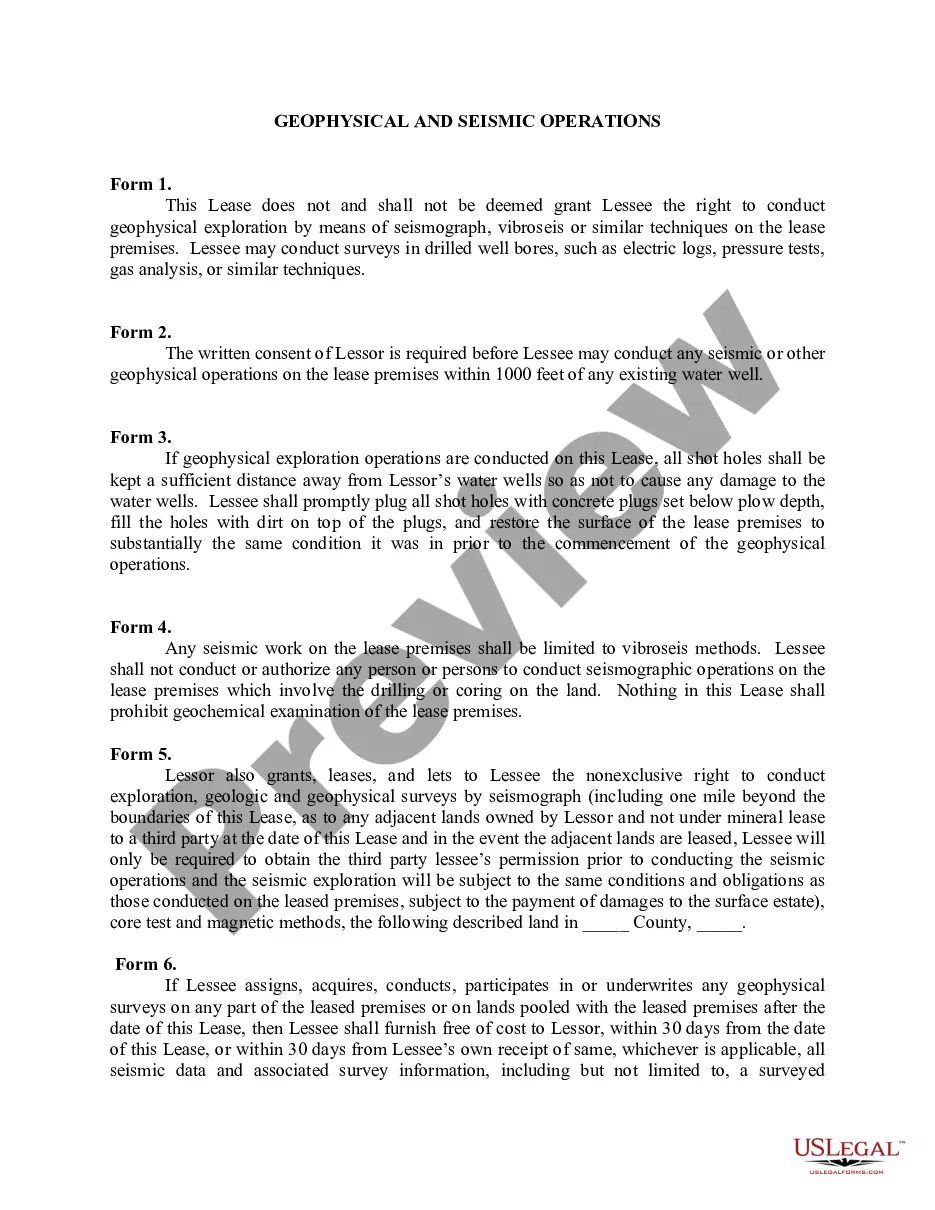
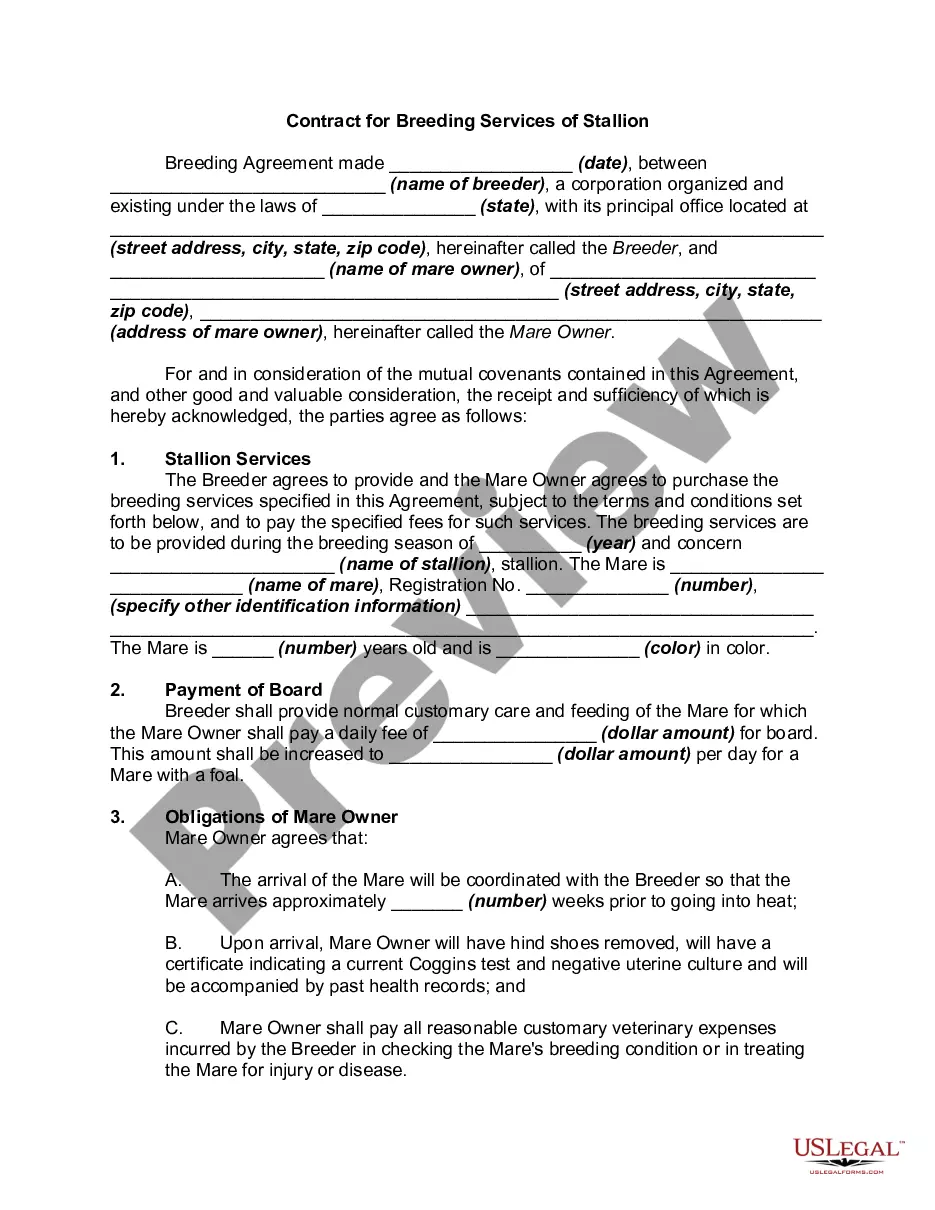
This form is a contract for the breeding of birds.
Washington Bird Breeding Contract
Category:
State:
Multi-State
Control #:
US-PET-2
Format:
Word;
Rich Text
Instant download
Description
Free preview

Get your form ready online
Our built-in tools help you complete, sign, share, and store your documents in one place.
Built-in online Word editor
Make edits, fill in missing information, and update formatting in US Legal Forms—just like you would in MS Word.
Export easily
Download a copy, print it, send it by email, or mail it via USPS—whatever works best for your next step.
E-sign your document
Sign and collect signatures with our SignNow integration. Send to multiple recipients, set reminders, and more. Go Premium to unlock E-Sign.
Notarize online 24/7
If this form requires notarization, complete it online through a secure video call—no need to meet a notary in person or wait for an appointment.
Store your document securely
We protect your documents and personal data by following strict security and privacy standards.

Make edits, fill in missing information, and update formatting in US Legal Forms—just like you would in MS Word.

Download a copy, print it, send it by email, or mail it via USPS—whatever works best for your next step.

Sign and collect signatures with our SignNow integration. Send to multiple recipients, set reminders, and more. Go Premium to unlock E-Sign.

If this form requires notarization, complete it online through a secure video call—no need to meet a notary in person or wait for an appointment.

We protect your documents and personal data by following strict security and privacy standards.
Looking for another form?


How to fill out Bird Breeding Contract?
You might spend numerous hours online trying to locate the legal document template that meets the state and federal requirements you desire.
US Legal Forms provides thousands of legal forms that have been evaluated by professionals.
It is easy to obtain or print the Washington Bird Breeding Contract from my service.
If available, utilize the Review button to browse through the document template simultaneously. If you wish to find another version of the form, use the Search area to find the template that fits your requirements and specifications. Once you have located the template you desire, simply click Acquire now to proceed. Select the pricing plan you want, enter your details, and register for an account on US Legal Forms. Complete the purchase transaction. You can use your Visa, Mastercard, or PayPal account to buy the legal form. Download the format of the document and save it to your device. Make adjustments to the document if necessary. You can complete, modify, sign, and print the Washington Bird Breeding Contract. Access and print thousands of document templates using the US Legal Forms website, which offers the largest selection of legal forms. Utilize professional and state-specific templates to address your business or personal requirements.
- If you possess a US Legal Forms account, you can sign in and click on the Obtain button.
- Afterward, you can complete, modify, print, or sign the Washington Bird Breeding Contract.
- Each legal document template you purchase is yours indefinitely.
- To have an additional backup for any purchased form, go to the My documents tab and click on the corresponding button.
- If you are using the US Legal Forms site for the first time, follow the simple instructions below.
- First, ensure that you have selected the correct document template for the region/city you choose.
- Review the form outline to confirm you have selected the correct template.
Form popularity
FAQ
During Trump's administration, changes were proposed to the Migratory Bird Treaty Act that aimed to reduce the scope of protections for migratory birds. This included efforts to limit penalties for incidental take of migratory birds, which could impact breeding populations. For stakeholders in Washington, staying informed about these changes is vital, as they may affect your Washington Bird Breeding Contract and related activities.
In Washington state, the Migratory Bird Treaty Act applies similarly to the federal level, protecting various migratory bird species. This law ensures that activities impacting these birds are regulated, especially during breeding seasons. For anyone engaging in bird breeding, knowing the stipulations of the Washington Bird Breeding Contract can help navigate these regulations effectively.
Yes, it is typically illegal to destroy a bird's nest, especially if it belongs to a migratory bird protected under the Migratory Bird Treaty Act. The law safeguards active nests during the breeding season, and violators may face significant fines. If you need to manage bird nesting on your property, consider consulting a Washington Bird Breeding Contract to ensure you comply with all legal requirements.
The Migratory Bird Treaty Act is a federal law that protects migratory birds and their nests. Under sections 703 to 711, the act prohibits the hunting, capturing, or killing of migratory birds without a permit. Section 712 outlines penalties for violations of the act. If you are involved in bird breeding in Washington, understanding this act is crucial for compliance with the Washington Bird Breeding Contract.
For instance, in the United Kingdom, these interesting birds are protected under the act passed in 1981 known as the Wildlife and Countryside Act. The basic purpose of this act is to prevent intentional killing, injuring or taking starlings by making all these activities illegal.
Overall, a breeding season usually only lasts a week or two at most. After that, at least one of the parents is responsible for caring for the young and coaxing them through maturation so that they can become independent birds in time.
Legal StatusStarlings are exempted from protection in Washington. Their nests, eggs, young, and/or adults may be removed or destroyed at any time. No permit is required.
The breeding season generally runs from late August through until November. It can be a stressful time for many people as favourite outdoor destinations become 'no-go zones' due to swooping birds.
Mating: Makin' Whoopee Bird Style! Most birds mate for only one season and only one reason. Some species, however, mate for life while others mate multiple times during one season. Geese, swans and eagles are known for having only one mate until one of them dies.
The breeding season of most animals is in the spring or summer. The stimulus to mate is the result of a photoperiodic response (see photoperiodism), which is thought to be controlled by day length.