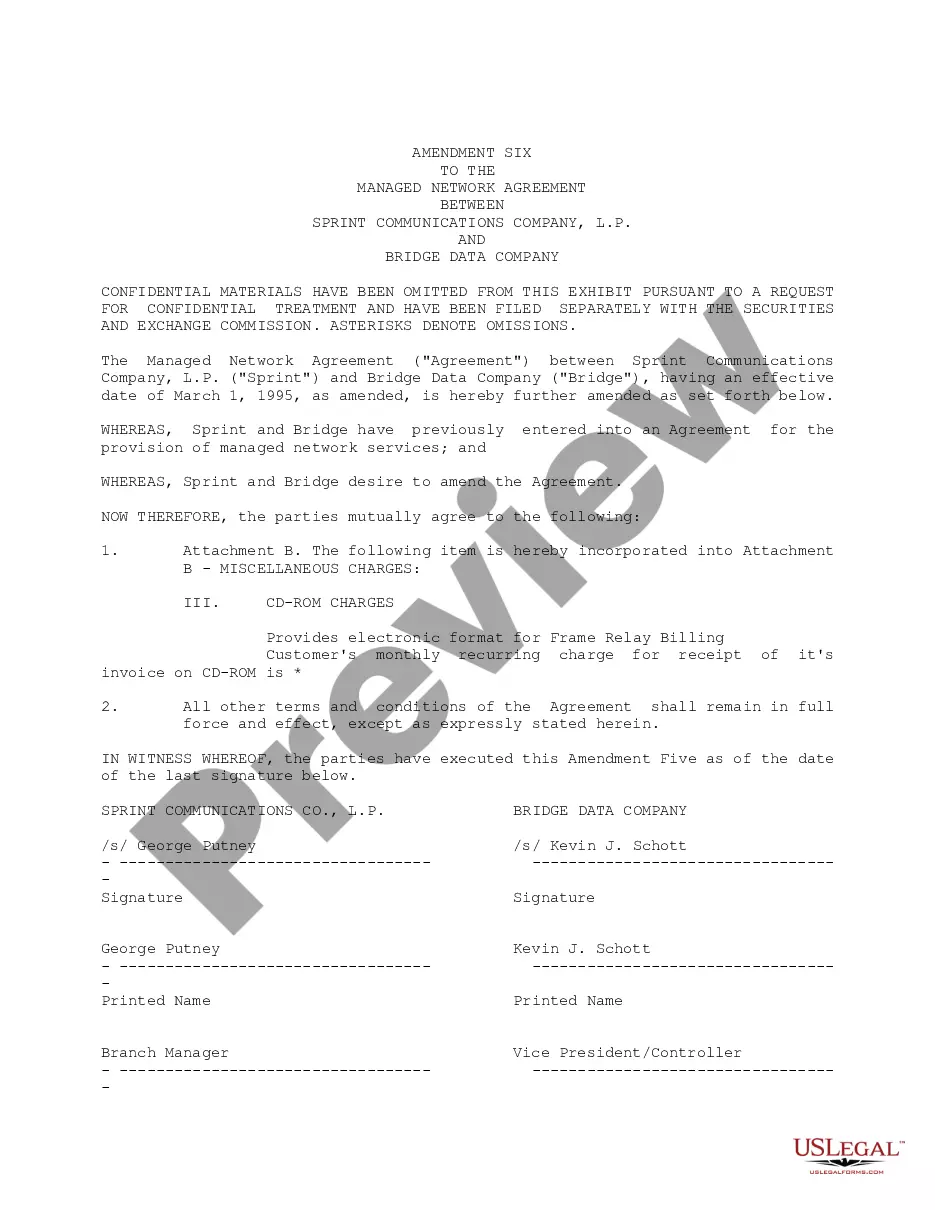
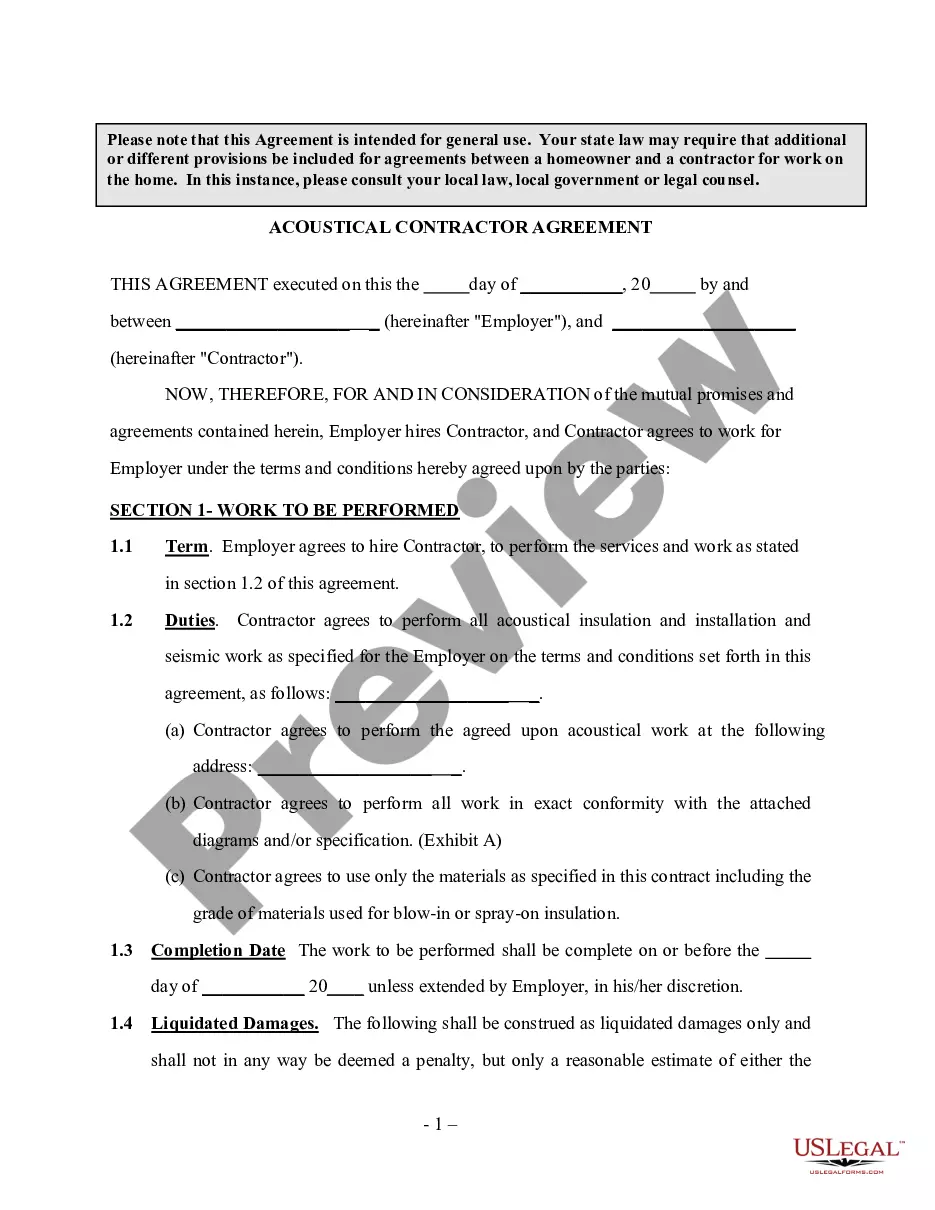
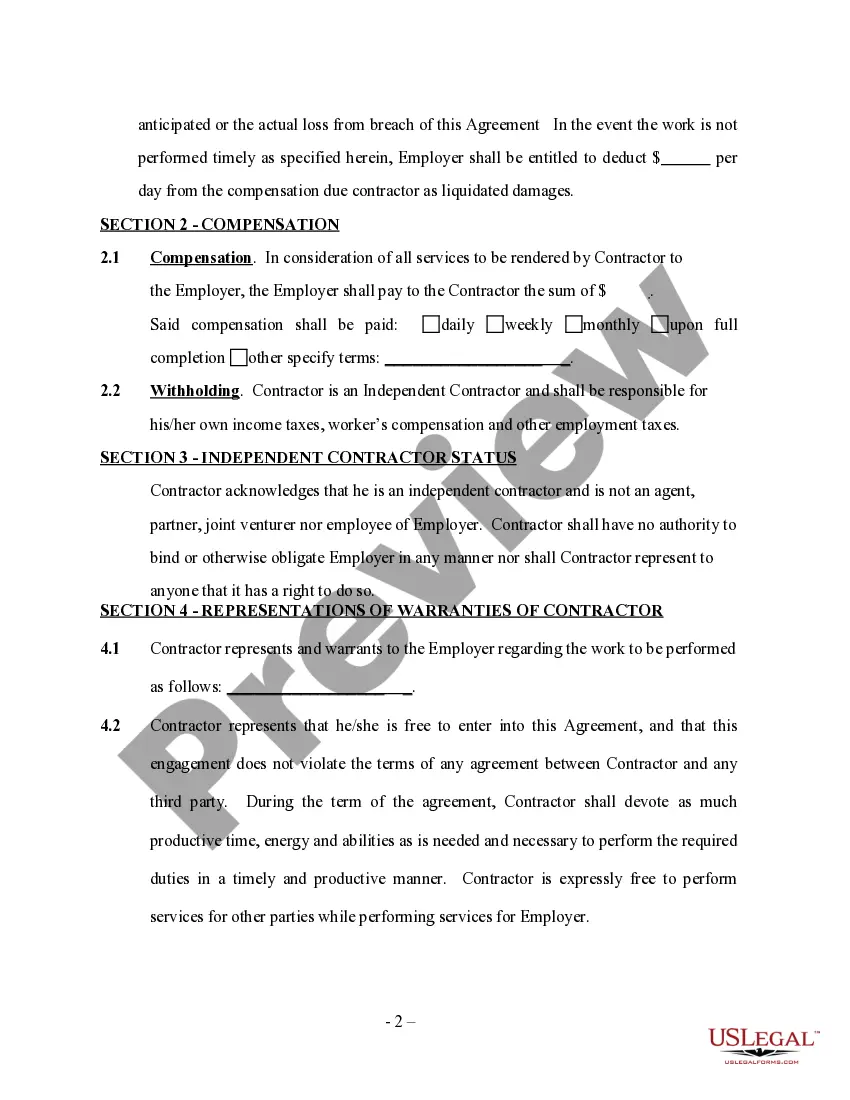
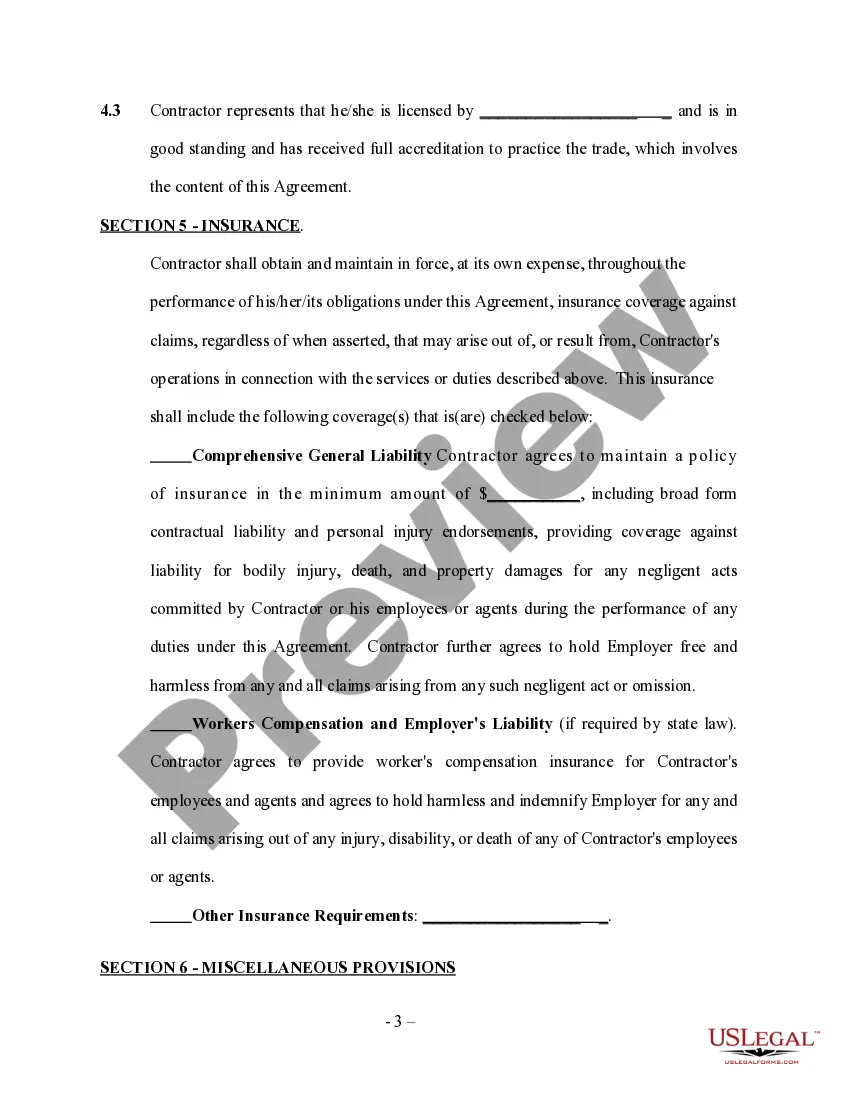
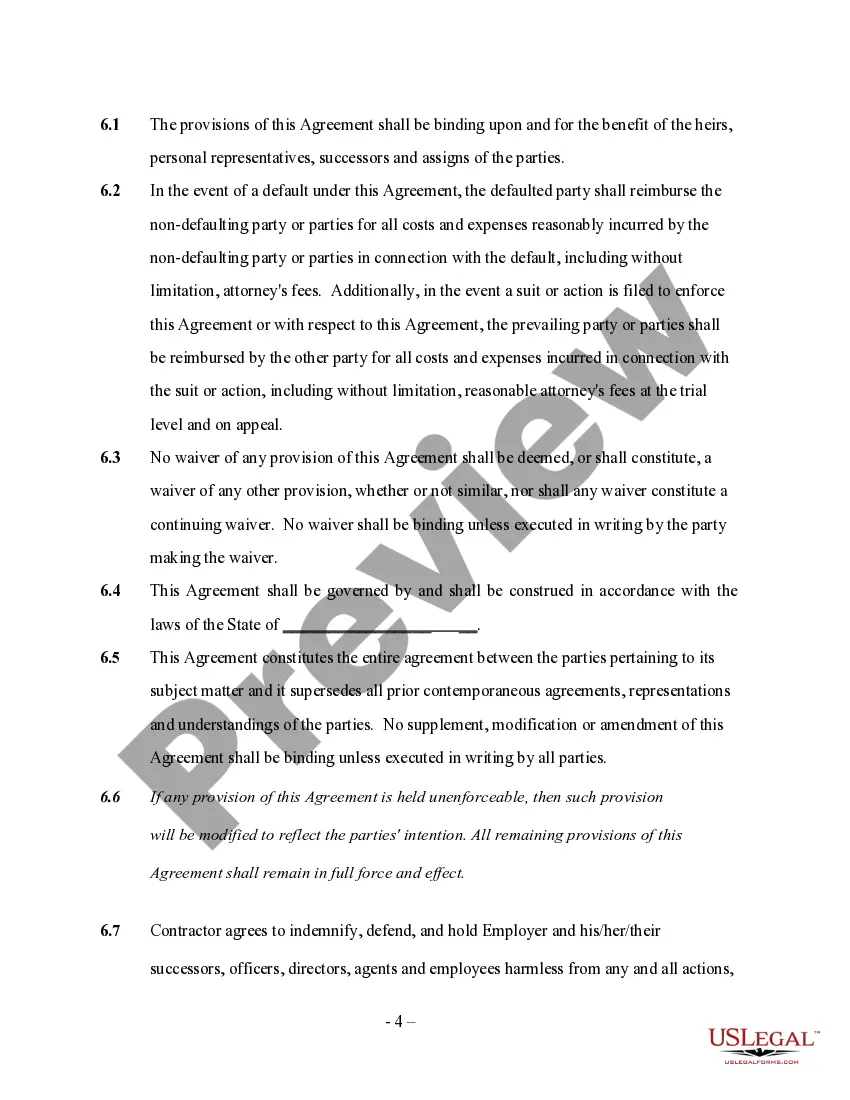
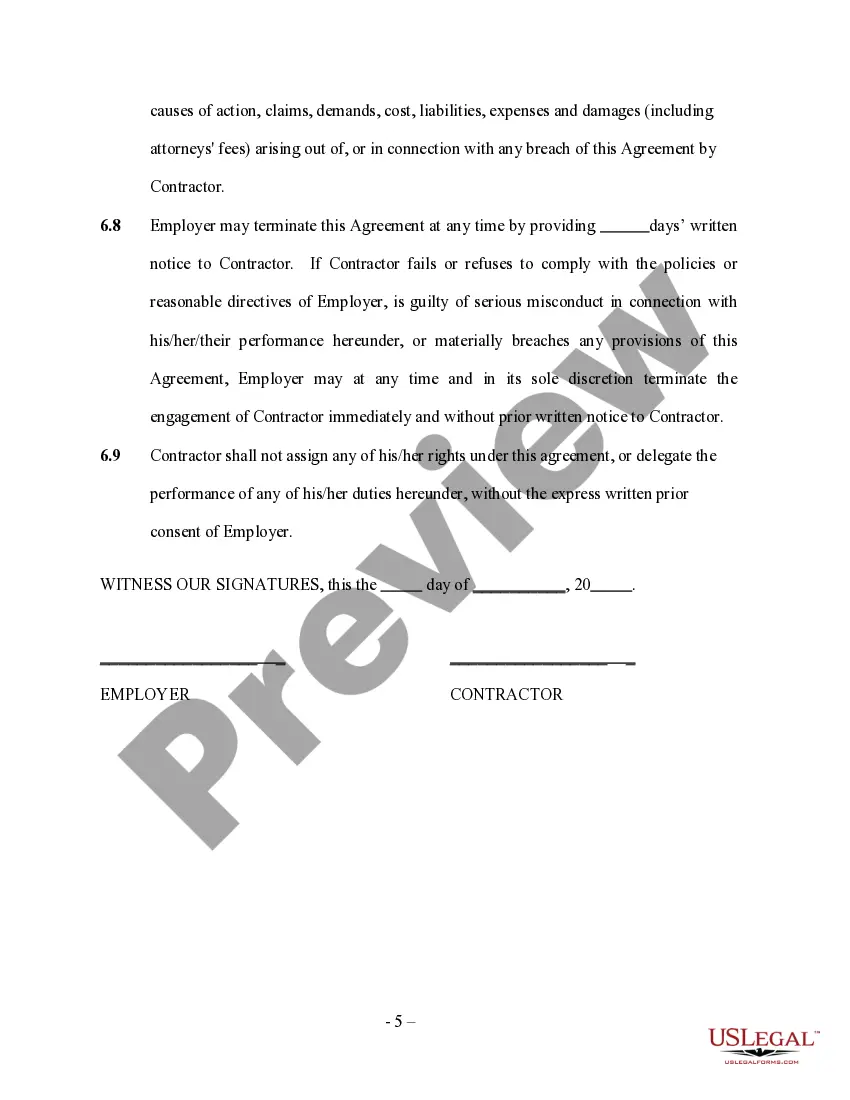
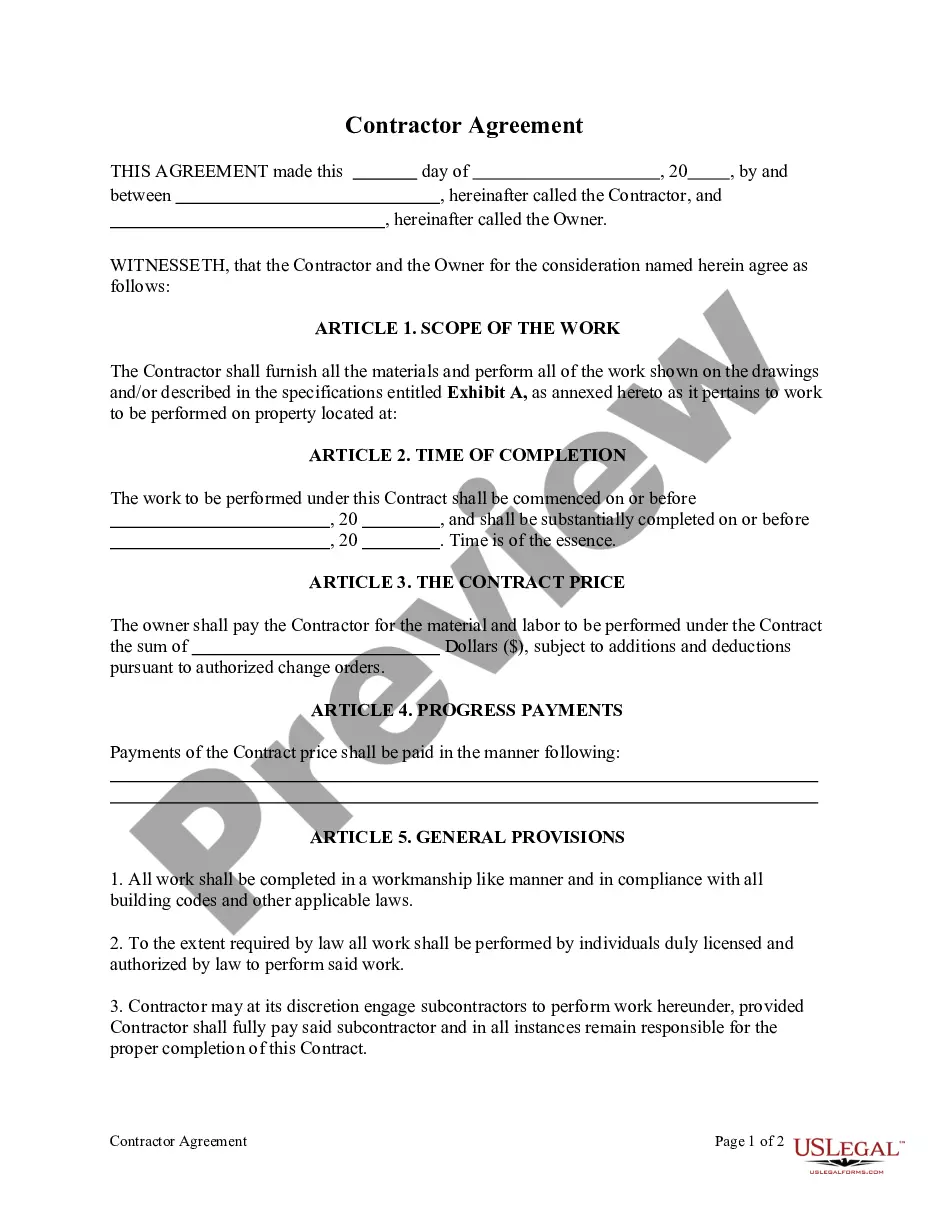
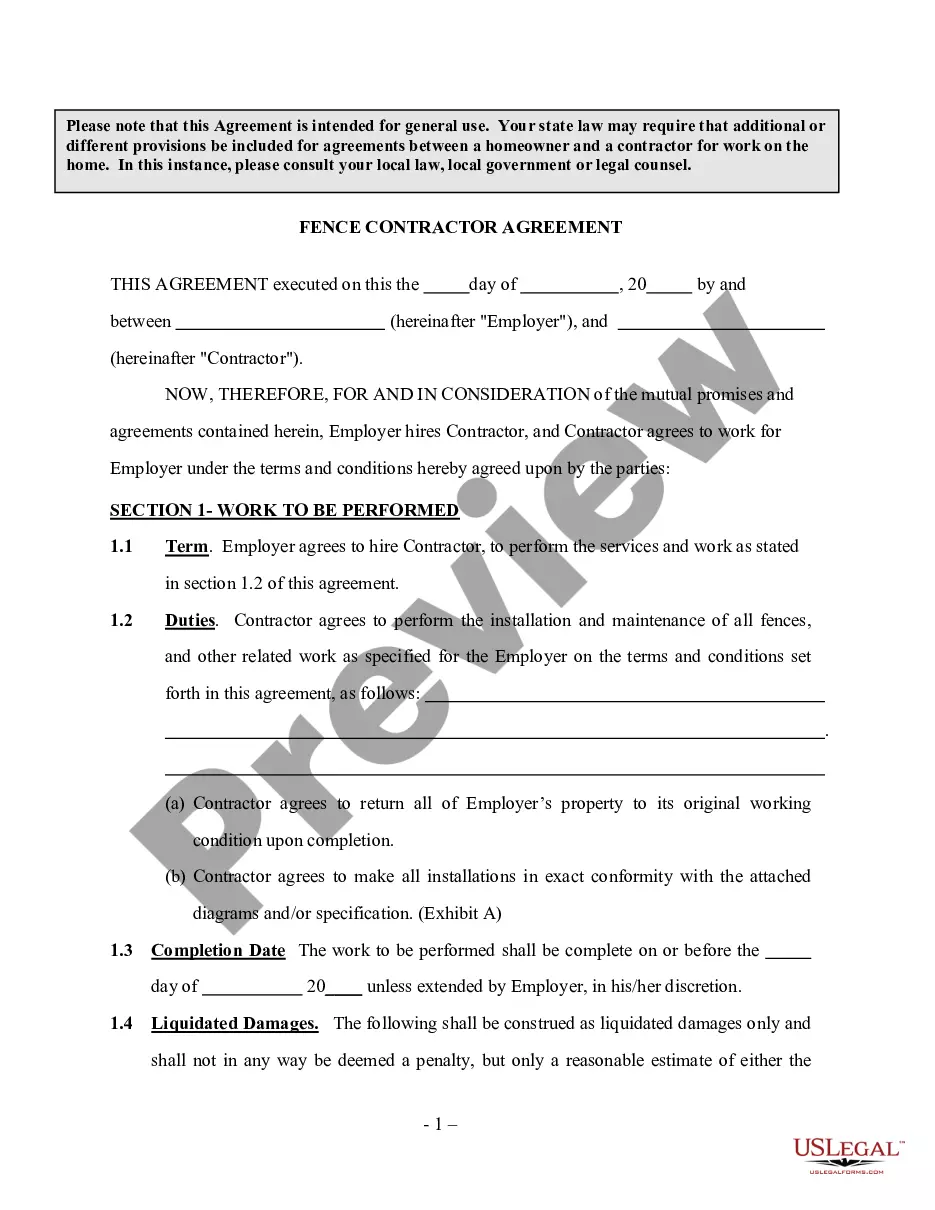
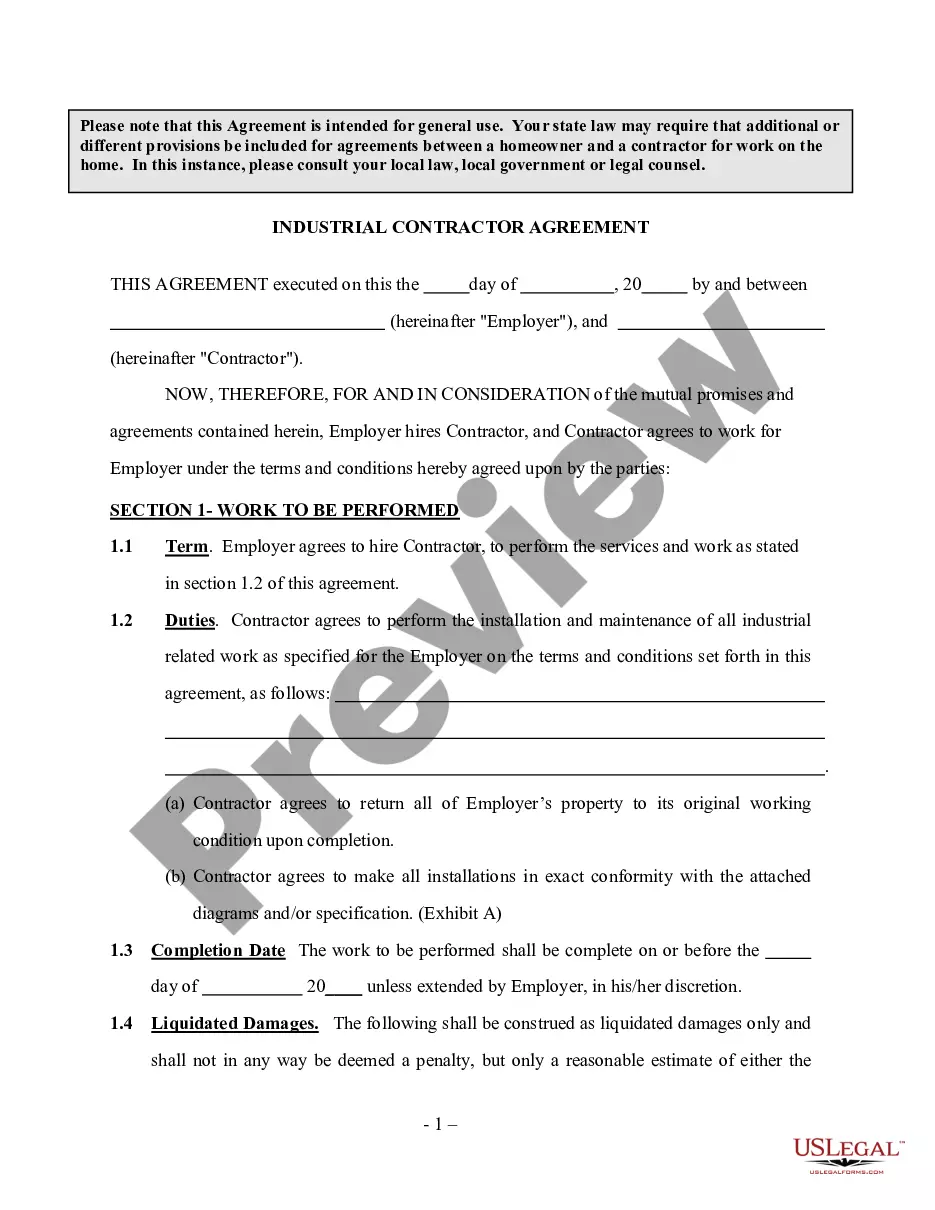
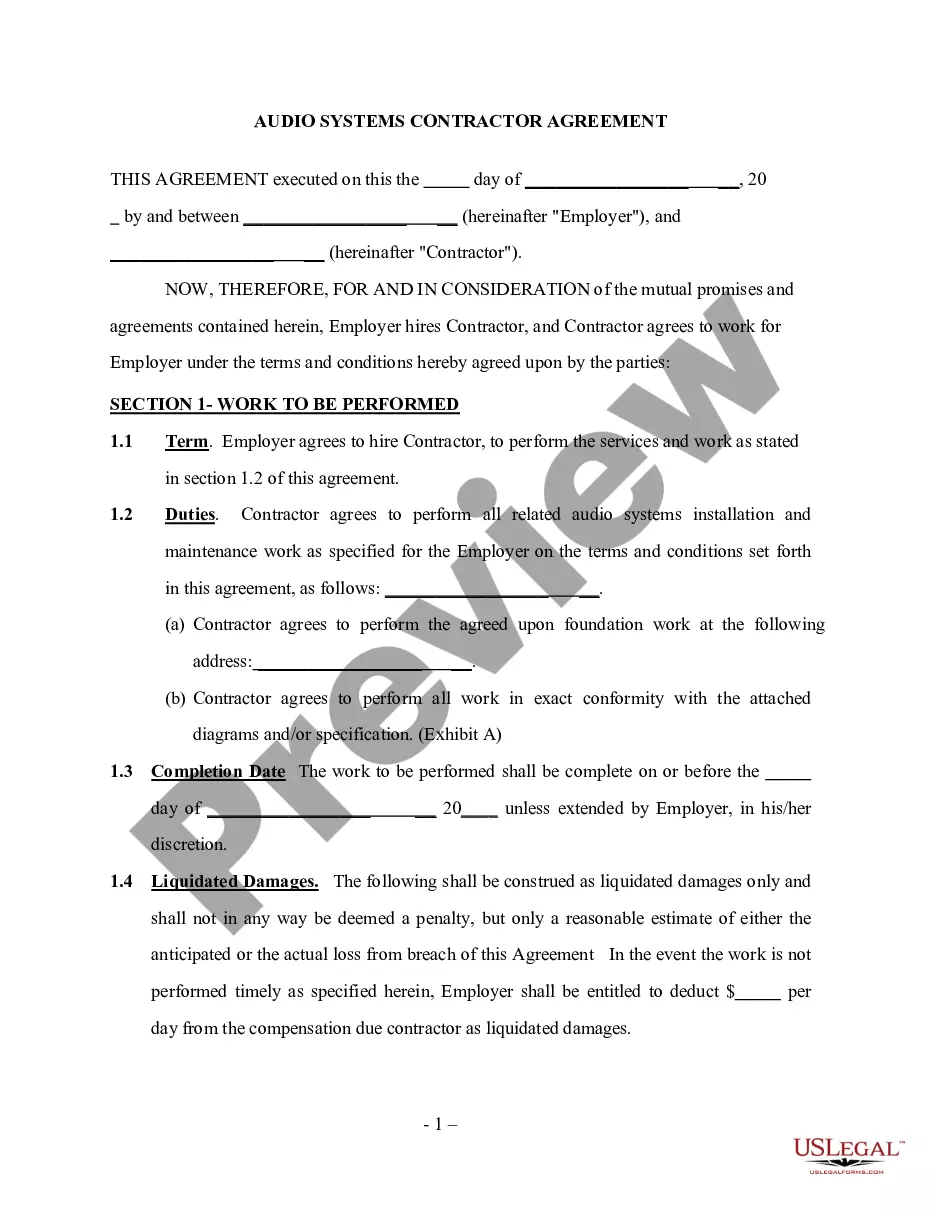
Employer contracts with an independent contractor to provide an acoustical area or building as specified and agreed upon in the contract. Please note that this Agreement is intended for general use. Your state law may require that additional or different provisions be included for agreements between a homeowner and a contractor for work on the home. In this instance, please consult your local law, local government or legal counsel.
Washington Acoustical Contractor Agreement - Self-Employed
State:
Multi-State
Control #:
US-INDC-115
Format:
Word;
Rich Text
Instant download
Description
Free preview
Get your form ready online
Our built-in tools help you complete, sign, share, and store your documents in one place.
Built-in online Word editor
Make edits, fill in missing information, and update formatting in US Legal Forms—just like you would in MS Word.
Export easily
Download a copy, print it, send it by email, or mail it via USPS—whatever works best for your next step.
E-sign your document
Sign and collect signatures with our SignNow integration. Send to multiple recipients, set reminders, and more. Go Premium to unlock E-Sign.
Notarize online 24/7
If this form requires notarization, complete it online through a secure video call—no need to meet a notary in person or wait for an appointment.
Store your document securely
We protect your documents and personal data by following strict security and privacy standards.

Make edits, fill in missing information, and update formatting in US Legal Forms—just like you would in MS Word.

Download a copy, print it, send it by email, or mail it via USPS—whatever works best for your next step.

Sign and collect signatures with our SignNow integration. Send to multiple recipients, set reminders, and more. Go Premium to unlock E-Sign.

If this form requires notarization, complete it online through a secure video call—no need to meet a notary in person or wait for an appointment.

We protect your documents and personal data by following strict security and privacy standards.
Looking for another form?

How to fill out Acoustical Contractor Agreement - Self-Employed?
If you wish to finalize, download, or print legal document templates, utilize US Legal Forms, the most extensive array of legal forms available online. Employ the site’s user-friendly and efficient search feature to locate the documents you require. Various templates for business and personal use are organized by categories and states, or keywords. Use US Legal Forms to find the Washington Acoustical Contractor Agreement - Self-Employed in just a few clicks.
If you are already a US Legal Forms user, Log In to your account and click on the Obtain button to access the Washington Acoustical Contractor Agreement - Self-Employed. You can also retrieve forms you previously downloaded in the My documents section of your account.
If you are using US Legal Forms for the first time, follow the steps below: Step 1. Ensure you have selected the form for the correct city/state. Step 2. Utilize the Review option to inspect the form’s content. Remember to read the description. Step 3. If you are dissatisfied with the form, use the Search field at the top of the screen to find other forms in the legal document format. Step 4. Once you have located the form you need, click the Acquire now button. Choose the payment plan you prefer and enter your credentials to register for an account. Step 5. Process the payment. You can use your credit card or PayPal account to complete the transaction. Step 6. Select the format of the legal document and download it to your device. Step 7. Complete, edit, and print or sign the Washington Acoustical Contractor Agreement - Self-Employed.
- Every legal document template you purchase is yours to keep indefinitely.
- You will have access to all forms you downloaded within your account.
- Visit the My documents section and select a form to print or download again.
- Stay competitive and download, and print the Washington Acoustical Contractor Agreement - Self-Employed with US Legal Forms.
- There are millions of professional and state-specific forms available for your business or personal needs.
Form popularity
FAQ
To prove your status as an independent contractor, you can present documentation like contracts, invoices, or tax forms showing your freelance work. Clear evidence of your business activities, such as marketing materials or client communications, can also help. Utilizing resources from US Legal Forms can simplify this process and assist with your Washington Acoustical Contractor Agreement - Self-Employed.
Being self-employed typically means running your own business or working as a freelance professional. Individuals must earn income outside of a traditional employer-employee relationship, thus receiving 1099 forms instead of W-2s. Understanding self-employment is crucial when navigating your Washington Acoustical Contractor Agreement - Self-Employed.
Yes, an independent contractor is indeed self-employed. This means that they operate their own business and provide services to clients without being classified as employees. Independent contractors enjoy greater freedom in how they work, which can be particularly beneficial when managing your Washington Acoustical Contractor Agreement - Self-Employed.
Yes, an independent contractor is generally considered self-employed. This relationship allows you flexibility in how you manage your work while providing services to clients under agreements like the Washington Acoustical Contractor Agreement - Self-Employed. By being self-employed, you gain control over your schedule and can operate multiple projects simultaneously. This arrangement is beneficial for those looking to establish their own businesses or work on diverse projects.
Yes, a self-employed person can absolutely have a contract. In fact, having a formal agreement, such as the Washington Acoustical Contractor Agreement - Self-Employed, helps to clearly outline the expectations and responsibilities of both parties. This contract protects you and your clients by offering a clear understanding of the services to be provided and the payment terms. Therefore, using a well-crafted contract is essential for successful self-employment.
Receiving a 1099 form typically indicates you are self-employed, as it signifies that you earned income without tax withholding. This income reporting method aligns with the structure of independent contractors and self-employed individuals. To solidify your self-employment status, consider drafting a Washington Acoustical Contractor Agreement - Self-Employed to establish clear terms with your clients.
Yes, in Washington State, independent contractors usually need a business license, depending on the specific services they provide. Obtaining this license ensures compliance with local regulations and helps establish your legitimacy as a business. Having a Washington Acoustical Contractor Agreement - Self-Employed can further support your business license application by demonstrating that you operate professionally.
Self-employed individuals typically earn income from their business activities rather than a traditional employer-employee relationship. You must be responsible for managing your own business affairs, including taxes and expenses. A comprehensive Washington Acoustical Contractor Agreement - Self-Employed can help you define your self-employment status and ensure your business operations align with state requirements.
Yes, an independent contractor is indeed considered self-employed. This classification means you operate your business and are not tied to a single employer. To clarify your role and protect your rights, a Washington Acoustical Contractor Agreement - Self-Employed can provide the necessary framework for your business dealings.
You can use either term interchangeably in most situations, but both have subtle differences. Self-employed generally implies you're the owner of your business, while independent contractor emphasizes your role in providing services to clients. Regardless of the term you choose, it's essential to have a solid Washington Acoustical Contractor Agreement - Self-Employed to outline your responsibilities and rights.