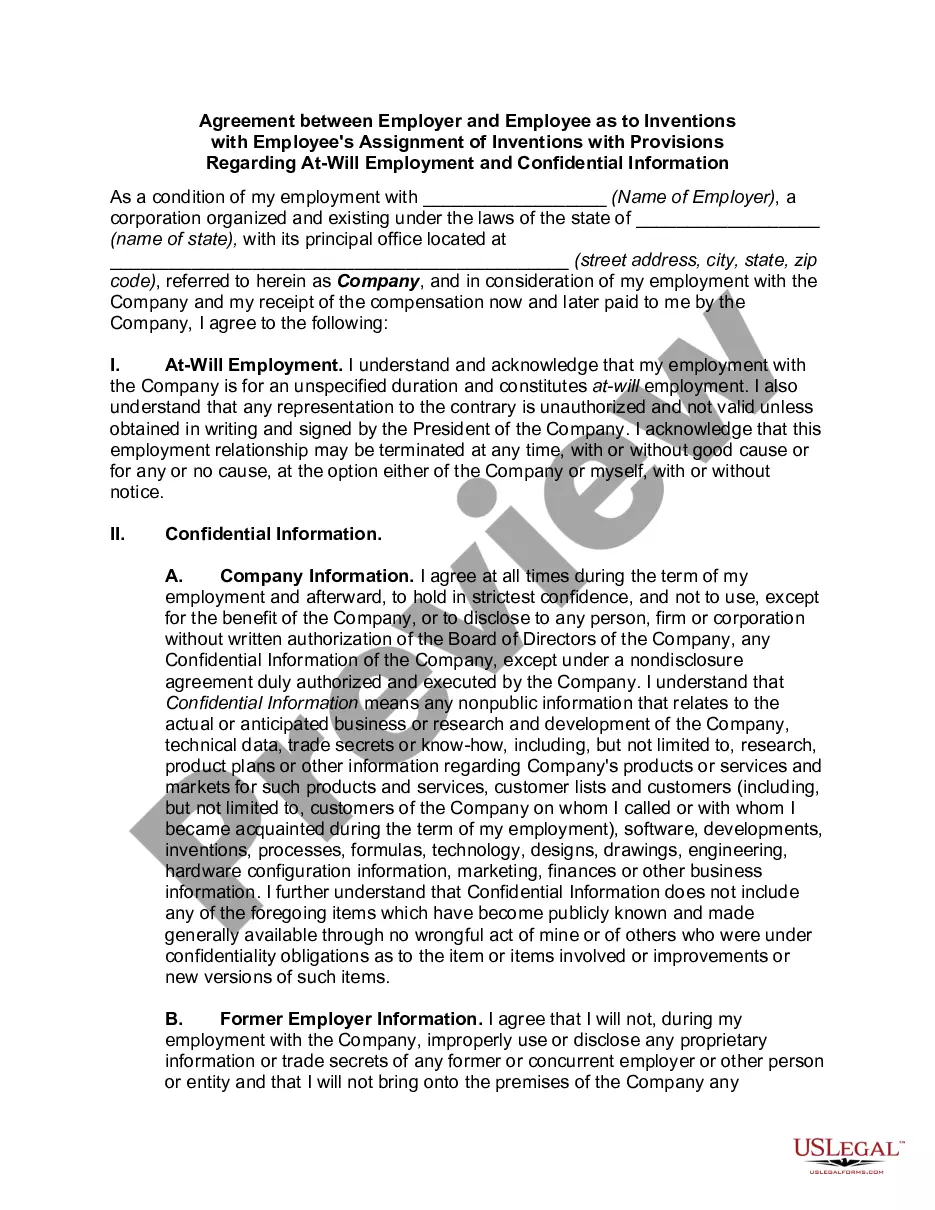
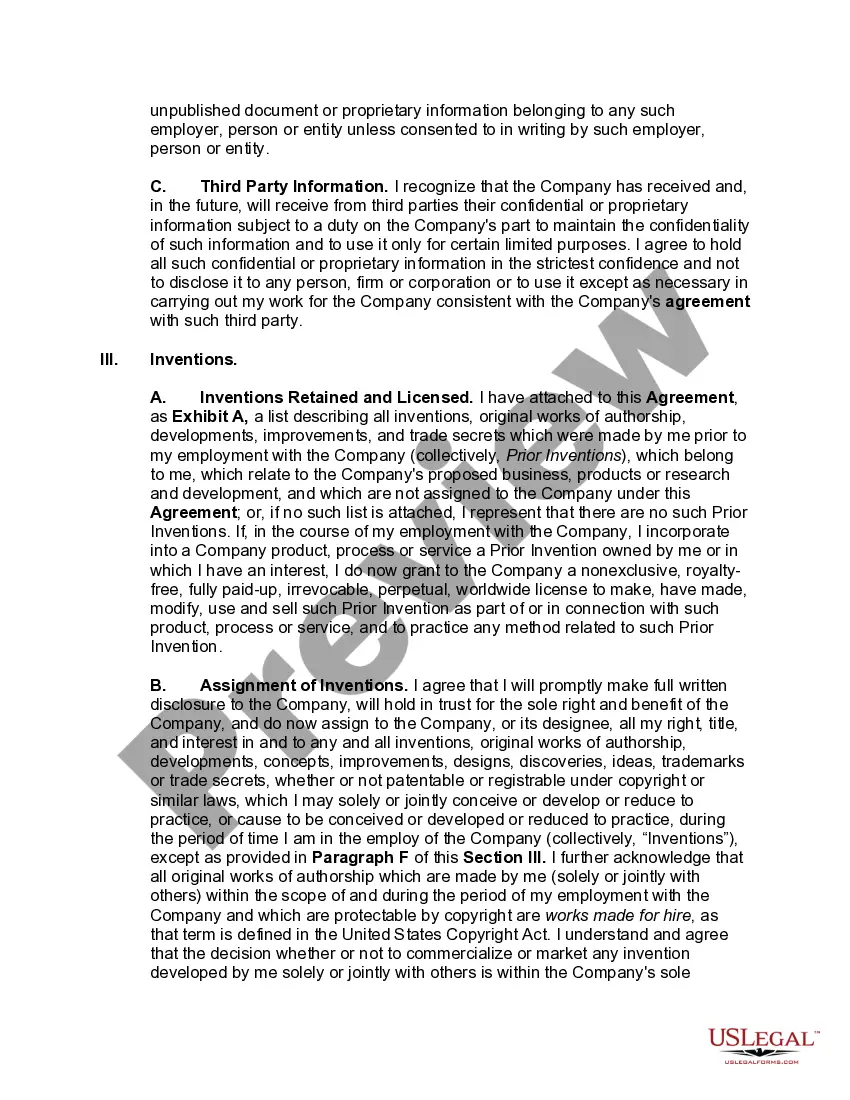
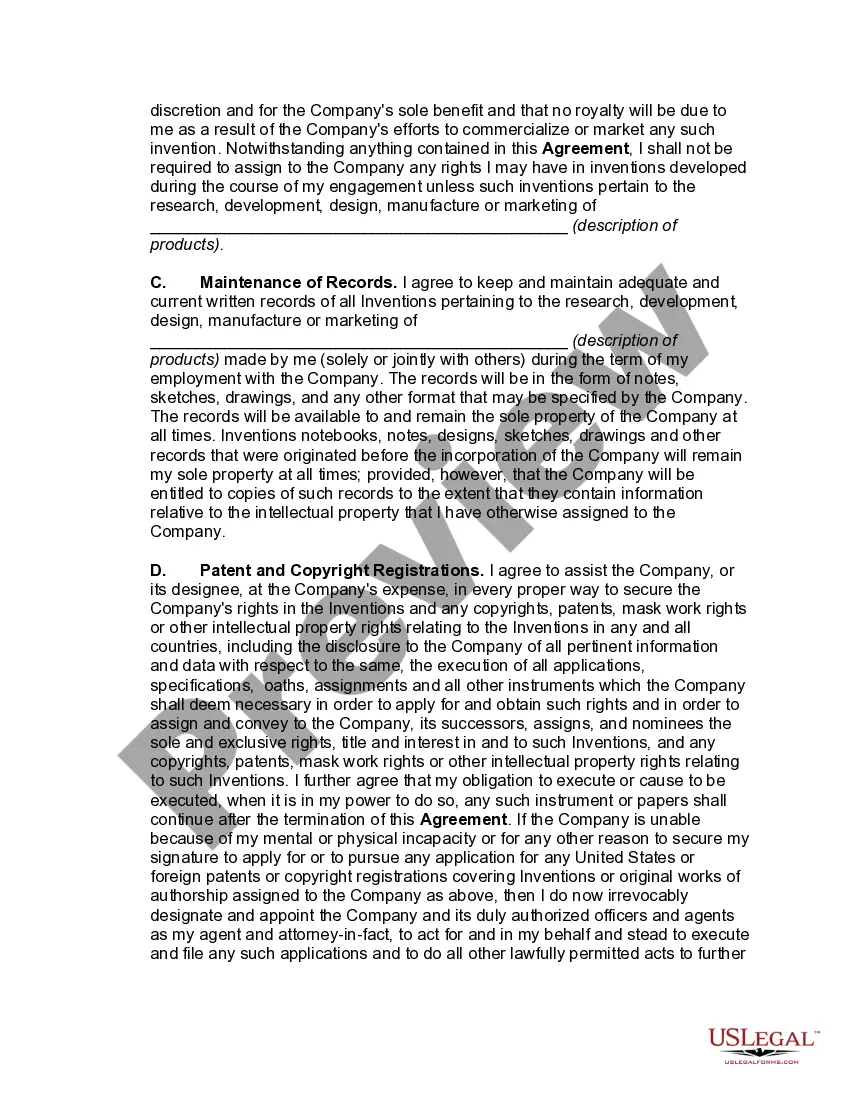
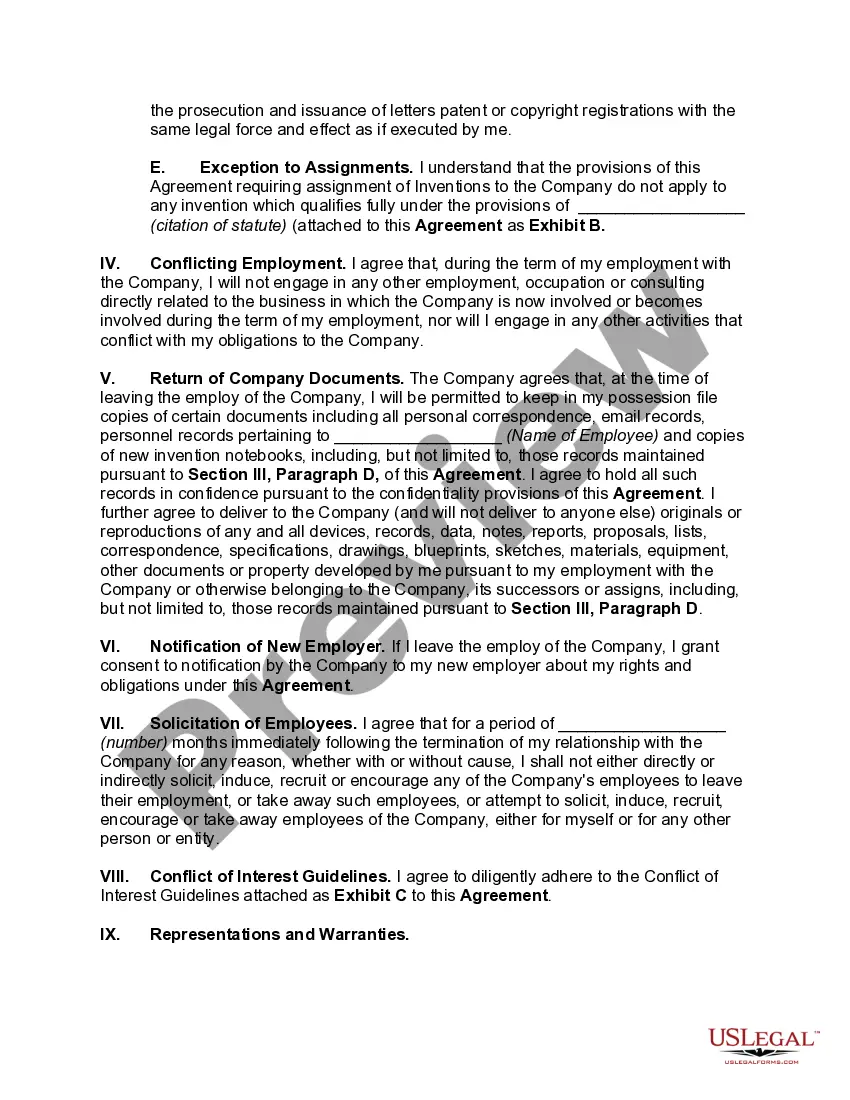
Washington Agreement between Employer and Employee as to Inventions with Employee's Assignment of Inventions with Provisions Regarding At-Will Employment and Confidential Information
Description
Get your form ready online
Our built-in tools help you complete, sign, share, and store your documents in one place.
Make edits, fill in missing information, and update formatting in US Legal Forms—just like you would in MS Word.
Download a copy, print it, send it by email, or mail it via USPS—whatever works best for your next step.
Sign and collect signatures with our SignNow integration. Send to multiple recipients, set reminders, and more. Go Premium to unlock E-Sign.
If this form requires notarization, complete it online through a secure video call—no need to meet a notary in person or wait for an appointment.
We protect your documents and personal data by following strict security and privacy standards.

Make edits, fill in missing information, and update formatting in US Legal Forms—just like you would in MS Word.

Download a copy, print it, send it by email, or mail it via USPS—whatever works best for your next step.

Sign and collect signatures with our SignNow integration. Send to multiple recipients, set reminders, and more. Go Premium to unlock E-Sign.

If this form requires notarization, complete it online through a secure video call—no need to meet a notary in person or wait for an appointment.

We protect your documents and personal data by following strict security and privacy standards.
Looking for another form?
How to fill out Agreement Between Employer And Employee As To Inventions With Employee's Assignment Of Inventions With Provisions Regarding At-Will Employment And Confidential Information?
You might invest hours online looking for the legal document template that meets both federal and state requirements you need.
US Legal Forms offers thousands of legal forms that have been reviewed by professionals.
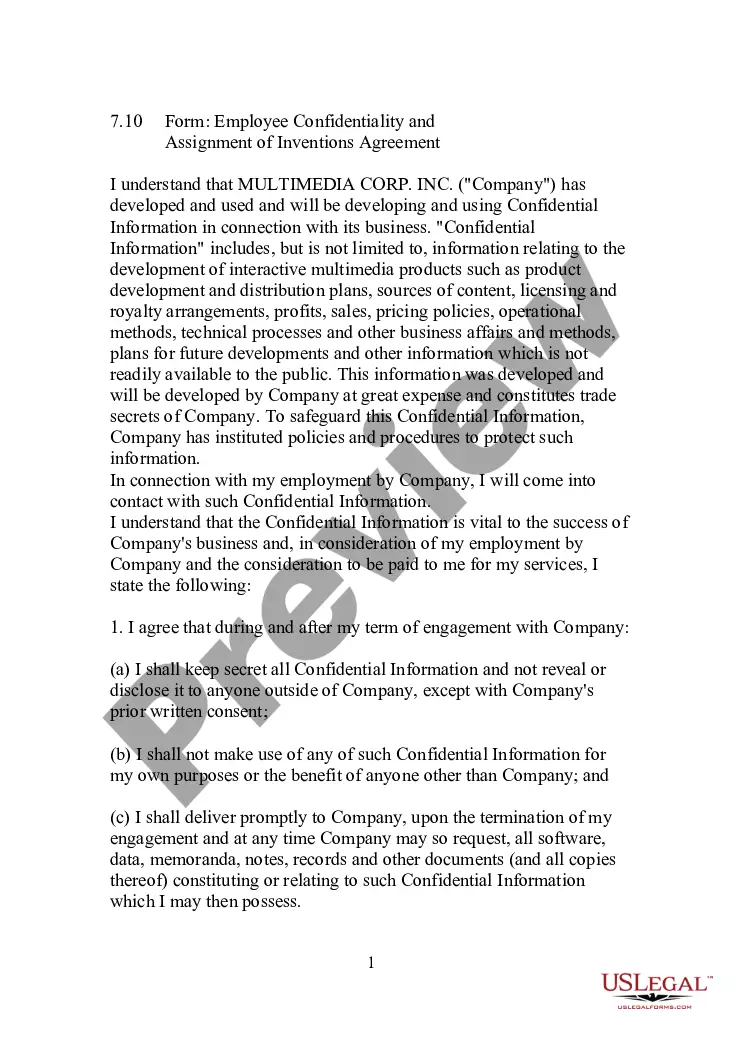
You can easily download or print the Washington Agreement between Employer and Employee regarding Inventions along with Employee's Assignment of Inventions including Provisions Concerning At-Will Employment and Confidential Information from our service.
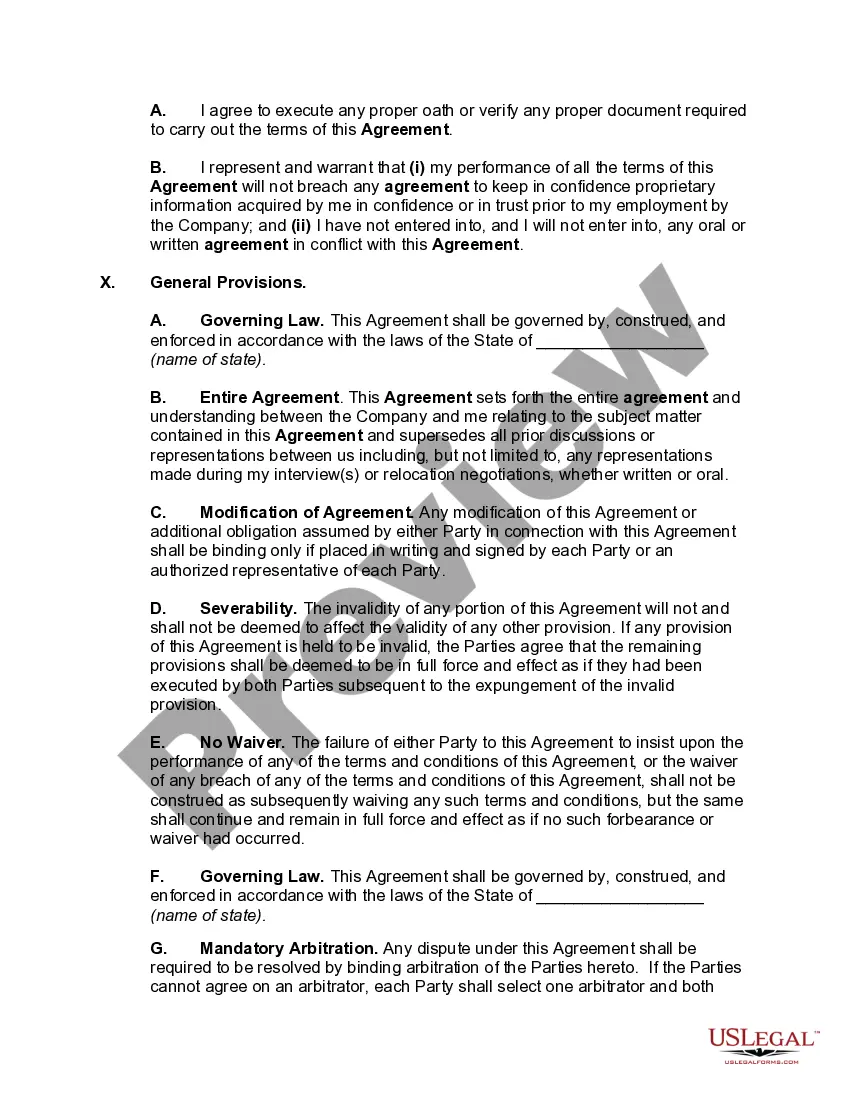
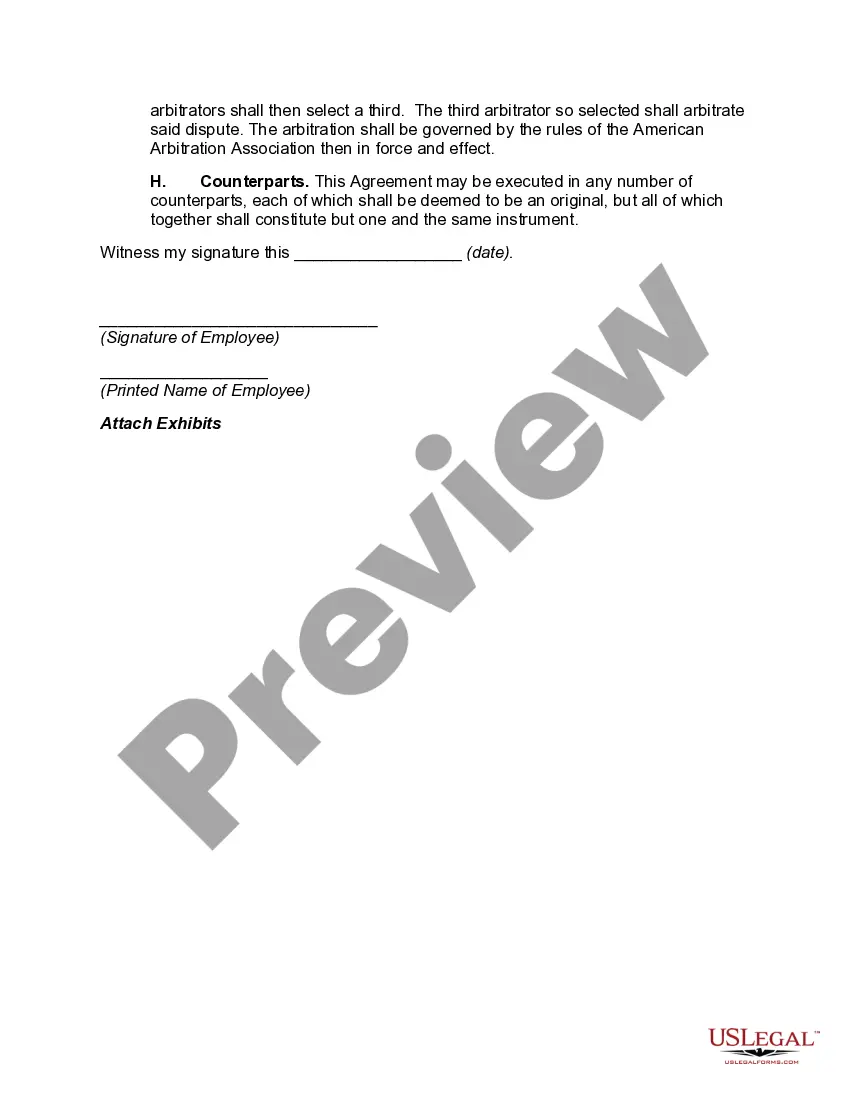
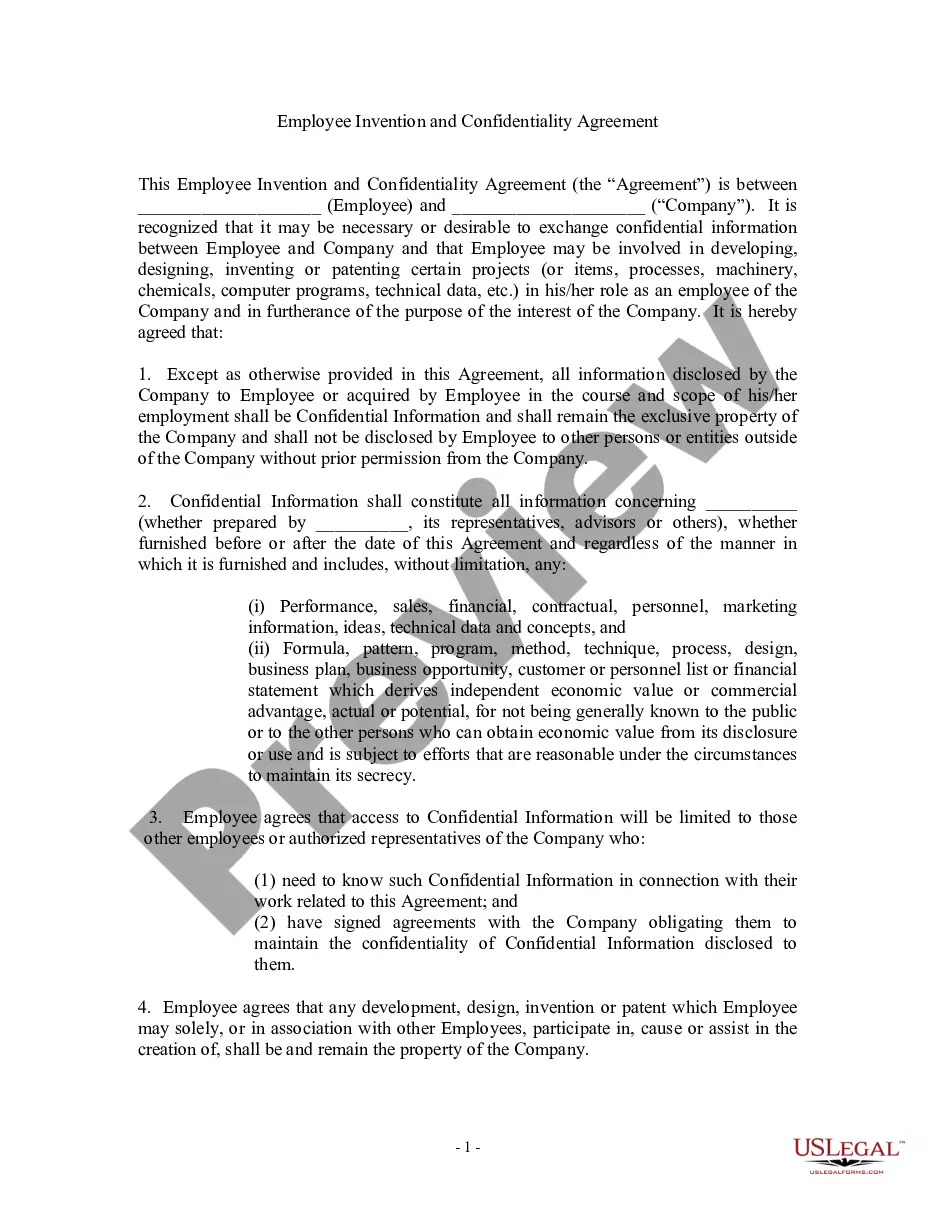
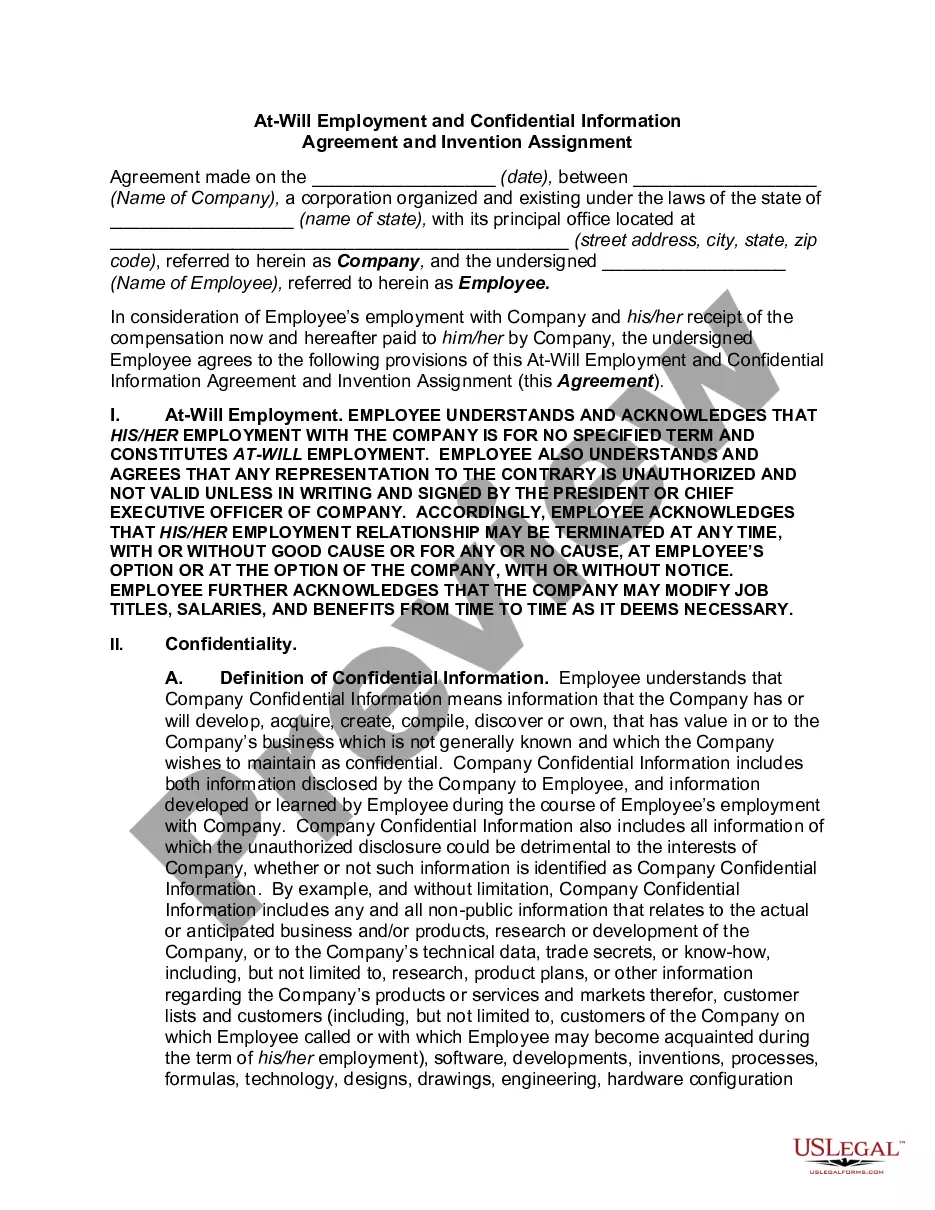
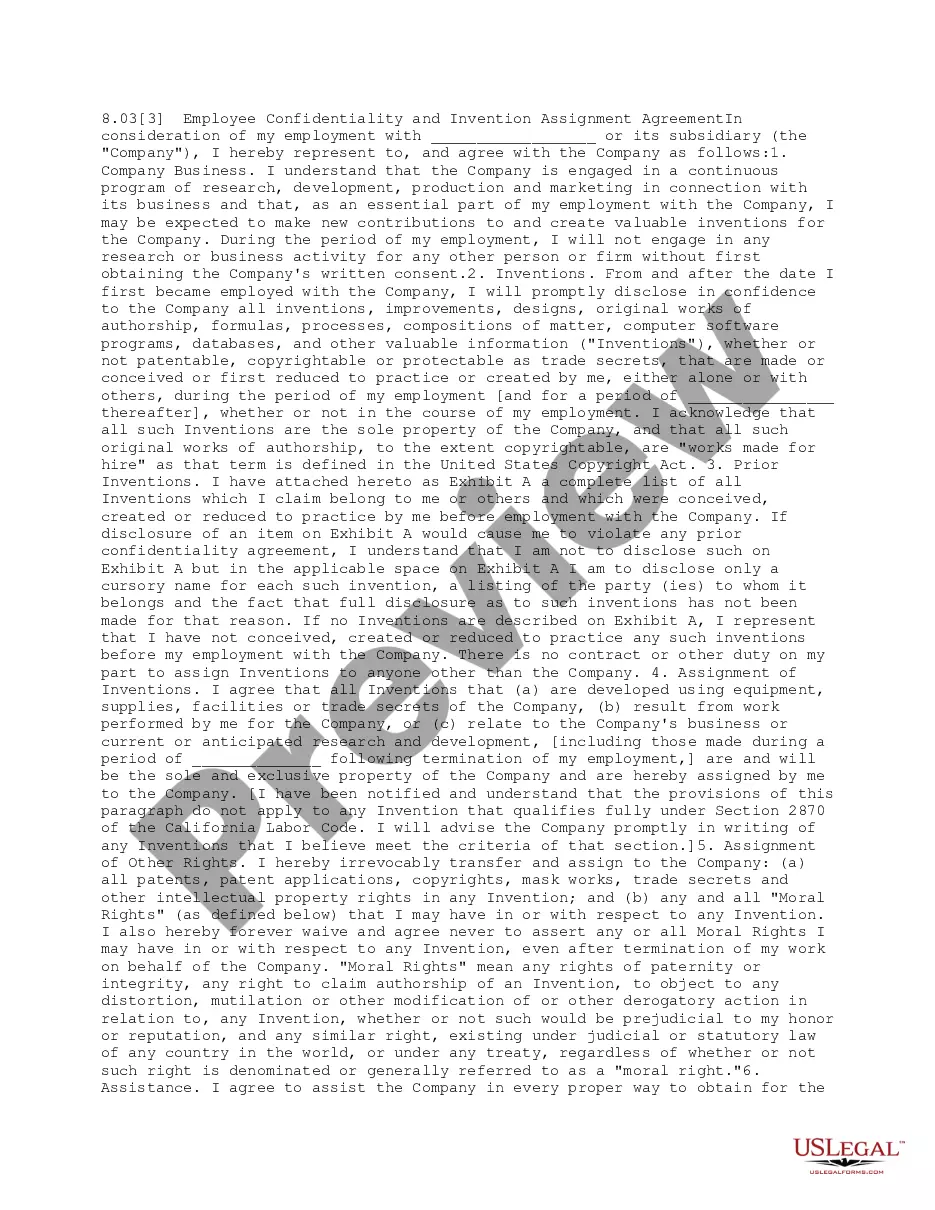
First, ensure you've selected the correct document template for the state/city of your choice. Check the form description to confirm you've chosen the right form. If available, utilize the Preview button to view the document template as well.
- If you possess a US Legal Forms account, you can Log In and click on the Obtain button.
- After that, you can complete, modify, print, or sign the Washington Agreement between Employer and Employee concerning Inventions along with Employee's Assignment of Inventions including Provisions Related to At-Will Employment and Confidential Information.
- Every legal document template you purchase is yours indefinitely.
- To get an additional copy of any purchased form, go to the My documents tab and click on the corresponding button.
- If you are using the US Legal Forms website for the first time, follow the straightforward instructions below.
Form popularity
FAQ
A Proprietary Information Agreement is a legally binding contract that stipulates that a number of parties must not disclose confidential supplies, data, or information as outlined by the contract to a different third party.
Employers Routinely Control Employees' Patents The general rule is that you own the patent rights to an invention you create during the course of your employment unless you either: signed an employment agreement assigning invention rights, or.
Excluded Inventions means any information (including, without limitation, business plans and/or business information), technology, know-how, materials, notes, records, designs, ideas, inventions, improvements, devices, developments, discoveries, compositions, trade secrets, processes, methods and/or techniques, whether
The agreement creates a confidential relationship between the parties to protect any type of confidential and proprietary information and assigns all relevant work product to the company during the signors employment with the company.
The employee may not create or retain any material reflecting on the employer. Proprietary information is qualified by intellectual property law as the rights and means to any copyright rights, patent rights, trademark rights, trade secret rights, mask work secret rights.
Also known as Proprietary Information and Inventions Assignment Agreements (or PIIAAs), Confidential Information and Inventions Assignment Agreements ensure that intellectual property and other proprietary rights created by employees during the course of their employment are assigned to the employer.
Employee agrees to perform, upon the reasonable request of the Company, during or after his employment, such further acts as may be necessary or desirable to transfer, perfect, and defend the Company's ownership of the Work Product.
An inventions assignment agreement is a typical feature of an independent contractor or employee agreement where the worker agrees to assign any intellectual property rights arising from the worker's services to the company.
A technology assignment agreement assigns your startup any intellectual property before you form the company. The developer(s) may retain individual intellectual property rights under certain circumstances, or they may sell the rights to you for equity or cash.