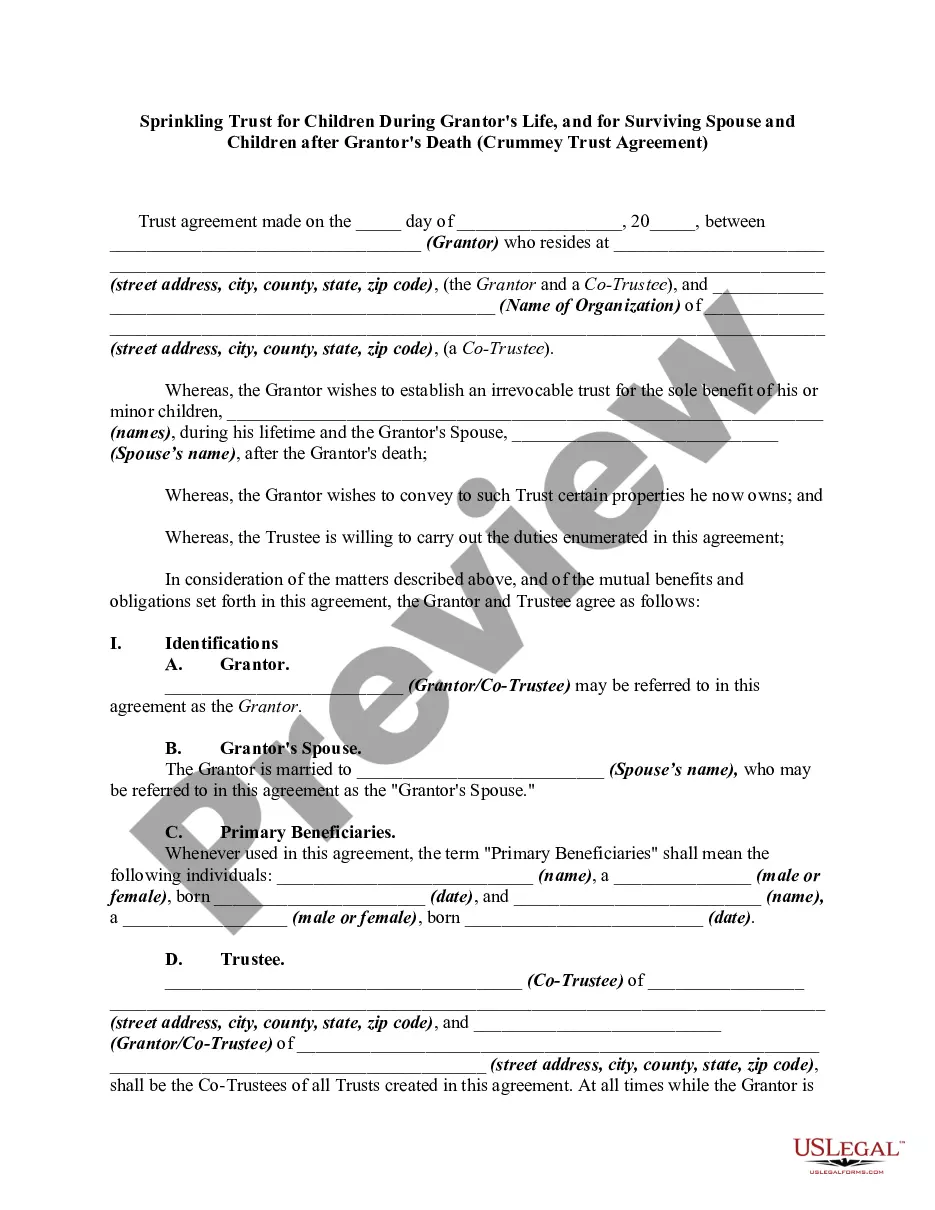
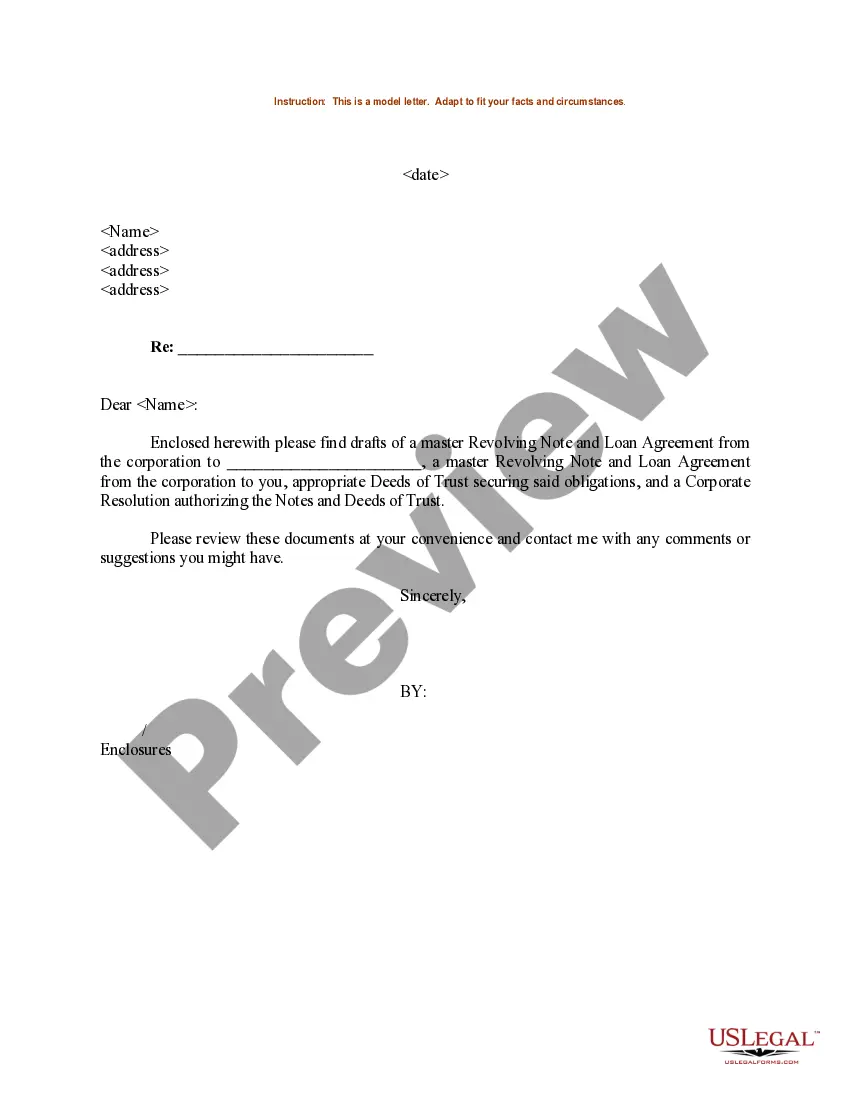
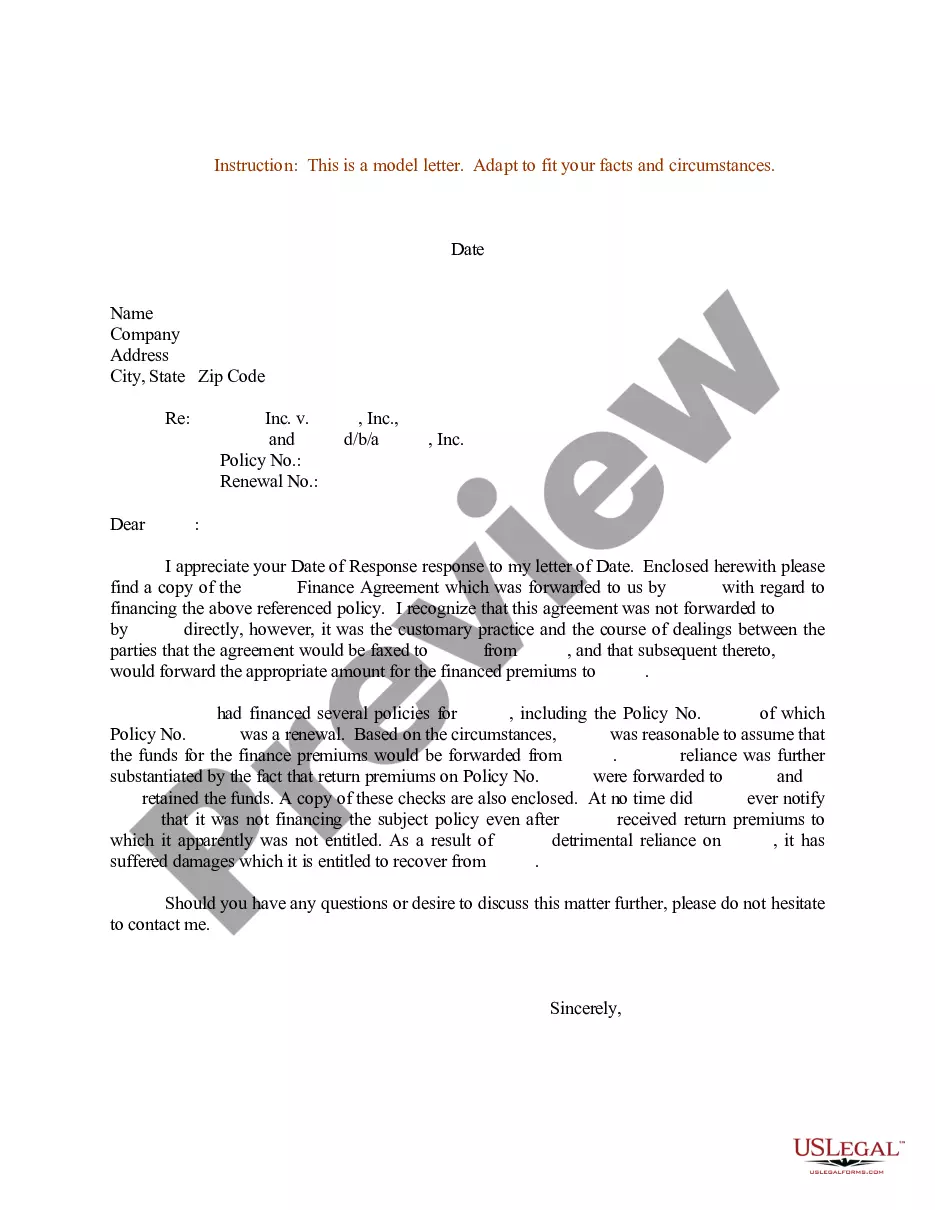
Washington Sample Letter regarding Revolving Note and Loan Agreement
Description
Get your form ready online
Our built-in tools help you complete, sign, share, and store your documents in one place.
Make edits, fill in missing information, and update formatting in US Legal Forms—just like you would in MS Word.
Download a copy, print it, send it by email, or mail it via USPS—whatever works best for your next step.
Sign and collect signatures with our SignNow integration. Send to multiple recipients, set reminders, and more. Go Premium to unlock E-Sign.
If this form requires notarization, complete it online through a secure video call—no need to meet a notary in person or wait for an appointment.
We protect your documents and personal data by following strict security and privacy standards.

Make edits, fill in missing information, and update formatting in US Legal Forms—just like you would in MS Word.

Download a copy, print it, send it by email, or mail it via USPS—whatever works best for your next step.

Sign and collect signatures with our SignNow integration. Send to multiple recipients, set reminders, and more. Go Premium to unlock E-Sign.

If this form requires notarization, complete it online through a secure video call—no need to meet a notary in person or wait for an appointment.

We protect your documents and personal data by following strict security and privacy standards.
Looking for another form?


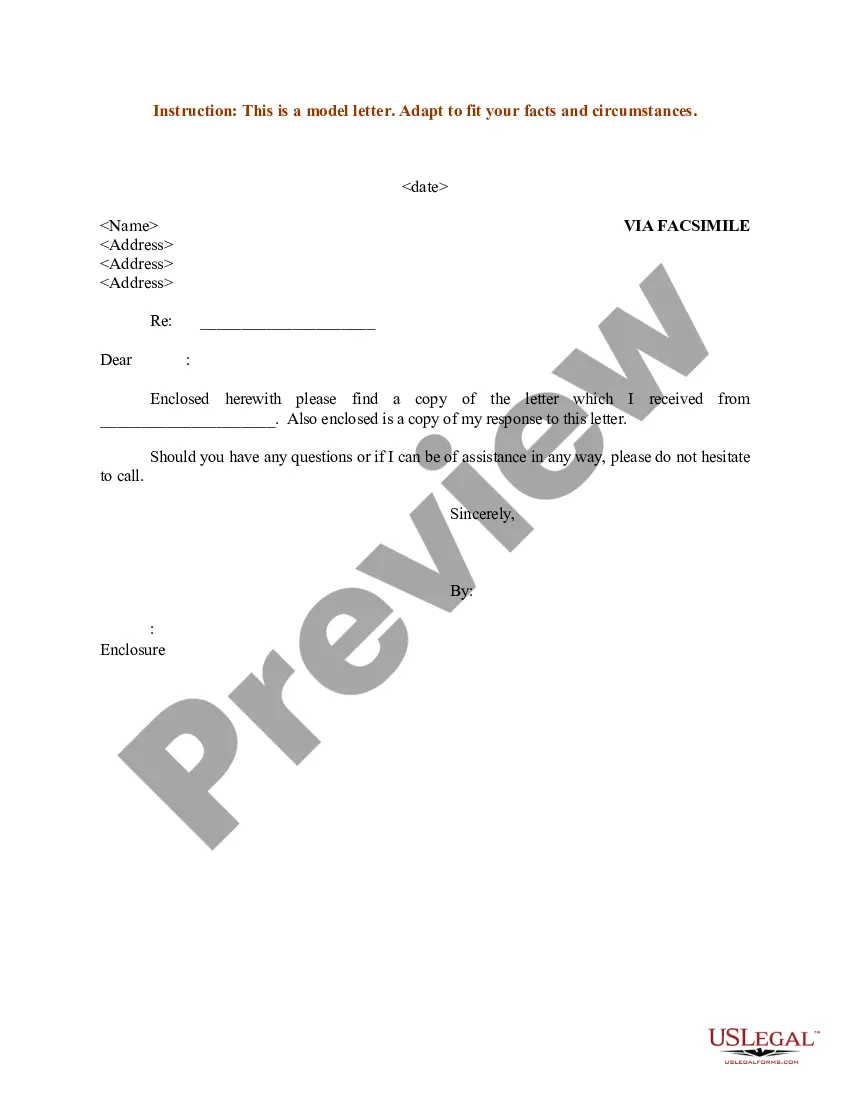
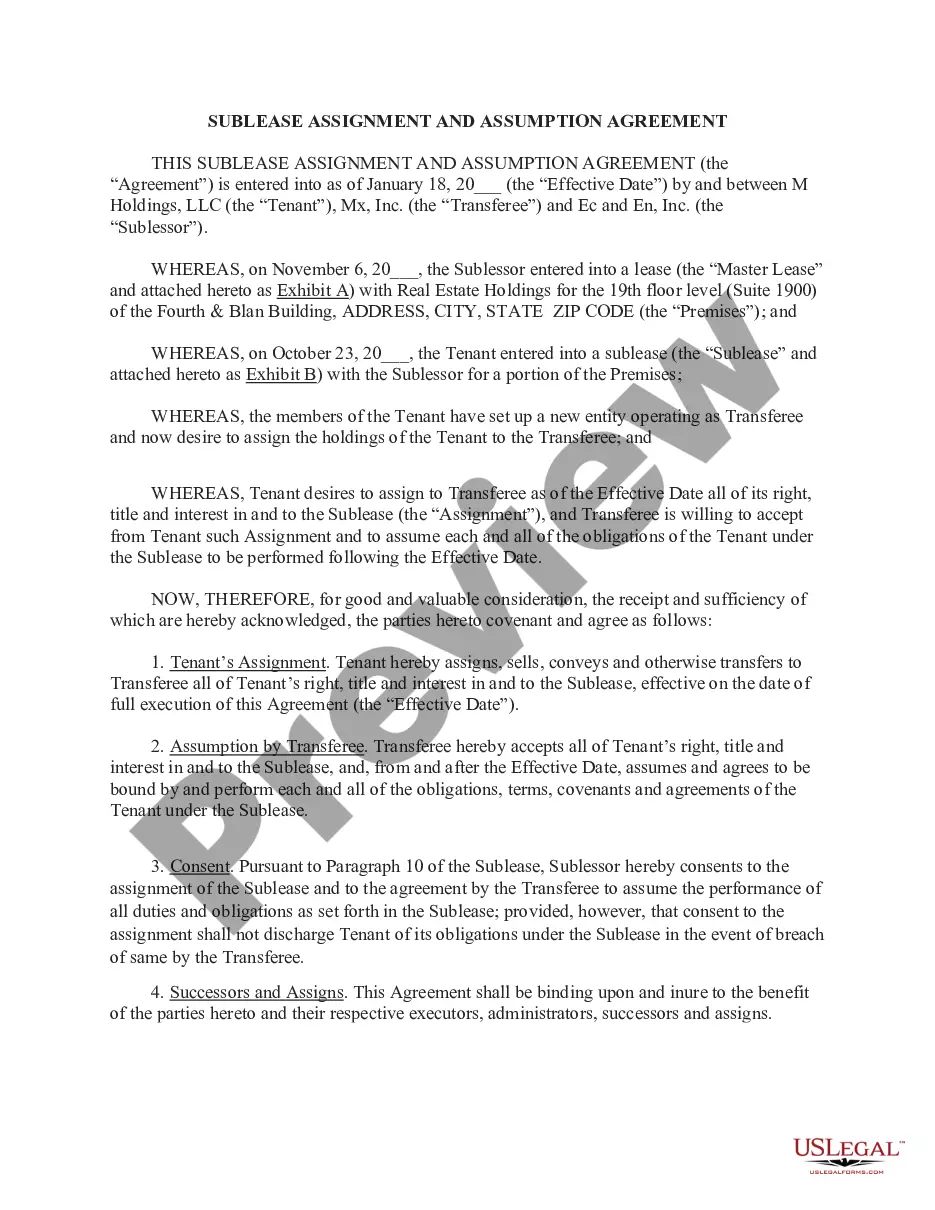
How to fill out Sample Letter Regarding Revolving Note And Loan Agreement?
In case you need to finalize, obtain, or create legal document templates, utilize US Legal Forms, the largest selection of legal documents accessible online.
Leverage the site’s straightforward and convenient search tool to locate the documents you require.
Numerous templates for commercial and personal purposes are organized by categories and states, or keywords.
Step 4. Once you have found the form you require, click the Get now button. Choose your desired pricing plan and enter your details to register for an account.
Step 5. Complete the transaction. You can use your credit card or PayPal account to finalize the transaction.
- Employ US Legal Forms to locate the Washington Sample Letter concerning Revolving Note and Loan Agreement in just a few clicks.
- If you are currently a US Legal Forms user, Log In to your account and click the Obtain button to acquire the Washington Sample Letter concerning Revolving Note and Loan Agreement.
- You can also access forms you previously saved under the My documents tab of your account.
- For first-time users of US Legal Forms, follow these guidelines.
- Step 1. Ensure you've selected the form for the correct city/state.
- Step 2. Use the Preview option to review the document’s content. Remember to read the description.
- Step 3. If you are not satisfied with the form, use the Search box at the top of the screen to find other versions of the legal document template.
Form popularity
FAQ
Installment credit gives borrowers a lump sum, and fixed, scheduled payments are made until the loan is paid in full. Revolving credit allows a borrower to spend the money they have borrowed, repay it, and borrow again as needed.
A loan agreement serves a similar purpose as a promissory note. Like a promissory note it is a contractual agreement between a lender who agrees to loan money to a borrower. However, a loan agreement is much more detailed than a promissory note.
A promissory note can be used for friend and family loans, or short-term, small loans. Loan agreements, on the other hand, are used for everything from vehicles to mortgages to new business ventures. Most banks and other large financial institutions have specific loan documents that they use for specific situations.
Term loans have a fixed repayment period, while revolving loans are repaid based on usage. Your assets can be used to pay back a defaulted loan.
A revolving line of credit refers to a type of loan offered by a financial institution. Borrowers pay the debt as they would any other. However, with a revolving line of credit, as soon as the debt is repaid, the user can borrow up to her credit limit again without going through another loan approval process.
Revolving credit is an agreement that permits an account holder to borrow money repeatedly up to a set dollar limit while repaying a portion of the current balance due in regular payments. Each payment, minus the interest and fees charged, replenishes the amount available to the account holder.
To draft a Loan Agreement, you should include the following:The addresses and contact information of all parties involved.The conditions of use of the loan (what the money can be used for)Any repayment options.The payment schedule.The interest rates.The length of the term.Any collateral.The cancellation policy.More items...
A Loan Agreement is a document between a borrower and lender that details a loan repayment schedule. You can use our Loan Agreement template for a variety of purposes, including: Personal lending between friends or family. Business transactions, such as securing capital for a startup.
Key Takeaways. A note is a legal document representing a loan made from an issuer to a creditor or an investor. Notes entail the payback of the principal amount loaned, as well as any predetermined interest payments.
Examples of revolving credit include credit cards, personal lines of credit and home equity lines of credit (HELOCs).