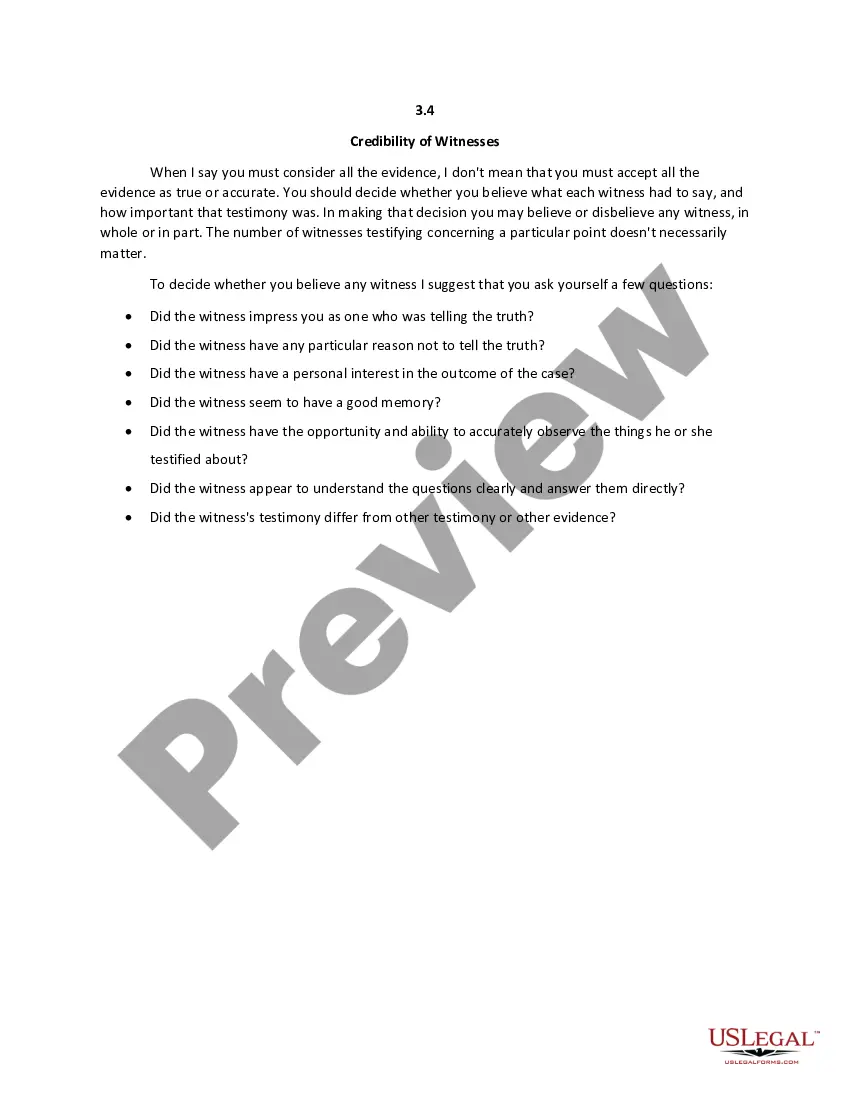
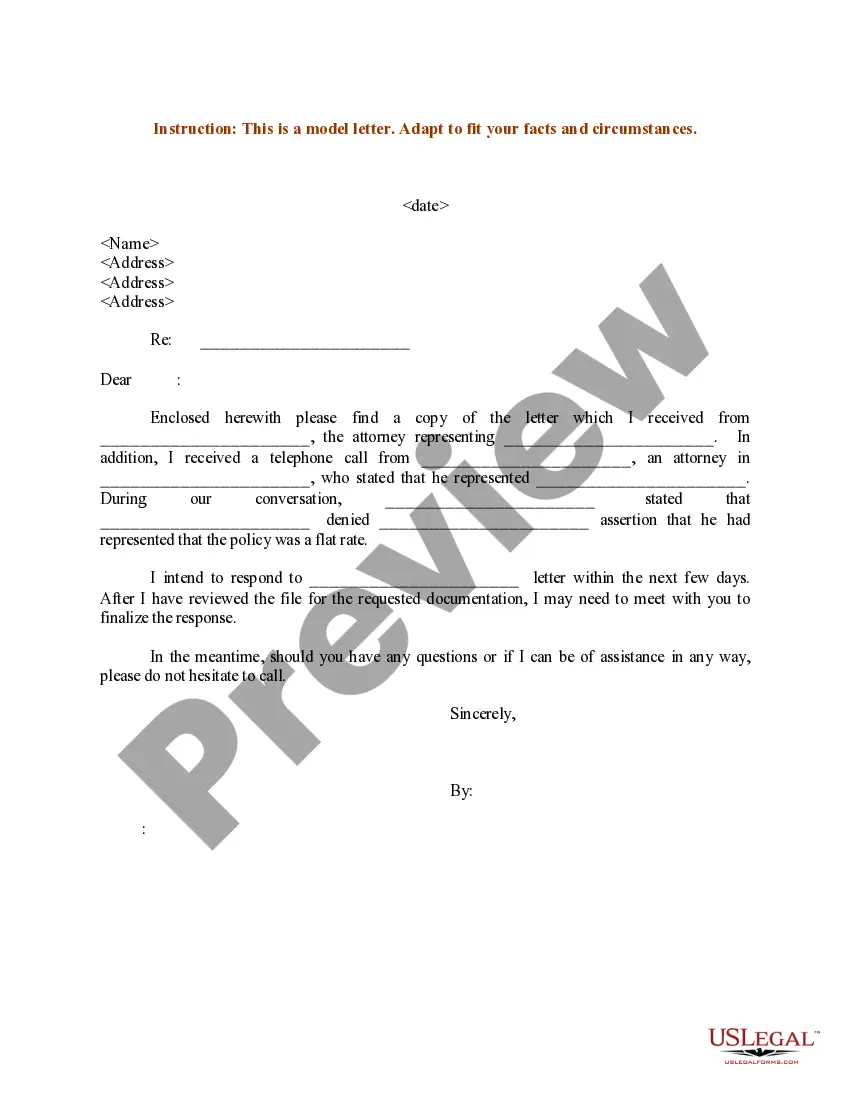
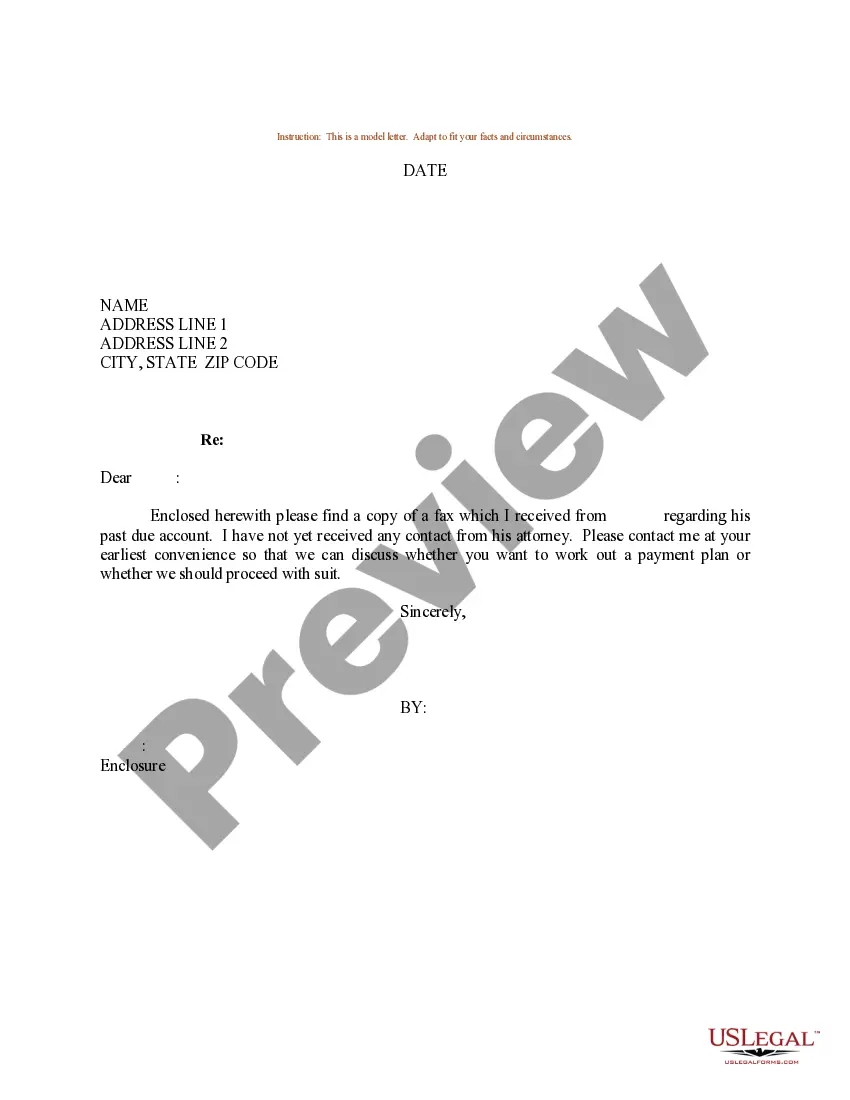
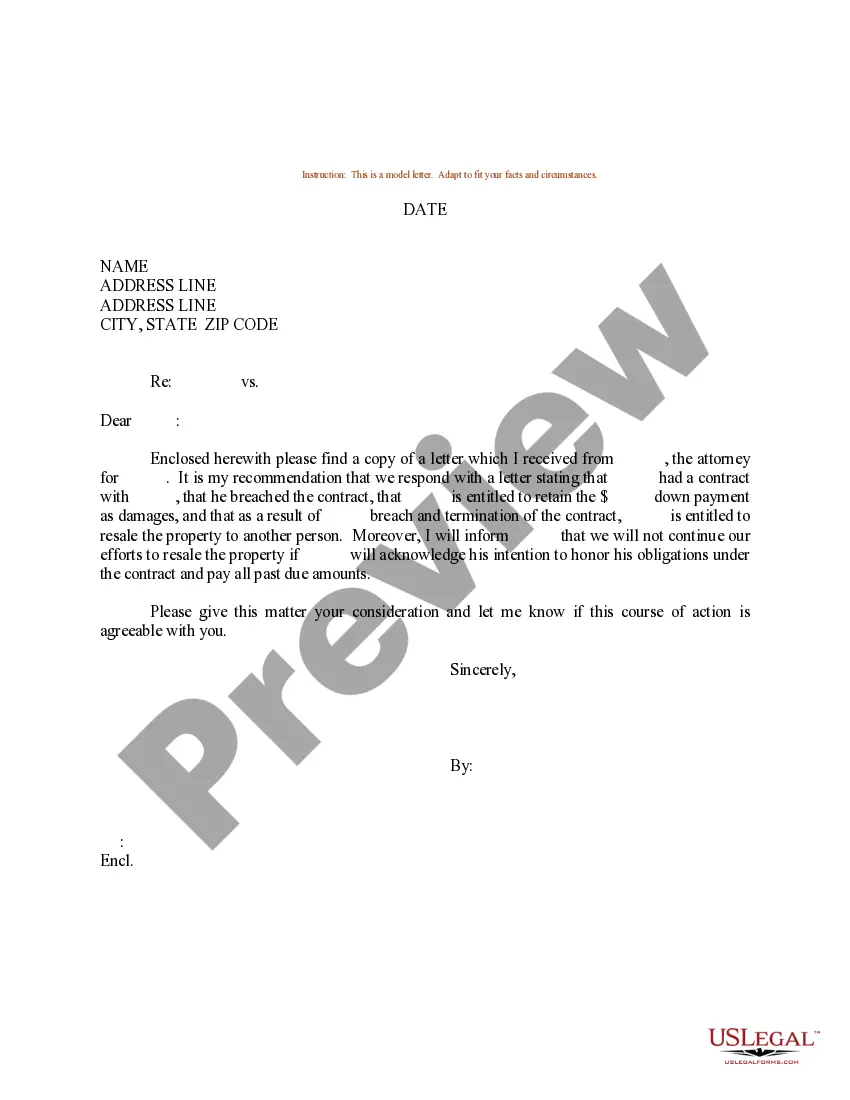
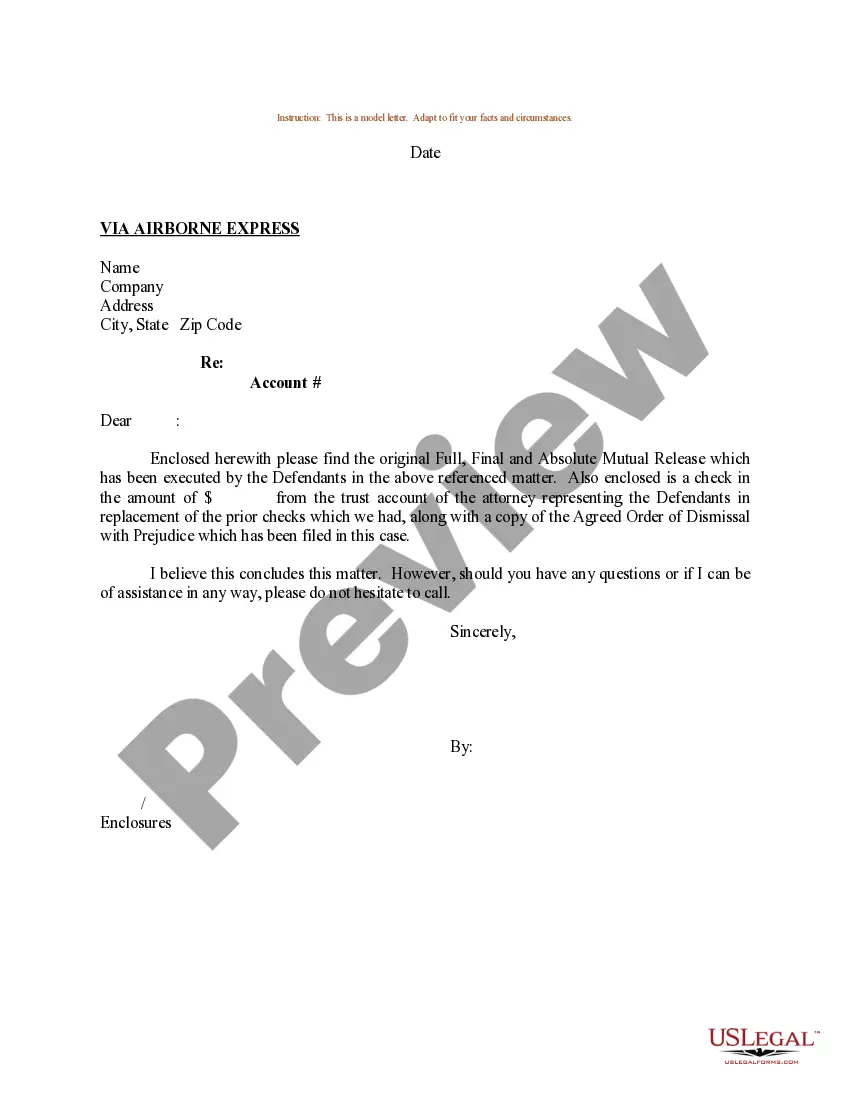
Washington Sample Letter to Client with Litigation Update - Telephone Call
Description
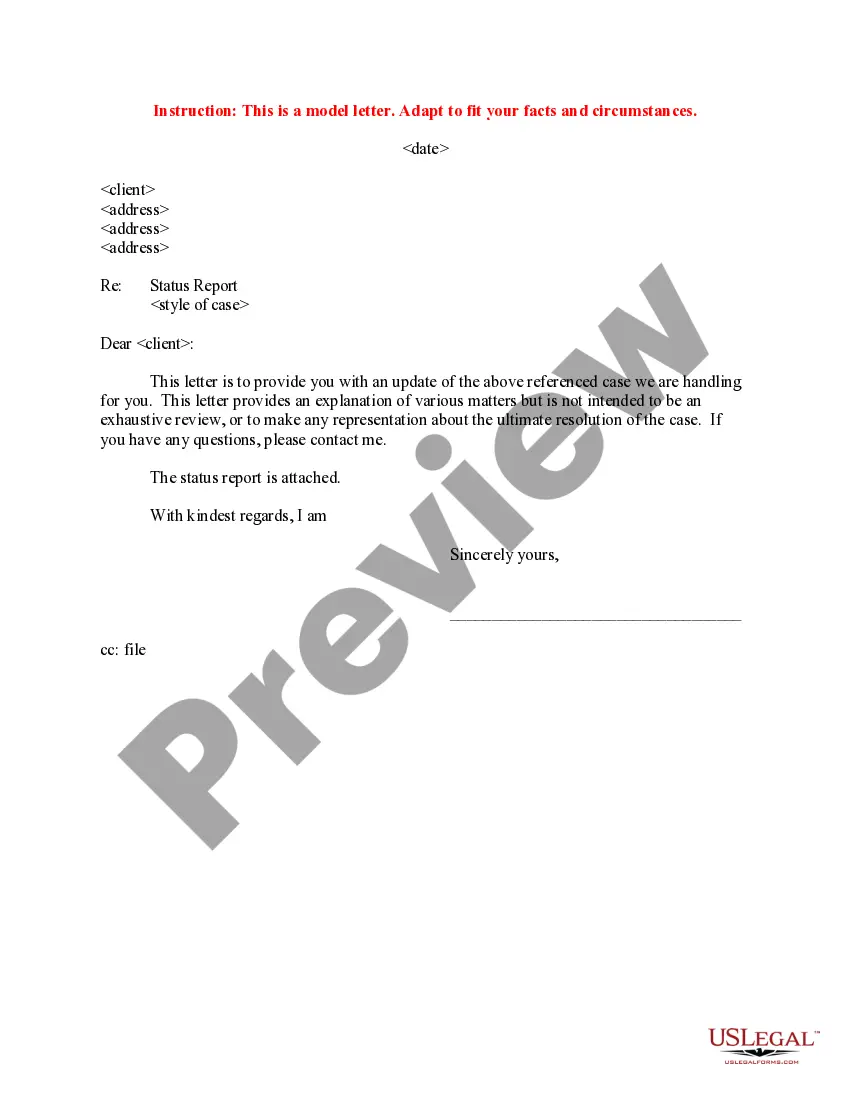
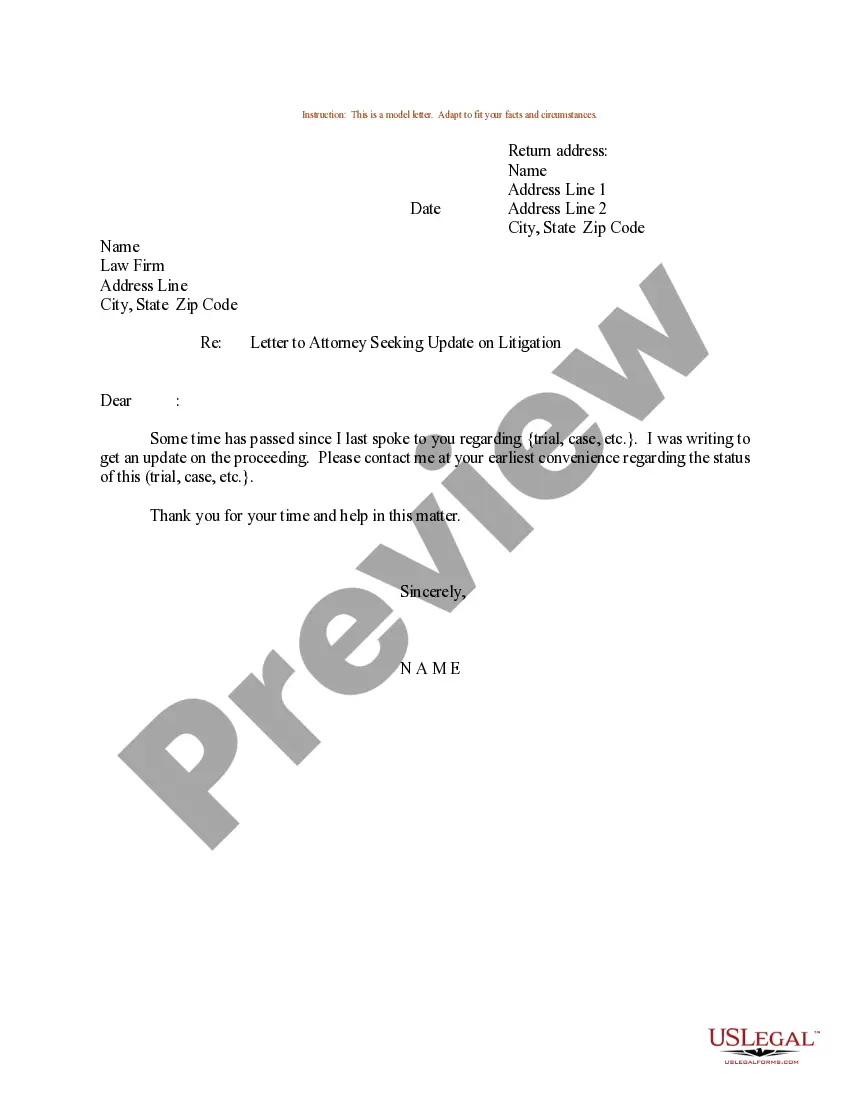
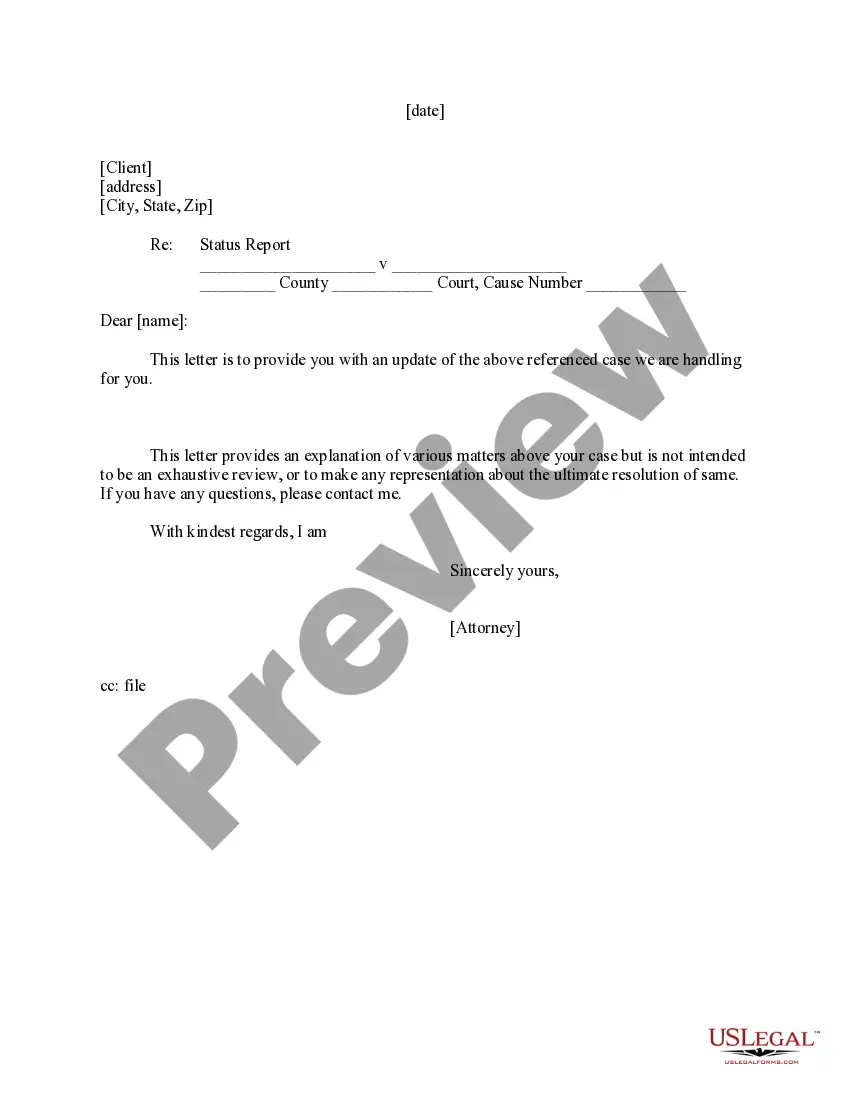
Get your form ready online
Our built-in tools help you complete, sign, share, and store your documents in one place.
Make edits, fill in missing information, and update formatting in US Legal Forms—just like you would in MS Word.
Download a copy, print it, send it by email, or mail it via USPS—whatever works best for your next step.
Sign and collect signatures with our SignNow integration. Send to multiple recipients, set reminders, and more. Go Premium to unlock E-Sign.
If this form requires notarization, complete it online through a secure video call—no need to meet a notary in person or wait for an appointment.
We protect your documents and personal data by following strict security and privacy standards.

Make edits, fill in missing information, and update formatting in US Legal Forms—just like you would in MS Word.

Download a copy, print it, send it by email, or mail it via USPS—whatever works best for your next step.

Sign and collect signatures with our SignNow integration. Send to multiple recipients, set reminders, and more. Go Premium to unlock E-Sign.

If this form requires notarization, complete it online through a secure video call—no need to meet a notary in person or wait for an appointment.

We protect your documents and personal data by following strict security and privacy standards.
Looking for another form?





How to fill out Sample Letter To Client With Litigation Update - Telephone Call?
Are you in a situation where you require documents for either organizational or personal purposes almost every workday.
There are numerous legal document templates accessible online, but locating reliable versions is not simple.
US Legal Forms provides thousands of template formats, such as the Washington Sample Letter to Client with Litigation Update - Telephone Call, designed to meet both state and federal requirements.
If you find the correct template, simply click Acquire now.
Choose the payment plan you prefer, complete the necessary information to create your account, and finalize the transaction using your PayPal or credit card.
- If you are already acquainted with the US Legal Forms website and possess an account, simply Log In.
- Then, you can obtain the Washington Sample Letter to Client with Litigation Update - Telephone Call template.
- If you do not have an account and wish to start using US Legal Forms, follow these steps.
- Obtain the template you require and ensure it is for the correct city/state.
- Use the Review button to examine the document.
- Check the details to verify that you have selected the appropriate template.
- If the template is not what you're looking for, use the Search area to find the document that fits your needs.
Form popularity
FAQ
The opening paragraph states the legal issue the letter is addressing followed by the facts, a discussion of the law as it applies to the facts and a conclusion which is essentially the advice to the client. Often attorneys include headings to lead the client through this process to arrive at the same conclusion.
Address the other party by courtesy title and name. If you plan to address the letter to a company and you don't know the name of the specific recipient, you can begin with ?Dear Sir or Madam? or ?To Whom It May Concern.?
A: A comprehensive legal opinion letter should include an analysis of the facts presented, an assessment of any applicable laws or regulations, and an explanation of any conclusions or recommendations made.
Here are five points to keep in mind when drafting a pre-litigation demand letter: Clearly state the nature of your demand. ... Stick to the facts and avoid inflammatory language. ... Consider the applicable ethical constraints. ... Follow the requirements of any applicable contracts or statutes.
Write the Salutation If you are addressing it to a member of the court staff, type "Dear Ms. Smith:" and include a colon after the person's name. If you are addressing the letter generally, type "Dear Clerk of Court:" and include a colon after the last word.
A response letter provides you the opportunity to establish the parameters of what you consider relevant to the issues involved in the future litigation, and places the burden on your adversary to articulate why those parameters should be broader.
In a business letter, the standard salutation is ?Dear.? Begin your letter with ?Dear [recipient's name]? and add a comma after the name. You may choose to address the recipient by an honorific paired with their last name or simply by their first and last name.