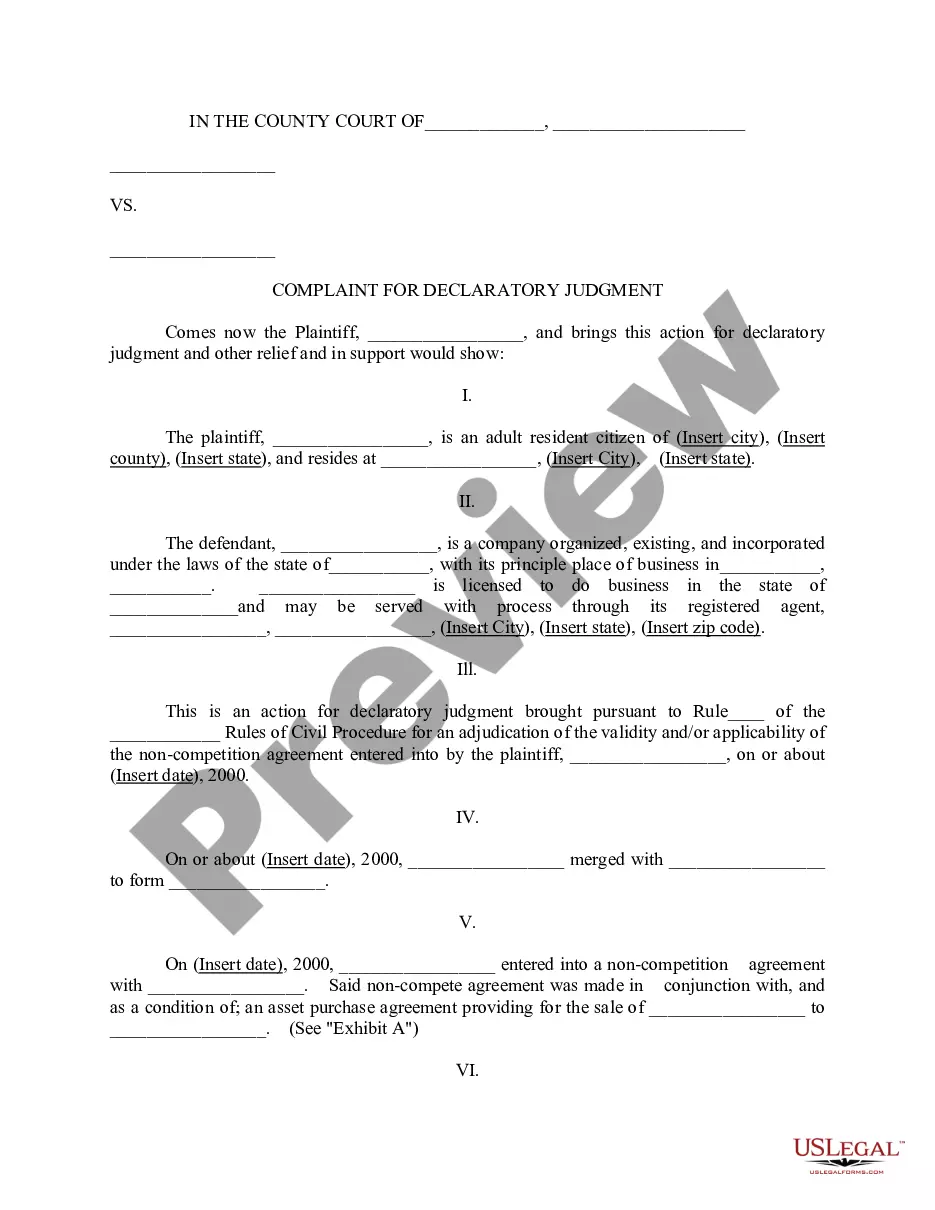
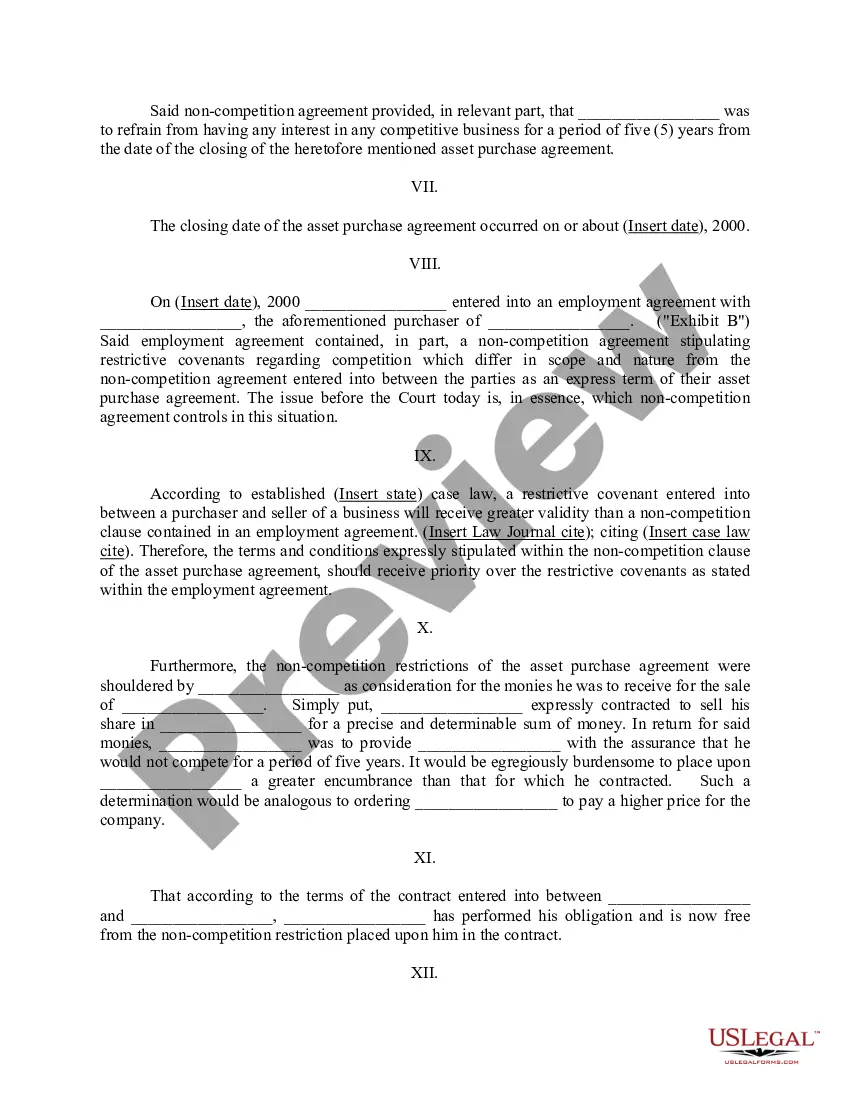
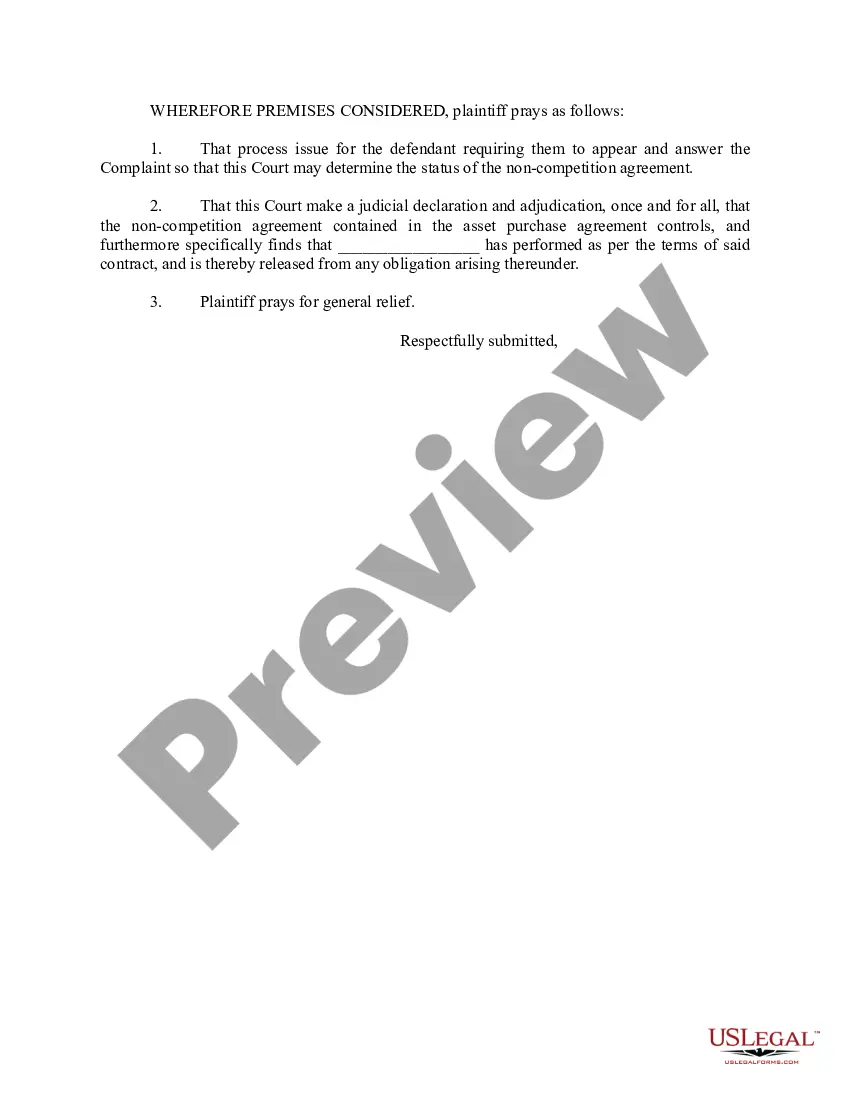
Plaintiff brings an action for a declaratory judgment arguing that he/she has fulfilled certain contractual duties and is now free from a non-competition restriction placed upon him/her in the contract.
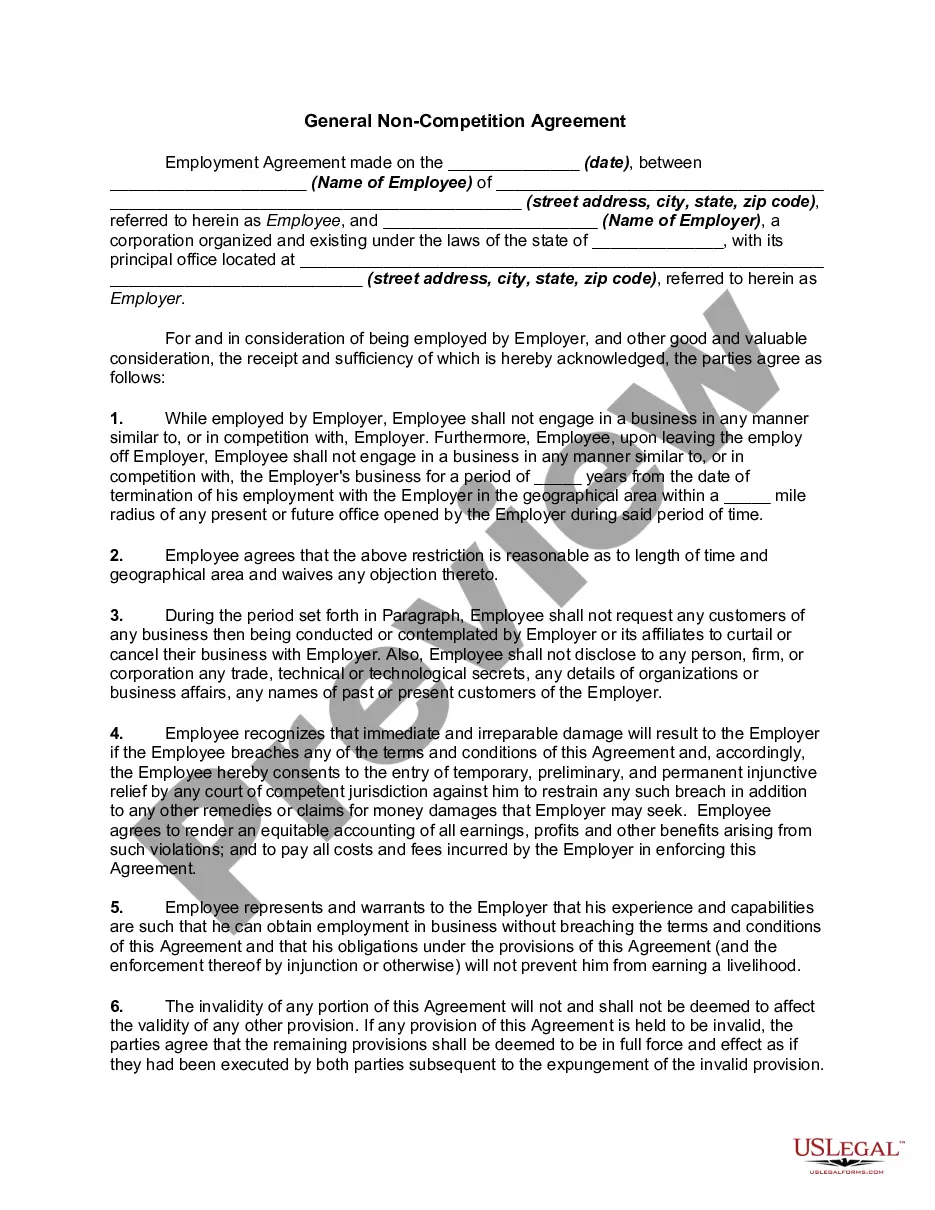
Washington Complaint For Declaratory Judgment Of Validity of Separate Noncompetition Agreements
Category:
State:
Multi-State
Control #:
US-000288
Format:
Word;
Rich Text
Instant download
Description
Free preview



How to fill out Complaint For Declaratory Judgment Of Validity Of Separate Noncompetition Agreements?
Are you in a location that requires documents for either business or personal purposes almost daily.
There are many legitimate document templates available online, but finding ones you can rely on is not easy.
US Legal Forms provides thousands of form templates, including the Washington Complaint For Declaratory Judgment Of Validity of Separate Noncompetition Agreements, which can be tailored to meet federal and state requirements.
Once you find the appropriate form, simply click Buy now.
Choose the pricing plan you prefer, provide the necessary information to create your account, and pay for the order using your PayPal or credit card.
- If you are already acquainted with the US Legal Forms site and have an account, simply Log In.
- After that, you can download the Washington Complaint For Declaratory Judgment Of Validity of Separate Noncompetition Agreements template.
- If you do not have an account and wish to start using US Legal Forms, follow these steps.
- Find the form you need and ensure it is for your specific city/region.
- Utilize the Review button to inspect the form.
- Read the description to confirm that you have selected the correct form.
- If the form is not what you are looking for, use the Search field to find the form that meets your needs.
Form popularity
FAQ
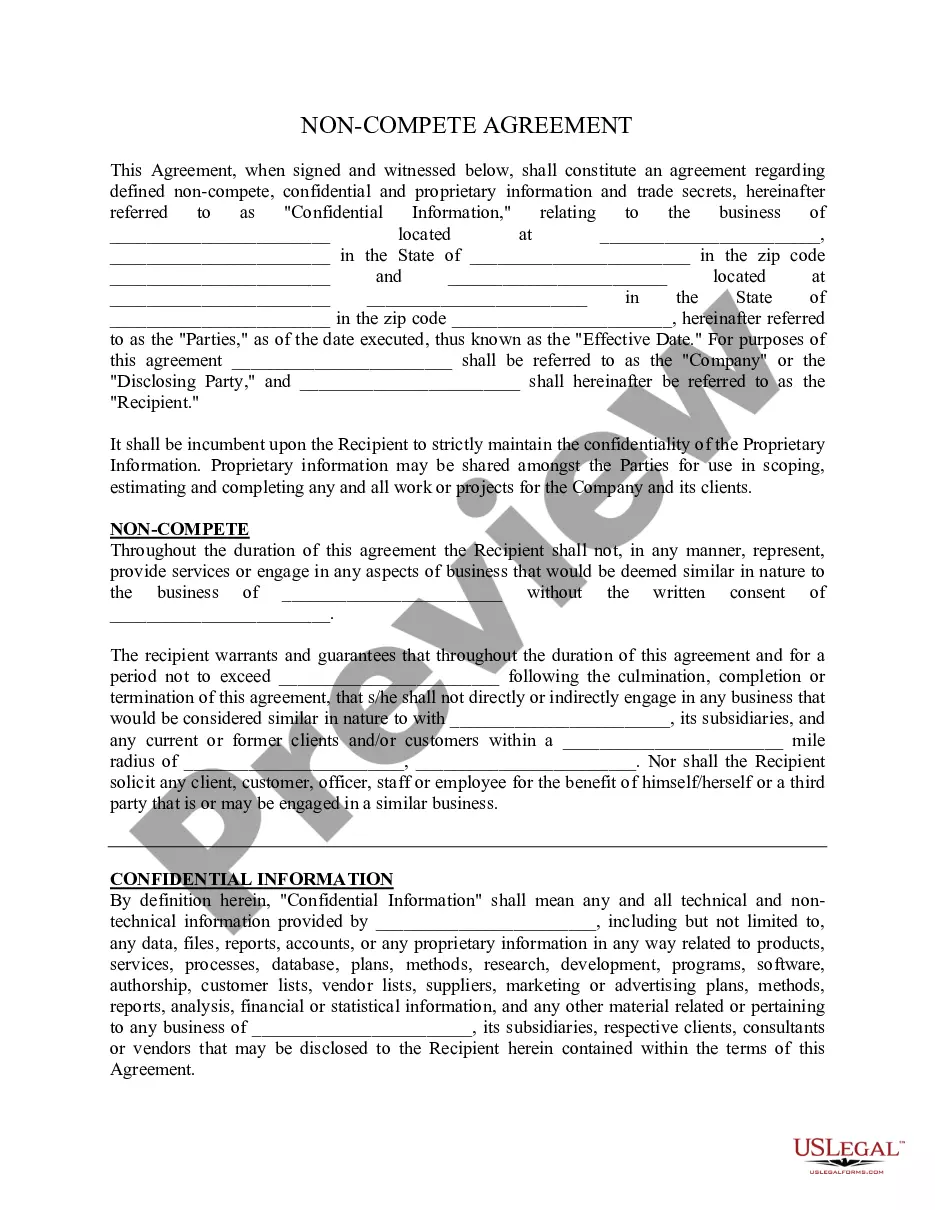
To void a non-compete agreement, you need to establish that it is unreasonable or violates Washington state law. You may file a Washington Complaint For Declaratory Judgment Of Validity of Separate Noncompetition Agreements to seek legal clarification and possibly invalidate the contract. Additionally, reviewing the terms of your agreement with a legal professional can provide insights into potential loopholes. Platforms like US Legal Forms can offer templates and resources to help you initiate this process smoothly.
In Washington, non-compete clauses can be enforceable, but specific conditions must be met. The agreements must be reasonable in time and geographic scope, and they should protect legitimate business interests. If you find yourself facing a restrictive non-compete, you may consider filing a Washington Complaint For Declaratory Judgment Of Validity of Separate Noncompetition Agreements to challenge its enforceability. Understanding your rights is crucial, and using platforms like US Legal Forms can help you navigate this process effectively.
A declaratory judgment is a binding judgment from a court defining the legal relationship between parties and their rights in a matter before the court. When there is uncertainty as to the legal obligations or rights between two parties, a declaratory judgment offers an immediate means to resolve this uncertainty.
The declaratory judgment is generally considered a statutory remedy and not an equitable remedy in the United States, and is thus not subject to equitable requirements, though there are analogies that can be found in the remedies granted by courts of equity.
For example, a policyholder believes that their denied claim is unjust. As a result, they inform the insurer that they are considering a lawsuit to recover losses. The insurer seeks a declaratory judgment to clarify its rights and obligations with hopes of preventing the lawsuit.
Declaratory relief refers to a court's declaratory judgment stating the rights of parties without ordering any specific action or listing awards for damages.
A declaratory judgment is a binding judgment from a court defining the legal relationship between parties and their rights in a matter before the court. When there is uncertainty as to the legal obligations or rights between two parties, a declaratory judgment offers an immediate means to resolve this uncertainty.
A claim for unjust enrichment consists of three elements: (1) a plaintiff conferred a benefit upon the defendant, (2) the defendant had knowledge or appreciation of the benefit, and (3) the defendant's accepting or retaining the benefit without the payment of its value is inequitable under the circumstances of the case ...
A declaratory judgment is typically requested when a party is threatened with a lawsuit but the lawsuit has not yet been filed; or when a party or parties believe that their rights under law and/or contract might conflict; or as part of a counterclaim to prevent further lawsuits from the same plaintiff (for example, ...