Washington Notice of Option for Recording
Understanding this form
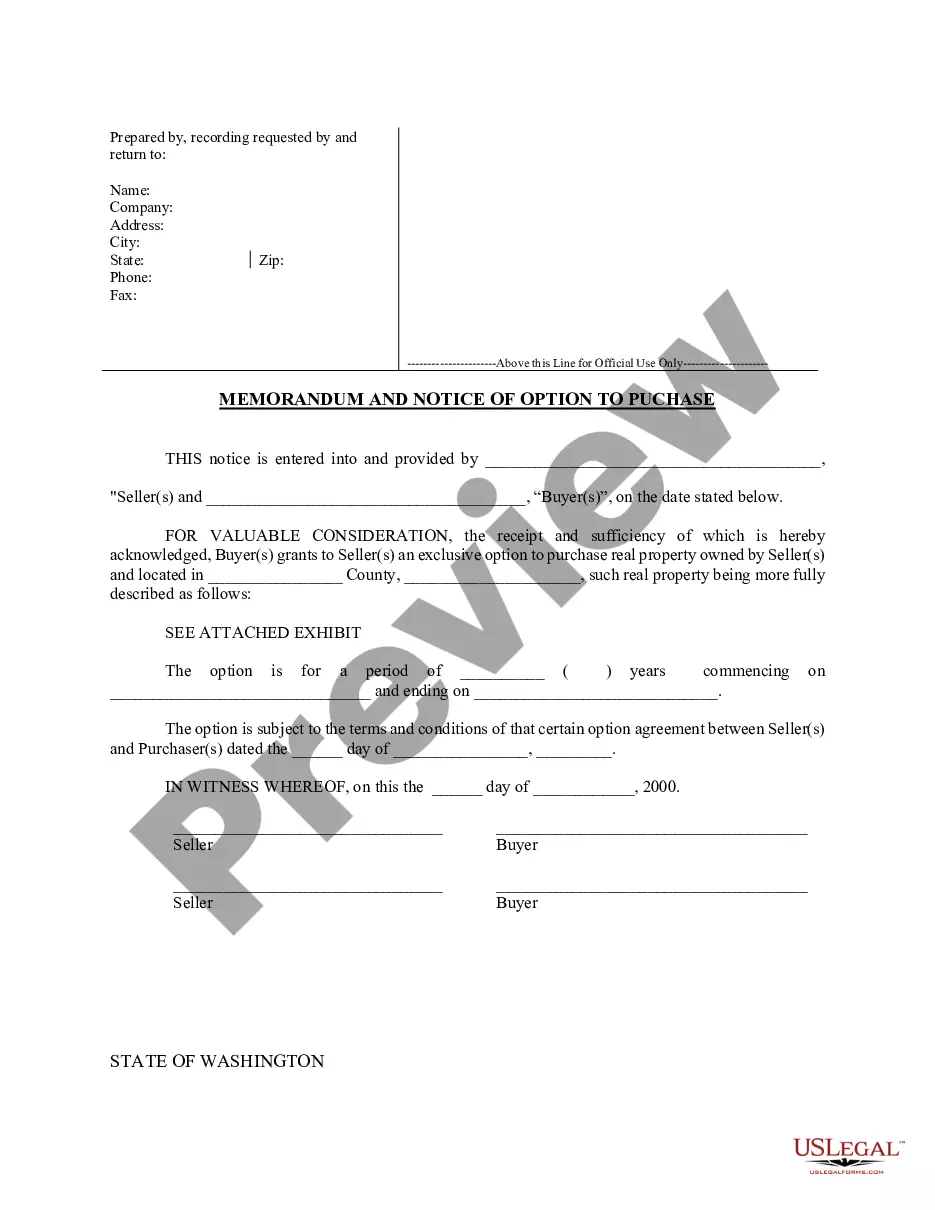
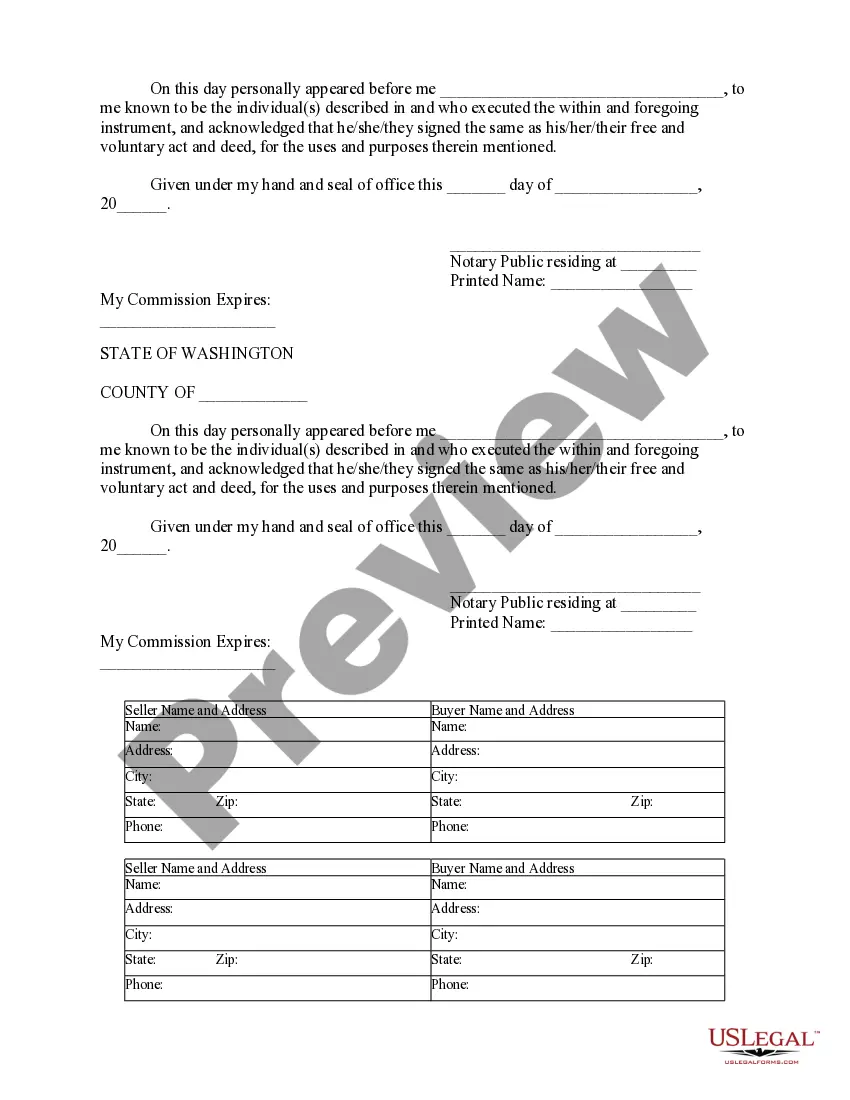
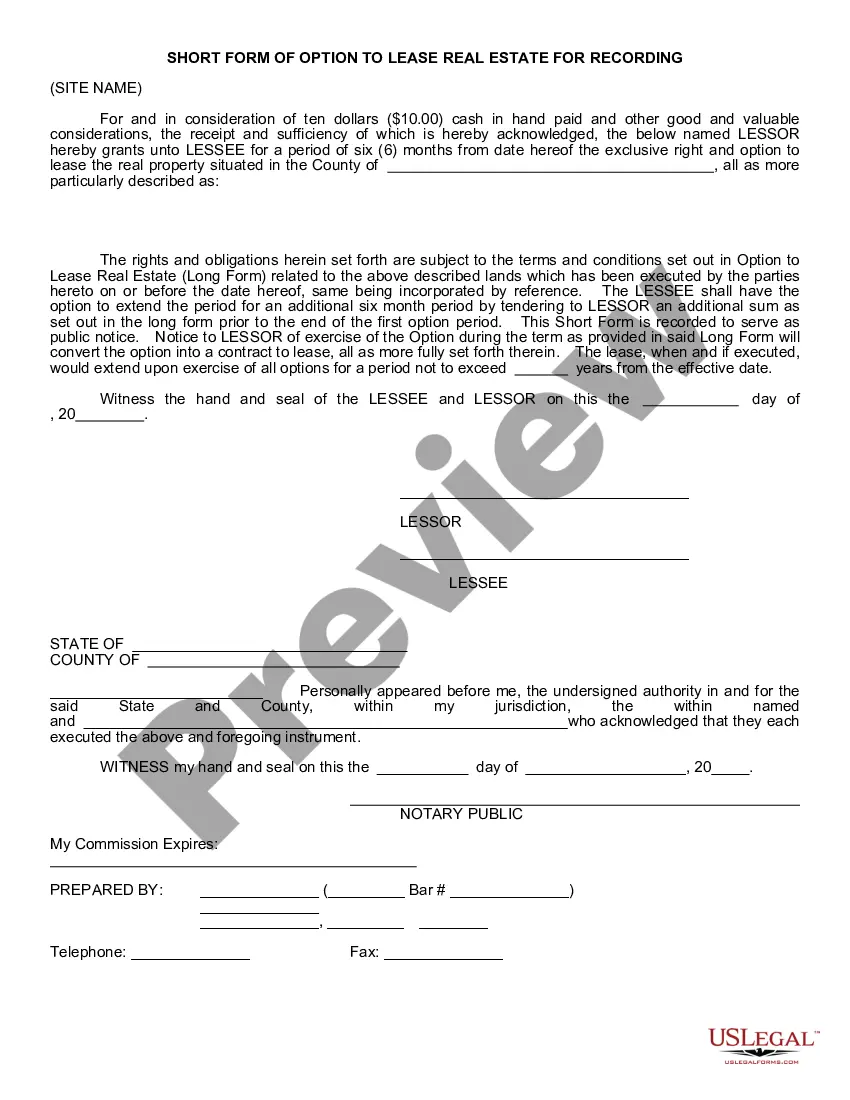
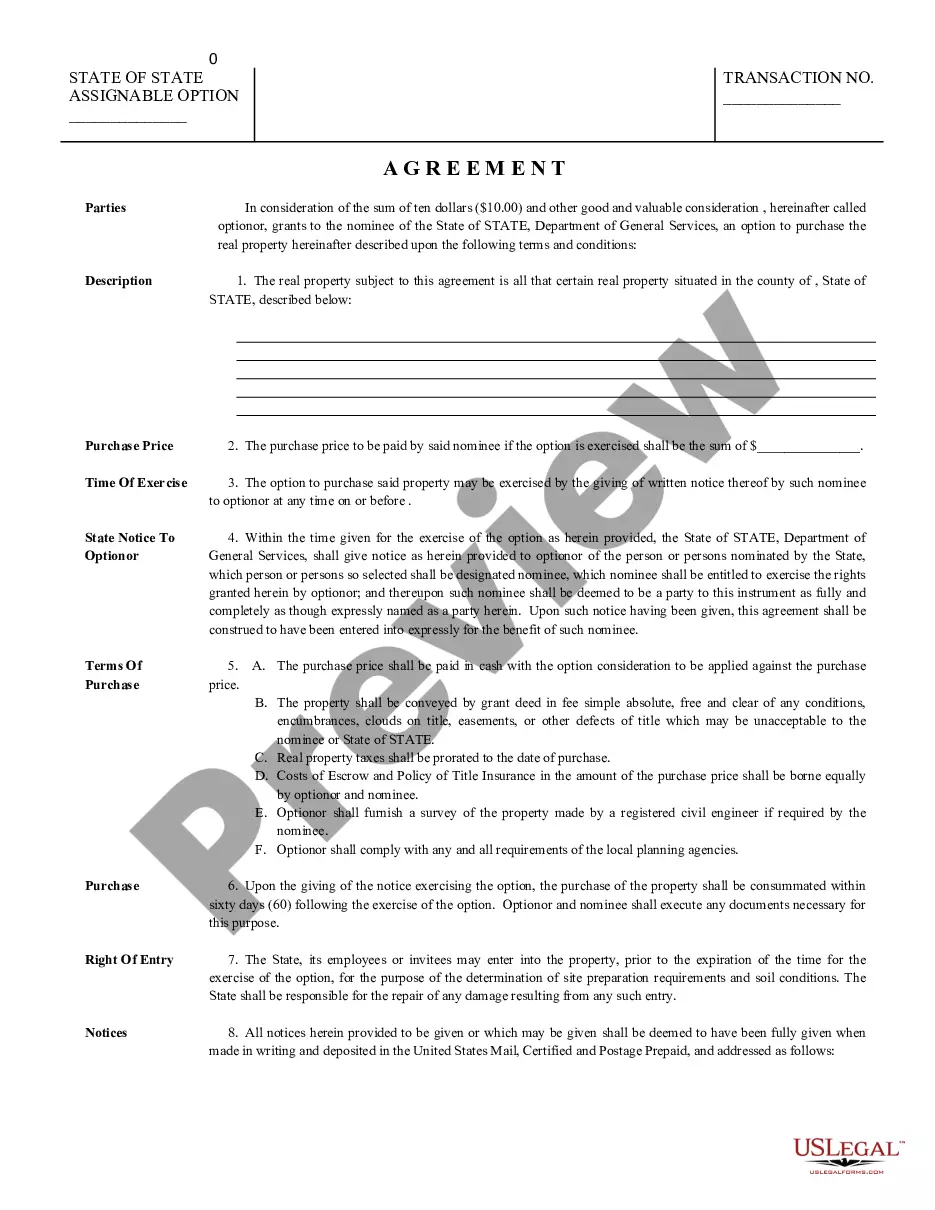
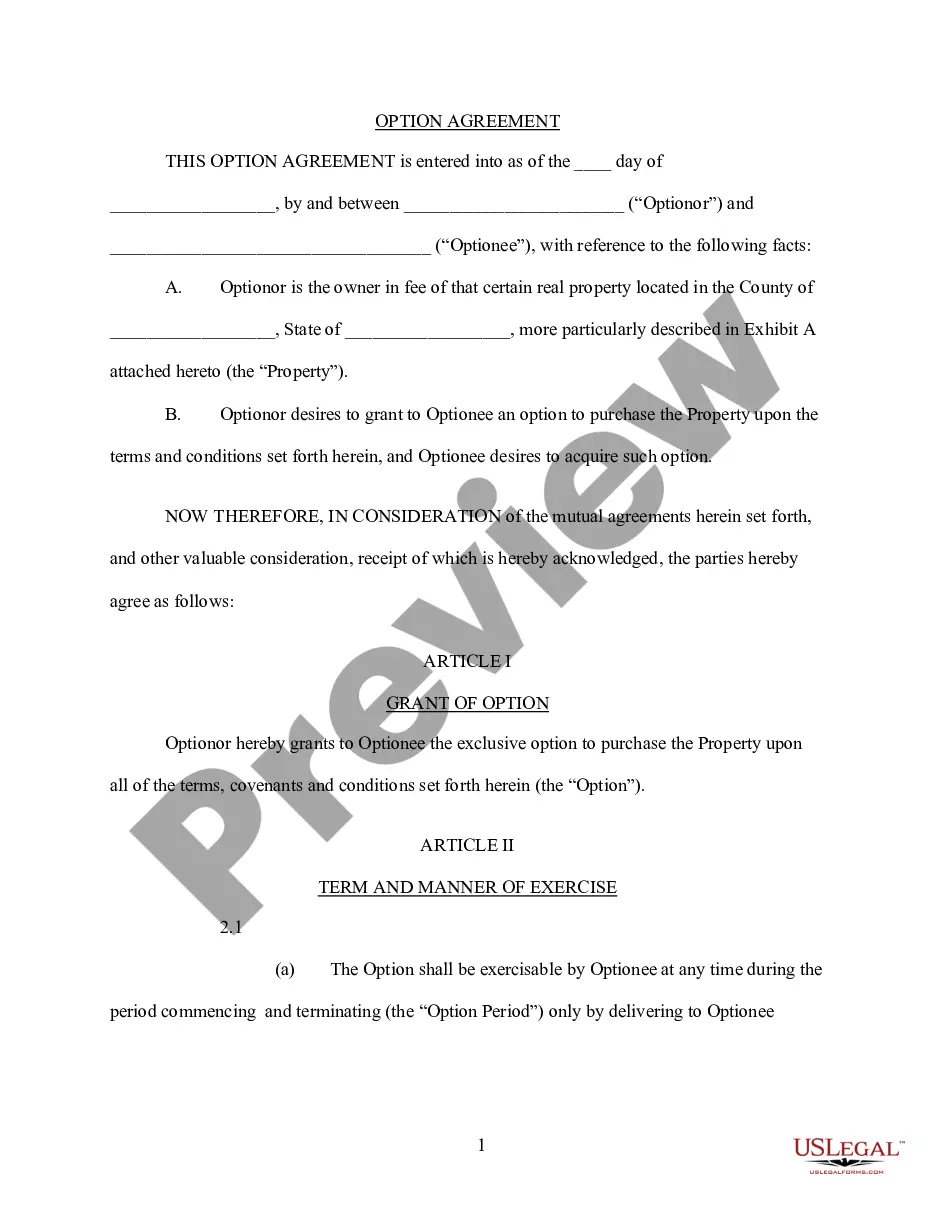
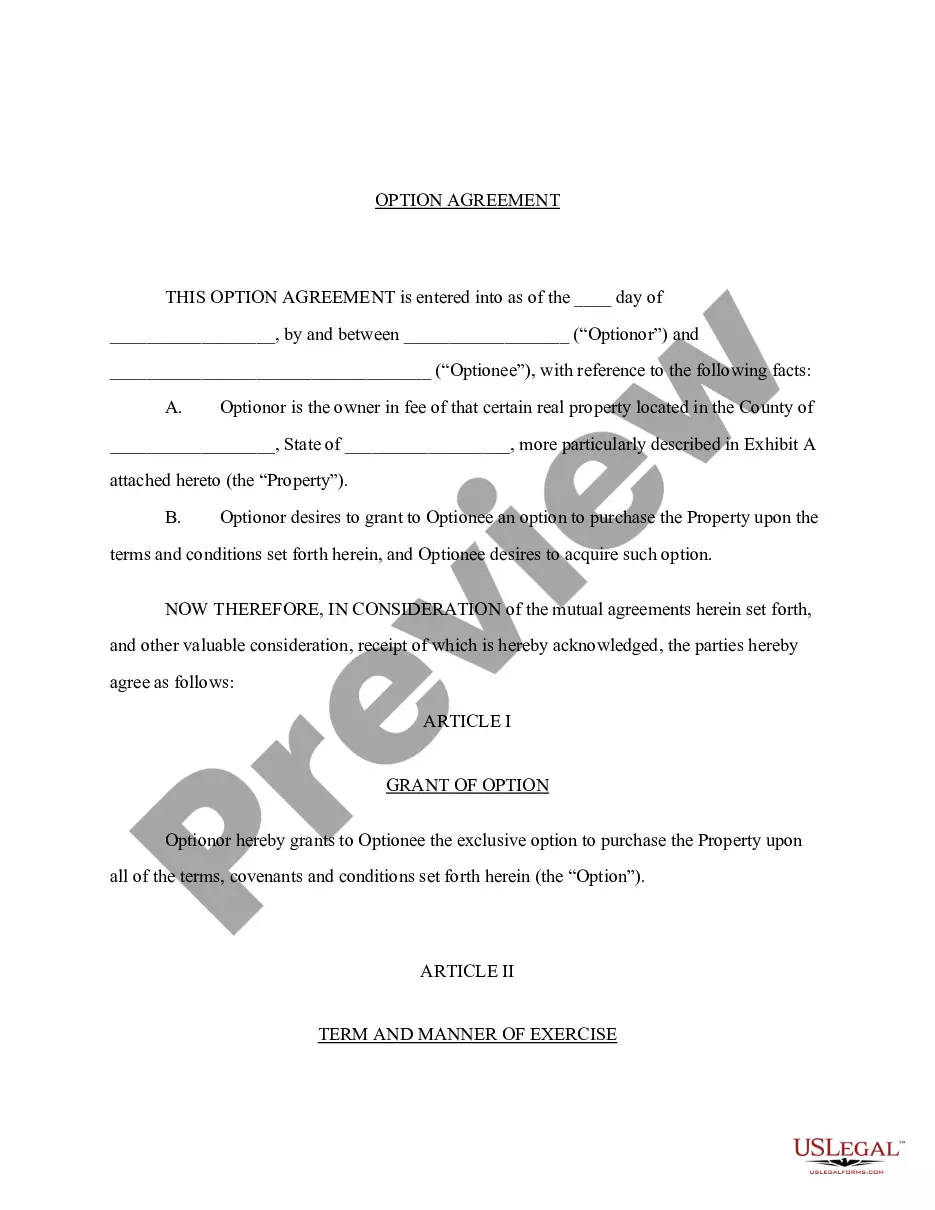
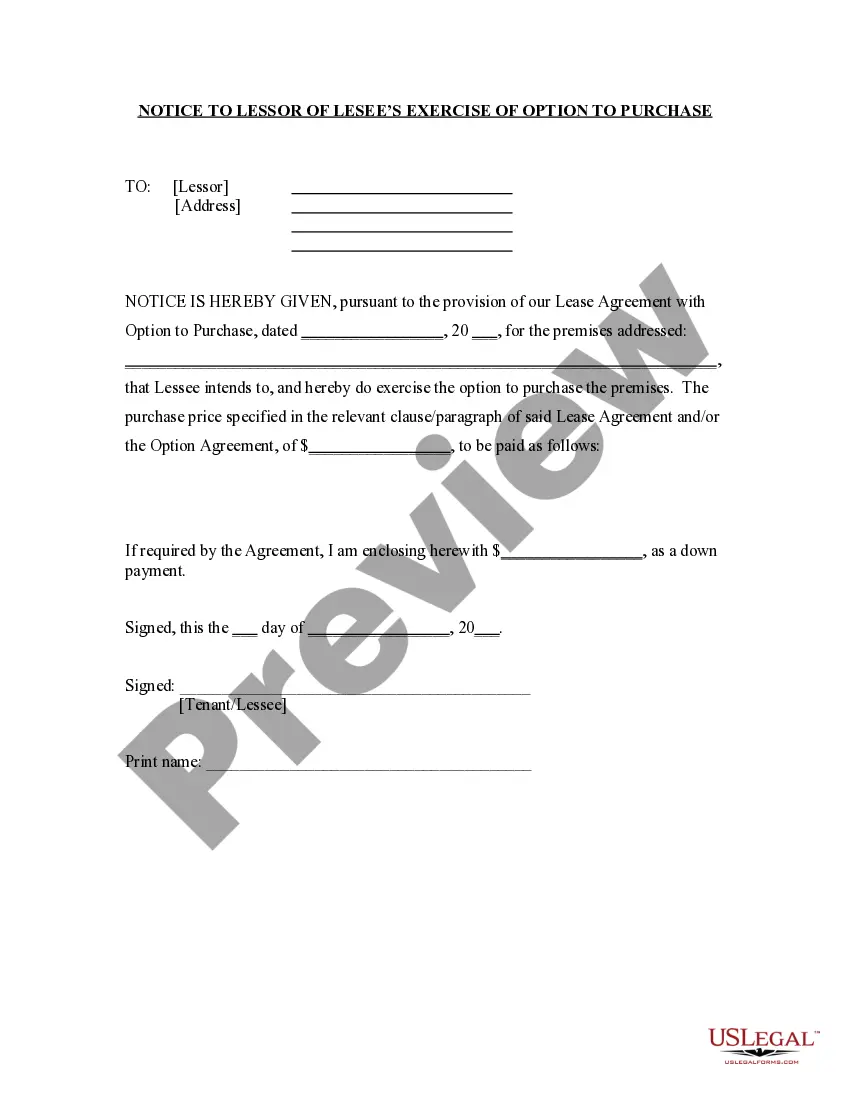
The Notice of Option for Recording is a legal document that serves to record an option to purchase a specific parcel of real estate. This form provides notice that an option exists without the need to file the entire Option Agreement with public records. It is designed for sellers and buyers involved in real estate transactions, making it clear that a purchase option has been granted.
Form components explained
- Prepared by, recorded by, and return address sections.
- Identification of the seller(s) and buyer(s) involved in the transaction.
- Description of the real property being placed under option.
- The duration of the option period, including start and end dates.
- Reference to the underlying Option Agreement.
- Signature sections for the seller(s) and buyer(s), including notary acknowledgment.
Situations where this form applies
This form is typically used when a seller wants to formalize an option to purchase agreement with a prospective buyer. It is suitable in situations where the buyer may not be ready to purchase the property immediately but wants the right to do so within a specified timeframe. Using this form can help both parties manage their rights and obligations regarding the property effectively.
Intended users of this form
- Real estate sellers wishing to grant an option to purchase their property.
- Potential buyers who want to secure the right to purchase real estate at a later date.
- Attorneys representing parties in real estate transactions.
- Individuals involved in the management or sale of real estate investments.
Instructions for completing this form
- Fill in the names and addresses of the seller(s) and buyer(s).
- Provide a detailed description of the real property involved.
- Specify the duration of the option to purchase, including start and end dates.
- Reference the date of the original Option Agreement.
- Ensure that all parties sign the document in the designated areas.
- Have the document notarized if required by state law.
Notarization guidance
To make this form legally binding, it must be notarized. Our online notarization service, powered by Notarize, lets you verify and sign documents remotely through an encrypted video session.
Get your form ready online
Our built-in tools help you complete, sign, share, and store your documents in one place.
Make edits, fill in missing information, and update formatting in US Legal Forms—just like you would in MS Word.
Download a copy, print it, send it by email, or mail it via USPS—whatever works best for your next step.
Sign and collect signatures with our SignNow integration. Send to multiple recipients, set reminders, and more. Go Premium to unlock E-Sign.
If this form requires notarization, complete it online through a secure video call—no need to meet a notary in person or wait for an appointment.
We protect your documents and personal data by following strict security and privacy standards.

Make edits, fill in missing information, and update formatting in US Legal Forms—just like you would in MS Word.

Download a copy, print it, send it by email, or mail it via USPS—whatever works best for your next step.

Sign and collect signatures with our SignNow integration. Send to multiple recipients, set reminders, and more. Go Premium to unlock E-Sign.

If this form requires notarization, complete it online through a secure video call—no need to meet a notary in person or wait for an appointment.

We protect your documents and personal data by following strict security and privacy standards.
Mistakes to watch out for
- Failing to include complete and accurate property descriptions.
- Not specifying the option period, which can lead to disputes.
- Omitting required signatures from one or more parties.
- Not providing a notary signature where necessary.
Advantages of online completion
- Easy access to downloadable templates that can be customized to fit individual needs.
- Convenience of completing the form from home without the need for in-person visits.
- Reliability of forms prepared by licensed attorneys, ensuring compliance with legal standards.
Main things to remember
- The Notice of Option for Recording officially documents an option to purchase real estate.
- It simplifies the process by notifying parties without recording the entire Option Agreement.
- Proper completion, including notarization, is crucial for legal enforceability.
Looking for another form?
Form popularity
FAQ
There are three basic kinds of statutory schemes in recording acts: race, notice, and race/notice. Even though a recording act does not require recordation, the law does create strong incentive for a buyer to record.
Washington Wiretapping Law. Washington's wiretapping law is a "two-party consent" law. Washington makes it a crime to intercept or record a private telephone call, in-person conversation, or electronic communication unless all parties to the communication consent.
Idaho, Washington, and Montana all have race-notice statutes.
The most common documents are related to mortgages, deeds, easements, foreclosures, estoppels, leases, licenses, and fees, among other kinds of documents. The most important real estate documents list ownership, encumbrances, and lien priority.
TheLaw.com Law Dictionary & Black's Law Dictionary 2nd Ed. Publicly taking note or acknowledging the claim of another person with regard to real estate, such as the filing and recording of a deed.
1. C Explanation: Recording an instrument provides constructive notice to the public of the interest set forth in the recorded instrument. 2. A Explanation: A corporate seal may be added where a corporation is grantor, in order to indicate that the person who signed had authority to sign on behalf of the corporation.
The purpose of recording a document is to provide a traceable chain of title to the property (chain of title is evidence that a piece of property has validly passed down through the years from one owner to the next).
WA. In Western Australia, it is illegal to record a private conversation without the consent of all parties involved, whether or not you are a party to the conversation.It is also legal to record private conversations without the consent of any party if it is in the public interest.
Title deeds do not have to be recorded. Recording is filing them in the county recorder's office and if recorded, the title deed acts as defacto notice to all third parties as to ownership in the property.