Washington Paternity Law and Procedure Handbook
Overview of this form
The Paternity Law and Procedure Handbook is a comprehensive guide that explains the laws and processes surrounding the establishment of paternity in the United States. This handbook is essential for unmarried parents navigating the complexities of legal paternity acknowledgment, including voluntary acknowledgment and court actions. It simplifies the often intricate legal language, providing state-specific resources and guidance on what to expect during the paternity establishment process.
Form components explained
- Definitions of key terms related to paternity
- Overview of voluntary and court-established paternity
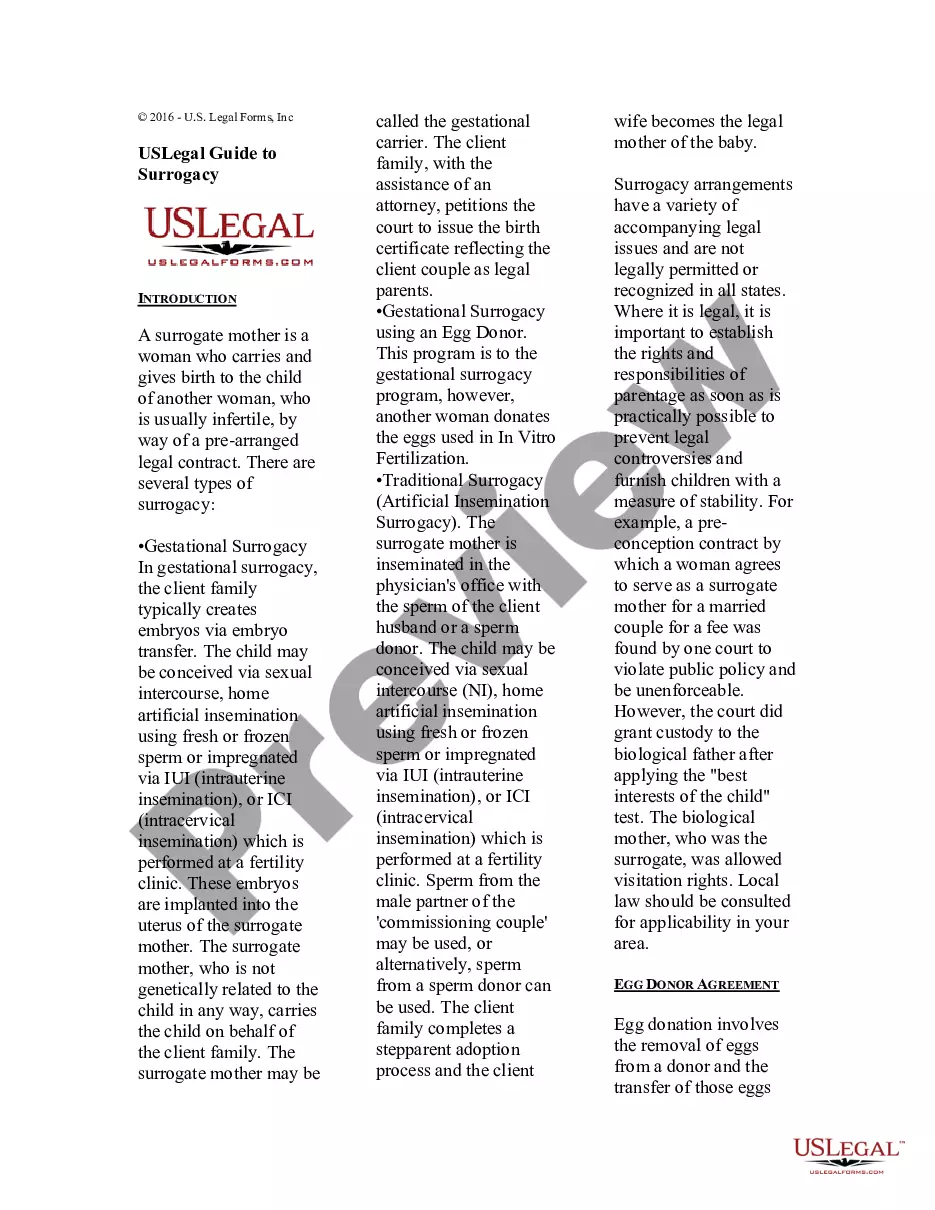
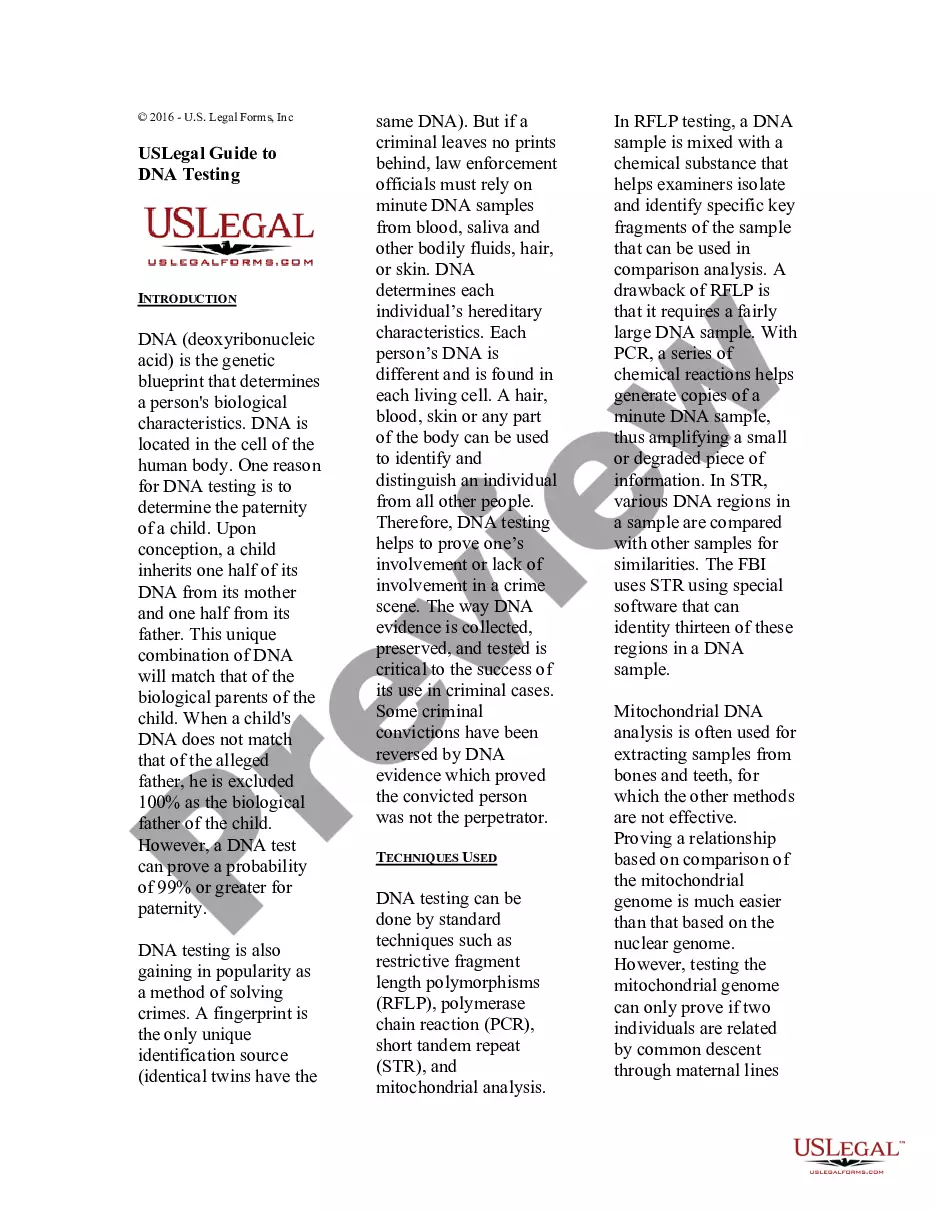
- Procedures for genetic testing to confirm paternity
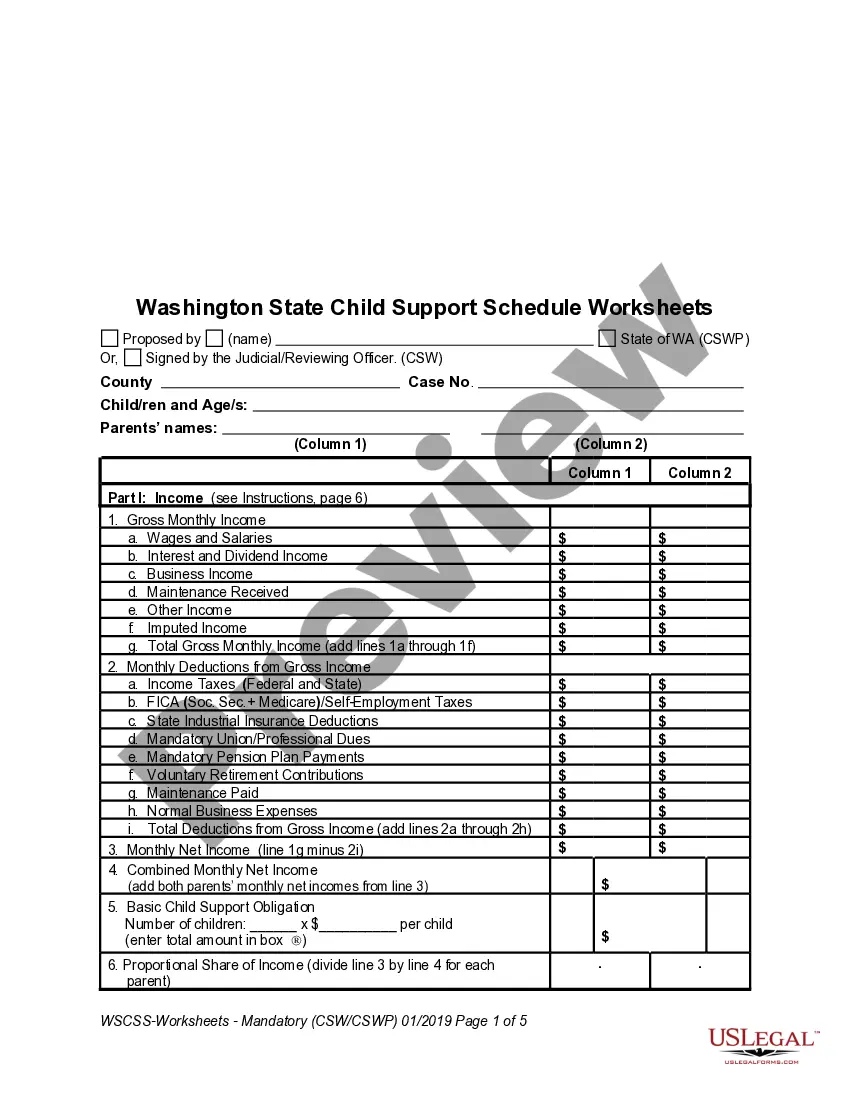
- Child custody and support implications related to paternity
- State-specific paternity law summaries and resources
- Frequently asked questions regarding paternity establishment


When to use this document
This handbook is useful in several scenarios, including when a child is born to unmarried parents and paternity is in question. It provides guidance for parents wanting to establish legal fatherhood, seek child support, or understand parental rights and responsibilities. Additionally, it serves as a reference for state-specific paternity laws and the processes required to legitimize the father-child relationship.
Intended users of this form
This handbook is intended for:
- Unmarried couples with a child and questions about paternity
- Single mothers seeking to establish child support from the father
- Putative fathers wanting to acknowledge or contest paternity
- Legal professionals advising clients on paternity issues
- Anyone involved in child custody or parentage disputes
How to complete this form
- Read the handbook thoroughly to understand paternity laws in your state.
- Identify if a voluntary acknowledgment of paternity applies to your situation.
- Gather necessary documentation, such as birth certificates and identification.
- Complete any required forms provided in the handbook for paternity acknowledgment.
- Follow specified procedures for filing petitions or agreements with your local courts if necessary.
Is notarization required?
This form usually doesn’t need to be notarized. However, local laws or specific transactions may require it. Our online notarization service, powered by Notarize, lets you complete it remotely through a secure video session, available 24/7.
Get your form ready online
Our built-in tools help you complete, sign, share, and store your documents in one place.
Make edits, fill in missing information, and update formatting in US Legal Forms—just like you would in MS Word.
Download a copy, print it, send it by email, or mail it via USPS—whatever works best for your next step.
Sign and collect signatures with our SignNow integration. Send to multiple recipients, set reminders, and more. Go Premium to unlock E-Sign.
If this form requires notarization, complete it online through a secure video call—no need to meet a notary in person or wait for an appointment.
We protect your documents and personal data by following strict security and privacy standards.

Make edits, fill in missing information, and update formatting in US Legal Forms—just like you would in MS Word.

Download a copy, print it, send it by email, or mail it via USPS—whatever works best for your next step.

Sign and collect signatures with our SignNow integration. Send to multiple recipients, set reminders, and more. Go Premium to unlock E-Sign.

If this form requires notarization, complete it online through a secure video call—no need to meet a notary in person or wait for an appointment.

We protect your documents and personal data by following strict security and privacy standards.
Common mistakes
- Failing to understand state-specific laws, resulting in incorrect filings.
- Not completing all required documentation or forms properly.
- Delaying paternity establishment, which can affect parental rights and child support.
- Assuming that verbal acknowledgments are sufficient without formal documentation.
Why use this form online
- Convenience of accessing comprehensive paternity resources from home.
- Editable formats allow for easy customization based on personal circumstances.
- Reliable information drafted by licensed attorneys ensuring legal accuracy.
- Streamlined processes minimize the complexity of legal proceedings.
Legal use & context
- The Paternity Law and Procedure Handbook provides guidelines and resources for legally establishing paternity.
- All information included should be verified with state-specific laws due to variations across jurisdictions.
- This handbook is intended as a general guide and should not replace professional legal counsel.
Summary of main points
- Establishing paternity is crucial for both financial support and legal rights regarding child custody.
- Paternity can be established voluntarily or through court actions, depending on the situation.
- It is essential to understand local laws and procedures as they may vary significantly from state to state.
Looking for another form?


Form popularity
FAQ
If the Acknowledgment is signed and filed within five days of the child's birth, there is no filing fee. Once the Acknowledgment of Paternity is properly filed with the Center for Health Statistics, the father is the legal father of the child and his name will be included on the child's birth certificate.
If a man seeking to establish paternity does not attend the paternity test, the man is in contempt of the court order that required him to do so. The man may be held in contempt of court. In addition, if the man does not appear, the court may grant a default judgment against him.
In Washington, unmarried fathers have access to the same parenting rights as mothers, but they must first establish paternity. This is a legal process meant to establish that a man is the biological father of a child.
In Washington State, when two unmarried parents have a child, custody defaults to the mother. However, if paternity is established for the father, his rights as a parent will hold equal weight in court.
What Age Can a Child Refuse Visitation in Washington? Parenting plans or custody orders will stay in place until a child reaches 18, is emancipated, or the order is modified. Visitation is designed to benefit the child, not the child's parents. There's not a set age at which a child can refuse visitation.
In Washington State, the father is determined through marriage, a parentage case, adoption papers, or a paternity acknowledgement. If the biological father is not married to the mother, he must establish paternity to gain rights as a father. Unmarried fathers do not have rights until they prove their paternity.
As a dad, you have parental fathers rights in Washington State. These include the right to take part in the raising of your children, in determining their education, moral upbringing, and more.If the biological father is not married to the mother, he must establish paternity to gain rights as a father.
Washington child custody laws don't use the terms "custody" and "visitation." Instead, they refer to these arrangements collectively as a "parenting plan." A family law judge will determine whether a parenting plan provides the most loving and stable relationship between the children and each parent.
Parental rights might be terminated in any of the following circumstances: Abandonment: The parent did not communicate with the child for at least 6 months.