Washington Retainage Bond
Understanding this form
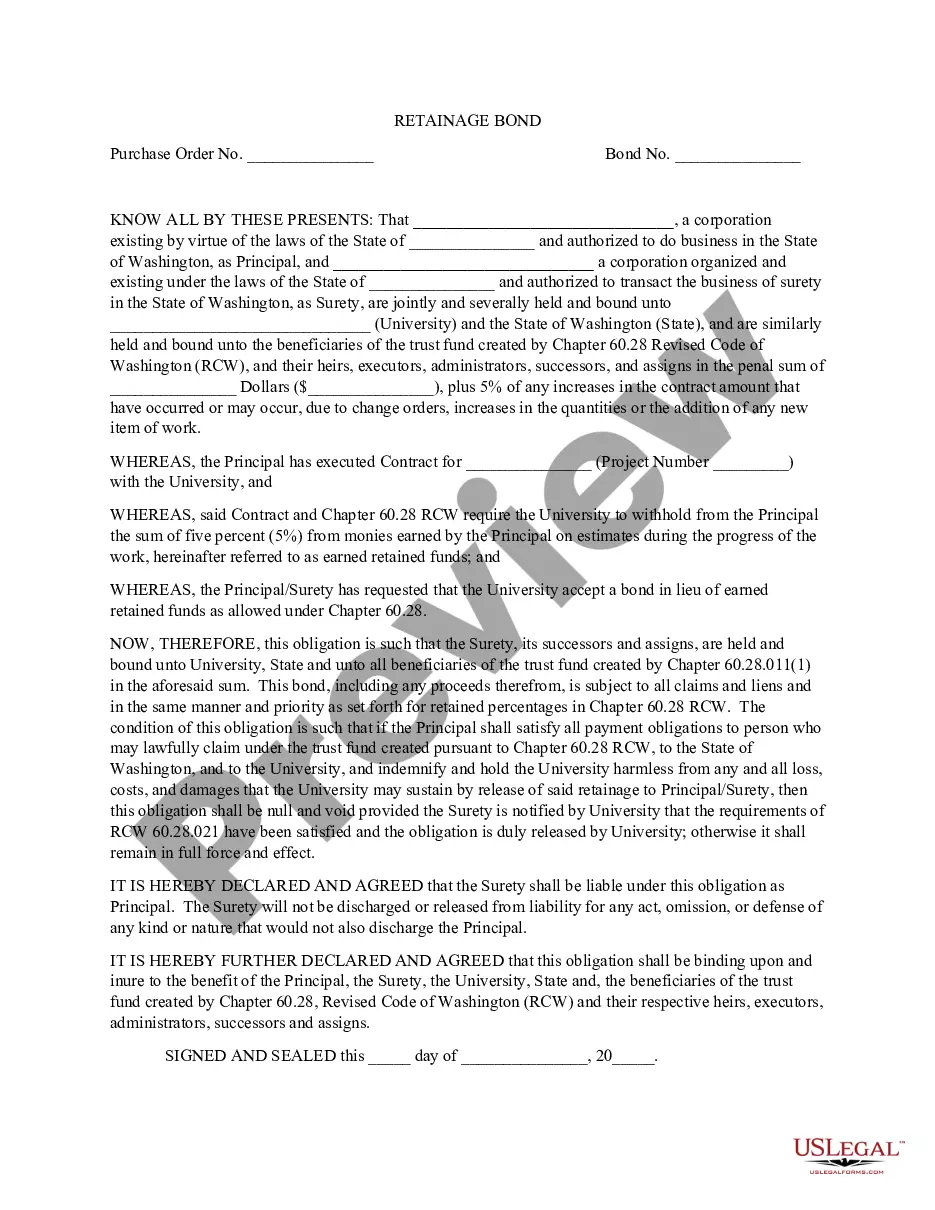
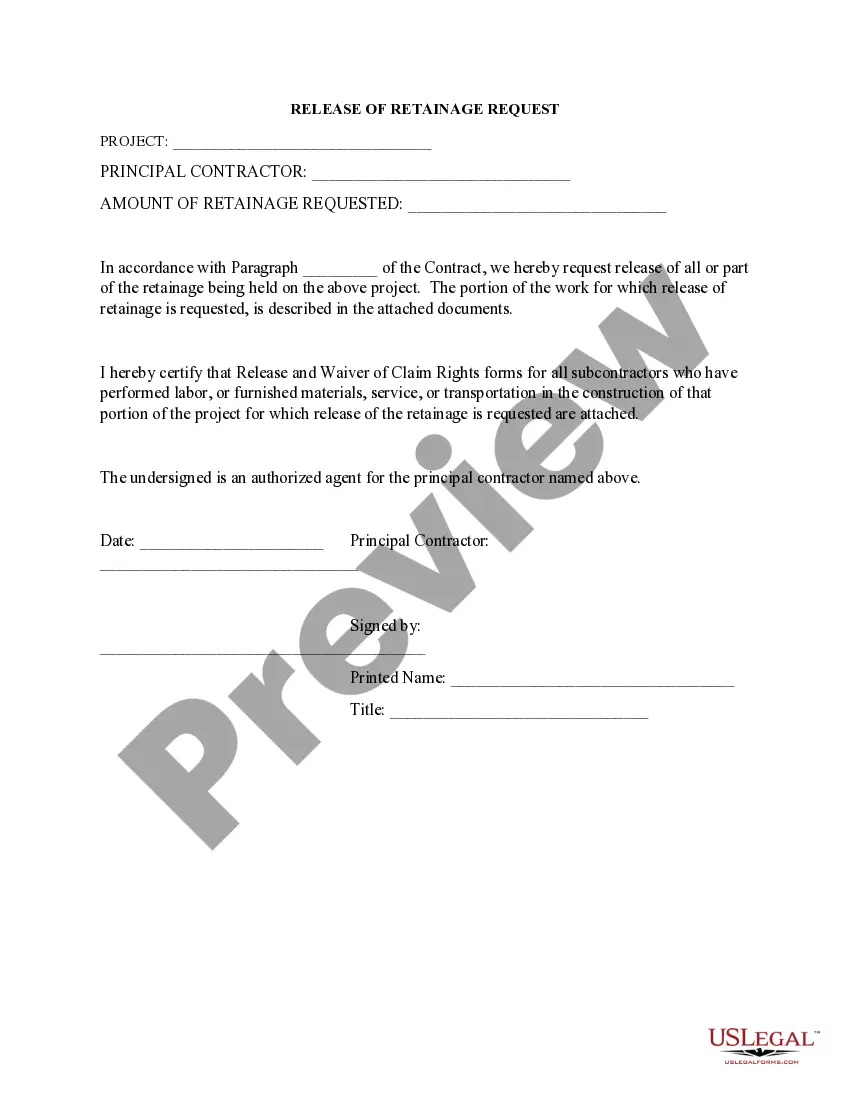
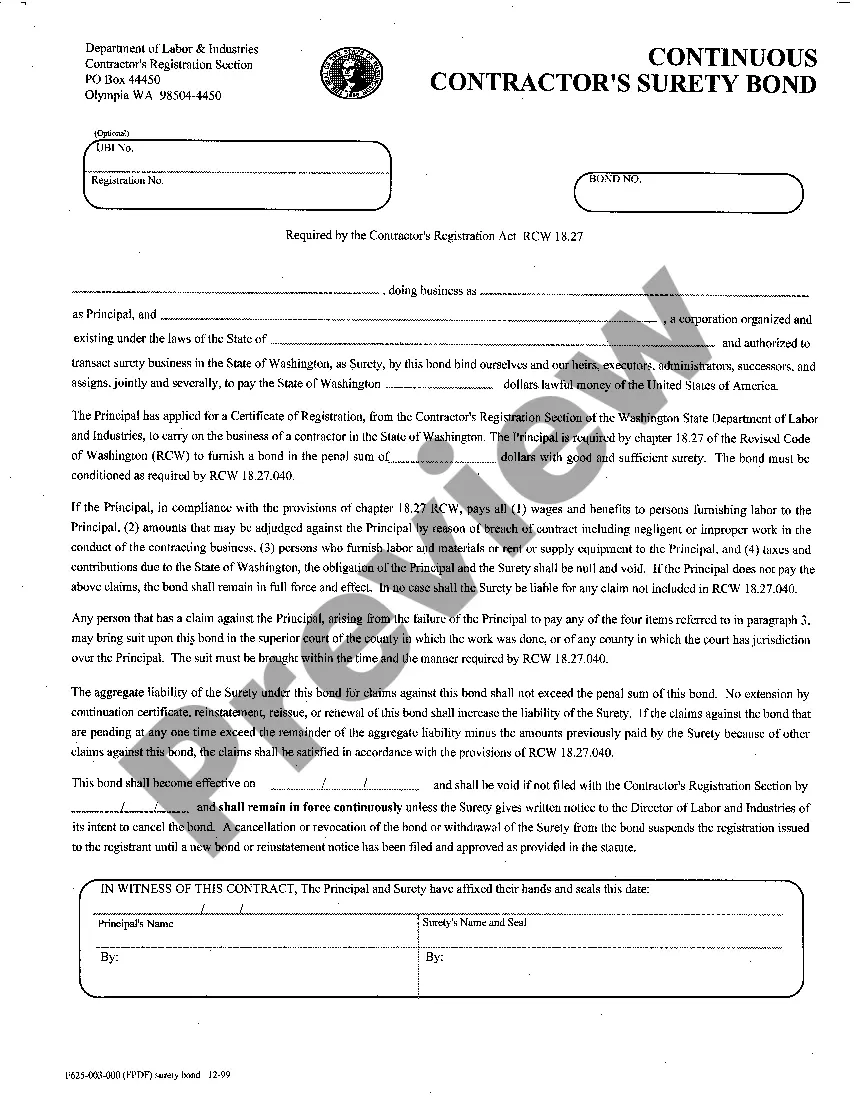
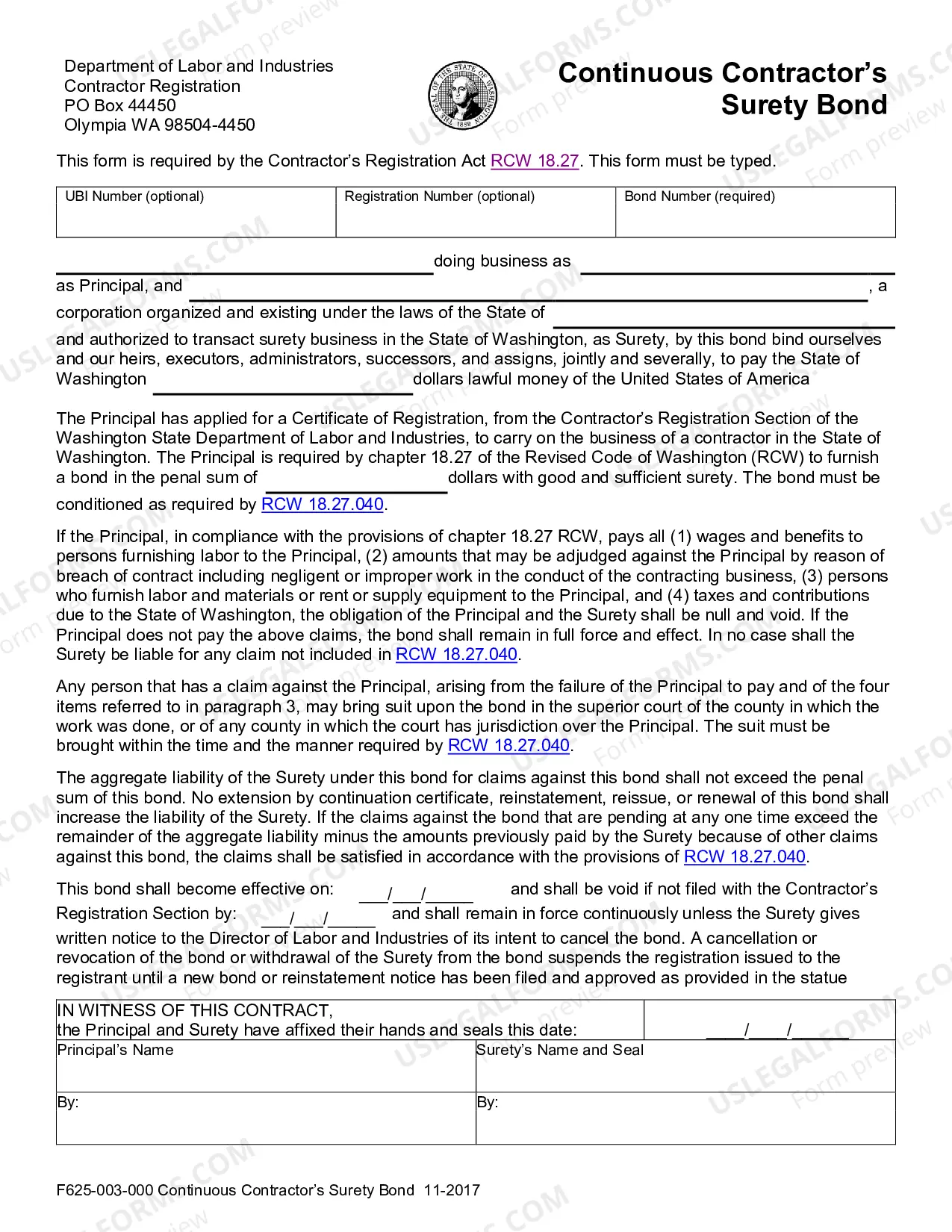
The retainage bond is a legal document that ensures payment to a government contractor for public improvement projects in Washington State. This bond serves as a financial guarantee that the contractor will complete the project according to the terms of their contract with the university, with up to 5 percent of the contract value withheld as retainage. Unlike other bonds, the retainage bond specifically addresses the withholding of funds required by local laws, providing protection for both the contractor and the hiring agency until the project is fully completed and accepted.
What’s included in this form
- Identification of the principal (contractor) and surety (bond issuer).
- Details about the project and associated contract number.
- Financial amount of the bond, including potential increases from change orders.
- Conditions under which the bond is enforceable, ensuring all obligations to beneficiaries are satisfied.
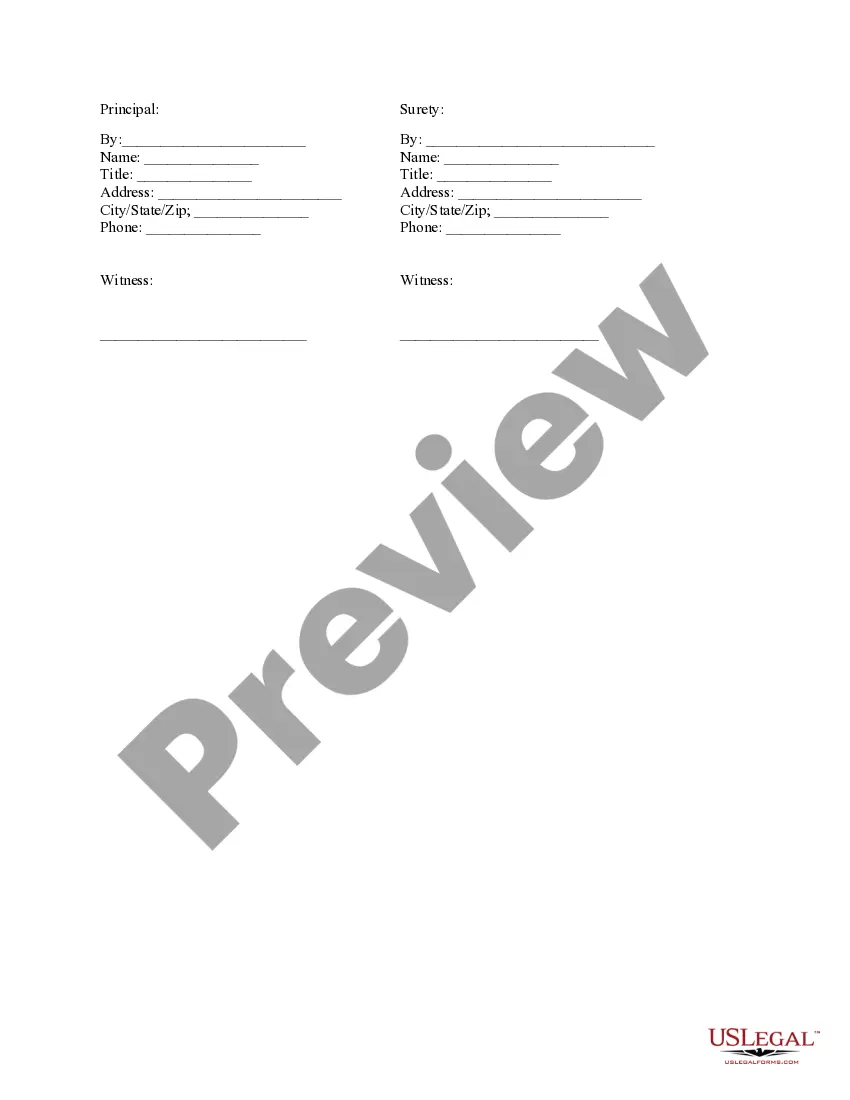
- Signatures of both the principal and surety to validate the bond.

When this form is needed
This retainage bond should be used when a contractor is entering into a public improvement contract with a government agency, such as a university in Washington State. It is specifically required when the government agency intends to withhold a portion of payment (retainage) until project completion. Contractors may need this form to provide assurance that they will meet their payment obligations while the project is ongoing, making it essential for securing the contract.
Who this form is for
- Construction contractors working on public improvement projects in Washington State.
- Surety companies providing financial backing for contractors.
- Government agencies, particularly universities, hiring contractors for public works.
- Any party needing to ensure compliance with local retainage laws.
How to complete this form
- Identify the principal contractor and surety, including full legal names and addresses.
- Enter the project number and relevant details about the construction contract.
- Specify the amount of the bond and any potential increases due to contract changes.
- Ensure all parties understand their obligations, including conditions for release of the bond.
- Gather signatures from both the principal and surety, along with any necessary witnesses.
Notarization requirements for this form
This form does not typically require notarization unless specified by local law. It is essential to check local regulations to confirm any specific requirements for signature verification on the retainage bond.
Get your form ready online
Our built-in tools help you complete, sign, share, and store your documents in one place.
Make edits, fill in missing information, and update formatting in US Legal Forms—just like you would in MS Word.
Download a copy, print it, send it by email, or mail it via USPS—whatever works best for your next step.
Sign and collect signatures with our SignNow integration. Send to multiple recipients, set reminders, and more. Go Premium to unlock E-Sign.
If this form requires notarization, complete it online through a secure video call—no need to meet a notary in person or wait for an appointment.
We protect your documents and personal data by following strict security and privacy standards.

Make edits, fill in missing information, and update formatting in US Legal Forms—just like you would in MS Word.

Download a copy, print it, send it by email, or mail it via USPS—whatever works best for your next step.

Sign and collect signatures with our SignNow integration. Send to multiple recipients, set reminders, and more. Go Premium to unlock E-Sign.

If this form requires notarization, complete it online through a secure video call—no need to meet a notary in person or wait for an appointment.

We protect your documents and personal data by following strict security and privacy standards.
Common mistakes to avoid
- Failing to include accurate project and contract numbers.
- Leaving fields blank or not specifying the full financial amount of the bond.
- Not obtaining signatures from all required parties.
Advantages of online completion
- Convenient access to templates that can be completed at any time.
- Easy to edit and customize to meet specific project needs.
- Reliable legal language drafted by licensed attorneys, ensuring compliance with state law.
Main things to remember
- The retainage bond is crucial for contractors on public projects in Washington State.
- It serves to protect both contractors and government agencies by ensuring completion of work.
- Understanding the specific requirements and conditions of this bond is essential for compliance.
Looking for another form?
Form popularity
FAQ
Purpose of Retainage Retainage, also referred to as a ?hold back,? helps the owner ensure a contractor sufficiently completes the project, and that the work meets with their approval and terms of the contract. It also provides a financial incentive for the contractor to see the project through to its successful finish.
Retainage is the withholding of a portion of the funds that are due to a contractor or subcontractor until the construction project is finished. It is meant to serve as a financial incentive and an assurance that the contractor will complete the project in a satisfactory manner.
For example, if the complete project cost is $200,000 to be paid in five progress payments and the percentage to be retained is 5%, the calculation would be as follows: 200,000 x 0.05 = 10,000 total retainage amount. 10,000 divided by 5 = 2,000 retainage withheld from each progress payment.
Retainage and Retainage Bonds. RCW 60.28. 011 requires agencies to withhold up to 5% of the value of a public improvement contract, not including sales tax ing to Department of Revenue ETA 3024.2013, as retainage until the project is completed and the contract is accepted.
A retention bond allows the retainer to receive the payment in full instead of a partial 90 to 95 percent of the agreed amount. It also provides additional funds to remedy an issue before the project's completion. Furthermore, it helps prevent construction companies from defaulting.
A Retention Guarantee Bond is a written promises to pay for direct loss or damage suffered by a third party as a result of a breach of contract. Many types of bond or guarantee are available for almost any area of risk, subject to underlying security and the risk being acceptable to the guarantor.
General contractors require a $12,000 surety bond, and specialty contractors need a $6,000 bond that they must post to the Washington State Dept.