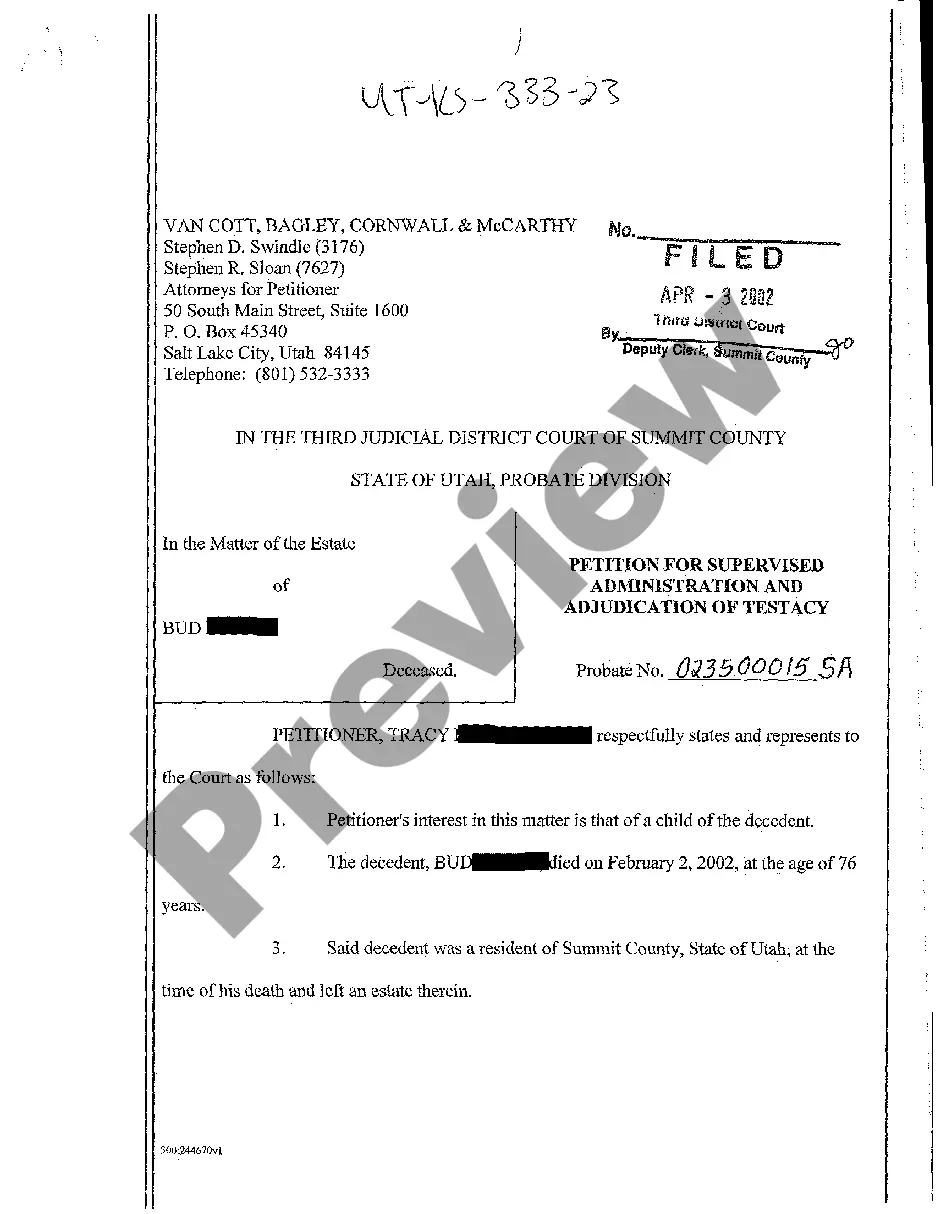
Washington Security Contract for Contractor
Understanding this form
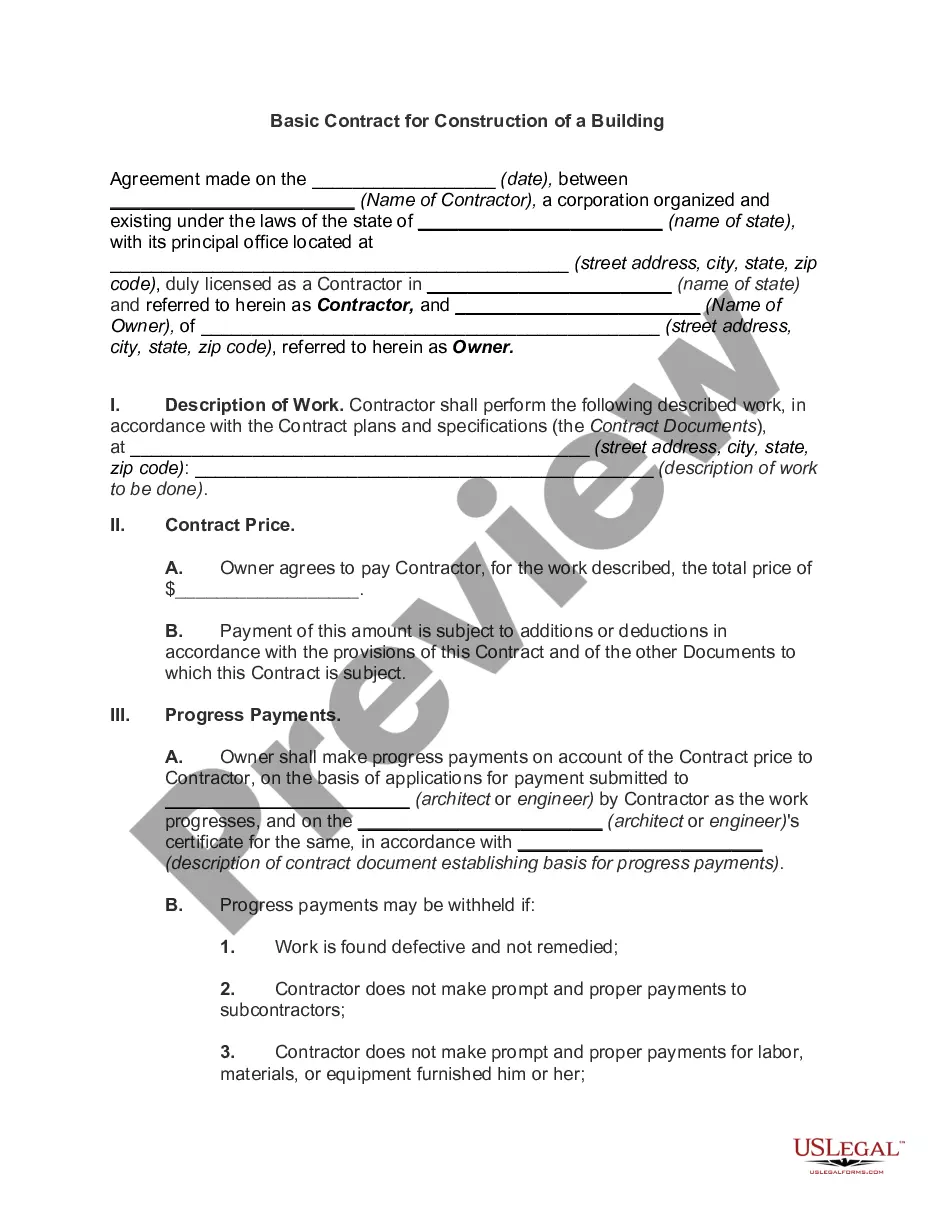
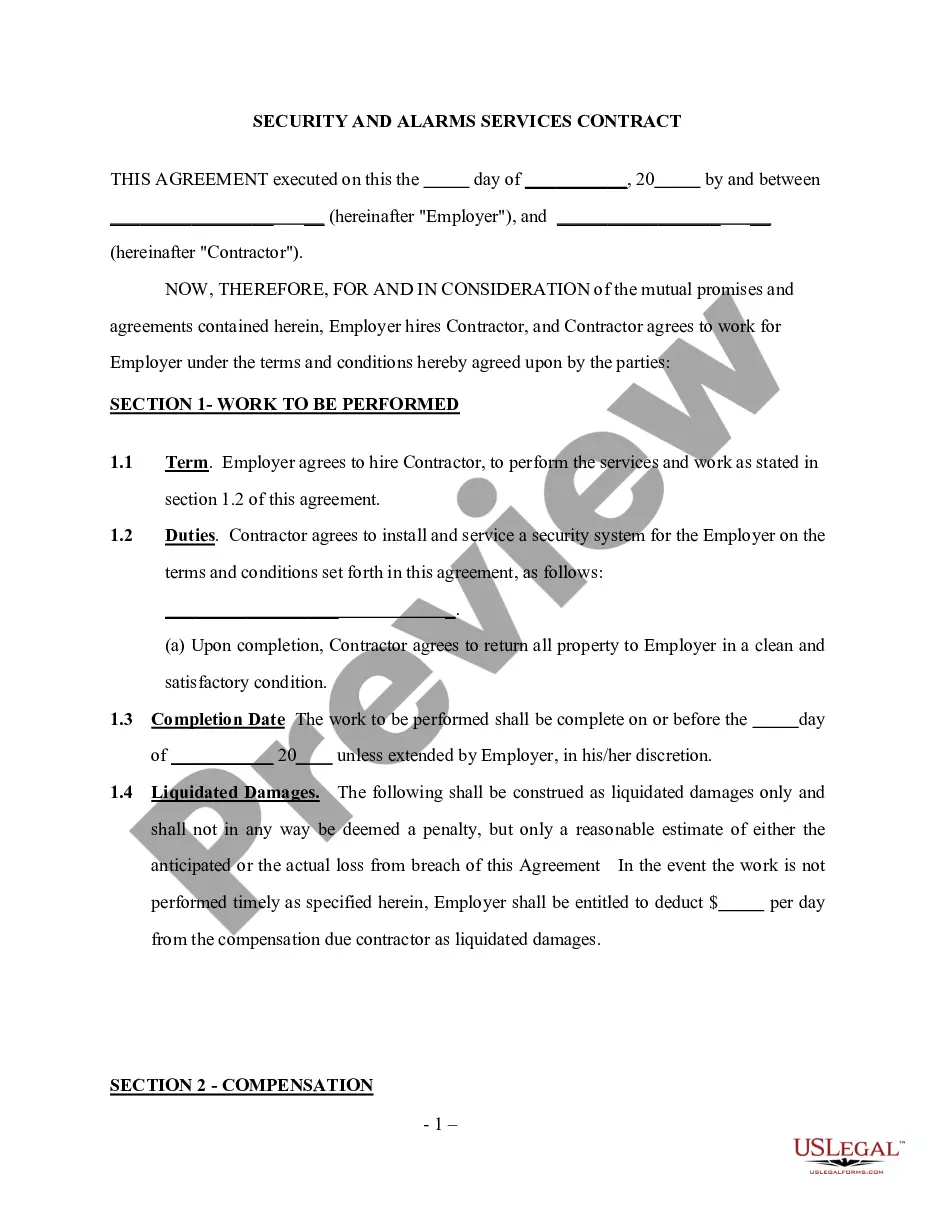
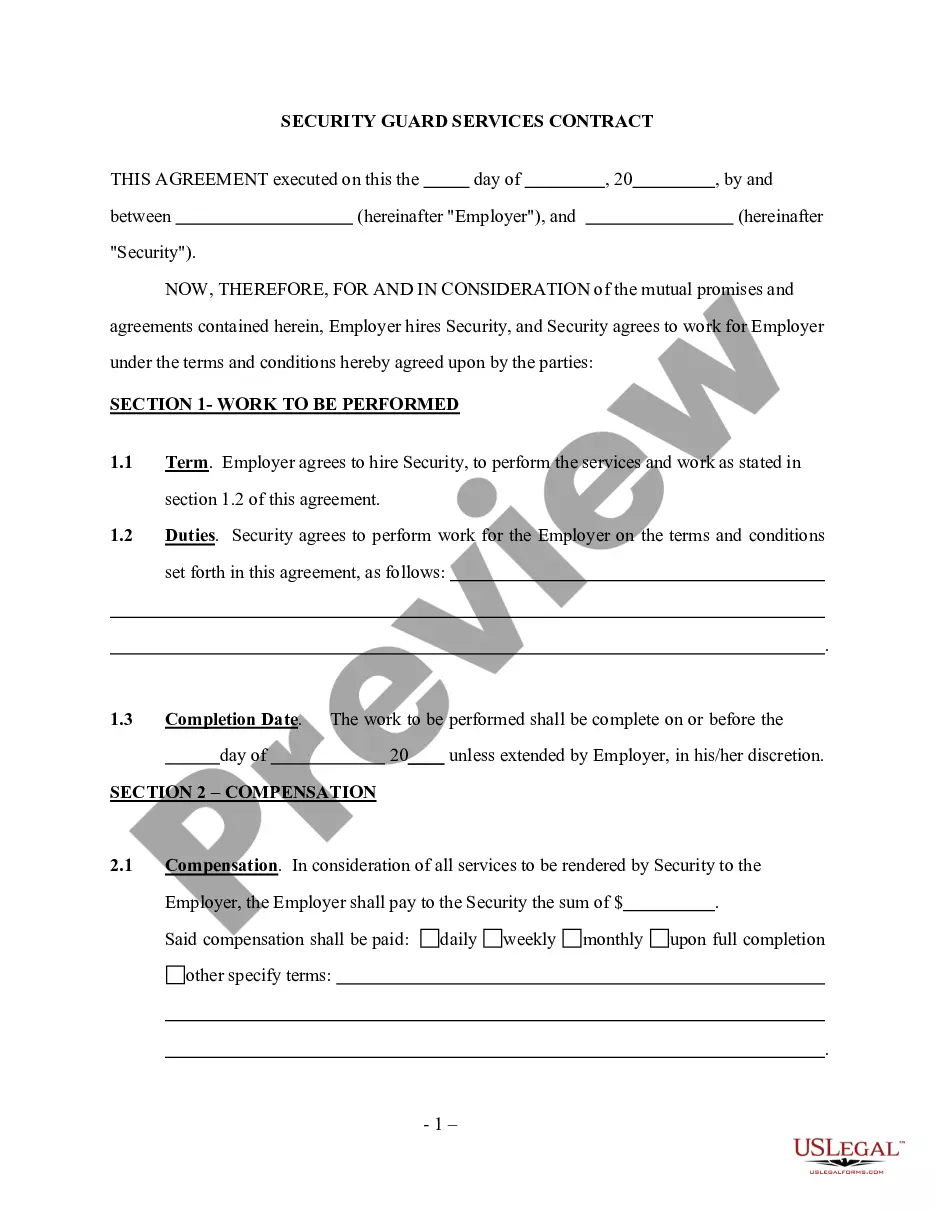
The Security Contract for Contractor is a legal document that formalizes an agreement between security contractors and property owners. This contract outlines the details of the security services to be provided, including payment arrangements, work site information, and terms regarding changes and warranties. Unlike general service contracts, this document specifically addresses the unique needs and legal compliance for security services in the State of Washington.
Main sections of this form
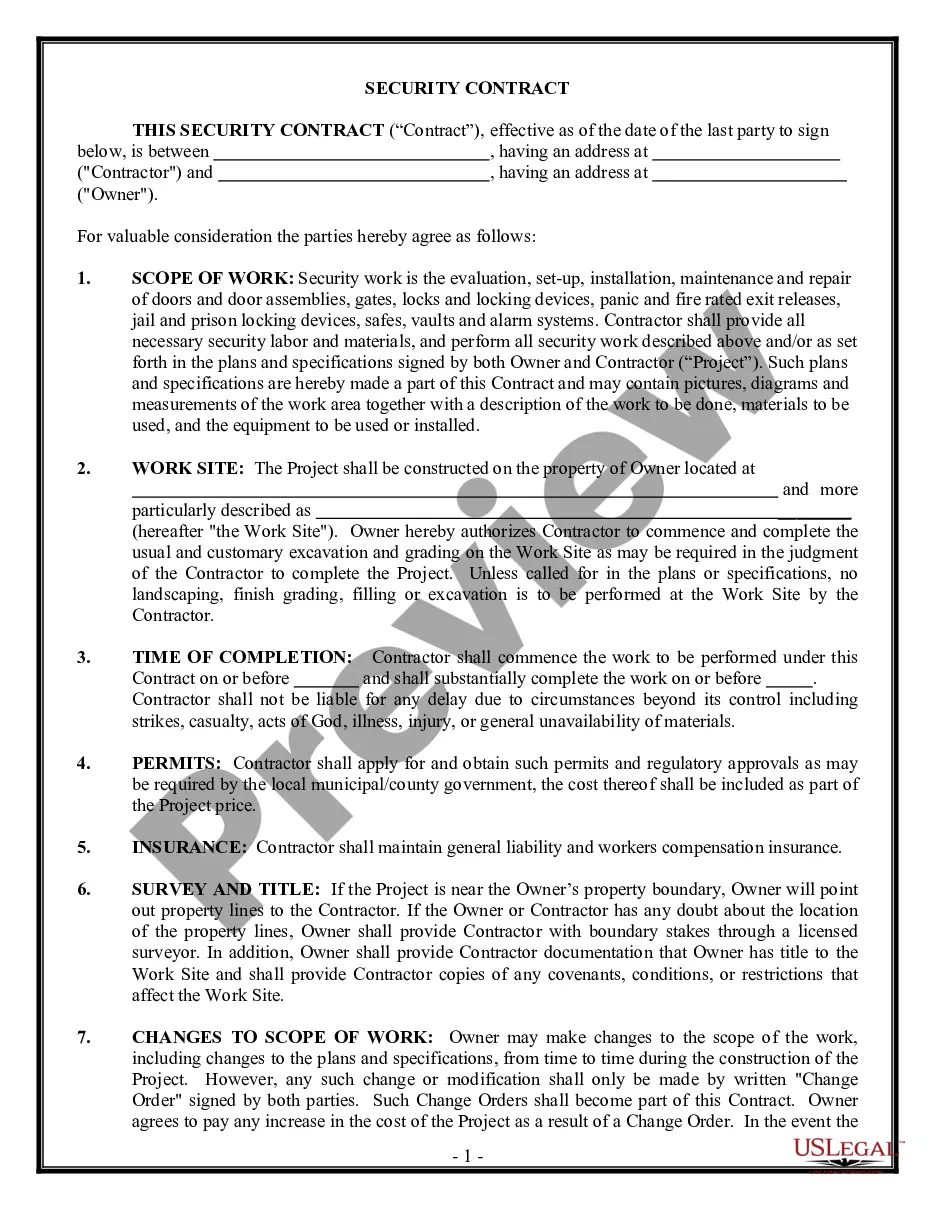
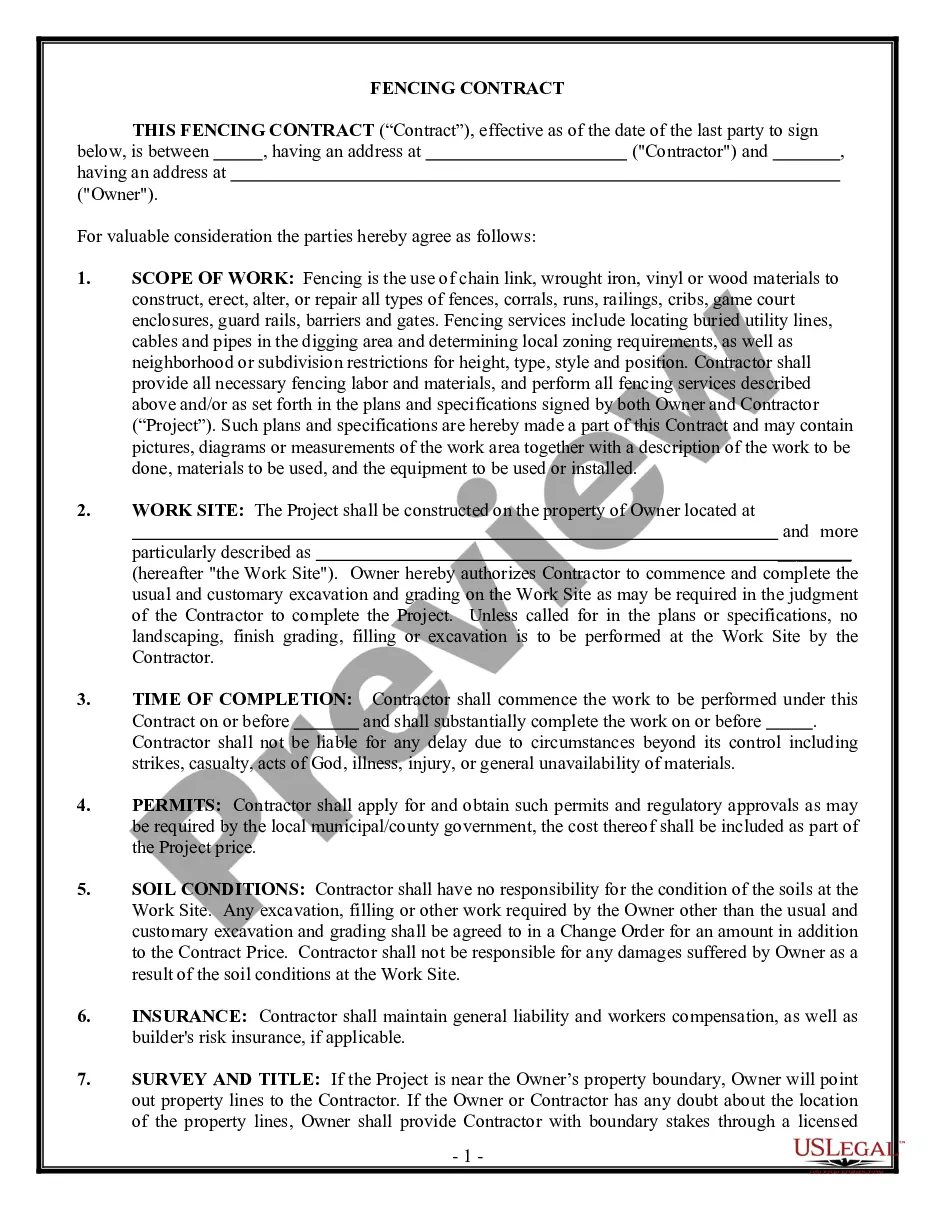
- Permits: The contractor is responsible for obtaining necessary permits and approvals required by local authorities.
- Insurance: The contractor must maintain general liability and workers' compensation insurance.
- Survey and Title: The owner must provide documentation of property lines and title to the work site.
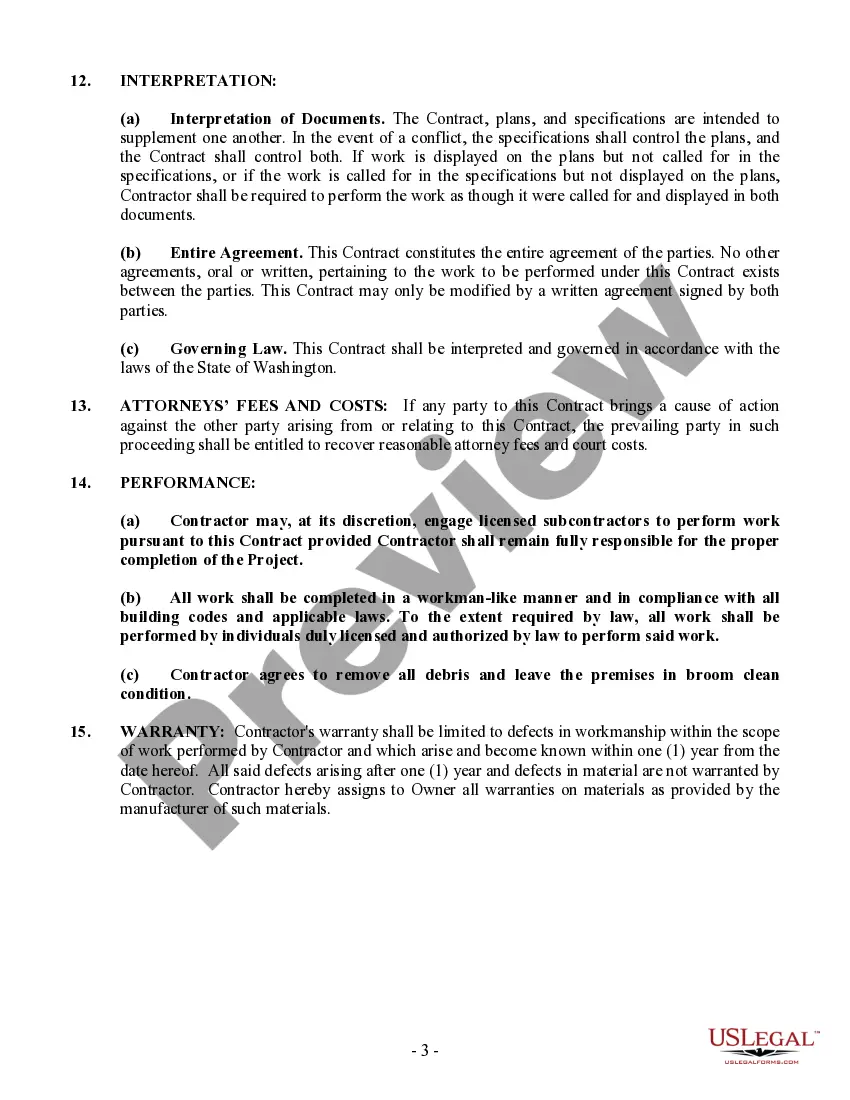
- Changes to Scope of Work: Any changes must be documented through written change orders signed by both parties.
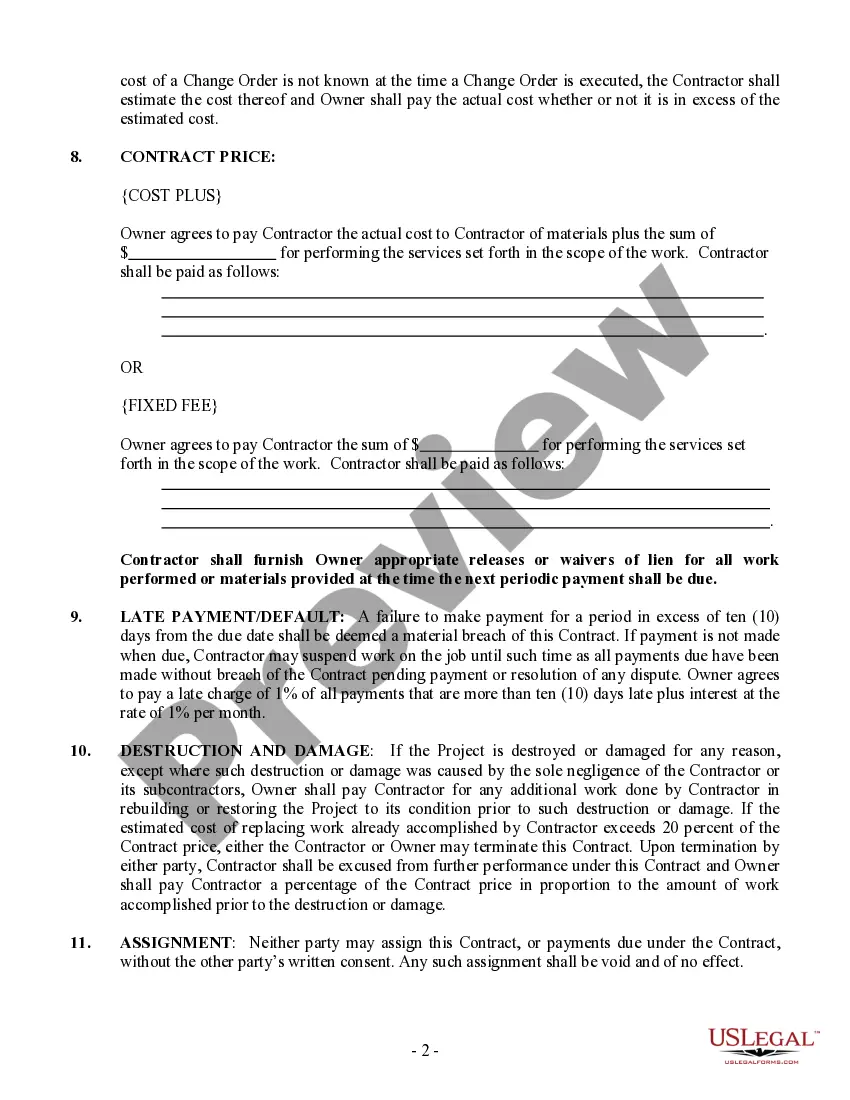
- Contract Price: The contract specifies pricing and payment terms.
- Destruction and Damage: Provisions regarding what happens if the project is damaged or destroyed.

When to use this form
You should use this Security Contract for Contractor when you plan to hire a security contractor for your property. This form is essential when discussing project details such as the scope of work, payment structure, and liability concerns. Whether you are a property owner looking to secure your premises or a contractor providing security services, this form ensures that both parties' rights and responsibilities are clearly outlined and legally enforceable.
Who should use this form
This form is suitable for:
- Property owners seeking to hire professional security services.
- Security contractors providing their services to property owners.
- Legal professionals looking to draft or review security service agreements.
Steps to complete this form
Follow these steps to complete the Security Contract for Contractor:
- Identify the parties involved, including the property owner and the contractor.
- Specify the payment arrangementâeither cost plus or fixed fee.
- Outline the scope of work and any specific requirements for permits and insurance.
- Include sections on change orders and what happens in the event of damage or destruction of the project.
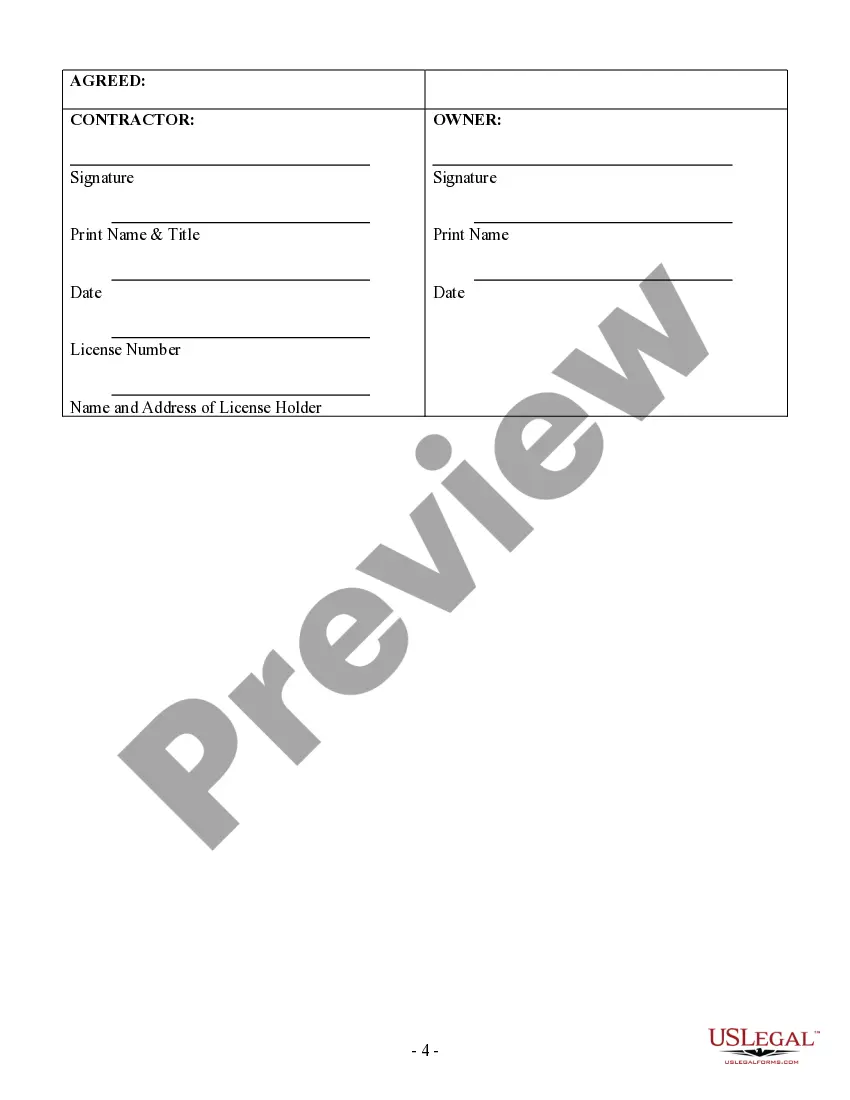
- Ensure both parties sign and date the contract to make it legally binding.
Does this document require notarization?
This form does not typically require notarization unless specified by local law. Ensure you check local regulations for any specific requirements regarding notarization of contracts.
Get your form ready online
Our built-in tools help you complete, sign, share, and store your documents in one place.
Make edits, fill in missing information, and update formatting in US Legal Forms—just like you would in MS Word.
Download a copy, print it, send it by email, or mail it via USPS—whatever works best for your next step.
Sign and collect signatures with our SignNow integration. Send to multiple recipients, set reminders, and more. Go Premium to unlock E-Sign.
If this form requires notarization, complete it online through a secure video call—no need to meet a notary in person or wait for an appointment.
We protect your documents and personal data by following strict security and privacy standards.

Make edits, fill in missing information, and update formatting in US Legal Forms—just like you would in MS Word.

Download a copy, print it, send it by email, or mail it via USPS—whatever works best for your next step.

Sign and collect signatures with our SignNow integration. Send to multiple recipients, set reminders, and more. Go Premium to unlock E-Sign.

If this form requires notarization, complete it online through a secure video call—no need to meet a notary in person or wait for an appointment.

We protect your documents and personal data by following strict security and privacy standards.
Common mistakes
- Failing to adequately define the scope of work, leading to disputes.
- Not documenting changes with formal change orders.
- Neglecting to ensure that all necessary permits are acquired before work begins.
- Overlooking insurance requirements, which could lead to liability issues.
Benefits of using this form online
- Convenience: Download and complete the form at your pace without needing legal assistance.
- Editability: Tailor the contract to fit the specific needs of your security service agreement.
- Reliability: The forms are drafted by licensed attorneys, ensuring legal compliance.
Main things to remember
- The Security Contract for Contractor is essential for formalizing agreements between security contractors and property owners.
- Key components such as insurance, permits, and change orders are critical for project clarity and compliance.
- Using this template can help avoid common mistakes and ensure a smoother working relationship.
Looking for another form?
Form popularity
FAQ
For most types of projects you hire an independent contractor (IC) to do, the law does not require you to put anything in writing. You can meet with the IC, agree on the terms of your arrangement, and have an oral contract or agreement that is legally binding. Just because you can doesn't mean you should, however.
Form W-9. The IRS requires contractors to fill out a Form W-9, request for Taxpayer Identification Number and Certification, which you should keep on file for at least four years after the hiring. This form is used to request the correct name and Taxpayer Identification Number, or TIN, of the worker or their entity.
1. Not Having a Written Contract.The taxing, labor and employment, and insurance authorities expect a written contract that states that the worker is an independent contractor and will be paid as such with no tax withholding, no benefits, etc.
Unemployment benefits are available for Washingtonians who have lost work because of the COVID-19 crisisincluding freelancers, independent contractors and other self-employed workers.If you're a self-employed worker who's lost income in this crisis, you may now qualify for unemployment benefits.
Terms. This is the first section of any agreement or contract and states the names and locations of the parties involved. Responsibilities & Deliverables. Payment-Related Details. Confidentiality Clause. Contract Termination. Choice of Law.
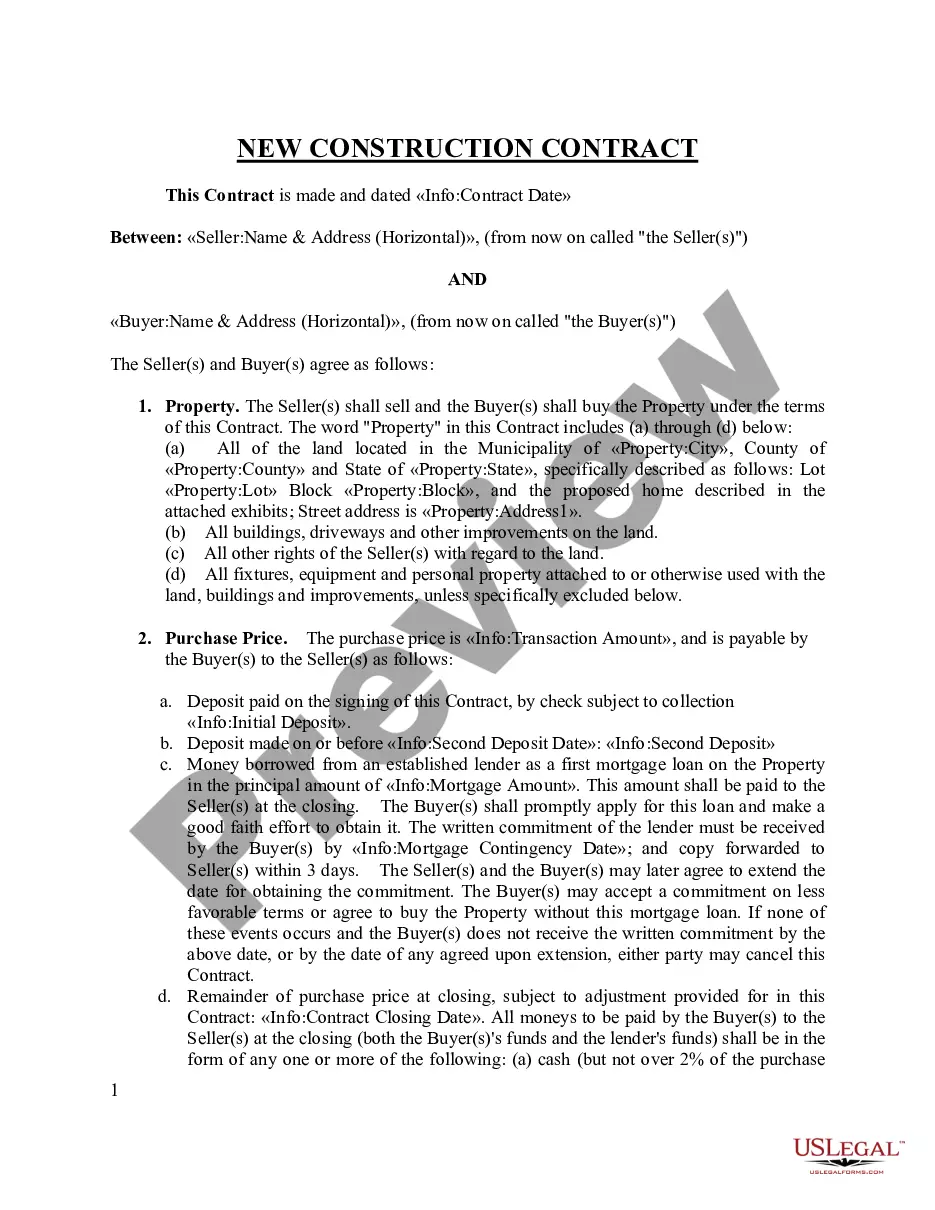
Name of contractor and contact information. Name of homeowner and contact information. Describe property in legal terms. List attachments to the contract. The cost. Failure of homeowner to obtain financing. Description of the work and the completion date. Right to stop the project.
Get it in writing. Keep it simple. Deal with the right person. Identify each party correctly. Spell out all of the details. Specify payment obligations. Agree on circumstances that terminate the contract. Agree on a way to resolve disputes.
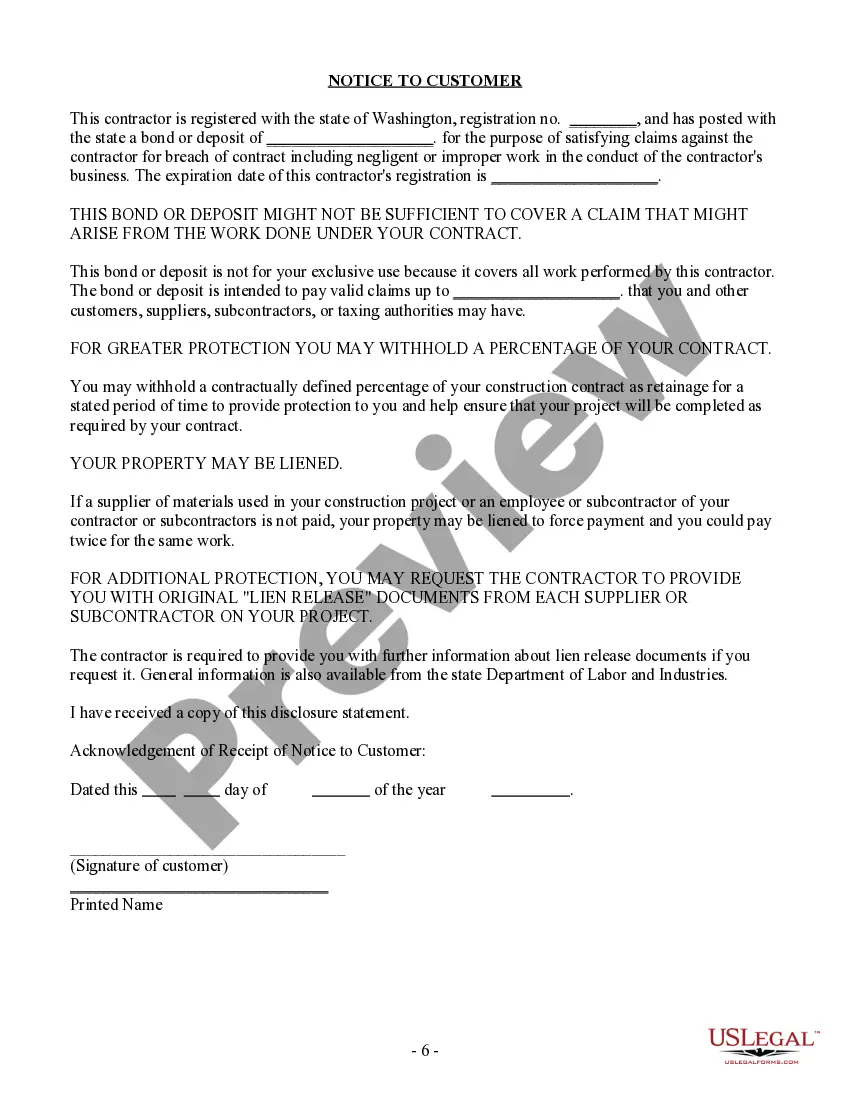
Avoid companies that require an upfront deposit of more than 10 percent. Try to include language in the contract that holds back a percentage of the total price, called a retainage, until you're sure the work was done well. A 10 percent retainage is common for residential remodeling work.
Do not designate someone as a 1099 Employee if: Company provides training on a certain method of job performance. Tools and materials are provided. Employees must follow set schedule. You provide benefits such as vacation, overtime pay, etc.