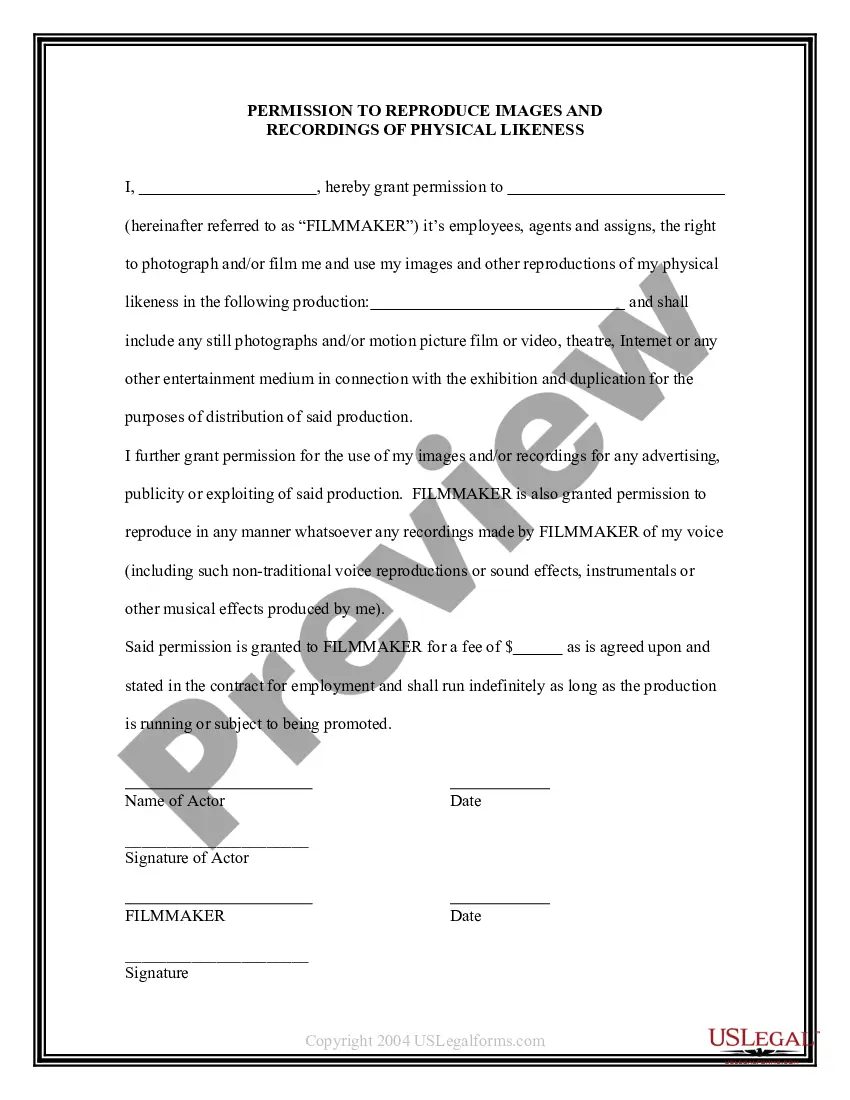
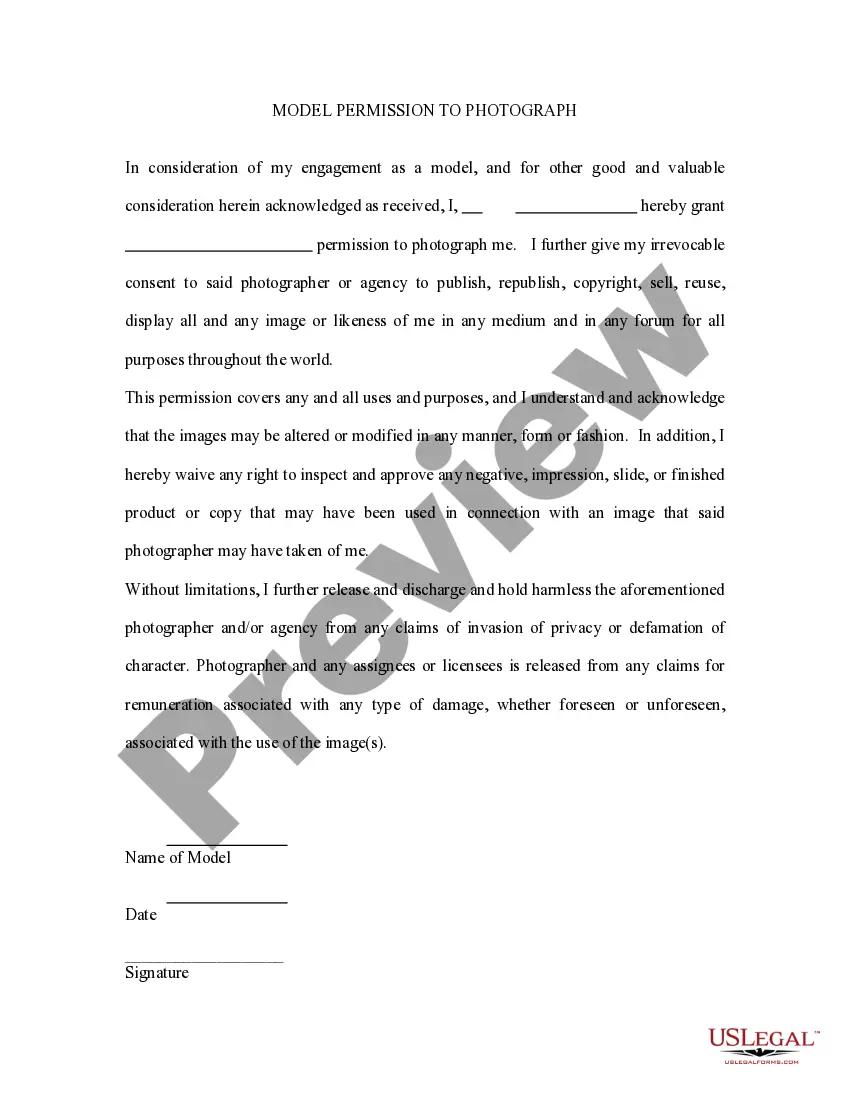
This is a form signed by an actor authorizing a filmmaker to use the actor's image or likeness in a movie production as well as for advertising and publicity reasons.
Vermont Permission To Reproduce Images And Recordings Of Physical Likeness
State:
Multi-State
Control #:
US-PRM-25
Format:
Word;
Rich Text
Instant download
Description
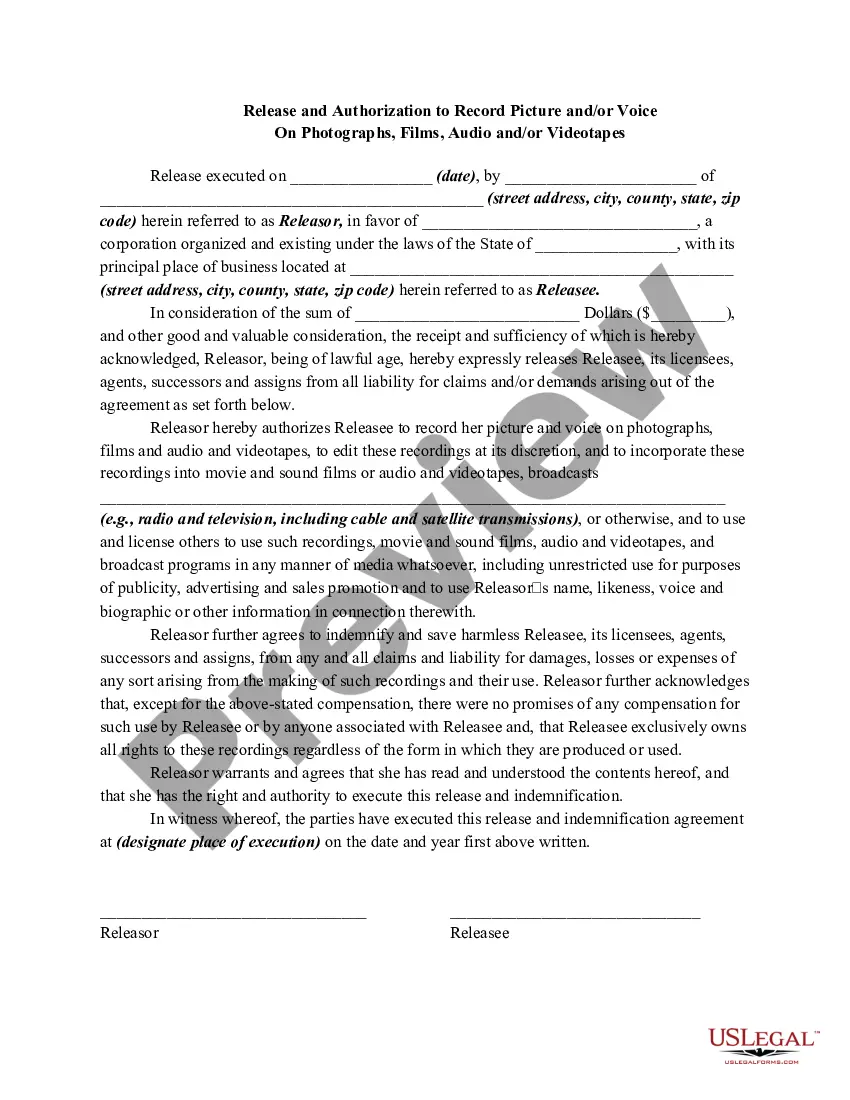
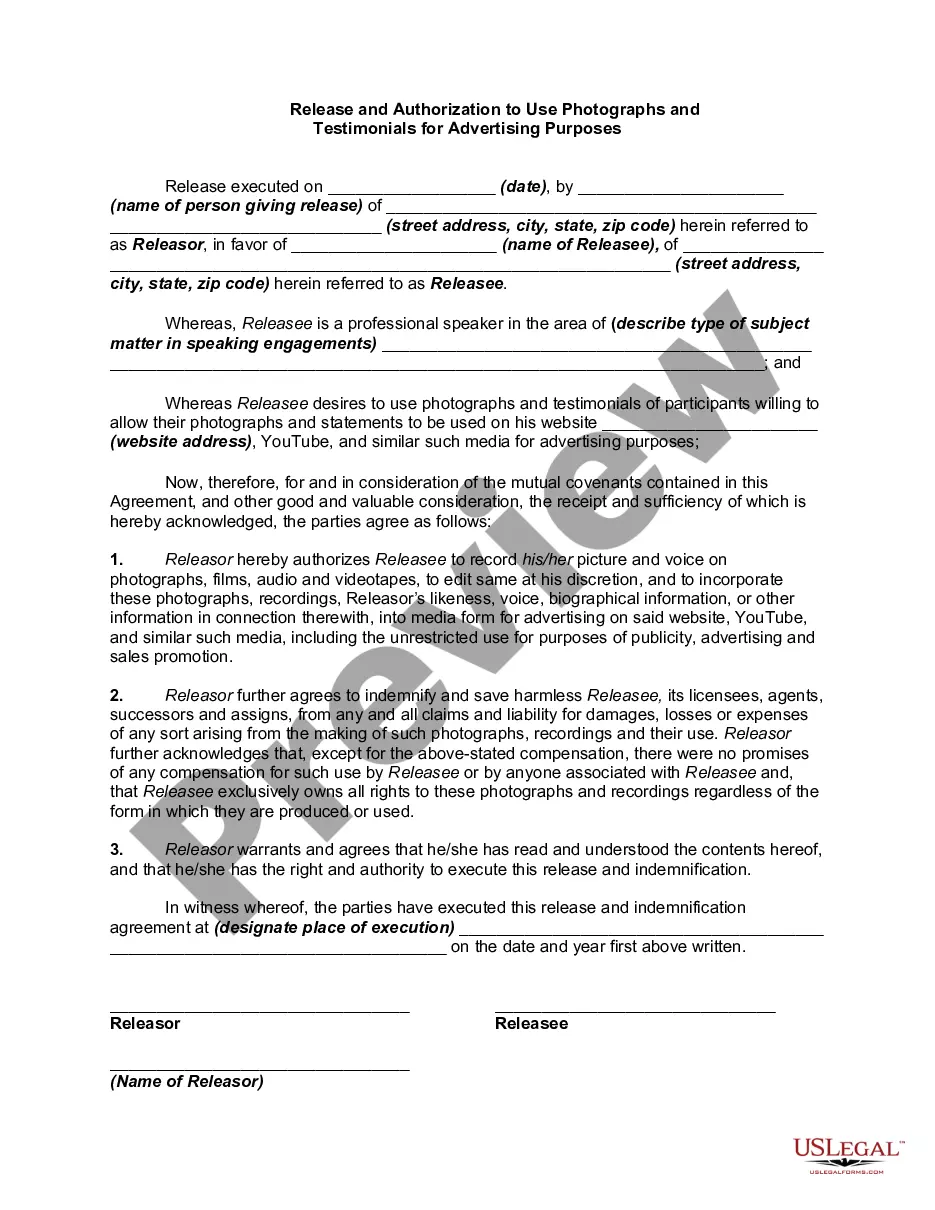
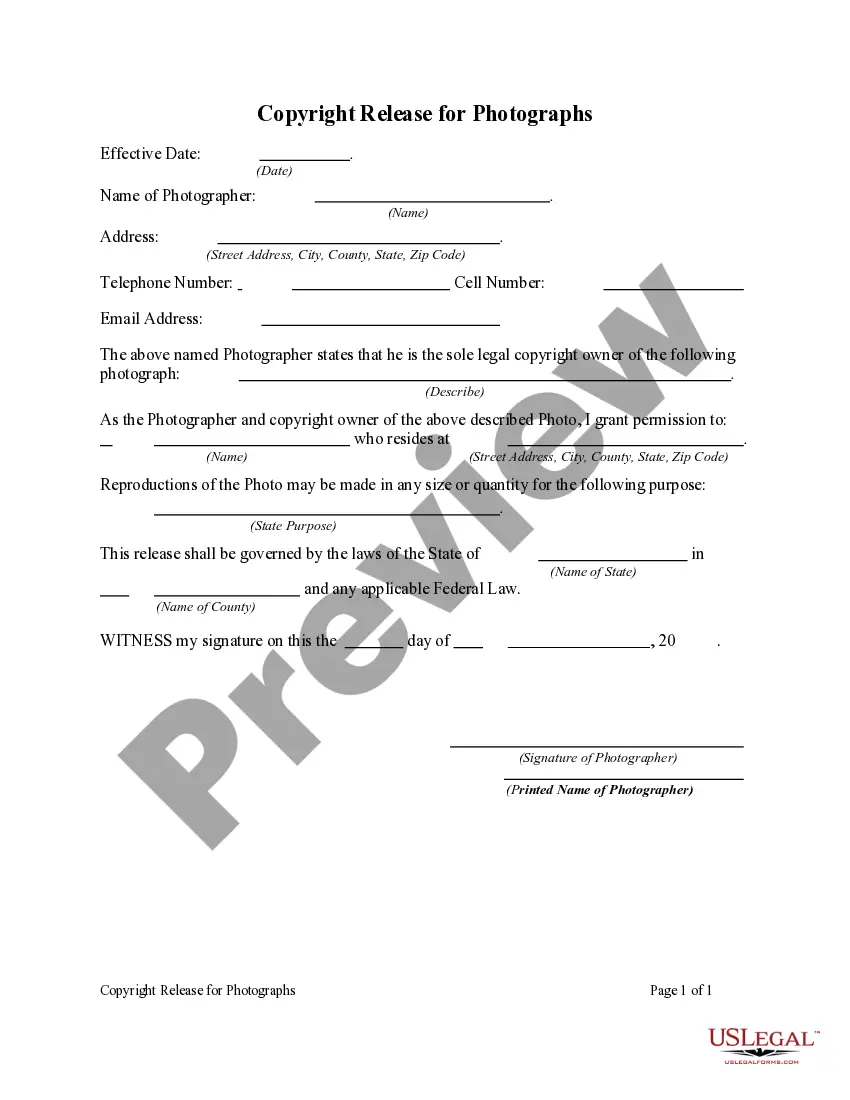

How to fill out Permission To Reproduce Images And Recordings Of Physical Likeness?
Selecting the appropriate legitimate document template can be a challenge. Of course, there are numerous designs available online, but how do you find the authentic form you require? Utilize the US Legal Forms website. The service offers thousands of templates, including the Vermont Permission To Reproduce Images And Recordings Of Physical Likeness, that can be utilized for both business and personal purposes. All the forms are reviewed by experts and comply with state and federal regulations.
If you are already registered, Log In to your account and click the Download button to access the Vermont Permission To Reproduce Images And Recordings Of Physical Likeness. Use your account to browse through the legal forms you have previously acquired. Go to the My documents section of your account and download another copy of the document you need.
If you are a new user of US Legal Forms, here are simple instructions for you to follow: First, ensure you have selected the correct form for your city/state. You can review the form using the Preview button and read the form description to confirm this is indeed the right one for you. If the form does not fulfill your requirements, use the Search field to locate the appropriate form. Once you are confident that the form is suitable, click the Purchase Now button to obtain the form. Choose the pricing plan you prefer and enter the necessary information. Create your account and pay for the order using your PayPal account or credit card. Select the document format and download the legal document template to your device. Complete, modify, and print and sign the received Vermont Permission To Reproduce Images And Recordings Of Physical Likeness.
US Legal Forms is the largest repository of legal forms where you can find various document templates. Use the service to download professionally crafted documents that meet state regulations.
Form popularity
FAQ
You send a letter to the holder asking for permission and stating how you intend to use the image. The holder sends a letter back granting you permission. Your request should be as specific as possible in describing the intended use of the image.
Having the digital rights to a photo means that you can distribute it anywhere in the digital world, but you can't use if for commercial purposes unless you also have the commercial rights.
If you're in the image, nothing changes: the photographer is still creating an original work and thus getting the copyright. It doesn't matter whether it's a photo of you or a duck, the photographer owns it. Since the photographer owns the photo, you as the subject don't have any rights to it.
The term public domain refers to creative materials that are not protected by intellectual property laws such as copyright, trademark, or patent laws. The public owns these works, not an individual author or artist. Anyone can use a public domain work without obtaining permission, but no one can ever own it.
In general, it's legal to take and publish photographs in and from a public space without asking, whereas taking photographs in a private space requires consent. Selling a photograph usually requires consent from the persons in the picture.
Remember that you do not need permission if you are using something that is not copyrightable or is in the public domain. You also don't need permission if you are using it in a way that does not implicate one of the rights of copyright holders or is permitted by a user's right, such as fair use.
When a person creates an image in the United States, that image is automatically granted copyright protection. When an image has copyright protection, no one else can use the image without the owner giving permission.
Images in the public domain If copyright has expired, then images are considered to be in the 'public domain' and can be used by anyone without seeking permission from the copyright owner.
Public domain images are free to use. In contrast, any non-public domain work usually has copyright protection and requires a license to use.
If you want to use an image that isn't yours you must obtain permission to use itwhether through a license or the creator directly. If you request permission and it's granted, keep a record on hand for future reference. When someone shares an image on a public account, that doesn't make it public domain.