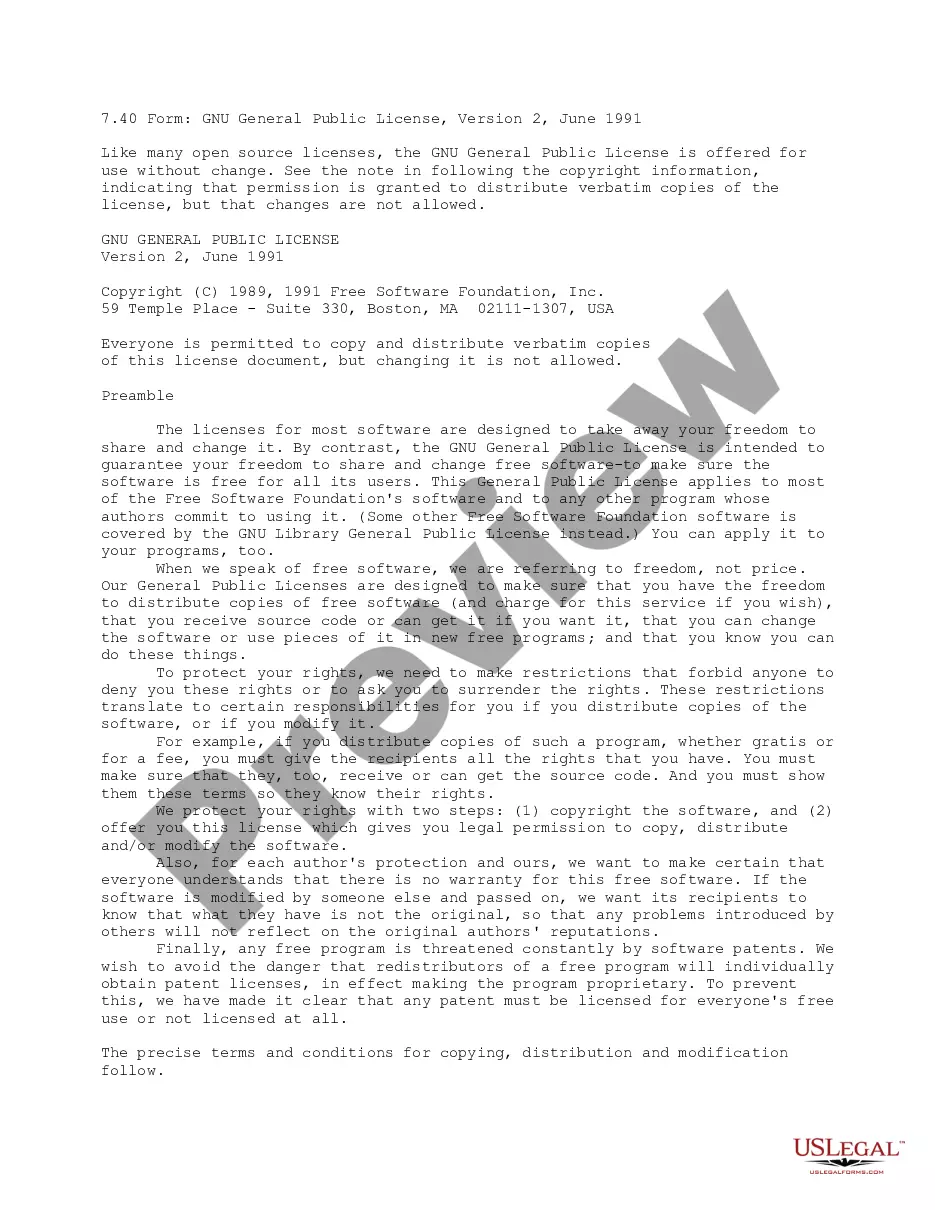
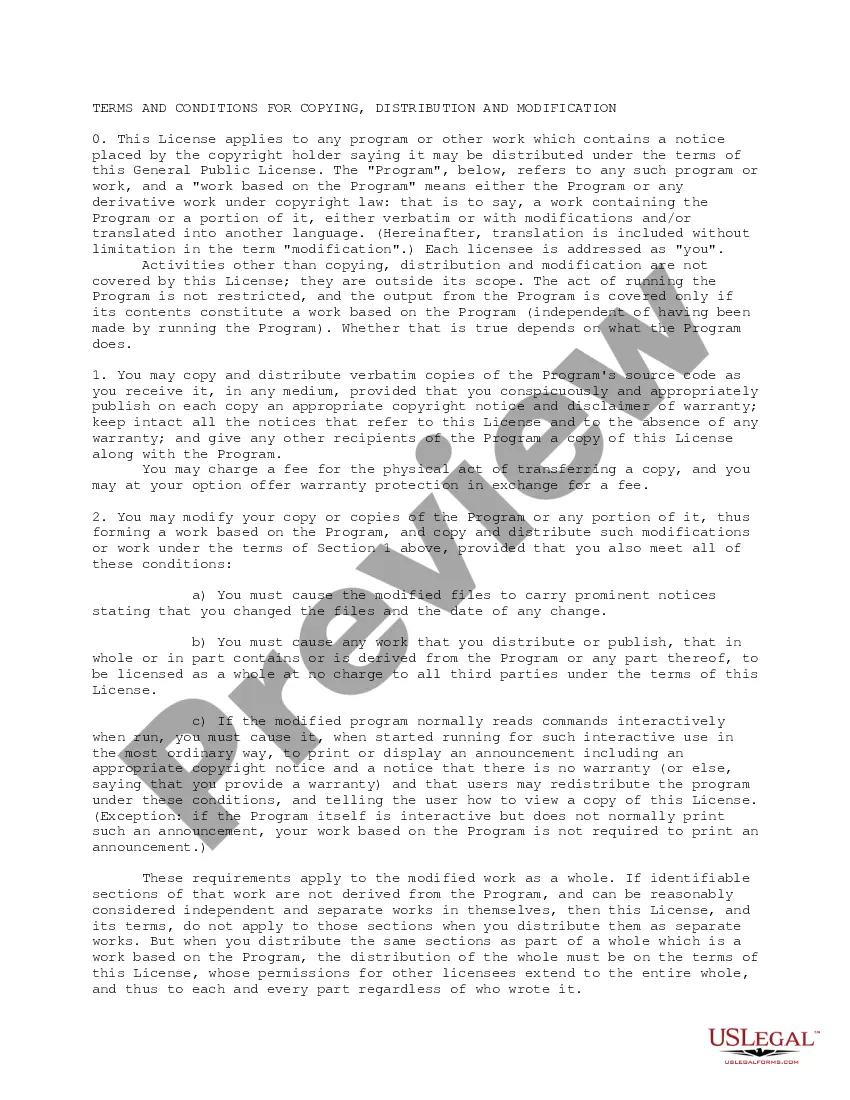
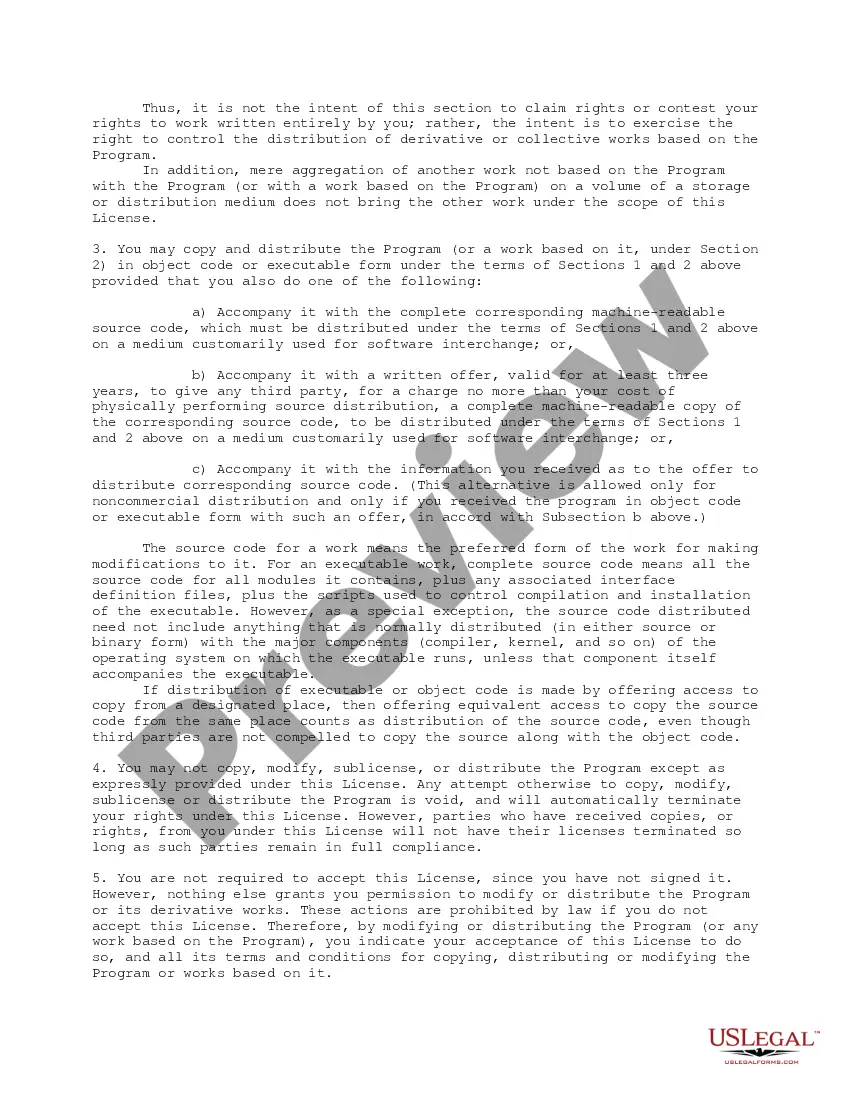
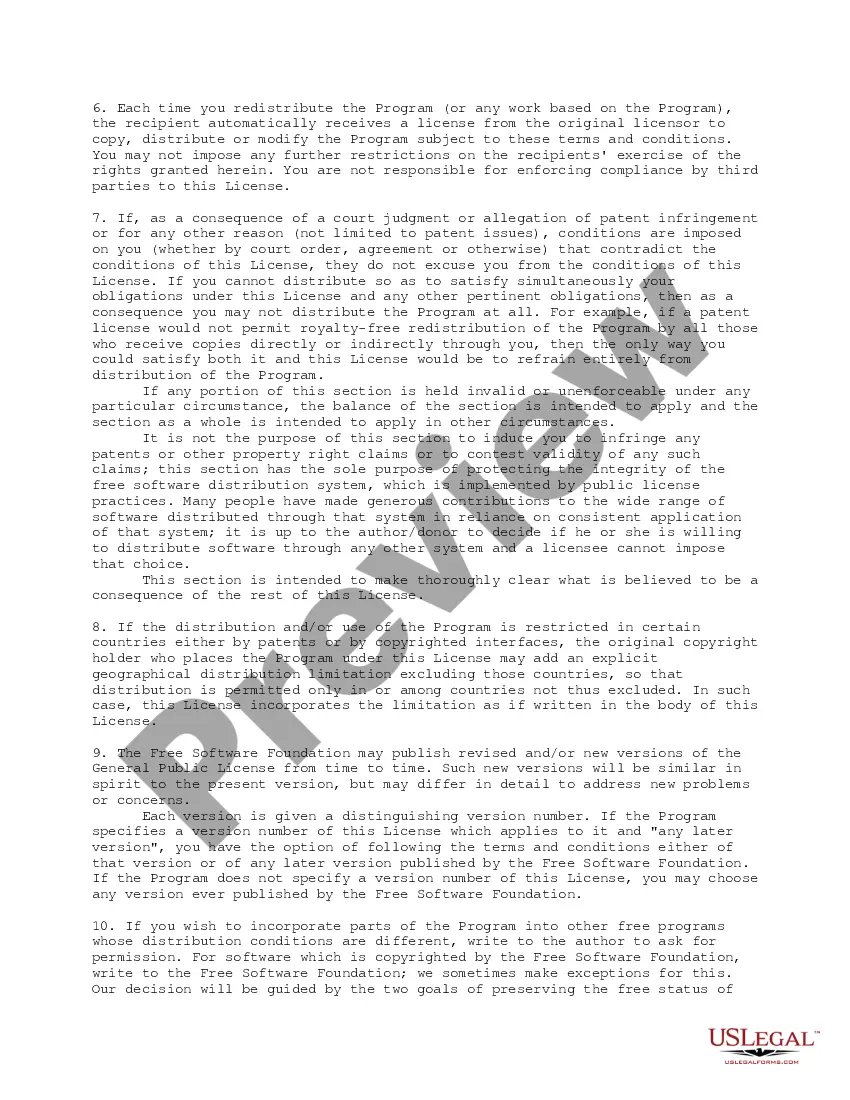
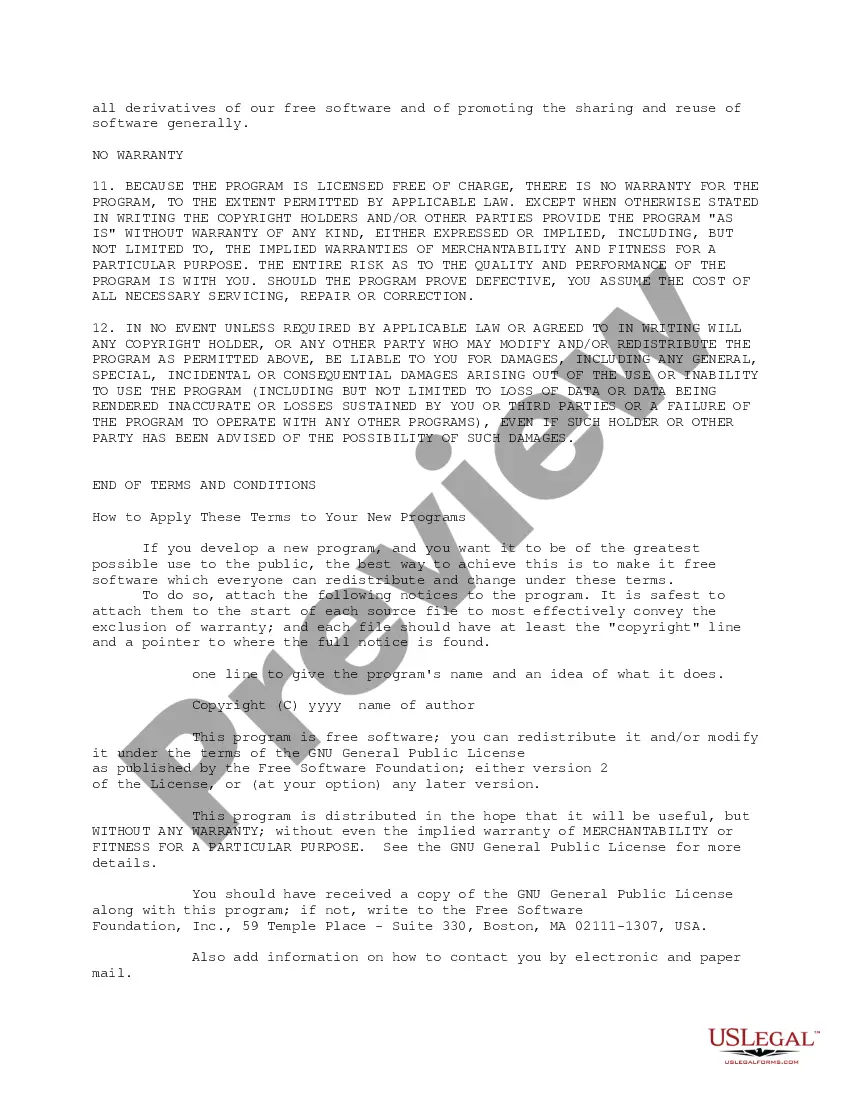
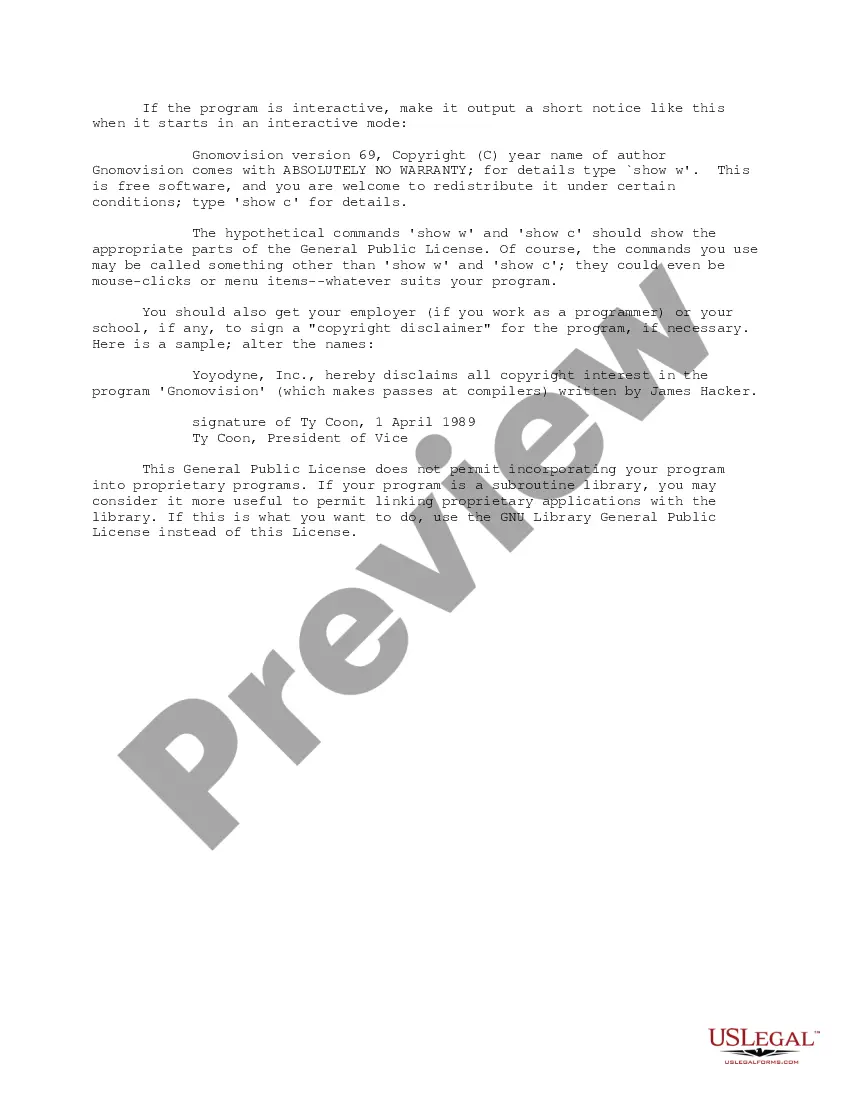
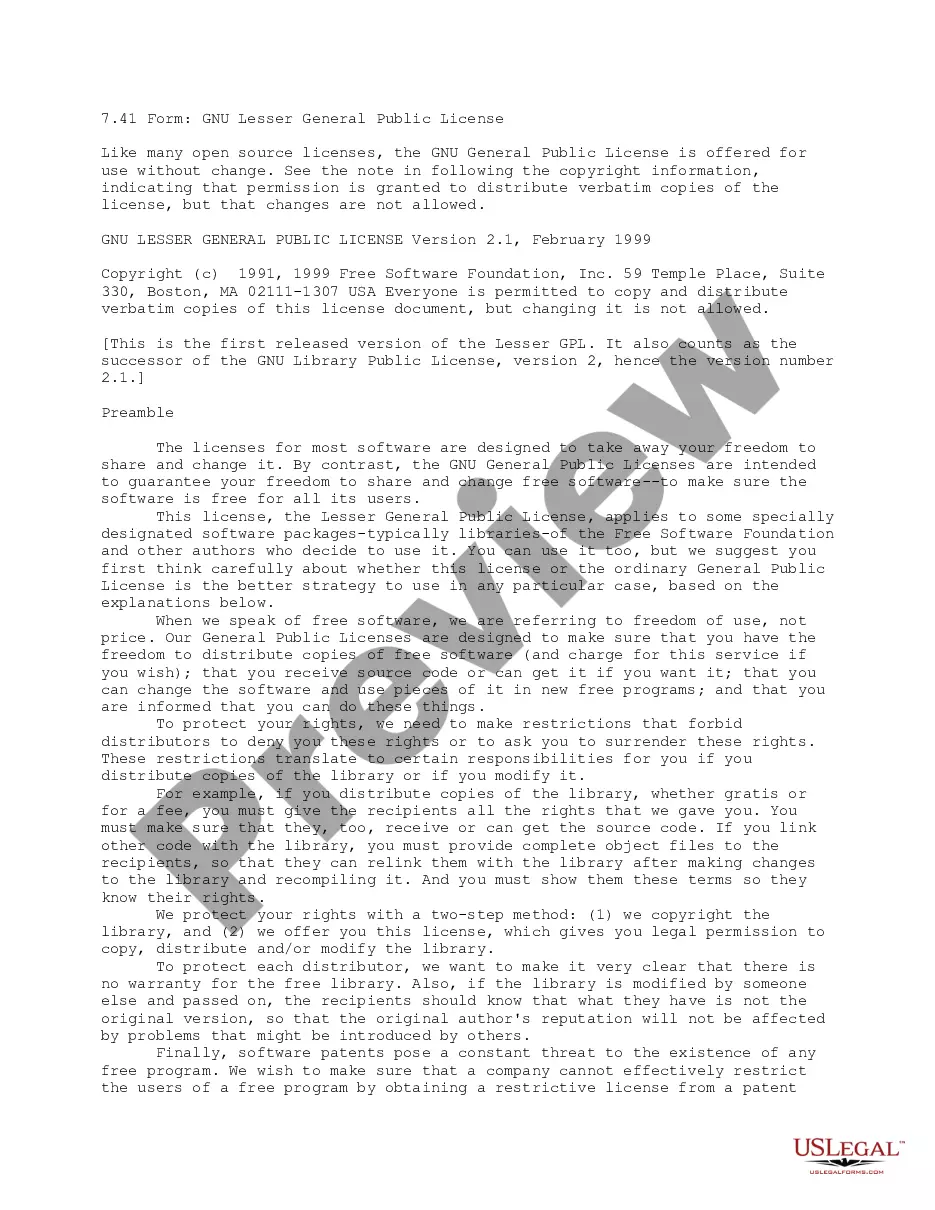
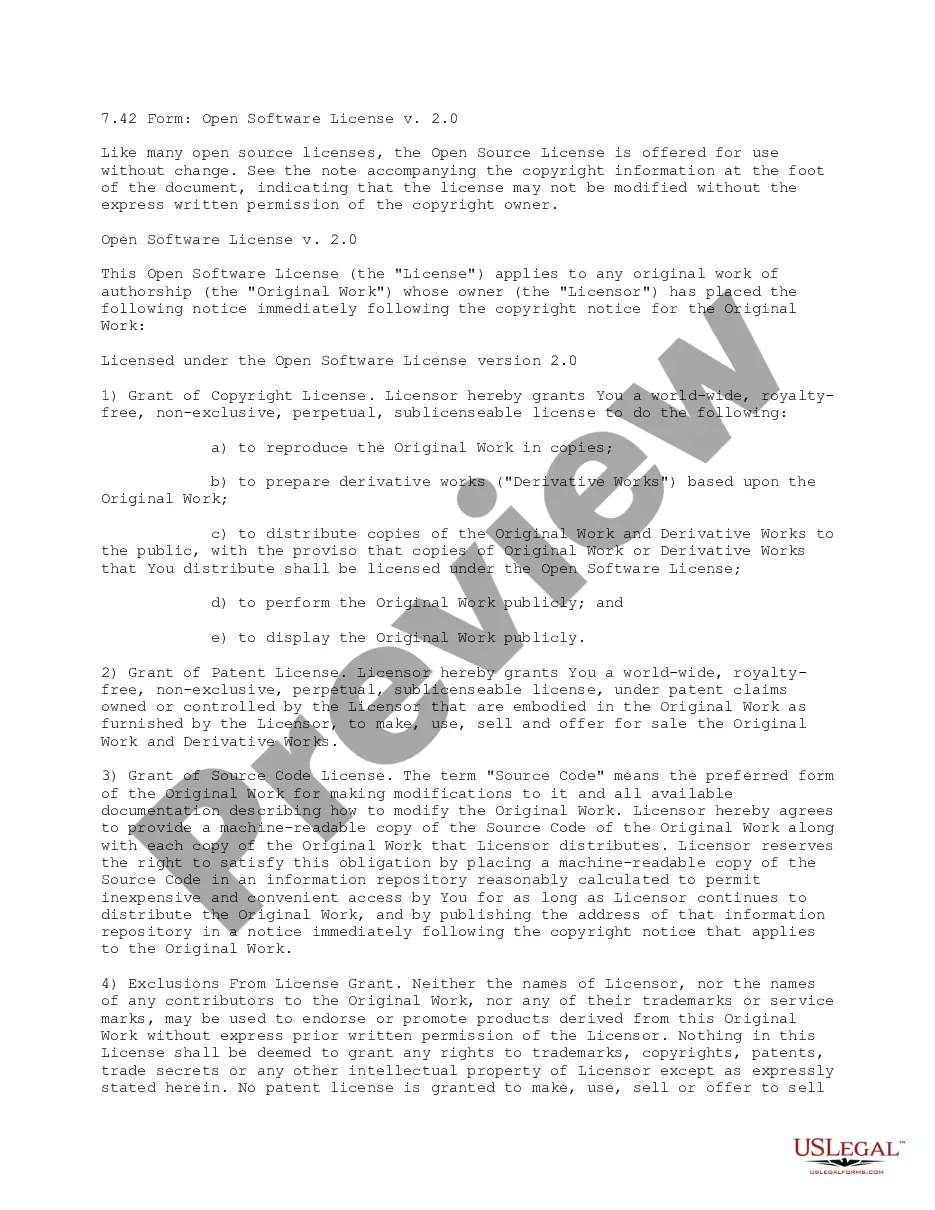
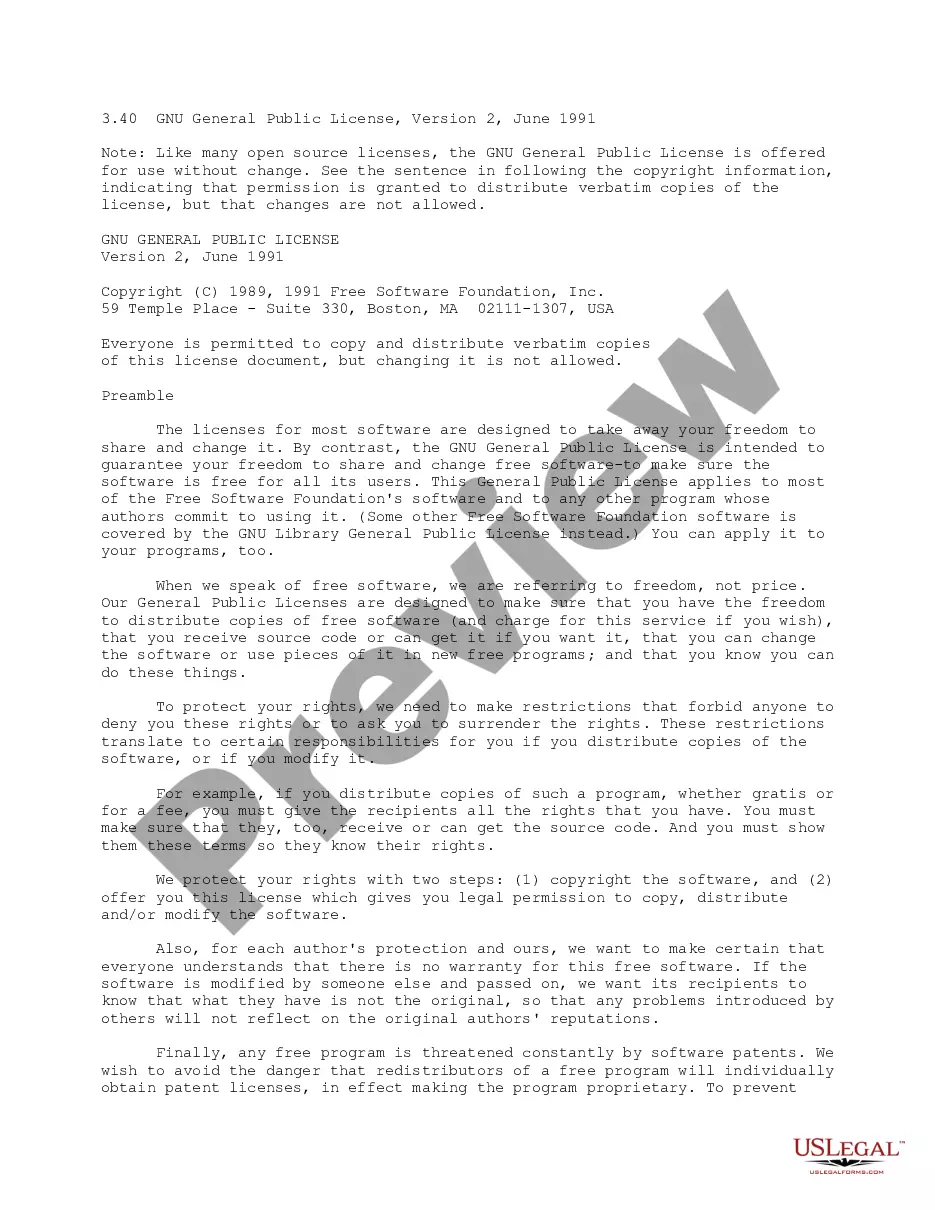
This license contains the terms and conditions needed to make free software programs
available to the public. With this license, the software can be changed under certain
conditions and redistributed.
Vermont GNU General Public License
Instant download
Description
Free preview
Get your form ready online
Our built-in tools help you complete, sign, share, and store your documents in one place.
Built-in online Word editor
Make edits, fill in missing information, and update formatting in US Legal Forms—just like you would in MS Word.
Export easily
Download a copy, print it, send it by email, or mail it via USPS—whatever works best for your next step.
E-sign your document
Sign and collect signatures with our SignNow integration. Send to multiple recipients, set reminders, and more. Go Premium to unlock E-Sign.
Notarize online 24/7
If this form requires notarization, complete it online through a secure video call—no need to meet a notary in person or wait for an appointment.
Store your document securely
We protect your documents and personal data by following strict security and privacy standards.

Make edits, fill in missing information, and update formatting in US Legal Forms—just like you would in MS Word.

Download a copy, print it, send it by email, or mail it via USPS—whatever works best for your next step.

Sign and collect signatures with our SignNow integration. Send to multiple recipients, set reminders, and more. Go Premium to unlock E-Sign.

If this form requires notarization, complete it online through a secure video call—no need to meet a notary in person or wait for an appointment.

We protect your documents and personal data by following strict security and privacy standards.
Looking for another form?




How to fill out GNU General Public License?
You can utilize the internet attempting to locate the legal document template that meets the state and federal criteria you require.
US Legal Forms offers a vast selection of legal documents which are assessed by experts.
You can download or create the Vermont GNU General Public License from your services.
To get another version of the document, utilize the Lookup field to find the template that aligns with your needs and requirements.
- If you already possess a US Legal Forms account, you may Log In and then select the Download button.
- After that, you can fill out, modify, create, or sign the Vermont GNU General Public License.
- Each legal document template you purchase is yours indefinitely.
- To obtain another copy of the purchased document, navigate to the My documents section and click the appropriate option.
- If this is your first time using the US Legal Forms website, follow the simple instructions provided below.
- First, ensure you have selected the correct document template for the region/area of your choice. Review the form description to confirm you have chosen the right form.
- If available, use the Review feature to consult the document template as well.
Form popularity
FAQ
Using the Licensed CodeThe GPL v3 license permits users of the code to: Use the code for commercial purposes: Like GPL v2, GPL v3 imposes no conditions on the internal use of the software.
You can distribute your application using a GPL library commercially, but you must also provide the source code. GPL v3 tries to close some loopholes in GPL v2.
The GPL is a free software license, and therefore it permits people to use and even redistribute the software without being required to pay anyone a fee for doing so. You can charge people a fee to get a copy from you. You can't require people to pay you when they get a copy from someone else.
The GNU Lesser General Public License (LGPL) is a member of the GNU family of open source licenses, along with the GNU GPL v2, the GNU GPL v3, and the GNU AGPL License. Like the others, it was published by the Free Software Foundation as part of Richard Stallman's GNU Project.
Software under the GPL may be run for all purposes, including commercial purposes and even as a tool for creating proprietary software, such as when using GPL-licensed compilers. Users or companies who distribute GPL-licensed works (e.g. software), may charge a fee for copies or give them free of charge.
The GNU General Public License is often called the GNU GPL for short; it is used by most GNU programs, and by more than half of all free software packages.
GNU GPL is a copyright license. You can use and distribute software under the terms and condition of its license only. Hope this clears the difference between GPL and public domain software.
GPL is enforceable as it's essentially a copyright license. The copyright holders of the GPL software can choose to enforce the GPL on the distributed or derivative works of the software. For example, the FSF holds the copyrights on many pieces of the GNU system, such as the GNU Compiler Collection.
You can license your commercial application under the GPLv3 license as long as you comply with the terms of the GPLv3 license. You may discover, however that these terms do not work so well in your favor, since one of the terms prevents you from adding restrictions to the license.
Yes a company can use it internally. The GPL just says a person with the binary can request source. So if only the people with the binary are in the company then only they can request source.