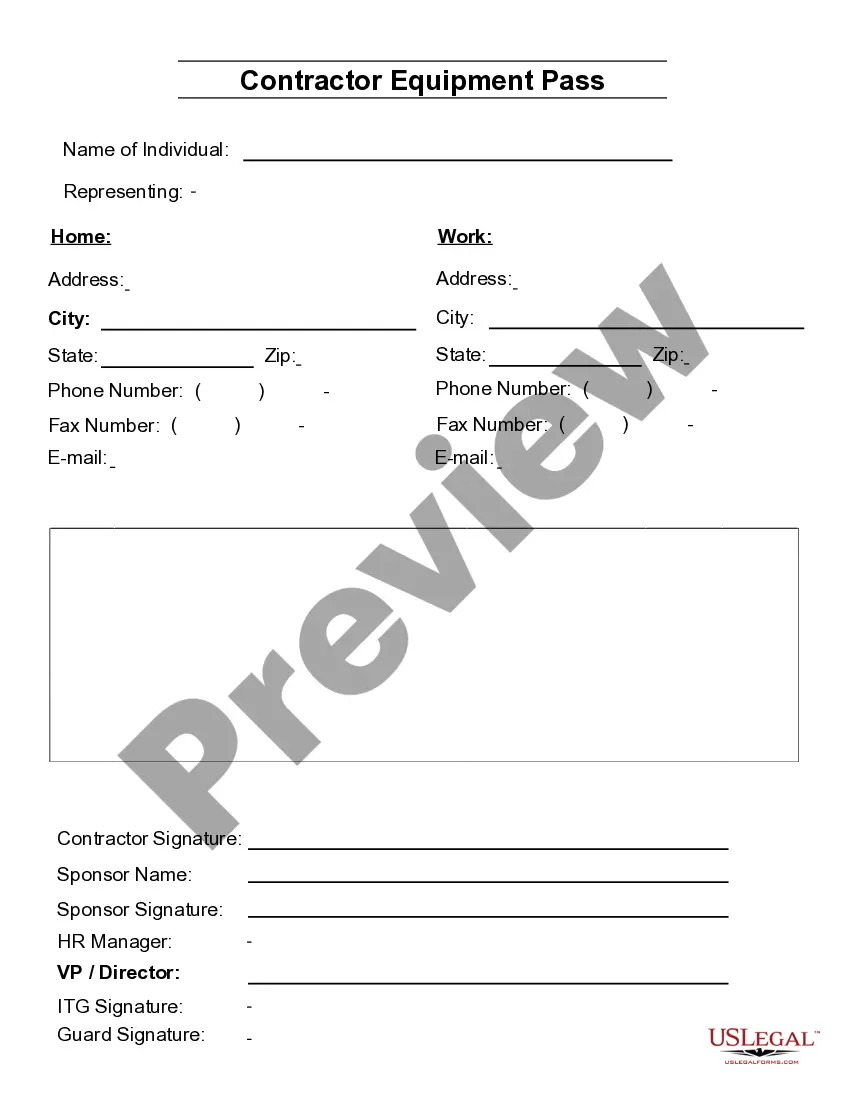
Vermont Contractor Equipment Pass
Description
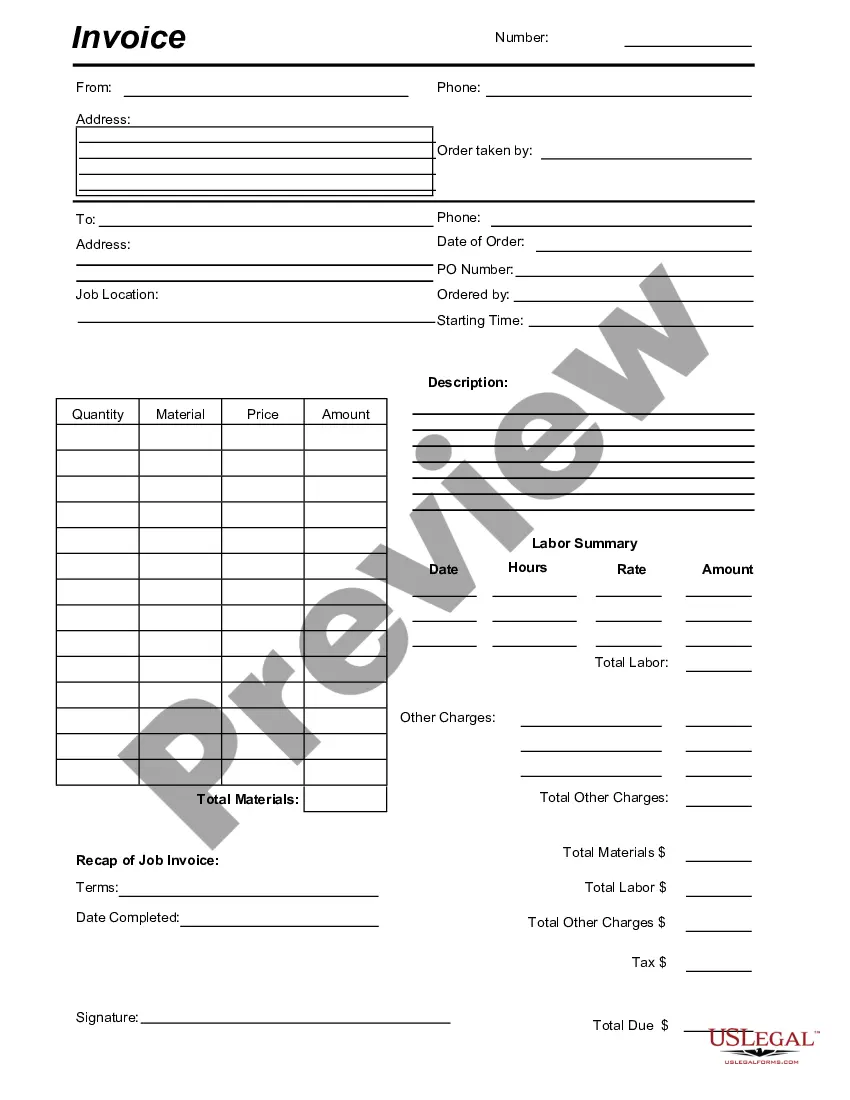
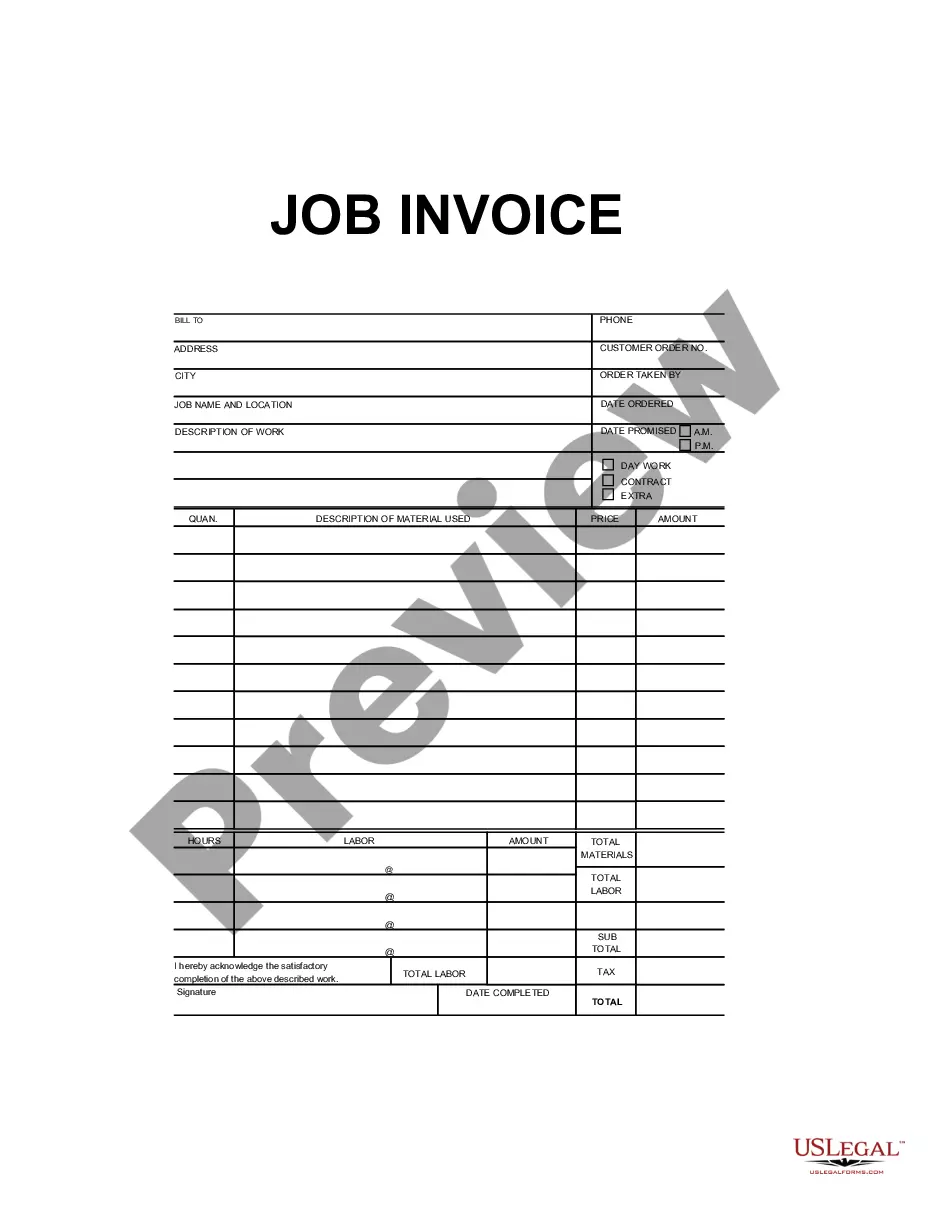
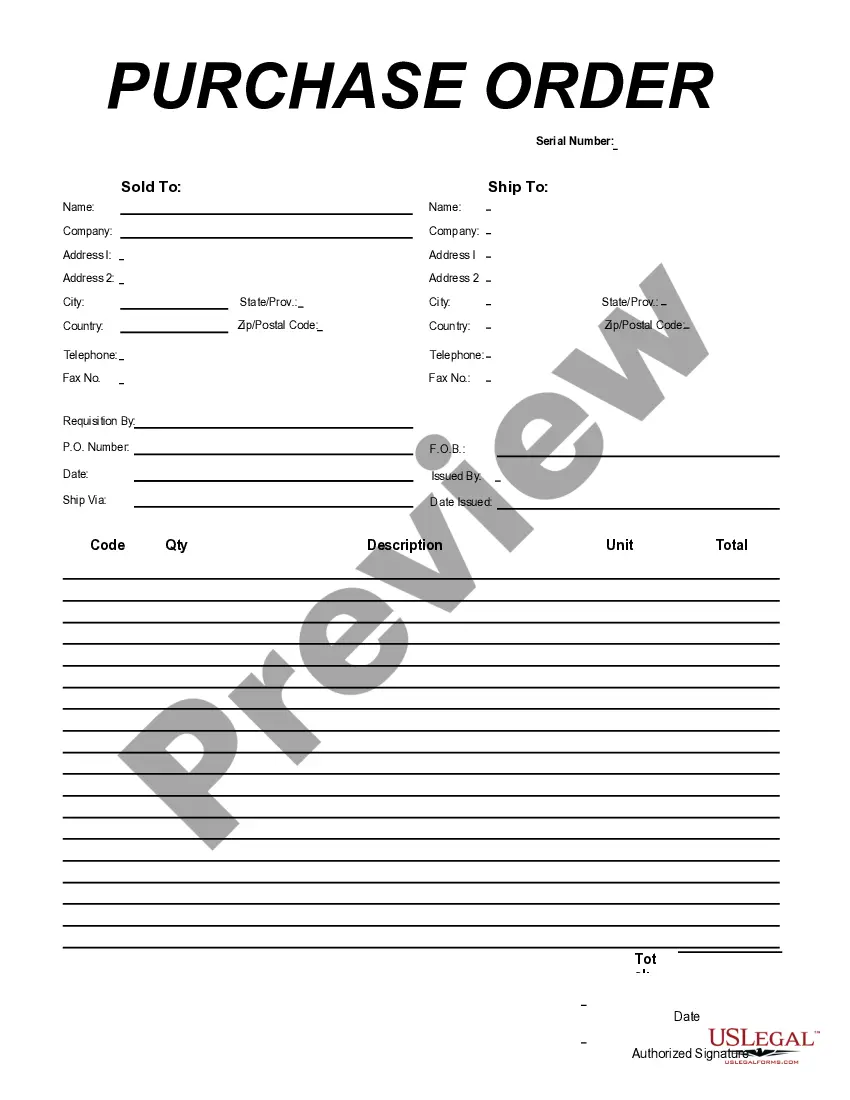
Get your form ready online
Our built-in tools help you complete, sign, share, and store your documents in one place.
Make edits, fill in missing information, and update formatting in US Legal Forms—just like you would in MS Word.
Download a copy, print it, send it by email, or mail it via USPS—whatever works best for your next step.
Sign and collect signatures with our SignNow integration. Send to multiple recipients, set reminders, and more. Go Premium to unlock E-Sign.
If this form requires notarization, complete it online through a secure video call—no need to meet a notary in person or wait for an appointment.
We protect your documents and personal data by following strict security and privacy standards.

Make edits, fill in missing information, and update formatting in US Legal Forms—just like you would in MS Word.

Download a copy, print it, send it by email, or mail it via USPS—whatever works best for your next step.

Sign and collect signatures with our SignNow integration. Send to multiple recipients, set reminders, and more. Go Premium to unlock E-Sign.

If this form requires notarization, complete it online through a secure video call—no need to meet a notary in person or wait for an appointment.

We protect your documents and personal data by following strict security and privacy standards.
Looking for another form?

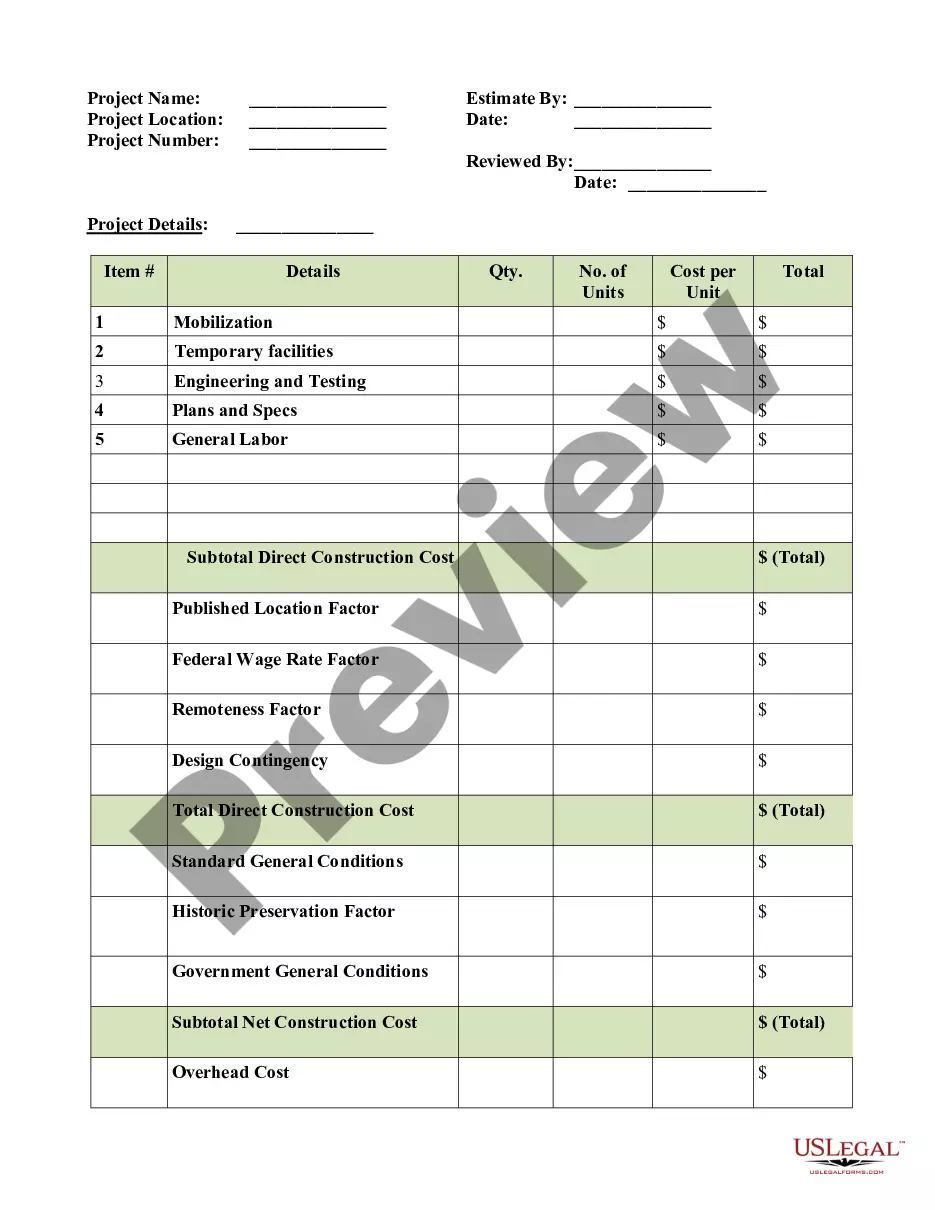


How to fill out Contractor Equipment Pass?
Selecting the appropriate legal document template can be quite a challenge.
Of course, there are many templates available online, but how do you find the legal form you need.
Turn to the US Legal Forms website.
First, ensure that you have selected the correct form for your city/region. You can review the form using the Review button and read the form description to confirm it's suitable for you.
- The service offers a wide array of templates, including the Vermont Contractor Equipment Pass, suitable for both business and personal purposes.
- All forms are vetted by professionals and comply with state and federal regulations.
- If you are already registered, Log In to your account and click the Download button to obtain the Vermont Contractor Equipment Pass.
- Utilize your account to browse the legal documents you have acquired previously.
- Visit the My documents tab in your account to retrieve another copy of the document you need.
- If you are a new user of US Legal Forms, here are simple steps to assist you.
Form popularity
FAQ
Yes, Vermont does require most businesses to designate a registered agent. A registered agent serves as the official contact for legal documents and notices. If you own a contracting business using a Vermont Contractor Equipment Pass, having a registered agent can help you maintain compliance and streamline communication regarding important legal matters.
To avoid Vermont estate tax, individuals can make use of various financial strategies, such as gifting assets or creating a living trust. While the Vermont Contractor Equipment Pass is not directly linked to estate tax, understanding how your business assets may affect your estate planning is crucial. Consulting with a financial advisor can provide tailored strategies to minimize estate taxes effectively.
Yes, Vermont is a member of the Streamlined Sales Tax (SST) Governing Board. This membership helps simplify sales tax processes for businesses operating in multiple states. For contractors, utilizing a Vermont Contractor Equipment Pass may allow for easier management of sales tax obligations related to equipment purchases.
Yes, most individuals and businesses that earn income in Vermont must file a Vermont income tax return. If you possess a Vermont Contractor Equipment Pass and generate income through your contracting business, you must report that income accurately. It's important to consult with a tax professional to ensure compliance and maximize your potential deductions.
To become a Responsible Managing Officer (RMO) contractor, you need to meet the specific requirements outlined by your state’s licensing board. Typically, you will need to have substantial experience in construction and be effective in overseeing projects. Ensure that you are aware of any requirements, such as obtaining a Vermont Contractor Equipment Pass, which may be relevant to your licensing process.
Yes, general contractors are licensed by each state. Licensing requirements differ among states, which may include testing, experience verification, and insurance. If you work in Vermont, you will need to be familiar with the Vermont Contractor Equipment Pass, as it may be part of your licensing journey.
No, there is no federal contractor license. Contractor licensing falls under state jurisdiction, which means you must meet each state's specific criteria. If your projects involve equipment, obtaining a Vermont Contractor Equipment Pass can help ensure compliance with state laws and regulations.
To obtain a general contractor's license in the USA, you usually need to fulfill specific state requirements, which may include passing an exam, showing proof of experience, and providing financial documentation. The process often varies by state, so it is crucial to check local regulations. Additionally, a Vermont Contractor Equipment Pass might be required if you intend to work with specific equipment.
General contractors oversee various types of construction projects, including commercial and industrial work, while residential contractors focus specifically on homebuilding and renovations. Understanding these roles can help you choose the right contractor for your project. Have you considered how a Vermont Contractor Equipment Pass can streamline this process?
A licensed contractor has completed the necessary qualifications and certifications required by the state. In contrast, a general contractor manages entire construction projects and may supervise subcontractors. Both need to comply with regulations, including the Vermont Contractor Equipment Pass for accessing specific equipment legally.