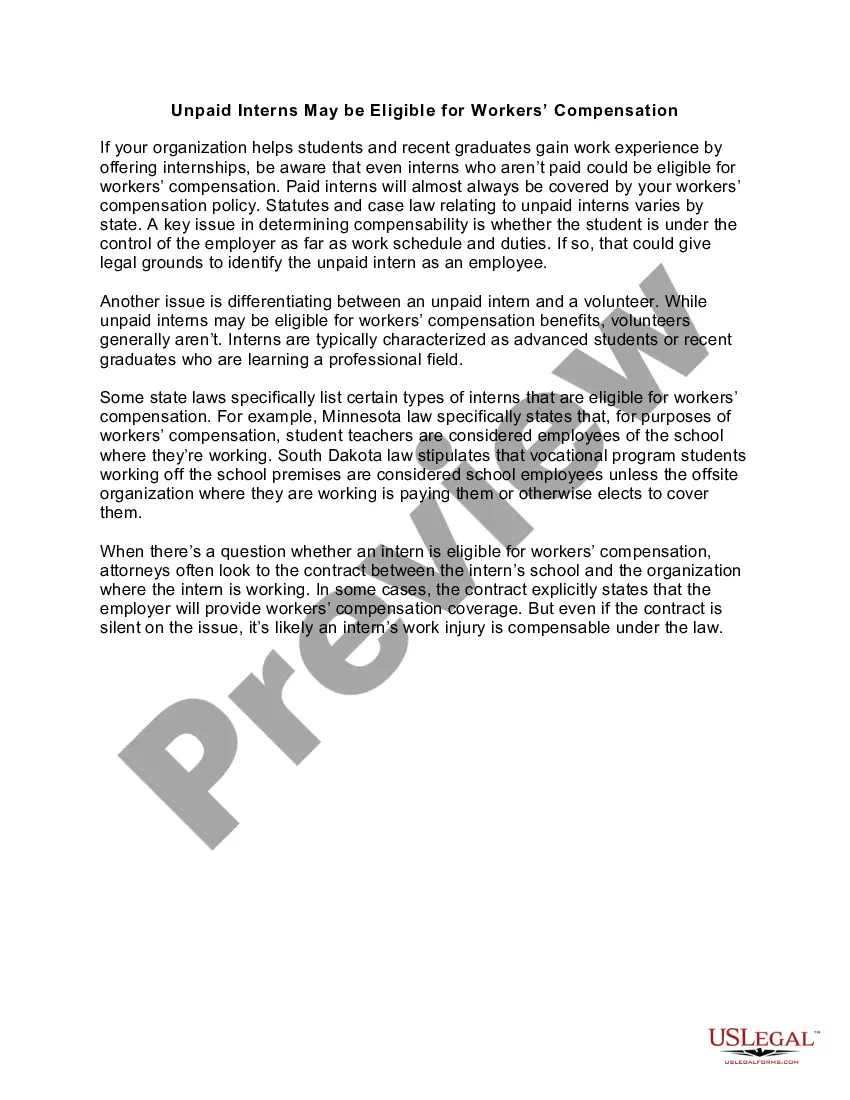
Vermont Unpaid Interns May be Eligible for Worker's Compensation
Description
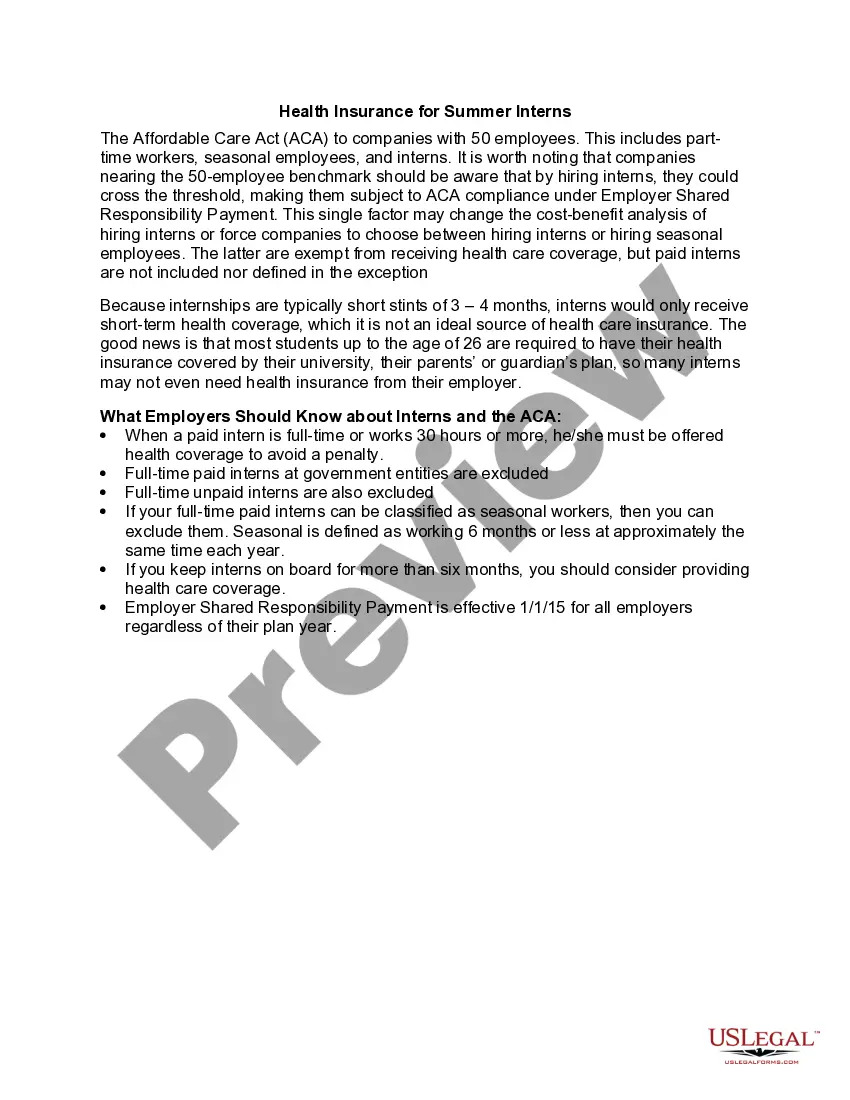
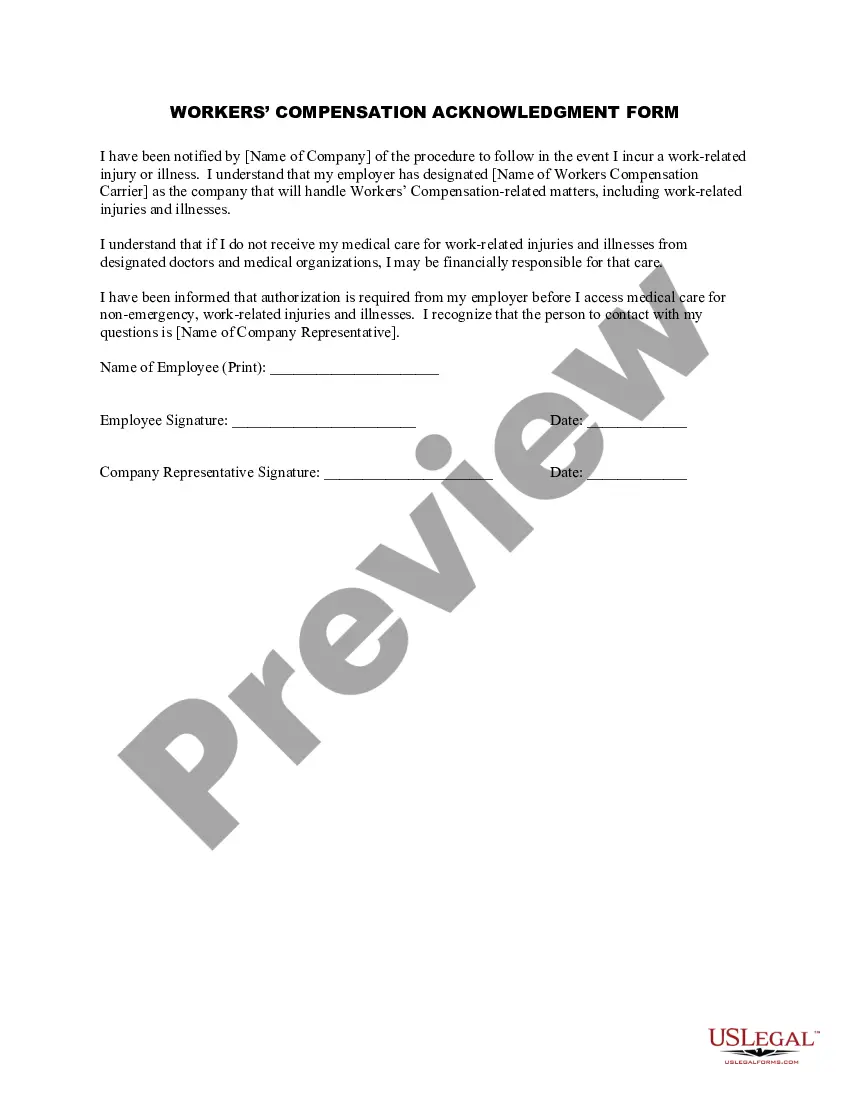
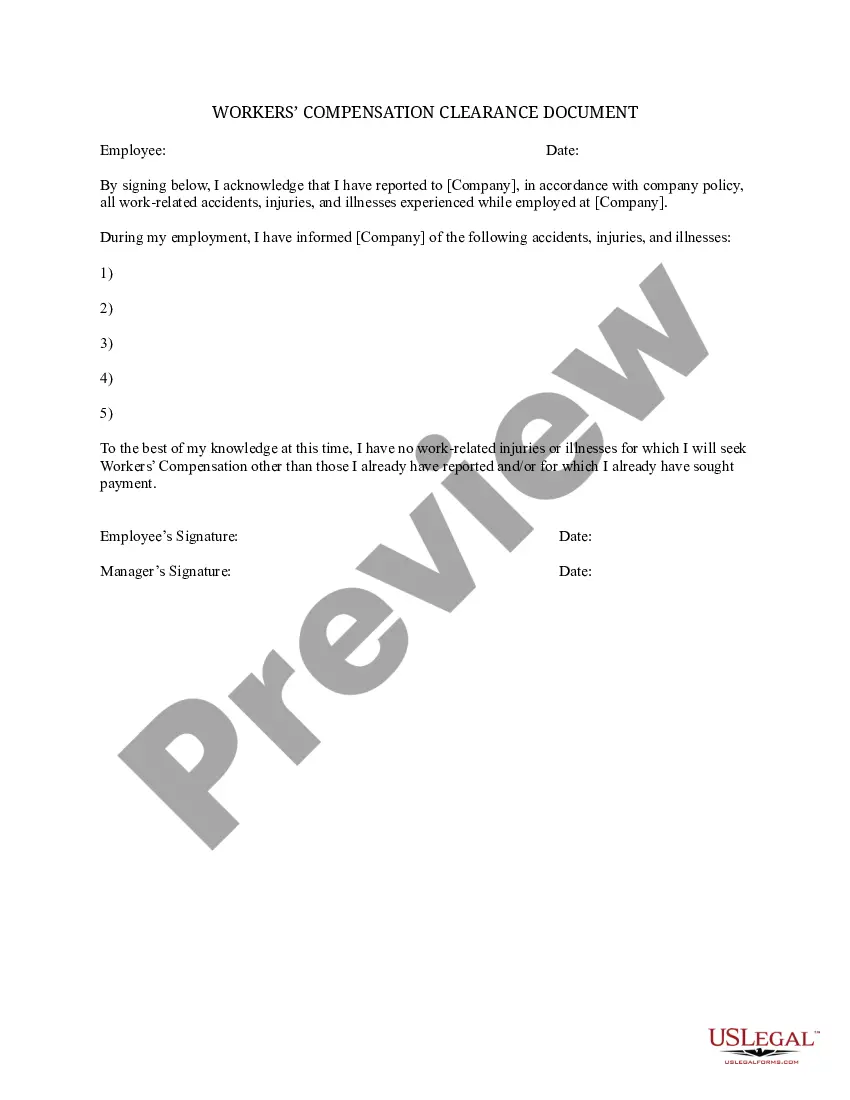
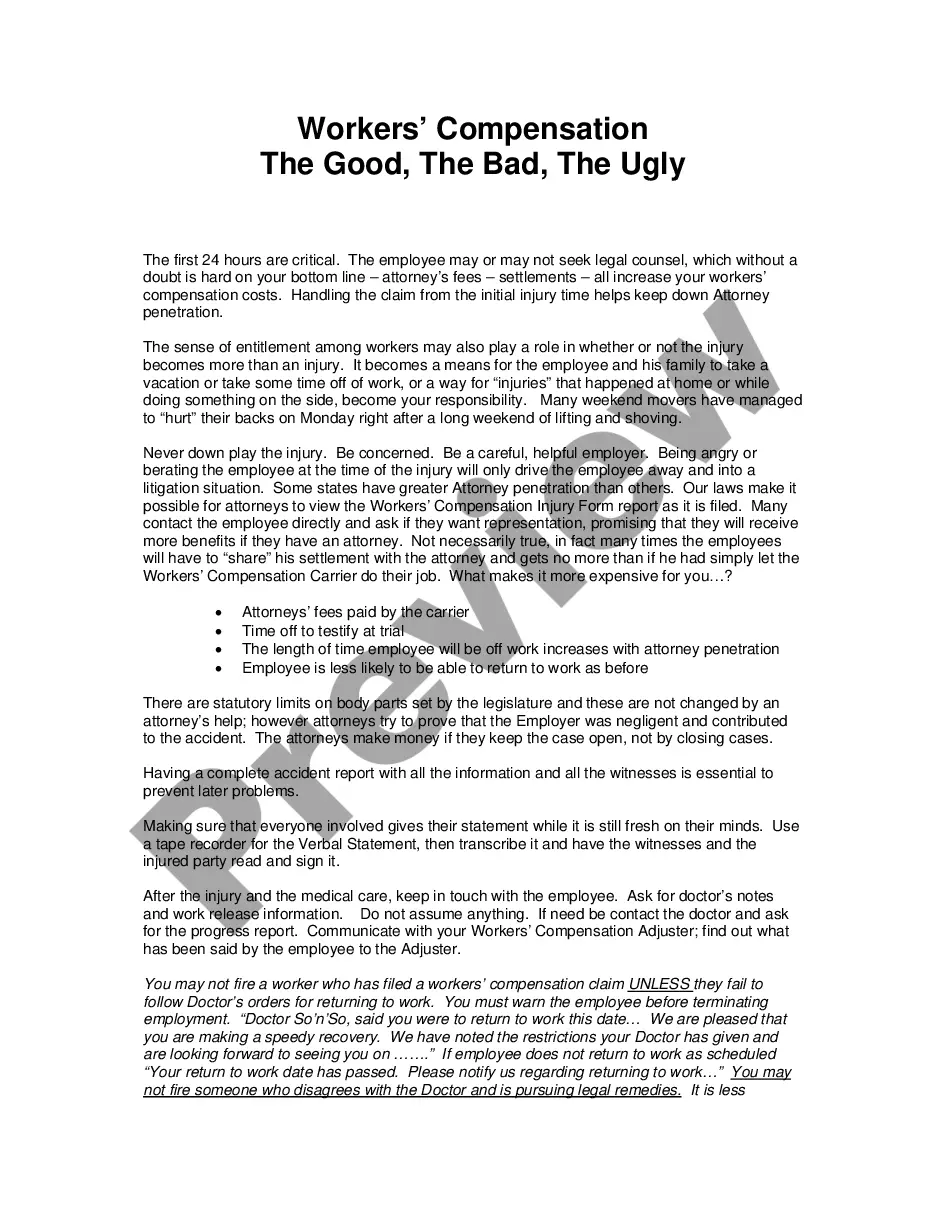
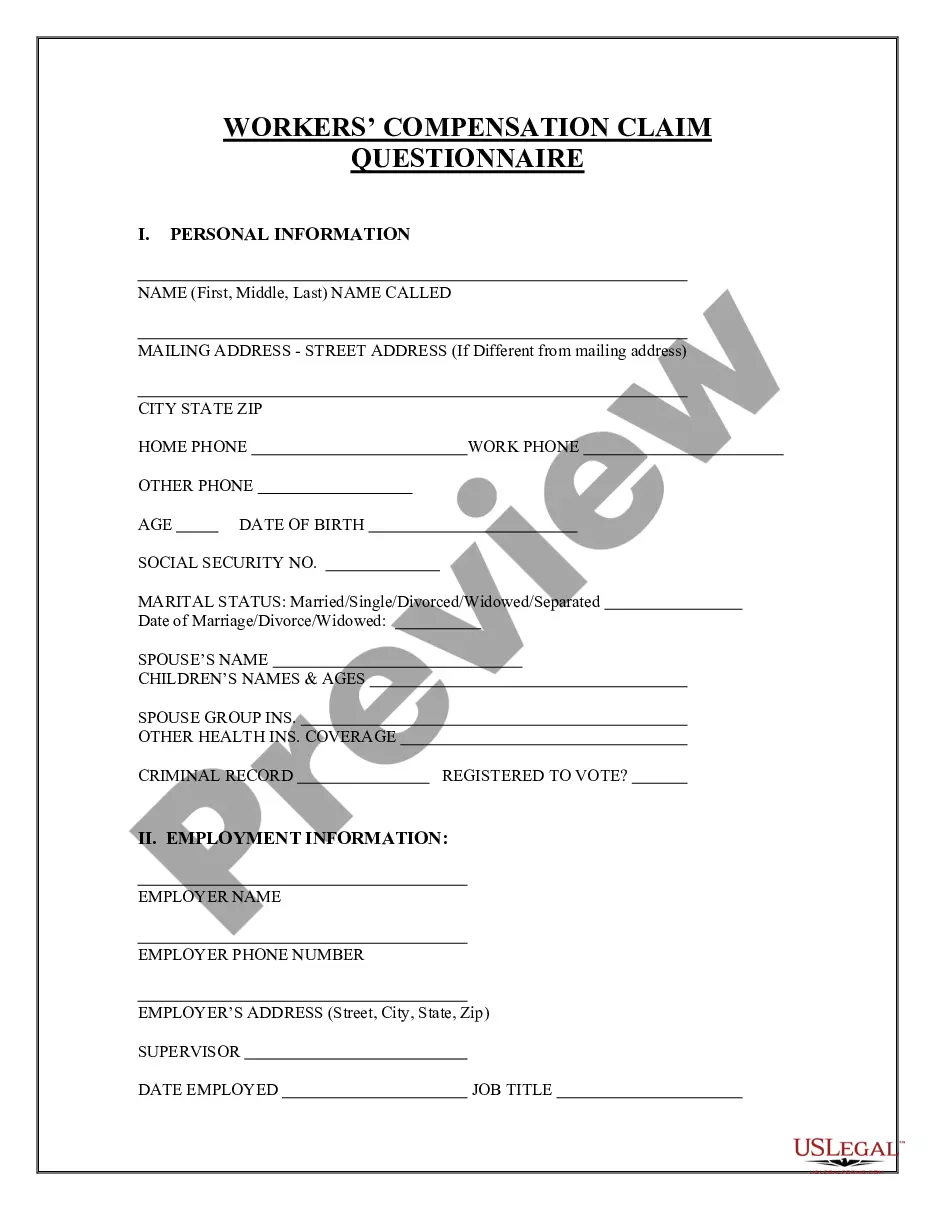
How to fill out Unpaid Interns May Be Eligible For Worker's Compensation?
Locating the appropriate sanctioned document template can be quite a challenge.
Clearly, there are numerous templates accessible online, but how do you obtain the sanctioned form you need? Utilize the US Legal Forms website.
The service offers thousands of templates, such as the Vermont Unpaid Interns May be Eligible for Worker's Compensation, which you can utilize for both business and personal purposes.
- All of the forms are reviewed by experts and meet federal and state requirements.
- If you are currently registered, Log In to your account and click the Obtain button to access the Vermont Unpaid Interns May be Eligible for Worker's Compensation.
- Use your account to browse through the legal forms you have bought previously.
- Visit the My documents section of your account and obtain another copy of the document you need.
- If you are a new user of US Legal Forms, here are straightforward instructions for you to follow.
- First, ensure you have selected the correct form for your particular city/region. You can view the form using the Preview option and read the form description to confirm this is indeed the right one for you.
Form popularity
FAQ
In Texas, if a company has worker's compensation, interns are generally eligible for the same coverage as full-time employees.
Employers who hire unpaid interns face potential legal troubles, including costly class action lawsuits. Recently, unpaid interns brought a class-action lawsuit against Mary-Kate and Ashley Olsen's entertainment company, Dualstar Entertainment Group, LLC.
There are no legal limits on the number of hours an unpaid intern over the age of 18 is allowed to work. For undergraduate students still in school, unpaid internship hours per week are usually limited to 10 to 20.
In Texas, private employers can choose to carry workers' compensation insurance coverage, but it is not required in most cases. A workers' compensation insurance policy provides lost wages and medical benefits to employees injured on the job.
The FLSA requires for-profit employers to pay employees for their work. Interns and students, however, may not be employees under the FLSAin which case the FLSA does not require compensation for their work.
Under workers' compensation law, an injury or illness is covered, without regard to fault, if it was sustained in the course and scope of employment, i.e., while furthering or carrying on the employer's business; this includes injuries sustained during work-related travel.
If you don't get the opportunity to ask those questions during or after the interview, consider doing so via email. Let them know how much you appreciate their time and ask if you can follow up with a few questions. At this point, simply ask them whether the internship is paid or unpaid.
Texas does not have separate regulations at the state level regarding unpaid internships. Instead, the Texas Workforce Commission advises employers to adhere to the six-prong test established by the DOL.
Unpaid internships are legal if the intern is the primary beneficiary of the arrangement. This is determined by the seven-point Primary Beneficiary Test. If an employer is the primary beneficiary, the intern is considered an employee under the Fair Labor Standards Act and entitled to minimum wage.
The Glatt Test focuses on what an intern receives in exchange for her work while also providing courts the flexibility to examine the economic reality as it exists between the intern and the employer. The 7 non-exhaustive factors are defined as follows: 1.