Non-Compete Agreement for Business Sale
What this document covers
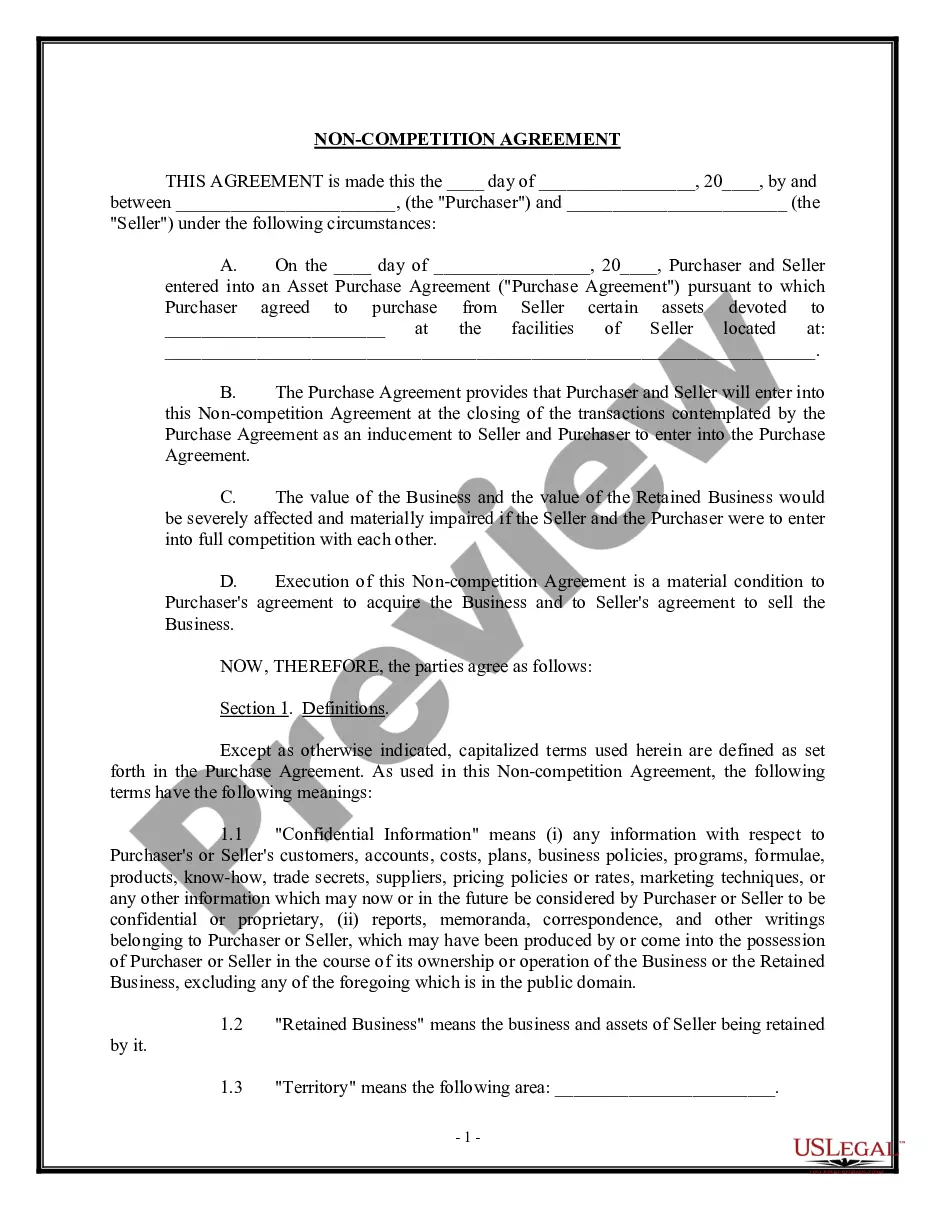
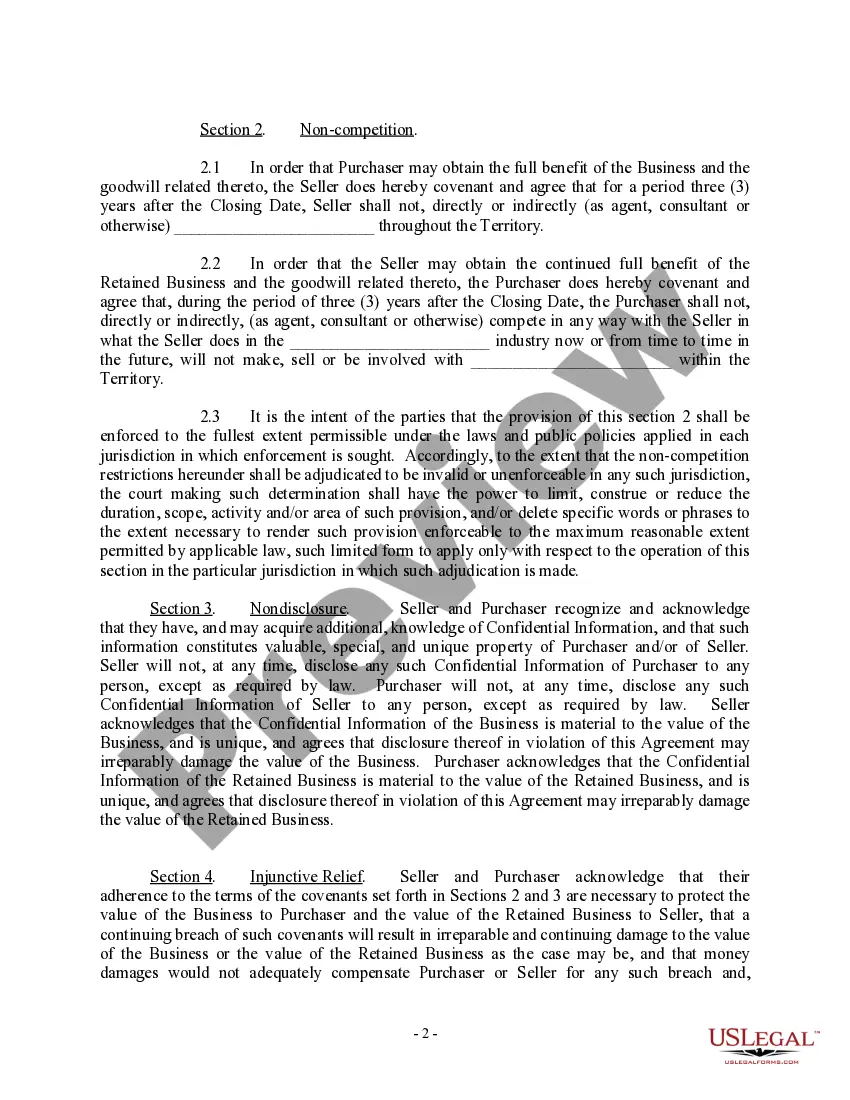
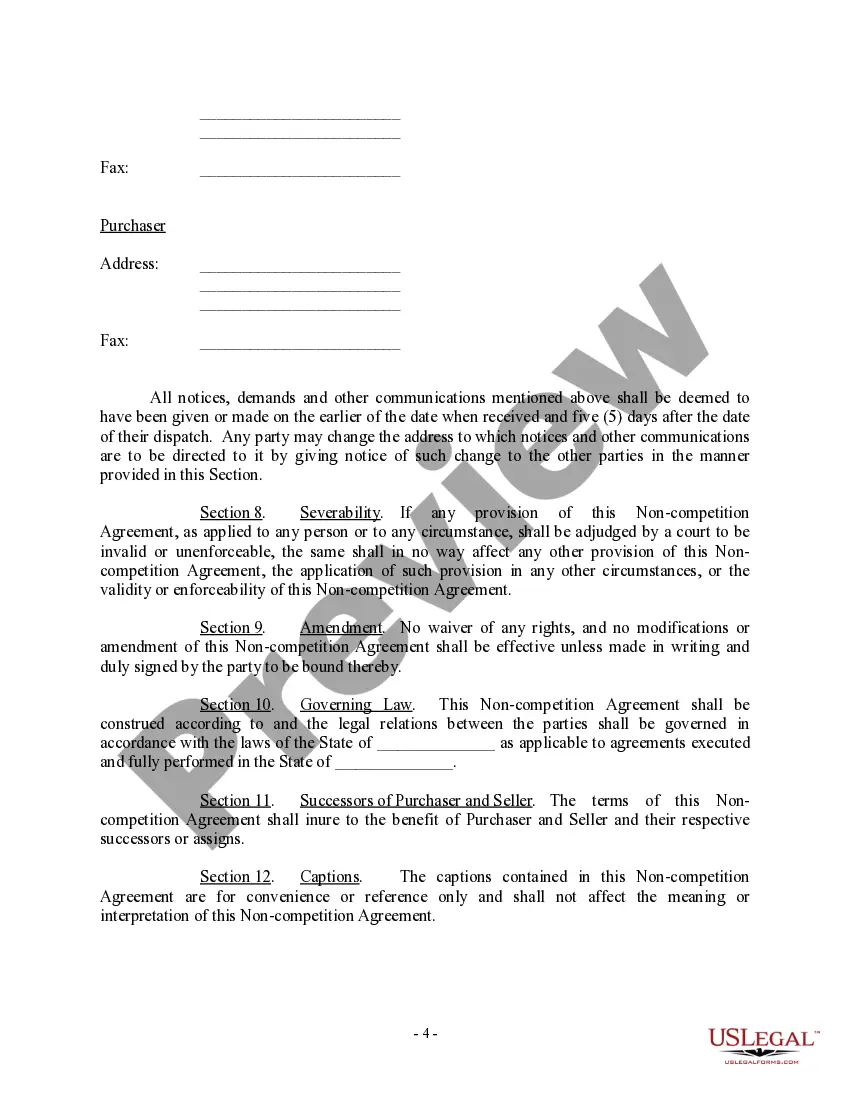
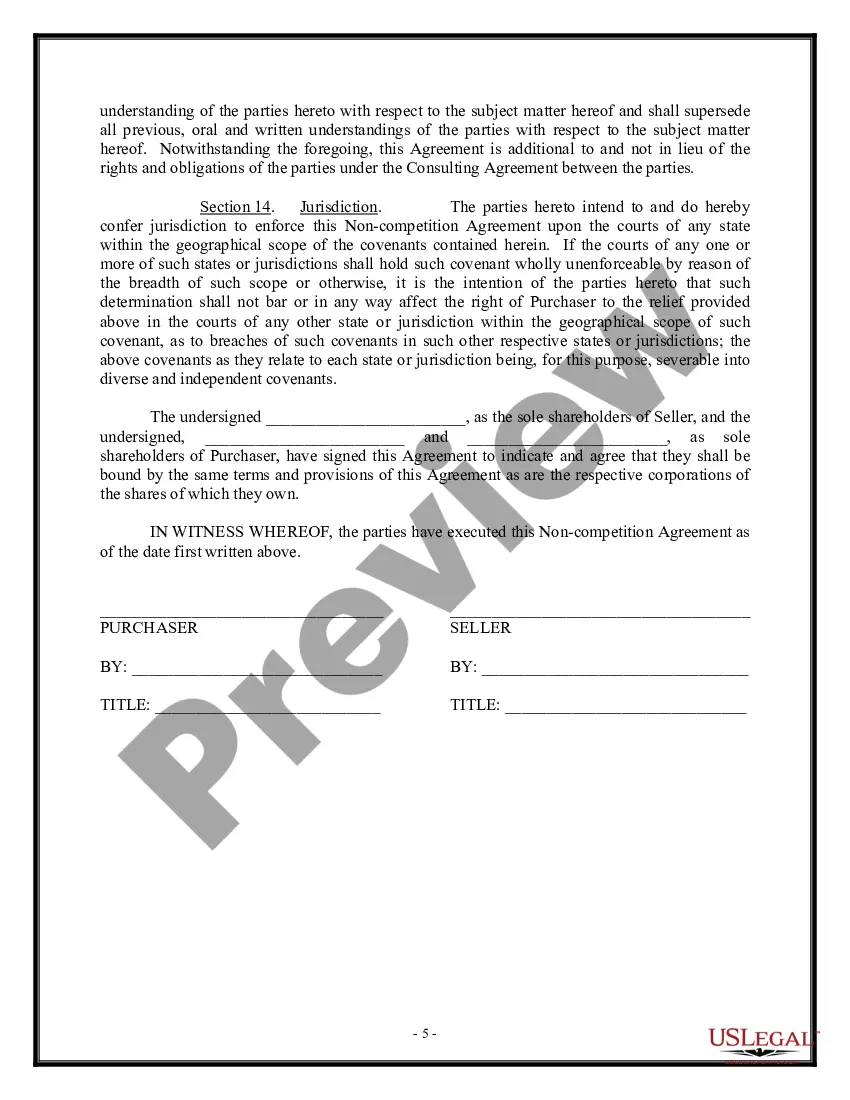
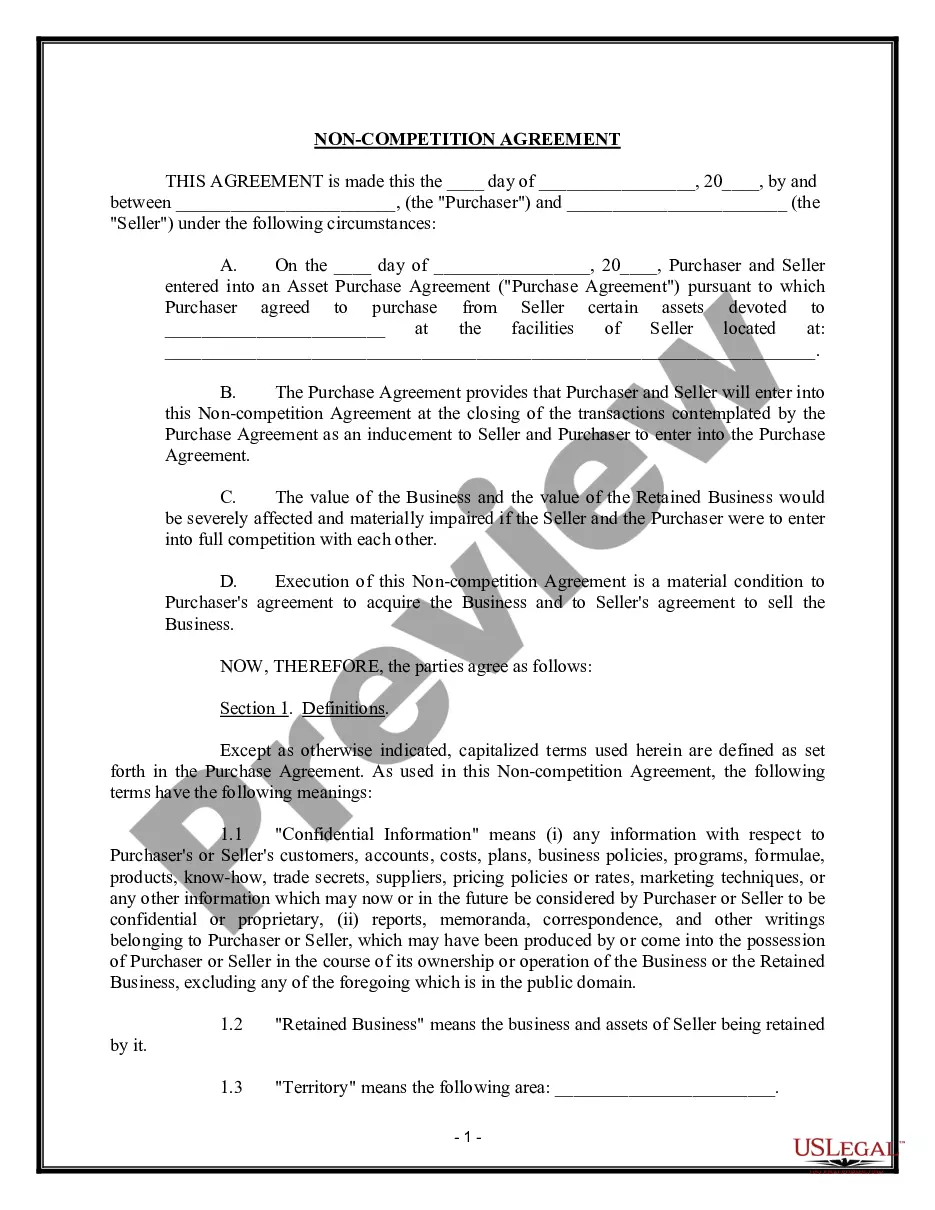
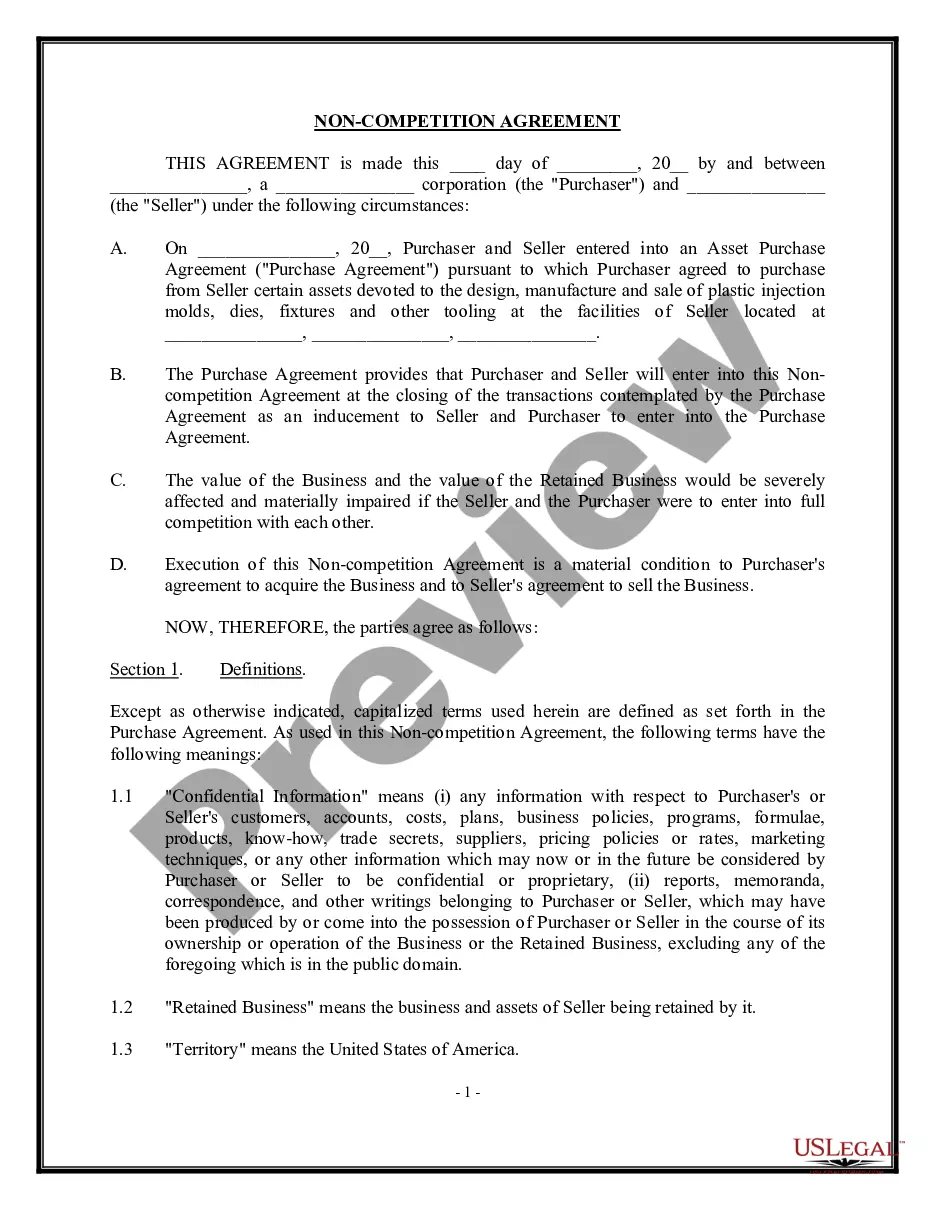
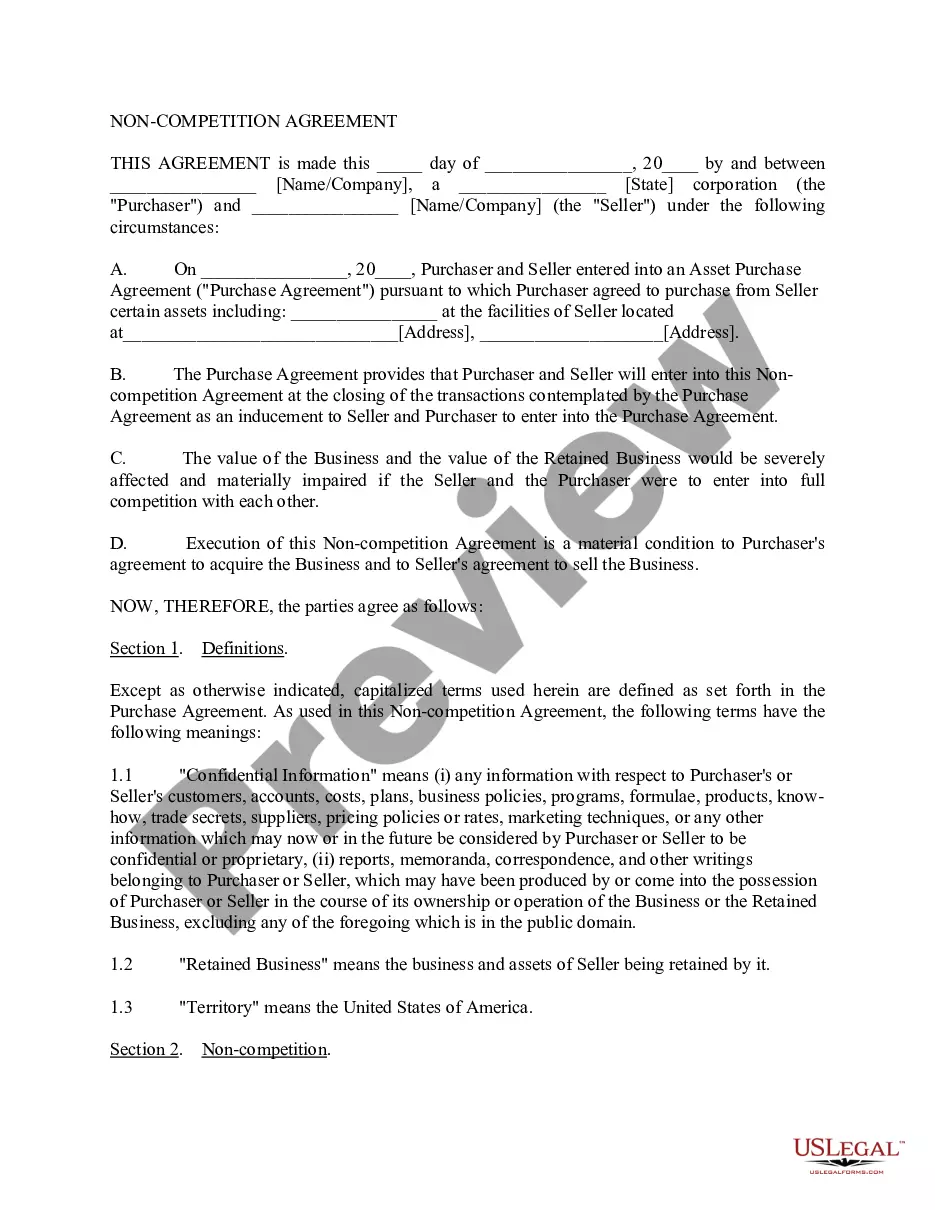
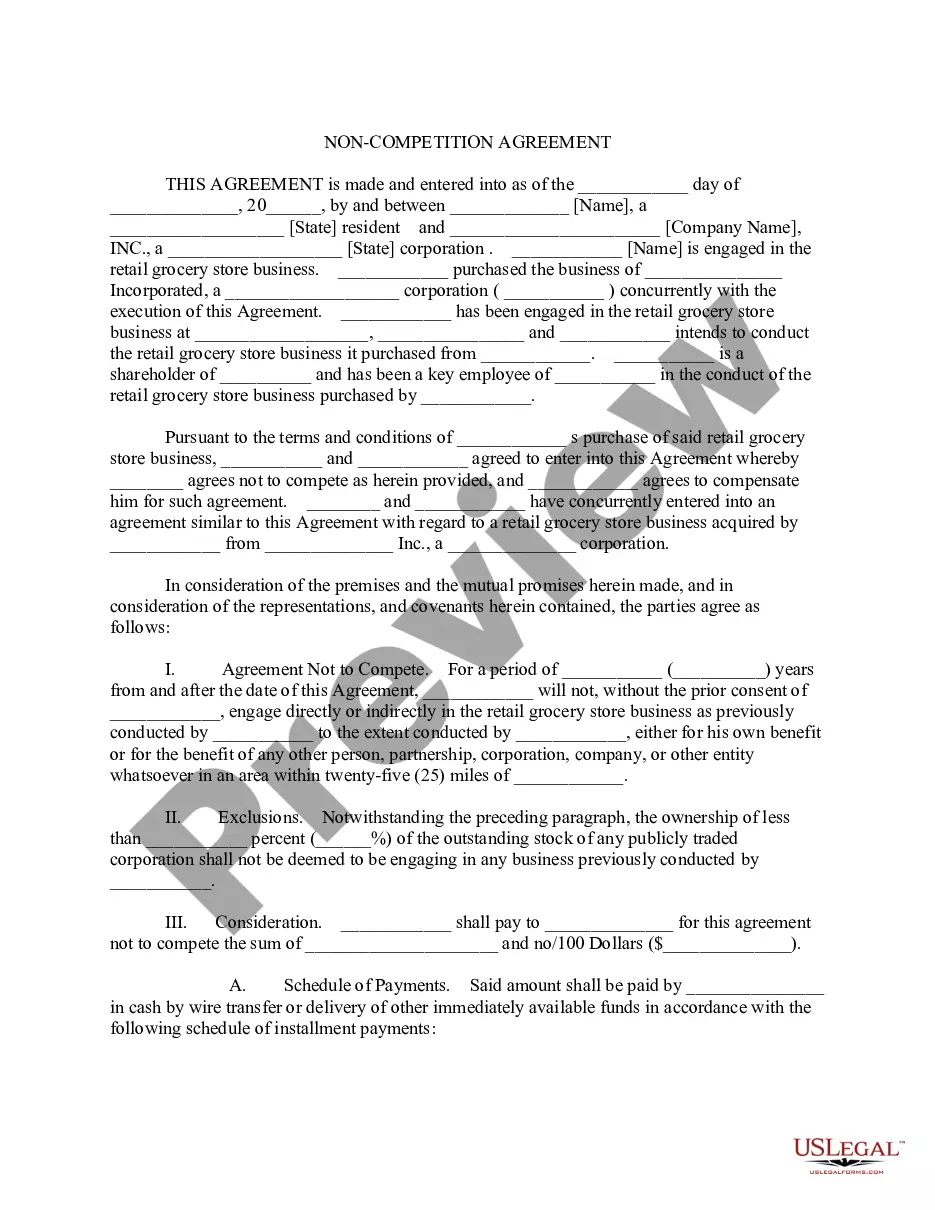
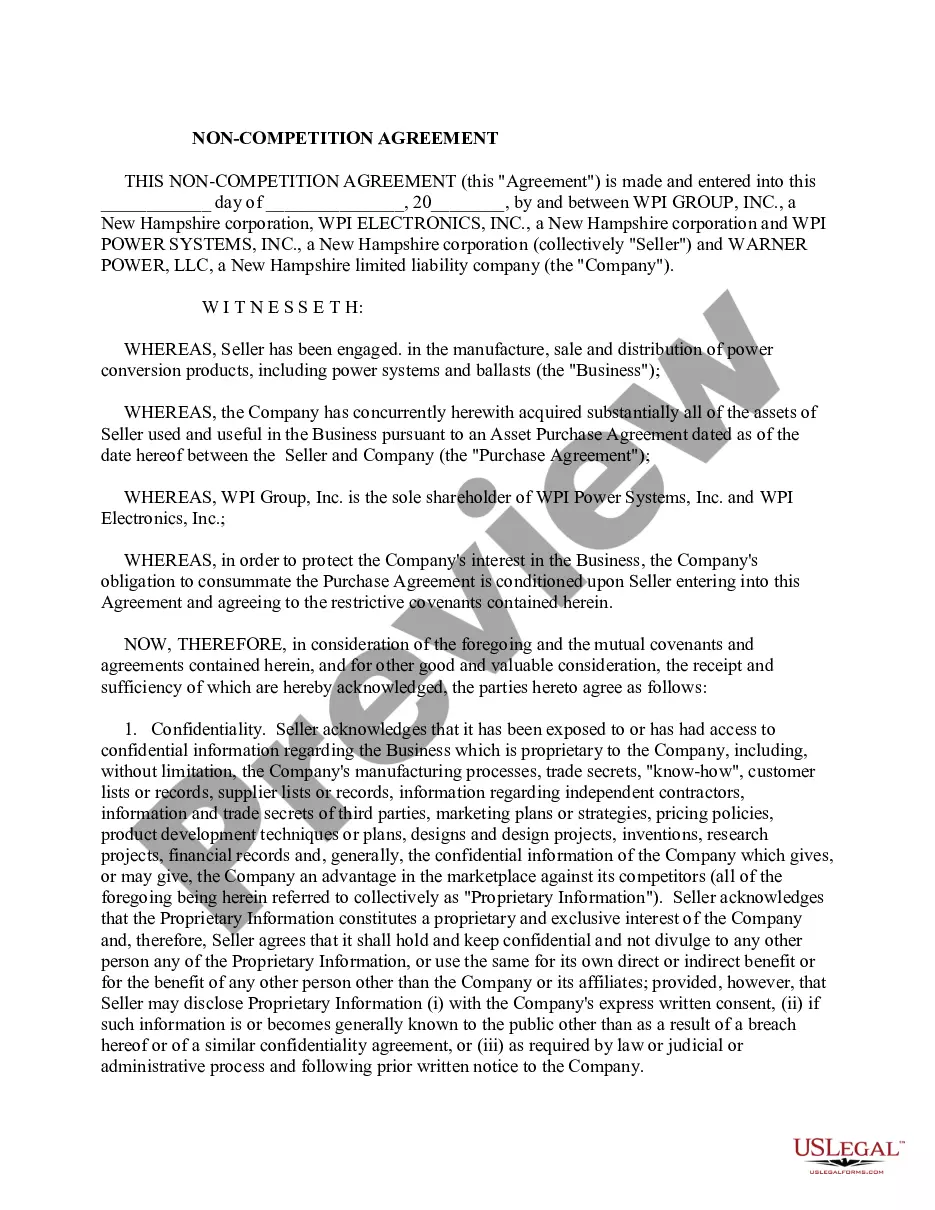
The Non-Compete Agreement for Business Sale is a legal document that outlines the obligations of both the seller and the purchaser concerning competition after the sale of a business. This agreement is designed to protect the goodwill and value of the business being sold by restricting the seller from starting or engaging in similar business activities in a specified territory for a set period after the closing date. Unlike other agreements, this form specifically addresses the context of a business sale, ensuring that both parties agree to certain limitations to foster a smooth transition and protect their interests.
Key components of this form
- Parties Involved: Identification of the buyer (Purchaser) and the seller.
- Definitions: Clarification of key terms, including 'Confidential Information' and 'Territory'.
- Non-competition Clause: Details on the restrictions imposed on both parties regarding competitive activities after the transaction.
- Nondisclosure Obligations: Conditions around the handling and sharing of confidential information.
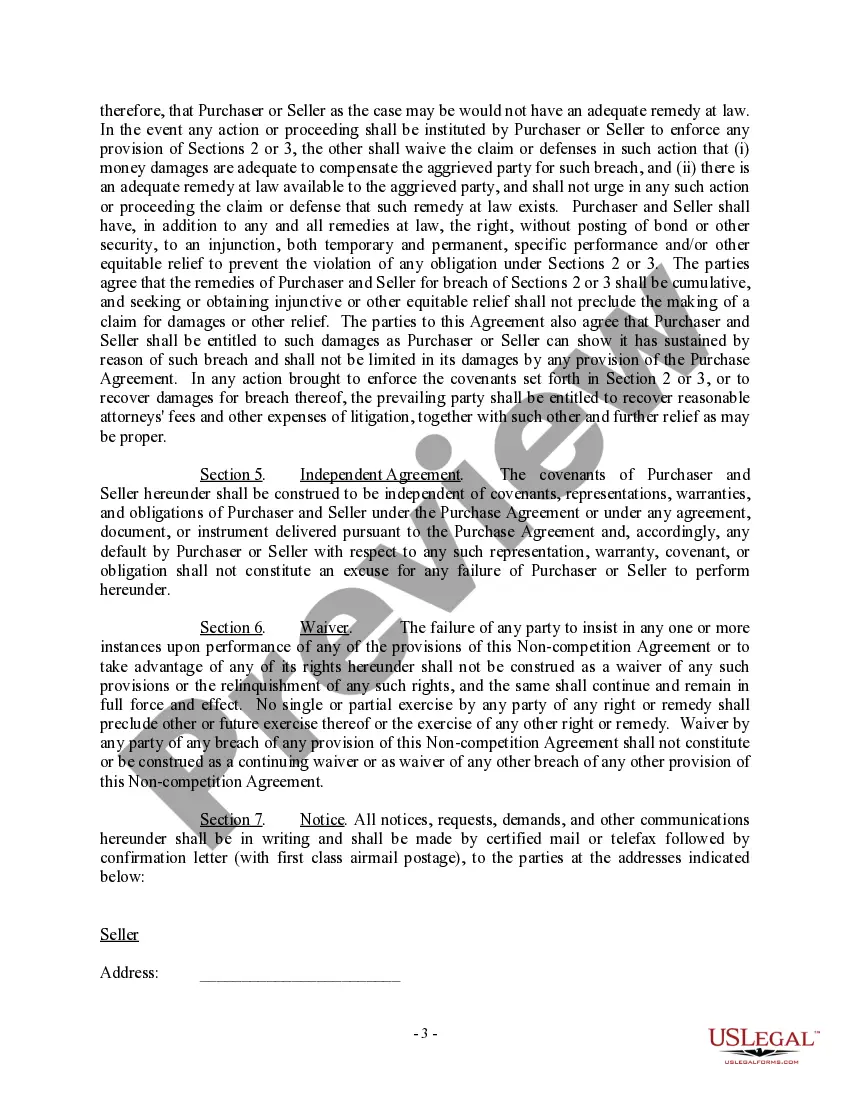
- Injunctive Relief: Legal recourse available to enforce the agreement if breached.
- Governing Law: Specification of the state laws that will be applicable.
Common use cases
This form should be used when a business is being sold, and there is a need to ensure that the seller will not enter into competition with the buyer for a designated period and within a specified area. It is particularly relevant in industries where proprietary information and goodwill significantly affect business value. If you are selling a business and want to protect your investment and future operations, utilizing this agreement will help ensure both parties adhere to their commitments post-sale.
Who should use this form
- Business owners and sellers looking to sell their operations while preserving their customer base and goodwill.
- Purchasers intending to acquire a business and wanting to safeguard their investment from direct competition.
- Legal professionals advising clients on sale transactions to ensure compliance with local regulations and best practices.
How to complete this form
- Identify the purchaser and seller by entering their full names and addresses.
- Enter the closing date of the business sale transaction.
- Specify the territory where the non-competition clause will be enforced.
- Define the business activities that are restricted after the closing date in the non-competition section.
- Ensure both parties sign and date the agreement to finalize it.
Is notarization required?
This form does not typically require notarization unless specified by local law. However, having it notarized can add an additional layer of validity and protection should any disputes arise in the future.
Get your form ready online
Our built-in tools help you complete, sign, share, and store your documents in one place.
Make edits, fill in missing information, and update formatting in US Legal Forms—just like you would in MS Word.
Download a copy, print it, send it by email, or mail it via USPS—whatever works best for your next step.
Sign and collect signatures with our SignNow integration. Send to multiple recipients, set reminders, and more. Go Premium to unlock E-Sign.
If this form requires notarization, complete it online through a secure video call—no need to meet a notary in person or wait for an appointment.
We protect your documents and personal data by following strict security and privacy standards.

Make edits, fill in missing information, and update formatting in US Legal Forms—just like you would in MS Word.

Download a copy, print it, send it by email, or mail it via USPS—whatever works best for your next step.

Sign and collect signatures with our SignNow integration. Send to multiple recipients, set reminders, and more. Go Premium to unlock E-Sign.

If this form requires notarization, complete it online through a secure video call—no need to meet a notary in person or wait for an appointment.

We protect your documents and personal data by following strict security and privacy standards.
Avoid these common issues
- Failing to define the territory clearly, which can lead to disputes over enforceability.
- Not specifying the duration of the non-compete period appropriately.
- Neglecting to include a thorough definition of 'Confidential Information'.
- Assuming this agreement does not require legal review before signing.
Benefits of using this form online
- Convenient access to professionally drafted legal forms available for immediate download.
- Editability allows customization to meet specific needs.
- Reliable access to legal guidelines and definitions as you fill out the form.
- Cost-effective solution compared to hiring a lawyer for basic agreements.
Looking for another form?
Form popularity
FAQ
As with many legal issues, the answer is: it depends. If the acquisition is a stock purchase and the acquired company (we'll call it Company B) maintains a separate existence, the non-compete is unaffected. Company B will still be around to enforce the Agreement.
The court held that absent specific language prohibiting assignment, noncompete covenants, even though part of a personal service contract, remain enforceable by an assignee when transferred to the assignee as part of a sale or transfer of business assets regardless of whether the employment contract contains a clause
If a business has a major change in ownership, (the sale of a business, for example), part of the terms of the sale may be the assignment of the contract to the new owner.As part of the buy/sell process, a new contract may be substituted for a previous contract, with the agreement of both parties.
Typically, the only way to fight a non-compete agreement is to go to court. If you are an employee (or former employee) who signed such an agreement, this means you must violate the agreement and wait to be sued. It may be that your former employer has never sued another employee to enforce the non-compete agreement.
Voiding a non-compete contract is possible in certain circumstances. For instance, if you can prove that you never signed the contract, or if you can demonstrate that the contract is against the public interest, you may be able to void the agreement.
Typically, the only way to fight a non-compete agreement is to go to court. If you are an employee (or former employee) who signed such an agreement, this means you must violate the agreement and wait to be sued. It may be that your former employer has never sued another employee to enforce the non-compete agreement.
The U.S. Court of Appeals for the Eighth Circuit issued a decision in July 2016 stating that a non-compete agreement could be enforced by a company that bought all the assets of the employer.
The value of a non-competition agreement is represented by the present value of the cash flows that would be lost if the covenanter were to compete, adjusted for the effective probability that the covenanter would compete, and compete successfully.