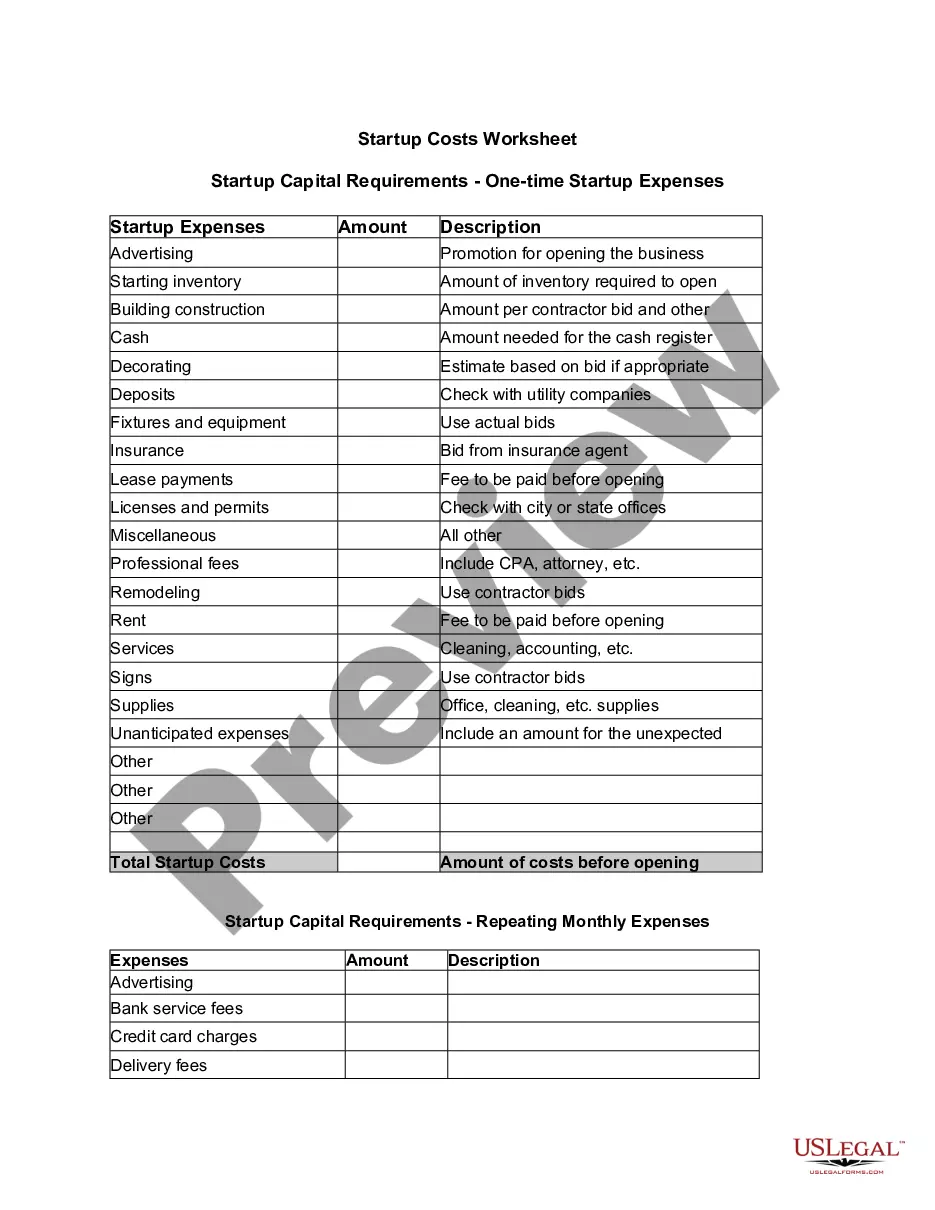
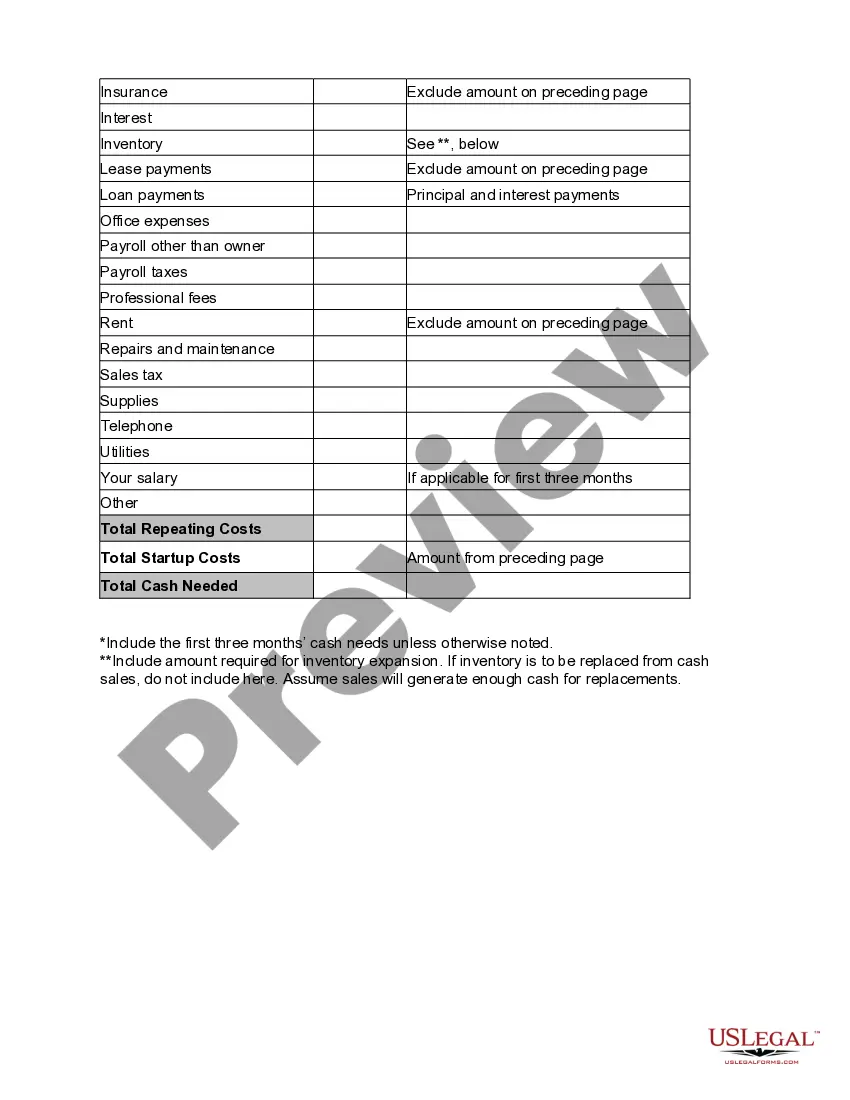
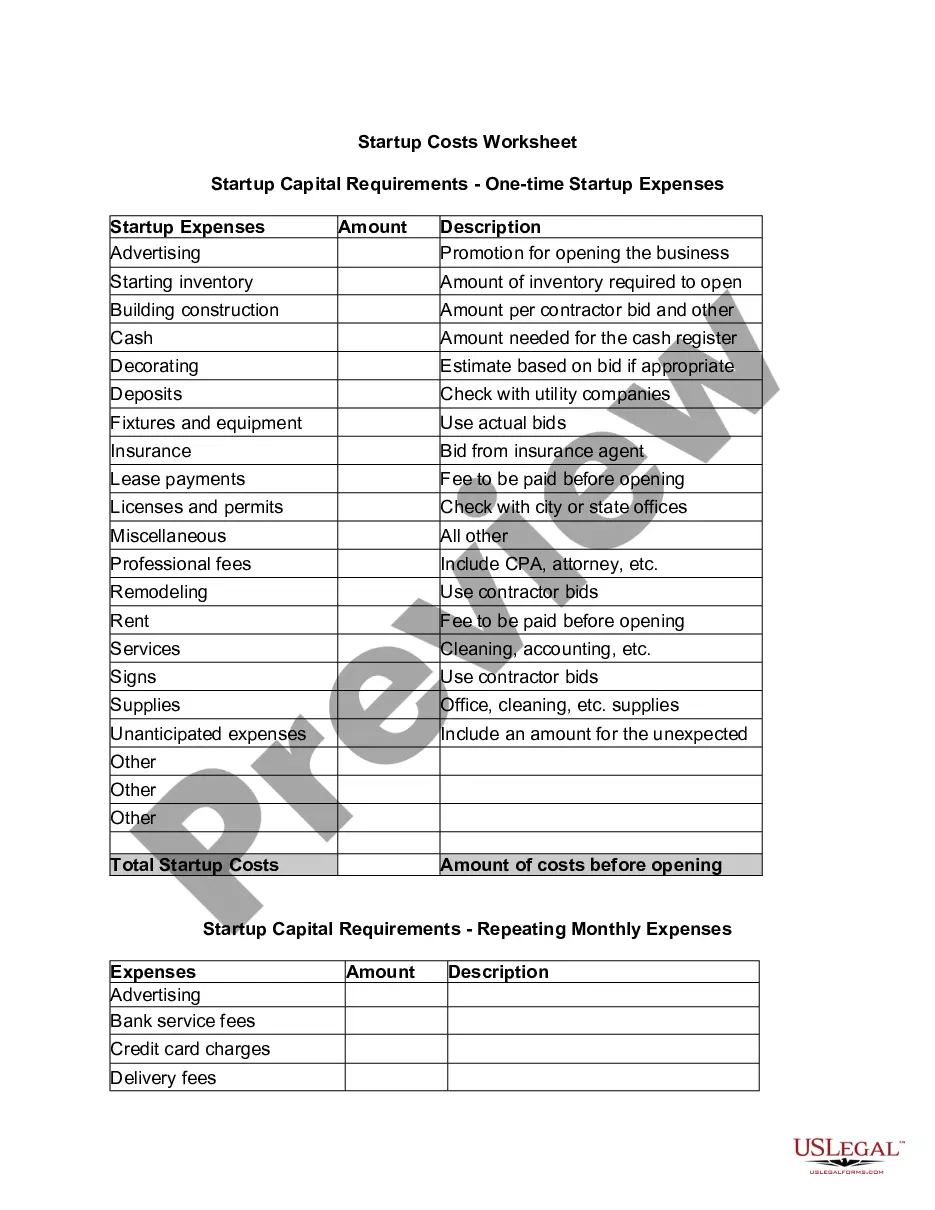
Vermont Startup Costs Worksheet
Description
Get your form ready online
Our built-in tools help you complete, sign, share, and store your documents in one place.
Make edits, fill in missing information, and update formatting in US Legal Forms—just like you would in MS Word.
Download a copy, print it, send it by email, or mail it via USPS—whatever works best for your next step.
Sign and collect signatures with our SignNow integration. Send to multiple recipients, set reminders, and more. Go Premium to unlock E-Sign.
If this form requires notarization, complete it online through a secure video call—no need to meet a notary in person or wait for an appointment.
We protect your documents and personal data by following strict security and privacy standards.

Make edits, fill in missing information, and update formatting in US Legal Forms—just like you would in MS Word.

Download a copy, print it, send it by email, or mail it via USPS—whatever works best for your next step.

Sign and collect signatures with our SignNow integration. Send to multiple recipients, set reminders, and more. Go Premium to unlock E-Sign.

If this form requires notarization, complete it online through a secure video call—no need to meet a notary in person or wait for an appointment.

We protect your documents and personal data by following strict security and privacy standards.
Looking for another form?



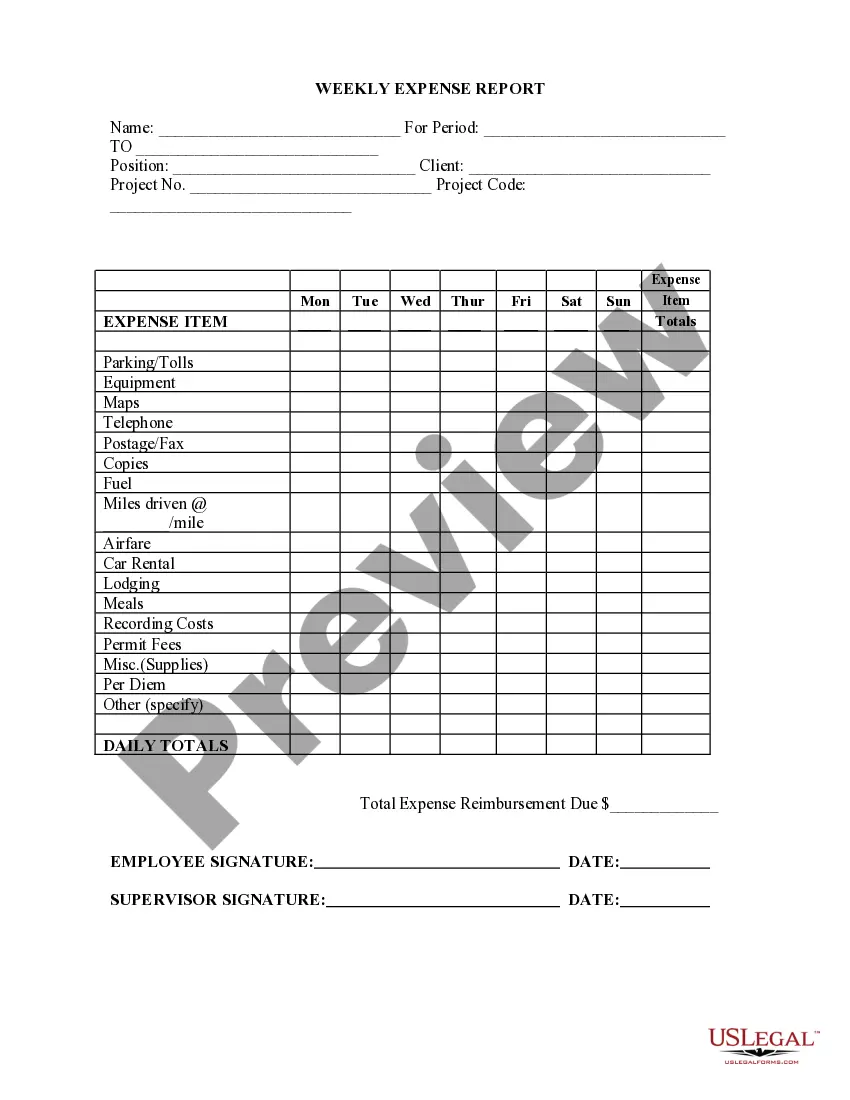




How to fill out Startup Costs Worksheet?
Selecting the optimal legitimate document format can be a struggle.
Certainly, there are numerous formats accessible online, but how can you obtain the authentic type you require.
Utilize the US Legal Forms website. The service provides thousands of templates, such as the Vermont Startup Costs Worksheet, that are suitable for both business and personal requirements.
If the form does not satisfy your needs, use the Search field to find the correct type. Once you are confident that the form is correct, click the Get now button to acquire the form. Choose the pricing plan you want and provide the necessary information. Create your account and pay for your order using your PayPal account or credit card. Select the file format and download the legitimate document template for your item. Finally, complete, modify, print, and sign the obtained Vermont Startup Costs Worksheet. US Legal Forms is the largest collection of legitimate templates where you can find a wide range of document formats. Utilize the service to obtain properly crafted documents that adhere to state regulations.
- All the documents are vetted by experts and comply with state and federal regulations.
- If you are already registered, sign in to your account and then click the Download button to obtain the Vermont Startup Costs Worksheet.
- Use your account to review the legitimate templates you have previously acquired.
- Visit the My documents section of your account to download another copy of the document you need.
- If you are a new user of US Legal Forms, here are simple instructions for you to follow.
- First, make sure you have selected the right type for your city/state. You can examine the form using the Review button and read the form description to ensure it is suitable for you.
Form popularity
FAQ
When calculating startup costs, it's crucial to include fixed costs, like rent or equipment, as well as variable costs, such as marketing and inventory. These two categories provide a comprehensive view of what you need to budget. The Vermont Startup Costs Worksheet makes it easier to categorize and quantify these expenses. This clear breakdown helps you avoid surprises as you launch your business.
Creating a startup budget involves listing all potential expenses you anticipate during the initial phases of your business. Utilize the Vermont Startup Costs Worksheet to record fixed and variable costs, including rent, salaries, and materials. Research industry standards and compare them to your items for accuracy. Regularly reviewing your budget can also help you adjust as necessary.
In contrast to fixed costs, variable costs are start-up costs that are likely to change in line with production or sales volume.
How to calculate startup costsIdentify your expenses. Start by writing down the startup costs you've already incurred but don't stop there.Estimate your costs. Once you've developed a list of your business needs, note the average cost for each category.Do the math.Add a cushion.Put the numbers to work.
Startup costs will include equipment, incorporation fees, insurance, taxes, and payroll. Although startup costs will vary by your business type and industry an expense for one company may not apply to another.
What are examples of startup costs? Examples of startup costs include licensing and permits, insurance, office supplies, payroll, marketing costs, research expenses, and utilities.
How to calculate total expenses?Net income = End equity - Beginning equity (from the balance sheet)Total Expenses = Net Revenue - Net Income.
According to the U.S. Small Business Administration, most microbusinesses cost around $3,000 to start, while most home-based franchises cost $2,000 to $5,000. While every type of business has its own financing needs, experts have some tips to help you figure out how much cash you'll require.
How to calculate startup costsIdentify your expenses. Start by writing down the startup costs you've already incurred but don't stop there.Estimate your costs. Once you've developed a list of your business needs, note the average cost for each category.Do the math.Add a cushion.Put the numbers to work.
A realistic start-up budget should only include those things that are necessary to start that business. These essential expenses can then be divided into two separate categories: fixed expenses (or overhead) and variable expenses (those related to producing sales for the business).