Vermont Agreement between Certified Disability Advocate and Client

State:
Multi-State
Control #:
US-01812BG
Format:
Word
Instant download

Description

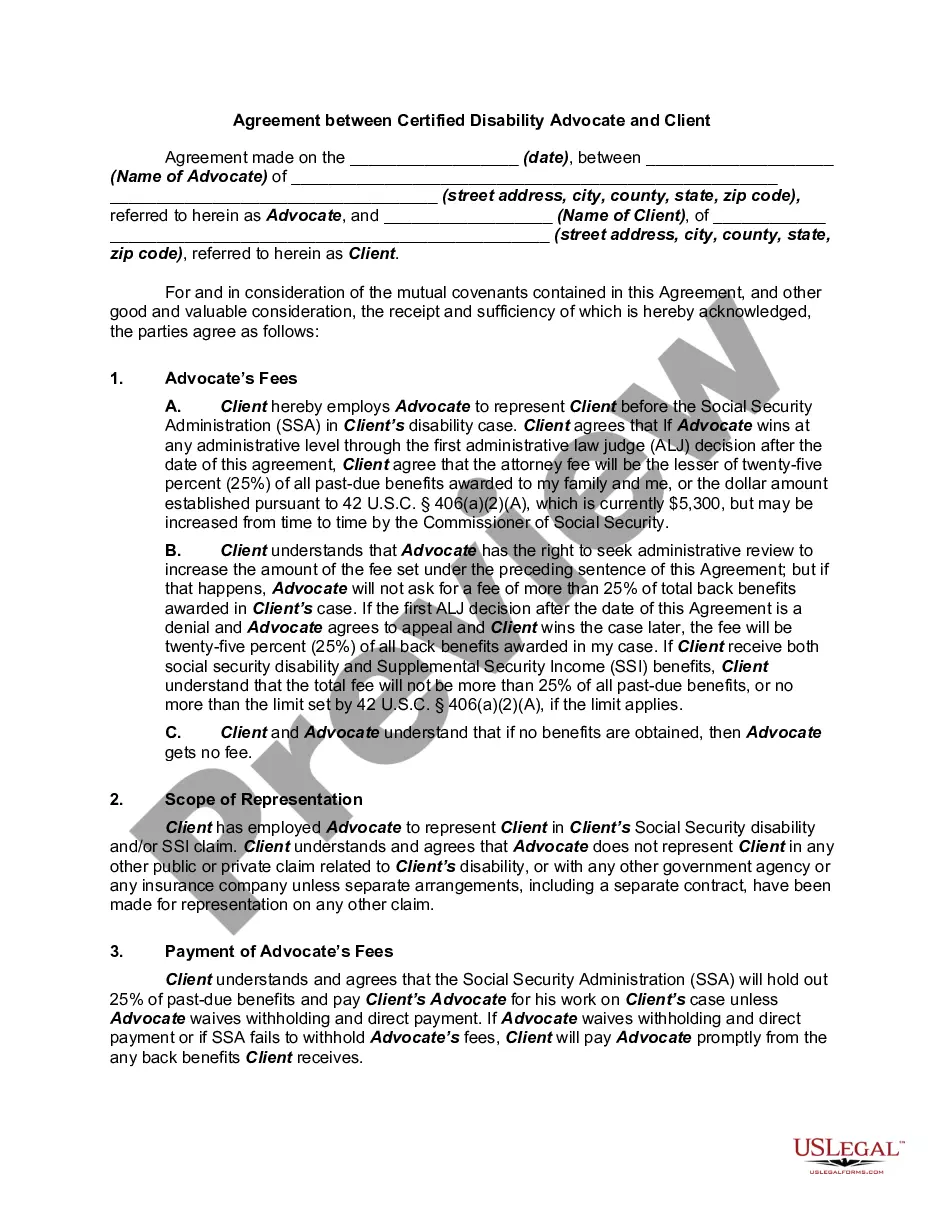
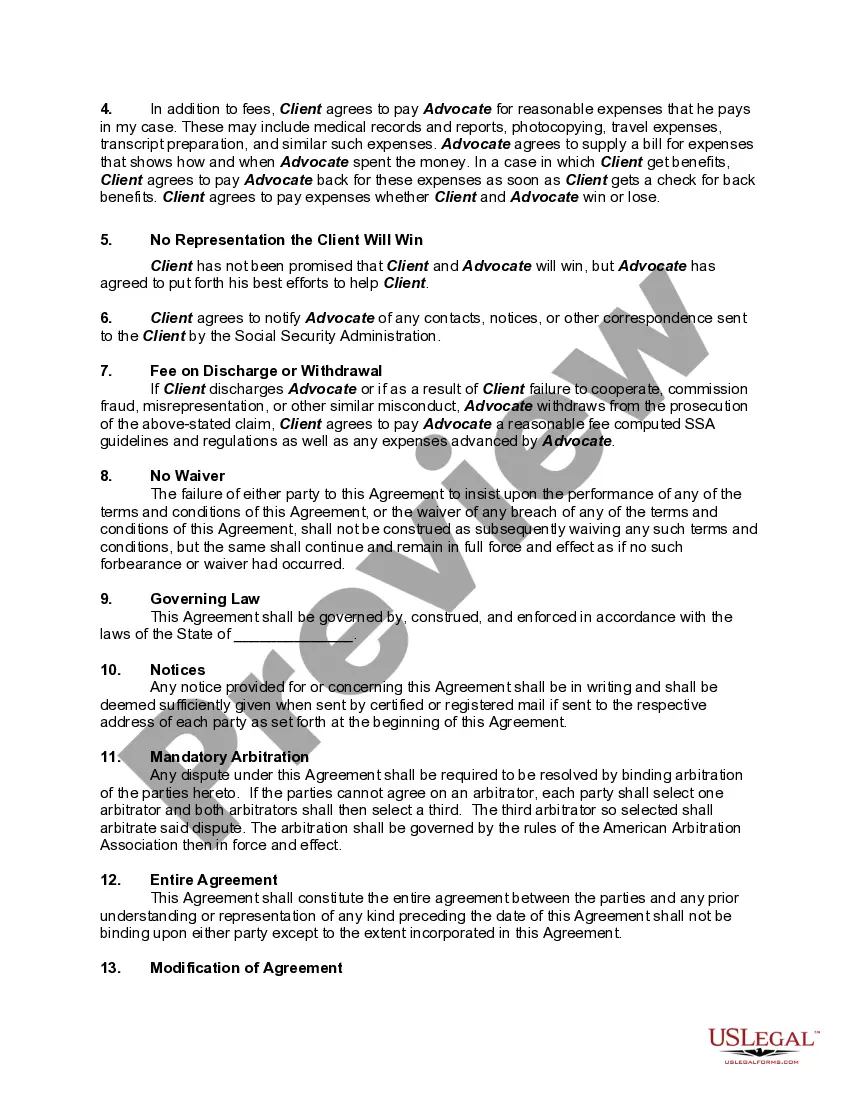
A Disability Advocate, also known as a Disability Consultant or non-attorney Representative, is a specially trained individual who assists others who are applying for Social Security disability benefits.


The duties of a Disability Advocate involve the execution of both formal and informal procedures on behalf of an applicant for Social Security disability benefits. These actions include, but are not limited to, the assessment of a case to determine the approximate percent chance of winning, and the development of a case by requesting copies of the client's medical records. By law, Social Security must consider the advocate's argument before making a final decision. If the advocate's argument is properly structured and supported by the evidence, it can greatly enhance the client's chances of winning benefits.
Free preview
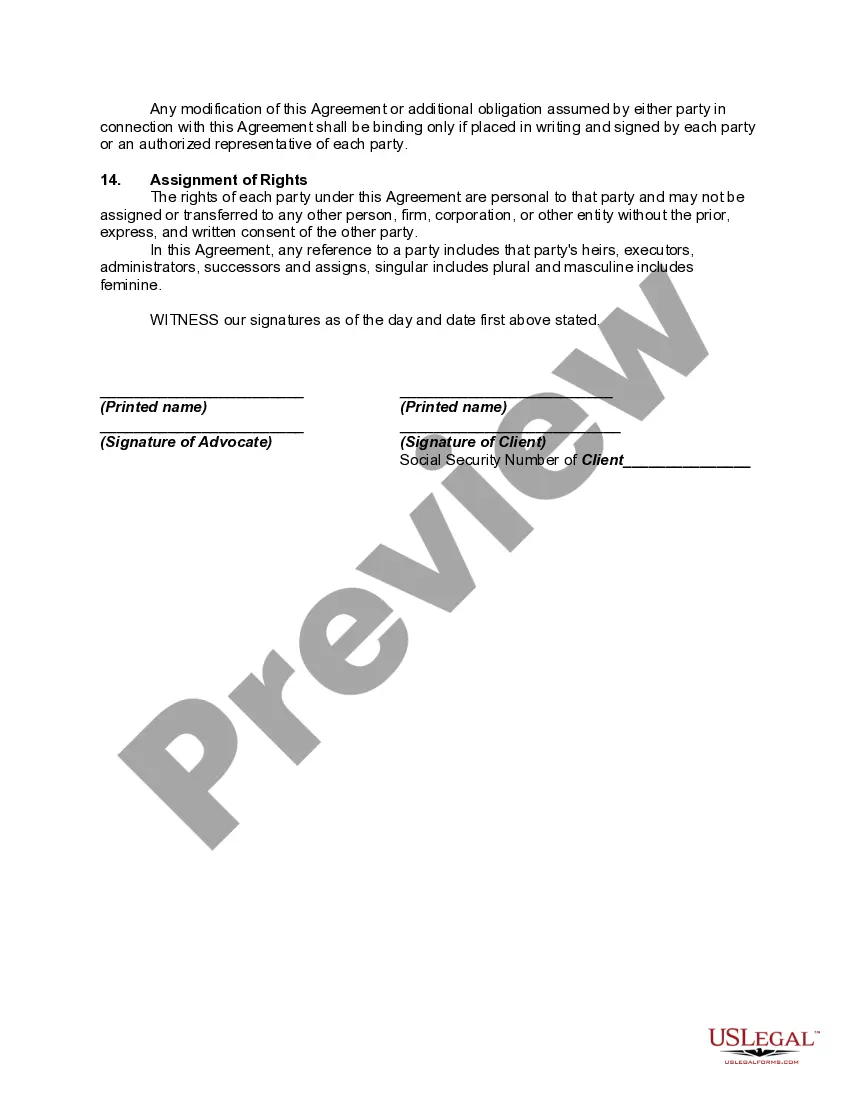
  • Preview Agreement between Certified Disability Advocate and Client
  • Preview Agreement between Certified Disability Advocate and Client
  • Preview Agreement between Certified Disability Advocate and Client

How to fill out Agreement Between Certified Disability Advocate And Client?

Have you ever found yourself in a location where you consistently require documents for either business or personal use? There is a multitude of legal document templates accessible online, but finding ones that you can rely on is not straightforward.

US Legal Forms provides an extensive array of template documents, such as the Vermont Agreement between Certified Disability Advocate and Client, which are crafted to comply with federal and state regulations.

If you are already familiar with the US Legal Forms website and possess an account, simply Log In. After that, you can download the Vermont Agreement between Certified Disability Advocate and Client template.

You can find all the document templates you have purchased in the My documents section. You may download an additional copy of the Vermont Agreement between Certified Disability Advocate and Client at any time by clicking on the desired document to download or print the template.

Utilize US Legal Forms, the most extensive collection of legal documents, to save time and avoid mistakes. The service offers professionally crafted legal document templates that can be used for a variety of purposes. Create an account on US Legal Forms and start simplifying your life.

  1. If you do not have an account and wish to start using US Legal Forms, follow these steps.
  2. Locate the document you need and verify it is for the correct city/state.
  3. Utilize the Review button to examine the form.
  4. Read the description to ensure you have picked the appropriate document.
  5. If the document is not what you need, use the Search field to find the form that satisfies your needs and criteria.
  6. Once you find the correct document, click Purchase now.
  7. Select the pricing plan you prefer, enter the required details to create your account, and make a purchase using your PayPal or credit card.
  8. Choose a convenient paper format and download your version.

Form popularity

FAQ

Rule 1.9 of the New York Rules of Professional Conduct is similar to the Model Rules, emphasizing that a lawyer must not represent a new client in a matter that is substantially related to a previous case involving a former client if it puts the former client's interests at risk. This rule seeks to uphold the integrity of the attorney-client relationship, as outlined in the Vermont Agreement between Certified Disability Advocate and Client. It's essential for clients to know their rights under these rules when engaging legal services.

Rule 1.9 of the Model Rules of Professional Conduct prohibits a lawyer from representing a new client in a matter that is substantially related to a previous representation if the new client's interests are materially adverse to the interests of the former client. This rule illustrates the importance of maintaining the confidentiality of information gained in the course of the client relationship. The Vermont Agreement between Certified Disability Advocate and Client emphasizes these principles to protect all parties involved.

Yes, a lawyer can have a relationship with a former client, but certain professional guidelines must be followed. The Vermont Agreement between Certified Disability Advocate and Client outlines ethical boundaries to maintain client confidentiality and address conflicts of interest. This ensures that the lawyer's past relationship with the client does not compromise their current or future representation. Always consult your advocate to understand how these relationships may affect your case.

Simply put, the attorney-client privilege means that anything you discuss with your lawyer cannot be shared with others without your permission. This privilege exists to promote trust and candor between clients and their legal representatives. It’s a fundamental aspect of the Vermont Agreement between Certified Disability Advocate and Client, offering clients peace of mind as they seek assistance.

In Vermont, the attorney-client privilege protects communications between a lawyer and their client from disclosure. This privilege encourages honest and open dialogue about legal issues without fear of public exposure. Knowing the nuances of this privilege is important when you consider the implications of a Vermont Agreement between Certified Disability Advocate and Client.

The rule of professional conduct 1.16 in Vermont covers a lawyer's obligation to decline or terminate representation under certain circumstances. This includes situations where the lawyer cannot provide competent representation, the client seeks illegal conduct, or the attorney experiences a conflict of interest. Understanding this rule can enhance your comprehension of a Vermont Agreement between Certified Disability Advocate and Client.

The 5 C's of attorney-client privilege include Communication, Confidentiality, Competency, Consent, and Control. These principles ensure that legal advice remains protected between clients and their attorneys. Familiarity with these principles is essential when navigating the Vermont Agreement between Certified Disability Advocate and Client.

Rule 4.2 of the Vermont professional conduct regulations restricts lawyers from communicating with a person they know is represented by another lawyer concerning the matter at hand. This rule is designed to protect the integrity of the legal process and encourage respect for attorney-client relationships. Clarity on this rule can be especially relevant in the context of a Vermont Agreement between Certified Disability Advocate and Client.

The four essential elements of the attorney-client privilege include the communication being intended to be confidential, made between a lawyer and a client, for the purpose of seeking legal advice. This privilege helps ensure that clients can speak freely with their attorneys, fostering open communication. Understanding this privilege is crucial when drafting a Vermont Agreement between Certified Disability Advocate and Client.

The rule of professional conduct 1.9 in Vermont addresses the responsibilities of lawyers regarding former clients. Specifically, it prohibits a lawyer from representing a new client in a matter that is substantially related to a former client's case if it involves a direct conflict of interest. This rule protects client confidentiality and trust, which is vital in the Vermont Agreement between Certified Disability Advocate and Client.

Trusted and secure by over 3 million people of the world’s leading companies

Vermont Agreement between Certified Disability Advocate and Client