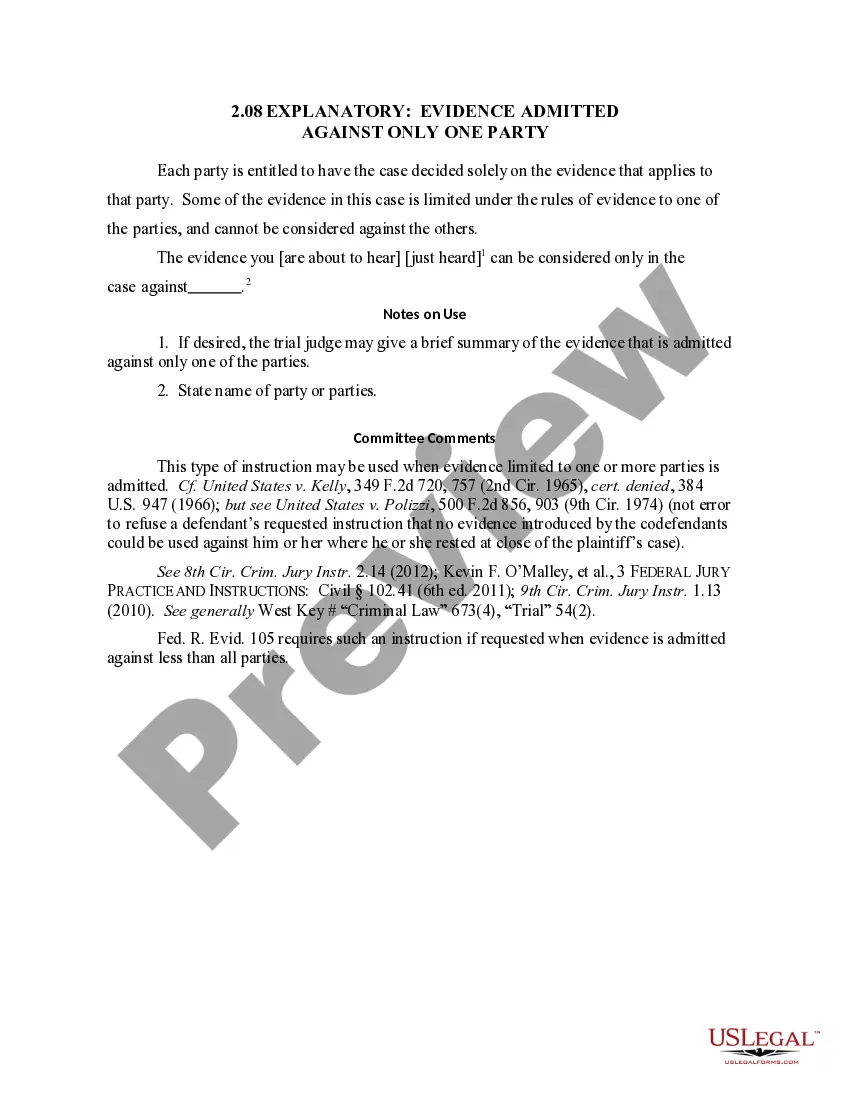
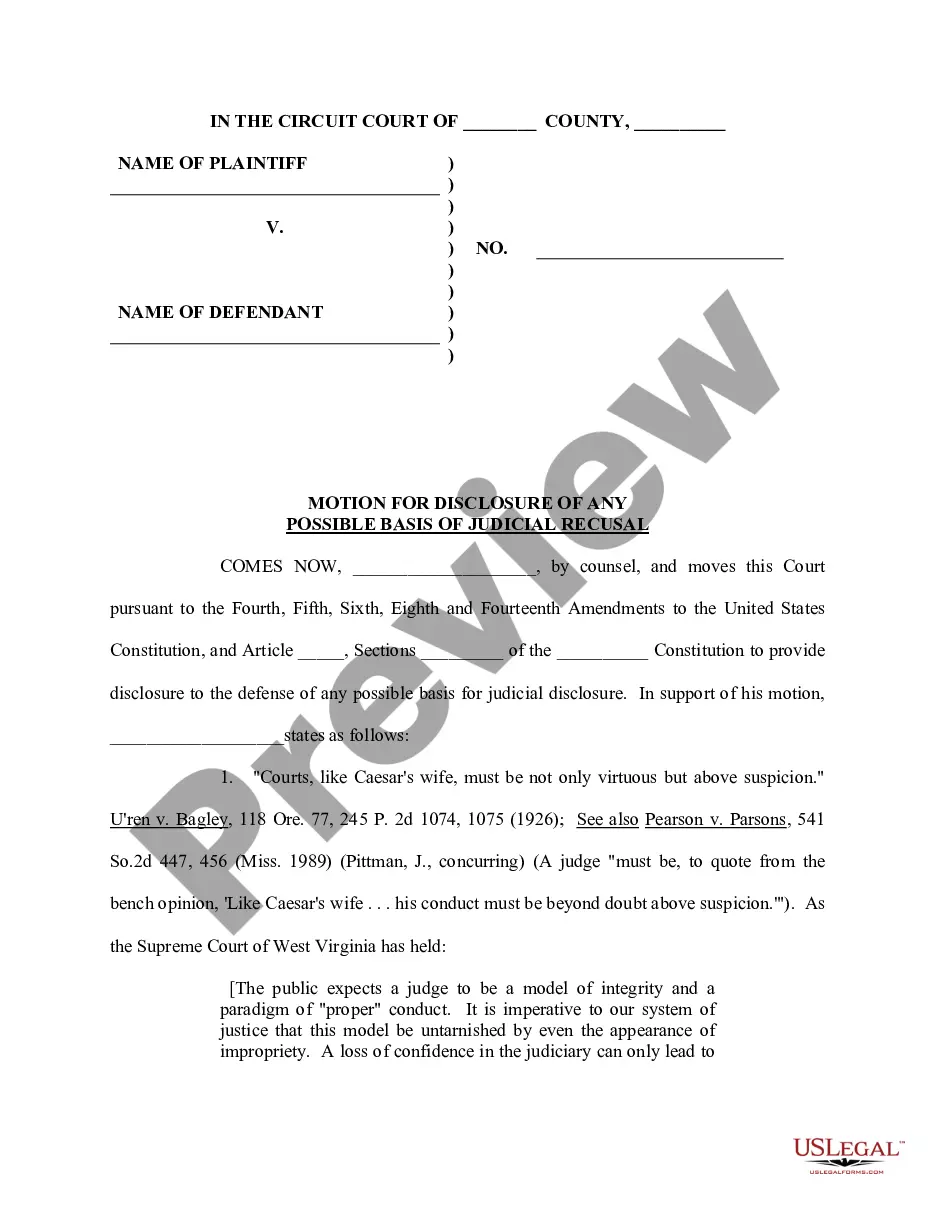
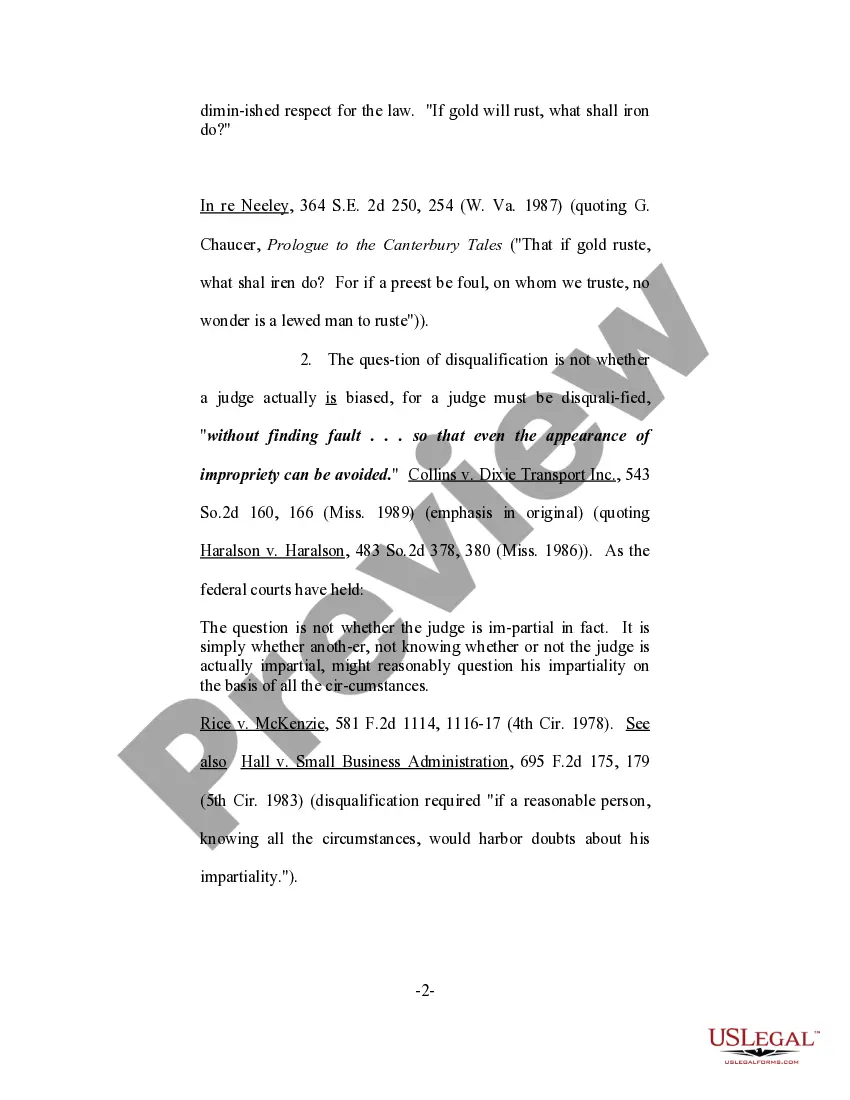
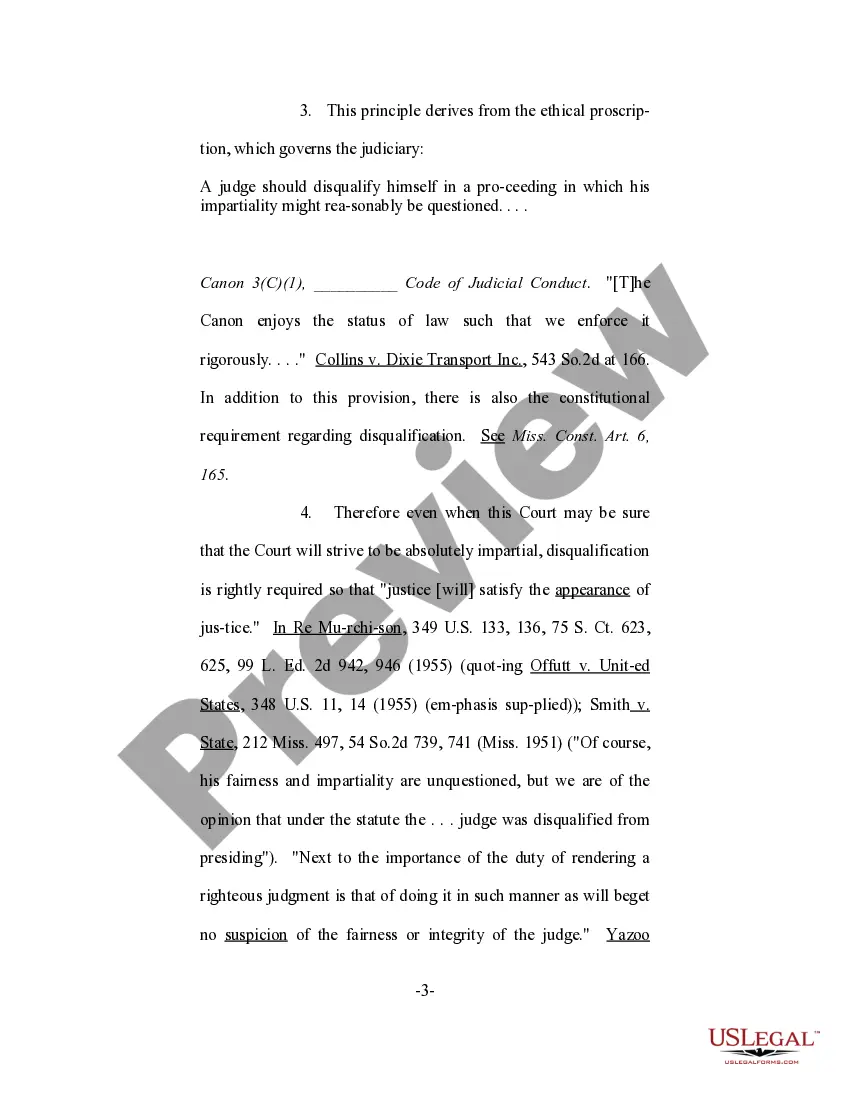
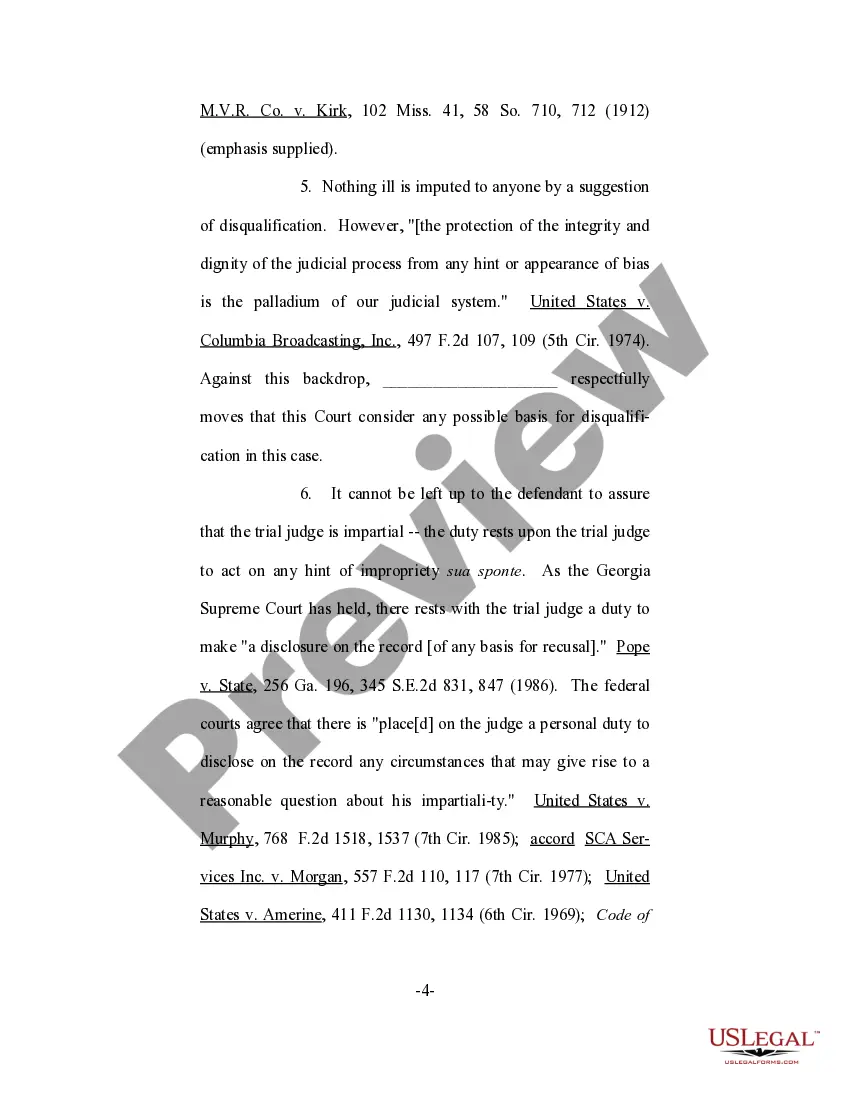
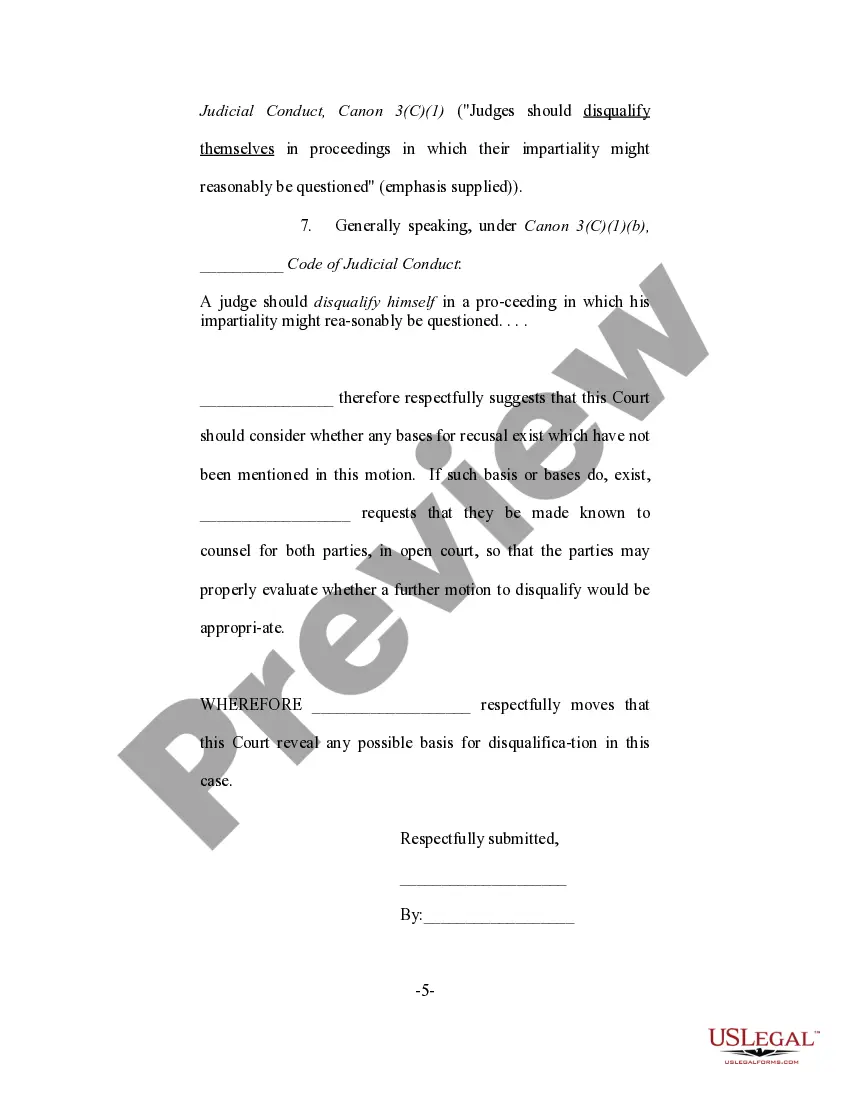
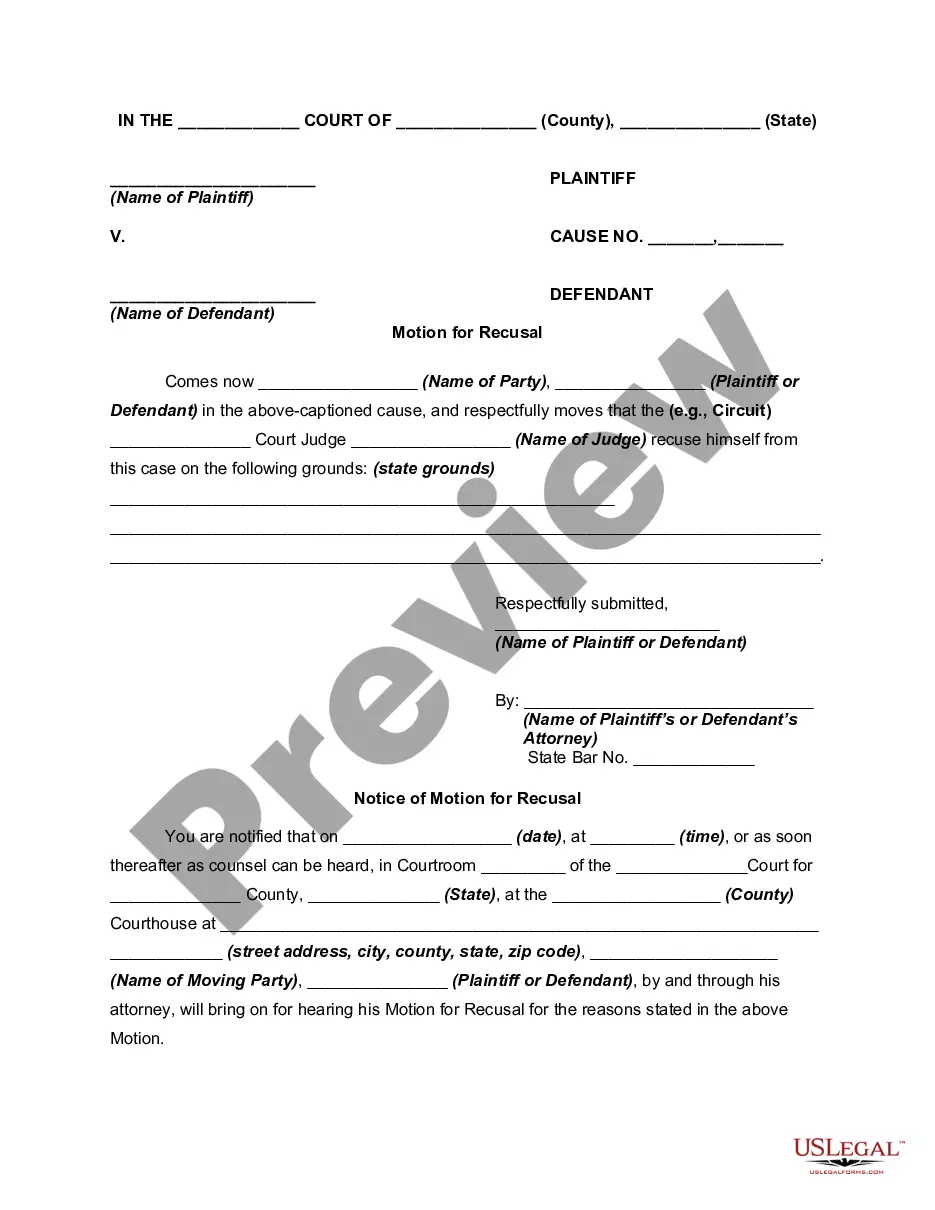
This is a multi-state form covering the subject matter of: Motion for Disclosure of any Possible
Basis of Judicial Recusal.
Vermont Motion for Disclosure of Any Possible Basis of Judicial Recusal
Instant download
Description
Free preview
How to fill out Motion For Disclosure Of Any Possible Basis Of Judicial Recusal?
US Legal Forms - one of the largest collections of legal documents in the United States - offers a diverse selection of legal document templates that you can download or print. By using the website, you can access thousands of forms for business and personal use, categorized by types, states, or keywords. You can obtain the latest versions of forms such as the Vermont Motion for Disclosure of Any Possible Basis of Judicial Recusal in seconds.
If you have a monthly subscription, Log In and download the Vermont Motion for Disclosure of Any Possible Basis of Judicial Recusal from the US Legal Forms library. The Download button will appear on every form you view. You can access all previously obtained forms in the My documents section of your account.
To use US Legal Forms for the first time, here are simple steps to get started: Ensure you have selected the correct form for your area/state. Click the Review button to check the form's details. Read the form description to confirm you have chosen the right form. If the form does not meet your needs, utilize the Search field at the top of the screen to find the one that does.
Access the Vermont Motion for Disclosure of Any Possible Basis of Judicial Recusal with US Legal Forms, the most extensive collection of legal document templates. Utilize thousands of professional and state-specific templates that cater to your business or personal needs and requirements.
- Once you are satisfied with the form, confirm your choice by clicking the Buy now button.
- Then, select the payment plan you prefer and provide your credentials to register for an account.
- Process the payment. Use your credit card or PayPal account to complete the transaction.
- Choose the format and download the form to your device.
- Make adjustments. Complete, edit, print, and sign the downloaded Vermont Motion for Disclosure of Any Possible Basis of Judicial Recusal.
- Every template added to your account has no expiration date and is yours indefinitely. So, if you want to download or print another copy, simply go to the My documents section and click on the form you need.
Form popularity
FAQ
The judge is only required to order recusal (or refer the matter over to another judge to decide whether recusal is necessary) if a reasonable person, knowing all the facts, would have doubts about the judge's ability to be impartial in the case.
The judge has personal or financial interest in the outcome. This particular ground varies by jurisdiction. Some require recusal if there is any interest at all in the outcome, while others only require recusal if there is interest beyond a certain value. The judge determines he or she cannot act impartially.
There is, however, an exception to the ordinary recusal requirements, known as ?the rule of necessity,? which allows judges to hear a case in which virtually all other available judges would have the same disqualifying interest, and the case could not otherwise be heard.
A motion to recuse is a legal motion filed in court that says a judge should be disqualified, or removed, from a legal case for a reason listed within CCP 170.1. The motion can be brought by either a prosecutor or a defense attorney. And, a motion to recuse can be filed in either a civil suit or in a criminal trial.
Either party may move that the judge recuse him- or herself on the grounds of prejudice or conflict. The moving party bears the burden of proof. The defendant may also move to have the prosecutor recused from a case, but the court may grant such relief only upon an actual showing of conflict of interest.
The general rule is that, to warrant recusal, a judge's expression of an opinion about the merits of a case, or his familiarity with the facts or the parties, must have originated in a source outside the case itself.
What is a motion to recuse? A motion to recuse is a legal motion filed in court that says a judge should be disqualified, or removed, from a legal case for a reason listed within CCP 170.1. The motion can be brought by either a prosecutor or a defense attorney.
"Recusal" means the process by which a person is disqualified, or disqualifies himself or herself, from a matter because of a conflict of interest.