Vermont Revocable Living Trust for House
Description
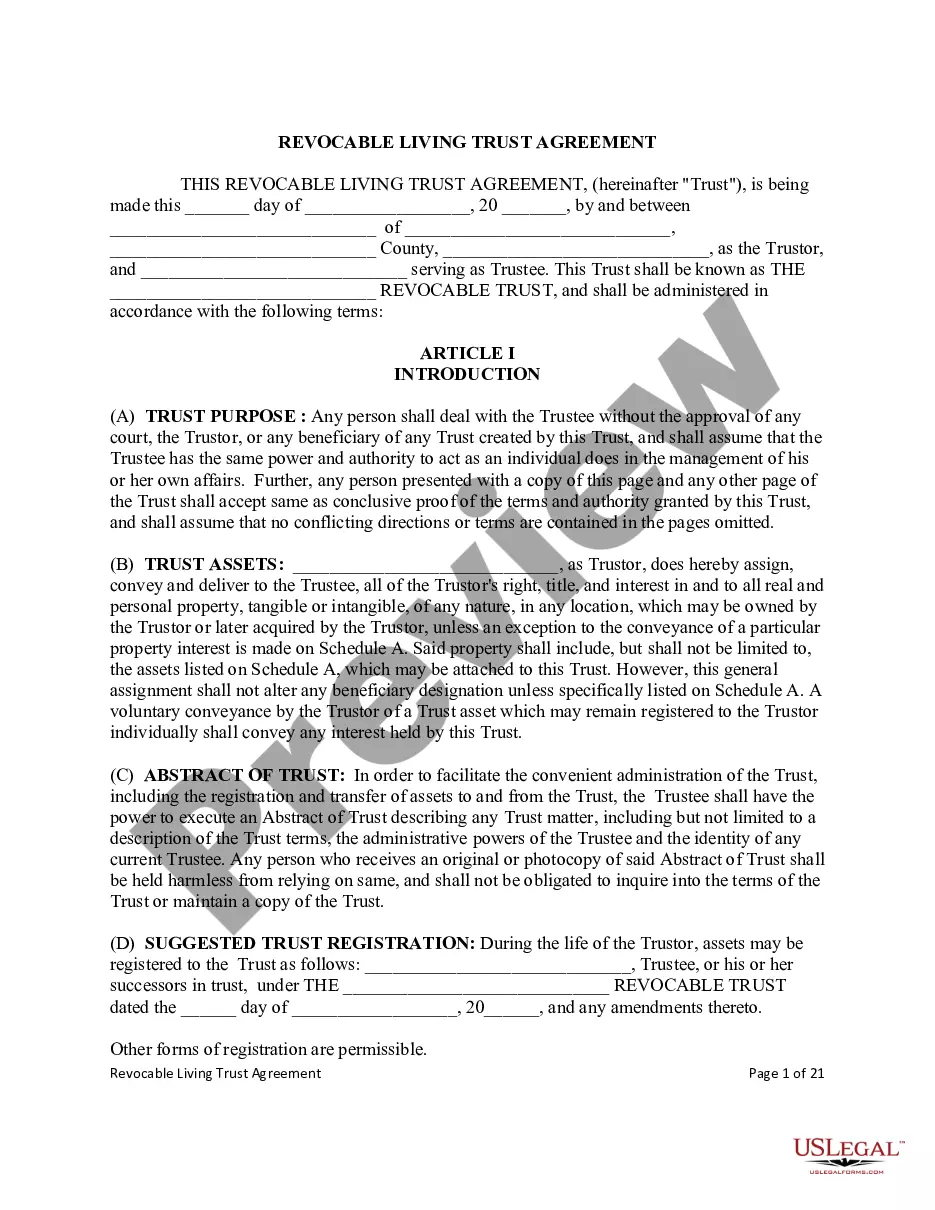
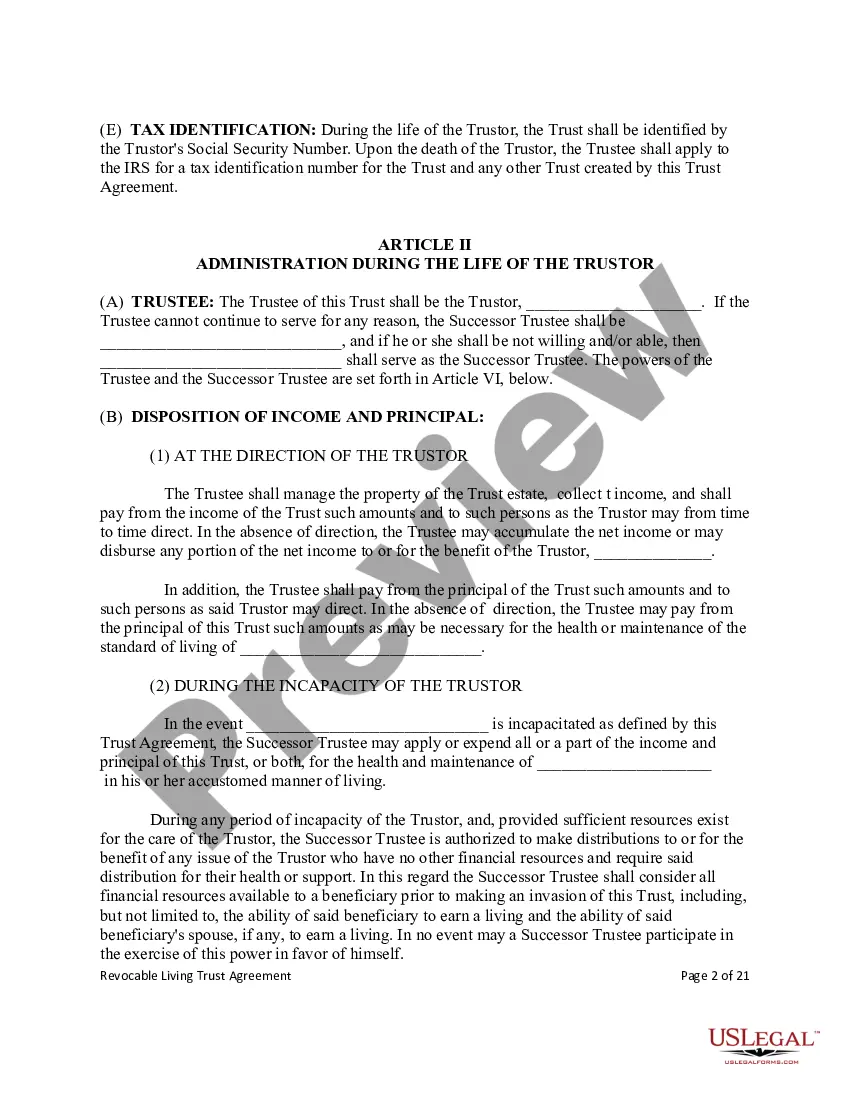
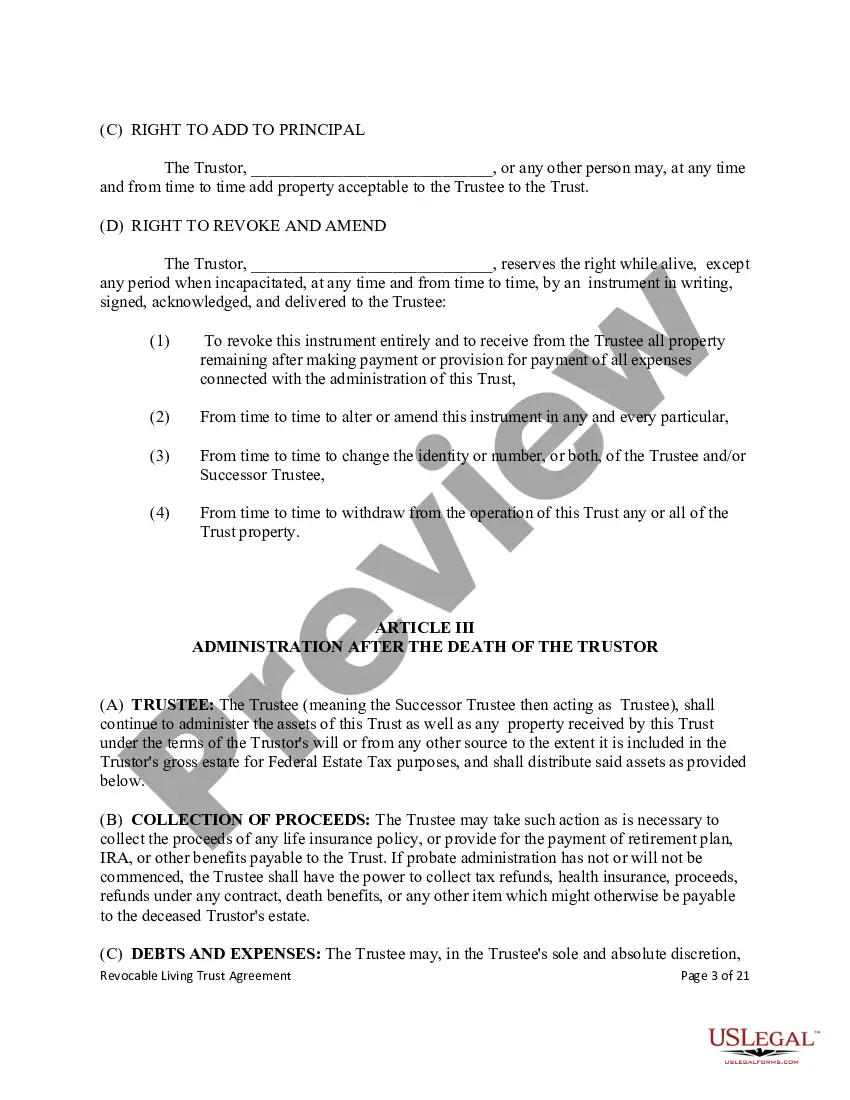
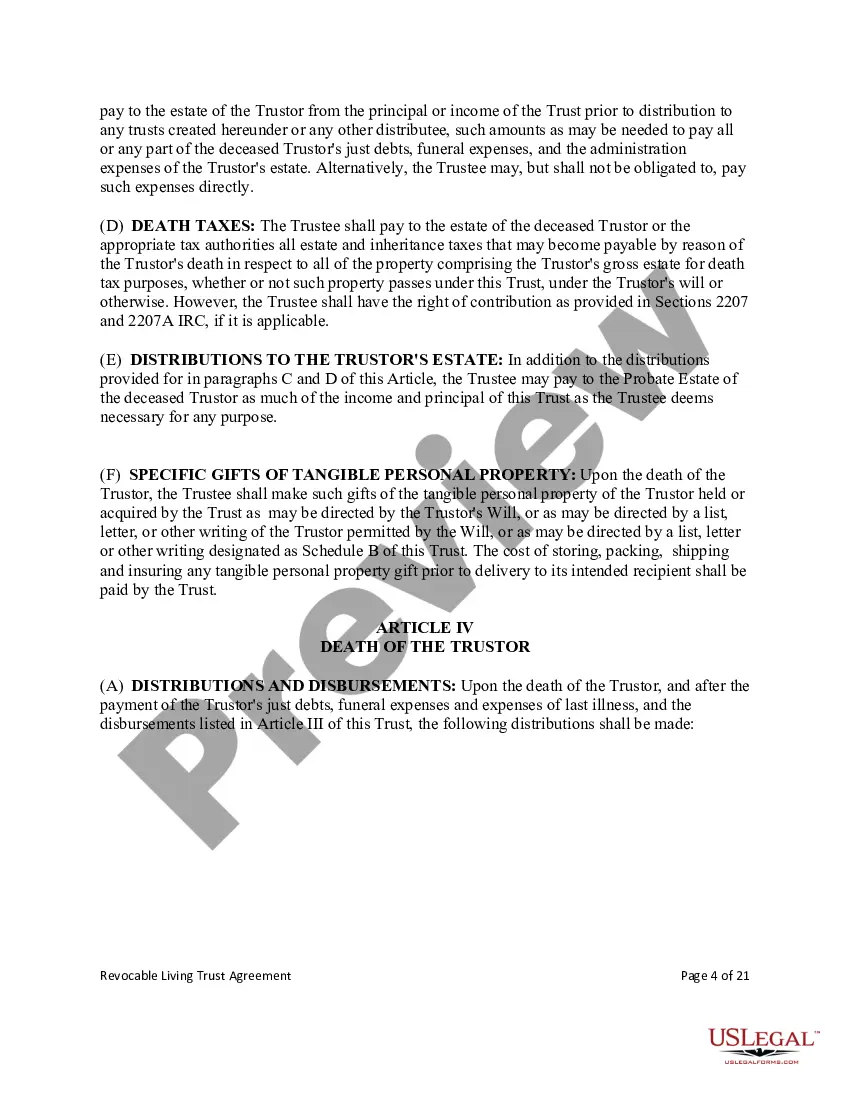
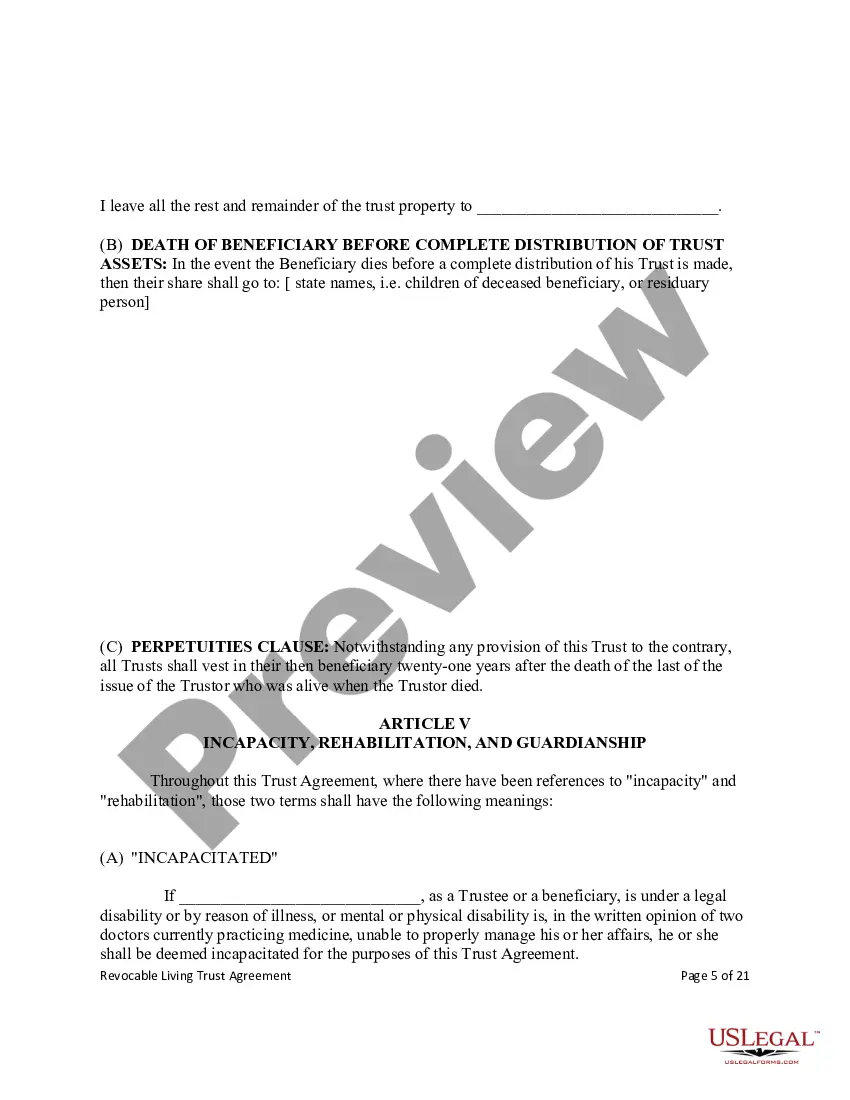
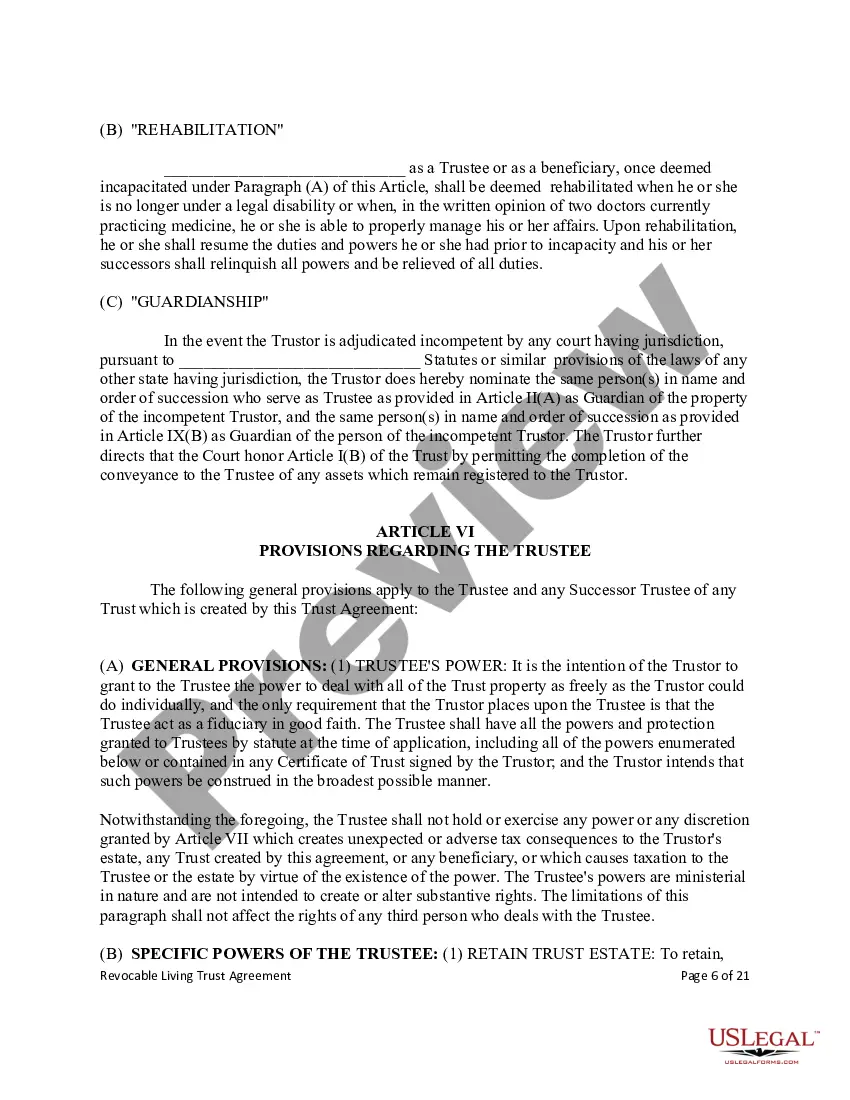
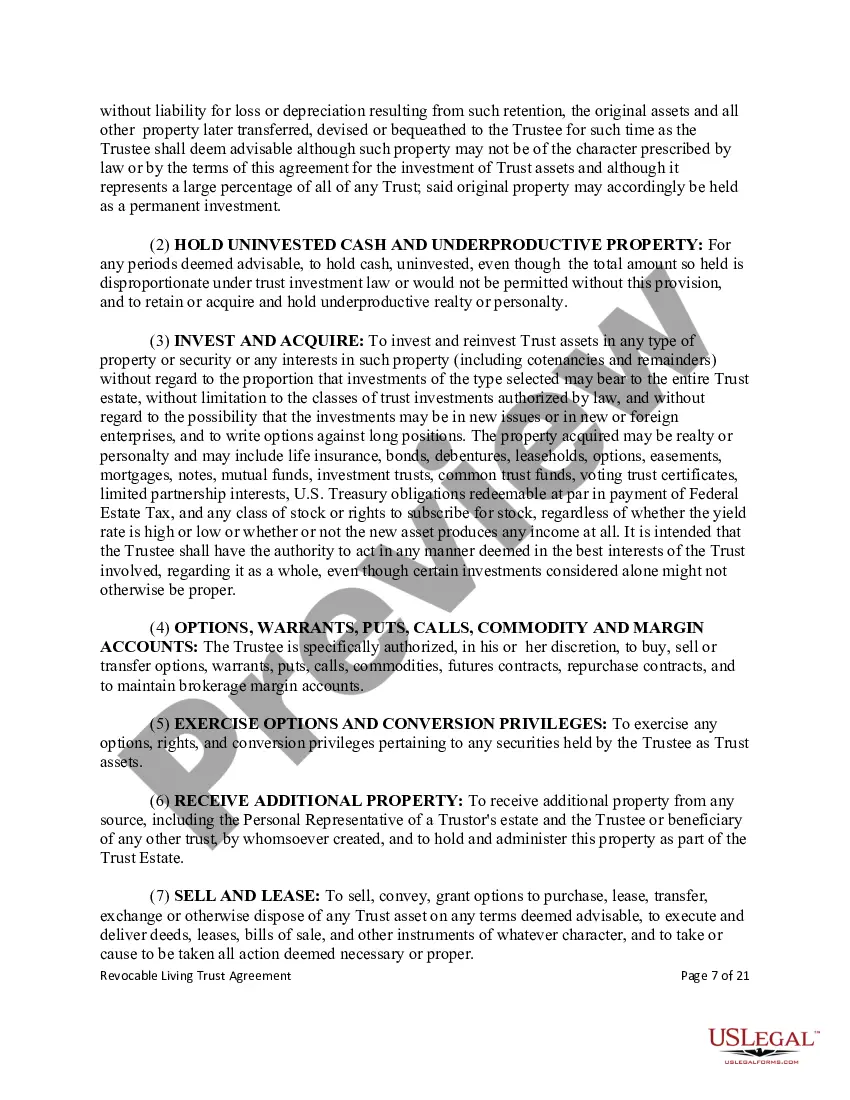

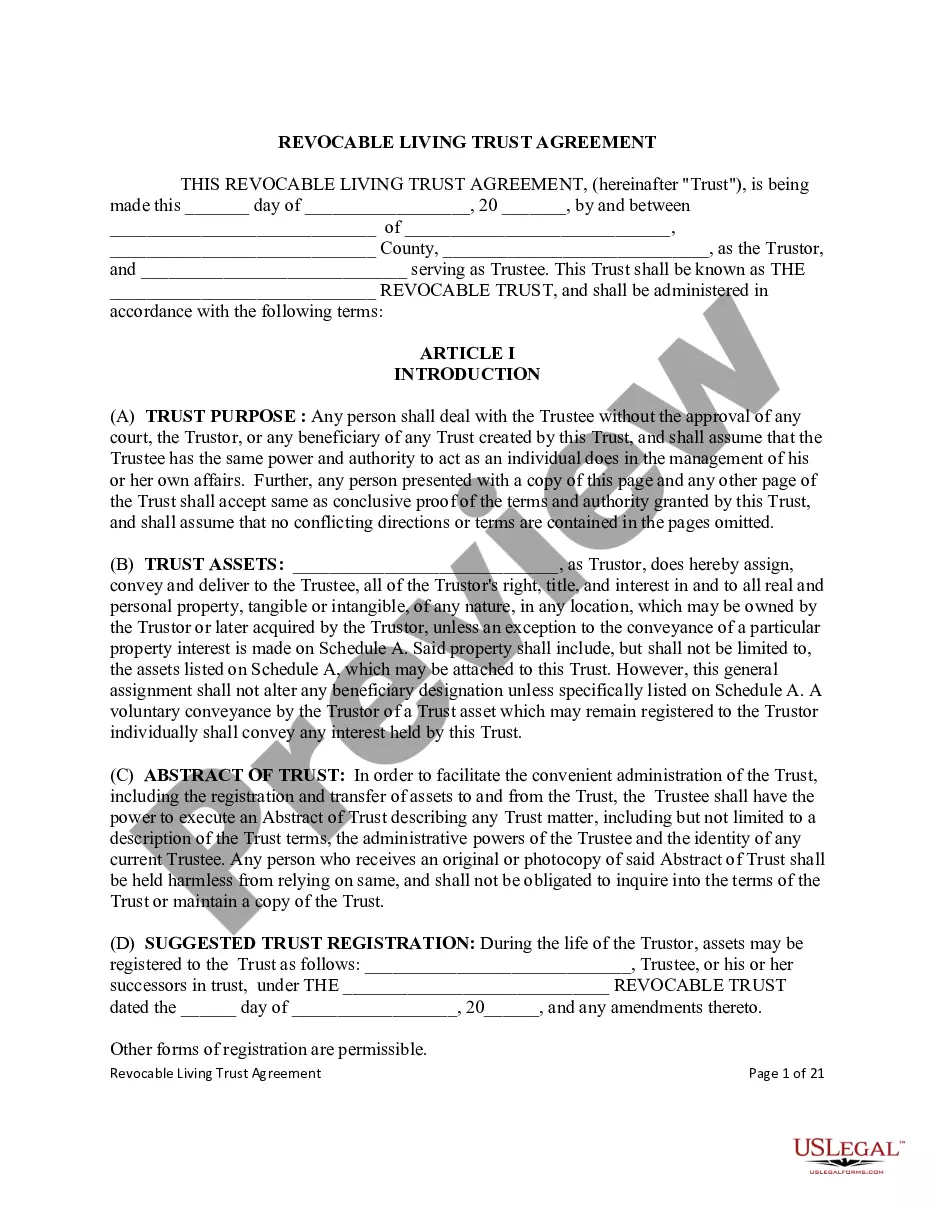
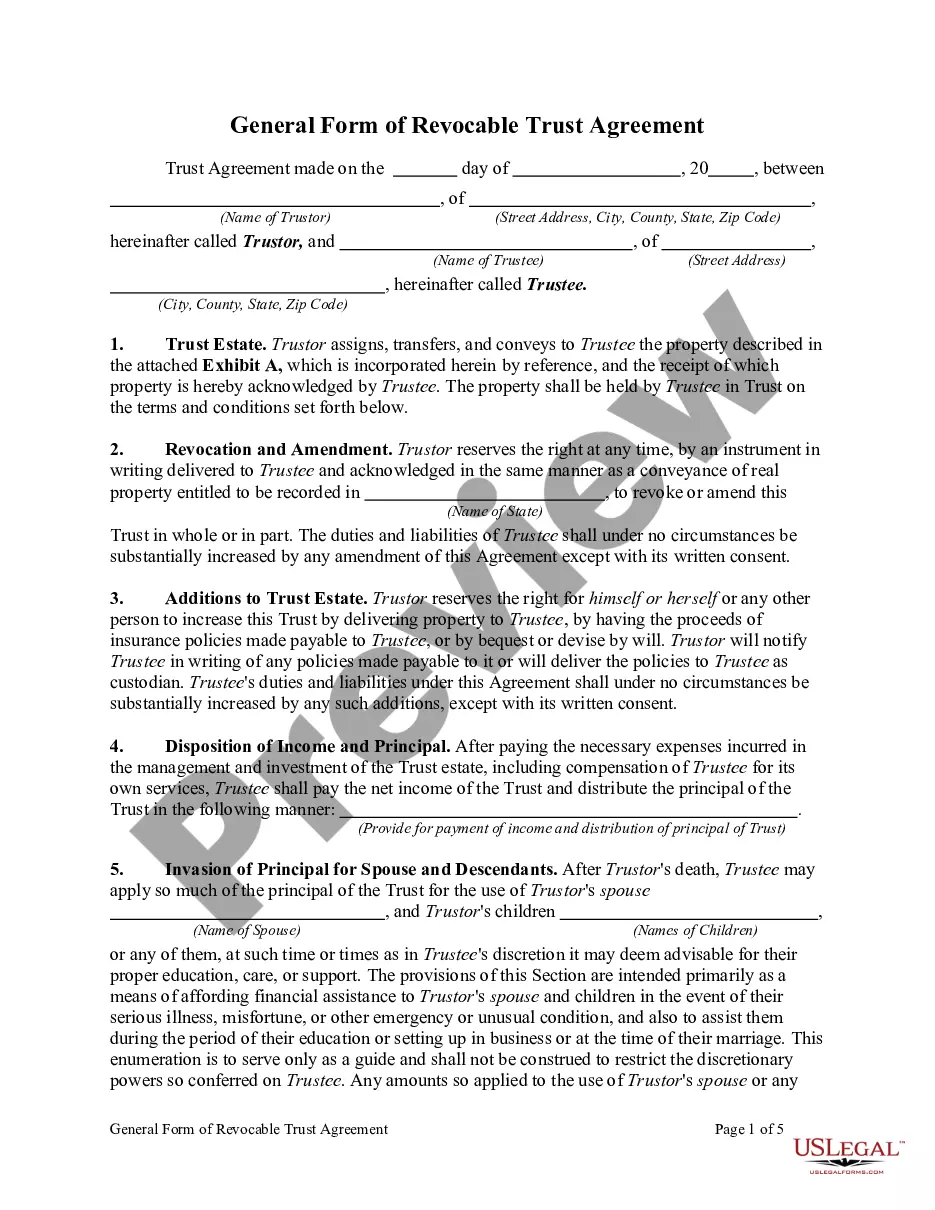
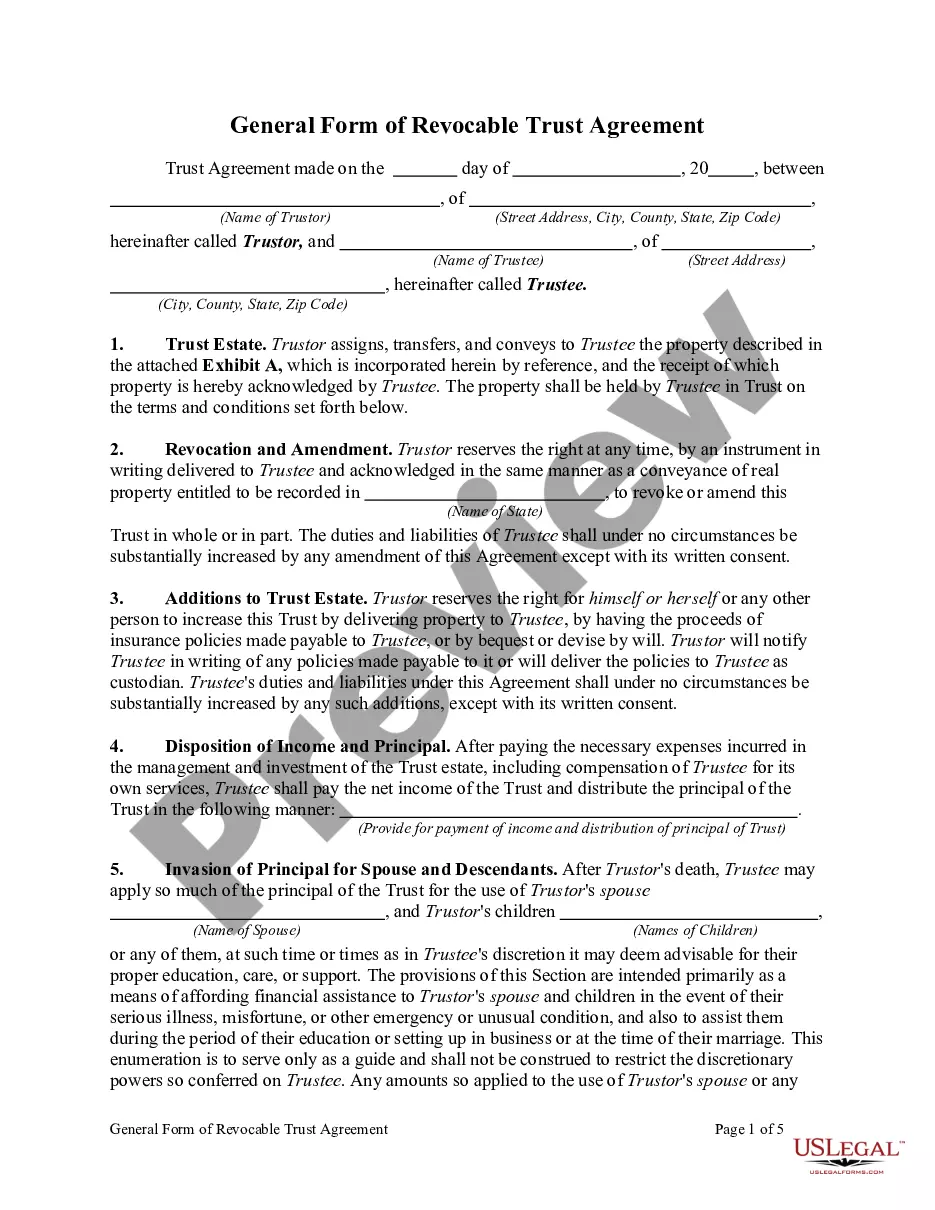
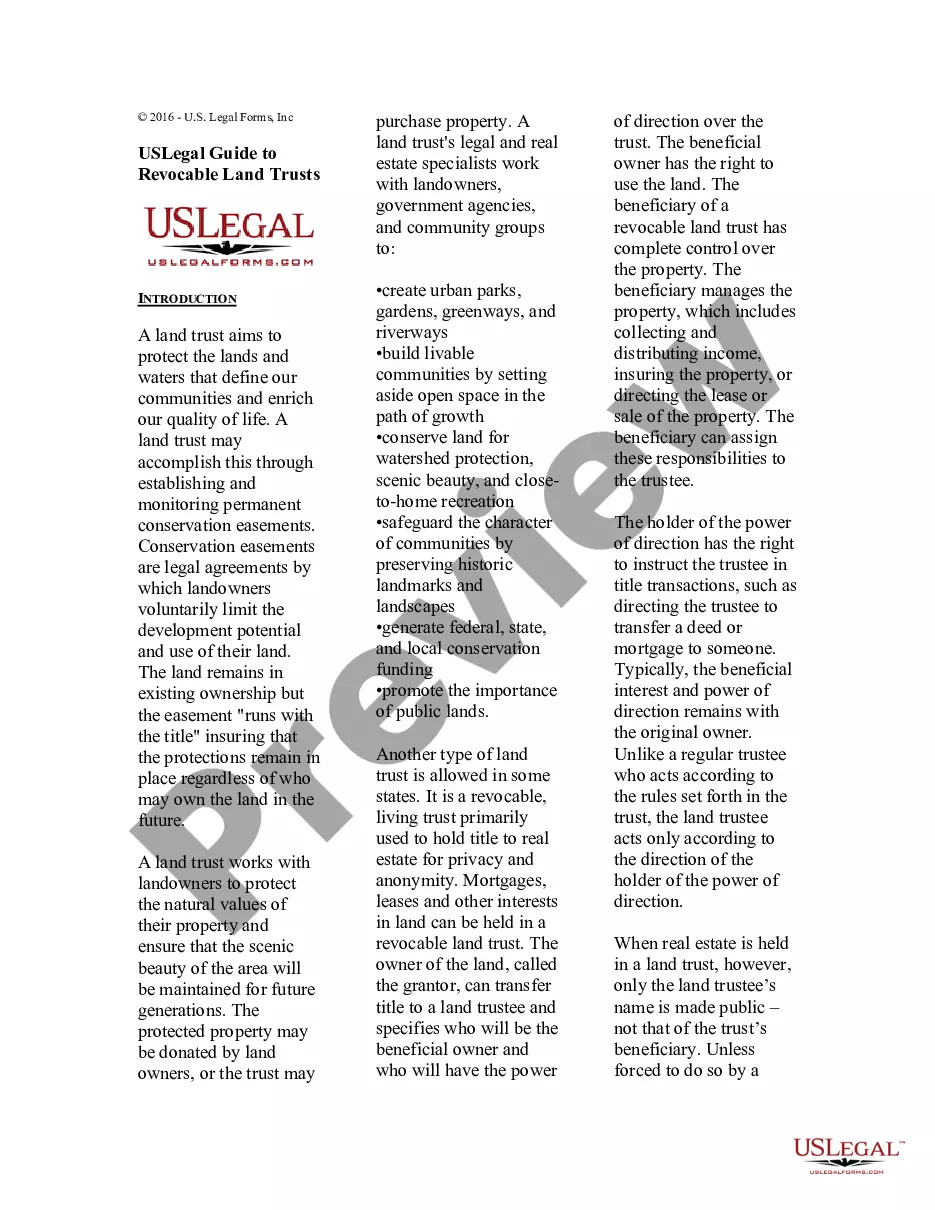




How to fill out Revocable Living Trust For House?
If you need to aggregate, download, or create legal document templates, utilize US Legal Forms, the largest assortment of legal forms accessible online.
Take advantage of the website's straightforward and efficient search to find the documents you require.
Various templates for business and personal purposes are organized by categories and genres, or keywords.
Step 4. Once you have identified the form you need, click the Get now button. Choose the pricing strategy you prefer and enter your information to register for an account.
Step 5. Complete the payment process. You can use your Мisa or Ьastercard or PayPal account to finalize the transaction. Step 6. Select the format of the legal form and download it to your device. Step 7. Complete, modify, and print or sign the Vermont Revocable Living Trust for House.
- Utilize US Legal Forms to obtain the Vermont Revocable Living Trust for House with just a few clicks.
- If you are already a US Legal Forms customer, sign in to your account and click on the Acquire option to obtain the Vermont Revocable Living Trust for House.
- You may also access forms you previously saved in the My documents tab of your account.
- If you are using US Legal Forms for the first time, follow the steps outlined below.
- Step 1. Ensure you have chosen the correct form for your state/region.
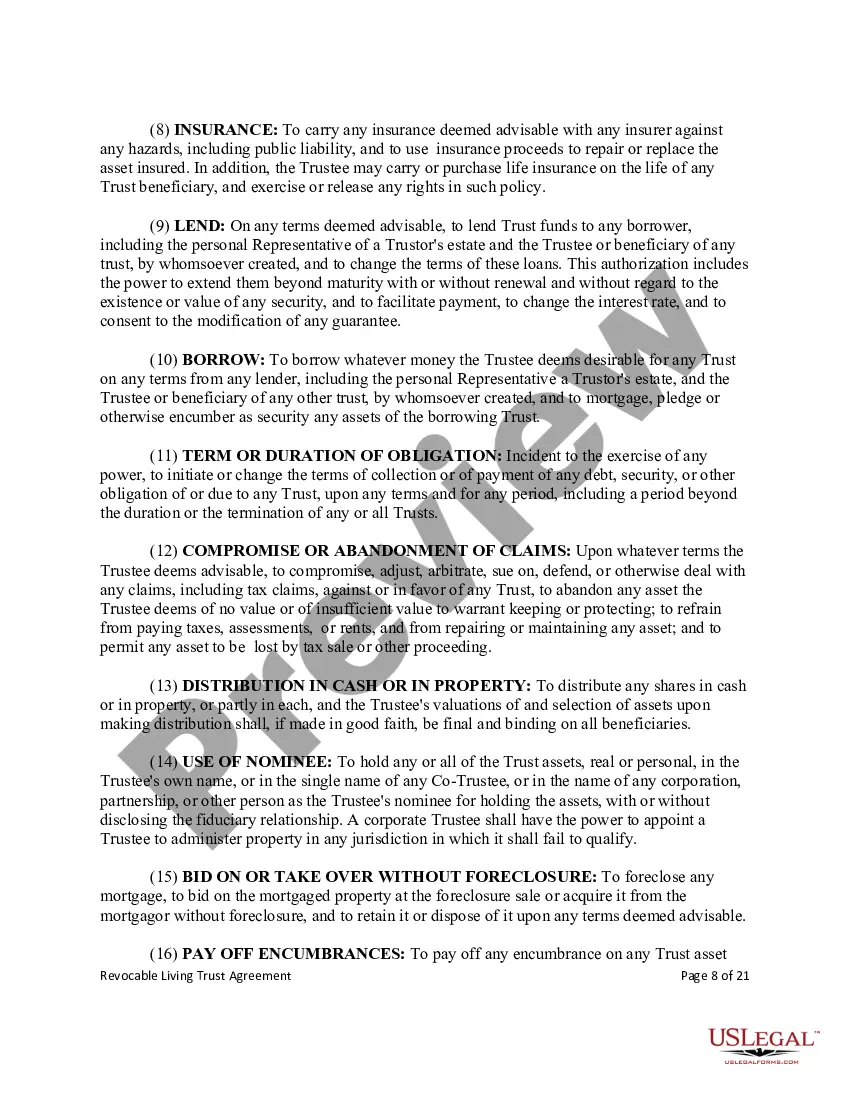
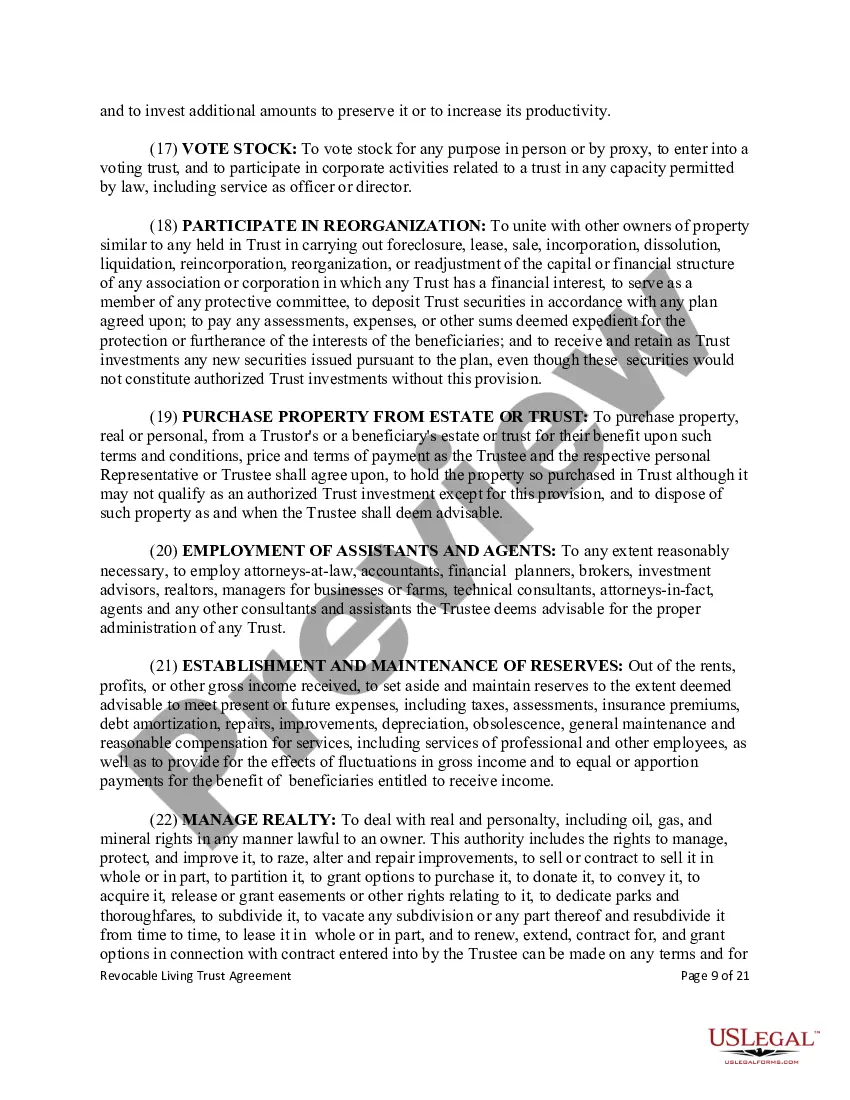
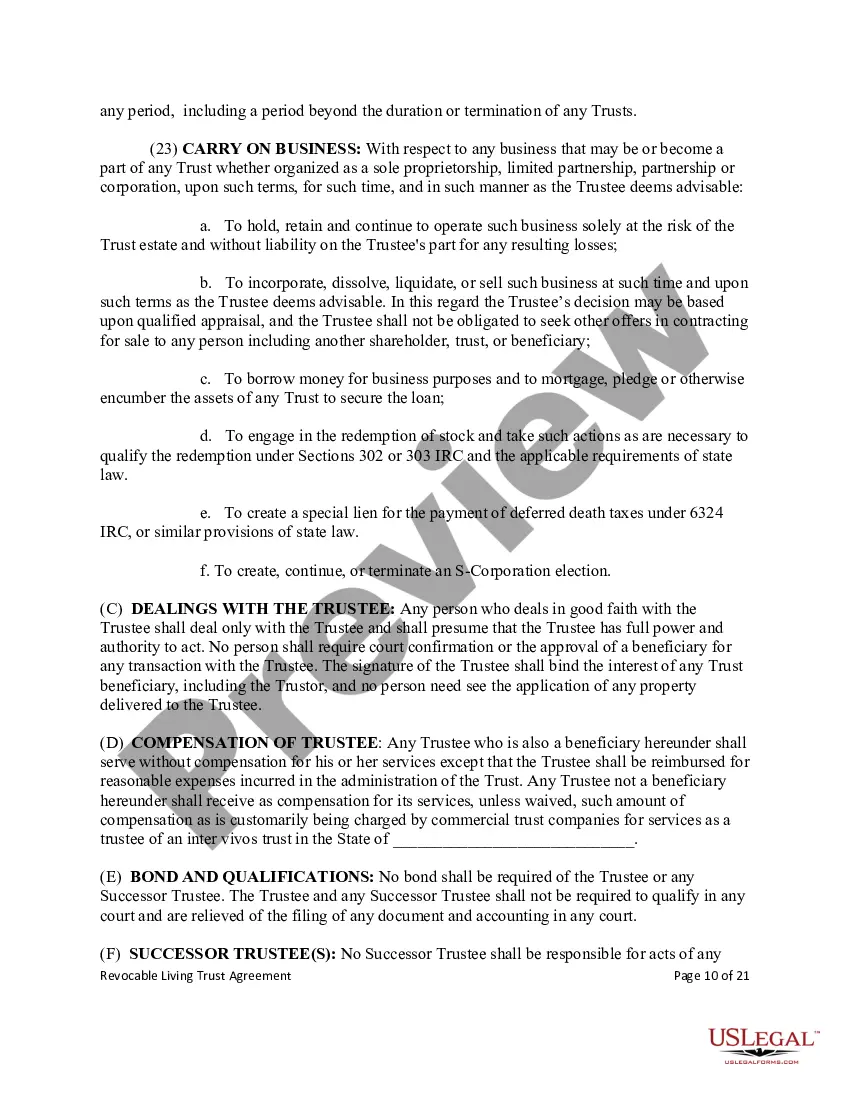
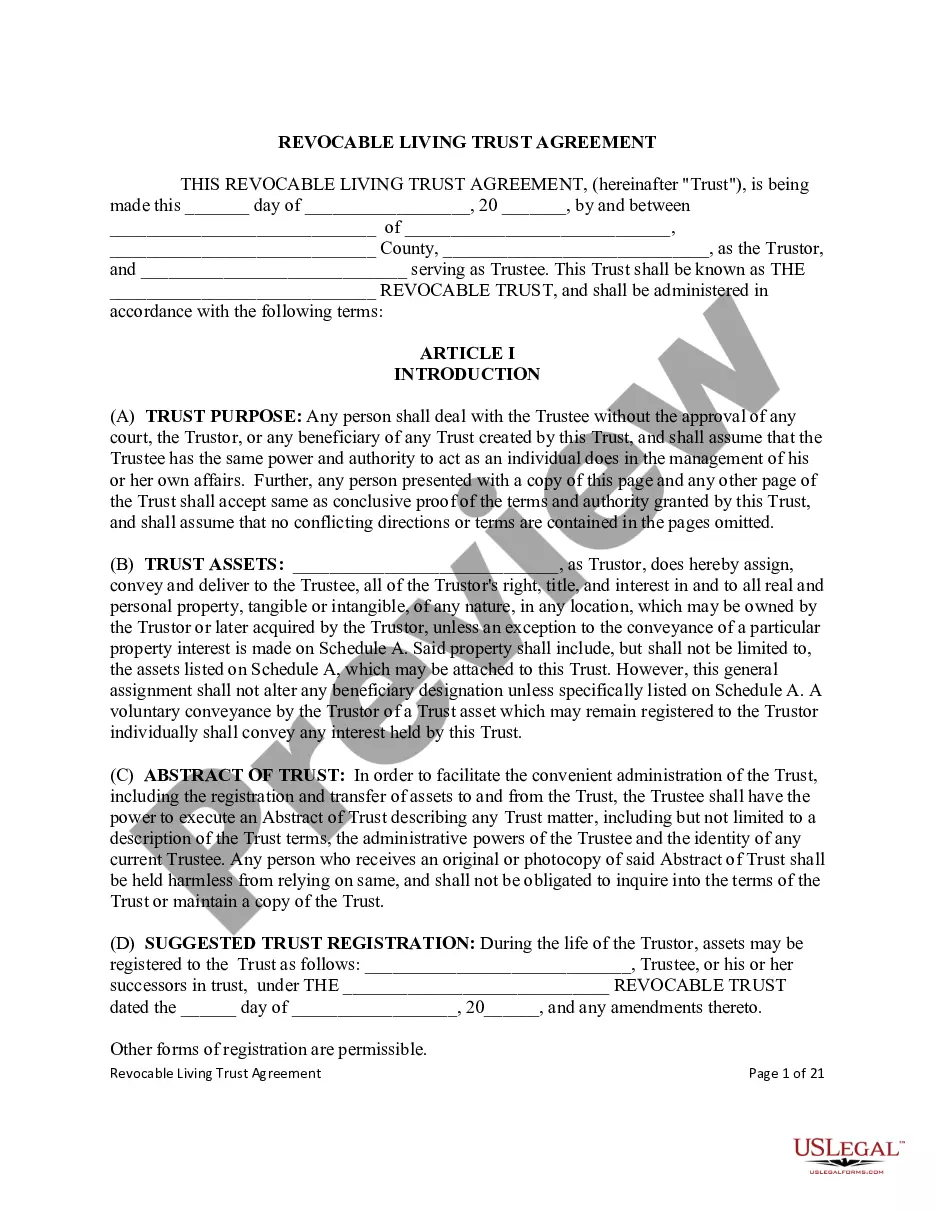
- Step 2. Use the Preview option to review the form’s content. Remember to read the description.
- Step 3. If you are not satisfied with the form, utilize the Search area at the top of the screen to find other legal form templates.
Form popularity
FAQ
To fill out a Vermont Revocable Living Trust for House, start by gathering essential information about your property and beneficiaries. Clearly list the assets you wish to include, such as your house, along with any specific instructions on how you want them managed. You might want to consider using a platform like uslegalforms, which offers structured guidance and templates to simplify the process. After filling out the necessary forms, review everything carefully to ensure accuracy before signing.
Putting your house in a Vermont Revocable Living Trust for House offers numerous advantages. It allows you to avoid probate, simplifying the transfer of your property to your heirs. Additionally, you maintain control over your asset during your lifetime, and you can make changes to the trust as needed. By choosing options like USLegalForms, you can easily create a trust that fits your needs without unnecessary complications.
Filling out a Vermont Revocable Living Trust for House involves several clear steps. First, you need to provide your personal information and the details about your house, such as its address. Next, you must designate a trustee who will manage the trust and a beneficiary who will receive the property upon your passing. Finally, consider utilizing platforms like USLegalForms to streamline the process and ensure you meet all legal requirements.
Creating a living trust in Vermont involves several straightforward steps. First, you must decide on the property you want to place in the trust. Next, choose a trustee to manage the assets and draft the trust document, ensuring it complies with Vermont laws. Utilizing U.S. Legal Forms can simplify this process, providing resources to help you establish a Vermont Revocable Living Trust for House professionally and efficiently.
Yes, Vermont operates as a deed of trust state, facilitating the process of securing real estate loans. In this context, a deed of trust involves a borrower, a lender, and a trustee, allowing for a clear path to foreclosure if necessary. When planning your estate with a Vermont Revocable Living Trust for House, understanding how deeds of trust work can help in managing your property effectively.
The best state for a revocable living trust often depends on your specific needs, but many find Vermont to be favorable due to its probate-friendly laws. Vermont provides a flexible framework for creating trusts, allowing easier management of your estate. By choosing a Vermont Revocable Living Trust for House, you can effectively secure your assets and simplify the transfer process upon your passing.
In Vermont, various types of trusts exist, including revocable living trusts, irrevocable trusts, special needs trusts, and charitable trusts. Each of these serves different purposes, such as protecting assets, aiding charitable causes, or providing for dependents with special needs. When planning your estate, a Vermont Revocable Living Trust for House can be a versatile choice for managing your home and assets effectively.
The four major types of trusts include revocable trusts, irrevocable trusts, charitable trusts, and special needs trusts. Among these, a Vermont Revocable Living Trust for House allows you to maintain control over your assets during your lifetime. You can change or revoke it at any time, making it flexible to your needs. Understanding these options can tailor your estate planning effectively.
A special needs trust in Vermont is designed to assist individuals with disabilities. It enables them to receive financial support without jeopardizing their government benefits. By establishing this type of trust, you can protect your loved one's eligibility for essential services while improving their quality of life. Consider a Vermont Revocable Living Trust for House as a supplementary option to secure your estate.
The disadvantages of putting your house in trust include the potential loss of control and the impact on eligibility for certain benefits. If your goal is to use assets for future care, a Vermont Revocable Living Trust for House may complicate financial aid options. Furthermore, managing property in a trust may require additional paperwork and coordination with the trustee.