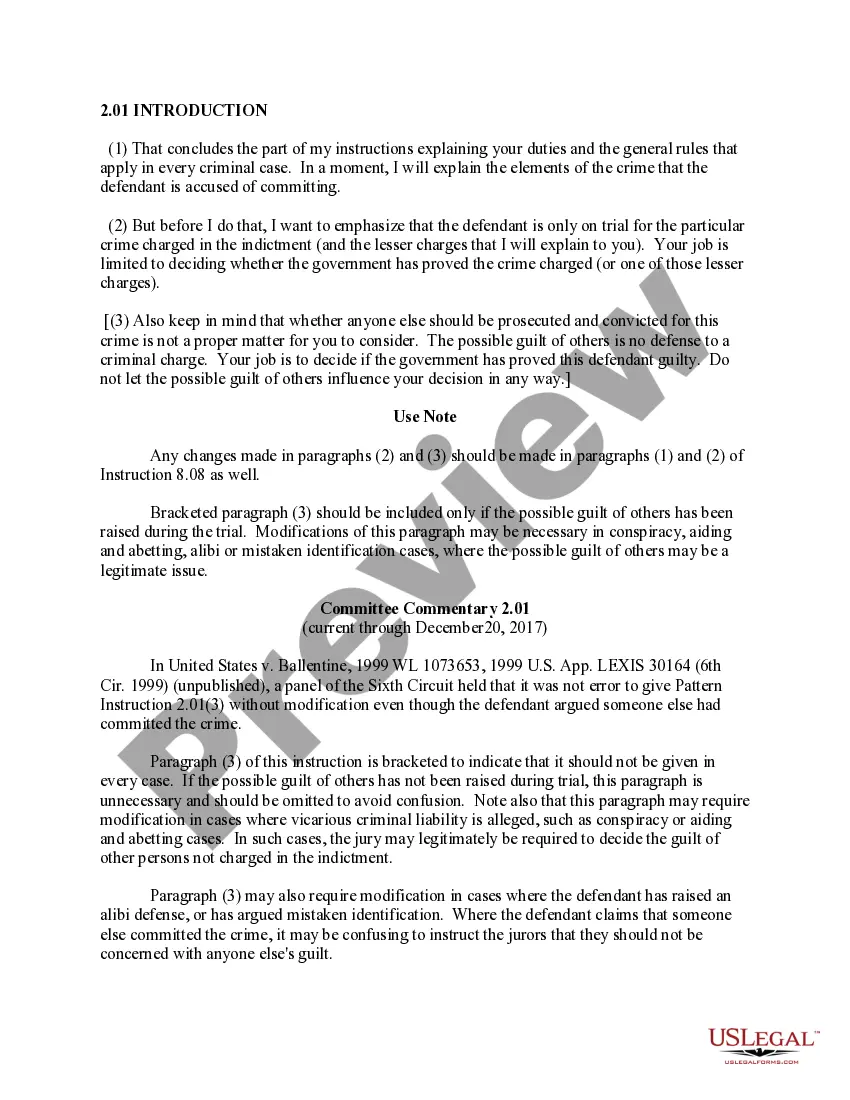
Vermont Closing Statement

What is this form?
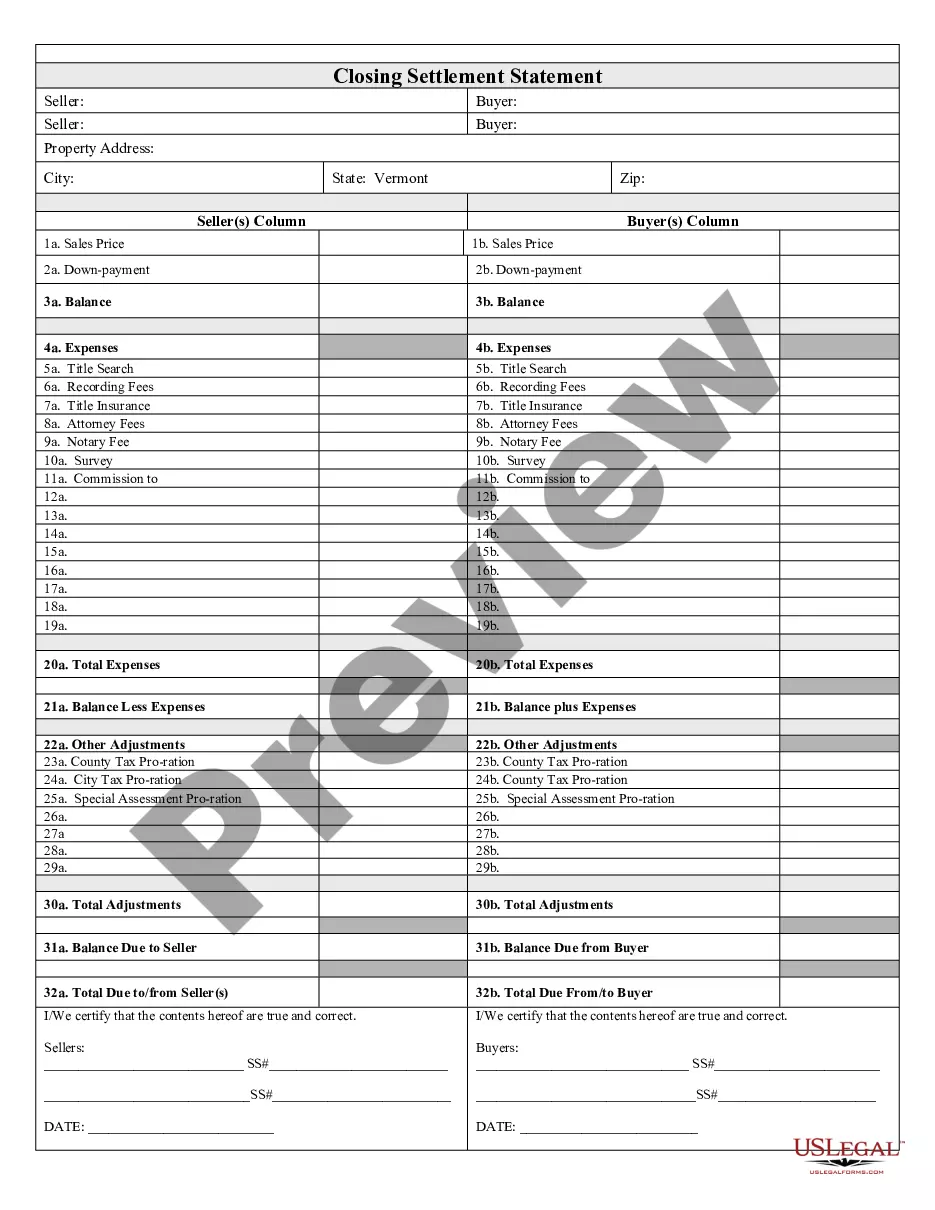
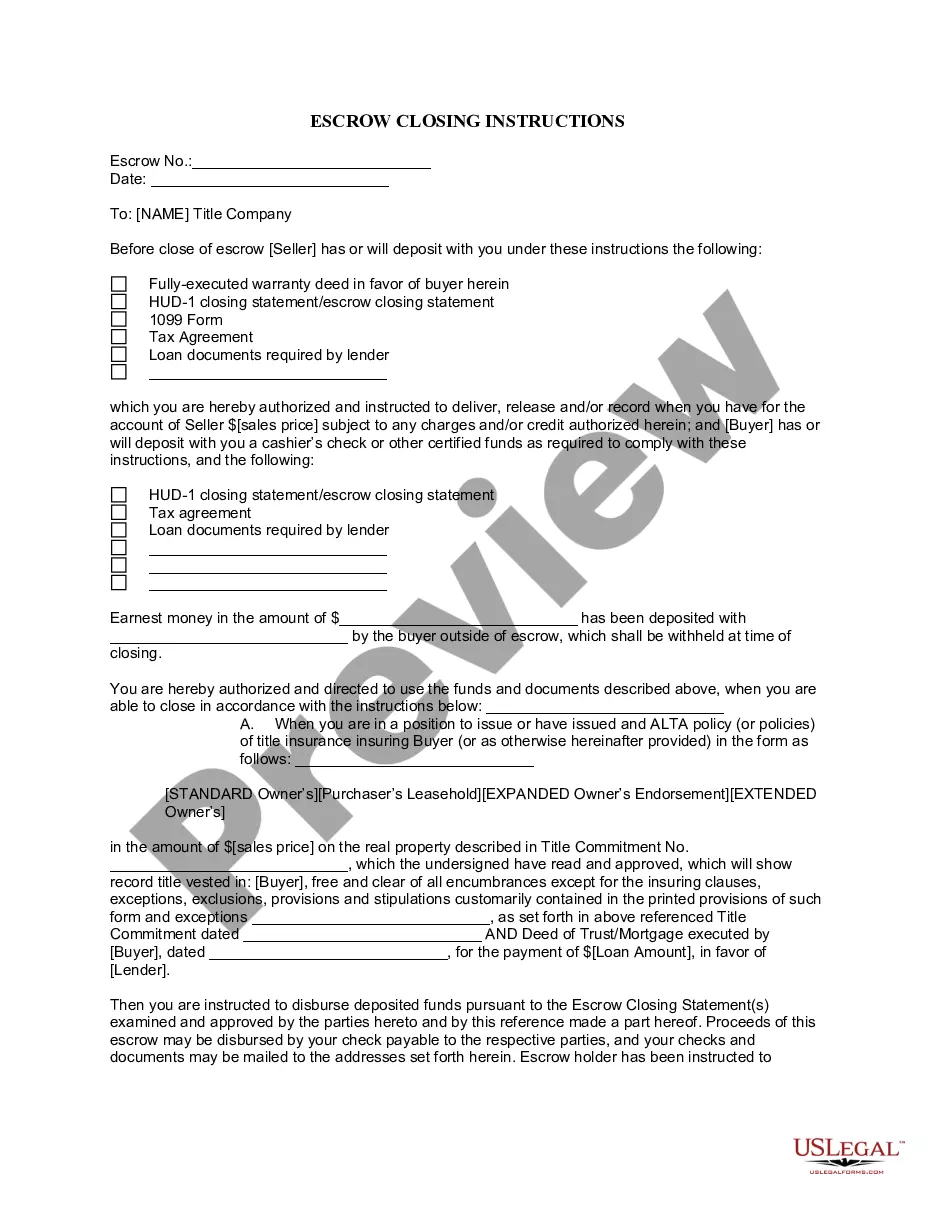
The Closing Statement is a crucial document in real estate transactions, particularly for cash sales or transactions involving owner financing. This form outlines all financial details of the transaction, including sales price, expenses, and balances due to or from either party. It is essential for ensuring that both the seller and buyer are on the same page regarding the financial aspects of the sale, and must be verified and signed by both parties to be legally valid.
Key components of this form
- Balance: Represents the final financial position after all expenses are calculated.
- Expenses: Details all costs related to the transaction, such as attorney fees and title insurance.
- Title Search: Indicates if a title search has been conducted, ensuring the property is free from liens.
- Recording Fees: Lists charges for filing necessary documents with the local government.
- Adjustment Entries: Accounts for prorations, taxes, and any other financial adjustments between the parties.
- Signatures: Certifies that all information provided is accurate and that both parties agree with the terms.

When to use this document
This form should be used during a real estate transaction that involves a cash sale or owner financing. It is vital for both buyers and sellers to have a clear record of all financial details before the transaction closes. Use the Closing Statement to confirm all party agreements on expenses and balances, ensuring a smooth transfer of property ownership.
Intended users of this form
- Home buyers engaging in a direct purchase without third-party financing.
- Home sellers who need to finalize the sale of their property.
- Real estate agents facilitating transactions that involve cash or owner financing.
Completing this form step by step
- Identify the parties involved: Clearly state the names and contact information of the buyer(s) and seller(s).
- Specify the property: Enter the address and any additional details necessary to identify the property being sold.
- Fill in financial details: List all expenses, taxes, and adjustments as required by the transaction.
- Calculate the total: Sum all amounts to reflect the final balance due to/from each party.
- Sign and date: Ensure both parties sign and date the document to attest to its accuracy.
Is notarization required?
This form must be notarized to be legally valid. US Legal Forms provides secure online notarization powered by Notarize, allowing you to complete the process through a verified video call.
Get your form ready online
Our built-in tools help you complete, sign, share, and store your documents in one place.
Make edits, fill in missing information, and update formatting in US Legal Forms—just like you would in MS Word.
Download a copy, print it, send it by email, or mail it via USPS—whatever works best for your next step.
Sign and collect signatures with our SignNow integration. Send to multiple recipients, set reminders, and more. Go Premium to unlock E-Sign.
If this form requires notarization, complete it online through a secure video call—no need to meet a notary in person or wait for an appointment.
We protect your documents and personal data by following strict security and privacy standards.

Make edits, fill in missing information, and update formatting in US Legal Forms—just like you would in MS Word.

Download a copy, print it, send it by email, or mail it via USPS—whatever works best for your next step.

Sign and collect signatures with our SignNow integration. Send to multiple recipients, set reminders, and more. Go Premium to unlock E-Sign.

If this form requires notarization, complete it online through a secure video call—no need to meet a notary in person or wait for an appointment.

We protect your documents and personal data by following strict security and privacy standards.
Typical mistakes to avoid
- Failing to include all relevant expenses, leading to discrepancies in the final balance.
- Not securing signatures from both parties, which invalidates the form.
- Forgetting to adjust for property taxes or other prorations correctly.
Why complete this form online
- Instant access to professionally drafted templates, saving time and reducing errors.
- Easy editability allows for adjustments to cater to specific real estate transactions.
- Downloadable formats provide flexibility in how the form can be stored and shared.
Looking for another form?
Form popularity
FAQ
Closing Costs for Vermont Homes: What to Expect However, this does not include variable costs like title insurance, title search, taxes, other government fees, escrow fees, and discount points. In general, buyers should expect to pay between 2% and 5% of the closing price in closing costs.
The homebuyer pays the tax When a home purchase closes, the home buyer is required to pay, among other closing costs, the Vermont Property Transfer Tax. The buyer is taxed is at a rate of 0.5% of the first $100,000 of the home's value and 1.45% of the remaining portion of the value.
Who pays closing costs? Typically, both buyers and sellers pay closing costs, with buyers generally paying more than sellers. The buyer's closing costs typically run 5 to 6 percent of the sale price, according to Realtor.com.
Closing costs are expenses related to making a loan and closing the purchase, Ailion says. They include attorney fees, title fees, survey fees, transfer fees and transfer taxes.Closing costs are due when you sign your final loan documents.
A closing statement, also called a HUD-1 statement or settlement sheet, is a form used in real estate transactions with an itemized list of all the costs to the buyer and seller.
Closing costs are paid according to the terms of the purchase contract made between the buyer and seller. Usually the buyer pays for most of the closing costs, but there are instances when the seller may have to pay some fees at closing too.
What is the seller's closing statement, aka settlement statement? The seller's closing statement is an itemized list of fees and credits that shows your net profits as the seller, and summarizes the finances of the entire transaction.
In general, average closing costs in Vermont will range from about 2% to 3% of the total loan/value of the house, although the percentage will be lower with higher priced homes since certain costs (ie, appraisals and credit reports) don't vary much in price regardless of the type of home you are buying.