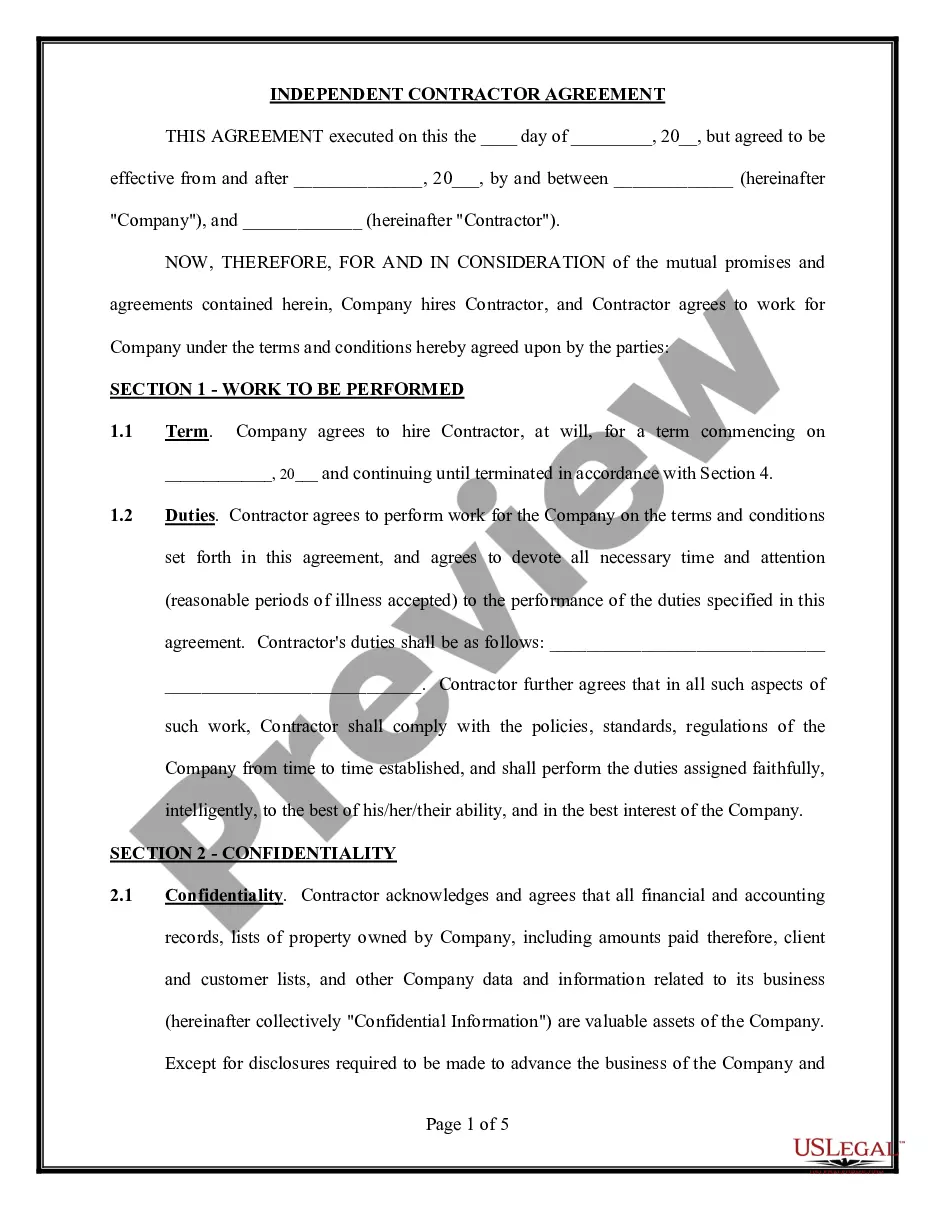
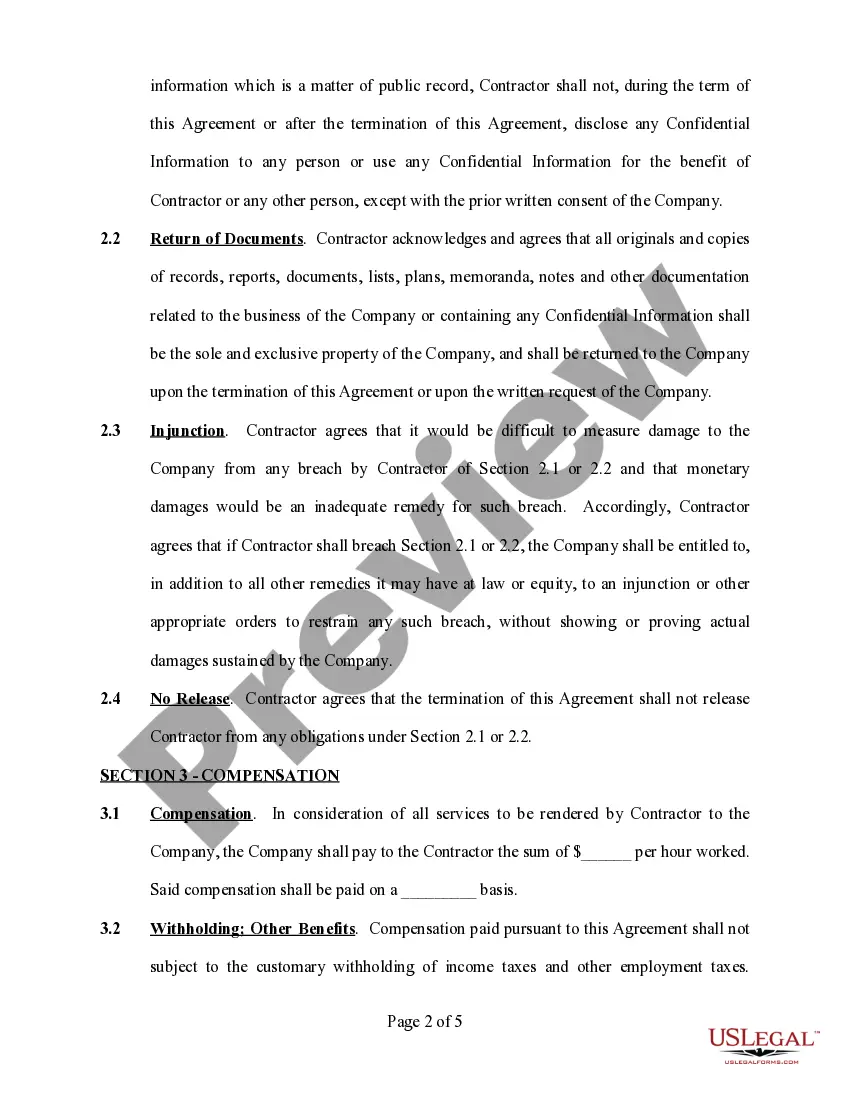
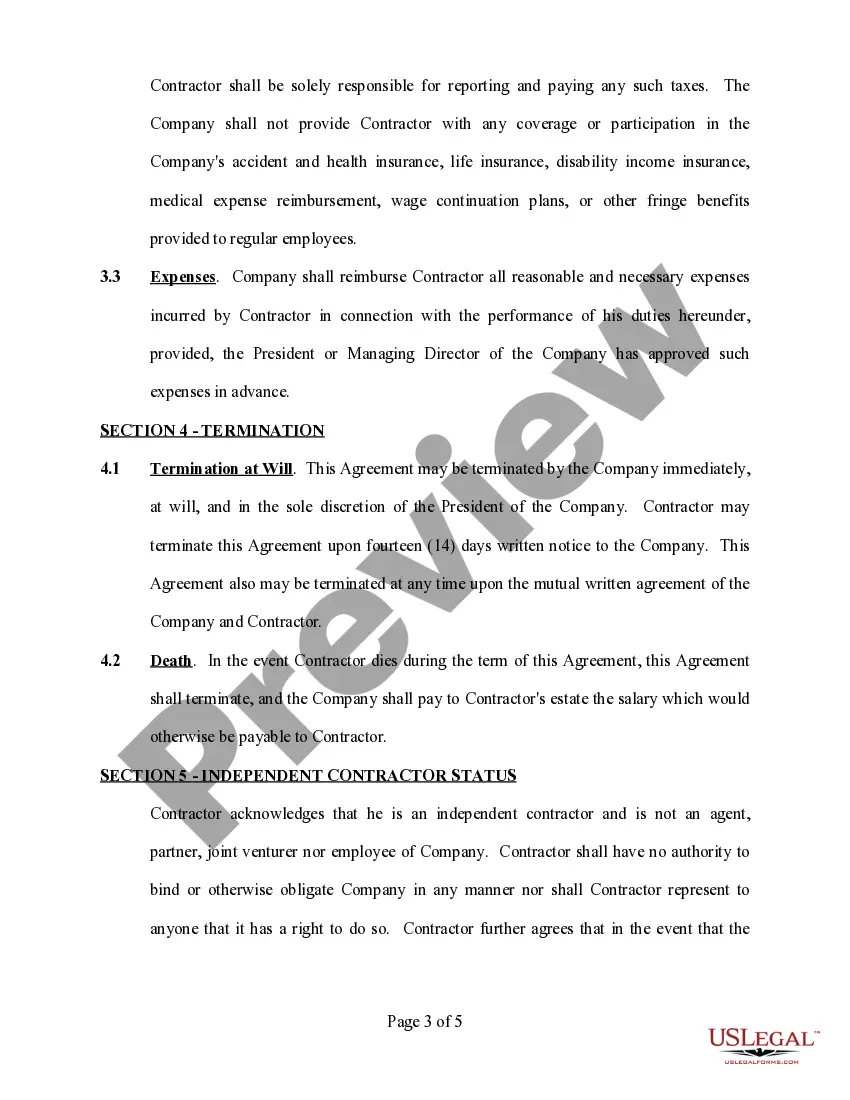
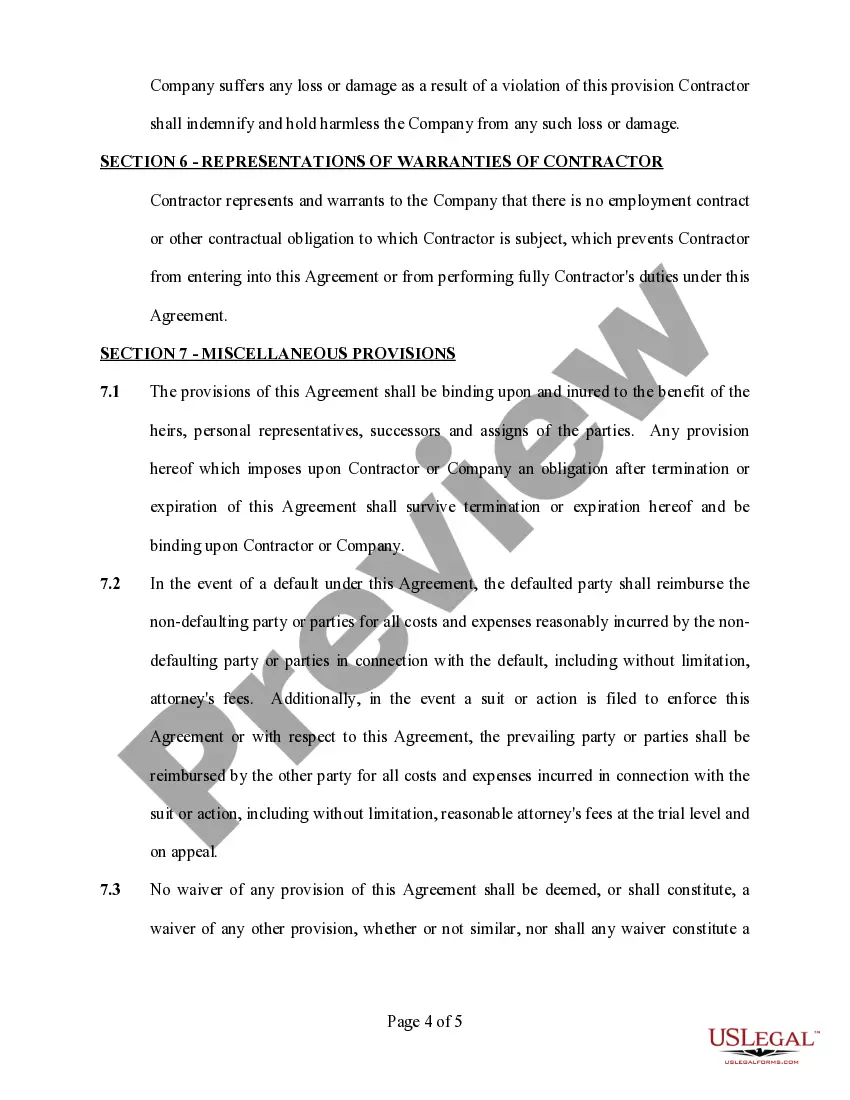
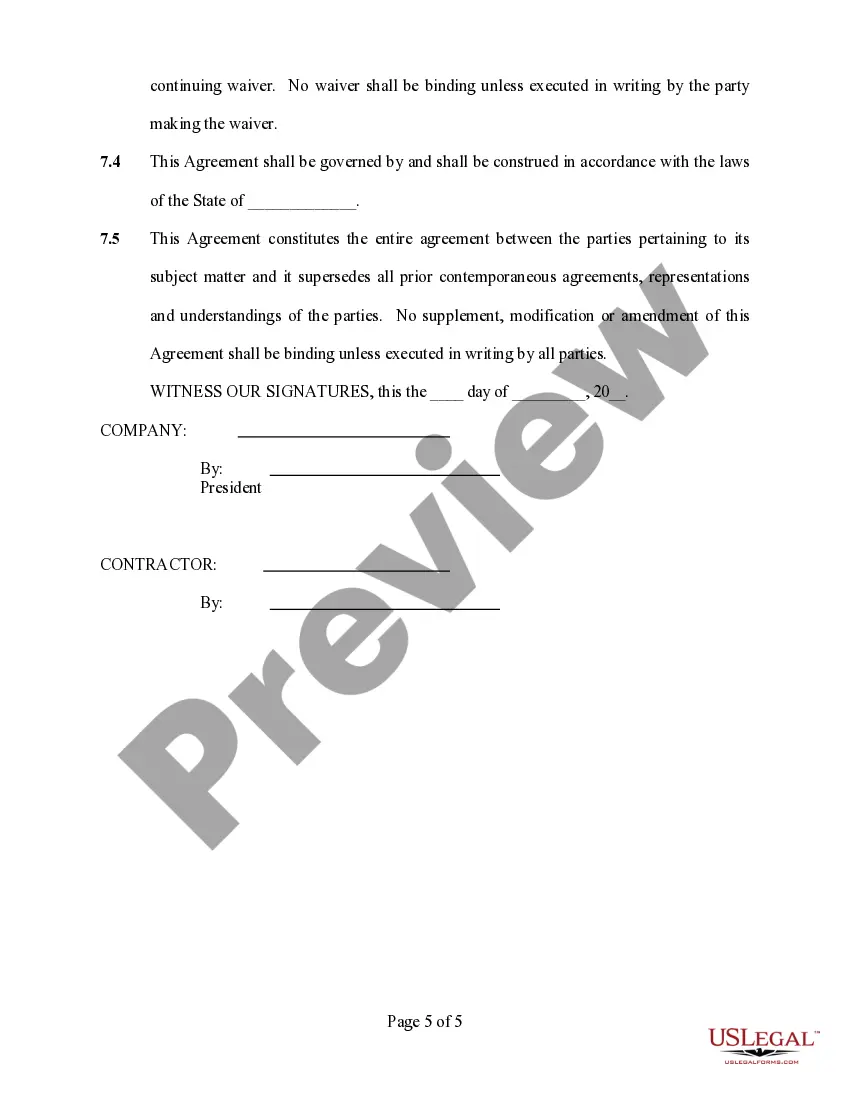
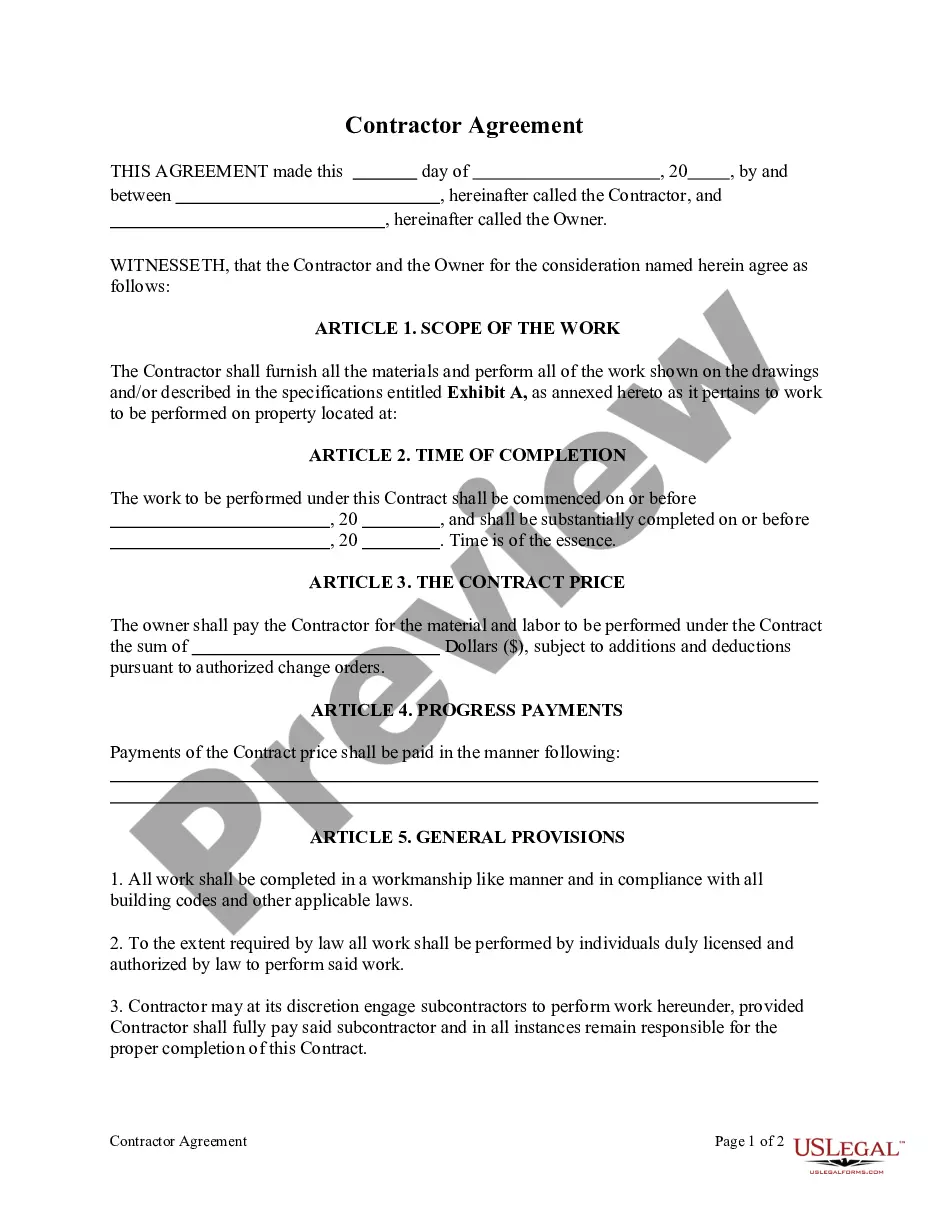
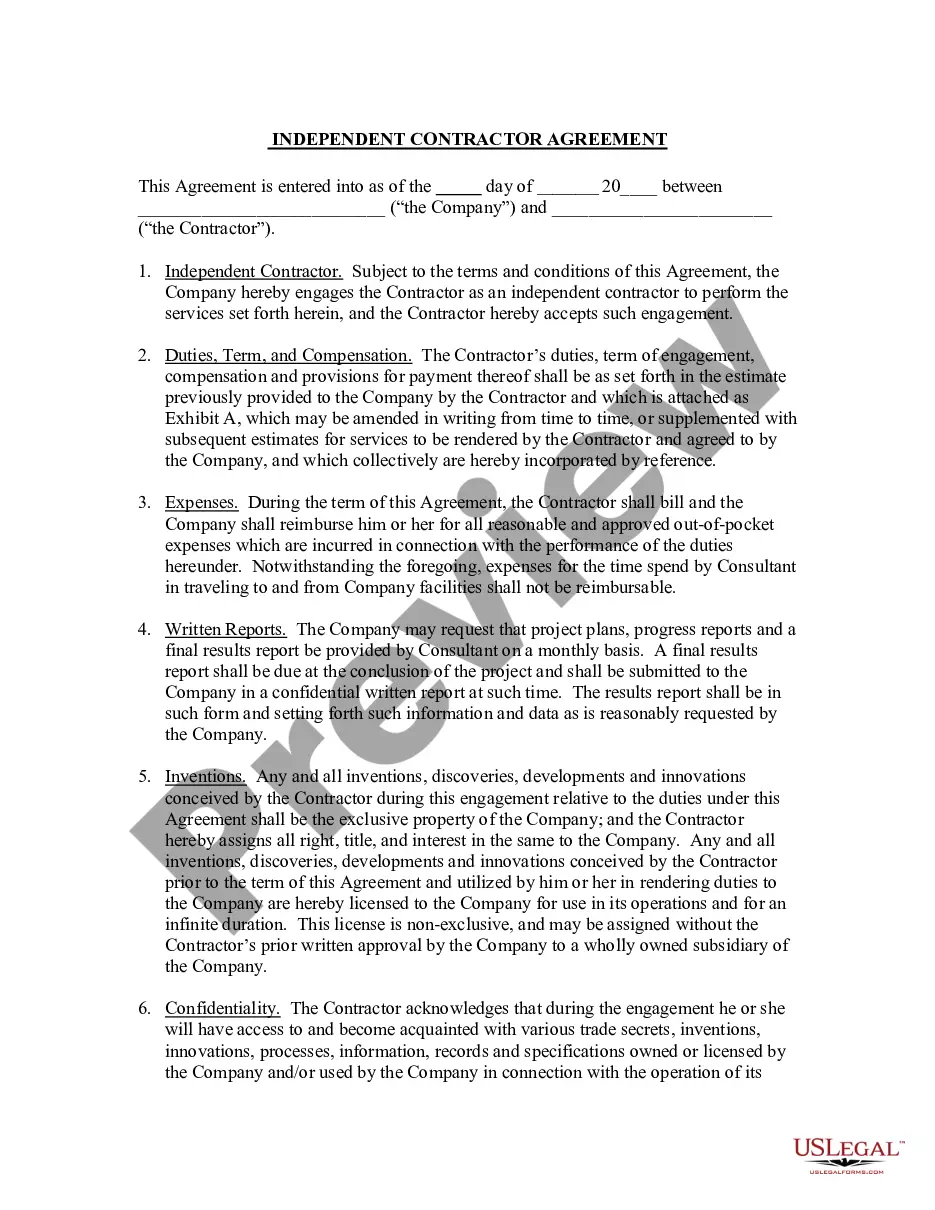
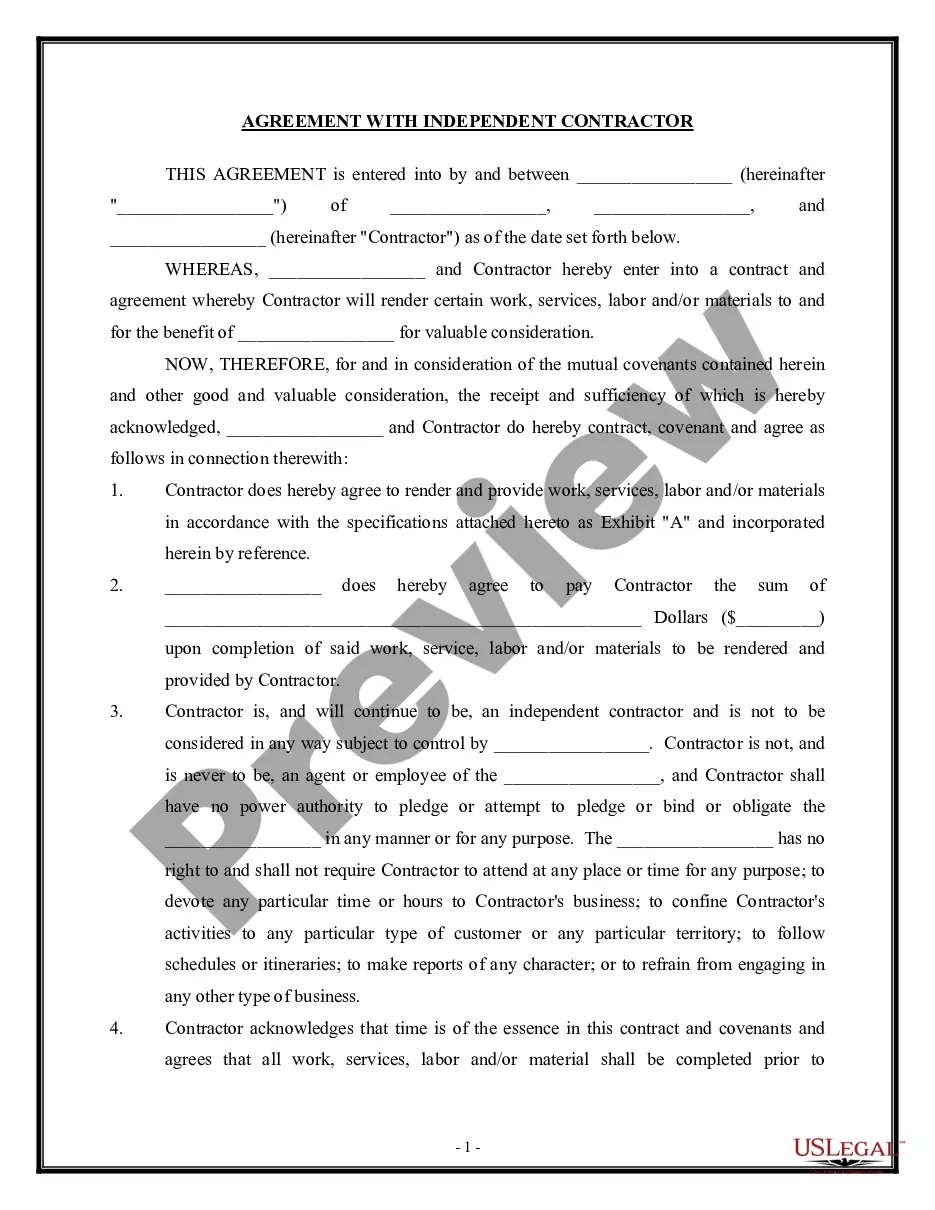
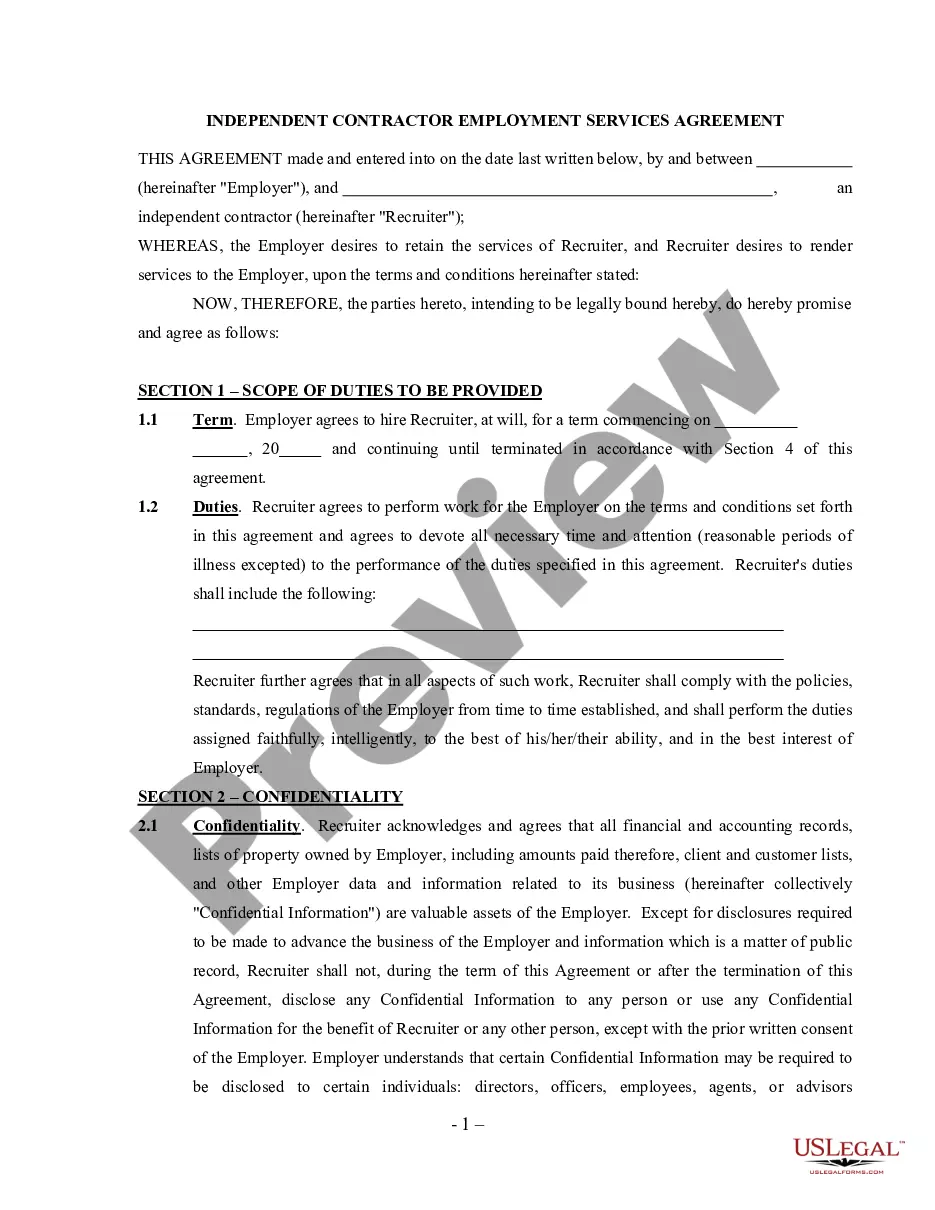
A company agrees to hire a contractor to perform work on the terms and conditions set forth in the agreement. The contractor agrees that all financial and accounting records will remain the confidential property of the company. The form also provides that the company will reimburse the contractor for all reasonable and necessary expenses incurred by the contractor with the performance of his/her duties.
Virgin Islands Self-Employed Independent Contractor Employment Agreement - General
State:
Multi-State
Category:
Control #:
US-60701
Format:
Word;
Rich Text
1,677 downloads
Description
Free preview
Get your form ready online
Our built-in tools help you complete, sign, share, and store your documents in one place.
Built-in online Word editor
Make edits, fill in missing information, and update formatting in US Legal Forms—just like you would in MS Word.
Export easily
Download a copy, print it, send it by email, or mail it via USPS—whatever works best for your next step.
E-sign your document
Sign and collect signatures with our SignNow integration. Send to multiple recipients, set reminders, and more. Go Premium to unlock E-Sign.
Notarize online 24/7
If this form requires notarization, complete it online through a secure video call—no need to meet a notary in person or wait for an appointment.
Store your document securely
We protect your documents and personal data by following strict security and privacy standards.

Make edits, fill in missing information, and update formatting in US Legal Forms—just like you would in MS Word.

Download a copy, print it, send it by email, or mail it via USPS—whatever works best for your next step.

Sign and collect signatures with our SignNow integration. Send to multiple recipients, set reminders, and more. Go Premium to unlock E-Sign.

If this form requires notarization, complete it online through a secure video call—no need to meet a notary in person or wait for an appointment.

We protect your documents and personal data by following strict security and privacy standards.
Looking for another form?

How to fill out Self-Employed Independent Contractor Employment Agreement - General?
Have you ever faced a scenario where you require documents for either business or personal activities virtually every day.
There are numerous legal document templates available online, but locating the ones you can trust is not simple.
US Legal Forms offers a vast array of form templates, such as the Virgin Islands Self-Employed Independent Contractor Employment Agreement - General, that are designed to comply with state and federal regulations.
Once you find the appropriate form, click Purchase now.
Select the pricing plan you prefer, complete the necessary information to create your account, and complete the payment using your PayPal or Visa or Mastercard.
- If you are already acquainted with the US Legal Forms website and possess an account, simply Log In.
- Then, you can download the Virgin Islands Self-Employed Independent Contractor Employment Agreement - General template.
- If you do not have an account and wish to start using US Legal Forms, follow these instructions.
- Obtain the form you need and ensure it is for the relevant state/county.
- Utilize the Review button to examine the form.
- Check the details to ensure you have selected the correct form.
- If the form is not what you're looking for, use the Search section to find the form that meets your needs and specifications.
Form popularity
FAQ
Yes, self-employed individuals should have a contract to clarify the terms of their work. A Virgin Islands Self-Employed Independent Contractor Employment Agreement - General sets the expectations and responsibilities for both parties. This contract protects your rights and provides a clear understanding of the services you will perform. Using a proper employment agreement helps to reduce misunderstandings and establish a professional relationship.
A 1099 employee is a US self-employed worker that reports their income to the IRS on a 1099 tax form. Freelancers, gig workers, and independent contractors are all considered 1099 employees.
Cons of Independent ContractingContractors must withhold their own federal, state, and local taxes. They may also have to submit quarterly estimated taxes to the IRS. In most cases, contractors aren't eligible for state unemployment benefits, because they're self-employed, and they must fund their retirement accounts.
If you are an independent contractor, then you are self-employed. The earnings of a person who is working as an independent contractor are subject to self-employment tax. To find out what your tax obligations are, visit the Self-Employed Individuals Tax Center.
Doing Work as an Independent Contractor: How to Protect Yourself and Price Your ServicesProtect your social security number.Have a clearly defined scope of work and contract in place with clients.Get general/professional liability insurance.Consider incorporating or creating a limited liability company (LLC).More items...?
Independent contractors are self-employed workers who provide services for an organisation under a contract for services. Independent contractors are not employees and are typically highly skilled, providing their clients with specialist skills or additional capacity on an as needed basis.
Simply put, being an independent contractor is a way of being self-employed. Is an independent contractor self-employed? Yes. Independent contractors are self-employed who earn an income but do not work as employees.
But in a strict sense, self-employed contractors do not have the rights and protections afforded to employees and workers. However, even if someone is described as being self-employed in their contract and pays tax as a self-employed person, they may in fact have 'worker' or, in some cases, 'employee' status.
In general, an independent contractor is someone who is in business for himself or herself. Independent contractors usually perform work that requires a specialized skill or trade that is not part of a company's regular business.
Remember that an independent contractor is considered to be self-employed, so in effect, you are running your own one-person business. Any income that you earn as an independent contractor must be reported on Schedule C. You'll then pay income taxes on the total profit.
