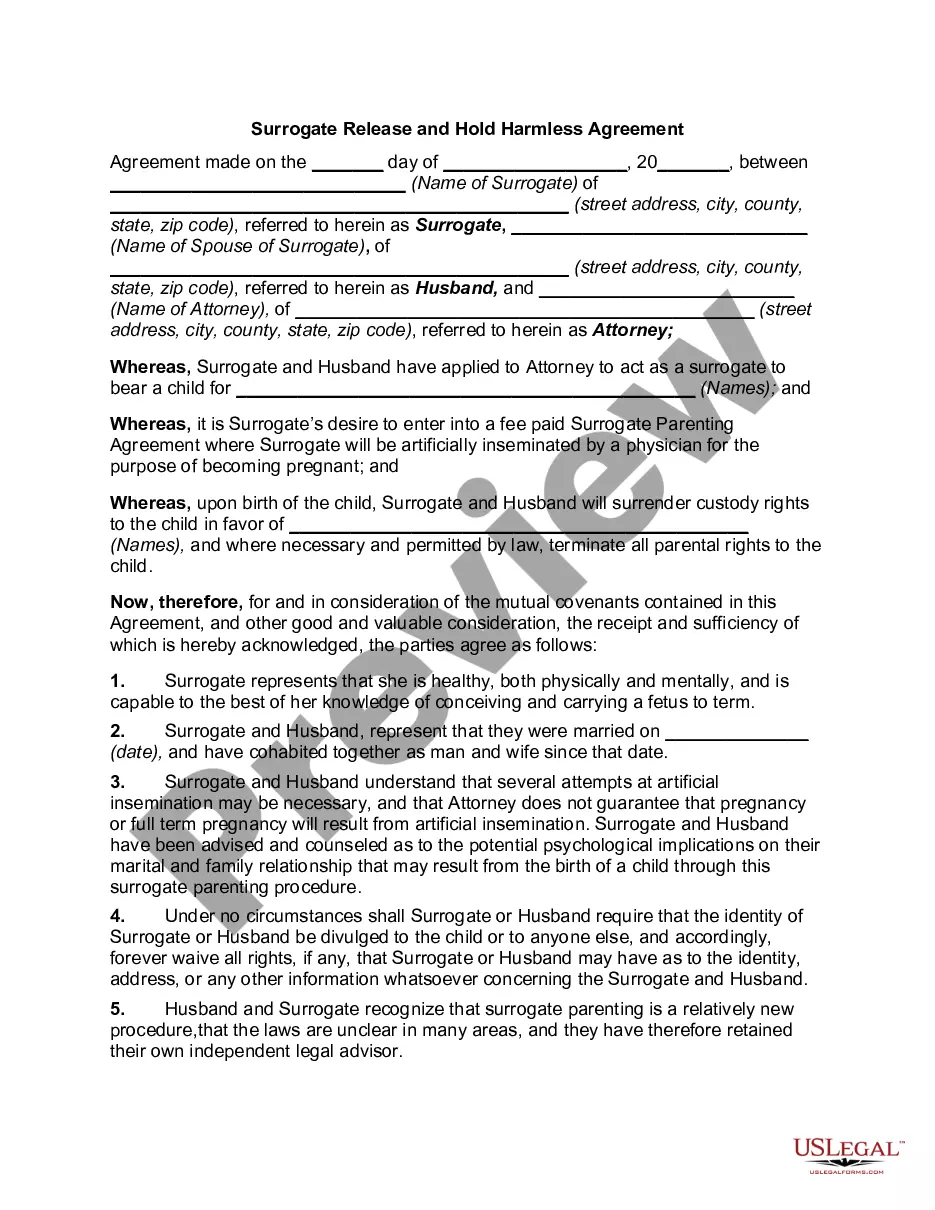
Virgin Islands Surrogate Parenting Agreement
Description
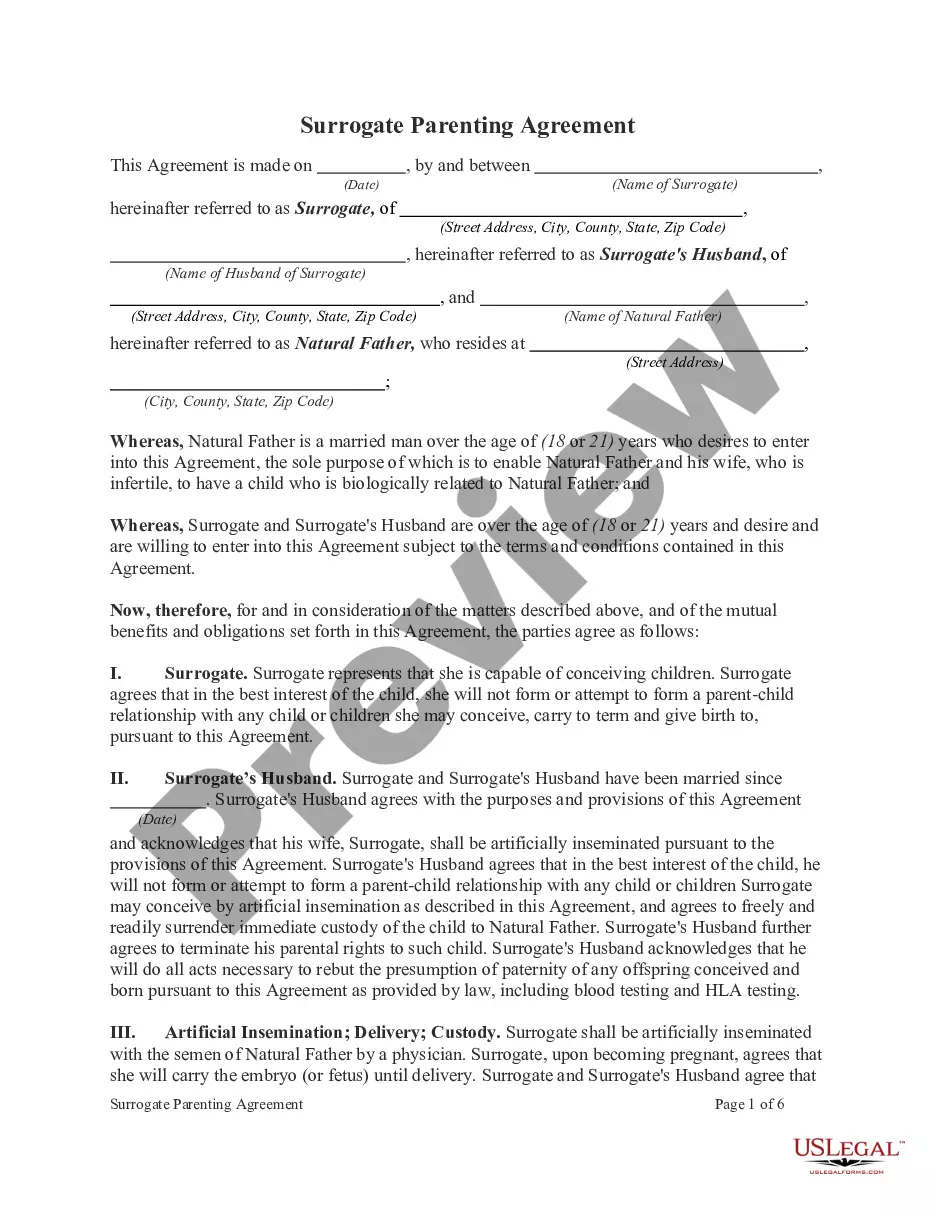
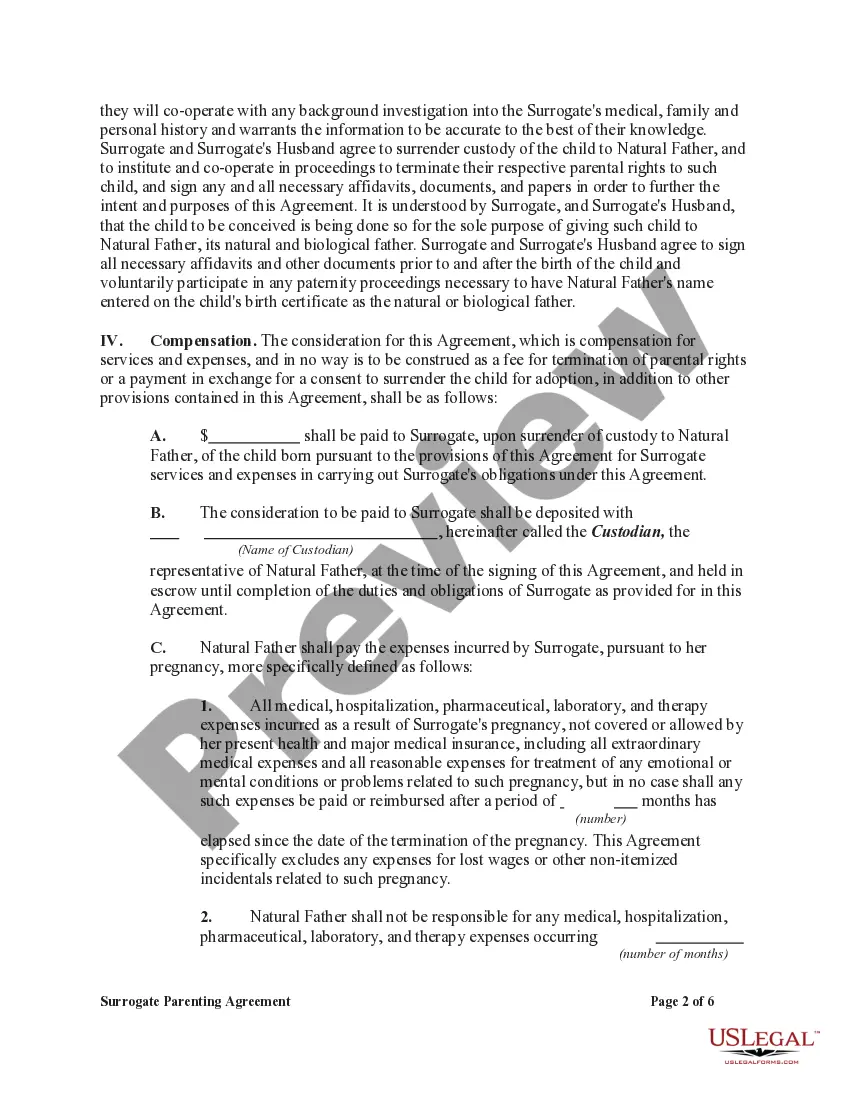
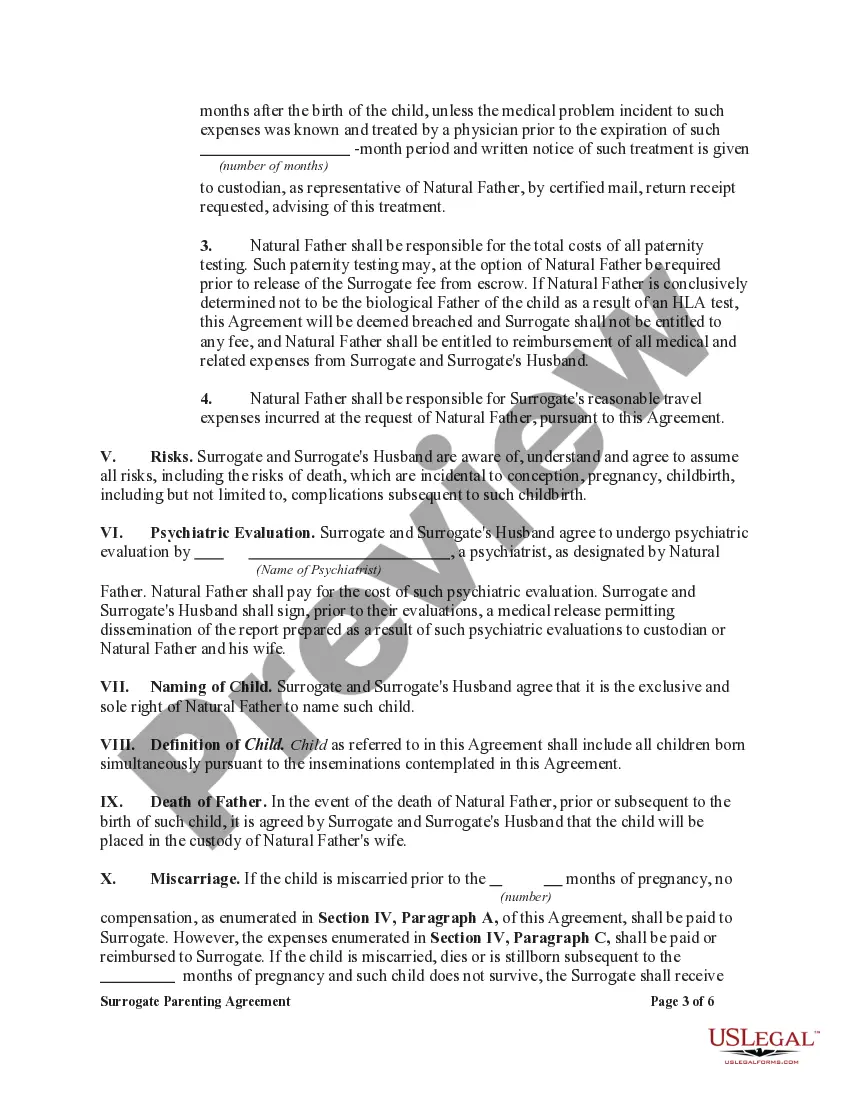
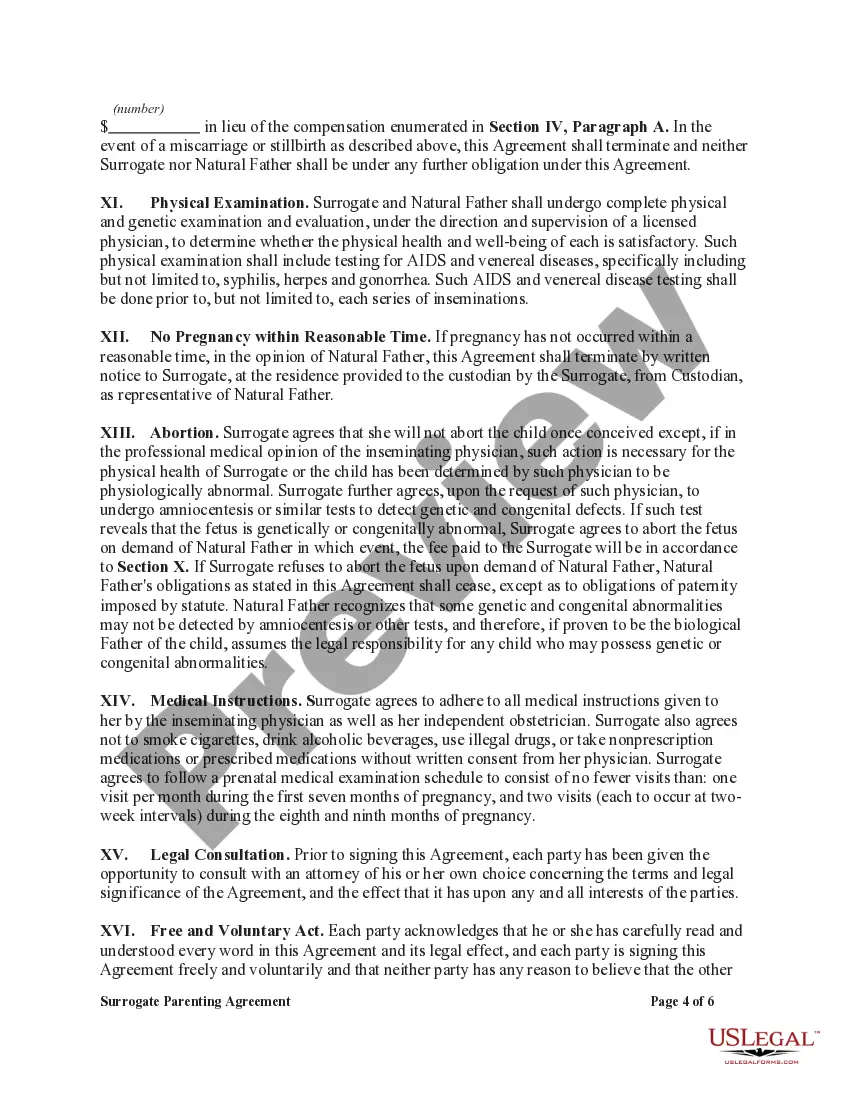
Get your form ready online
Our built-in tools help you complete, sign, share, and store your documents in one place.
Make edits, fill in missing information, and update formatting in US Legal Forms—just like you would in MS Word.
Download a copy, print it, send it by email, or mail it via USPS—whatever works best for your next step.
Sign and collect signatures with our SignNow integration. Send to multiple recipients, set reminders, and more. Go Premium to unlock E-Sign.
If this form requires notarization, complete it online through a secure video call—no need to meet a notary in person or wait for an appointment.
We protect your documents and personal data by following strict security and privacy standards.

Make edits, fill in missing information, and update formatting in US Legal Forms—just like you would in MS Word.

Download a copy, print it, send it by email, or mail it via USPS—whatever works best for your next step.

Sign and collect signatures with our SignNow integration. Send to multiple recipients, set reminders, and more. Go Premium to unlock E-Sign.

If this form requires notarization, complete it online through a secure video call—no need to meet a notary in person or wait for an appointment.

We protect your documents and personal data by following strict security and privacy standards.
Looking for another form?

How to fill out Surrogate Parenting Agreement?
US Legal Forms - among the largest collections of legal documents in the United States - offers a range of legal document templates you can obtain or print.
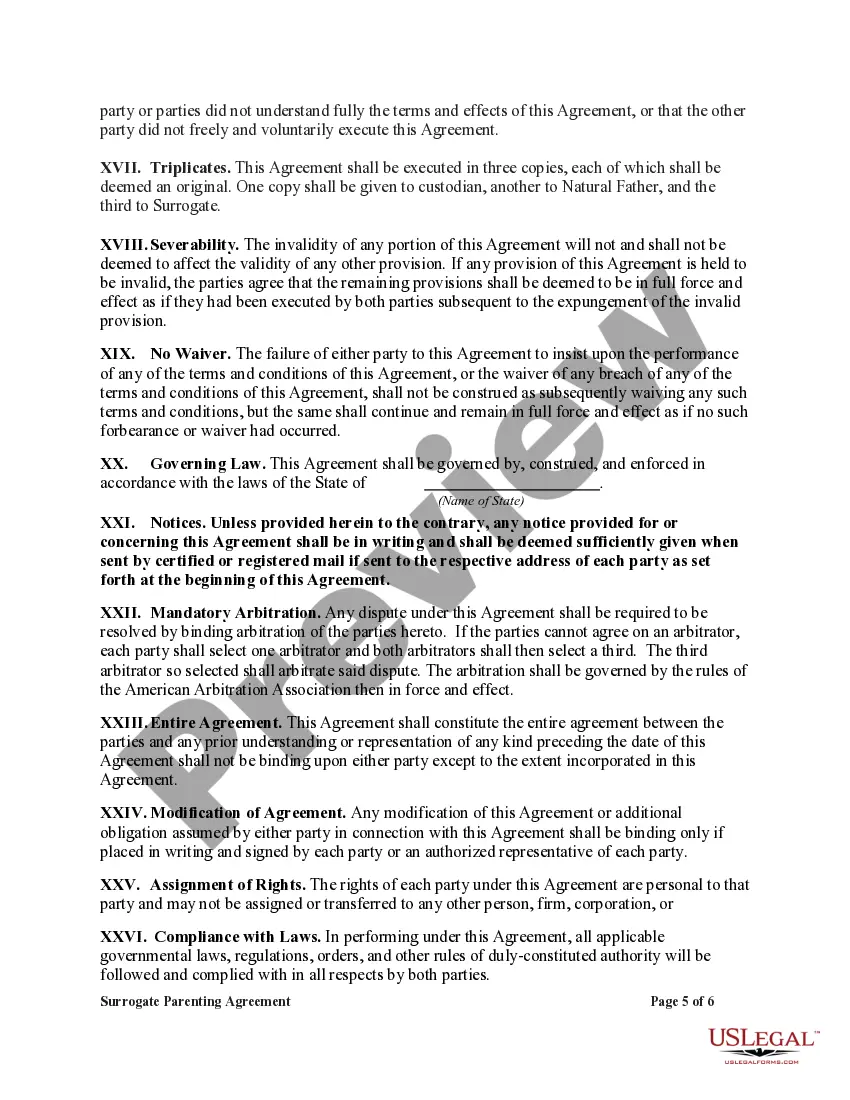
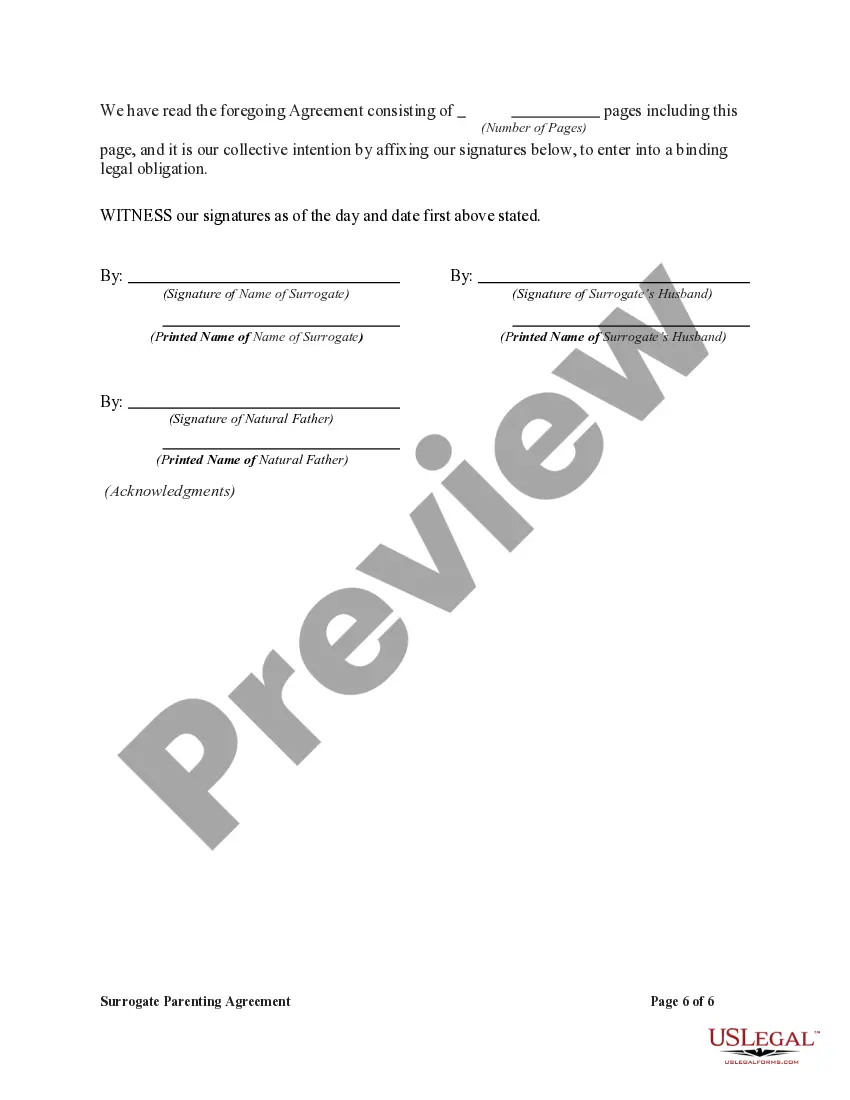
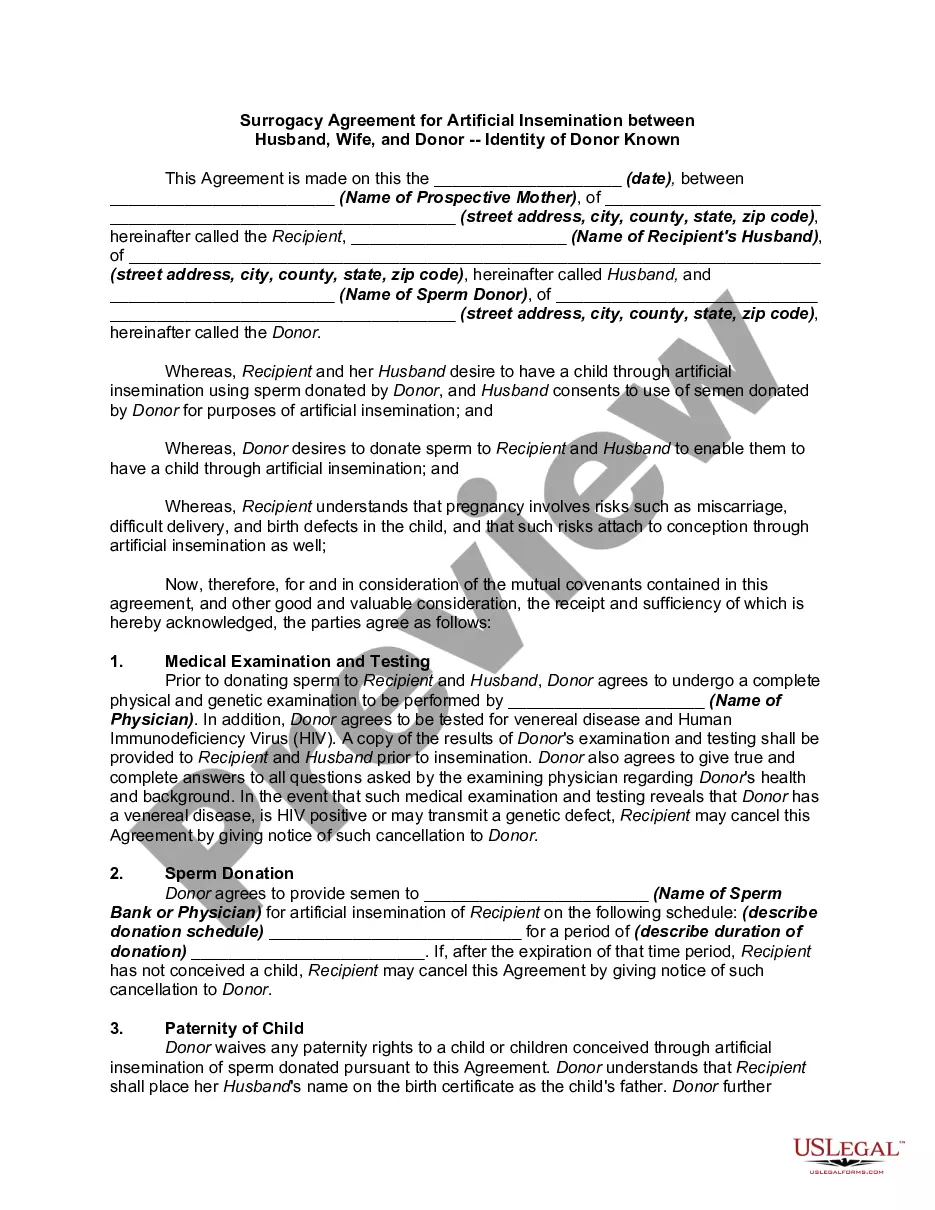
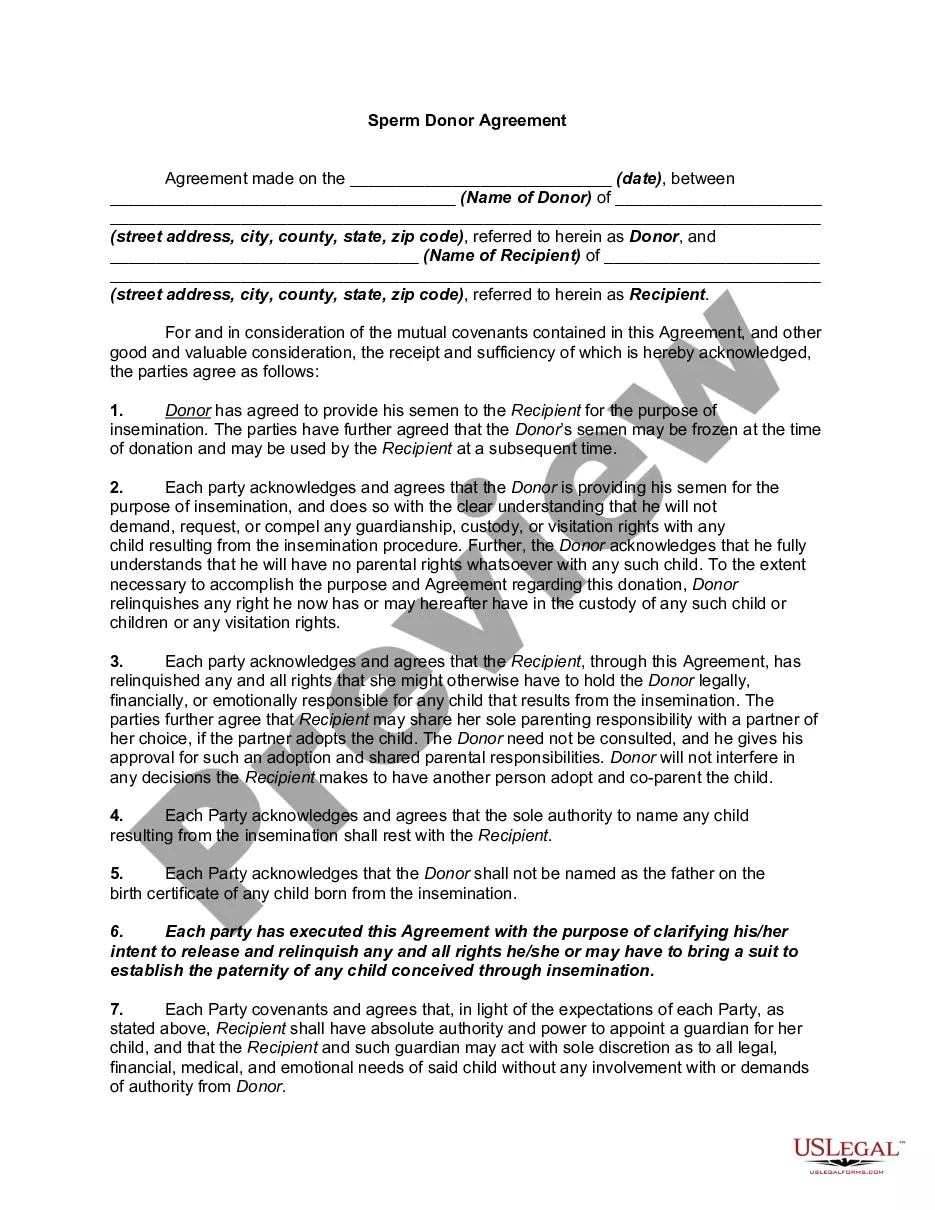
Using the website, you can access thousands of forms for business and personal purposes, categorized by types, states, or keywords. You will find the latest versions of forms such as the Virgin Islands Surrogate Parenting Agreement within moments.
If you already possess a membership, Log In and download the Virgin Islands Surrogate Parenting Agreement from the US Legal Forms library. The Download option will be available on every form you view. You can access all previously downloaded forms through the My documents section of your account.
Complete the transaction. Use a credit card like Visa or Mastercard or a PayPal account to finalize the purchase.
Select the format and download the form to your device.Make changes. Fill out, modify, and print and sign the downloaded Virgin Islands Surrogate Parenting Agreement.
- If you are using US Legal Forms for the first time, here are easy steps to get started.
- Ensure you have chosen the correct form for your city/state.
- Utilize the Review option to check the form’s details.
- Read the description of the form to confirm you have selected the right one.
- If the form does not meet your needs, make use of the Search field at the top of the screen to find one that does.
- When satisfied with the form, affirm your choice by clicking the Download now button.
- Then, select your preferred payment plan and provide your credentials to register for an account.
Form popularity
FAQ
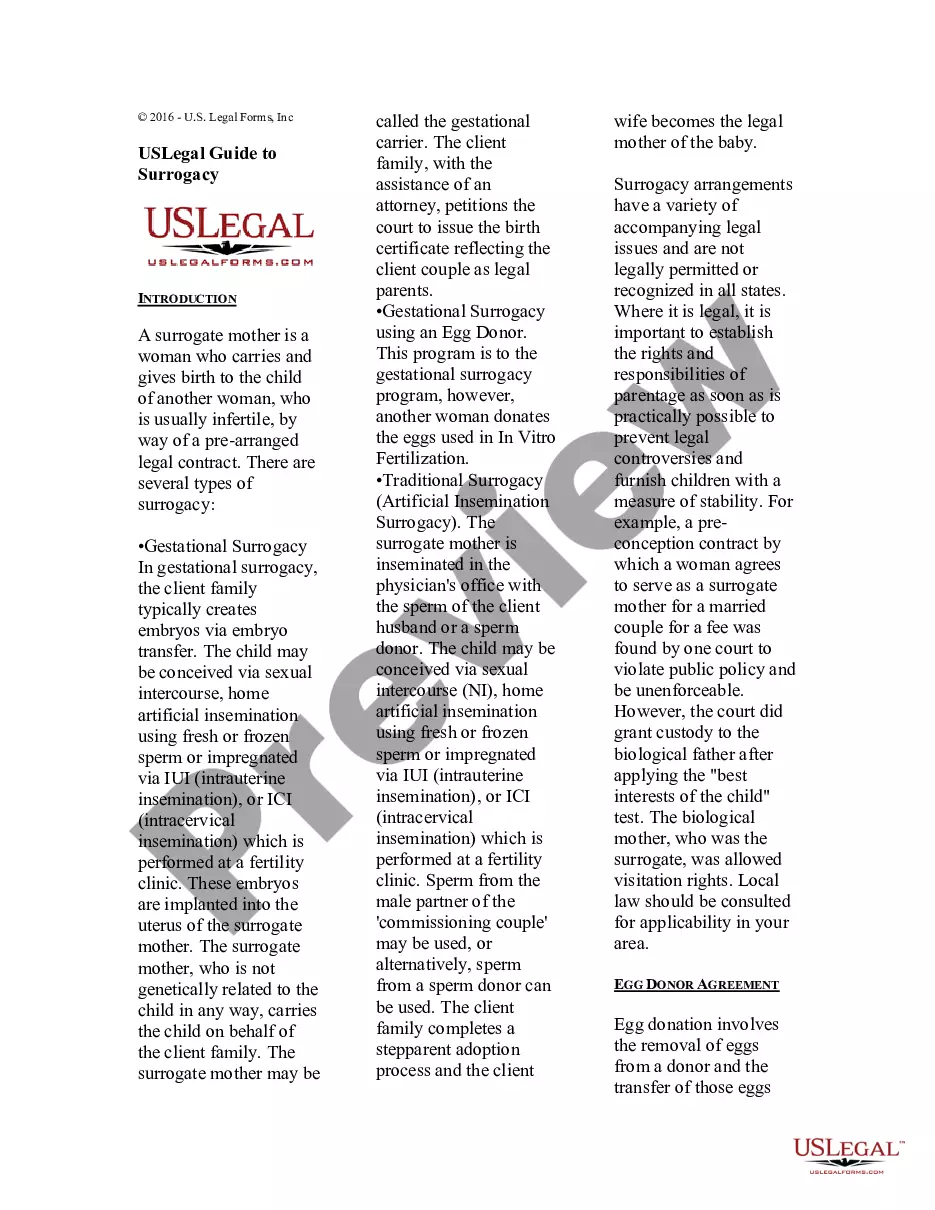
A fairly common question that people have is whether the baby will share the DNA of the surrogate mother. The short answer is no. All babies, no matter the nature of their conception, have the genetic material provided by the parents. Therefore, the surrogate mother contributes little or none of the genetic material.
With surrogacy, all the parties involved have certain rights. However, from a legal perspective, when the mother signs the surrogacy agreement, she's essentially signing away her right to keep the child. So if she changes her mind and decides post-birth that she wants to keep the baby, legally she's in the wrong.
No. While a surrogate has rights, the right to keep the child is not one of them. Once legal parenthood is established, the surrogate has no legal rights to the child and she cannot claim to be the legal mother.
A traditional surrogate is the biological mother of her child, meaning she has parental rights and the power to change her mind and keep the baby. The intended parents would then need to go to court to gain custody of the child.
The surrogate who has given birth is automatically regarded as the child's legal parent, even if they are not genetically related.
Does a surrogate mother share her DNA with the baby? This is a fairly common question and the answer is no. In a compensated surrogacy arrangement with a gestational carrier, the baby's DNA comes from the intended mother's egg, or from an egg donor, and from the intended father's sperm, or from a sperm donor.
The surrogate then carries the baby until birth. They don't have any genetic ties to the child because it wasn't their egg that was used. A gestational surrogate is called the "birth mother." The biological mother, though, is still the woman whose egg was fertilized.
Can my surrogate decide to keep the baby? While your surrogate has many rights outlined in your contract, a gestational carrier cannot choose to keep the child because she won't have parental rights to the baby and won't be biologically related.
A traditional surrogate is the biological mother of the child, however, as a traditional surrogate, you would sign over your parental rights to the child's intended parents. Without a contract, you would be the baby's legal mother and the intended father who gave the sperm would be the legal father.
A gestational surrogate is not biologically related to the child they will carry. The embryo is created via in vitro fertilization (IVF) with the egg and sperm of the intended parents or chosen donors, and is then transferred to the surrogate.