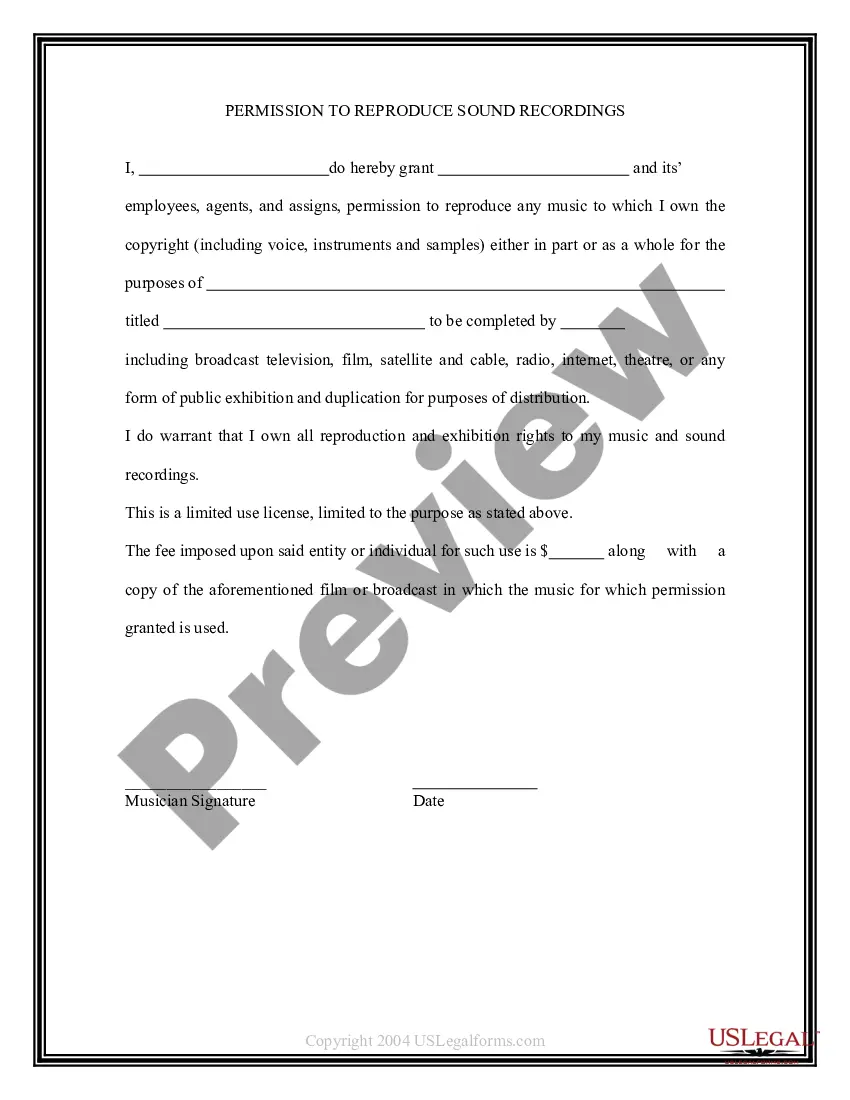
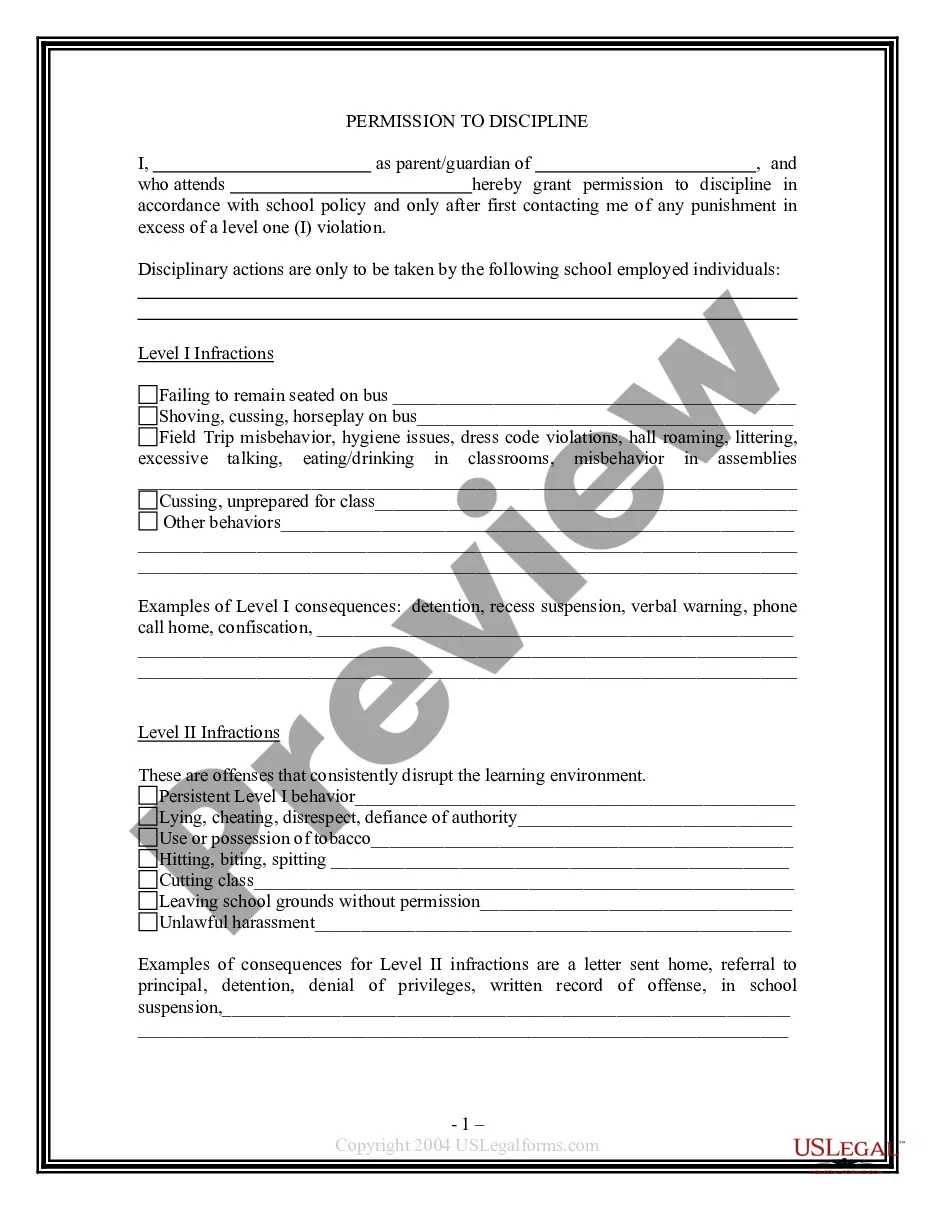
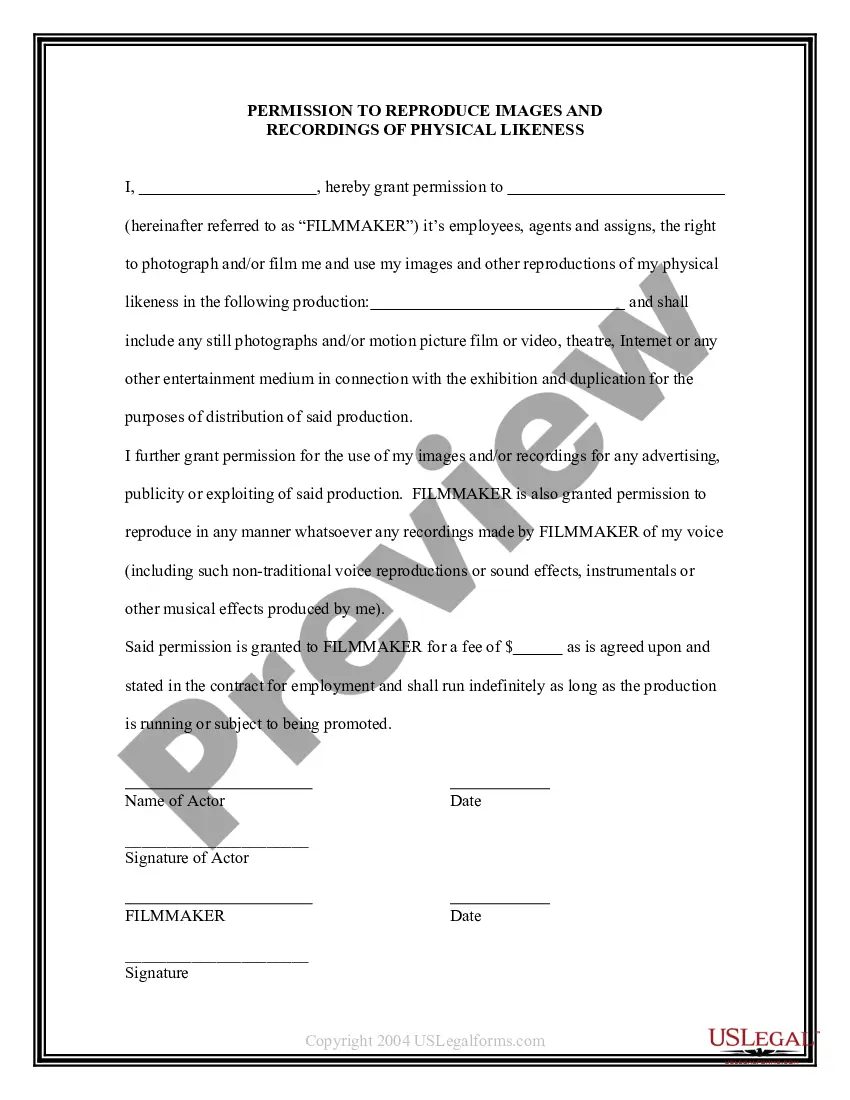
This is a form signed by a musician or owner of music granting permission to reproduce copyrighted music for use in a film, television, Internet, radio etc.
Virginia Permission To Reproduce Sound Recordings
State:
Multi-State
Control #:
US-PRM-23
Format:
Word;
Rich Text
Instant download
Description

How to fill out Permission To Reproduce Sound Recordings?
Selecting the correct legal document template can be a challenge. Clearly, there are numerous templates available online, but how will you obtain the legal form you require? Utilize the US Legal Forms website. This service offers thousands of templates, including the Virginia Permission To Reproduce Sound Recordings, suitable for both business and personal needs. All forms are reviewed by professionals and comply with state and federal guidelines.
If you are already registered, Log In to your account and then click the Acquire button to obtain the Virginia Permission To Reproduce Sound Recordings. Use your account to browse through the legal forms you have previously purchased. Navigate to the My documents section of your account and retrieve another copy of the document you need.
If you are a new user of US Legal Forms, here are simple steps for you to follow: First, ensure you have selected the correct form for your area/state. You can view the form using the Review button and read the form description to verify it is the right one for you. If the form does not meet your needs, use the Search section to find the appropriate form. Once you are certain that the form is suitable, click the Get now button to obtain the form. Choose the pricing plan you want and enter the required information. Create your account and pay for your order using your PayPal account or Visa or Mastercard. Select the document format and download the legal document template to your device. Complete, modify, print, and sign the acquired Virginia Permission To Reproduce Sound Recordings.
US Legal Forms is a comprehensive resource for legal documentation, offering expertly designed templates that meet state requirements.
- US Legal Forms is the largest repository of legal documents where you can find a variety of form templates.
- Utilize the service to download professionally crafted paperwork that adheres to state regulations.
- Ensure accuracy in your document submissions by following guidelines provided.
- Access a wide range of forms for different legal needs in one convenient location.
- Benefit from the expertise of professionals who review all templates for compliance.
- Enjoy the convenience of managing your legal documents online with ease.
Form popularity
FAQ
In Virginia, using a secret recording as evidence can be complex. If the recording was made in violation of the state’s consent laws, it may be deemed inadmissible in court. However, if the recording complies with the Virginia Permission To Reproduce Sound Recordings requirements, it could potentially be used as evidence. Legal resources like uslegalforms can guide you on how to ensure your recordings meet legal standards.
Two-party consent laws require both parties to agree to the recording of a conversation. States with such laws include California, Florida, and Illinois, among others. Virginia, however, is a one-party consent state, meaning only one party needs to be aware of the recording. To navigate these regulations effectively, consider exploring the Virginia Permission To Reproduce Sound Recordings for clarity on your rights and obligations.
In Virginia, it is generally illegal for someone to record your voice without your consent. This falls under the state's wiretapping laws, which require at least one party to be aware of the recording. If you are concerned about unauthorized recordings, understanding the Virginia Permission To Reproduce Sound Recordings can help you protect your rights. Utilizing platforms like uslegalforms can provide you with the necessary legal documents to safeguard your interests.
California is an all-party consent state. It is illegal to record a confidential conversation, including private conversations or telephone calls, without consent in California.
In California, all parties to any confidential conversation must give their consent to be recorded. For calls occurring over cellular or cordless phones, all parties must consent before a person can record, regardless of confidentiality. Both civil and criminal penalties are available to victims of illegal recordings.
California is an all-party consent state. It is illegal to record a confidential conversation, including private conversations or telephone calls, without consent in California. A violation of this rule is the crime of eavesdropping, per Penal Code 632 PC.
Under the federal Wiretap Act, it is illegal for any person to secretly record an oral, telephonic, or electronic communication that other parties to the communication reasonably expect to be private. (18 U.S.C. § 2511.)
There is no Virginia case that has addressed the illegality of videotaping someone without their consent and capturing the oral communications that take place during the videotaping.
In Virginia, it is legal, and often admissible in Court, to record audio of conversations as long as one of the individuals being recorded is a) aware of the recording taking place, and b) consents to being recorded.
Virginia's wiretapping law is a "one-party consent" law. Virginia makes it a crime to intercept or record any "wire, oral, or electronic communication" unless one party to the conversation consents.