Virginia Cable Consortium Cable Television Franchise Agreement
Description
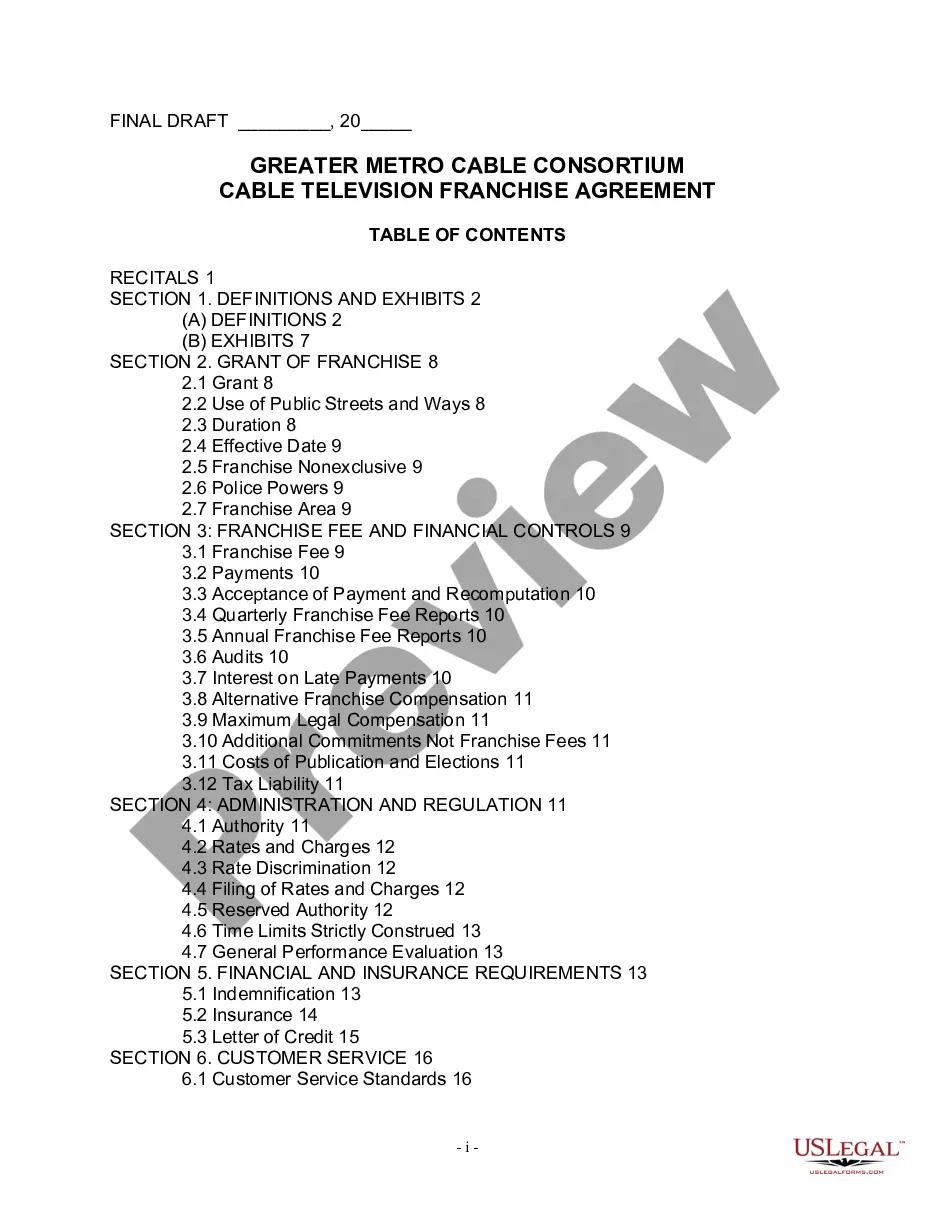
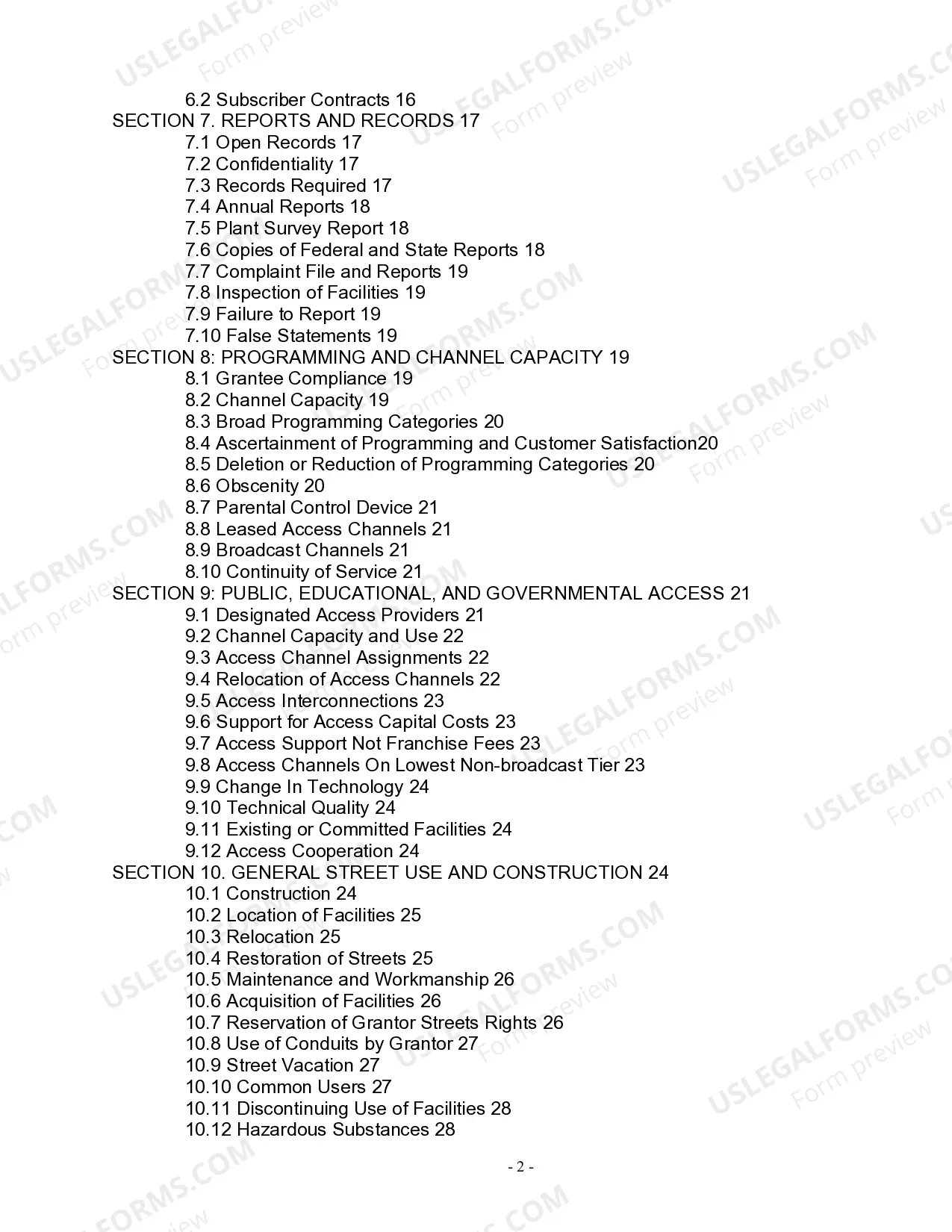
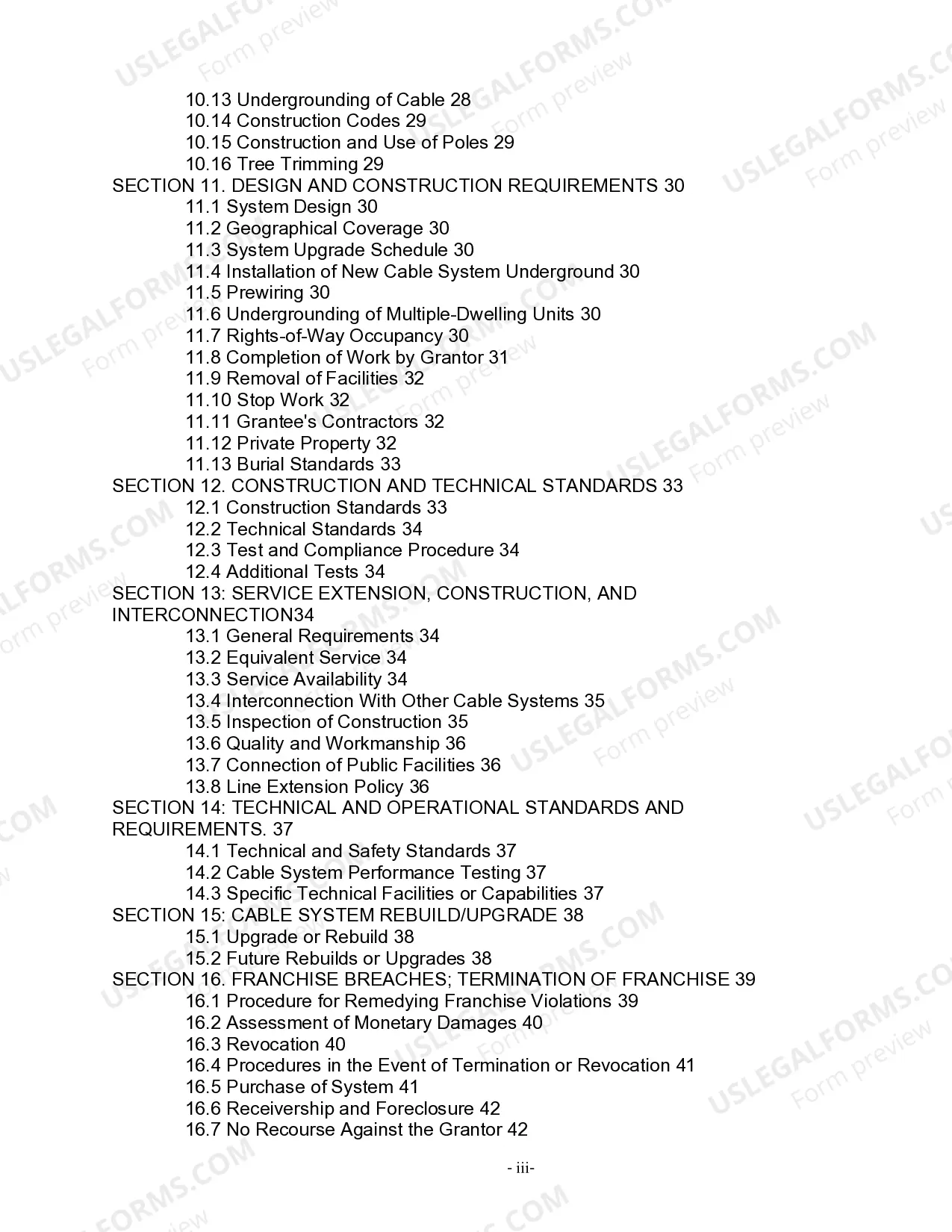


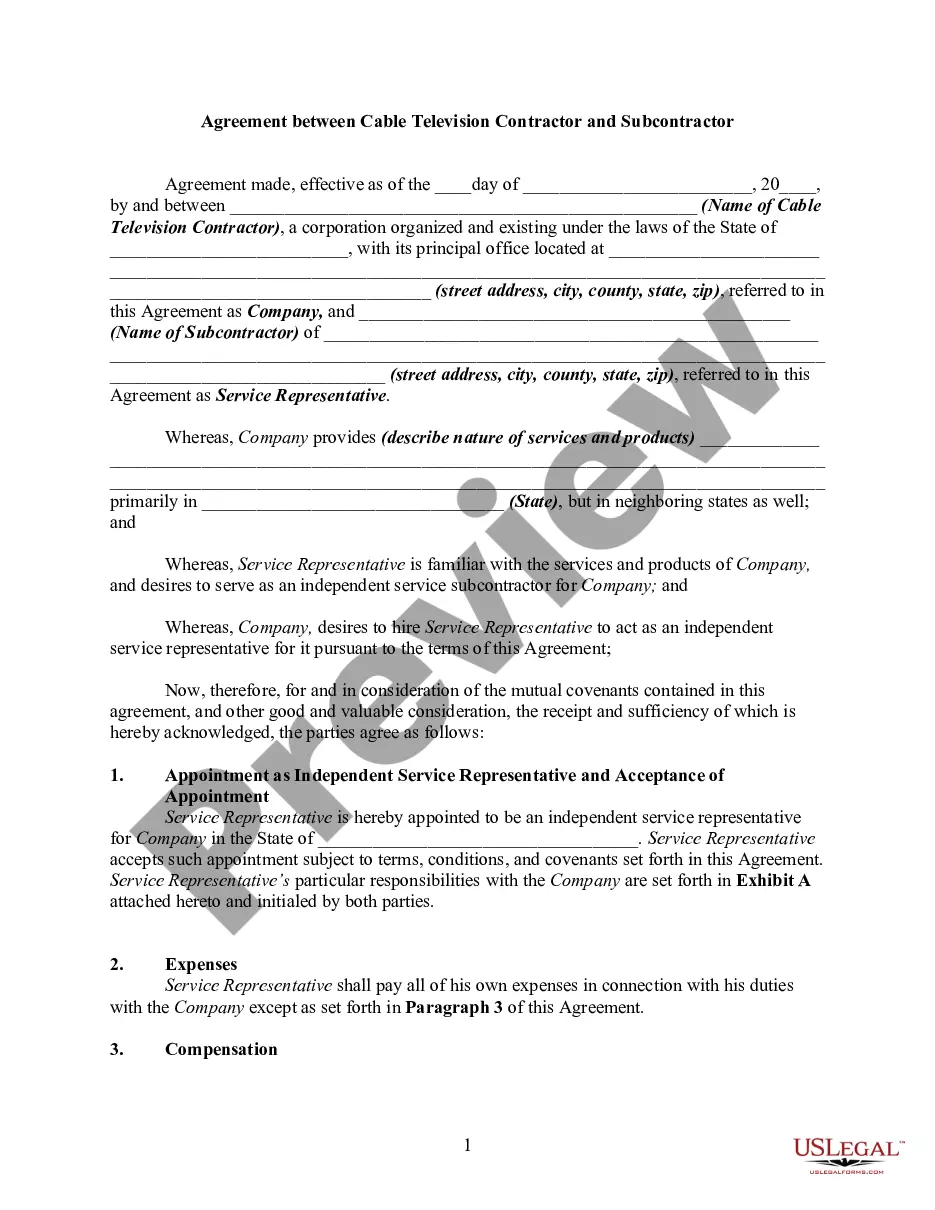


How to fill out Cable Consortium Cable Television Franchise Agreement?
Are you presently in a situation where you frequently require documents for either business or personal reasons? There are numerous official document templates accessible online, but finding reliable versions can be challenging.
US Legal Forms offers thousands of template forms, including the Virginia Cable Consortium Cable Television Franchise Agreement, which can be tailored to comply with state and federal regulations.
If you're already acquainted with the US Legal Forms site and possess an account, simply Log In. Afterwards, you can download the Virginia Cable Consortium Cable Television Franchise Agreement template.
Access all the document templates you have purchased in the My documents list. You can obtain another copy of the Virginia Cable Consortium Cable Television Franchise Agreement anytime, if needed. Just select the desired form to download or print the document template.
Utilize US Legal Forms, the largest collection of official forms, to save time and avoid errors. The service provides professionally crafted legal document templates that can be used for a variety of purposes. Create an account on US Legal Forms and start simplifying your life.
- Acquire the form you require and ensure it is for the correct city/region.
- Utilize the Review button to examine the document.
- Read the description to confirm you have selected the appropriate form.
- If the form isn't what you are seeking, use the Search field to find the form that suits your requirements.
- Once you have the correct form, click Buy now.
- Select the pricing plan you prefer, fill in the necessary details to create your account, and complete the transaction using your PayPal or credit card.
- Choose a convenient document format and download your copy.
Form popularity
FAQ
Cable franchises are typically awarded for a duration of 10 to 15 years, as specified in the Virginia Cable Consortium Cable Television Franchise Agreement. This timeframe allows cable providers to invest in infrastructure while ensuring that communities have reliable service. The length of the agreement can vary based on negotiations and local regulations, providing flexibility for both parties involved.
The purpose of a franchise agreement, especially in the context of the Virginia Cable Consortium Cable Television Franchise Agreement, is to establish clear guidelines for cable service delivery. It aims to protect consumer interests while allowing cable companies to operate legally. Moreover, this agreement fosters collaboration between local governments and providers, ensuring that services meet community needs effectively.
Cable franchise fees, derived from the Virginia Cable Consortium Cable Television Franchise Agreement, can be allocated for various public purposes. These fees often support local government operations, infrastructure projects, and community services. Additionally, they can improve public access television and enhance broadband services. This funding directly benefits your community by promoting better local media access.
Starting a cable TV business involves several key steps, including obtaining the necessary licenses and agreements. First, review the Virginia Cable Consortium Cable Television Franchise Agreement to understand your obligations. Next, develop a solid business plan that outlines your target market and services. Finally, consider using platforms like uslegalforms to access resources and legal documents that simplify the setup process and help you navigate the regulatory landscape.
Yes, Virginia is a registration state for franchising. This means that cable operators must follow specific regulations to operate legally within the state. The Virginia Cable Consortium Cable Television Franchise Agreement outlines these requirements, ensuring compliance and protecting both the operators and the consumers. Understanding this framework is crucial for anyone planning to enter the cable television market in Virginia.
Franchise Fee Franchise fees are paid to local governments as compensation for Comcast's use of the public rights-of-way and easements. The Federal Cable Act authorizes cable operators to collect from customers the full amount of franchise fees paid to local governments.
A franchise fee is a fee collected by Charter on behalf of your local government and municipality. This fee is paid directly to the local government to use the public rights of way when providing cable service.
Under that provision, franchising authorities may not "grant an exclusive franchise" or "unreasonably refuse to award an additional competitive franchise."
In the United States cable television industry, a cable television franchise fee is an annual fee charged by a local government to a private cable television company as compensation for using public property it owns as right-of-way for its cable lines.
The best way to get rid off TV broadcast fee is by negotiating with the company's customer support. Otherwise, you might have to look into third-party service providers that don't require you to pay extra for services you don't avail of.