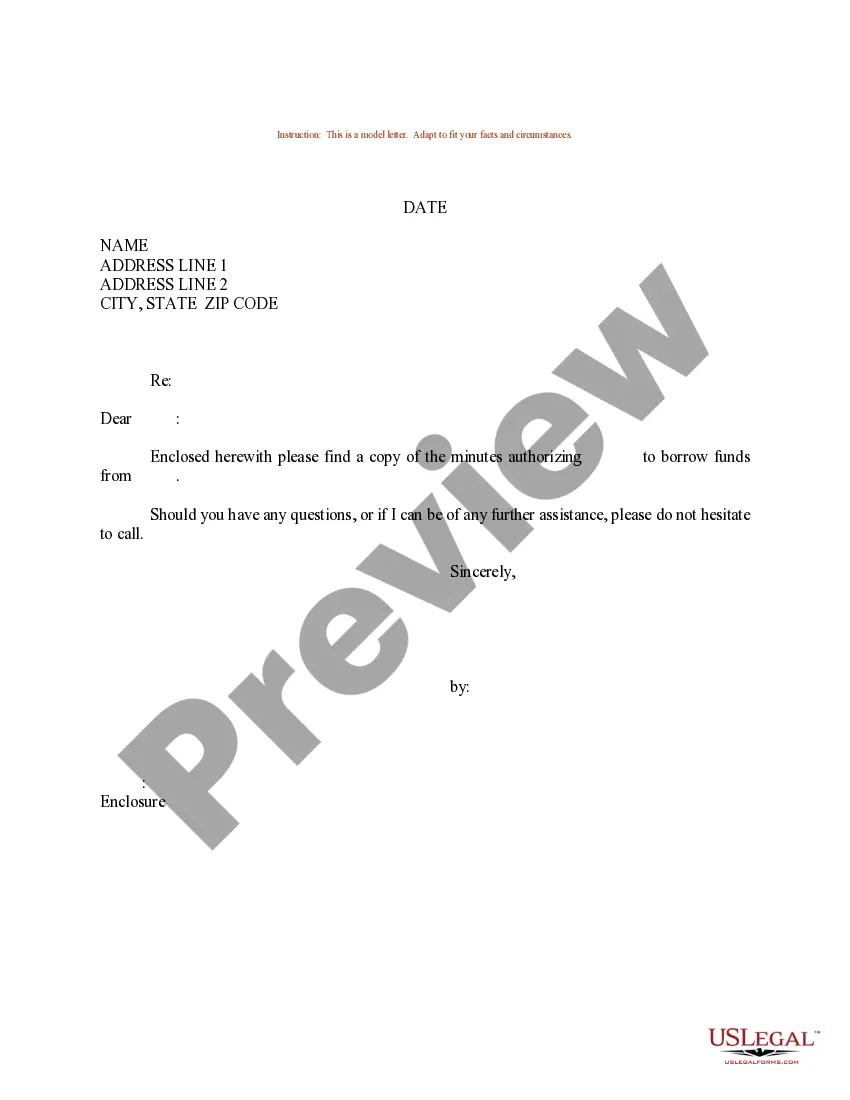
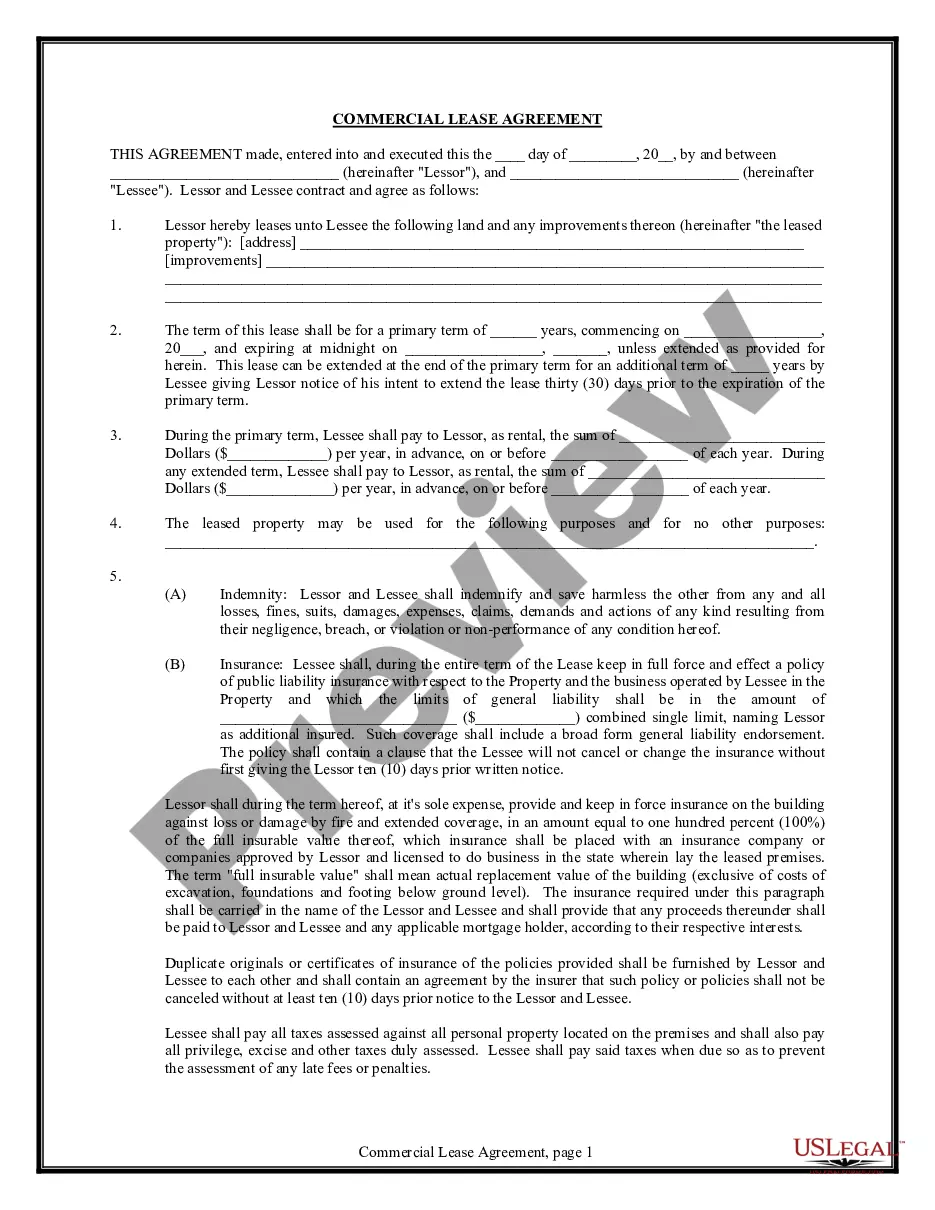
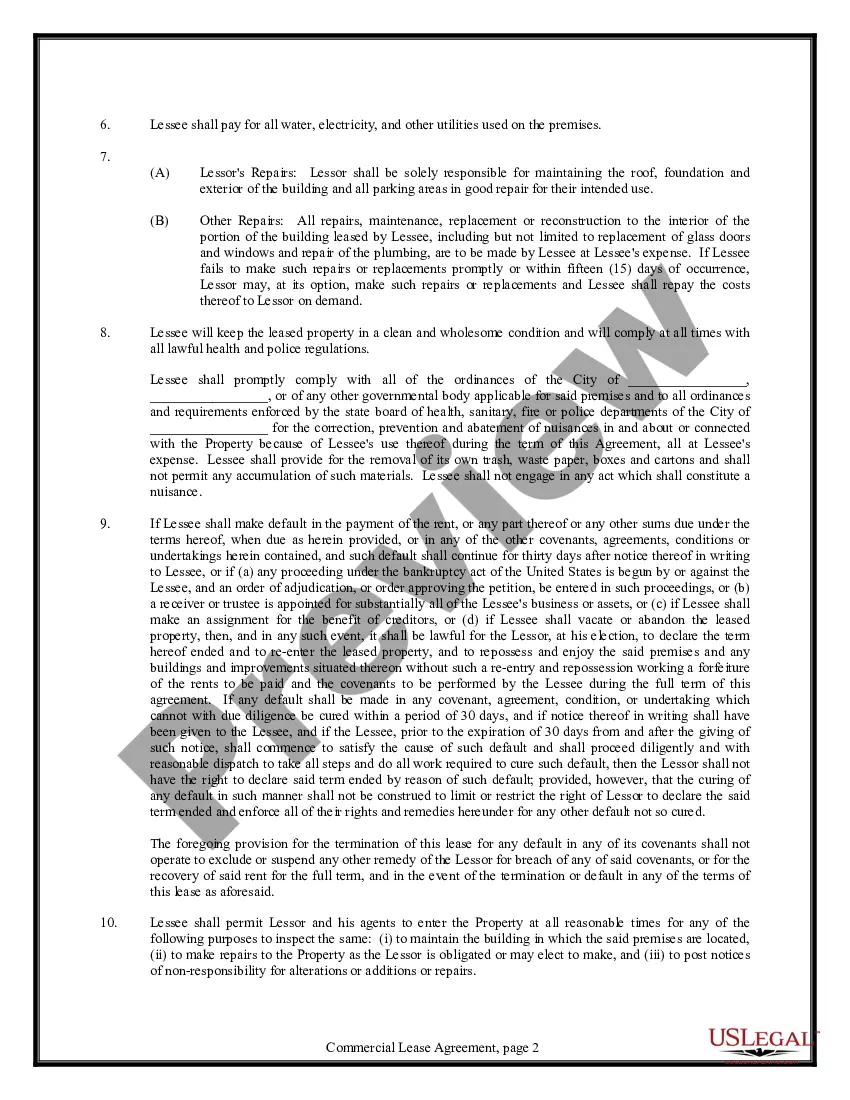
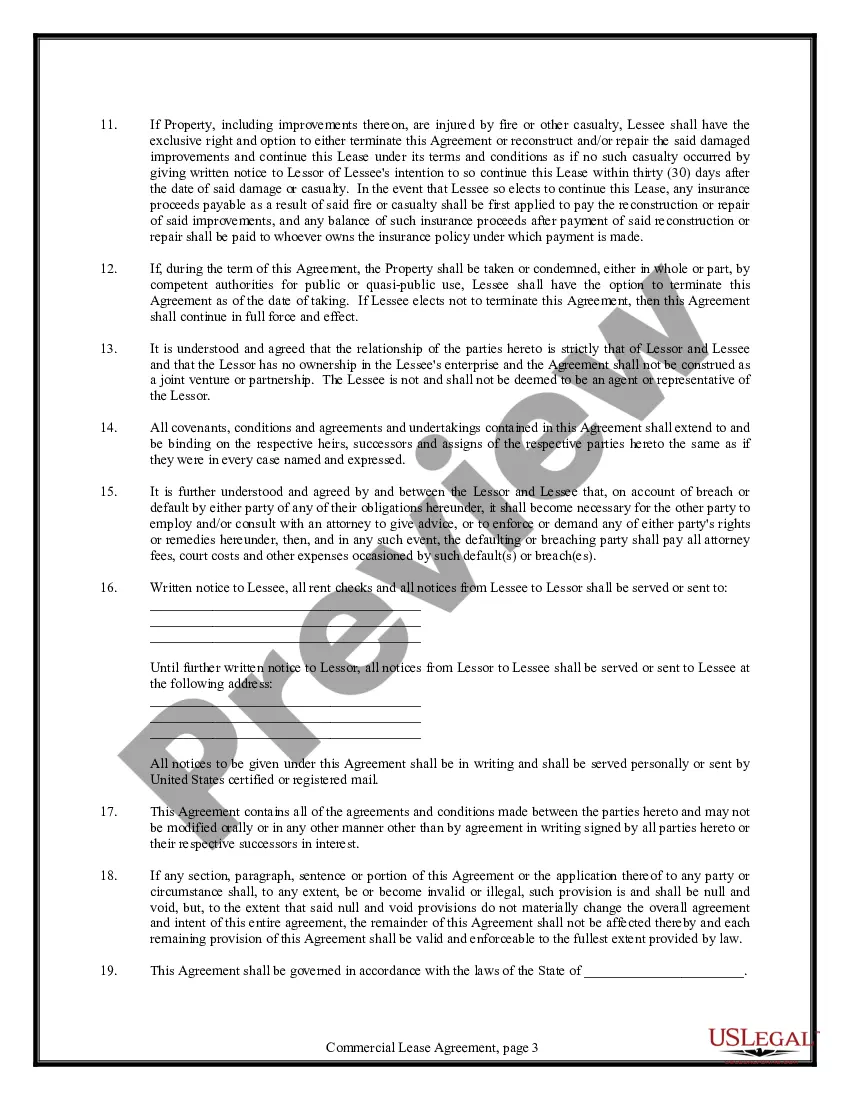
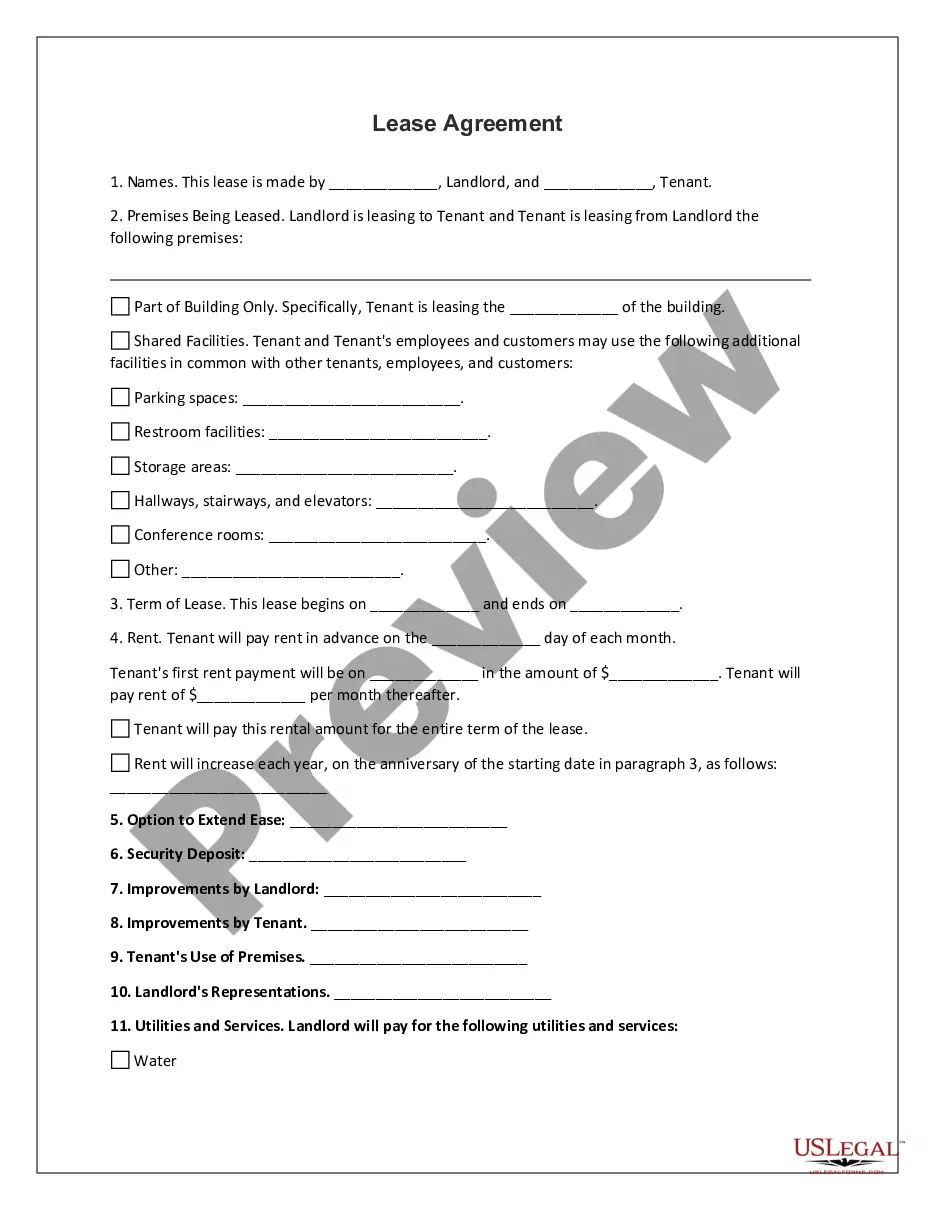
Virginia Commercial Lease Agreement
Description
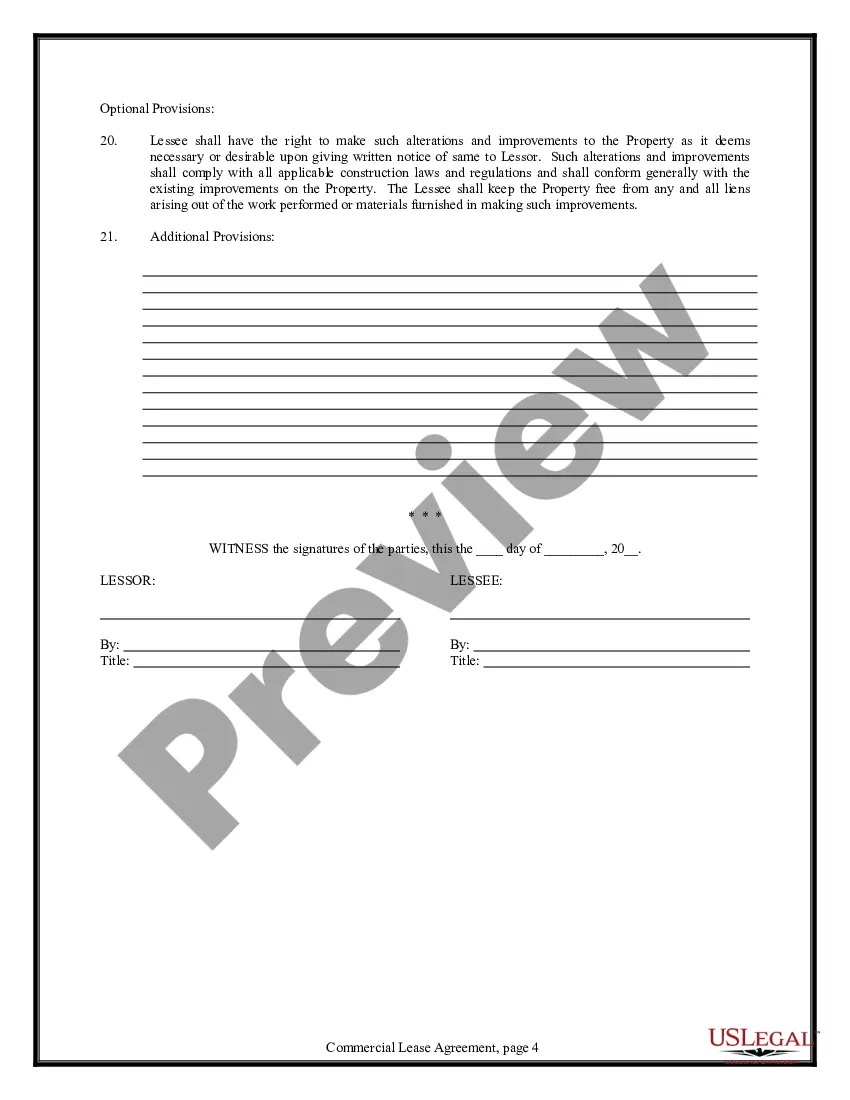
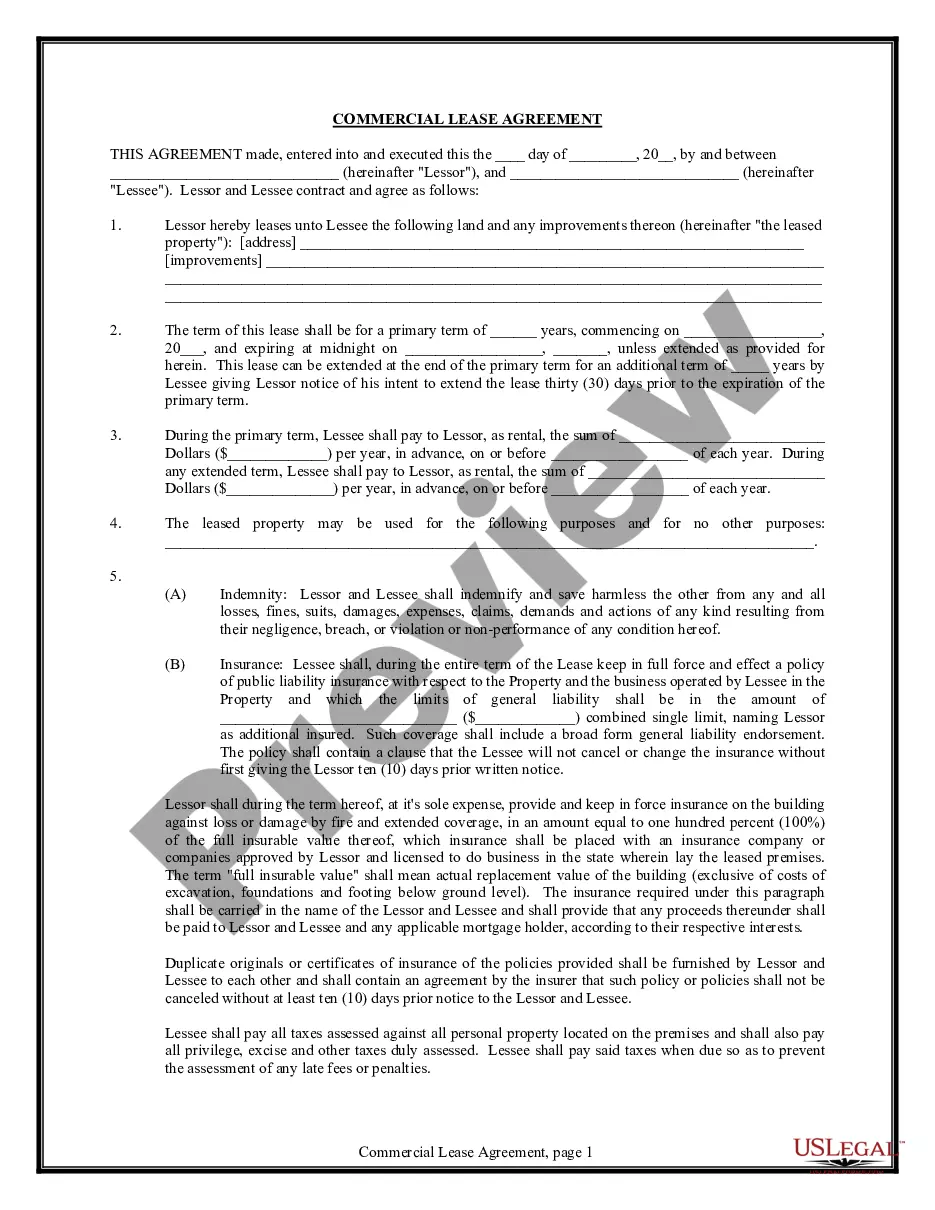
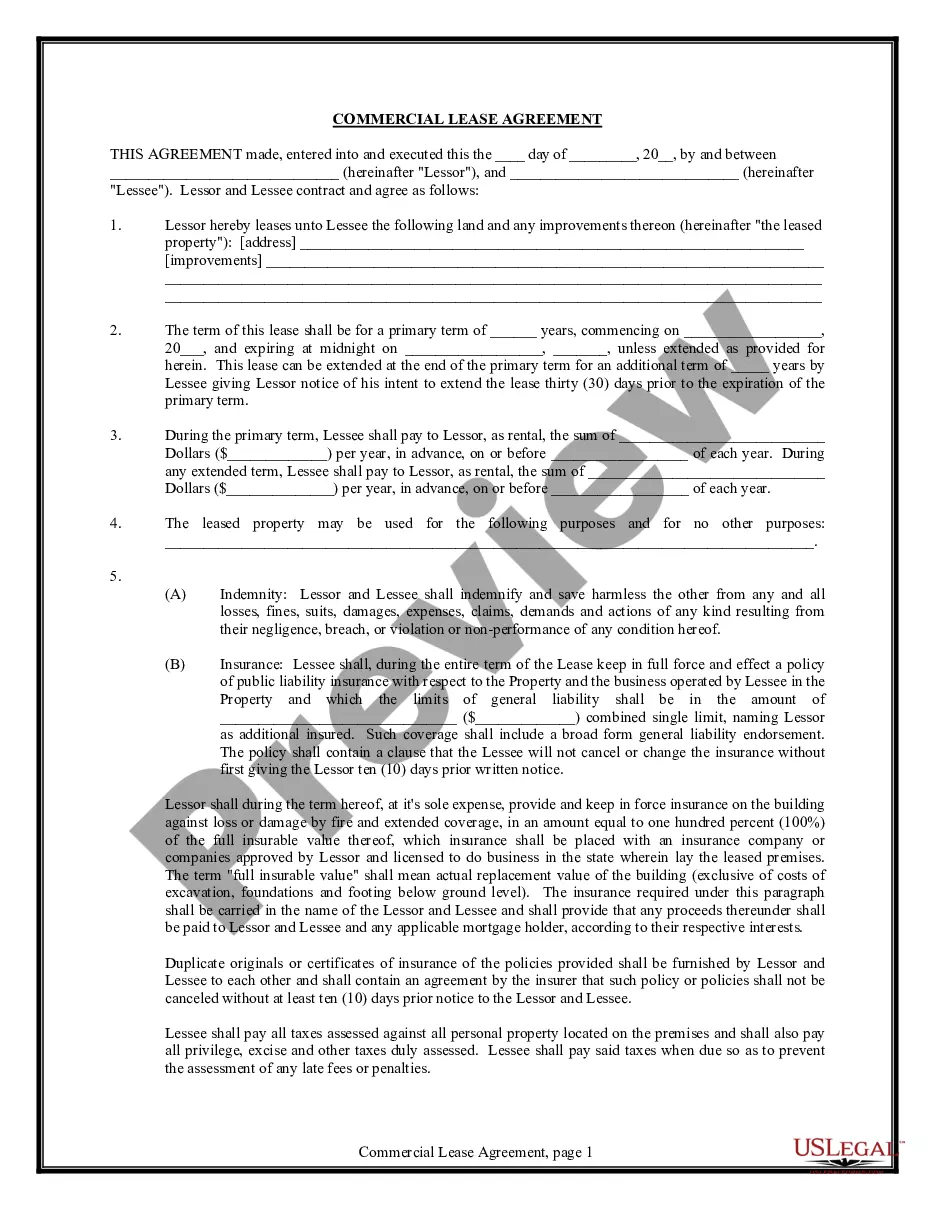
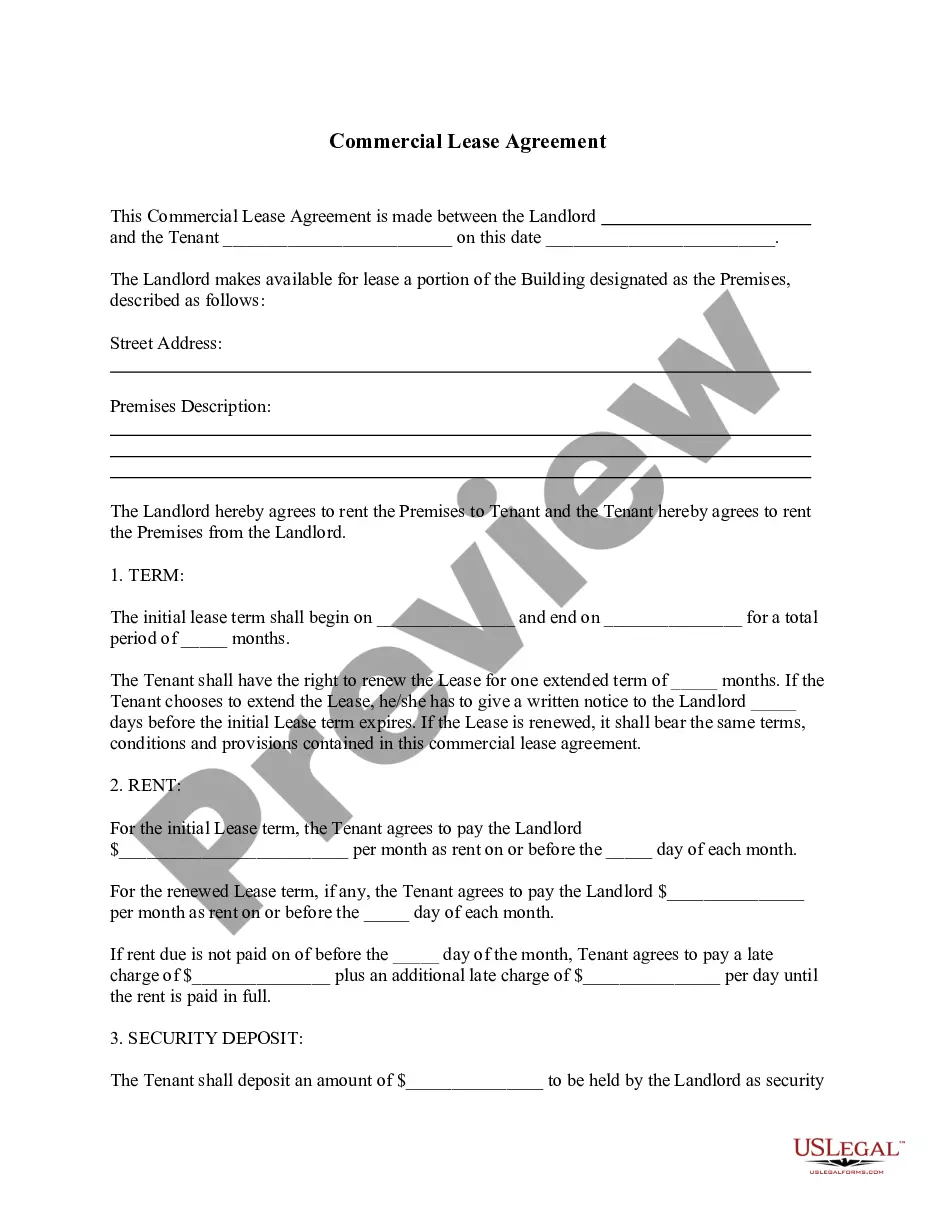
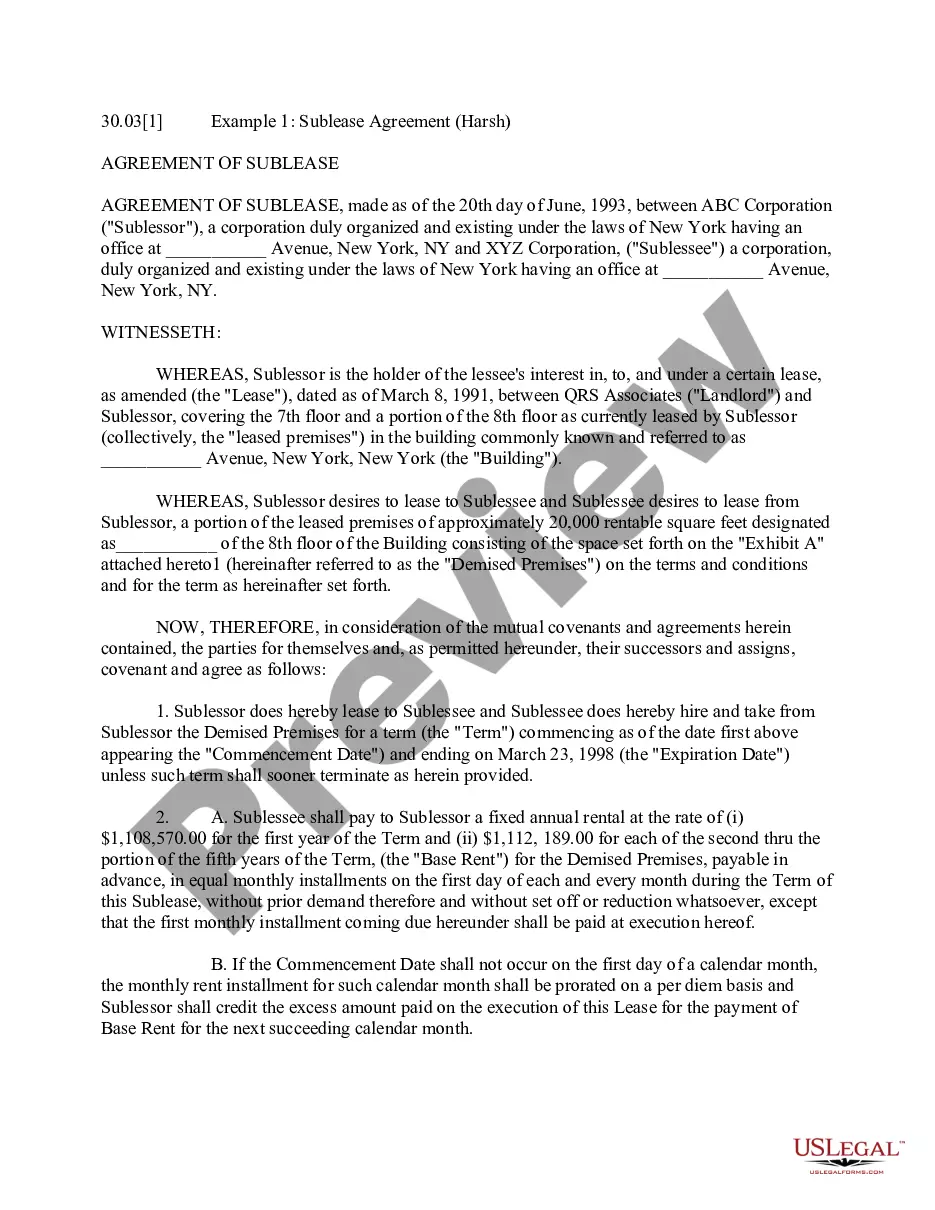
Get your form ready online
Our built-in tools help you complete, sign, share, and store your documents in one place.
Make edits, fill in missing information, and update formatting in US Legal Forms—just like you would in MS Word.
Download a copy, print it, send it by email, or mail it via USPS—whatever works best for your next step.
Sign and collect signatures with our SignNow integration. Send to multiple recipients, set reminders, and more. Go Premium to unlock E-Sign.
If this form requires notarization, complete it online through a secure video call—no need to meet a notary in person or wait for an appointment.
We protect your documents and personal data by following strict security and privacy standards.

Make edits, fill in missing information, and update formatting in US Legal Forms—just like you would in MS Word.

Download a copy, print it, send it by email, or mail it via USPS—whatever works best for your next step.

Sign and collect signatures with our SignNow integration. Send to multiple recipients, set reminders, and more. Go Premium to unlock E-Sign.

If this form requires notarization, complete it online through a secure video call—no need to meet a notary in person or wait for an appointment.

We protect your documents and personal data by following strict security and privacy standards.
Looking for another form?

How to fill out Commercial Lease Agreement?
Have you ever been in a situation where you require paperwork for either business or personal reasons nearly every single day.
There are numerous legal document templates available online, but finding reliable ones is not easy.
US Legal Forms offers thousands of form templates, such as the Virginia Commercial Lease Agreement, that are designed to comply with federal and state regulations.
If you find the appropriate form, simply click Get now.
Select the pricing plan you prefer, enter the necessary information to create your account, and complete the payment using your PayPal or Visa/Mastercard.
- If you are already acquainted with the US Legal Forms website and possess an account, simply Log In.
- Then, you will be able to download the Virginia Commercial Lease Agreement template.
- If you do not have an account and wish to start using US Legal Forms, follow these steps.
- Find the form you need and ensure it is for the correct city/state.
- Use the Preview button to view the document.
- Review the description to confirm that you have selected the right form.
- If the form is not what you are looking for, use the Search box to find the document that meets your needs.
Form popularity
FAQ
Notarizing the Deed of Lease is not necessary, but may serve as an alternate means of compliance. Compliance.
Like some other states, Virginia only requires the signature of one party to be binding. If the landlord doesn't sign a lease that has been signed by the tenant, accepting rent has the same effect as signing the lease.
A commercial lease agreement is a legally binding contract executed between a landlord and a business owner for the purpose of renting property for the business. The designation of commercial means that the property will be used strictly for business purposes instead of housing or personal use.
Can a landlord lock out a tenant or shut off utilities? Under either the general landlord tenant-law or the VRLTA, the landlord may not shut off utilities, lock the tenant out of the rental unit, or evict the tenant without giving notice and going to court.
Virginia law does not specifically forbid self-help evictions for commercial properties, so it may be possible to evict a commercial tenant by changing locks or shutting off utilities. However, this practice is incredibly risky, and it is not recommended.
Commercial leases are legally binding contracts between landlords and commercial tenants. They give tenants the right to use the premises in a particular way for a set period for an agreed rent. Your lease will establish your rights and responsibilities as a tenant, as well as those of your landlord.
Under Virginia law, when a commercial tenant defaults on a lease agreement for non-payment of rent or breach of a lease obligation, the landlord can move for eviction through the judicial process by filing what is known as an unlawful detainer, then obtaining a writ of execution, and conducting an eviction.
No, a commercial lease does not need to be notarized in Virginia in order for it to be legally binding; however, any party to the lease may request to have it notarized if they so choose.
Recordation of Leases in VirginiaVirginia law requires that a lease for a term of more than five years be recorded, or it is void as to all purchasers for valuable consideration without notice of the lease and not parties to the lease itself, and as to all lien creditors.
The short answer is No a witness does not need to sign But, there are some exceptions and things to consider. Most agreements do not need witnesses to sign them. Most agreements do not even need to be signed by the parties entering into the agreement. Most agreements do not even need to be in writing.