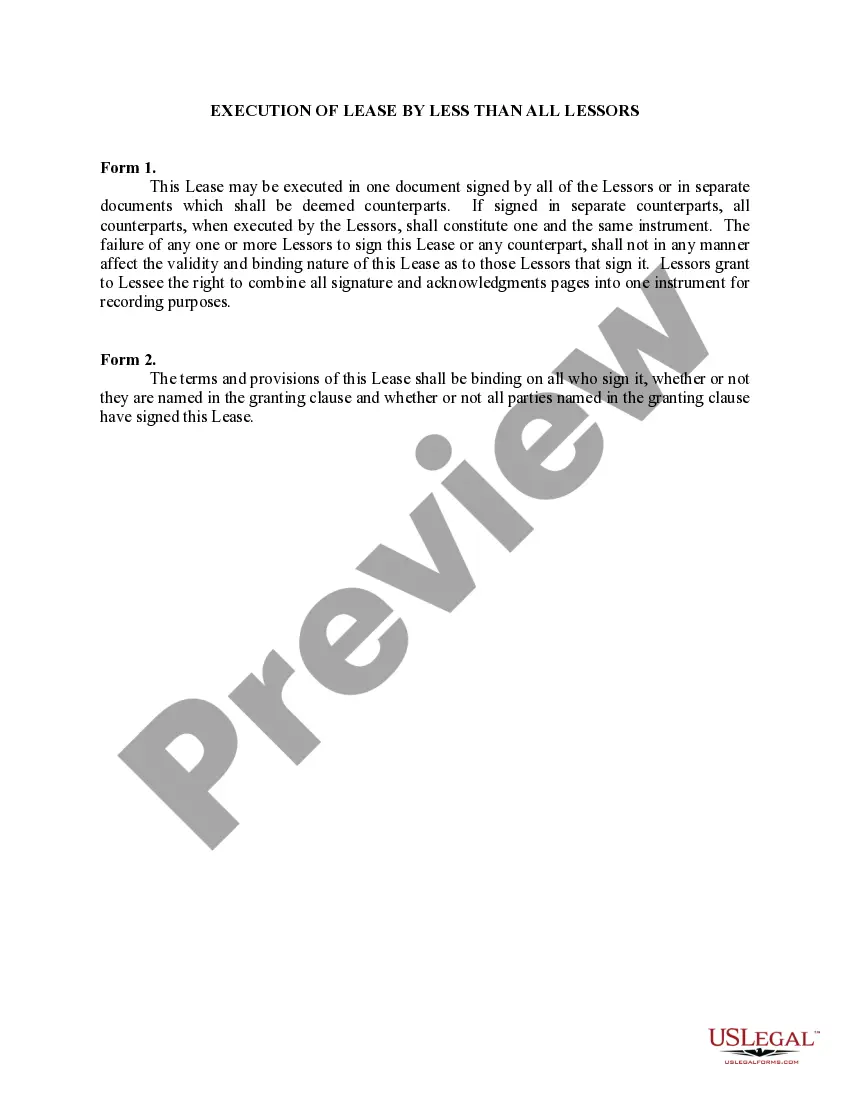
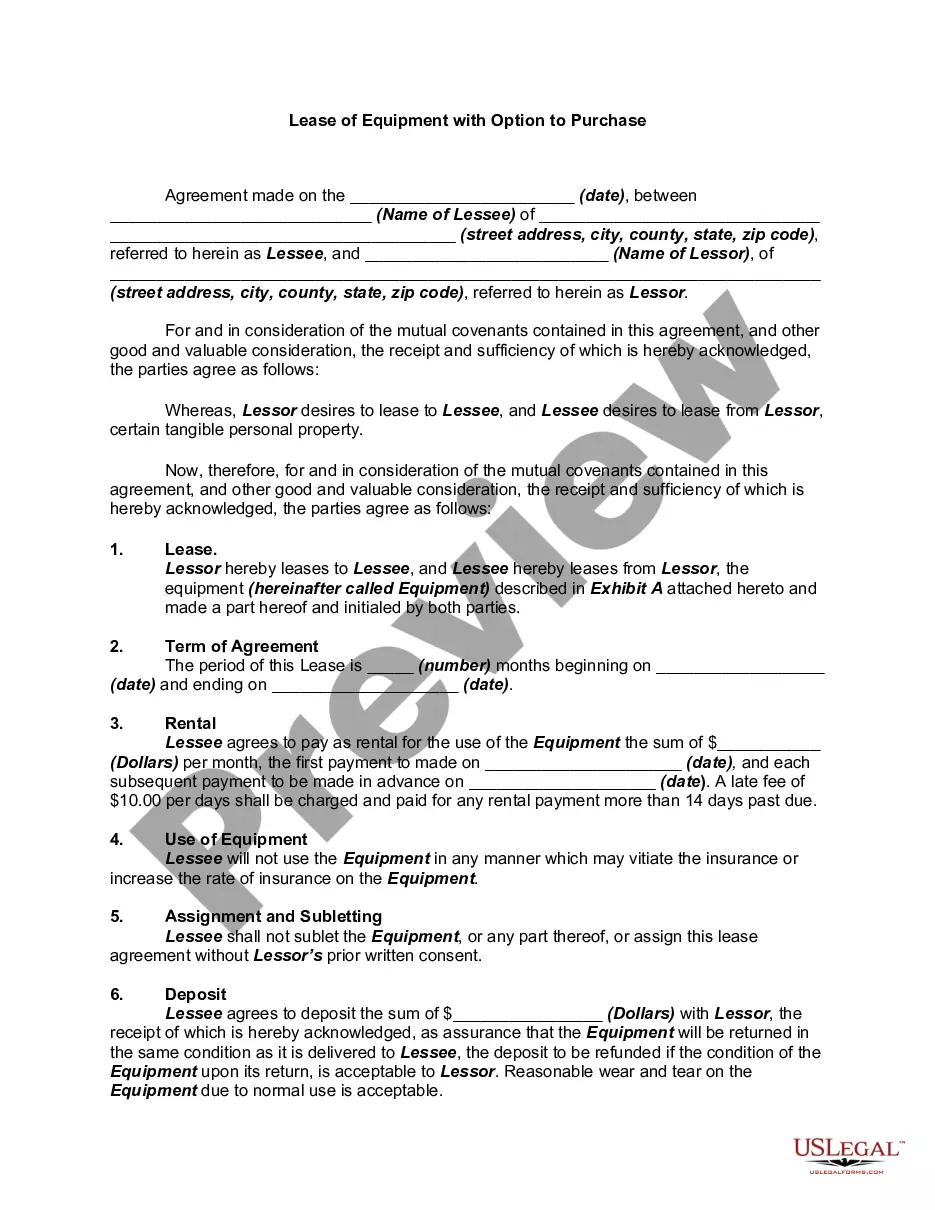
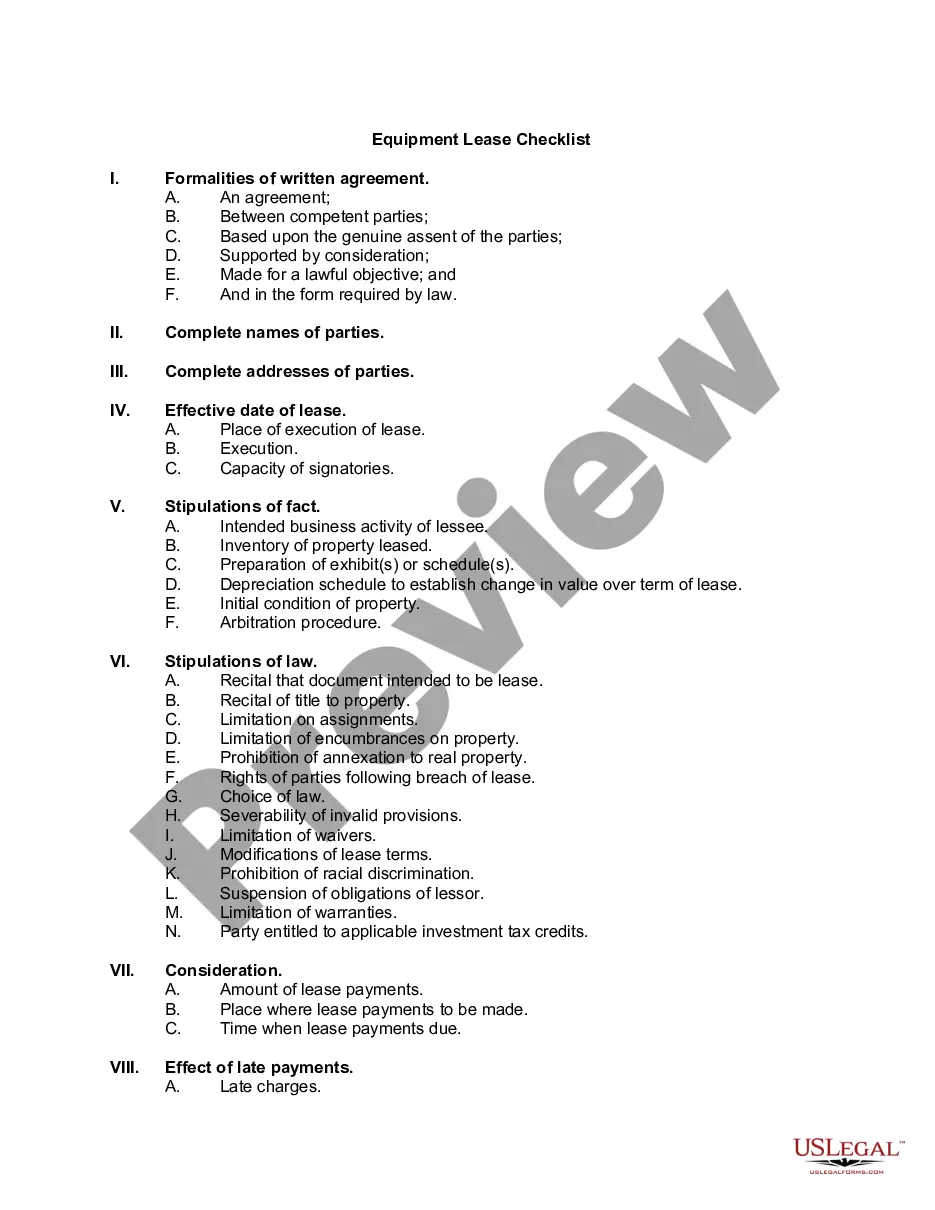
Leasing equipment can help your business stay up-to-date with the latest technology. Other benefits of leasing include making lower monthly payments than you would have with a loan, getting a fixed financing rate instead of a floating rate, benefiting from tax advantages, and conserving working capital by avoiding cash-devouring down payments. Leasing also has its downside, however: You may pay a higher price over the long term. You are also committed to retaining a piece of equipment for a certain time period, which can be problematic if your business is in flux.
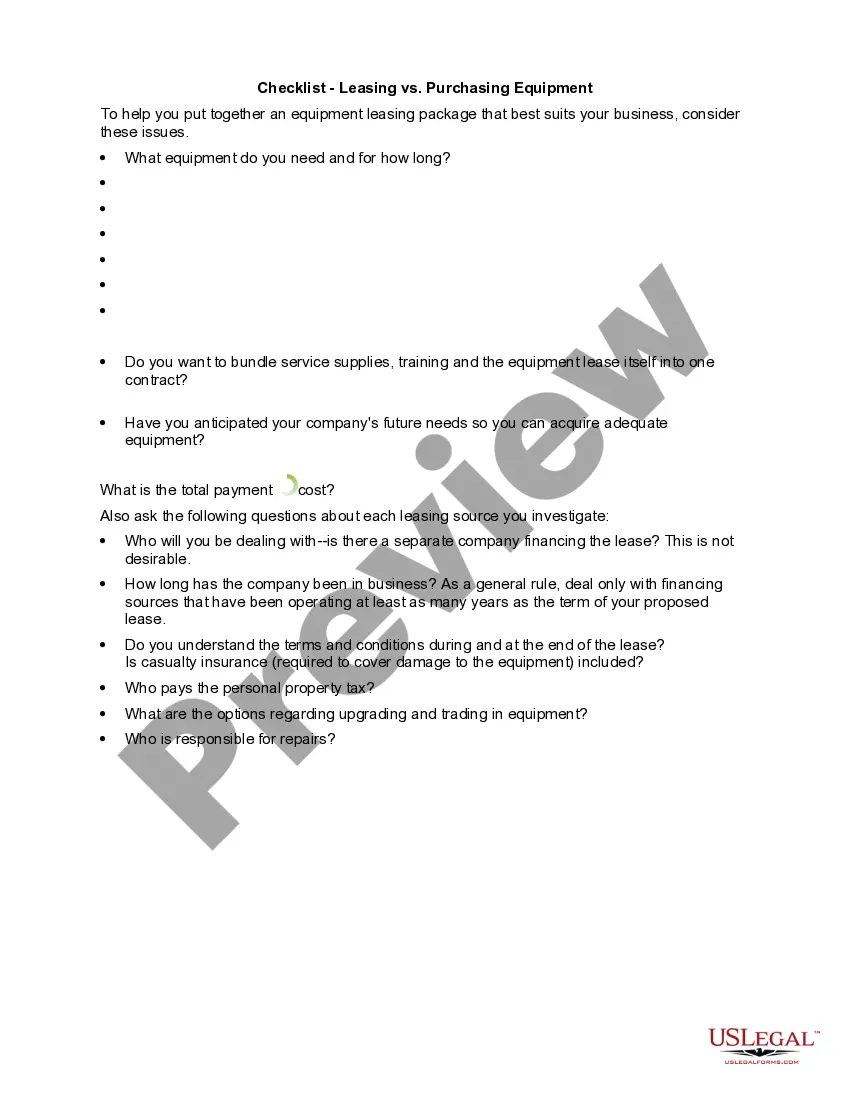
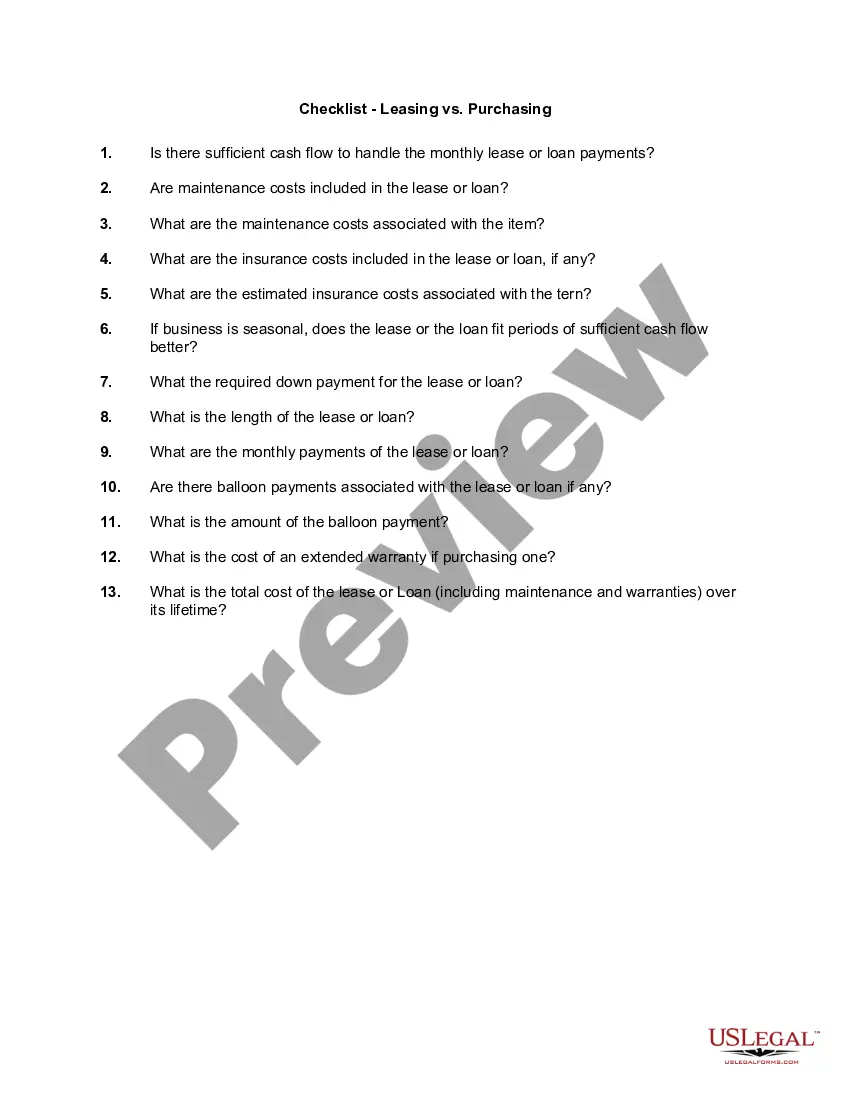
Every lease decision is unique so it's important to study the lease agreement carefully. When deciding to obtain equipment, you need to determine whether it is better to lease or purchase the equipment. You might use this checklist to compare the costs for each option.
Virginia Checklist - Leasing vs. Purchasing Equipment
Category:
State:
Multi-State
Control #:
US-03082BG
Format:
Word;
Rich Text
Instant download
Description
Get your form ready online
Our built-in tools help you complete, sign, share, and store your documents in one place.
Built-in online Word editor
Make edits, fill in missing information, and update formatting in US Legal Forms—just like you would in MS Word.
Export easily
Download a copy, print it, send it by email, or mail it via USPS—whatever works best for your next step.
E-sign your document
Sign and collect signatures with our SignNow integration. Send to multiple recipients, set reminders, and more. Go Premium to unlock E-Sign.
Notarize online 24/7
If this form requires notarization, complete it online through a secure video call—no need to meet a notary in person or wait for an appointment.
Store your document securely
We protect your documents and personal data by following strict security and privacy standards.

Make edits, fill in missing information, and update formatting in US Legal Forms—just like you would in MS Word.

Download a copy, print it, send it by email, or mail it via USPS—whatever works best for your next step.

Sign and collect signatures with our SignNow integration. Send to multiple recipients, set reminders, and more. Go Premium to unlock E-Sign.

If this form requires notarization, complete it online through a secure video call—no need to meet a notary in person or wait for an appointment.

We protect your documents and personal data by following strict security and privacy standards.
Looking for another form?








How to fill out Checklist - Leasing Vs. Purchasing Equipment?
You can invest time online trying to discover the authentic document template that fulfills the federal and state standards you require.
US Legal Forms offers a vast array of legitimate forms that are reviewed by professionals.
You can easily download or print the Virginia Checklist - Leasing vs. Purchasing Equipment from my service.
If available, use the Preview button to view the document template as well.
- If you already possess a US Legal Forms account, you can Log In and click on the Acquire button.
- Then, you can complete, modify, print, or sign the Virginia Checklist - Leasing vs. Purchasing Equipment.
- Every legitimate document template you obtain is yours permanently.
- To obtain another copy of the purchased form, go to the My documents tab and click the corresponding button.
- If you are using the US Legal Forms site for the first time, follow the simple steps below.
- First, ensure you have selected the appropriate document template for your state/city of choice.
- Read the form description to confirm you have chosen the correct form.
Form popularity
FAQ
Whether it is better to buy or lease equipment depends on your financial goals and how you plan to use the equipment. Buying may be advantageous if you require equipment long-term, while leasing is beneficial for technology that changes rapidly. Use a Virginia Checklist - Leasing vs. Purchasing Equipment to analyze your business requirements and make the most informed choice.
Buying equipment provides ownership, allowing you to utilize and modify it as you see fit, while leasing keeps you tied to a contract with predefined terms. Buying can lead to depreciation costs, but also includes potential tax benefits. To make an informed decision, review a Virginia Checklist - Leasing vs. Purchasing Equipment and assess your operational needs.
Leasing involves paying for the use of an asset for a specific time, while purchasing means you own the asset outright. Leasing typically has lower initial costs and may not require a large down payment, but you'll also have ongoing payments. Familiarizing yourself with a Virginia Checklist - Leasing vs. Purchasing Equipment can help you understand the best choice for your situation.
Deciding whether to buy or lease a machine depends on your business's specific needs and financial strategy. Leasing may allow you to acquire the latest technology with lower upfront costs, while purchasing builds equity. A Virginia Checklist - Leasing vs. Purchasing Equipment can provide insights to help you weigh these options effectively.
One significant downside of leasing a car is that you do not own the vehicle at the end of the lease term. This means you have no equity, and you may face mileage restrictions and additional fees for wear and tear. When using a Virginia Checklist - Leasing vs. Purchasing Equipment, it's vital to consider these factors to ensure that leasing aligns with your preferences and lifestyle.
The lease payment on a $30,000 car can vary based on several factors, including the term of the lease and the interest rate. Typically, you can expect payments to range from $300 to $500 per month. A Virginia Checklist - Leasing vs. Purchasing Equipment can help you calculate these figures accurately by taking into account your specific needs and financial situation.
While requirements vary by lender, a credit score of 650 or higher is typically preferred to lease equipment comfortably. However, some leasing companies may work with lower scores, depending on other factors like business revenue and time in operation. To navigate these options effectively, refer to our Virginia Checklist - Leasing vs. Purchasing Equipment for personalized guidance.
A good equipment lease rate can vary significantly based on the type of equipment, its age, and market conditions. Generally, lease rates are expressed as a percentage of the equipment's value. Our Virginia Checklist - Leasing vs. Purchasing Equipment can help you compare rates and negotiate a fair deal.
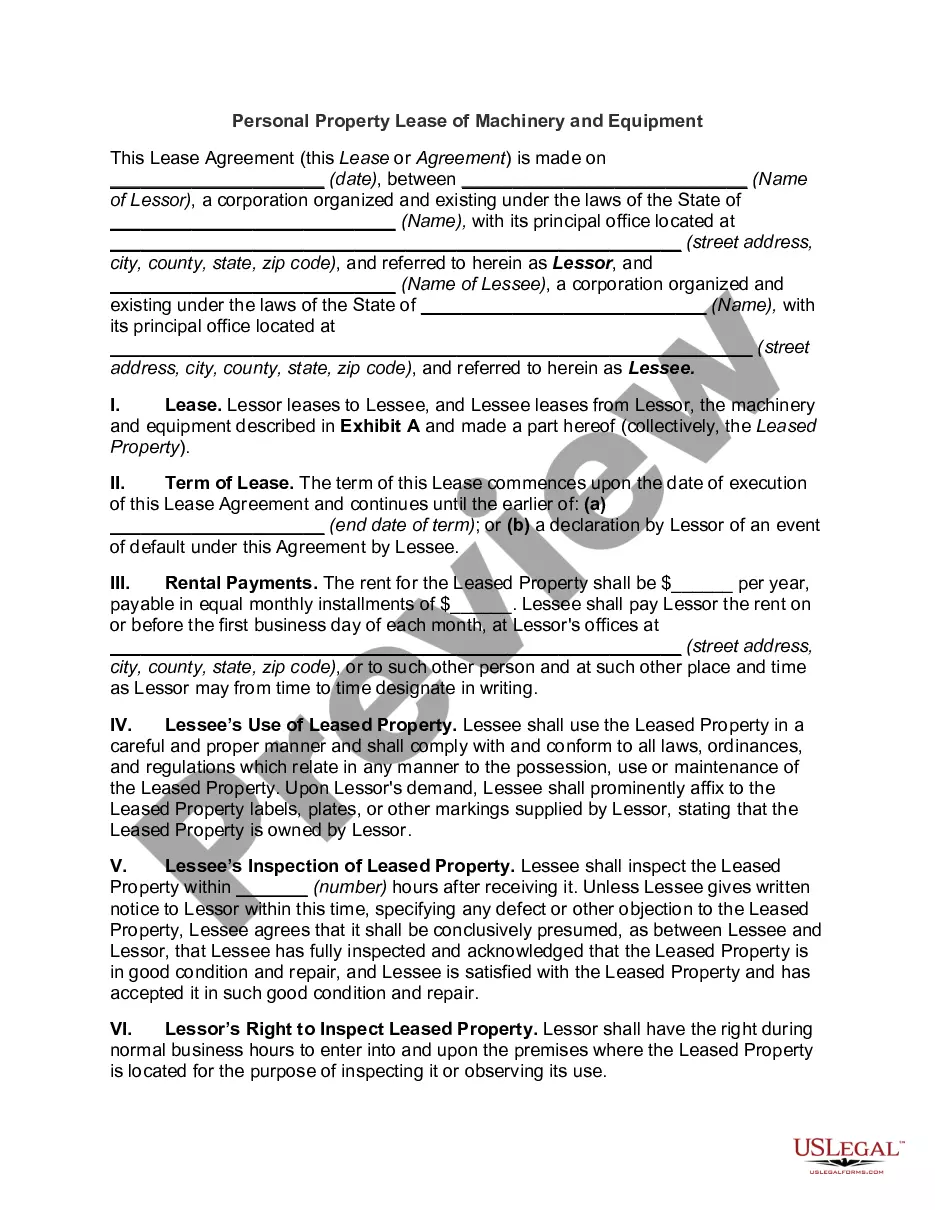
Setting up an equipment lease involves researching available leasing companies, choosing the right equipment, and drafting a lease agreement. It's crucial to consider lease duration, monthly payments, and any additional fees. With our Virginia Checklist - Leasing vs. Purchasing Equipment, you can streamline the setup process and ensure that all necessary details are captured.
Various types of equipment can be leased, including office machinery, construction equipment, and vehicles. Almost any item that can be used for business purposes may qualify for a lease. When using our Virginia Checklist - Leasing vs. Purchasing Equipment, you can explore options specific to your industry needs.