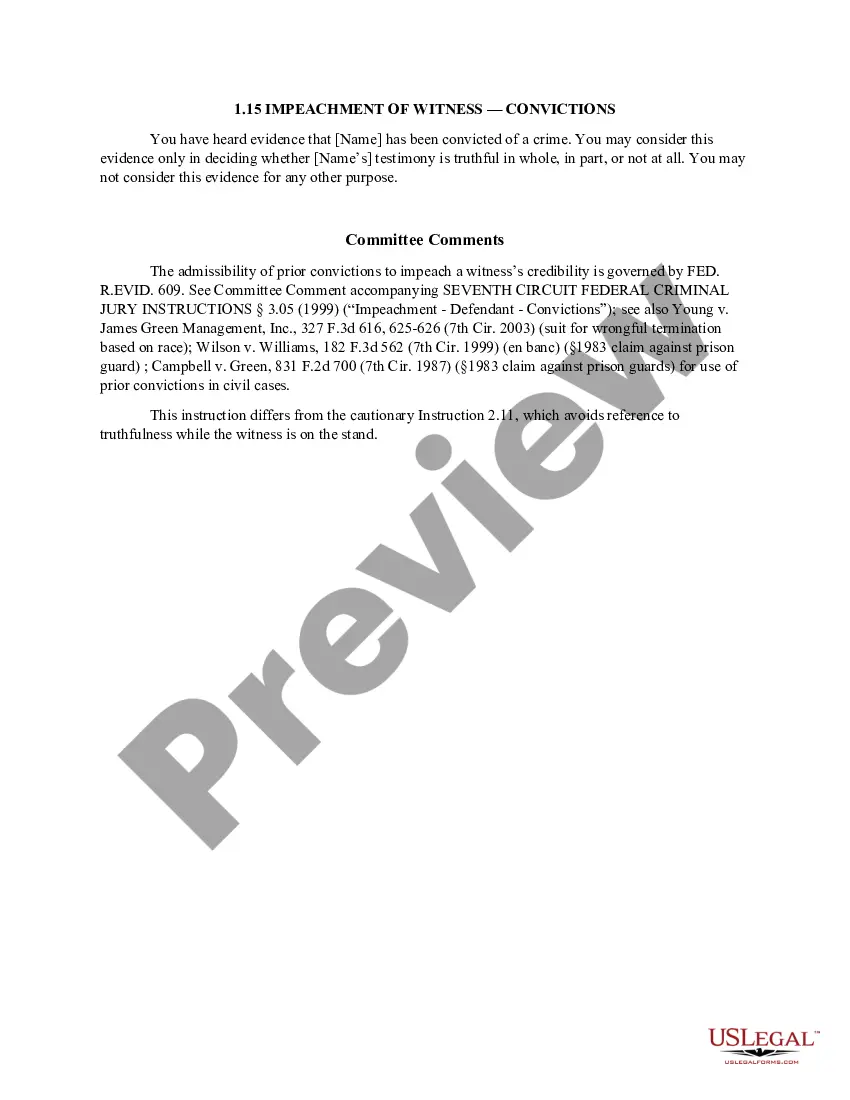
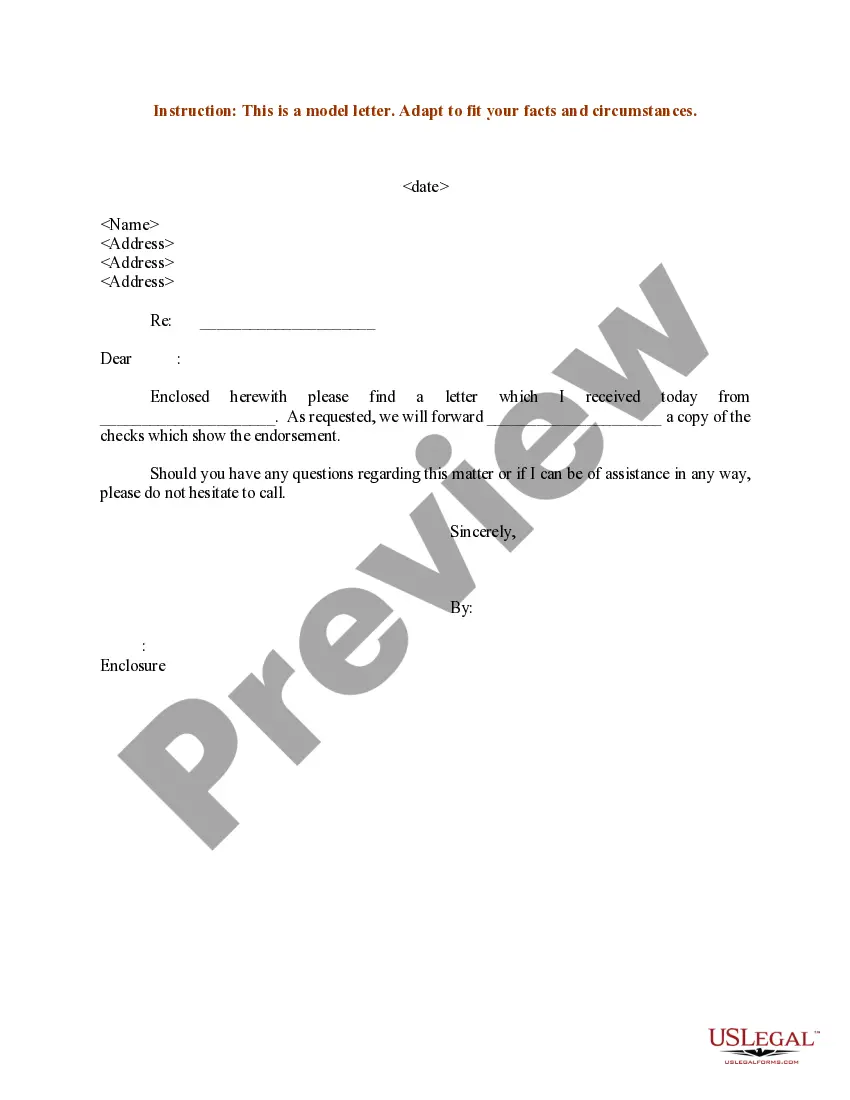
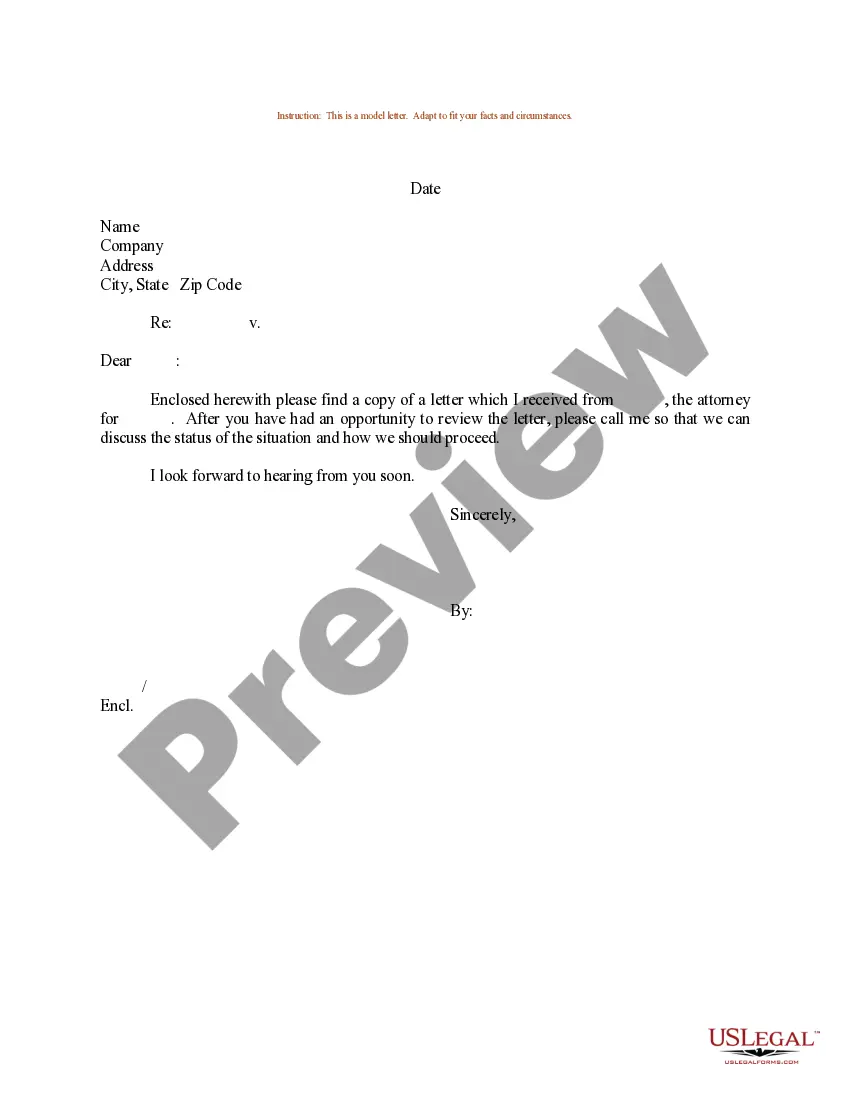
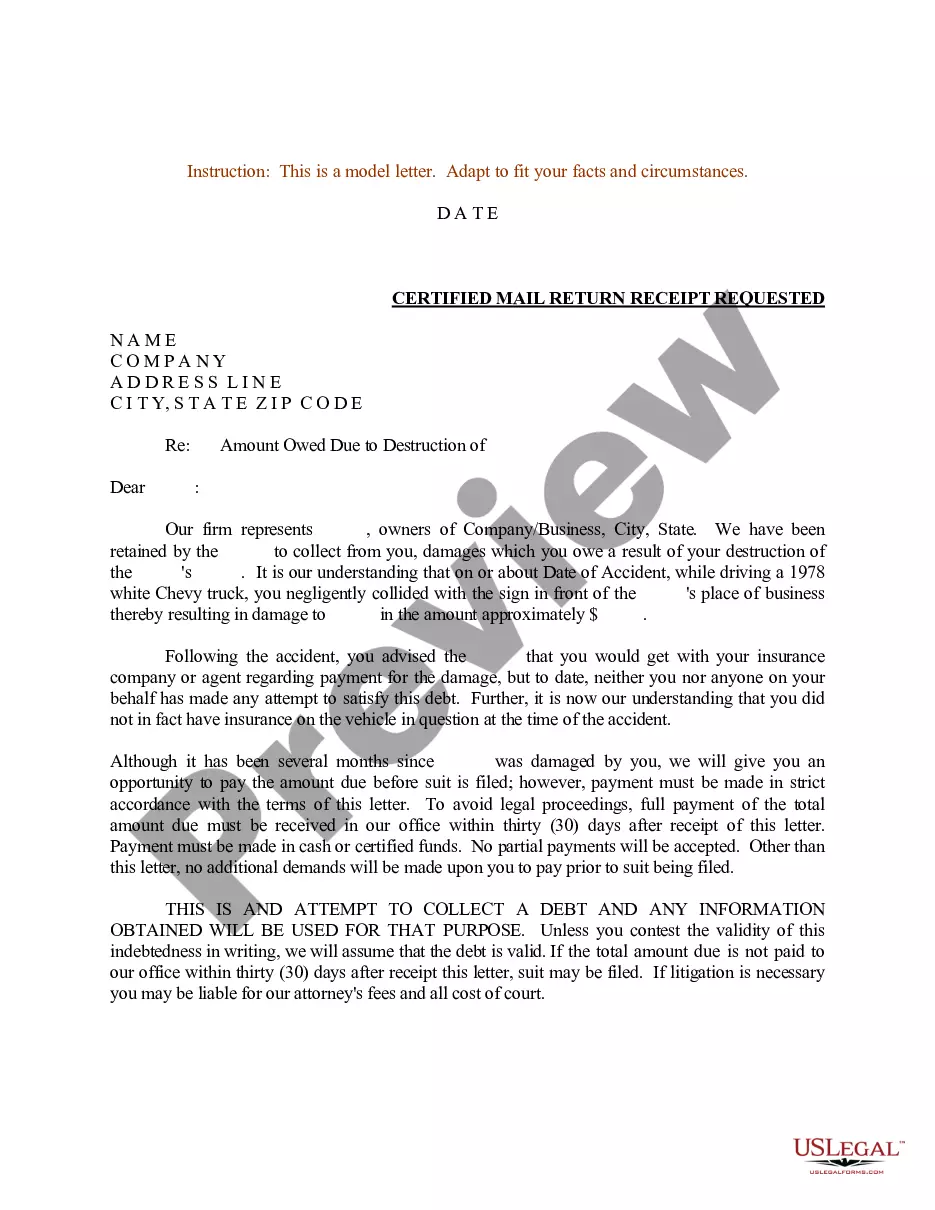
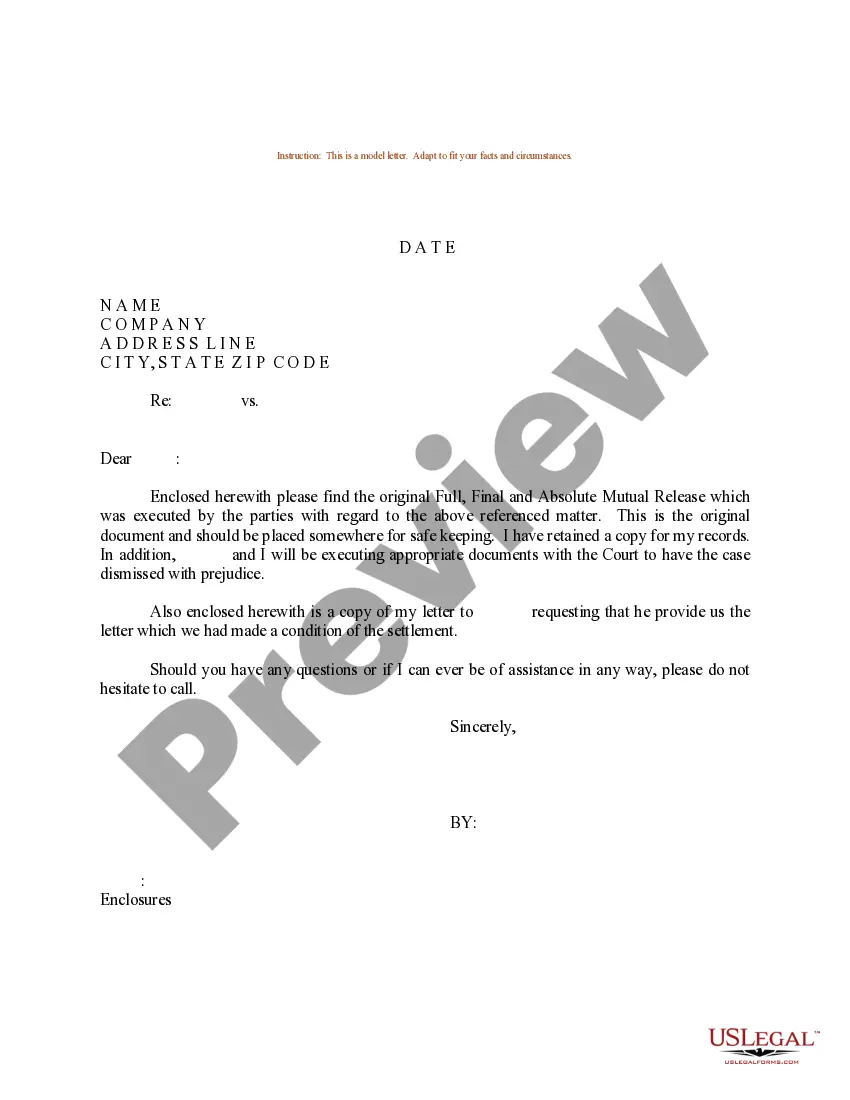
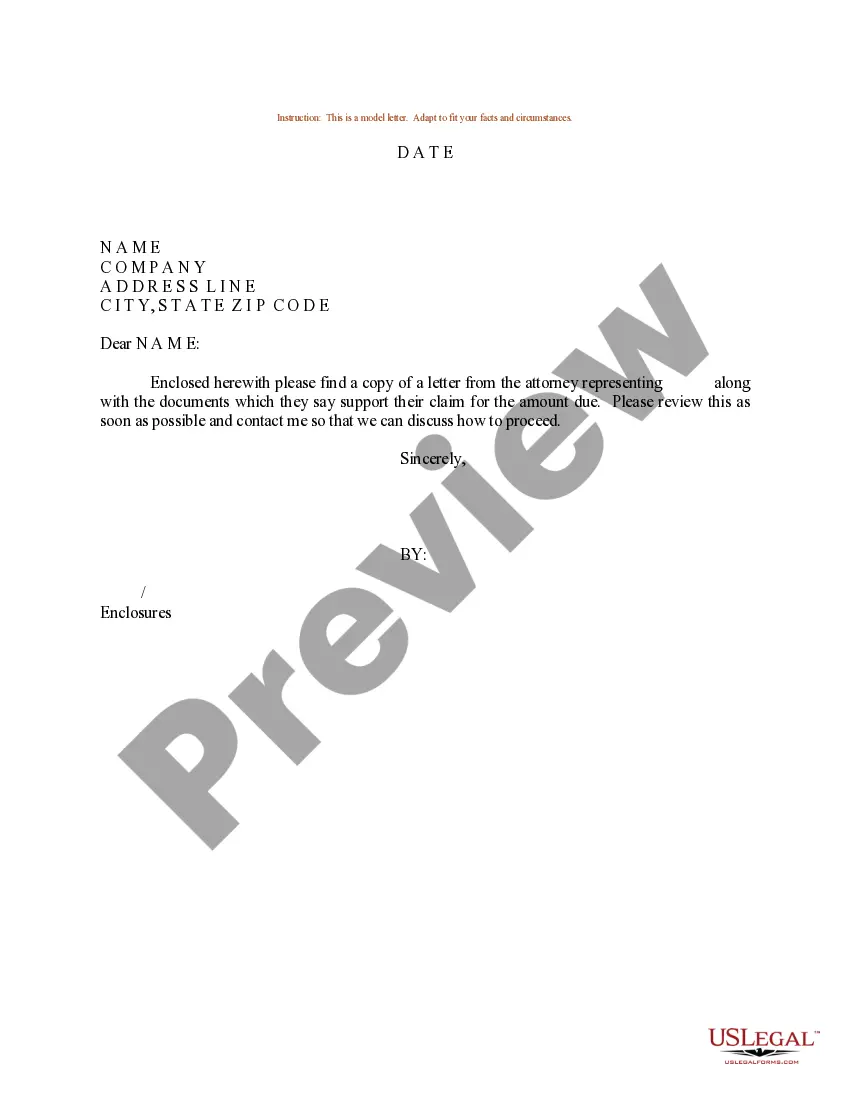
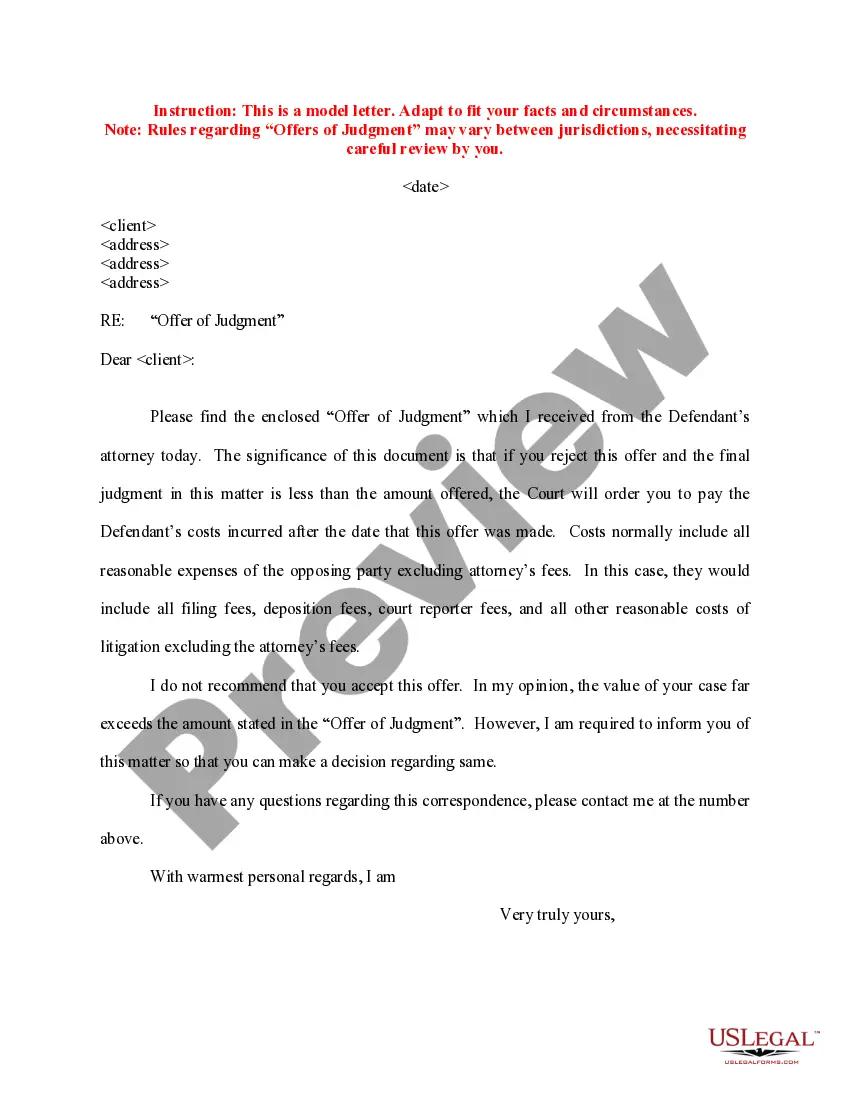
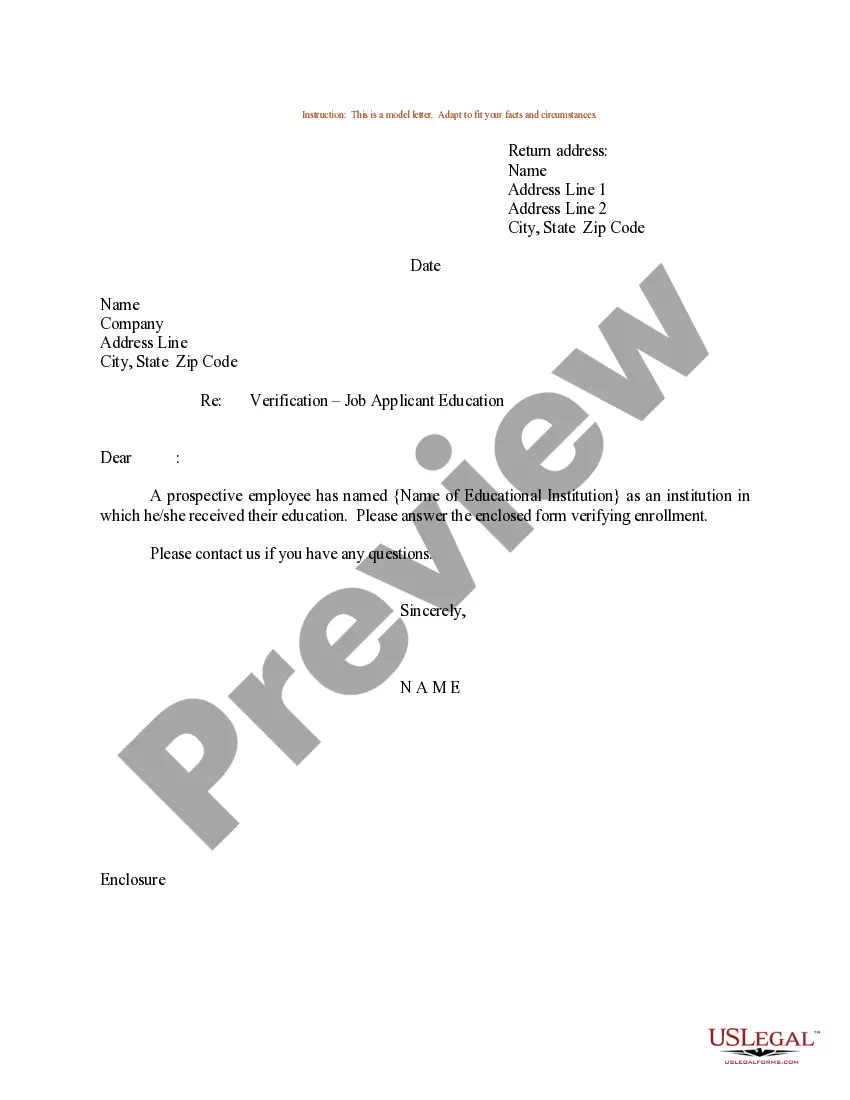
Virginia Sample Letter for Correspondence received from Defendant
Description
Get your form ready online
Our built-in tools help you complete, sign, share, and store your documents in one place.
Make edits, fill in missing information, and update formatting in US Legal Forms—just like you would in MS Word.
Download a copy, print it, send it by email, or mail it via USPS—whatever works best for your next step.
Sign and collect signatures with our SignNow integration. Send to multiple recipients, set reminders, and more. Go Premium to unlock E-Sign.
If this form requires notarization, complete it online through a secure video call—no need to meet a notary in person or wait for an appointment.
We protect your documents and personal data by following strict security and privacy standards.

Make edits, fill in missing information, and update formatting in US Legal Forms—just like you would in MS Word.

Download a copy, print it, send it by email, or mail it via USPS—whatever works best for your next step.

Sign and collect signatures with our SignNow integration. Send to multiple recipients, set reminders, and more. Go Premium to unlock E-Sign.

If this form requires notarization, complete it online through a secure video call—no need to meet a notary in person or wait for an appointment.

We protect your documents and personal data by following strict security and privacy standards.
Looking for another form?
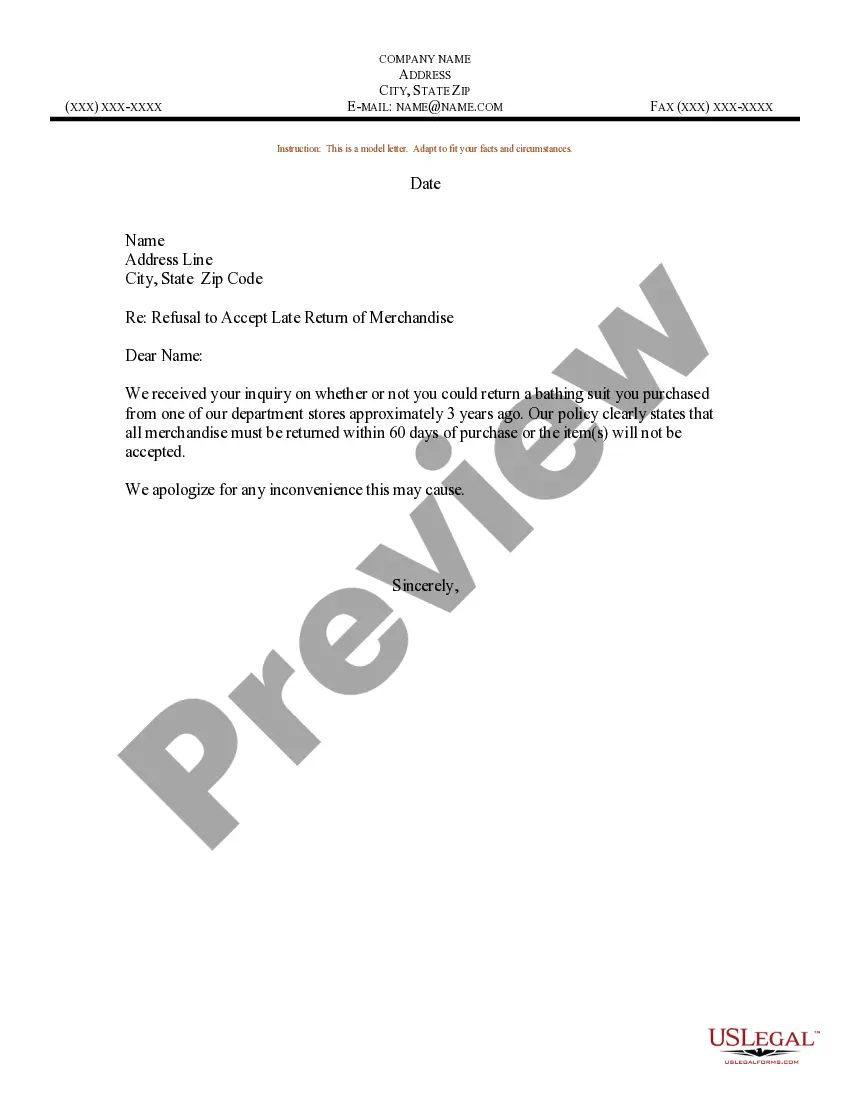
How to fill out Sample Letter For Correspondence Received From Defendant?
If you wish to accumulate, acquire, or print authentic document templates, utilize US Legal Forms, the primary collection of legal forms available online. Take advantage of the site’s straightforward and user-friendly search to find the documents you need. Various templates for commercial and personal purposes are categorized by type and state, or keywords. Utilize US Legal Forms to obtain the Virginia Sample Letter for Correspondence received from Defendant in just a few clicks.
If you are already a US Legal Forms user, Log In to your account and click on the Download button to retrieve the Virginia Sample Letter for Correspondence received from Defendant. You can also access forms you previously acquired in the My documents section of your account.
If you are using US Legal Forms for the first time, follow the instructions below: Step 1. Make sure you have selected the form for the correct city/state. Step 2. Use the Preview option to review the form’s content. Remember to read the description. Step 3. If you are not satisfied with the form, use the Search field at the top of the screen to find other versions in the legal form template. Step 4. Once you have located the form you need, click the Get now button. Choose the pricing plan you prefer and enter your details to register for the account. Step 5. Complete the transaction. You can use your credit card or PayPal account to finalize the purchase. Step 6. Choose the format of the legal form and download it to your device. Step 7. Complete, edit, and print or sign the Virginia Sample Letter for Correspondence received from Defendant.
- Every legal document template you purchase is yours indefinitely.
- You can access every form you have acquired within your account.
- Click the My documents section and select a form to print or download again.
- Complete and download, and print the Virginia Sample Letter for Correspondence received from Defendant with US Legal Forms.
- There are numerous professional and state-specific forms available for your business or personal needs.
Form popularity
FAQ
Correspondence is defined as the exchange of letters as a means of communication. Correspondence from one party to another and responses to such letters constitute what is known as correspondence between parties.
Guidelines for Letters of Support The letter should be addressed to the Judge, but mailed to the defendant's attorney. ... Who are you? ... Make it personal when describing the defendant's characteristics. ... Only talk about what you know. ... Be truthful. ... Never attack the victims or law enforcement.
Good faith is a legal term that describes the intention of the party or parties in a contract to deal in an honest manner with each other. In contracts, the parties signing abide by and uphold the contract. It requires people to act honestly without taking advantage of others.
Hear this out loud PauseI am writing to bring your attention to a claim I have against [name of defendant] regarding [briefly describe the nature of the claim]. I am writing this letter in support of my claim and to request that the court consider my case. On [date of incident], I [briefly describe what happened].
Hear this out loud PauseWhen writing, avoid simply describing the defendant in terms like ?he is loyal.? Instead, tell a story about his loyalty, or how he has been an upstanding member of the community. A story will stand out in the judge's mind more than adjectives will, making your letter more effective.
Remember that judges read hundreds of letters. The easier you make it for the judge to read, the most likely the judge will be able to focus on the message you are trying to convey. For most people, a typed letter is more legible than a handwritten one.
Hear this out loud PauseDear [Funder's Name], I am writing to express my enthusiastic support for [Name of the organization] and their proposed [Name of the project/program]. As someone who has experienced the [Relevant issue], I can personally attest to the urgent need for this project in our community.
Hear this out loud PauseMost letters have three parts: an opening statement that identifies the project/program where funds are being sought, one or two middle paragraphs that indicate the relationship of the writer to the effort seeking funding, and a closing statement. Be sure all your supporters address the same person at the same address.