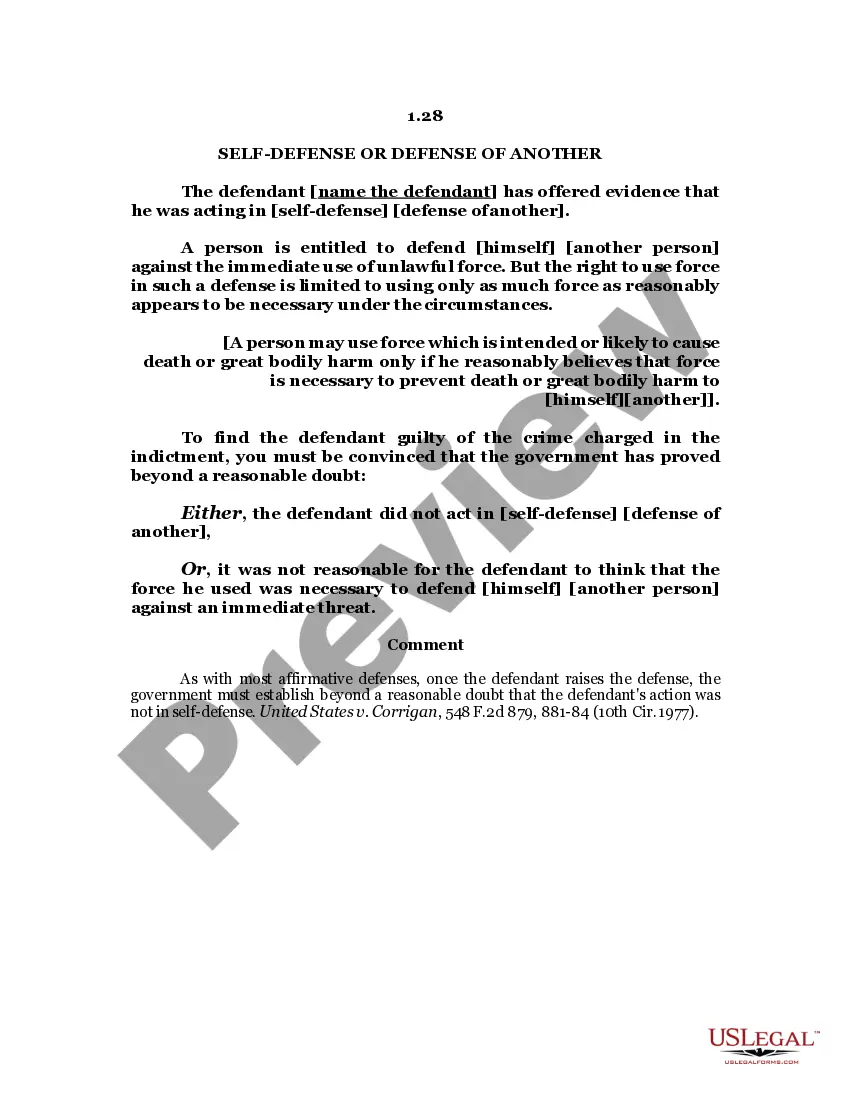
Virginia Self-Defense
Description
Get your form ready online
Our built-in tools help you complete, sign, share, and store your documents in one place.
Make edits, fill in missing information, and update formatting in US Legal Forms—just like you would in MS Word.
Download a copy, print it, send it by email, or mail it via USPS—whatever works best for your next step.
Sign and collect signatures with our SignNow integration. Send to multiple recipients, set reminders, and more. Go Premium to unlock E-Sign.
If this form requires notarization, complete it online through a secure video call—no need to meet a notary in person or wait for an appointment.
We protect your documents and personal data by following strict security and privacy standards.

Make edits, fill in missing information, and update formatting in US Legal Forms—just like you would in MS Word.

Download a copy, print it, send it by email, or mail it via USPS—whatever works best for your next step.

Sign and collect signatures with our SignNow integration. Send to multiple recipients, set reminders, and more. Go Premium to unlock E-Sign.

If this form requires notarization, complete it online through a secure video call—no need to meet a notary in person or wait for an appointment.

We protect your documents and personal data by following strict security and privacy standards.
Looking for another form?

How to fill out Self-Defense?
Locating the appropriate legal document template can be quite a challenge.
It goes without saying that there are numerous templates accessible online, but how do you find the legal form you need.
Utilize the US Legal Forms website. The platform offers a vast selection of templates, such as the Virginia Self-Defense, which you can use for both business and personal purposes.
You can preview the form using the Preview button and read the form details to confirm it is suitable for you.
- All of the documents are reviewed by experts and comply with state and federal requirements.
- If you are already a member, Log In to your account and click on the Download button to retrieve the Virginia Self-Defense.
- You can use your account to search through the legal documents you have previously acquired.
- Visit the My documents section of your account and obtain another copy of the document you need.
- If you are a new user of US Legal Forms, here are simple steps to follow.
- First, ensure you have selected the correct document for your city/state.
Form popularity
FAQ
Stand-your-ground laws are essentially a revocation of the duty to retreat. Stand your ground laws generally state that, under certain circumstances, people can use force to defend themselves without first attempting to retreat from the danger.
However, if a police officer arrests you unlawfully, you are entitled to use reasonable force to defend yourself. Va Code § 18.2-479.1.
This clause removes the ?duty of retreat? even outside of one's home (car, work, where one is allowed to possess a firearm). The State of Virginia doesn't have a ?Castle Doctrine? or a ?Stand Your Ground? clause.
Duty to Retreat in Virginia Unlike other states, Virginia does not have a ?stand your ground? law. Instead, a person is justified in not retreating if certain circumstances are met.
Virginia also has a "no retreat" or more commonly know as a "stand your ground" law, which means you are not required to "retreat", in other words try to escape, prior to using self defense, under certain circumstances. 3. Self defense can provide a legal basis as a defense in cases, in part, involving: Murder.
Search the Definitions. all words any words phrase. self-defense. n. the use of reasonable force to protect oneself or members of the family from bodily harm from the attack of an aggressor, if the defender has reason to believe he/she/they is/are in danger.
To successfully claim self-defense in VA, you need to be able to prove that you were threatened ? not that you ?believed? that a person was a threat, but that they performed some action that indicated attack.
West Virginia Law West Virginia has enacted a stand your ground law which removes the duty to retreat before using deadly force in self defense when a person is in any place he or she has a legal right to be.