Virginia Contractor's Final Affidavit of Payment to Subcontractors
Description
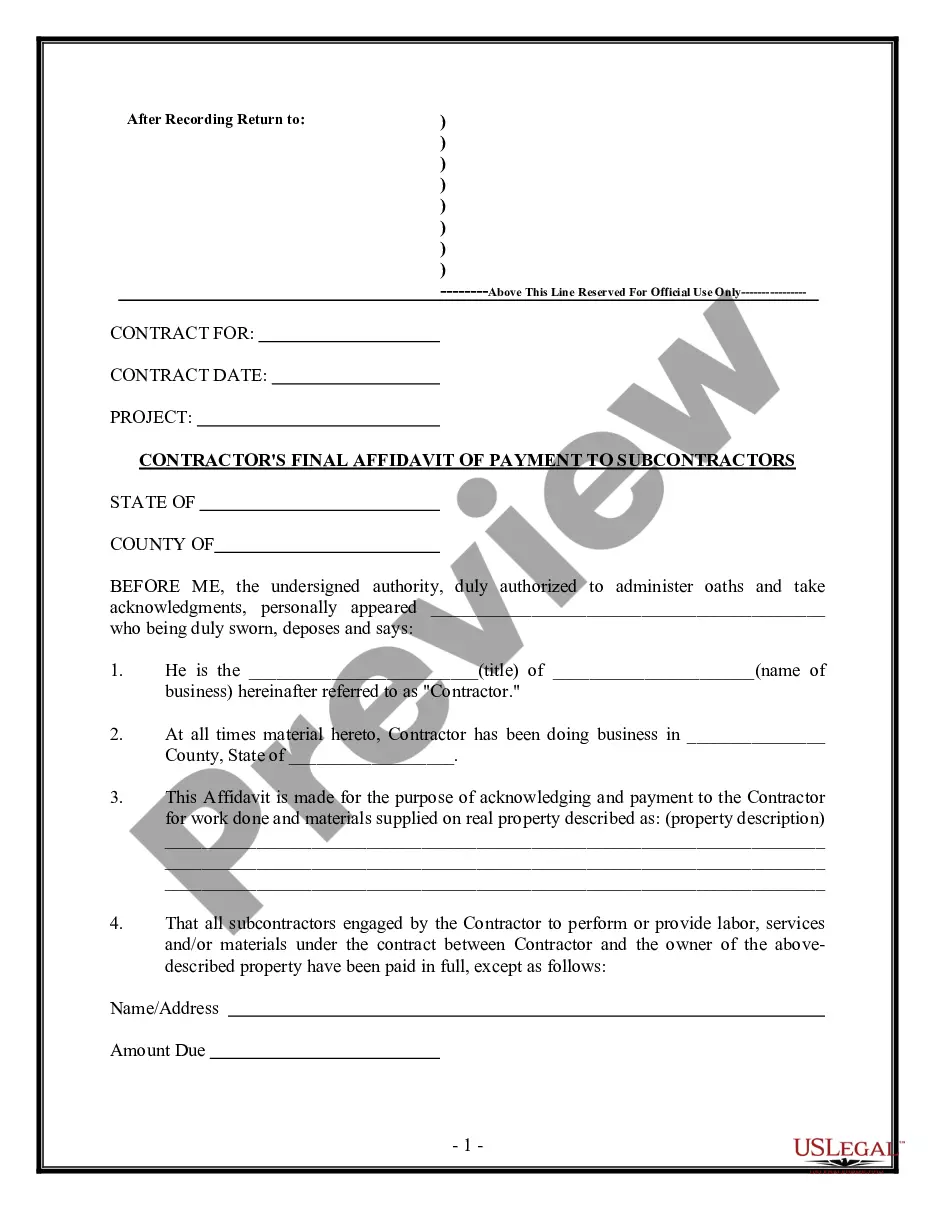
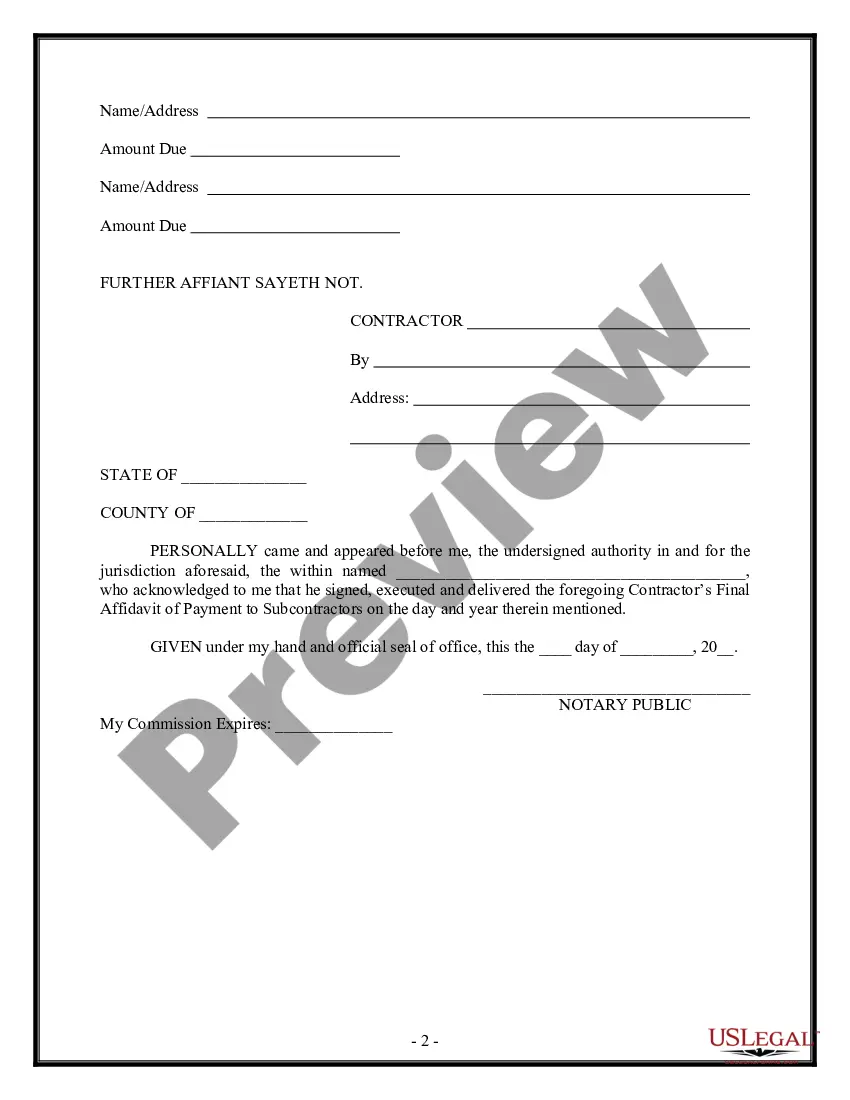
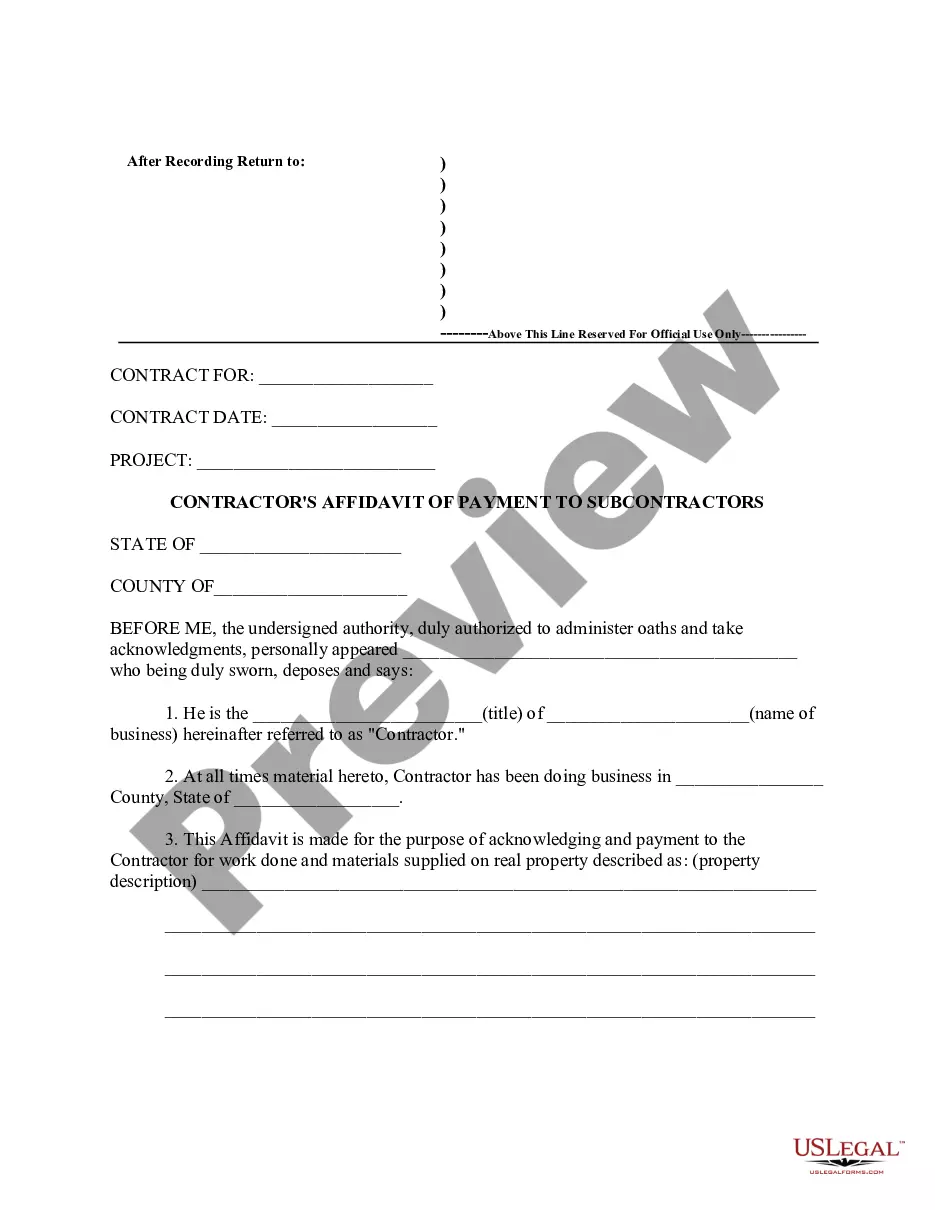
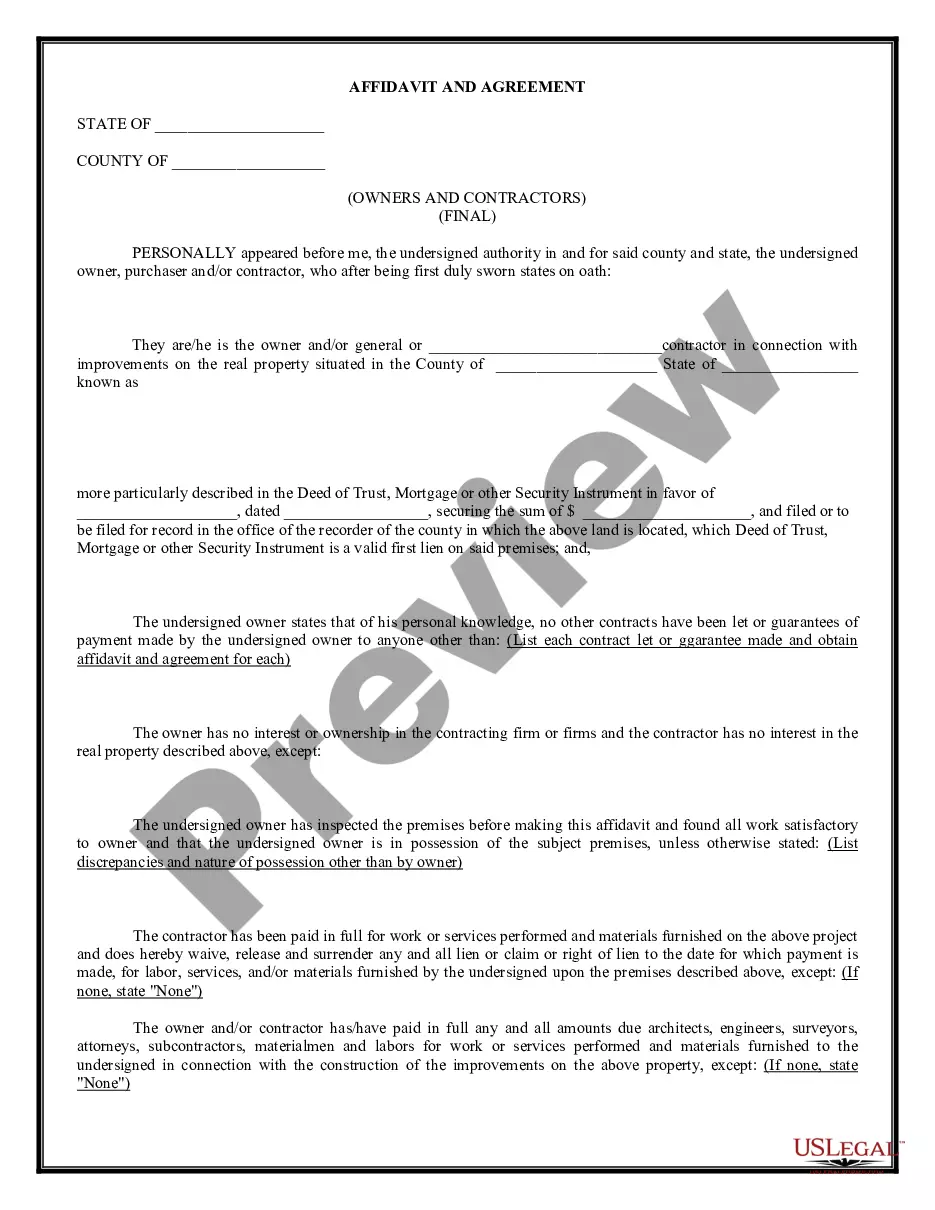
Get your form ready online
Our built-in tools help you complete, sign, share, and store your documents in one place.
Make edits, fill in missing information, and update formatting in US Legal Forms—just like you would in MS Word.
Download a copy, print it, send it by email, or mail it via USPS—whatever works best for your next step.
Sign and collect signatures with our SignNow integration. Send to multiple recipients, set reminders, and more. Go Premium to unlock E-Sign.
If this form requires notarization, complete it online through a secure video call—no need to meet a notary in person or wait for an appointment.
We protect your documents and personal data by following strict security and privacy standards.

Make edits, fill in missing information, and update formatting in US Legal Forms—just like you would in MS Word.

Download a copy, print it, send it by email, or mail it via USPS—whatever works best for your next step.

Sign and collect signatures with our SignNow integration. Send to multiple recipients, set reminders, and more. Go Premium to unlock E-Sign.

If this form requires notarization, complete it online through a secure video call—no need to meet a notary in person or wait for an appointment.

We protect your documents and personal data by following strict security and privacy standards.
Looking for another form?
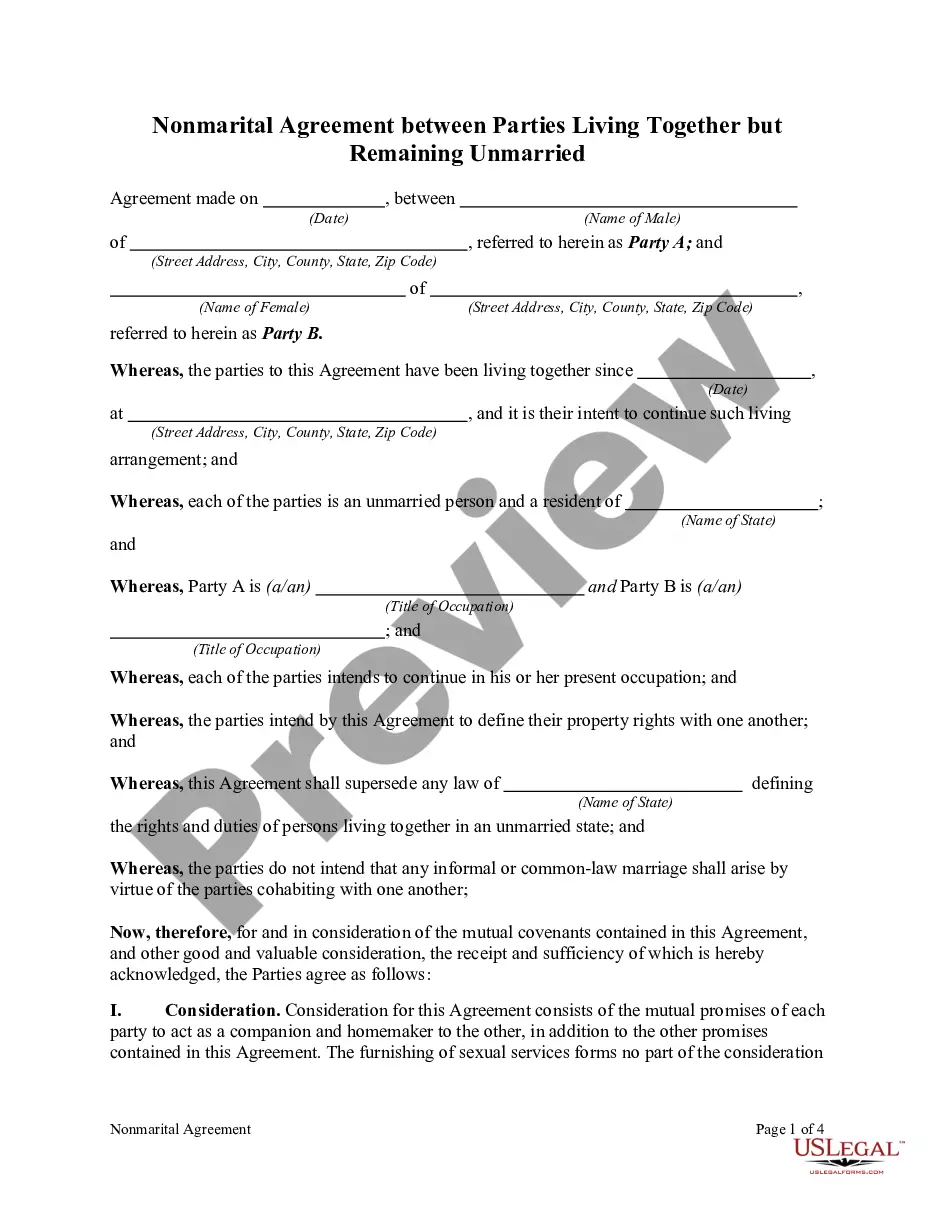
How to fill out Contractor's Final Affidavit Of Payment To Subcontractors?
Have you ever found yourself in a situation where you need paperwork for either business or personal reasons on a daily basis.
There are various legal document templates available online, but locating ones you can trust isn't easy.
US Legal Forms offers a multitude of form templates, such as the Virginia Contractor's Final Affidavit of Payment to Subcontractors, which can be designed to meet both federal and state requirements.
When you find the correct form, click Get now.
Select the pricing plan you prefer, fill in the necessary details to create your account, and complete your order using your PayPal or credit card.
- If you are already familiar with the US Legal Forms site and have an account, just Log In.
- After logging in, you can download the Virginia Contractor's Final Affidavit of Payment to Subcontractors template.
- If you do not have an account and wish to begin using US Legal Forms, follow these steps.
- Locate the form you need and ensure it is for your appropriate city/county.
- Use the Preview button to take a look at the form.
- Read the description to confirm you have selected the correct form.
- If the form isn’t what you’re looking for, utilize the Lookup field to find the form that meets your needs.
Form popularity
FAQ
6.2. The total "retention money" shall be due for release upon final acceptance of the works.
Under the common law of contracts, upon final acceptance, the owner takes control and ownership of the project and the risk of loss passes from the contractor to the owner. Final acceptance generally means acceptance of the work as completed, including any deficiencies known to exist.
Final Payment means the last and final monetary compensation made to Contractor for any portion of the Work that has been completed and accepted for which payment has not been made, amounts owing to adjustments to the final Contract Sum resulting from approved change orders, and release of Contractor's retainage.
The following steps can help contractors get the payments they are owed.Create Solid Contracts. A solid contract is the strongest weapon in your arsenal.Optimize Your Contracts.Send Invoices for Progress Payments.Use Preliminary Notices & Conditional Lien Waivers.5 Seek Payment After the Project is Completed.11-Dec-2019
The Net 10,30 and 60 terms The most typical payment term for contractors (and businesses, overall) is net payment. It means that an invoice is due in a specific amount of days from the invoice date.
AIA Document G706A21221994 supports AIA Document G70621221994 in the event that the owner requires a sworn statement of the contractor stating that all releases or waivers of liens have been received.
Definitions of final payment. the final payment of a debt. synonyms: payoff. type of: payment. a sum of money paid or a claim discharged.
Typically, payments are made on a monthly schedule, but they may also be sent at certain percentages of completion (e.g. when the job is 30% complete, 60% complete, and 100% complete). There are several different construction contract pricing structures. Some of the more common are: Time and materials (T&M)
It must:be served by or on behalf of a claimant; and.identify the respondent and the construction work performed or related goods and services; and.indicate the amount. A claim for $10,000 + GST should be described as $11,000 including GST; and.relate to work performed on or prior to a reference date.
Consulting services you have provided. interest on overdue progress payments. your losses and additional costs due to work being deleted from your contract while you suspended work. cash security and retention money.