Virginia Pour Over Will for Wife
About this form
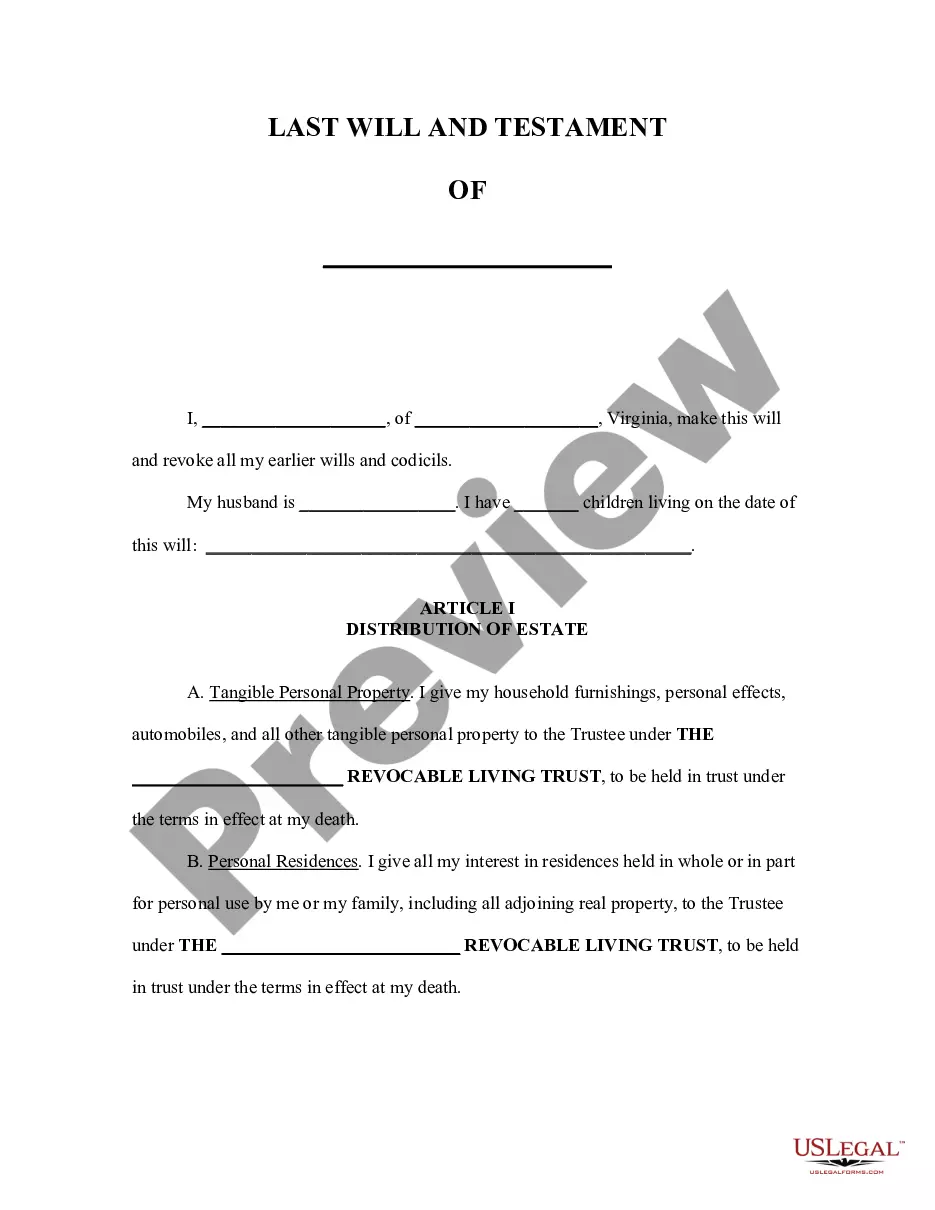
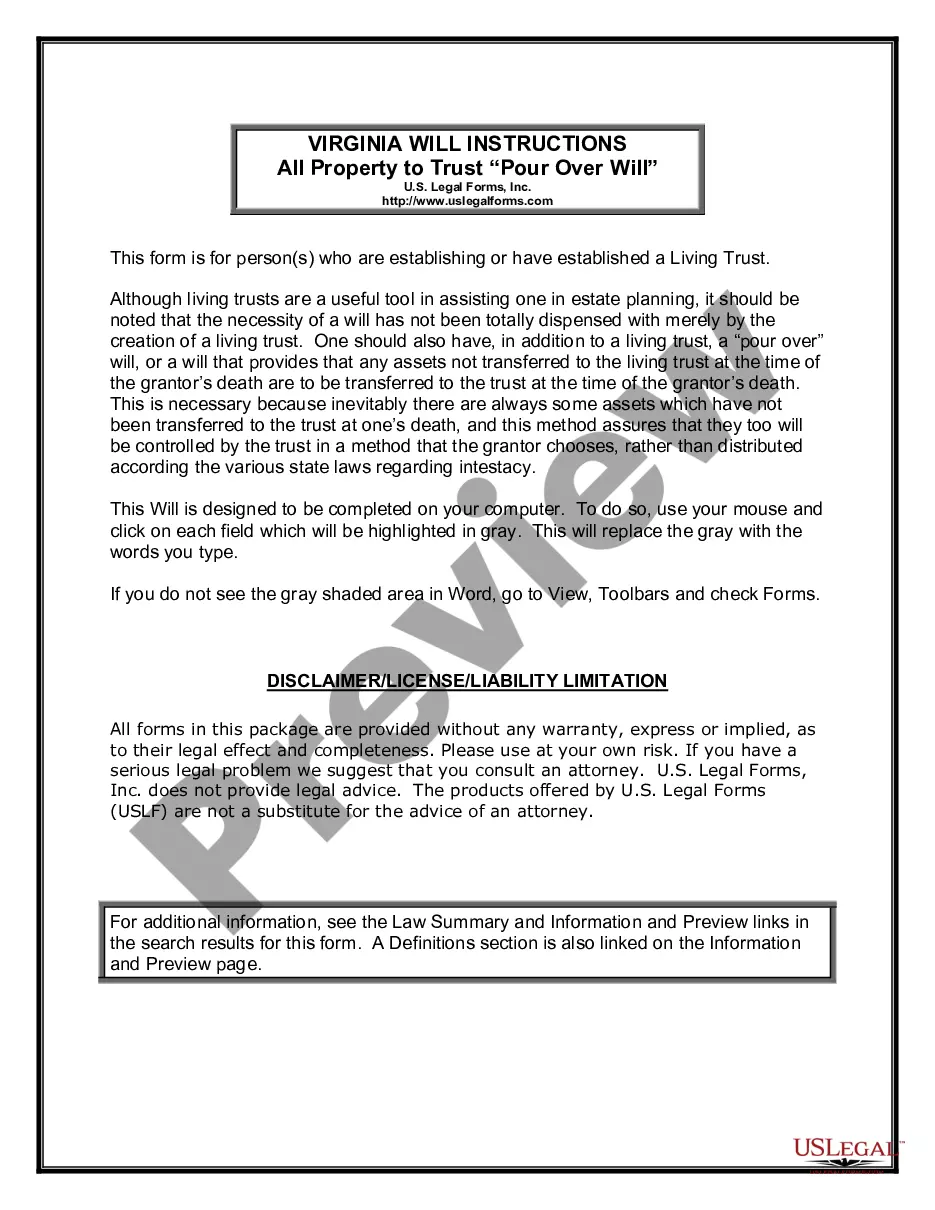
A Pour-Over Will for Wife is a legal document that ensures any assets not included in your trust are transferred to your living trust upon your death. This will directs your Executor to "pour over" these assets for distribution according to the terms established in your revocable living trust. Unlike a standard Last Will and Testament, this form specifically complements a trust, making it an essential tool for estate planning when you want to simplify asset management for your beneficiaries.
Form components explained
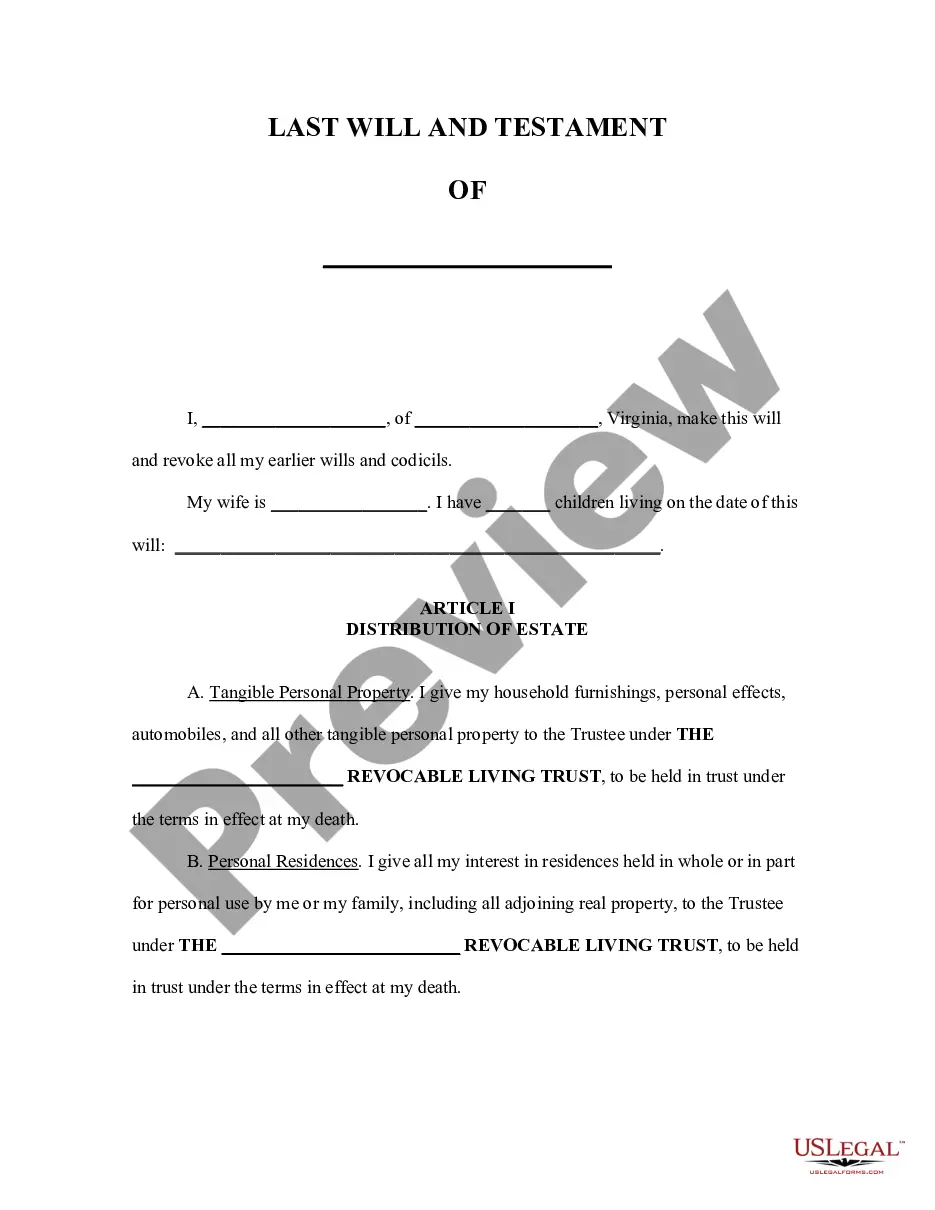
- Testator Information: Includes the name and address of the individual creating the will.
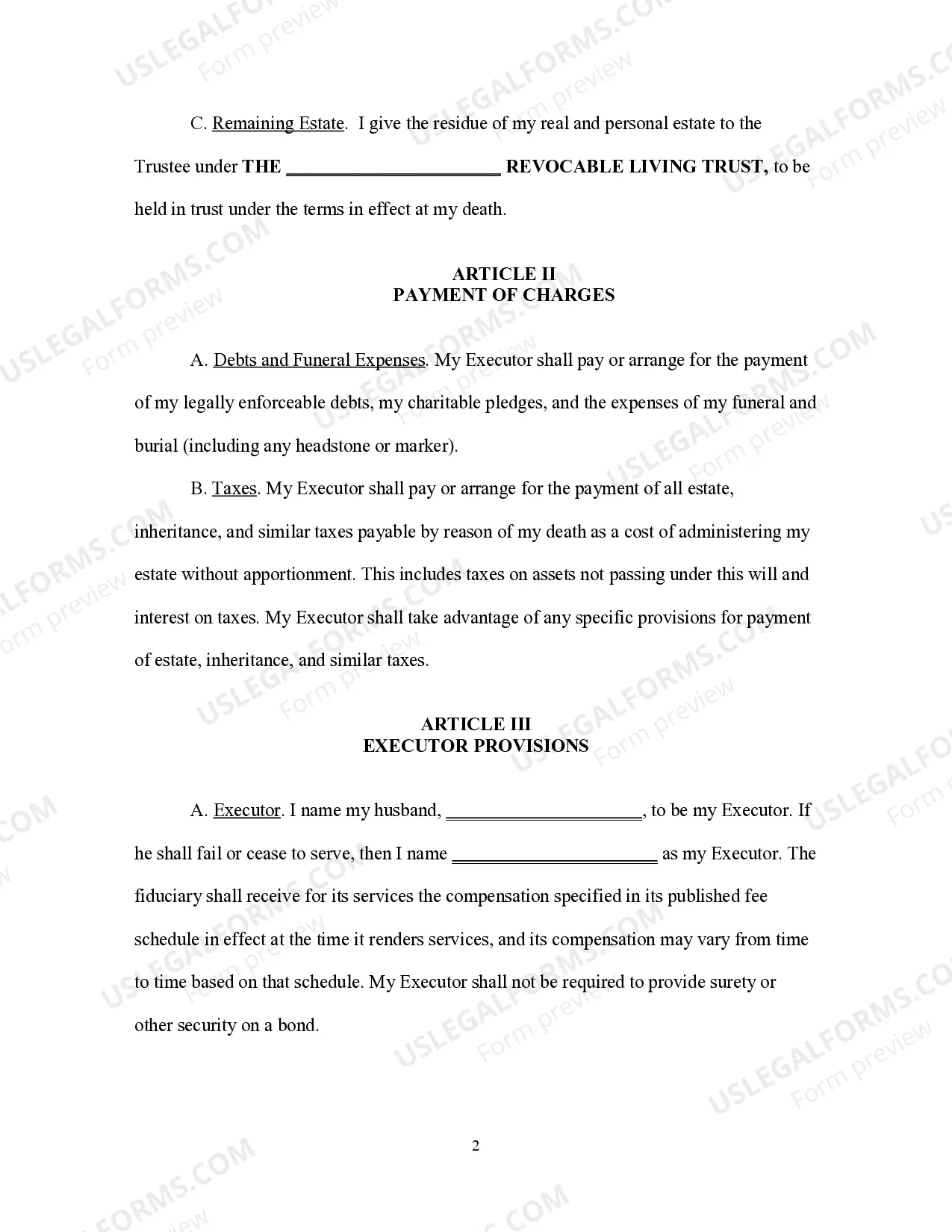
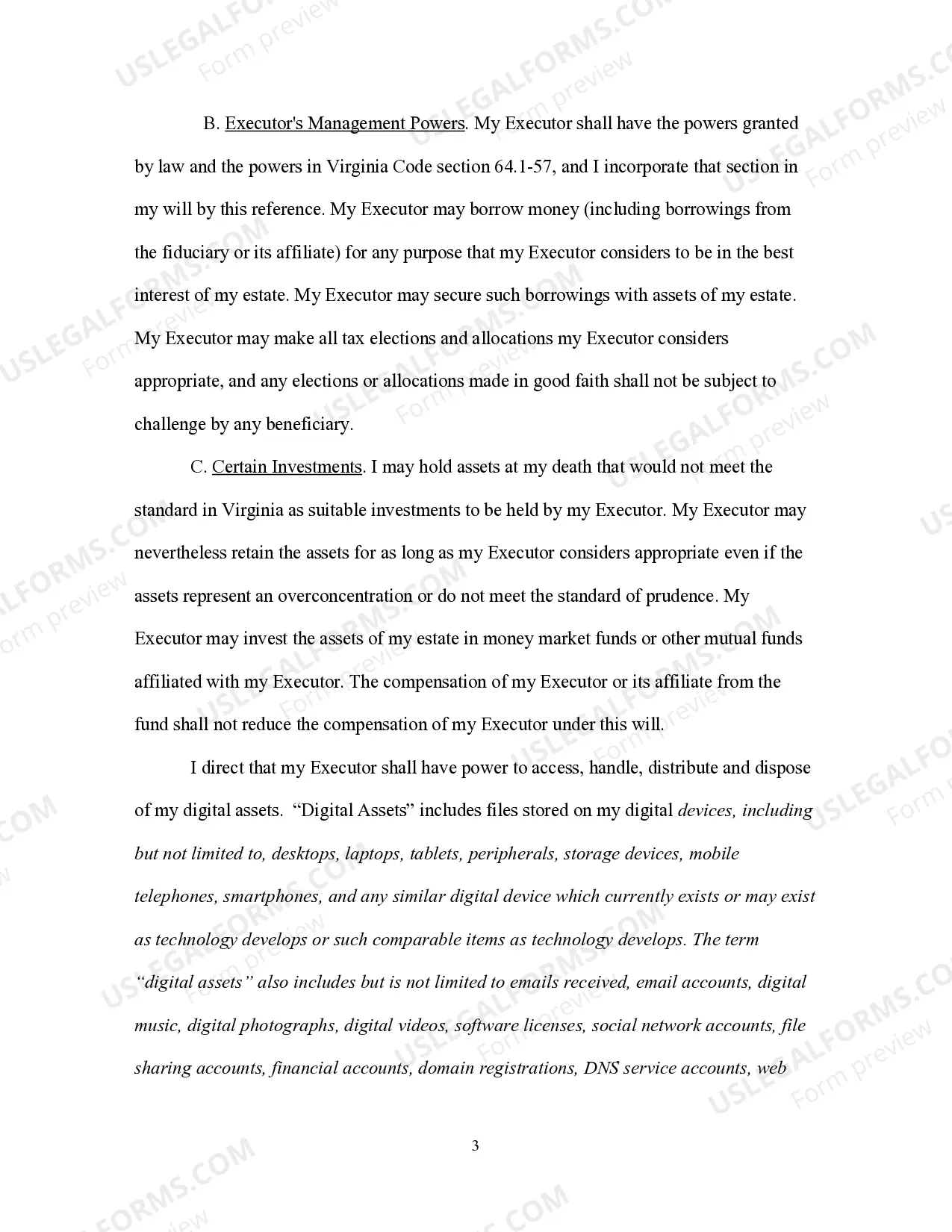
- Executor Appointment: Designates your husband as the executor of the will, responsible for managing the estate.
- Distribution of Estate: Clearly outlines how tangible personal property and remaining estate assets should be handled via the living trust.
- Debts and Expenses: Specifies the responsibility of the Executor to pay debts, funeral expenses, and taxes related to the estate.
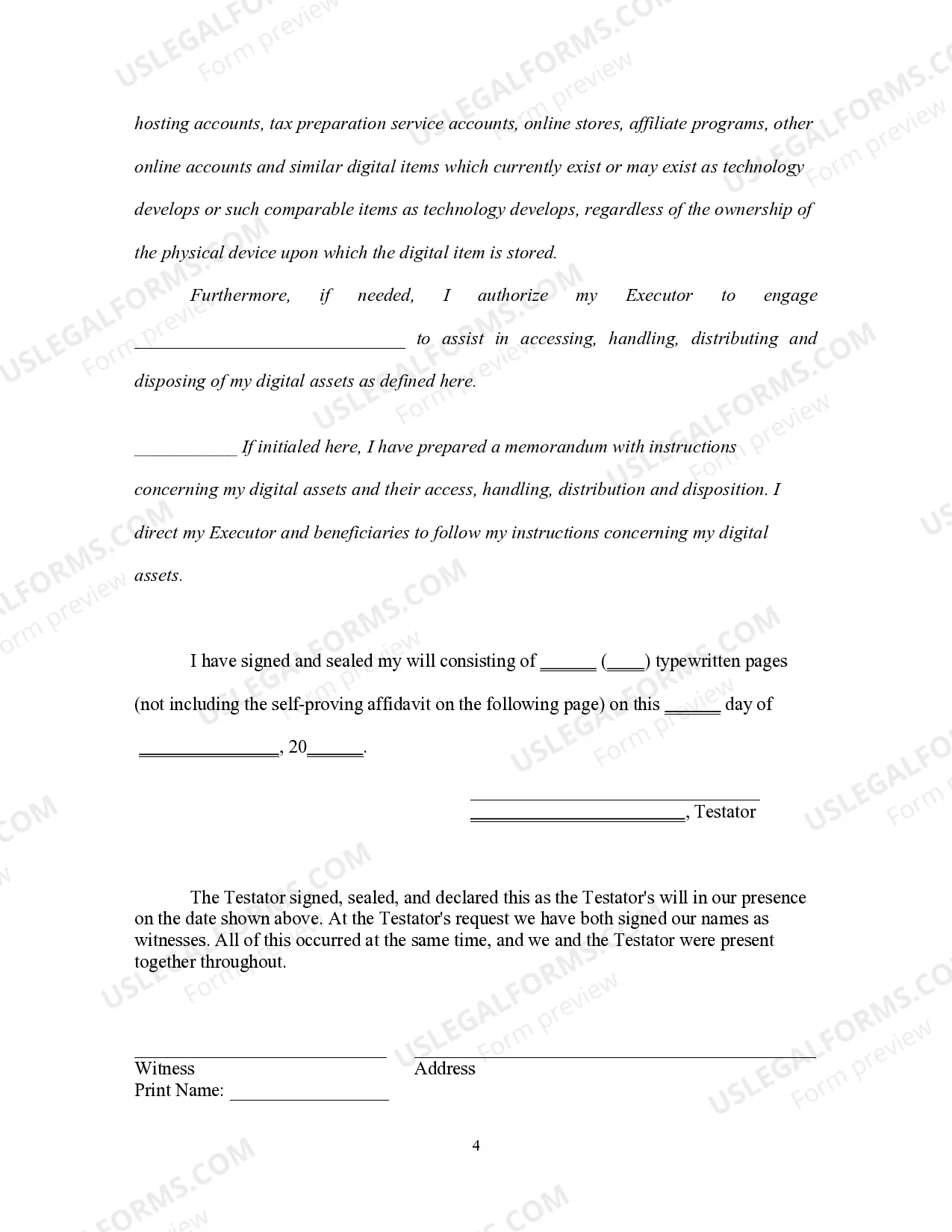
- Witness Signatures: Requires signatures from witnesses to authenticate the will, ensuring it complies with legal standards.


Common use cases
This form is particularly useful when you have a living trust but want to ensure that any assets not formally included in the trust at the time of your death are still managed according to your wishes. It's ideal for individuals who wish to streamline their estate distribution, especially if certain assets might be overlooked during the trust setup.
Who needs this form
- Individuals who have a revocable living trust and want to complement it with a Pour-Over Will.
- Married individuals looking to ensure their spouse is directly involved in estate management.
- Anyone who wants to simplify the estate distribution process and avoid potential probate issues.
How to complete this form
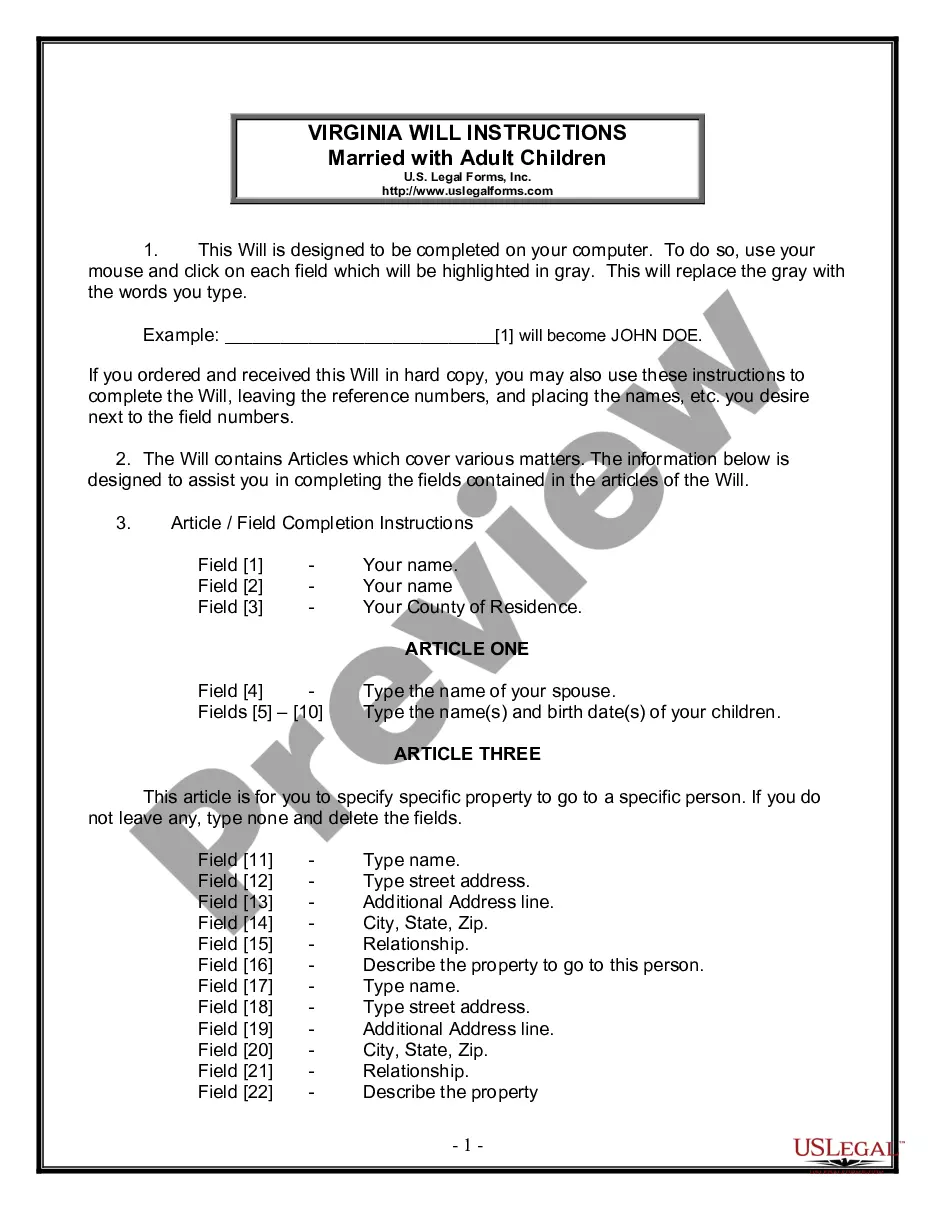
- Identify the parties: Fill in your name, address, and details of your husband as the Executor.
- Specify your children: List the names of your living children on the date of the will.
- Detail asset distribution: Clearly outline how tangible personal property and remaining estate should be managed by the Trustee.
- Provide witness information: Gather signatures from two witnesses as required to validate your will.
- Finalize the document: Sign and date the will in the presence of witnesses and ensure all parties verify their presence.
Does this form need to be notarized?
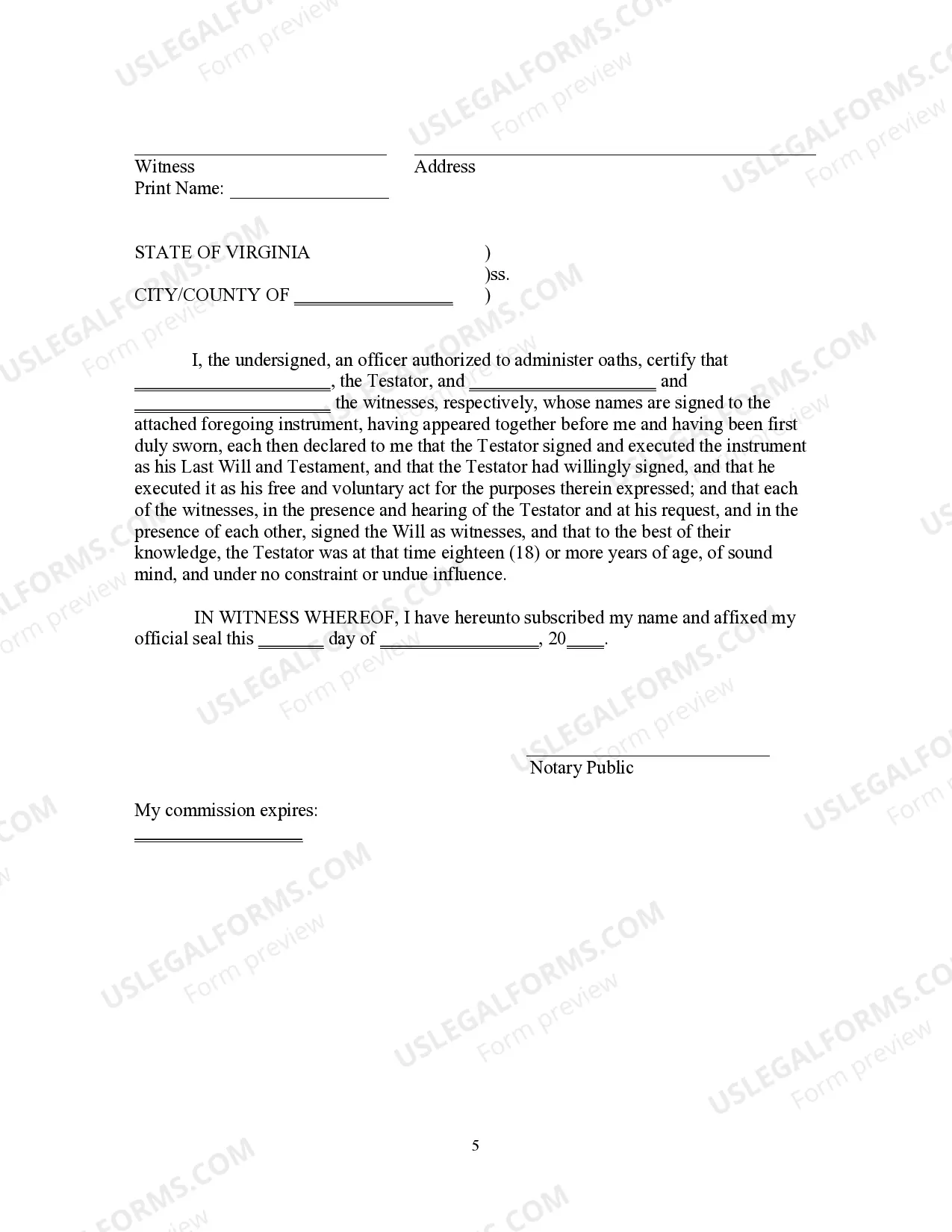
To make this form legally binding, it must be notarized. Our online notarization service, powered by Notarize, lets you verify and sign documents remotely through an encrypted video session.
Get your form ready online
Our built-in tools help you complete, sign, share, and store your documents in one place.
Make edits, fill in missing information, and update formatting in US Legal Forms—just like you would in MS Word.
Download a copy, print it, send it by email, or mail it via USPS—whatever works best for your next step.
Sign and collect signatures with our SignNow integration. Send to multiple recipients, set reminders, and more. Go Premium to unlock E-Sign.
If this form requires notarization, complete it online through a secure video call—no need to meet a notary in person or wait for an appointment.
We protect your documents and personal data by following strict security and privacy standards.

Make edits, fill in missing information, and update formatting in US Legal Forms—just like you would in MS Word.

Download a copy, print it, send it by email, or mail it via USPS—whatever works best for your next step.

Sign and collect signatures with our SignNow integration. Send to multiple recipients, set reminders, and more. Go Premium to unlock E-Sign.

If this form requires notarization, complete it online through a secure video call—no need to meet a notary in person or wait for an appointment.

We protect your documents and personal data by following strict security and privacy standards.
Mistakes to watch out for
- Failing to name an alternate Executor in case the primary cannot serve.
- Not properly signing or obtaining witness signatures, making the will invalid.
- Omitting specific assets from your trust that you assume are included.
- Not updating the will after significant life changes, such as additional children or changes in marital status.
Benefits of using this form online
- Convenient access: Download the form anytime, from anywhere.
- Editable template: Customize the will to fit your specific needs.
- Compliance assurance: Forms are drafted by licensed attorneys to ensure legal validity.
What to keep in mind
- A Pour-Over Will directs unallocated assets to your living trust upon your death.
- This form helps ensure your estate is handled according to your wishes.
- Notarization is a critical step in validating your will.
Looking for another form?
Form popularity
FAQ
Pour-over wills are subject to probate since the assets have not yet been transferred into the trust. Some states also require your assets to go through the probate process any time your assets or property are over a certain value.Even though pour-over wills don't avoid probate, there is still a measure of privacy.
There are certain types of property that legally cannot be included in a person's will. Depending on state laws, these may include: Any Property that is Co-Owned with Someone Else Through Joint-Tenancy: Married couples typically own the marital home in joint tenancy.Property being held in a living trust.
A pour-over will is a testamentary device wherein the writer of a will creates a trust, and decrees in the will that the property in his or her estate at the time of his or her death shall be distributed to the Trustee of the trust.
Pour-over wills are subject to probate since the assets have not yet been transferred into the trust. Some states also require your assets to go through the probate process any time your assets or property are over a certain value.Even though pour-over wills don't avoid probate, there is still a measure of privacy.
Pour-over wills are subject to probate since the assets have not yet been transferred into the trust. Some states also require your assets to go through the probate process any time your assets or property are over a certain value.Even though pour-over wills don't avoid probate, there is still a measure of privacy.
Types Of Property And Assets To Include In A WillCash, including money in checking accounts, savings accounts, and money market accounts, etc. Intangible personal property, such as stocks, bonds, and other forms of business ownership, as well as intellectual property, royalties, patents, and copyrights, etc.
The pour over will does not need to be notarized; however, in California it does need to be signed by two disinterested witnesses.
Anyone who is single and has assets titled in their sole name should consider a Revocable Living Trust. The two main reasons are to keep you and your assets out of a court-supervised guardianship and to allow your beneficiaries to avoid the costs and hassles of probate.