Virginia Complaint for Divorce for irreconcilable differences
About this form
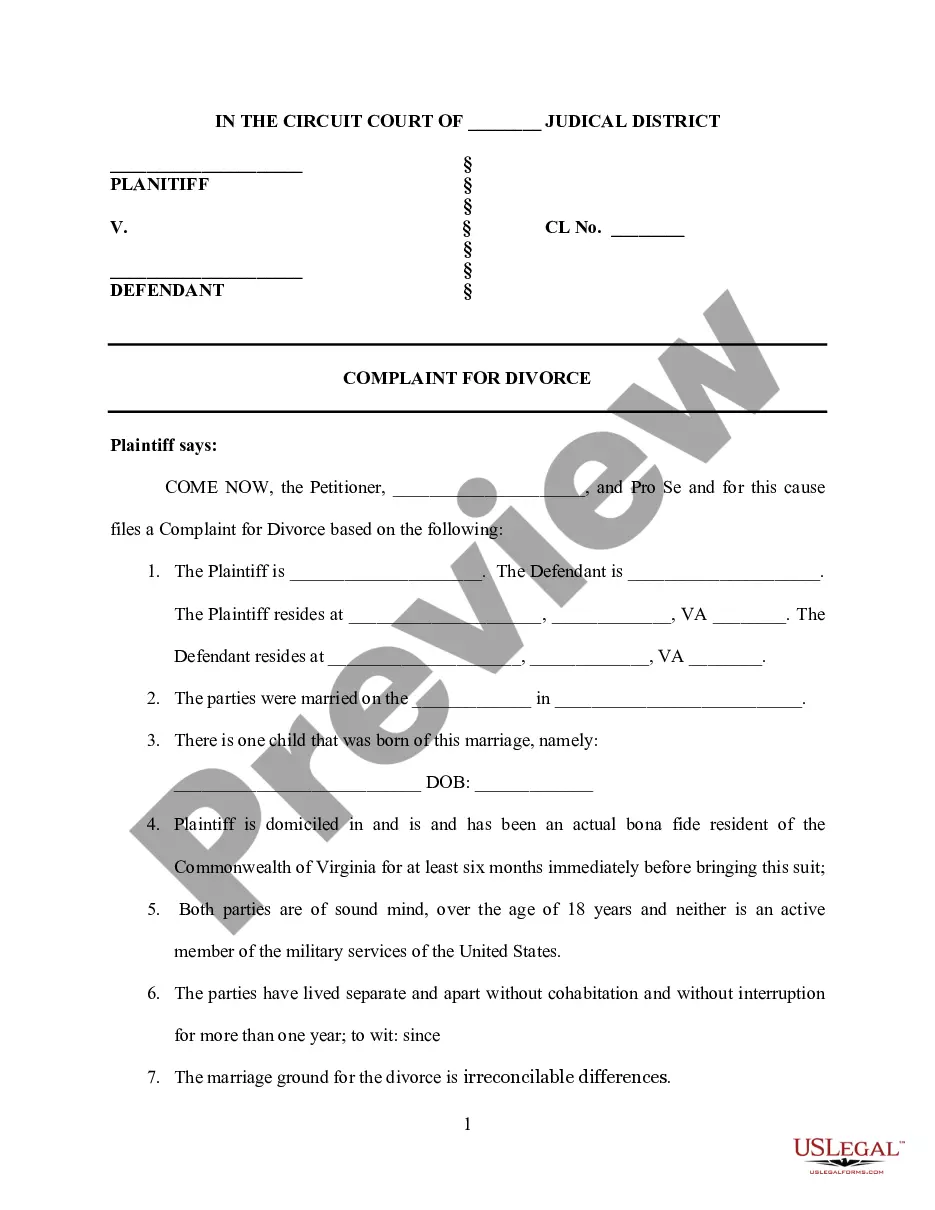
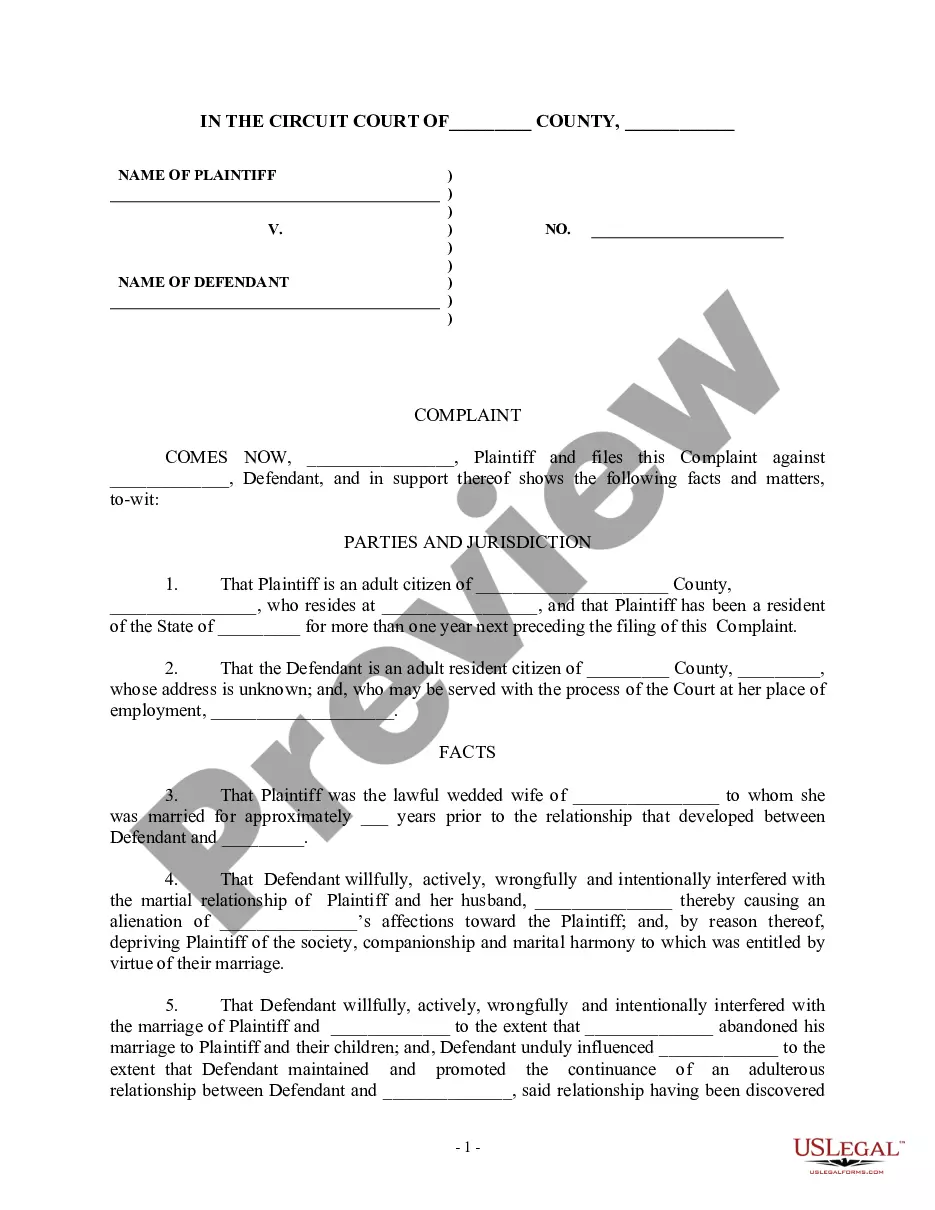
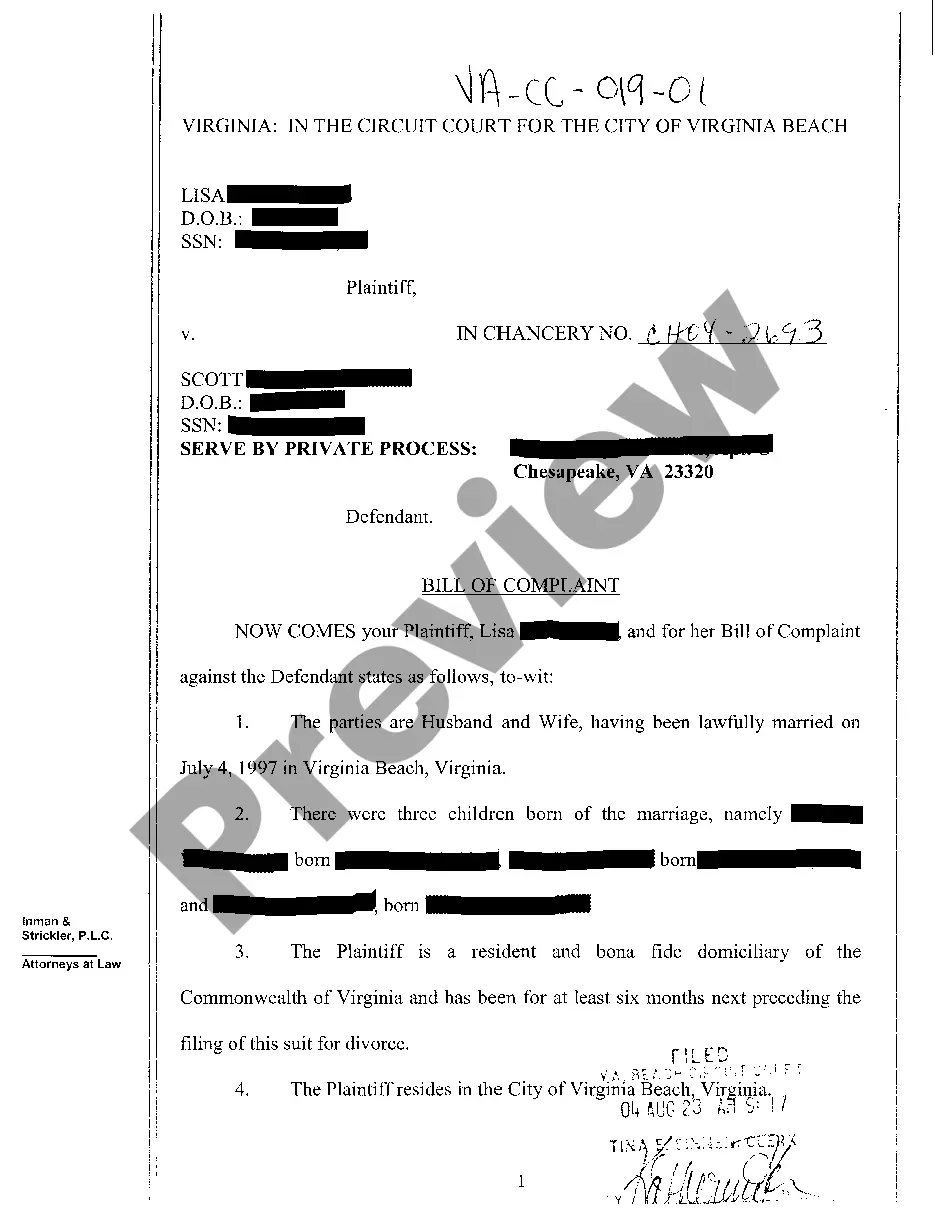
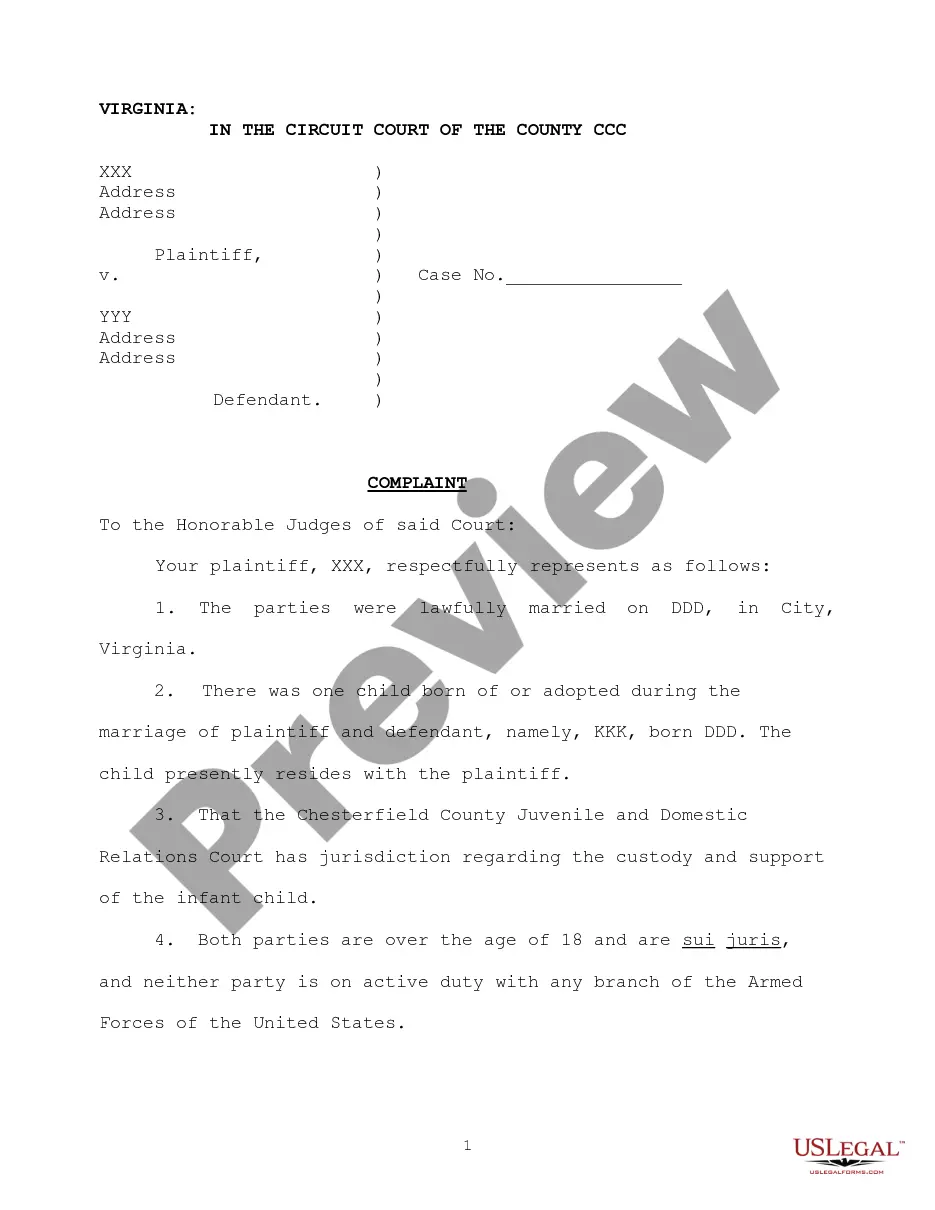
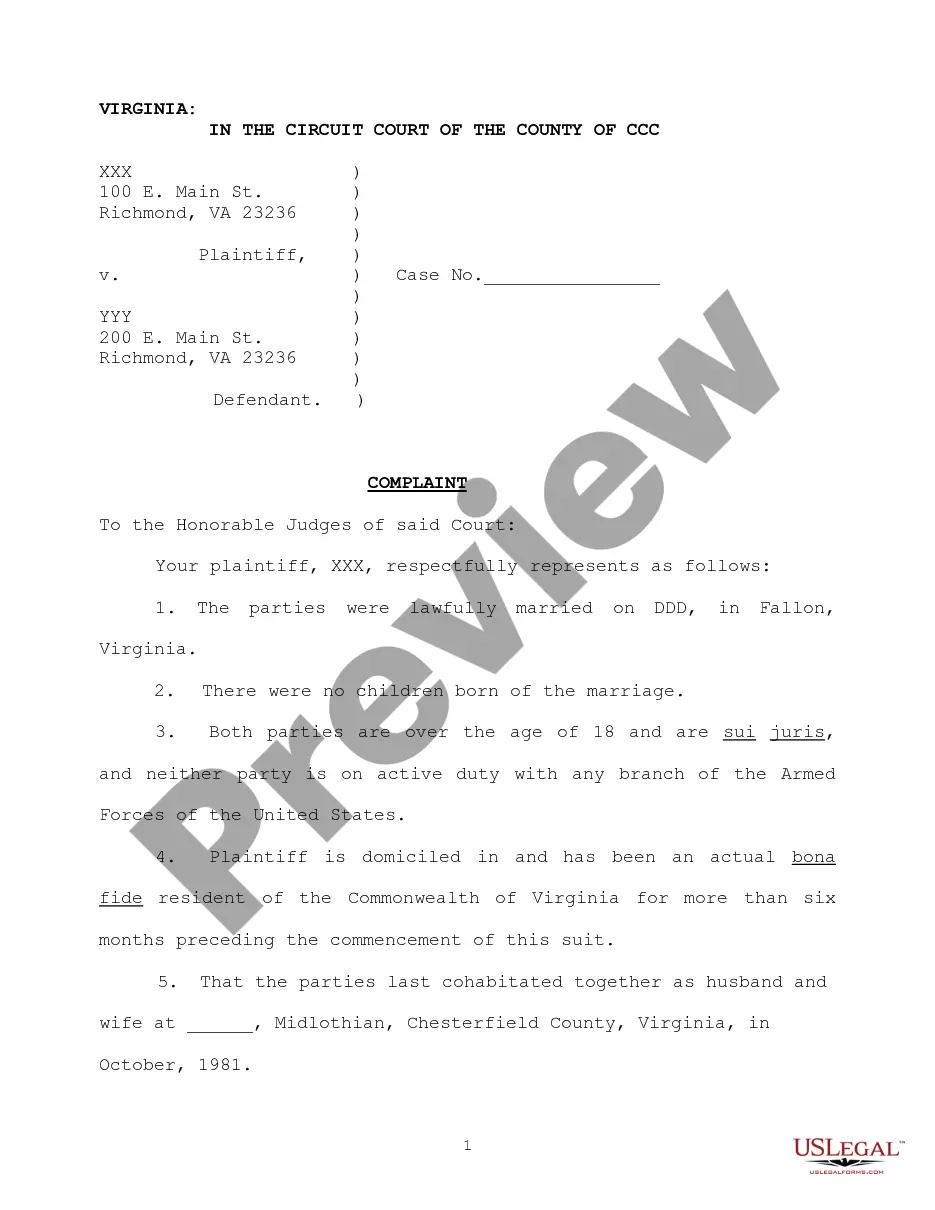
The Complaint for Divorce based on irreconcilable differences is a legal document that initiates a divorce proceeding. It specifically addresses situations where both spouses agree that their marriage cannot continue due to irreconcilable differences. This form is particularly helpful for couples who have reached an agreement regarding child custody and support, allowing them to request a divorce amicably without litigation.
Key parts of this document
- Names of the parties involved (Plaintiff and Defendant)
- Dates and locations of marriage and residence
- Details about any children from the marriage, including their date of birth
- Grounds for divorce being irreconcilable differences
- Statements regarding residency requirements and separation period
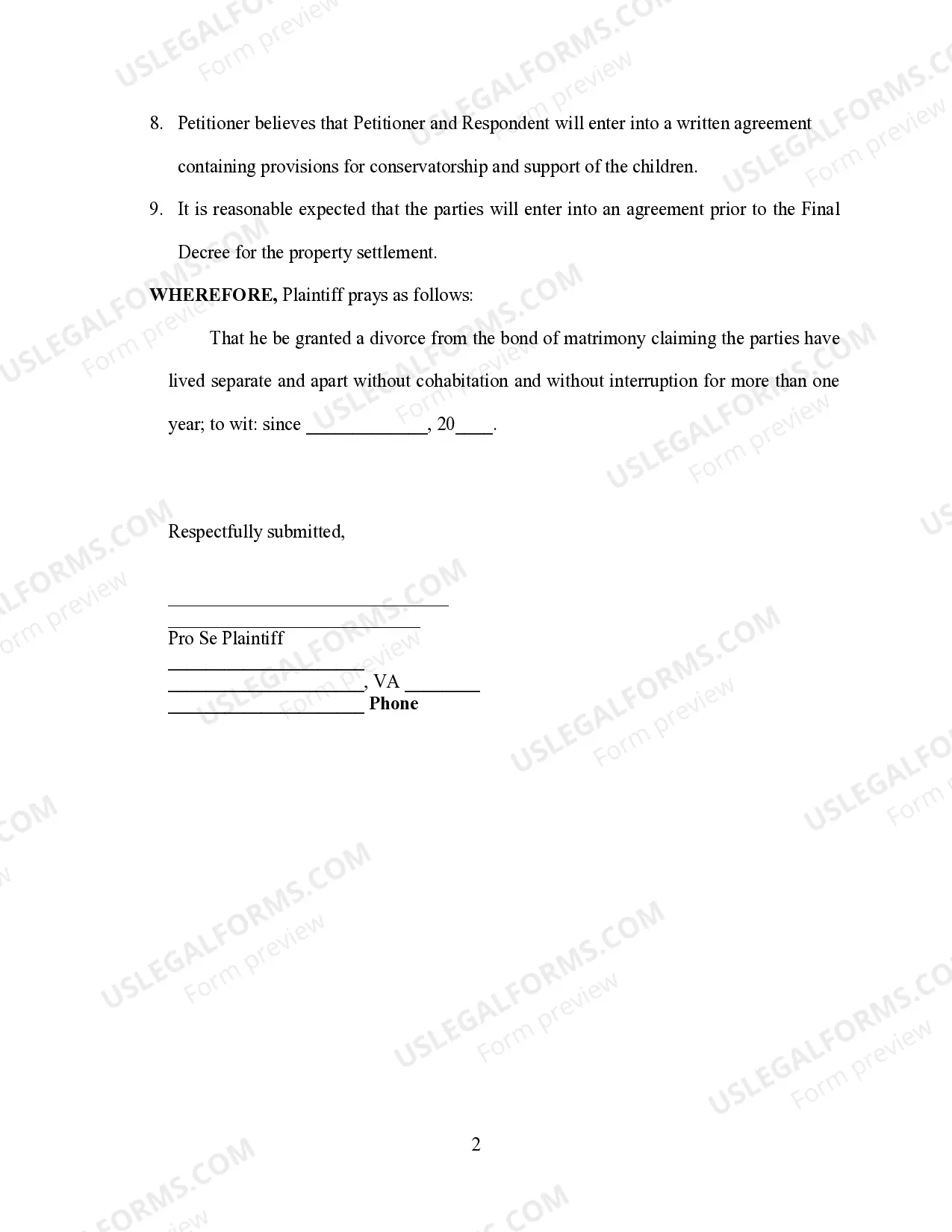
- Request for the court to grant the divorce and adopt any agreements made between the parties

Common use cases
This form should be used when a couple wants to file for divorce on the grounds of irreconcilable differences, and both parties have mutually agreed on child custody and support arrangements. It is ideal for cases where there is no dispute over property or marital issues, allowing for a smooth and amicable dissolution of marriage.
Who this form is for
- Couples who have agreed to divorce amicably without disputes
- Individuals seeking a no-fault divorce based on irreconcilable differences
- Parents wanting to establish custody and support arrangements for their children
- Residents of Virginia who meet the jurisdictional requirements for filing
How to prepare this document
- Identify the parties: Fill in the names of the plaintiff and defendant.
- Provide details on marriage: Enter the marriage date and location.
- Specify residency: Confirm that both parties meet Virginia's residency requirements.
- Document children: List the name and date of birth of any children from the marriage.
- Indicate grounds for divorce: State that the grounds for divorce are irreconcilable differences.
- Request court relief: Ensure you specify what you are asking the court to grant, including any agreements on custody and support.
Is notarization required?
This form does not typically require notarization unless specified by local law. However, it is wise to check local regulations for any additional notarization requirements.
Get your form ready online
Our built-in tools help you complete, sign, share, and store your documents in one place.
Make edits, fill in missing information, and update formatting in US Legal Forms—just like you would in MS Word.
Download a copy, print it, send it by email, or mail it via USPS—whatever works best for your next step.
Sign and collect signatures with our SignNow integration. Send to multiple recipients, set reminders, and more. Go Premium to unlock E-Sign.
If this form requires notarization, complete it online through a secure video call—no need to meet a notary in person or wait for an appointment.
We protect your documents and personal data by following strict security and privacy standards.

Make edits, fill in missing information, and update formatting in US Legal Forms—just like you would in MS Word.

Download a copy, print it, send it by email, or mail it via USPS—whatever works best for your next step.

Sign and collect signatures with our SignNow integration. Send to multiple recipients, set reminders, and more. Go Premium to unlock E-Sign.

If this form requires notarization, complete it online through a secure video call—no need to meet a notary in person or wait for an appointment.

We protect your documents and personal data by following strict security and privacy standards.
Common mistakes
- Failing to meet residency requirements before filing.
- Not specifying all children involved or their details accurately.
- Neglecting to provide information on any written agreements regarding custody and support.
- Forgetting to sign and date the document before submission.
Benefits of completing this form online
- Convenient access to legal forms that can be downloaded and filled out at your own pace.
- Editability allows you to customize the document according to your specific needs.
- Reliability of forms drafted by licensed attorneys, ensuring legal compliance.
What to keep in mind
- The Complaint for Divorce for irreconcilable differences is a legal way to file for divorce amicably.
- It is essential to detail residency, children, and agreements clearly.
- This form is designed for use in Virginia, with specific state requirements regarding residency and separation.
Looking for another form?

Form popularity
FAQ
Emotional Abuse in a Virginia Divorce Under Virginia law, abusive language, humiliation, and other forms of emotional abuse are considered cruelty. You can seek a divorce on those grounds. Note that the court won't simply take your word for it. You will need proof of your spouse's emotional abuse.
§§ 20-91(A)(1), 20-94. b. Conviction of a Felony. If either spouse is convicted of a felony and is jailed on a sentence that exceeds one year, the other spouse may immediately seek a divorce so long as he/she has not lived with the guilty spouse after knowledge of the confinement.
However, if you are considering a divorce because of emotional abuse, you can file for a fault-based divorce based on cruelty. Family Law courts take any instances of abuse very seriously, and fault-based divorces can have lasting impacts on the ?guilty? party.
Are Irreconcilable Differences Grounds for Divorce in Virginia? No. Virginia does not recognize or grant divorces based on ?irreconcilable differences.? There must either be fault grounds for divorce or no fault grounds.
While the outcome of your divorce is ultimately dependent on personal circumstances, emotional abuse can affect the court's ruling. Here are some possible scenarios in which abuse impacts the final divorce settlement: Property and debt distribution.
While emotional abuse can be just as harmful as physical abuse, it is more difficult to prove. There is often no physical proof of emotional abuse, such as bruising or injuries. Instead, proving emotional abuse may require: Texts, messages or emails.
If two things such as opinions or proposals are irreconcilable, they are so different from each other that it is not possible to believe or have both of them.
Cruelty. The cruelty ground requires proof of ?cruelty or reasonable apprehension of bodily hurt.? Acts of physical violence and conduct that endanger the life, safety, or health of one's spouse will constitute cruelty. Abusive language, humiliating statements, and repeated neglect can also constitute cruelty.