Virginia Mutual Non-Disclosure Agreement
What this document covers
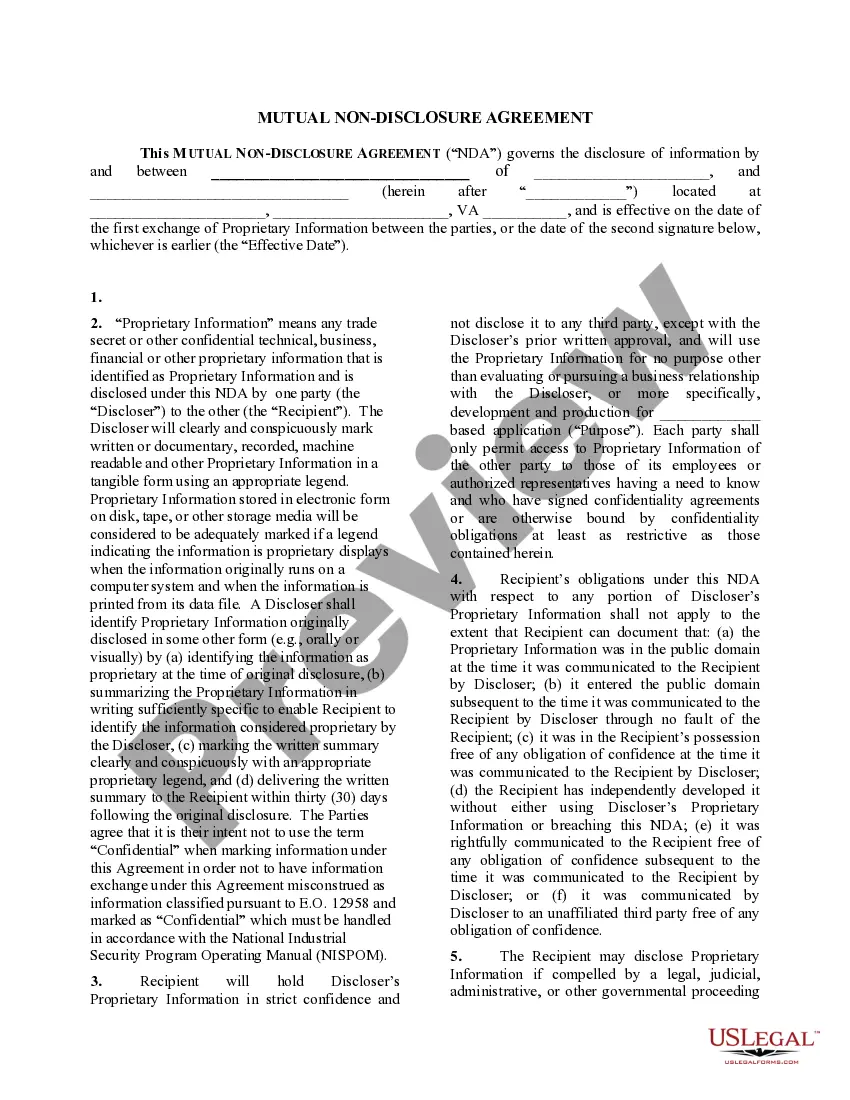
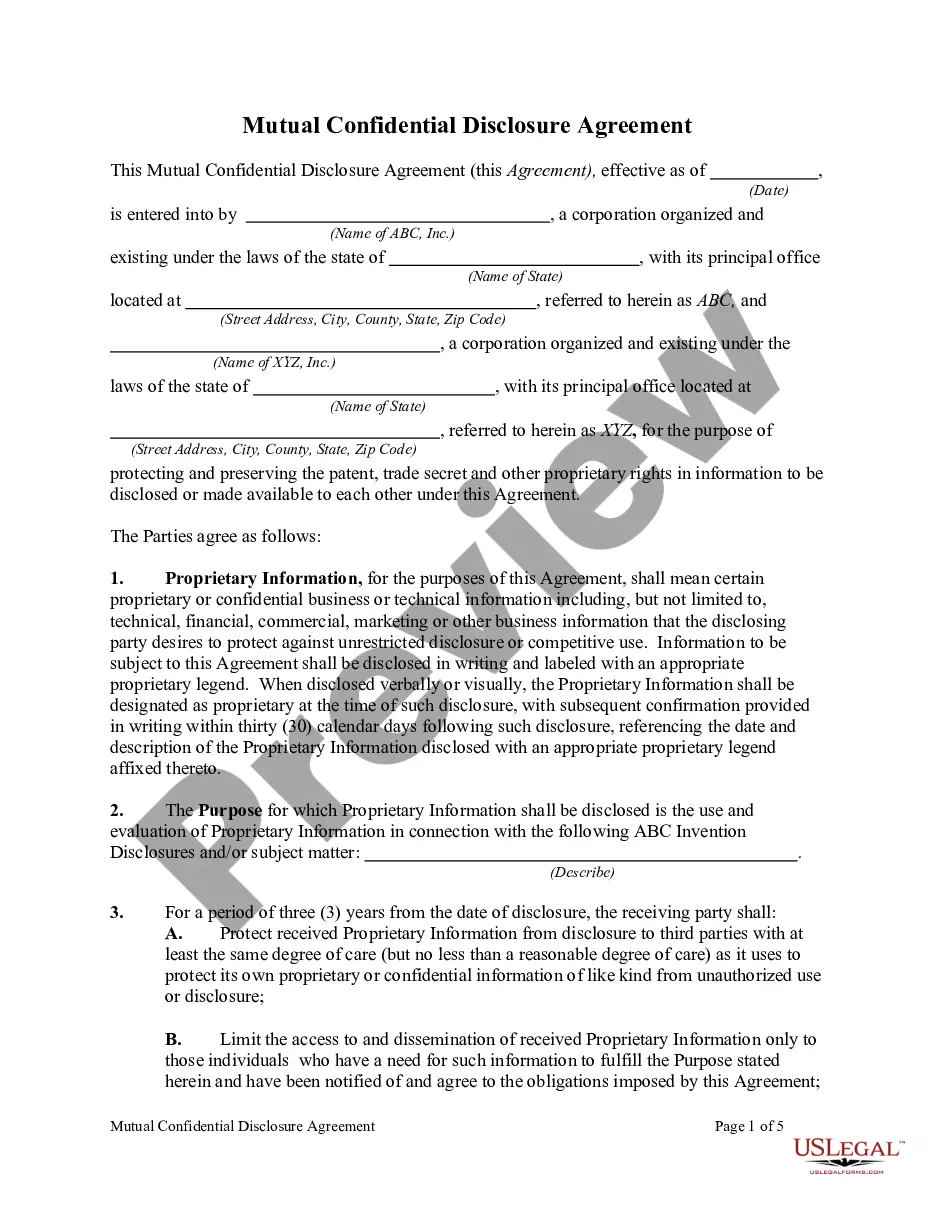
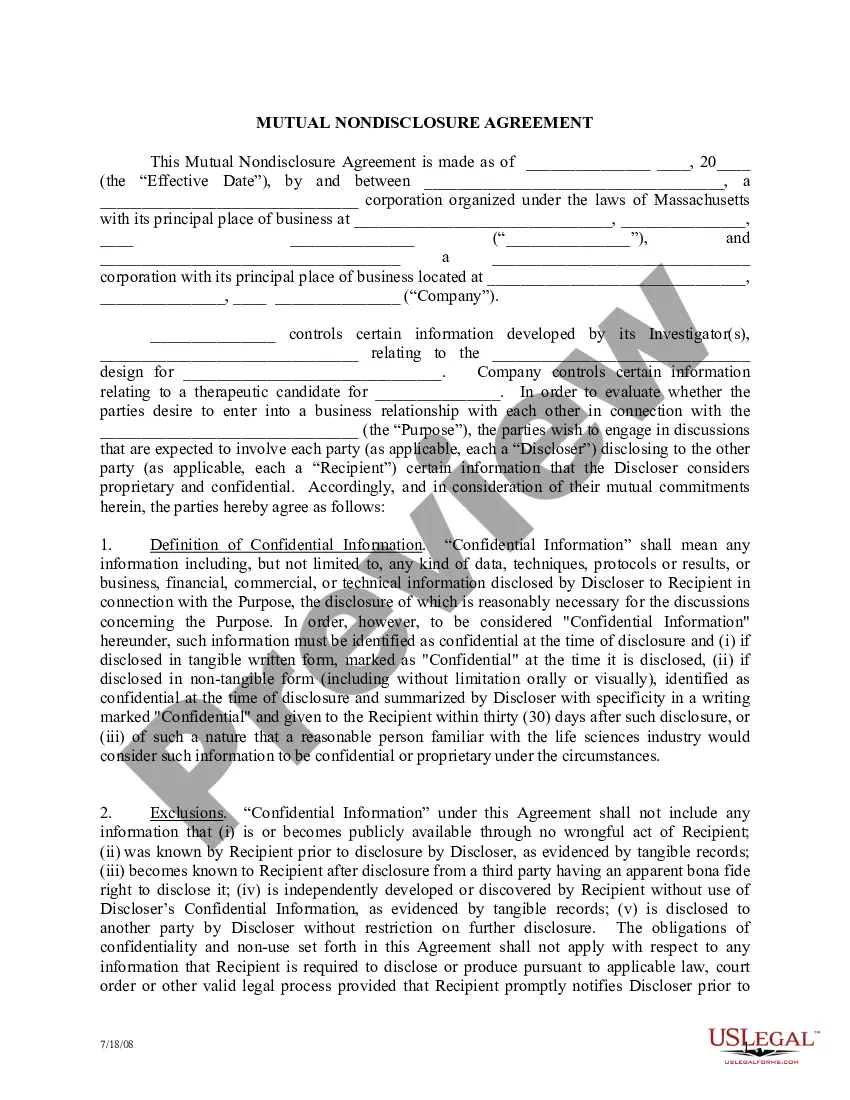
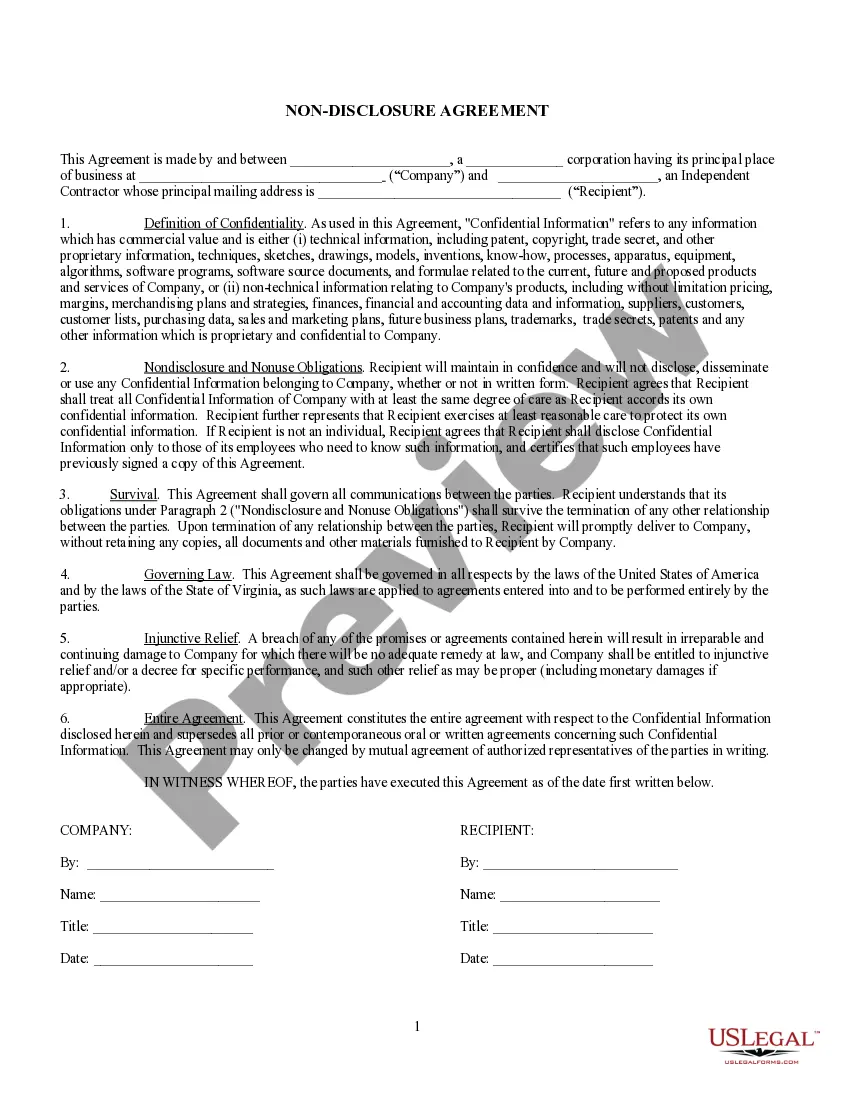
The Mutual Non-Disclosure Agreement (NDA) is a legal document that establishes a confidential relationship between two parties. It ensures that both parties agree not to disclose the proprietary information they may share with each other during discussions or negotiations. This form is crucial for safeguarding sensitive information and differs from unilateral nondisclosure agreements, which only protect one party's information.
Form components explained
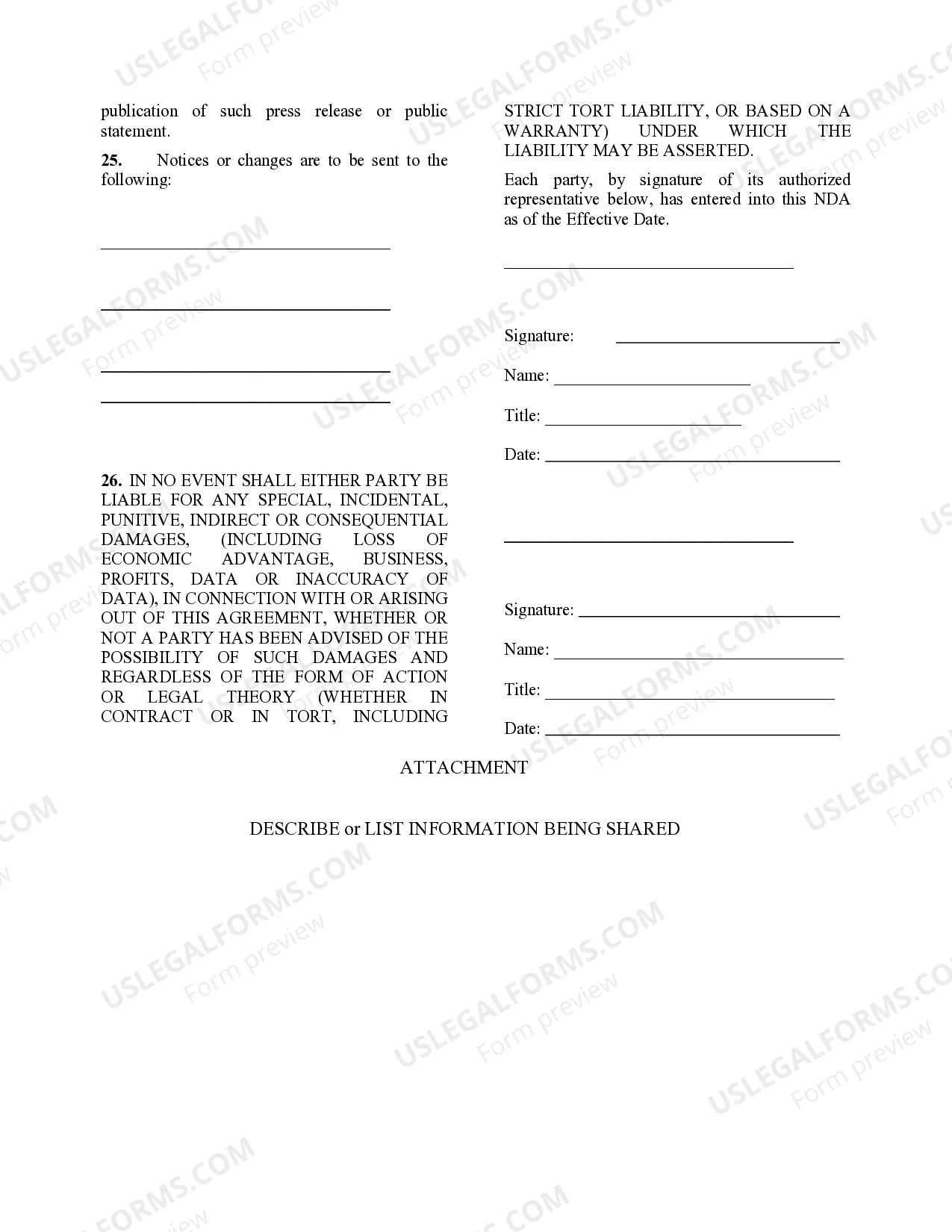
- Identification of the parties involved in the agreement.
- Definition of "Proprietary Information" that is protected under the agreement.
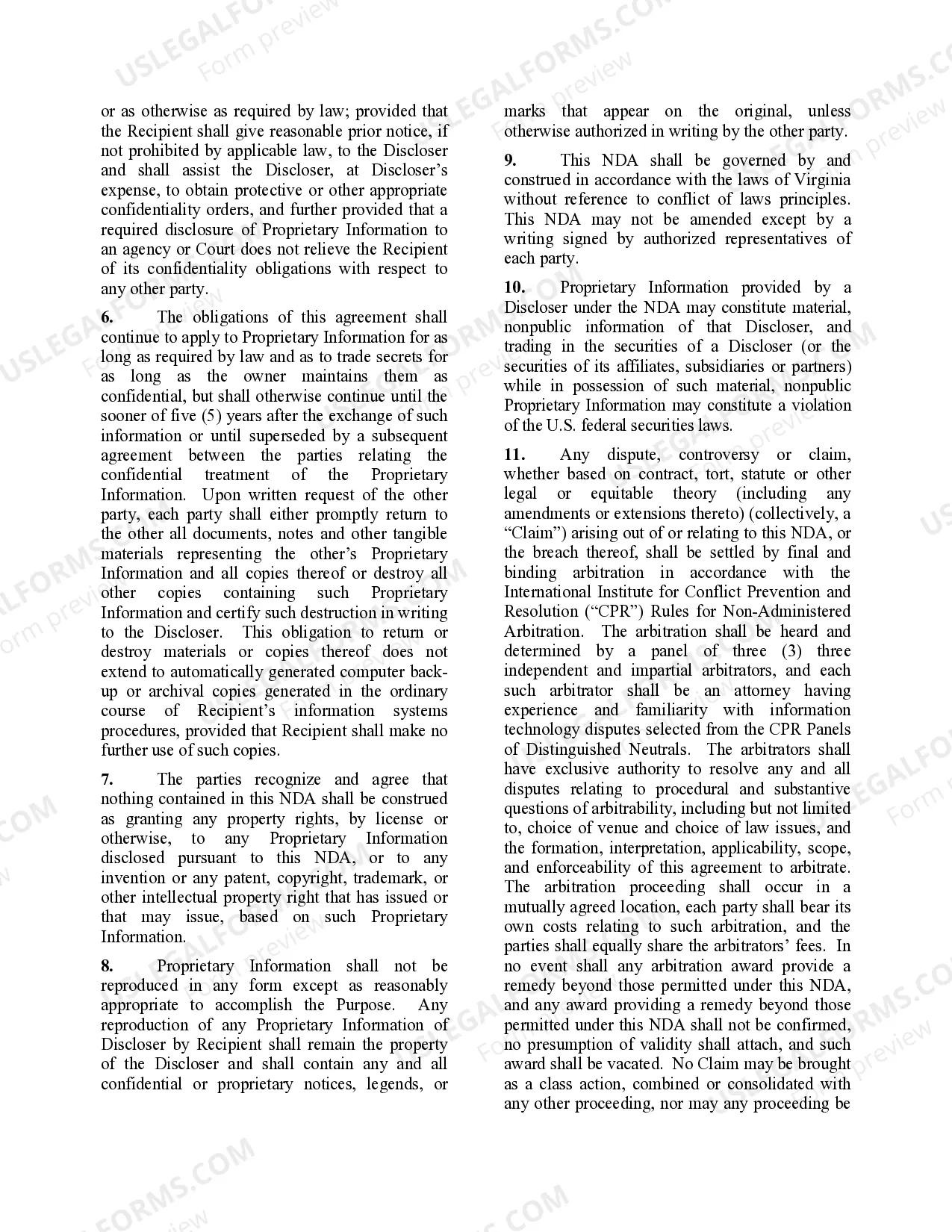
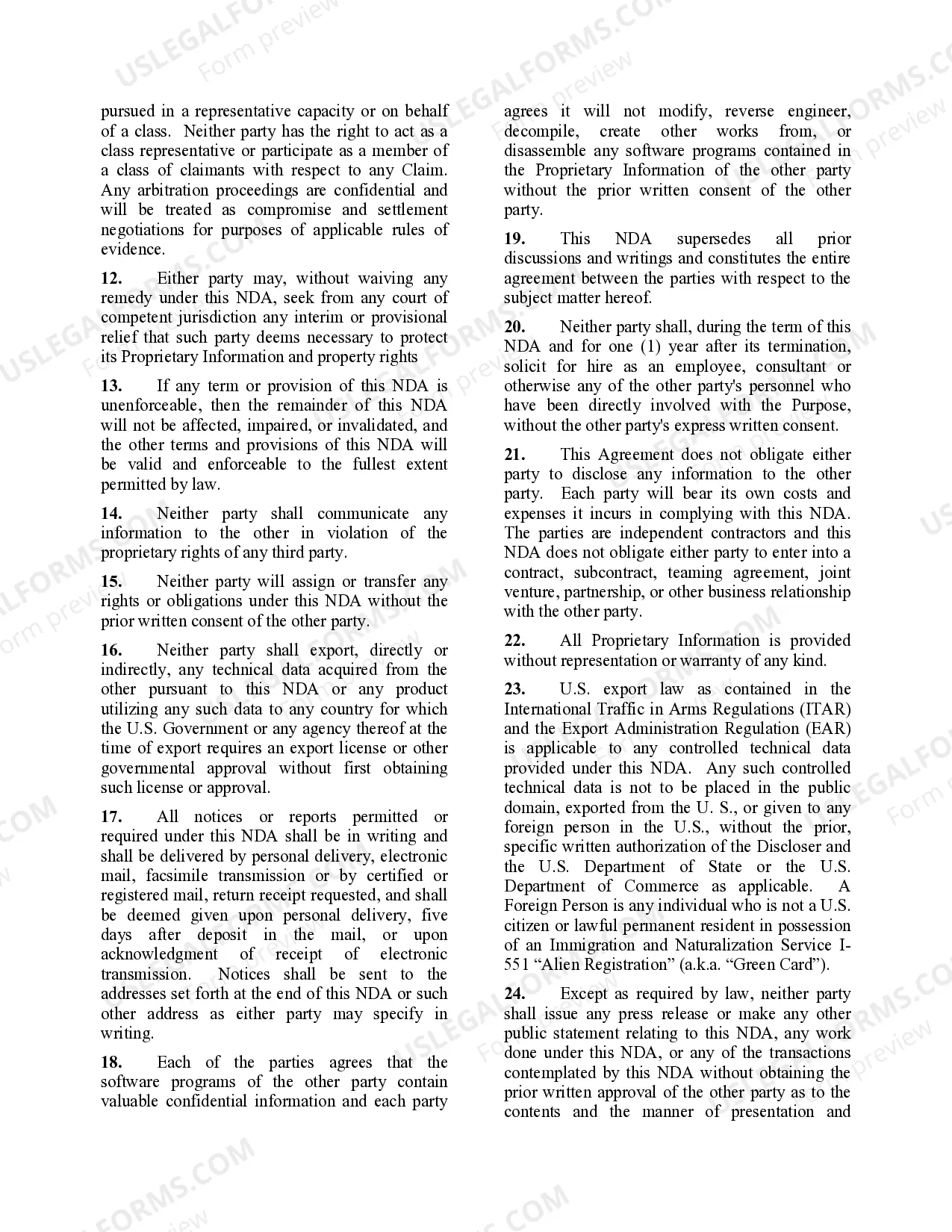
- Obligations of the Recipient regarding the handling of the Proprietary Information.
- Conditions under which Proprietary Information can be disclosed.
- Duration of confidentiality obligations and conditions for returning or destroying information.
- Arbitration clause for resolving disputes related to the NDA.
Situations where this form applies
This form is used when two parties wish to engage in discussions that involve sharing confidential or proprietary information. For example, it is applicable when businesses consider a partnership, clients work with consultants, or individuals share sensitive trade secrets. Using this NDA protects all parties from unauthorized disclosure of their proprietary information.
Who needs this form
- Businesses seeking partnerships or collaborations.
- Individual consultants negotiating contracts with clients.
- Partners sharing trade secrets before formalizing business relationships.
- Any party that needs to share proprietary information with another party while ensuring confidentiality.
How to prepare this document
- Identify and fill in the names and addresses of both parties at the beginning of the document.
- Define the proprietary information clearly as specified in the attached description or list.
- Specify the purpose for which the proprietary information is being shared.
- Each party should sign and date the agreement where indicated.
- Retain a copy of the signed agreement for both partiesâ records.
Notarization requirements for this form
This form does not typically require notarization unless specified by local law. However, having a notarized document can add an extra layer of authenticity and may be preferred in certain business transactions or negotiations.
Get your form ready online
Our built-in tools help you complete, sign, share, and store your documents in one place.
Make edits, fill in missing information, and update formatting in US Legal Forms—just like you would in MS Word.
Download a copy, print it, send it by email, or mail it via USPS—whatever works best for your next step.
Sign and collect signatures with our SignNow integration. Send to multiple recipients, set reminders, and more. Go Premium to unlock E-Sign.
If this form requires notarization, complete it online through a secure video call—no need to meet a notary in person or wait for an appointment.
We protect your documents and personal data by following strict security and privacy standards.

Make edits, fill in missing information, and update formatting in US Legal Forms—just like you would in MS Word.

Download a copy, print it, send it by email, or mail it via USPS—whatever works best for your next step.

Sign and collect signatures with our SignNow integration. Send to multiple recipients, set reminders, and more. Go Premium to unlock E-Sign.

If this form requires notarization, complete it online through a secure video call—no need to meet a notary in person or wait for an appointment.

We protect your documents and personal data by following strict security and privacy standards.
Typical mistakes to avoid
- Failing to define the proprietary information clearly, leading to ambiguity.
- Not having both parties sign the agreement which can render it unenforceable.
- Overlooking the need to include a description or list of the information being shared.
- Assuming that an NDA eliminates all risks; it does not guarantee the protection of information unless enforced properly.
Benefits of completing this form online
- Immediate access to a professionally drafted NDA tailored to your needs.
- Easy editing options to customize the agreement for specific situations.
- Convenient download options, allowing you to have a physical copy instantly.
- Peace of mind knowing that the document meets legal standards.
Looking for another form?

Form popularity
FAQ
If only one party will be disclosing such information, a unilateral nondisclosure agreement is used. If both parties will be disclosing private information to each other, they use a mutual nondisclosure agreement.
Sample Mutual NDA When Apple and Gorilla Glass partnered to make iPhones together, both had protections in their NDA to protect their proprietary information. Apple even went as far as to include a $50 million penalty if Gorilla Glass decided to break the agreement.
In general, a non-disclosure agreement can be categorized as either a unilateral or mutual/bilateral NDA. In unilateral NDAs, only one party agrees not to disclose classified information. A mutual NDA means that both/all parties agree not to share any confidential information.
Here are the two types of NDAs to choose from: Unilateral (NDA) Unilateral nondisclosure agreements are the most common NDAs available.Mutual (MNDA) Mutual nondisclosure agreements (MNDA), also known as bilateral agreements, are used when two parties disclose confidential information to each other.
In general, a non-disclosure agreement can be categorized as either a unilateral or mutual/bilateral NDA. In unilateral NDAs, only one party agrees not to disclose classified information. A mutual NDA means that both/all parties agree not to share any confidential information.
Non-disclosure agreements are common for businesses entering into negotiations with other businesses. They allow the parties to share sensitive information without fear that it will end up in the hands of competitors. In this case, it may be called a mutual non-disclosure agreement.
Virginia has enacted two new laws which will further limit employers' use of nondisclosure and nondisparagement agreements with employees and prospective employees and will bar the use of social security numbers as employee identification numbers and on employee identification badges or cards.