Virginia Notice of Intent to Vacate at End of Specified Lease Term from Tenant to Landlord - Nonresidential
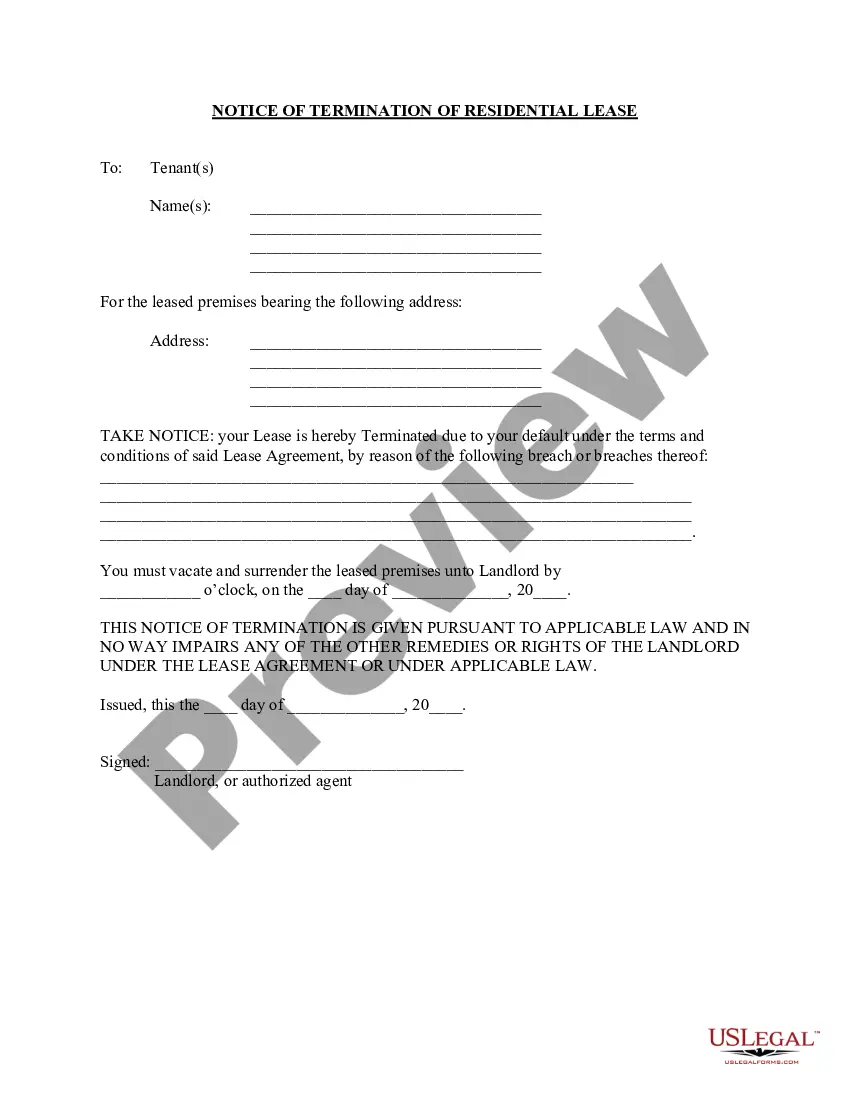
What is this form?
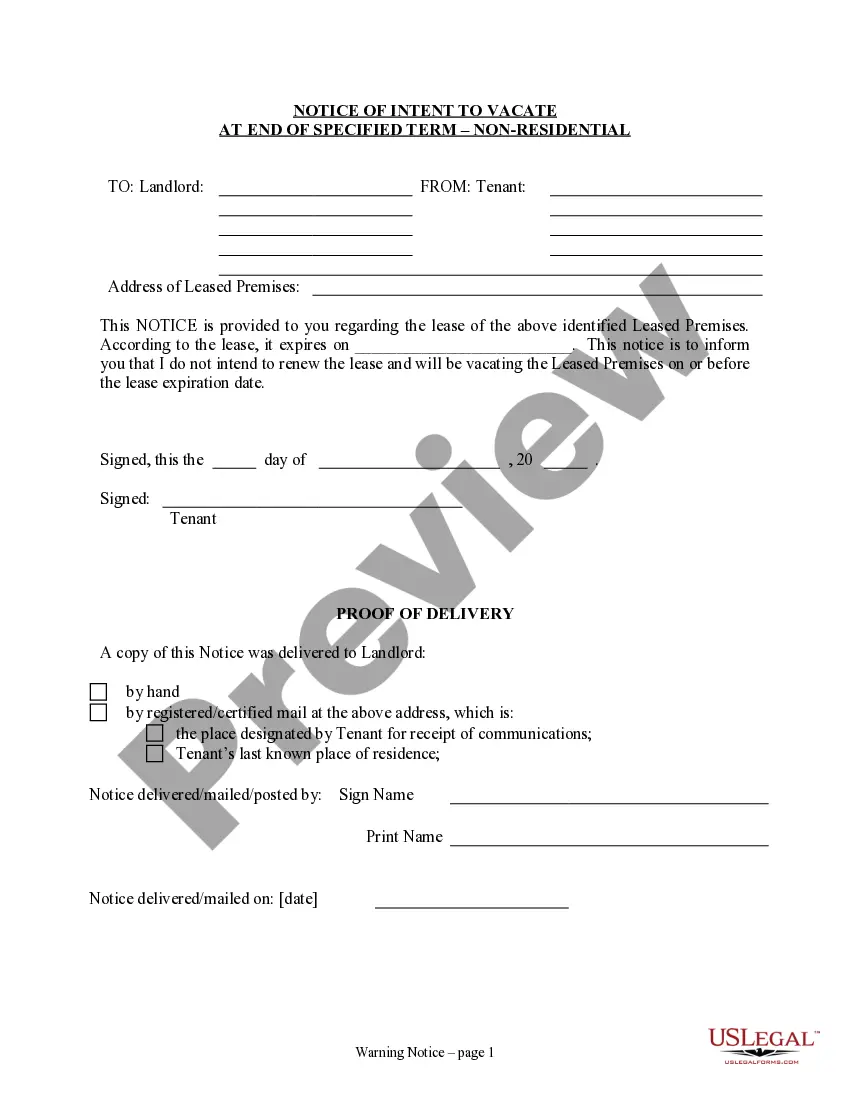
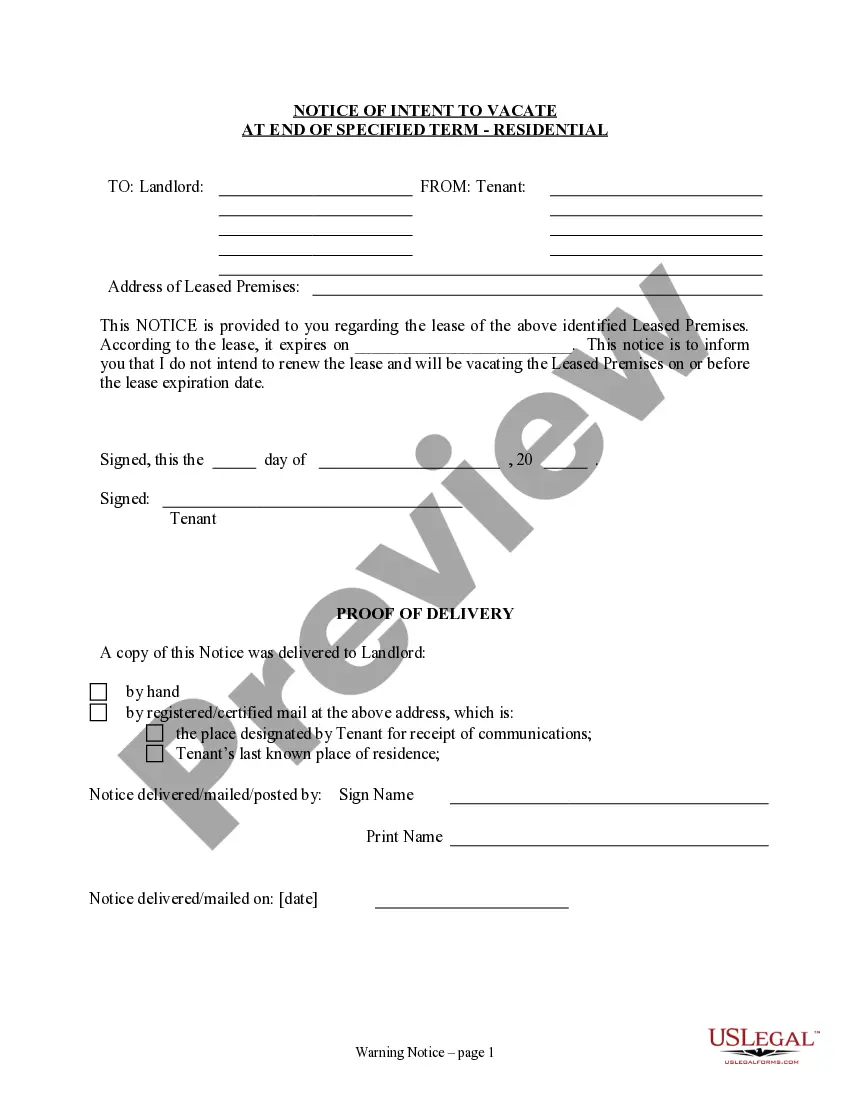
The Notice of Intent to Vacate at End of Specified Lease Term from Tenant to Landlord - Nonresidential is a legal document used by tenants to inform landlords of their intention to vacate a non-residential property at the end of the lease term. Unlike other notices that may require a longer notice period or differ based on lease conditions, this form allows tenants to terminate the lease on its specified expiration date, making it clear that they do not intend to renew the lease.
Main sections of this form
- Identification of the leased premises
- Lease expiration date
- Statement of intention to vacate
- Signature of the tenant
- Proof of delivery options for the notice
When this form is needed
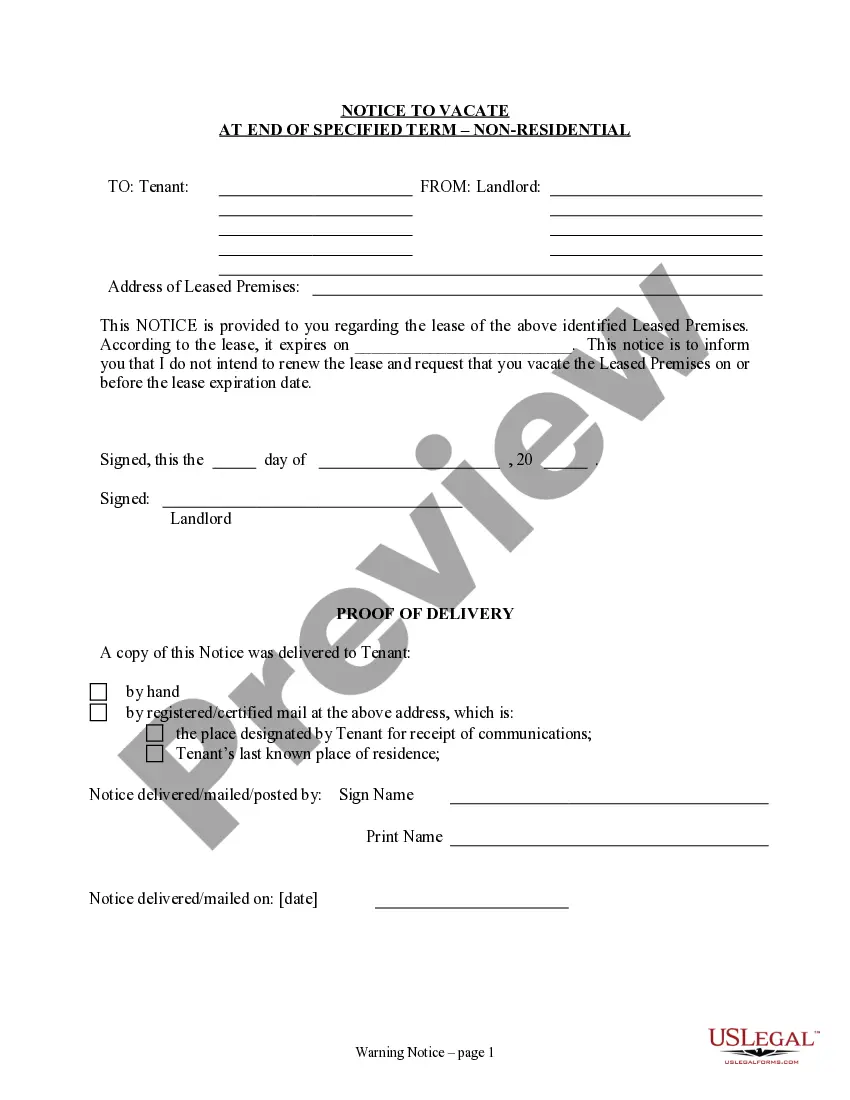
This form is typically used when a tenant wishes to notify the landlord that they plan to vacate the premises at the end of their lease term without renewing the contract. It is particularly useful for businesses that have specific lease dates and need to ensure proper communication with landlords to avoid any misunderstandings or disputes regarding the lease termination.
Who should use this form
- Tenants renting non-residential properties.
- Individuals or businesses with a fixed lease ending on a specified date.
- Tenants who do not wish to renew their lease agreement.
How to complete this form
- Identify the address of the leased premises.
- Clearly state the lease expiration date.
- Indicate your intention to vacate by the expiration date.
- Sign and date the notice.
- Choose a delivery method for the notice and indicate this on the proof of delivery section.
Does this document require notarization?
This form does not typically require notarization unless specified by local law. Always check your local regulations to confirm requirements.
Get your form ready online
Our built-in tools help you complete, sign, share, and store your documents in one place.
Make edits, fill in missing information, and update formatting in US Legal Forms—just like you would in MS Word.
Download a copy, print it, send it by email, or mail it via USPS—whatever works best for your next step.
Sign and collect signatures with our SignNow integration. Send to multiple recipients, set reminders, and more. Go Premium to unlock E-Sign.
If this form requires notarization, complete it online through a secure video call—no need to meet a notary in person or wait for an appointment.
We protect your documents and personal data by following strict security and privacy standards.
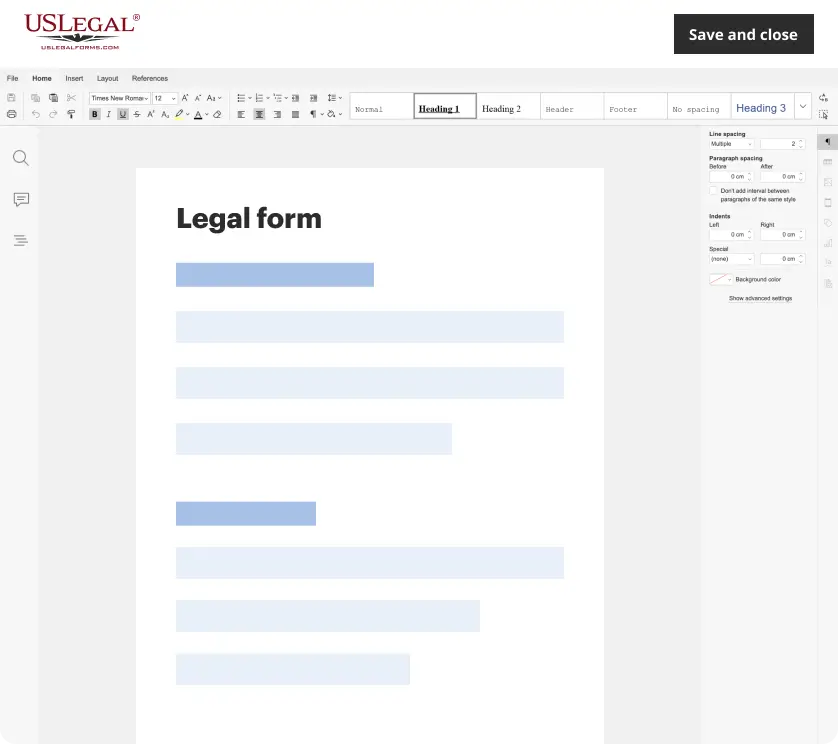
Make edits, fill in missing information, and update formatting in US Legal Forms—just like you would in MS Word.
Download a copy, print it, send it by email, or mail it via USPS—whatever works best for your next step.
Sign and collect signatures with our SignNow integration. Send to multiple recipients, set reminders, and more. Go Premium to unlock E-Sign.

If this form requires notarization, complete it online through a secure video call—no need to meet a notary in person or wait for an appointment.
We protect your documents and personal data by following strict security and privacy standards.
Typical mistakes to avoid
- Failing to include the lease expiration date.
- Not delivering the notice properly, which could lead to disputes.
- Using a vague statement that does not clearly indicate intent to vacate.
Benefits of using this form online
- Convenient access to a professionally drafted template.
- Editable format allows for customization based on specific lease terms.
- Reliability and legal validity ensured by the use of standard legal language.
- The notice establishes clear communication between tenant and landlord, which can help mitigate disputes.
- Using this form ensures compliance with lease agreements and state laws regarding notice periods.
- Retaining a signed copy of the notice serves as evidence of the tenantâs intent to vacate.
Main things to remember
- This form is essential for tenants planning to vacate non-residential properties.
- Clear documentation helps retain a positive relationship with the landlord.
- Proper completion ensures compliance with the lease and local laws.
- Using an online form service offers convenience and supports legal validity.
Looking for another form?
Form popularity
FAQ
As a renter in Virginia, you have legal protections under the Virginia Residential Landlord and Tenant Act (VRLTA) that include the right to: A fair application fee. A fair security deposit. A decent and safe place to live.
Except for an emergency or scheduled maintenance, your landlord must give you at least 24 hours of notice before entering the rental unit. If your landlord repeatedly violates your privacy by entering your unit, you may be able to break your lease without penalty.
TERMINATING OR ENDING YOUR TENANCY If you have no written lease and you pay rent by the month, the tenancy can be terminated by either you or the landlord for any reason or no reason at all, by giving at least 30 days written notice before the next rental due date.
The period required to receive or give a notice to move is determined by the length of time between rent payments, as specified in California Civil Code Section 1946. If you paid the rent every month, roughly every 30 days, then you were obligated to give the owner a written 30-day notice.
Yes, in Virginia, you can evict unwanted family members from your home.However, in most cases, Virginia still considers them to be a tenant. The courts will most likely treat them as a month-to-month tenant even if they have no lease, and pay no rent.
This notice will inform the tenant that the tenant has 21 days to either remedy the violation or move out of the rental unit. If the tenant does not remedy the violation or move, then the landlord can file an eviction lawsuit against the tenant at the end of the 30 days. (Va. Code Ann.
When you want to evict a tenant who is occupying the premises on a month-to-month basis, give the tenant a 30-day notice to quit, get a summons for unlawful detainer from the court, and appear at the hearing to argue the case. If you win, obtain a writ of possession and have the sheriff evict the tenants.
Notice Requirements for California Tenants Unless your rental agreement provides a shorter notice period, you must give your landlord 30 days' notice to end a month-to-month tenancy. Be sure to check your rental agreement which may require that you give notice on the first of the month or on another specific date.
NOTE: Under Virginia law, if you do not have a lease, and you do not pay rent, you are considered a tenant at sufferance. This means you can be evicted for any reason at all, at any time, and no notice needs to be given to you.If the rent is paid by the week, only a 7-day written notice is required.