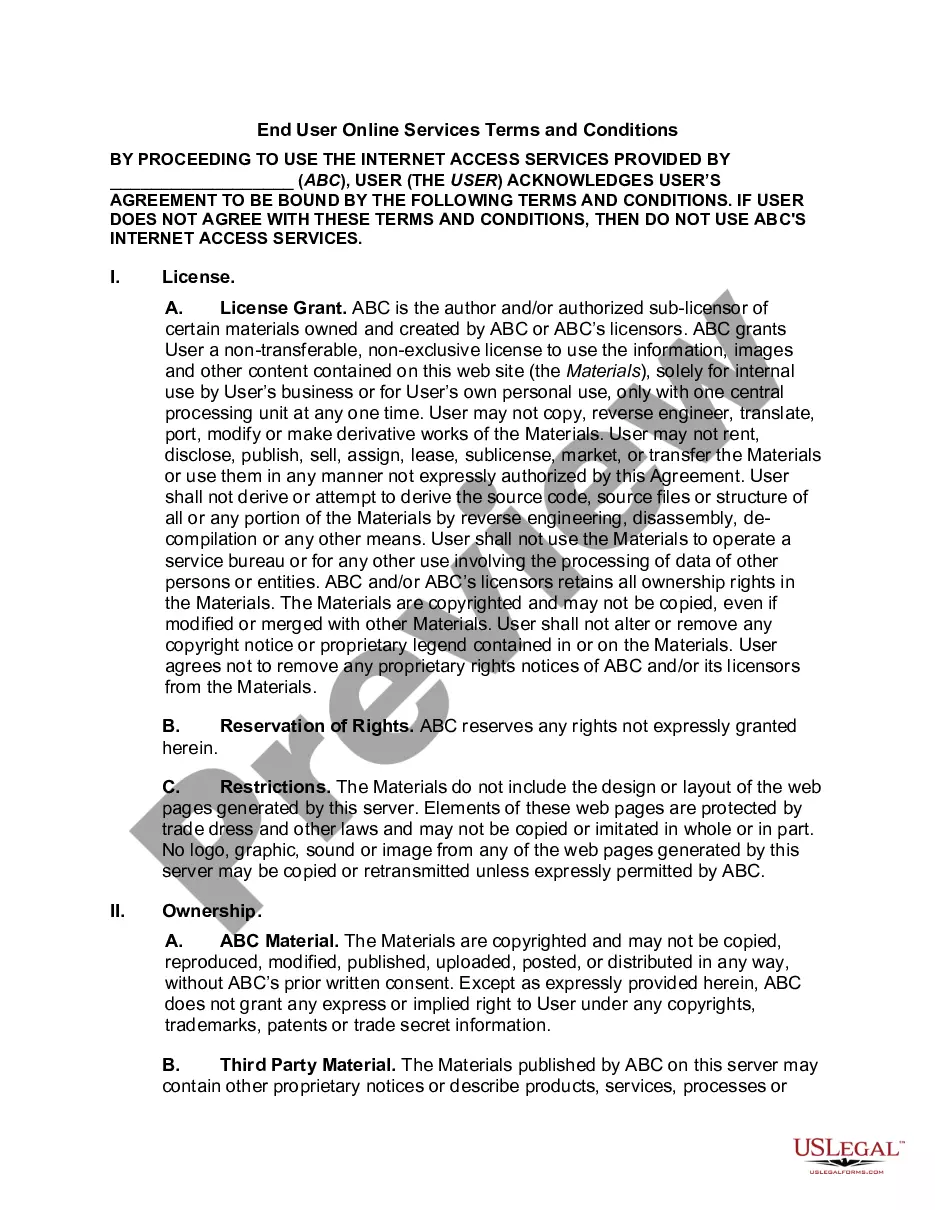
End User Online Services Terms and Conditions
What is this form?
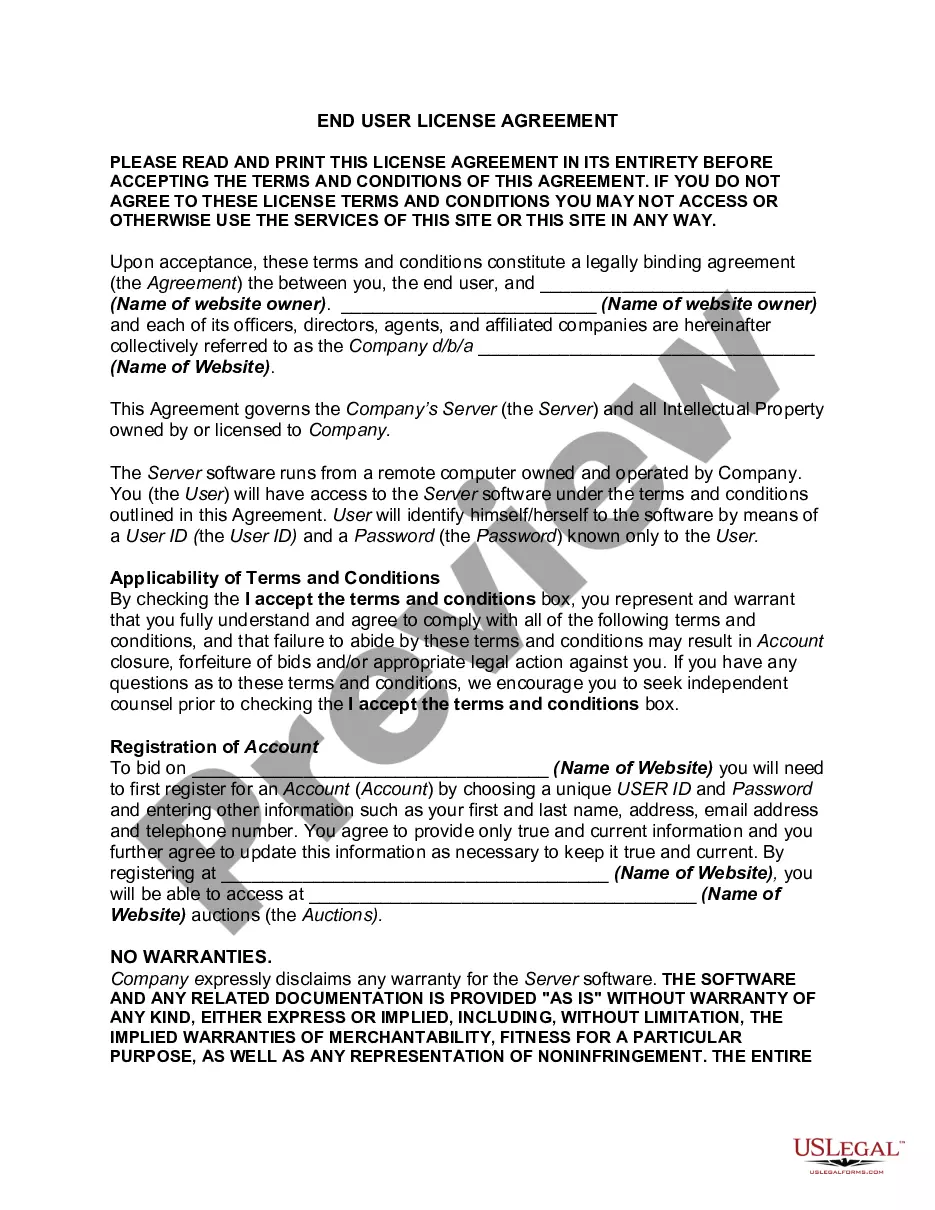
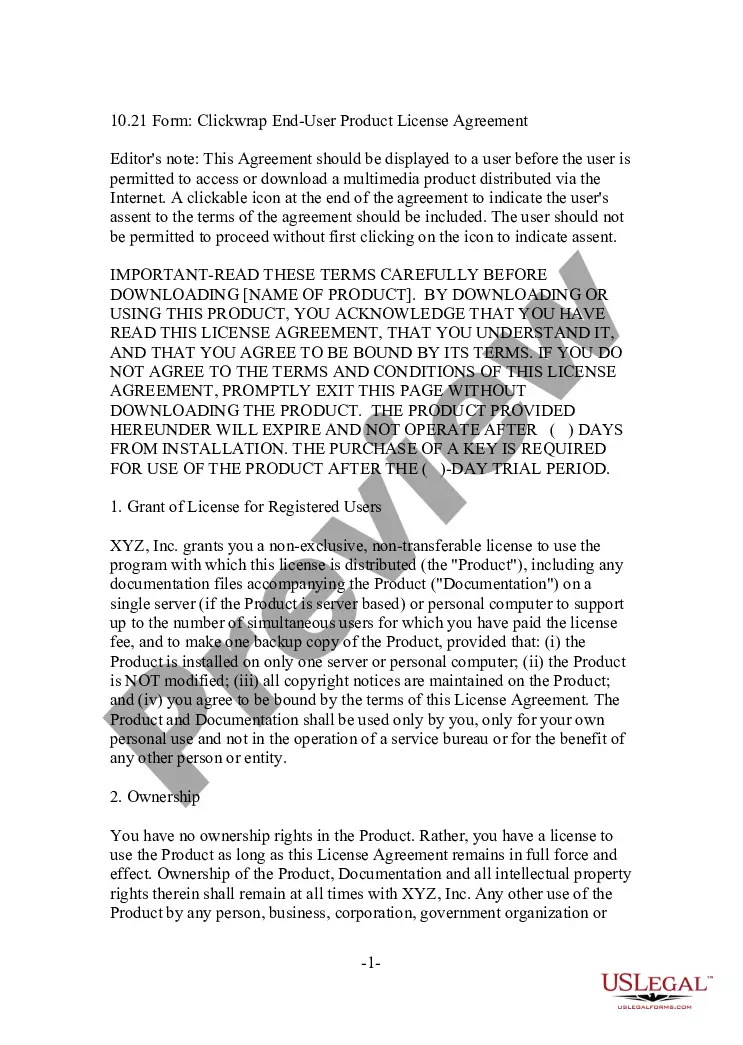
The End User Online Services Terms and Conditions form is designed to establish the legal framework between a service provider and users accessing internet services. This document defines the rights and responsibilities related to the use of online services, ensuring that users understand the terms they agree to by utilizing these services. Unlike general contracts, this form specifically addresses issues pertinent to the computer, internet, and software industries.
Key parts of this document
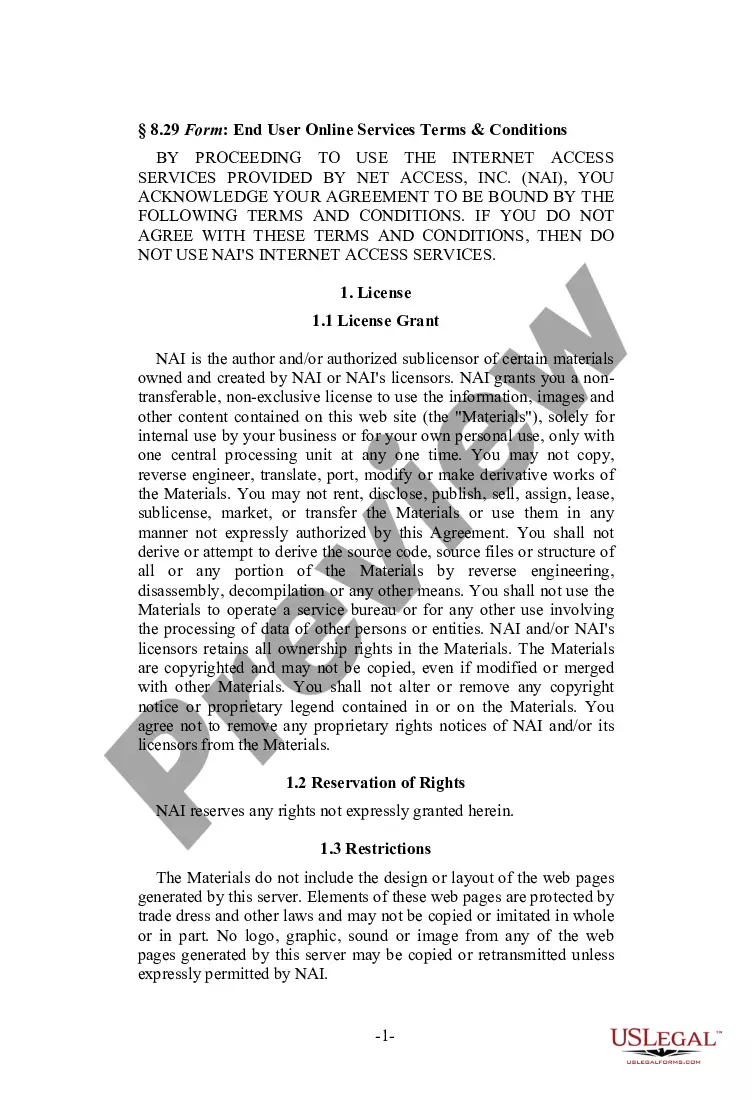
- License Grant: Details the permission granted to users for accessing and utilizing materials provided by the service.
- Ownership: Clarifies the ownership rights of the materials and restrictions on their use.
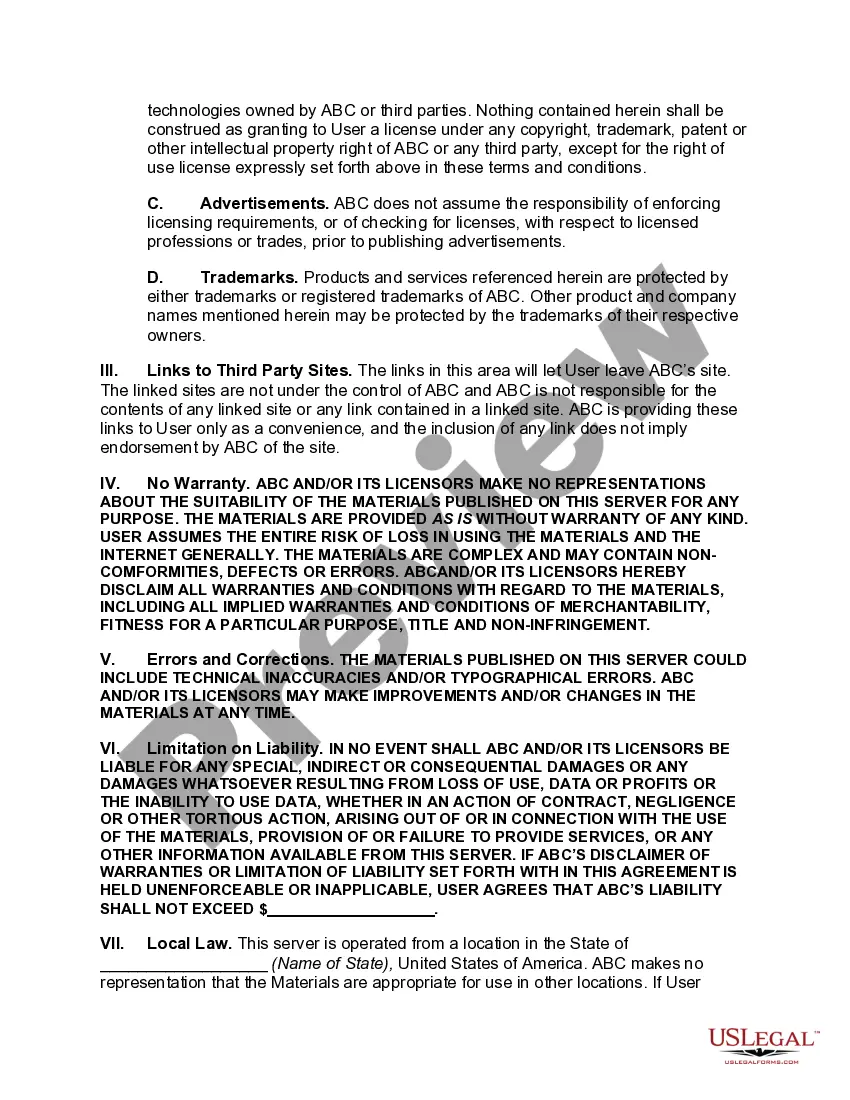
- Links to Third Party Sites: Indicates that the company is not responsible for the content of external websites linked from their services.
- No Warranty: States that the materials are provided "as is" without any guarantees about their quality or suitability.
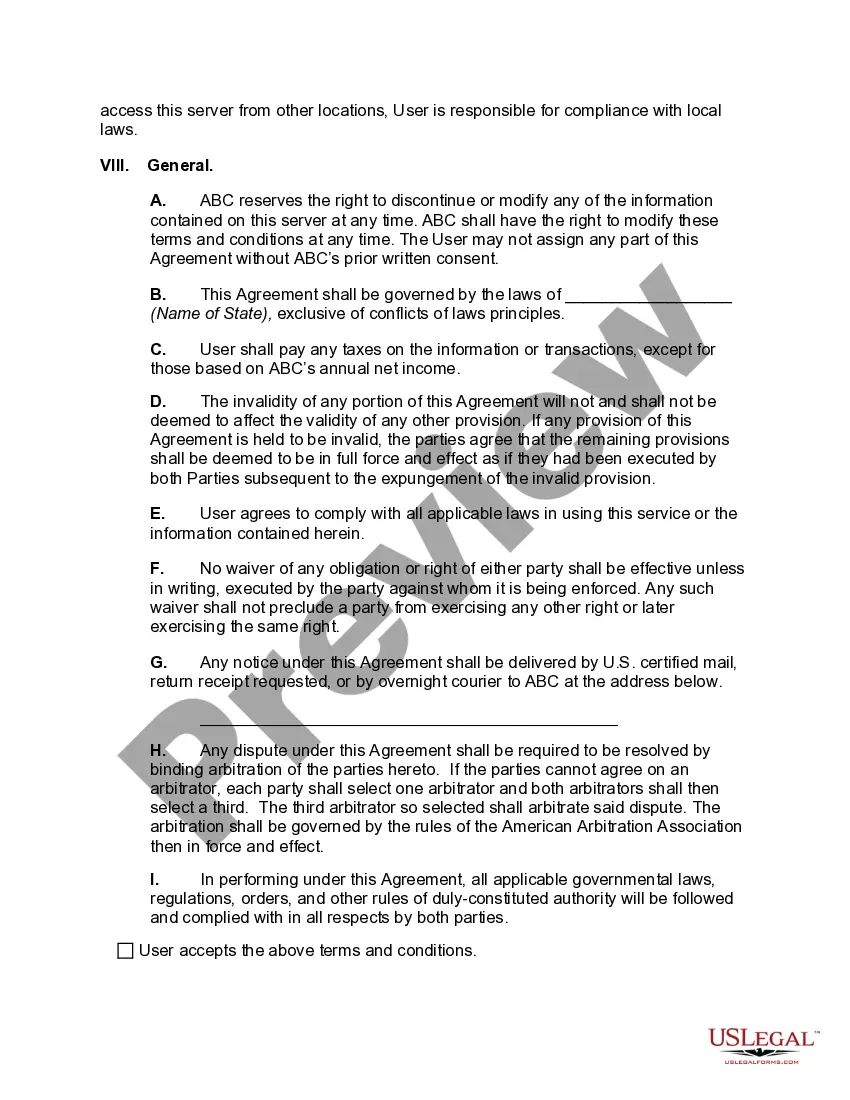
- Limitation on Liability: Sets forth the extent of liability for the service provider in case of issues arising from the use of materials.
Common use cases
This form should be used whenever a user wishes to access online services provided by a company. It is particularly important for businesses and individuals in the tech sector that offer or utilize online services, ensuring they are legally covered and aware of the terms governing their use of these services.
Intended users of this form
- Any organization providing internet access services.
- Businesses developing or distributing software online.
- Individuals utilizing online services for personal or business purposes.
- Service providers needing to outline user obligations and rights clearly.
Completing this form step by step
- Identify the service provider's name to fill in the designated blank space.
- Specify the state where the service is being provided, as this can impact legal enforceability.
- Read and accept the terms specified in the document, ensuring understanding of user rights and responsibilities.
- Enter any additional clauses or customizations to meet the specific requirements of your service.
- Ensure all parties sign the document if required, maintaining a record of acceptance.
Notarization guidance
This form does not typically require notarization unless specified by local law. For added assurance and compliance, users can consult legal professionals to confirm local requirements.
Get your form ready online
Our built-in tools help you complete, sign, share, and store your documents in one place.
Make edits, fill in missing information, and update formatting in US Legal Forms—just like you would in MS Word.
Download a copy, print it, send it by email, or mail it via USPS—whatever works best for your next step.
Sign and collect signatures with our SignNow integration. Send to multiple recipients, set reminders, and more. Go Premium to unlock E-Sign.
If this form requires notarization, complete it online through a secure video call—no need to meet a notary in person or wait for an appointment.
We protect your documents and personal data by following strict security and privacy standards.

Make edits, fill in missing information, and update formatting in US Legal Forms—just like you would in MS Word.

Download a copy, print it, send it by email, or mail it via USPS—whatever works best for your next step.

Sign and collect signatures with our SignNow integration. Send to multiple recipients, set reminders, and more. Go Premium to unlock E-Sign.

If this form requires notarization, complete it online through a secure video call—no need to meet a notary in person or wait for an appointment.

We protect your documents and personal data by following strict security and privacy standards.
Common mistakes to avoid
- Failing to read the terms thoroughly, leading to misunderstandings of rights and obligations.
- Not updating the form to reflect changes in service provision or local laws.
- Overlooking the need for each user to confirm understanding before accessing the services.
Benefits of using this form online
- Convenience: Easily accessible for immediate use, allowing for quick implementation.
- Editability: Can be tailored to fit specific service provisions and user needs.
- Reliability: Created by licensed attorneys, ensuring legal compliance and validity.
Legal use & context
- The terms outline the legal rights of the service provider and user, protecting both parties.
- Helps to mitigate risks associated with online service usage.
- Clarifies grounds for dispute resolution through binding arbitration if conflicts arise.
Main things to remember
- The End User Online Services Terms and Conditions form safeguards both service providers and users.
- Read and understand each clause to ensure compliance with service provisions.
- Update the document as necessary to reflect changes in services or local laws.
Looking for another form?
Form popularity
FAQ
A service level agreement is a contract between a service provider and a user. In most cases, the agreement is between a business and a consumer, though SLAs may be established between two business as well.
An End User License Agreement (EULA) is a legal contract between a software application author or publisher and the user of that application.The user can refuse to enter into the agreement by returning the software product for a refund or clicking "I do not accept" when prompted to accept the EULA during an install.
An end-user license agreement (EULA, /02c8ju02d0l0259/) is a legal contract entered into between a software developer or vendor and the user of the software, often where the software has been purchased by the user from an intermediary such as a retailer.
There's a whole lotta issues in your question, so it's impossible to give a definitive answer. Some EULA terms are simply unenforceable (for one reason or another), so nothing will happen to someone who violates those terms.
An end-user license agreement (EULA, /02c8ju02d0l0259/) is a legal contract entered into between a software developer or vendor and the user of the software, often where the software has been purchased by the user from an intermediary such as a retailer.Many EULAs assert extensive liability limitations.
A user agreement is a contract.It means that while you may be able to find a boilerplate user agreement online, it may not be the right one for your needs. A software licensing attorney can draft a better user agreement that clearly explains the rights of the user and how the software may and may not be used.
Generally speaking, an EULA is a legally binding agreement between the owner of a product (often software) and the end-user more specifically a contract between the licensor of a product and the licensee.
Perhaps the key difference between a EULA and a software license agreement is that a EULA is often meant for scenarios where many users could be using the software on a continuous basis and a software license agreement is more often used for business-to-business, often times for finite engagements.
An agreement exists where there is a mutual understanding regarding rights and responsibilities among parties to a business arrangement. A contract is an agreement between respective parties that creates legally binding obligations.
End User License Agreements are enforceable as long as it is clear that it is a contract and both parties can understand the terms. Unlike a basic software license that sets user parameters for a finite engagement, the EULA gives the end-user conditions to use the software or hardware continually.